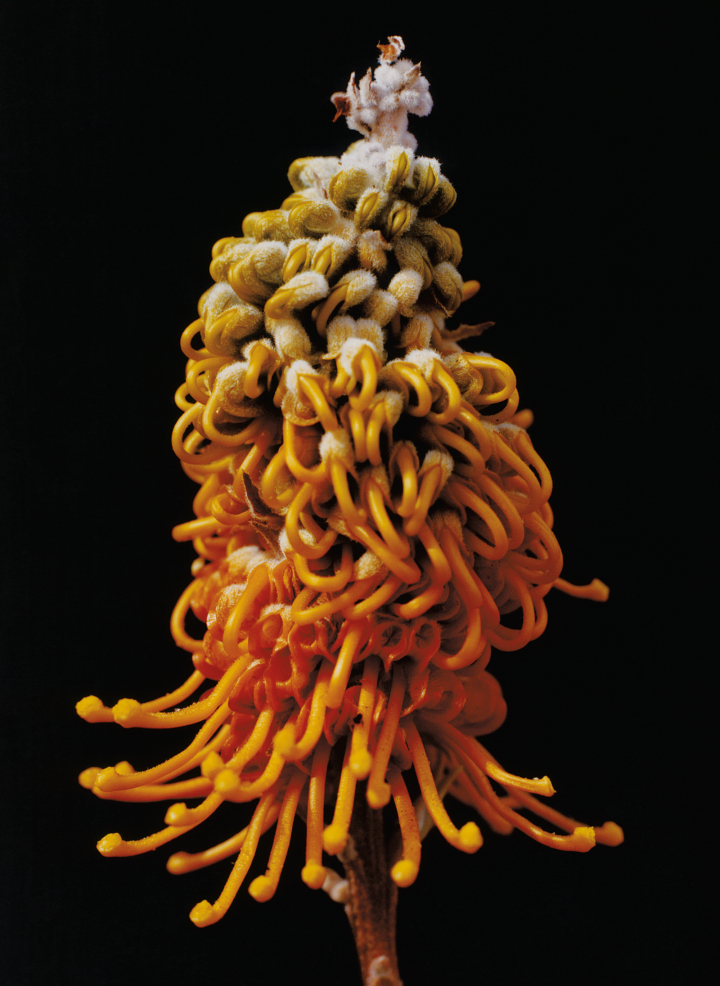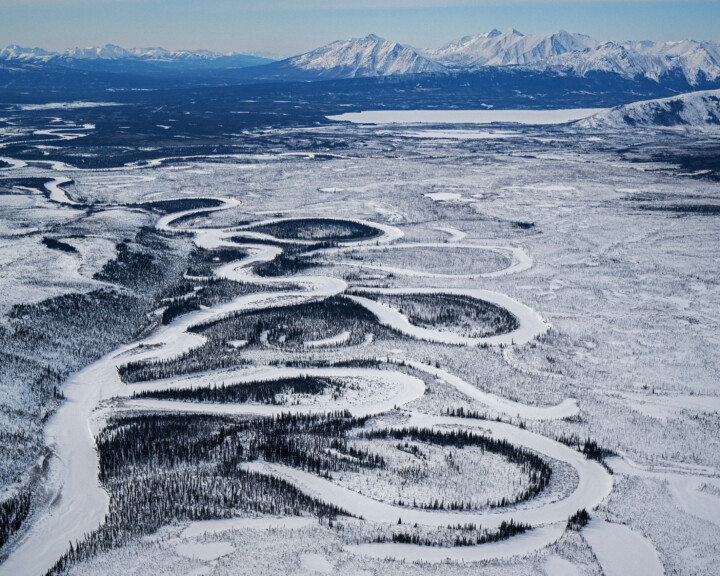
Photograph by Elizaveta Porodina
To never miss an episode of The Nature Of, be sure to follow here.
How can we find our way back to wonder? In this special episode, Willow takes listeners inside Enchanted Forest, a magical evening with Atmos at the New York Public Library during Climate Week. Featuring Robin Wall Kimmerer, Maria Popova, Giuliana Furci, and Indigenous Amazonian leader Juma Xipaia, the episode explores what forests can teach us about interdependence, belonging, and love. From the hidden wisdom of fungi to the power of reciprocity, these conversations offer a reminder that enchantment isn’t about escaping reality, but seeing it more clearly.
Maria Popova
We have to work extra hard to put ourselves in the path of wonder today in the world we live in.
NARRATION
If there is one word that sits at the center of all of the work that I am trying to weave into the world, it’s enchantment. For those of you who might be unfamiliar, this show is published by a magazine that I co-founded called Atmos. And our whole mission is to create cultural transformation by re-enchanting people with nature. That includes through a gorgeous print publication, weekly features on our website, newsletters straight to your inbox, and even events.
This past New York Climate Week, we held an event called Enchanted Forest, and it was really leaning into this theme of re-enchantment, which for me is twofold. It’s not just about making the transformation our world needs so deliciously irresistible that everyone wants to be part of it, it’s also about undoing the spell of separation that I think so many people have fallen under: that we are separate from the natural world.
So for this very special evening at the New York Public Library, we brought together many familiar voices that you might recognize from this show, including Robin Wall Kimmerer, Maria Popova, and Giuliana Furci. In this week’s episode of the show, we’re changing things up and you’re going to hear highlights from throughout the evening where these guests and more will share their particular lenses on enchantment and wisdom from the heart of the forest.
Robin Wall Kimmerer
Forests are my happy place. They’re the place where I soak up so much teaching, so much joy, so much peace, as we all do in this enchanted and enchanting forest.
Narration
I’m Willow Defebaugh, and this is The Nature Of, where we look to the nature of our world for wisdom and ideas that change the way we live. Our evening in the enchanted forest began with a musical performance by artist Dianna Lopez and then, quickly transitioned into a conversation between Maria Popova and Giuliana Furci about the beings who really hold forests together: fungi. I was so happy to watch our audience of 300 people witness the mind-bending wisdom of Maria and Giuliana, who spoke about the ways in which fungi challenge our notions of individuality, interdependence, and even language.
Maria Popova
Good evening. What a perfect way to begin—with music—because actually the etymological roots of “enchantment,” from Latin and then old French, means to be in a song. Which got me thinking about language, and how the great revelation of Einstein’s relativity was that space and time are a single fabric, and the curvature of spacetime tells matter how to move, and matter tugged by gravity tells the fabric how to bend. And similarly, language tells thought how to move, and thinking tells language how to bend.
And of course, I’m thinking of your triumph, where a few weeks ago the Cambridge Dictionary included funga alongside flora and fauna. I mean, it’s extraordinary that in our lifetime, the taxonomy and nomenclature of the natural world, for the first time since Linnaeus, has been revolutionized, and it’s a word you coined. How has this been fed by your thinking, and how is that feedback looping back to feeding your thinking back?
Giuliana Furci
Hello, everybody. Good evening, buenas noches, buena noche. Oh, what an intro. OK, I’m going to dive straight in.
Justice is important. Justice in the natural world is important. Diversity, equity, and inclusion is important in biological ways of thinking, and language creates reality. We have been living way too long in a world in which we have been taught or conditioned that only animals and plants, or fauna and flora, are the representatives of life on earth or of microscopic life on earth. Delimiting a word, finding a word, the quest for the inclusion of fungi, organisms that are neither plants or animals, into language has been a quest for justice. And the reason the word has been included in the dictionary is because many of us, thousands of us, have used and written this word, to write it into our collective notion of life on Earth.
Maria
Beautiful. And listening to you, I’m also struck by how all justice is, in some sense, an act of unselfing, of coming to other, and how much of our scientific nomenclature and organizing principle of the world has been based on self-similarity. Organisms that are the most similar to us have been granted higher status. And it’s interesting, because Darwin was a huge practitioner of marginality, as he would write in the margins of his books his arguments with the authors. And in one of the books he was reading, he took real issue with some of the language and he said, “Never write higher or lower, write more complicated.” So he was already thinking about complexity, not hierarchy.
And it’s interesting that fungi are organisms that are least similar to us in many ways. And so in changing, demolishing the hierarchy to put them on the same plane as another kind of region, of fauna, flora, natural world, is inviting this understanding that maybe our whole concept of what consciousness is is not based on human nervous systems, that maybe there is a different model of consciousness.
Giuliana
It’s interesting, because fungi are organisms that invite us to think about relationships. They are organisms that embody the fact that individuals don’t exist. They are organisms that invite us to embody that decomposition is not an end, but a beginning. And I want to focus, we’ve focused for a long time, on the symbiosis of how fungi enable plants to live on land through the mycorrhizal networks, and we miss Suzanne today, but we want to honor her work.
I will bring another perspective on fungal life, and it’s the decomposers. Fungi are the organisms that naturally recycle, along with bacteria, life on Earth, matter on Earth. And they teach us that there is no end, that every point in a cycle of life is a beginning, and that every end of a life form is nothing other than the beginning of many other life forms, and that challenges.
It’s a challenge to think about the complexity of life and not this linear way that we’ve been taught, this notion of the survival of the fittest, going back to Darwin that you were mentioning, that there is only one way to live. There’s only one way to thrive. Fungi teach us that adaptation is an array, is a spectrum, of ways to live in place.
And so in this world of ever-adapting situations that we need to live and thrive in, I believe that fungi are an array and a possibility of ways to live that is not conditioned to one way that is either linear nor the right way.
Maria
I mean, it’s interesting, because framed that way, it challenges even our basic model of physics, that the second law of thermodynamics maybe is not what it is. Entropy maybe is not a unidirectional collapse toward disorder. Maybe it just cycles back and forth, and then our whole understanding of the universe could be revised with this new model of continuity.
Giuliana
And not only that, Maria, it’s incredible because fungi also … I mean, there’s a species of fungus called schizophyllum commune that has 23,000 mating types. I mean, can we just wrap our mind around this? Even in the challenging of … Well, we’ve long challenged the binary, a long time ago, but even as far as you can go in thinking of any way of compatibility for life to thrive. And fungi not only do that, fungi are really important enablers of life of people in place.
Maria
The relationship to place is such a big part of what you do and how you do it. Say a little bit more about how place has shaped you as an organism, having the consciousness that you have.
Giuliana
Oh, dear. That’s a difficult one. Well, I am a daughter of a refugee, so I have lived in many places. I’ve been moved around places, but in every single one of those places, it’s been either fermentation, or the celebration of life through fermentation, that’s enabled life in place. The ability to find life in a city through place, through fungi.
Fungi are the organisms that enable plants to live outside of water. Fungi are organisms that enable the atmosphere to be the one in which we are. And when you learn this, and when you realize that we eat preserved foods, that we clothe with fungal elements, that we even wash our clothes with detergents that use fungal enzymes, you learn to live in place. No matter how concrete your jungle is or how green it is, there are these organisms that enable us to be able to live in place without having been born and lived entirely in place, which is admirable too.
Maria
As you were saying this, I remember foraging for the hen, the chicken of the woods, in downtown Santiago in a public park, climbing a castle wall to get some fungi, and you were very kind in your response to my misdemeanor.
Giuliana
“Be careful. Be careful, Maria.”
Maria
What has been the most surprising encounter you’ve had with an organism, a fungus?
Giuliana
Fungus or organism?
Maria
Well, a fungus.
Giuliana
So placewise?
Maria
Yeah.
Giuliana
There’s a fungus, a giant puffball. How many of you know puffballs? OK, this is good. There’s a giant puffball that lives in Tierra del Fuego. Tierra del Fuego is an island on the southern tip of the southern cone of the Americas that is shared politically between Chile and Argentina. And this giant puffball, which is this size sometimes, when immature, immature in quote, is edible. When it matures, when she matures and is reproducing, the spores are medicinal and can heal wounds.
And once sporulation has occurred and sexual reproduction has occurred, the sterile base of that fungus is used to start fire. So you have, in one of the most hostile places on the planet in Tierra del Fuego, deep Patagonia, as south as Patagonia gets, one species that is edible, medicinal, and a tinder, firestarter, in one, that enabled people to live in place. I think this fungus is one of the most astonishing living beings I’ve ever encountered.
Oh, yeah. So I was driving through a forest in Southern Chile on a very snowy day, and saw on the black soil a texture that was different. A texture, a fuzz. A fuzz, a vibration of life that’s different from plants and animals. Of course, I screeched the car to a halt. Nobody else wanted to get out because it was raining and snowing, but nothing can stop some of us with the fungi.
And there was this very, very, I would say, different being on the soil, which was a dark black mushroom with white scales. I remember looking at that mushroom and immediately knowing that it wasn’t a being that had a Latin name. I have no pretending. I didn’t discover this fungus, no. I knew that she, again, didn’t have a Latin name. And immediately, I knew that I was looking into a galaxy and that her name was Galactica.
She was an Amanita, a family member of the fly agaric or the—how many of you know fly agarics? OK, look, the red mushroom with white spots, Smurfs? OK. Actually, the oldest psychedelic mushroom known to people, in case you’re interested.
Maria
And possibly the origin of the Santa Claus legend.
Giuliana
And Soma, the god Soma of India. And Amanita Galactica is a very old mushroom who was around before the continents drifted, a Gondwanan species who lives in Southern Chile and has been only seen two or three times by people who have used the Latin name. I am sure seen many more times by people who steward the land, the Mapuche people in the Wallmapu in Chile.
Maria
I mean, how perfect, because a galaxy, the notion of a galaxy just a century ago was inconceivable. We thought this was the only galaxy there is. And then Henrietta Leavitt and Edwin Hubble saw Andromeda and there it is, this notion that there is another galaxy, and this constant reminder that over and over, our species continues to mistake the limits of our imagination for the limits of the possible. And then how you think about funga is expanding what we understand to be true and possible in our construct of reality. It’s so beautiful.
Giuliana
We mustn’t forget that we are living in a world of language, delimited a very few hundred years in hundreds of thousands of years of existence.
Maria
And acculturated, very much.
Giuliana
Very much, and I think that there is a resistance in language. We must resist the imposition of a standardized language. We must resist the imposition of charismatic species that are more important, one from the other. And I think we must resist, through always challenging and believing that we can find and discover and create and delimit new ways of speaking about life, without having to always be behind the footsteps of those that many tell us are the ones that know how life is. We are all part.
Narration
Speaking of language, through her seminal book, Braiding Sweetgrass, Robin Wall Kimmerer has touched millions of readers around the world with her concept of a grammar of animacy. As she explains in the Potawatomi culture that she belongs to, you would never call a mushroom or a river an it. We have this way in English and many other languages of deadening the living world, of speaking about the environment as if nature were some collection of inanimate objects. And language really shapes our reality and our relationship with the living world. So rewilding our language, enlivening our language, referring to a river as a who, begins to change how we see the world that we belong to.
For this next portion of the evening, I got to be in conversation with Robin once again as we spoke about how to be in relationship with the forest as a living community and to see ourselves as relatives with a responsibility to give back to the forest. And seeing as Robin is such a gifted storyteller, our conversation begins with her sharing a particularly personal story about how we can all come together for the world’s forests.
Robin Wall Kimmerer
The story that I wanted to begin with was shared with me by Haudenosaunee elder Tom Porter, and he’s given me permission to share this, just a fragment of a beautiful story, some of which you might know because you know about our Sky Woman story, right? And when Sky Woman—there’s a lot going on there, but eventually, eventually Sky Woman’s daughter was with child. She had two young boys in her womb, and those boys, of course, were twins, and they were—even in the womb—elbowing each other, contesting the way that the world should be. And one of those boys said, “It’s crowded in here; I want out.” His brother wisely said to him, “There’s a way this happens.” And that boy, the other boy whose name was Flint, said, “Not for me.” He had a flint knife with him, and he cut his way out of his mother’s womb. She died. And so the boys were raised by their grandma, who had her hands full because these two boys, as the first on Earth, were making the Earth and they couldn’t agree how to do it.
For example, the boy named Sapling grew blackberries. He said, “Oh, the people who are coming will love these blackberries.” But his brother Flint came along and put the thorns on them. Sapling made the rivers run both ways so we’d never have to work hard paddling upstream home, and his brother fixed it, shall we say. So these forces, which we wouldn’t call good and evil, we would just call them the forces of creation and destruction that are always with us. And the powerful part of the story that I want to share tonight is that they had to decide who would prevail, Flint or Sapling, and they decided to determine the fate of the world with a gambling game that today is called the Peach Stone Game. And in this game, you have peach stones which are painted black on one side, white on the other. And the game is that you toss those seeds up into the air and whoever, if they all fall one color up or one color down, that’s who wins the game.
So they could play for one day. They played and they played, and they played, and no one prevailed. All the stones were all mixed until the sun started to come up in the east, it was all pink on the horizon, and they knew that this was to be their last throw to decide the fate of the world, to decide whether life would continue. Two boys playing a gambling game. I don’t know about you, but this ancient story could not feel more contemporary to this moment.
And in the story, they threw those pits up into the air and they began to fall, clattering into the bowl. And the first one came up black, Flint’s color of destruction. And the second one fell, and it was black too. And the third one and the fourth one, and they all were falling black into the bowl until there was just one pit still hanging in the air. And it is said that at that moment, all the other beings, all the vines and the flowers and the ferns and the fungi and the mosses and the salamanders and the deer, all of them drew in their breath and in one cohesive breath, let out the mighty shout. And the power of that shout flipped the stone over and it settled into the bowl, light side up, the color of trillium in the springtime, the color of mother’s milk, color of polar bear.
It was the rest of our kinfolk. It was all our relations that saved the world and turned the tide against human foolishness. And that story sits with me as the invitation to how is it, relatives, that we could join that mighty shout and bring our gifts to turn that stone.
Willow Defebaugh
Thank you, Robin. And speaking of a mighty shout, I have to say that something I can count on is, whenever I meet someone who has a deep sense of awe and reverence for the living world, they have a story to tell about the moment in which Braiding Sweetgrass changed their life. And I’m guessing many of them are in this room. Am I right? Yes. OK.
That book is full of so many teachings, and I was hoping that you could share with us something that forests have taught you in your life that you have been calling upon lately.
Robin
Forests are my happy place. They’re the place where I soak up so much teaching, so much joy, so much peace as we all do in this enchanted and enchanting forest. And I would say one of the things that I really draw upon that the forest has taught me is that there’s really no such thing as an individual; that it is a fiction our separation from each other, our separation from the living world. When I’m in the forest and breathing all of that moss-recycled air and fungi-recycled air too, I feel like I have this deep understanding of being held, being held by a great green we, and that I’m part of that we and that all of us are part of that we. And that is, for me, not a challenge, but a great comfort because every one of us in that we, we all matter. Every being in the forest, from the microbes to the blue jays, we all have a gift, and the forest works because everybody’s giving their gift in this, to this big we, and that feels joyful and strengthening as well because then you know you belong.
Willow
The great green we. I also feel like what you’re sharing about forests; they are the opposite of what Maria called selfing, right? They’re a place where we come out of ourselves and into everything else. I mean, a thread of so much of your writing is reciprocity, and you have such a beautiful way of talking about science. It is enchanting, I-N-G. How do forests embody reciprocity?
Robin
With every exchange of tree breath for animal breath, in that fundamental poem of photosynthesis and respiration is a fundamental way in which when we share breath with the forest, that is reciprocity. I want to harken to a thread that was developed before about this reciprocity between living and dying, that in a forest, maybe the reason it feels so comforting and being held is that everything is moving in a circle. It is constantly in this process of becoming. I mean, I love nothing better than a big old dead log, seriously, full of cubicle red rot fungi and with the hylocomium splendens carpeting the beautiful log. Why? Because that log, when it is dead, is more alive than it was when it was standing as a tree. It just sort of embraces you in this endless process of becoming that for me makes me think, “Oh, I can’t wait to be a moss.”
Willow
I can’t wait to be a moss with you. And also, I think there’s such a beautiful lesson in there for how we live our lives, right? I think when we are sitting in our lives on the forest floor staring at the dead log, it seems like it’s all there is, but it’s actually part of a much bigger story in which it is also feeding the forest of our lives.
Robin
Absolutely. Absolutely. That our being gives back to the next generation. It is justice as well as we recycle carbon, as the dead support—the so-called dead, no such thing, really, are supporting life. That is justice on behalf of the living. That is a mighty shout right there.
Willow
Jake, my co-founder who’s in the room, we used to have this kind of bet whenever we had dinner conversations at what point I was going to make the conversation about death. And I didn’t do it this time. I just want to say, it wasn’t me.
So Robin, something I learned from you in one of our conversations this year is that forests actually migrate. They do so slowly. And as our planet is heating up, as we know, this is somewhat of a challenge. So you introduced me to this concept of helping the forests walk. Can you share a little bit about what this means?
Robin
Yeah. One of the great gifts of forest beings, of trees, is of course their ability to stand still for centuries and to create the kinds of relationships that enable them to stand still, that the great green we is standing still. But what we know is that trees do migrate. I mean, after the last glaciation, they had to move all the way north from, say, the Appalachians, for example, hundreds of miles, and they did, and it took centuries for that to happen. And right now, what we know and what our climate models show us very clearly is that the climate and the climate envelope of suitable habitat is changing between 10 and 20 times faster than the forests can move; that they can’t keep up with what we have been doing.
And so what is our responsibility to our relatives in that way? What is our responsibility as part of the great green we is this exchange of gifts. As I said, everyone in that great green we has their own gift, and the gift that we have is mobility. Man, I think the trees must look at us and just say, “Why are these people running around all the time?” But right now, that is our gift, that we could help the forests move. And so these techniques of assisted migration are what one of my wonderful mentors, Henry Lickers, he coined that term: helping forests walk. How can we help them go faster? And so there’s a lot of really good research and science into assisted migration to be able to help the genotypes, those genetic combinations of populations that are well-suited to maybe the hottest, driest part of their range. Shouldn’t we be ferrying those seeds north so that they have a chance, so that we have these founder populations? So that when the climate gets there, adapted trees are already there waiting and saying, “We got this. We got this.”
And there’s lots of different forms of assisted migration. And I think it’s really important that we invest in the research, the education, and the application of this. This is what our forest relatives ask of us. They’ve been taking care of us. It’s our turn to take care of them.
Willow
And something that really stuck with me in that conversation was it’s not just the seeds themselves that need to move, the forest needs to move, it’s also the cultural knowledge of the people, who are intimately familiar with the seeds, with the ecology, needs to travel as well. And this is so deeply connected to why we founded Atmos in the first place, is the weaving together of nature and culture.
Can you speak to the biocultural importance of why humans are really uniquely equipped to help the forest walk?
Robin
Yeah. It’s important, I think from the tree’s perspective, of what if they get there and nobody knows them and they don’t know the people there? Who is it who’s going to know their gifts and what medicines they bring us, how to process those fruits to keep your relatives alive in the winter, how to use the gifts of those plants, but also to know those plants as gifts for how will we tend to care for them? They’re going to be all by themselves up there. They need their people. They need their people to have our practices of caregiving, of ceremony, of tending for the plants.
And Potawatomi people understand what it is to be removed from our home ranges. Potawatomi people, who were marched at gunpoint from our Great Lakes homelands to Oklahoma, we know something about climate change in a very short period of time and what it takes to adapt. It takes knowledge sharing. It takes someone to care about you and to love you. And to me, that’s one of the other parts of our job—is to help our tree relatives move, but to care for them and love them when they’re there.
Narration
Love was also the parting message of our final speaker for the evening, Juma Xipaia. As the first female Indigenous chief in the middle region of Xingu in the Amazon and Brazil’s first secretary of Indigenous rights, Juma is the subject of a powerful new documentary called YANUNI. The film, which is streaming for free on YouTube and already has millions of views, follows Juma’s critical work defending her territory and the Amazon from illegal mining and deforestation. It’s such dangerous work that Juma has had six assassination attempts made against her life. But Juma’s story isn’t just one of justice and perseverance; it’s also about love—love for the forest she calls home, for her partner Hugo Loss, whom she met doing her activism, and for her children, who she hopes will one day inherit a healthy forest.
Interpreter for Juma Xipaia
One day a big dredger, one that you saw in the trailer, invaded my territory. So my father called me because they had found this big dredger, and they were going there to prevent a conflict that was going to happen. I was despaired. It was the eve of a holiday in Brazil. I called many people; nobody answered. So I went to Instagram. I don’t know why, but I received a message not from Instagram or my phone, but a spiritual message, and I made a denunciation, and I asked for help. And one of the people that answered my call for help was Hugo. So defending the Amazon with love, for love, made it possible for me to re-encounter Hugo six years later.
So the story doesn’t end when the film ends. It continues. And we continue to do exactly the same thing because we love. And since we love what we do, the forest, the Amazon, also taught us to love one another. So today, we don’t fight—not only because we love the Amazon, but because we love what we do and we also love each other. So let’s love more.
Narration
If there’s one thing I’ve learned doing this work, it’s that re-enchantment is a practice. As Maria said at the beginning of this episode, we have to work extra hard today to put ourselves in the path of wonder. And what is wonder if not another word for magic? I kept thinking at the end of this evening that magic was never lost; it just got renamed science. Now more than ever, we need people to be reawakened to the wonder of this world that we live in because it is our one and only home.
The Nature Of is an Atmos podcast produced by Jesse Baker and Eric Nuzum of Magnificent Noise. Our production staff includes Emmanuel Hapsis and Sabrina Farhi. Our sound designer is Kristen Mueller. Our executive producers are me, Willow Defebaugh, Theresa Perez, Jake Sargent, and Eric Nuzum. Atmos is a nonprofit that seeks to re-enchant people with our shared humanity and the earth through creative storytelling. To support our work or this podcast, see our show notes or visit atmos.earth/biome. That’s A-T-M-O-S.earth/B-I-O-M-E. I’m your host, Willow Defebaugh, and this is The Nature Of.
Join our membership community. Support our work, receive a complimentary subscription to Atmos Magazine, and more.
Step Into an Enchanted Forest With Robin Wall Kimmerer, Giuliana Furci, and More