
Words by Oliver Milman
photographs by michael hauptman
Our world is already beset by a climate crisis, galloping biodiversity loss, and a plague of plastic that has reached nearly every waterway and mountaintop. It may be unfortunate timing, then, that another—and perhaps final—environmental frontier is now rapidly coming into view: space.
A slew of industrial projects designed for Earth’s orbit or other celestial bodies are currently underway. Some, like mining the moon for helium or reflecting sunlight back to Earth after dark with giant mirrors, remain out-there aspirations that may never materialize.
Others are moving more quickly. Some of the world’s wealthiest people are determined that even if they cannot yet colonize other planets, they will soon be able to encircle our own with fleets of space-based data centers. Jeff Bezos’ Blue Origin has applied to the Federal Communications Commission to launch 51,600 data centers, while Elon Musk’s SpaceX has even grander ambitions—a constellation of 1 million facilities, with testing set to begin next year. Google on October 1 launched Project Suncatcher, its orbital data center initiative exploring how to power AI in space, into low Earth orbit.
The prospect of banishing data centers to space may appeal to people on Earth who abhor their explosive growth and decry their ravenous use of energy and water. In the United States, the issue has become so politically toxic that living next to a data center polls even worse than residing beside a nuclear plant. Musk has said space-based data centers will prove “ridiculously better” than their terrestrial counterparts.
“Elon (Musk) and others in the industry are like, ‘Let’s take the data centers that no one likes in your backyard—it seems like there’s a lot of consensus on that—and put them into space where they won’t bother anyone,’” Jared Isaacman, administrator of NASA, said in August on the Pod Force One podcast. Isaacman has said separately that while countries like China escalate their space ambitions, the U.S. can win the “space race for sure, but the AI race, too.”
The potential environmental payoff is substantial. The Department of Energy projects that data centers could account for as much as 12% of U.S. electricity demand by 2028, driven largely by the growth of AI. A large terrestrial data center can require around 100 megawatts of power and around 200,000 gallons of water a day for cooling, according to the Government Accountability Office. Moving some of that computing into orbit could, in theory, reduce the need for new power infrastructure, freshwater, and land on Earth. In sun-synchronous orbit, satellites could also receive near-continuous sunlight, allowing them to generate solar power without the nighttime interruptions affecting solar farms on the ground.
Space could also shift one of the most resource-intensive parts of computing: cooling. Rather than consuming freshwater to carry away heat, an orbital data center would use large radiators to release that heat into space, though cooling in a vacuum remains technically difficult. For proponents, the appeal is that networks of solar-powered satellites could eventually take on some of the computing now driving the construction of energy- and water-intensive facilities on Earth. Whether that produces a net environmental benefit depends on what it takes to manufacture, launch, maintain, and ultimately dispose of them.
But some experts are more wary. “Many issues occur with data centers in space that wouldn’t happen on Earth,” said Daniel Capper, a professor of philosophy at the Metropolitan State University of Denver and a proponent of space environmentalism. Even if the daunting cost and logistics of launching data centers into orbit can be overcome, adding 1 million large structures to low Earth orbit raises uncomfortable questions about energy, debris, and what happens when those structures eventually fall back to Earth.
“A land-based data center can’t fall on your head. If one falls in this way, upon a city or in the ocean causing a tsunami, we are in big trouble.”
Space-based data centers would be roughly the size of a tennis court, with only a fraction of the area housing computing equipment. The rest would be devoted to shielding the hardware from radiation, dispersing heat, and generating power. Should large, 5-gigawatt data centers make it into orbit, the solar arrays required to power them would also be sprawling—measuring more than six square miles, according to Starcloud, a company developing space-based data centers. All of that would require hundreds of rocket launches, generating additional emissions while adding large satellites to a band of space already cluttered with human-made debris. Around 30,000 pieces of tracked debris currently hurtle through orbit at roughly 10 times the speed of a bullet, posing a threat to satellites and other infrastructure we depend on for everyday functions such as GPS.
“We have already entered a period of unstable debris growth in low Earth orbit; the amount of stuff in orbit will continue to grow even without human intervention,” said Cole Donovan, an advocate for the Stand Up for Science group who previously worked for the U.S. government on a new “air traffic control” system for various space actors.
Satellites are equipped with automated collision-avoidance systems, but adding another million large objects could increase the risk of Kessler syndrome, a theoretical chain reaction in which collisions create more debris, which in turn triggers further collisions until parts of orbit become impossible for new missions. “We are already at the beginning of Kessler syndrome; if it gets extreme we will have to remain grounded,” said Capper.
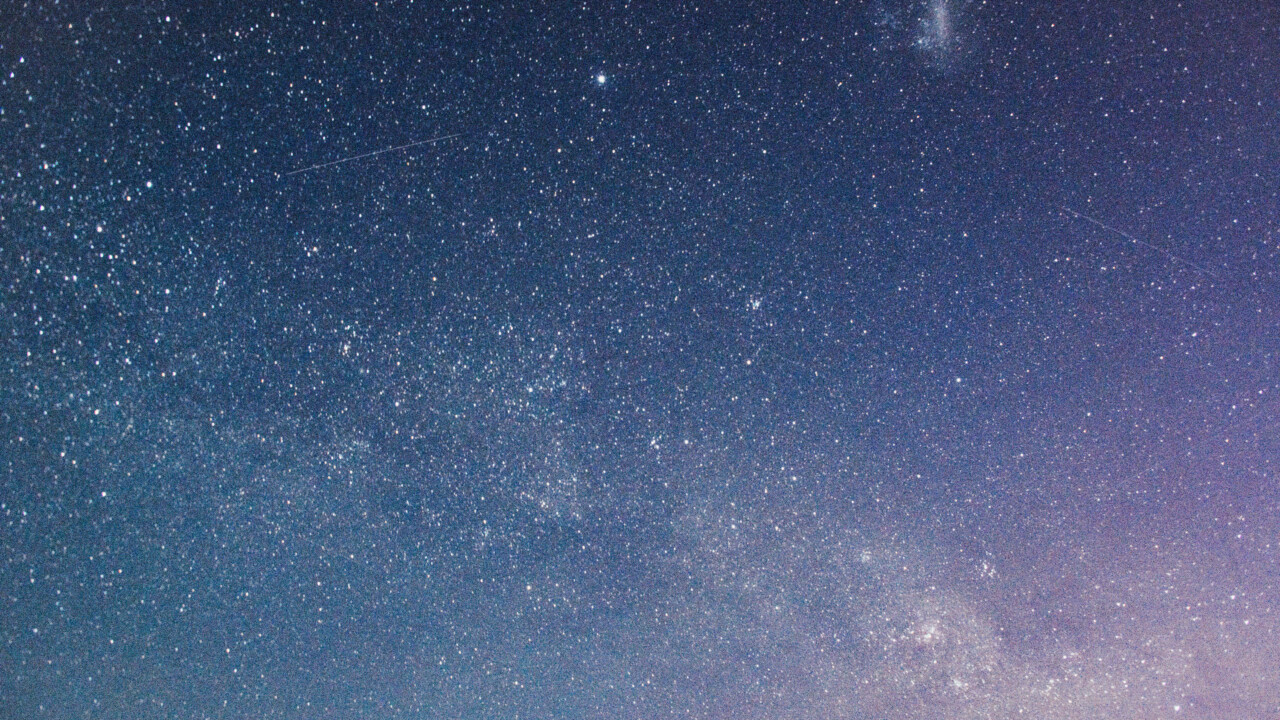
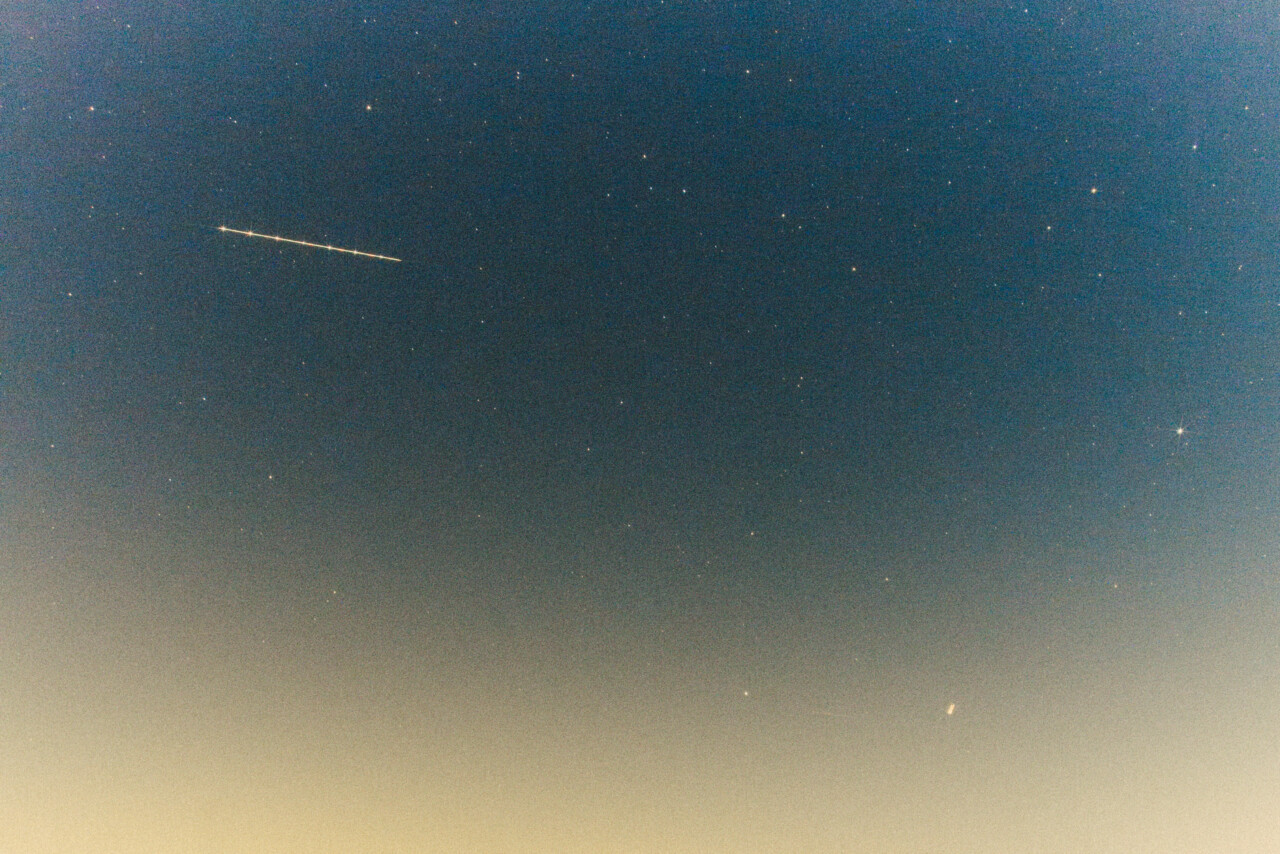
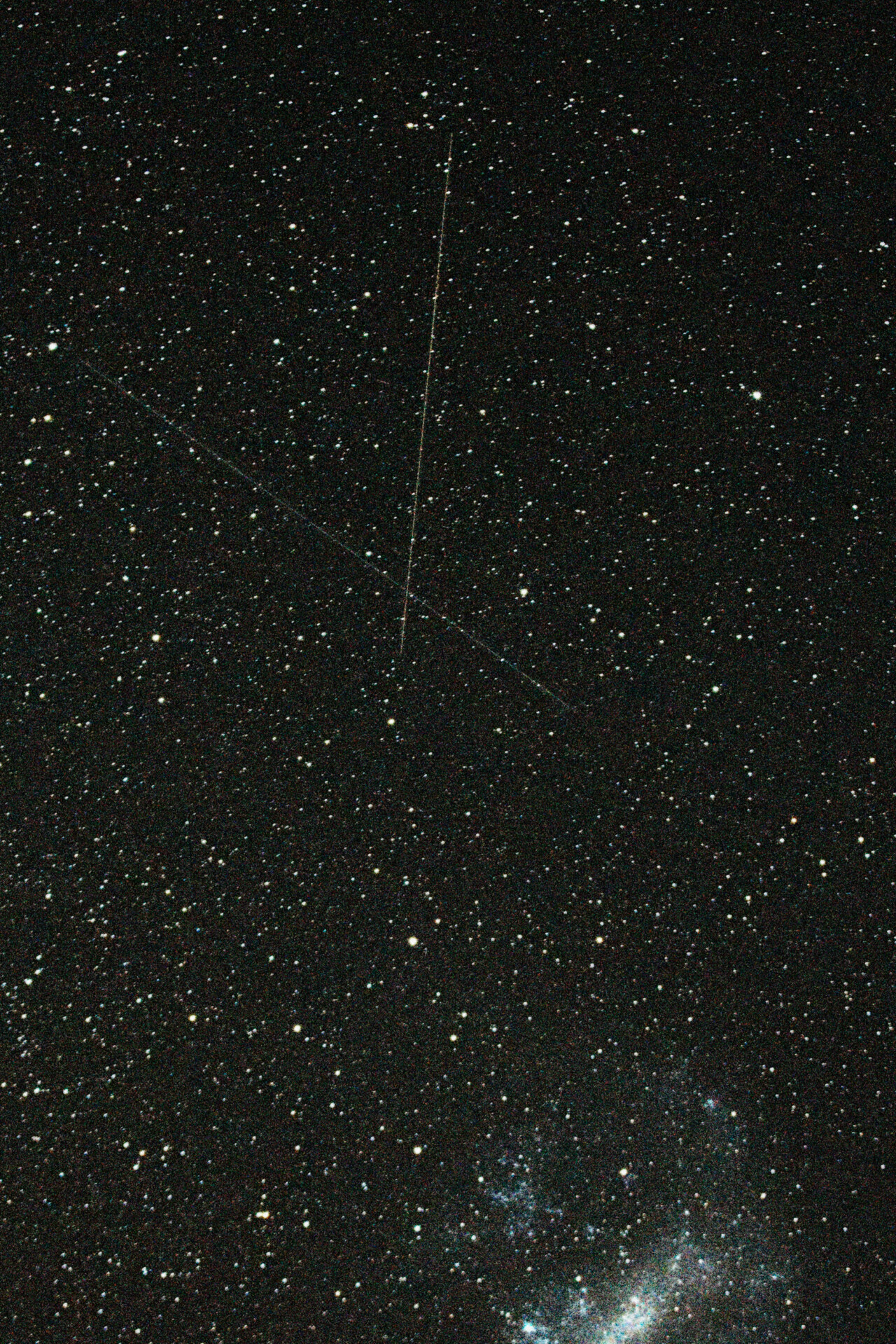
The size and number of these proposed data centers have also alarmed astronomers, who already contend with trails from the roughly 15,000 satellites in orbit streaking across wide-angle images of the night sky. “Even with the mitigations SpaceX has made to make the satellites fainter, with 1 million of them you will see more moving satellites than stars and no longer see constellations,” said Jonathan McDowell, a leading astronomer and astrophysicist.
“When you get this many satellites it makes it very hard to do astronomy from the ground, which is more than annoying if you’re looking for an asteroid that is heading our way and could kill us,” he said. Capper said a fleet of large data centers with vast solar wings could also obscure familiar patterns in the night sky and “cause havoc in the skies.” “If Elon Musk gets his way, you may never see another star again,” he warned.
An even greater concern for critics is what happens when satellites reach the end of their roughly five-year lifespan. To avoid adding to the mass of space trash already circling Earth, operators like Blue Origin and SpaceX would likely allow them to burn up during atmospheric re-entry.
But that process is already leaving traces. Burning rockets and satellites release particles containing soot, rare metals, and aluminum into the upper atmosphere, and those emissions could increase dramatically if space-based data centers become widespread. The environmental consequences remain uncertain. But some researchers have raised concerns that these particles could damage the ozone layer, which shields Earth from ultraviolet radiation, or trap heat in the atmosphere and contribute to warming.
“Vaporization is a terrible, terrible idea,” said Capper. “The best-case scenario is that you get to breathe that data center up your nose, all of the plastics, all of the metals.” Environmental groups and astronomers have filed objections to SpaceX’s FCC application, pointing out that replacing 1 million satellites every five years could increase the rate of debris re-entry from a handful of objects each day to roughly one every three minutes.
“There is more metal from our satellites staying at the upper levels of the atmosphere than we previously thought, and it just floats around like dust,” said Donovan. Much of that material has accumulated during the relatively short satellite era, he added, outweighing the billions of years of accumulated metals from meteorites entering the atmosphere. “It’s a cause for concern.”
The worst-case scenario is more immediate: larger pieces of debris reaching the ground. It already happens occasionally. In 2024, a piece of the International Space Station crashed through the roof of a house in Naples, Florida. And pieces of a SpaceX rocket last year rained down on Poland. “A land-based data center can’t fall on your head,” Capper said. “If one falls in this way, upon a city or in the ocean causing a tsunami, we are in big trouble.”
In the future, space-based recycling systems could potentially reduce the need to continually discard aging satellites. For now, however, Capper argues that there are no good options. Even moving obsolete satellites farther away would make us “giant historical jerks” passing the problem on to future generations, he said.
“When you have a million satellites rather than a few thousand satellites, you are going to have more incidents,” Donovan said. “If it’s true that we have a problem with the ozone layer from this, then the civilizational decline from AI could come, in fact, from re-entering satellites. That is what could be the thing to do us in. Which would be very bad.”
SpaceX did not respond to questions about the concerns surrounding its space data-center ambitions, but it previously told the FCC that while some debris could reach Earth, it should be harmless. The company has also developed a collision-avoidance system called Stargaze, which it says exceeds industry standards and will be made available to other satellite operators free of charge.
But SpaceX is only one player in a rapidly industrializing frontier. Companies are pursuing new satellite constellations, mining operations for rare metals on the moon and asteroids, and giant mirrors designed to reflect sunlight toward Earth. Closer to the planet, in the upper atmosphere, others are considering forms of solar geoengineering in which reflective particles would be dispersed to artificially cool the climate.
“That may be the central environmental question facing space: Industrialization is accelerating faster than the rules designed to govern it.”
Governments are expanding their ambitions, too. In September, the U.S. government announced it now has weapons in space alongside Space Force, which oversees military satellites responsible for GPS, weather data, and communications to ensure the country is “prepared to fight, endure and win … from the seabed to cislunar space,” according to Gen. Dan Caine, chair of the Joint Chiefs of Staff. China, meanwhile, has accelerated rocket launches and developed parallel broadband and GPS systems in orbit.
“Elon is leading the pack, but there is a pack—and people underestimate how China is rapidly commercializing its space effort. You’re not going to solve this unless they are at the table,” McDowell said. The broader challenge, he added, is that “we are moving to a more industrialized space and we need to understand how to govern and regulate that for the interest of all humanity. Rather than just for a few billionaires or other interests.”
That may be the central environmental question facing space: Industrialization is accelerating faster than the rules designed to govern it.
The Outer Space Treaty, signed in 1967, still undergirds international space law, prohibiting weapons of mass destruction in orbit and protecting the free, peaceful exploration of celestial bodies. But while United Nations forums have started grappling with more modern questions, from space debris and orbital traffic to commercial resource extraction and activity on the moon, the international framework has struggled to keep pace with an era of rapid commercialization.
“We’ve never had to worry about these things before, but we need to better manage what’s up there now,” said Michelle Hanlon, an expert in space law at the University of Mississippi. “It takes a colossal time to agree on anything, but at least everyone’s at the table still.”
One proposal is a version of the Conference of the Parties, or COP, for space. COPs are best known as the annual climate negotiations where governments and civil society gather to hammer out agreements on how to tackle the climate crisis. Progress has often been tortuous, but the process has at least created a recognizable framework for negotiating rules around a shared global resource.
“COP doesn’t have the power to implement taxes, but it has the power to get nations talking, which is what space needs,” said Ely Sandler, a Harvard University academic who has proposed space COPs. “You need to get agreed rules of the road, and it’s in everyone’s interest to not have satellites collide. The tragedy of the commons is easier to solve in space than with climate change.”
Still, amid a world fractured by war, geopolitical rivalry, and economic strain, Sandler acknowledges that governments are hardly well-positioned to strike major new agreements. “A conference of the parties under the auspices of the U.N. seems vanishingly small,” he said. “But we haven’t even had any attempts at space regulation since the 1970s. I think it’s possible for countries to at least try to make some progress.”
Environmental rules will need to catch up before the next phase of industrialization becomes entrenched. Some advocates have proposed adopting a national parks-style approach to parts of space, safeguarding places such as Mars’ vast canyons, Mercury’s salt glaciers, and Saturn’s famous rings from development.
Space is, in its own way, the ultimate wilderness. To study it is often to want to explore it, but there is also a kind of cosmic balm in simply looking: the humbling sweep of stars and planets unfolding across the universe. For now, at least, there is still time to imagine a different relationship with this frontier. It can still be imagined as a fresh start—one in which humanity avoids repeating some of the environmental mistakes it has made on Earth.
To Capper, that possibility, along with the more fecund treasures of our own planet, is worth fighting for. “It’s not realistic to expect AI to go away; if it can solve human poverty, then I’m all for it,” he said. “But we need a lot more awareness that space is an ecological resource, too. It’s hard to get space environmentalism on the agenda when there are so many problems on Earth, but we need to do so. And I think we can do that.”
Join our membership community. Support our work, receive a complimentary subscription to Atmos Magazine, and more.
A New Home for Data Centers: Space?