Artwork by Atmos
words by miranda green
When President Trump last summer unveiled an executive order to accelerate federal permitting of data center infrastructure, he wrote that he had “inaugurated a golden age for American manufacturing and technological dominance.”
The United States currently has more than 4,700 operating data centers and more than 1,500 additional facilities in various stages of development.
But matching the rapid expansion of data centers is the growing outrage over them.
Seven in 10 Americans oppose AI data center construction in their communities, according to a Gallup study conducted in March. And the opposition transcends party lines: 63% of Republicans and 75% of Democrats oppose them to some degree.
Now, with the midterms less than two months away, politicians in both parties are taking stock.
“It’s a totally cross-partisan rebellion,” said Will Lawrence, a Democrat who won Michigan’s Democratic congressional primary in August, said during a July press call. “That’s a place that you can fight from when you realize that everybody across the political spectrum in power is united.”
Data centers may feel synonymous with AI, but their roots stretch back decades. One predecessor was ENIAC, the room-sized computer built at the University of Pennsylvania for the U.S. Army during World War II and unveiled in 1946.
The internet—and later cloud computing—fueled a huge expansion of the facilities needed to store and process data. But AI has changed the scale and visibility of that infrastructure.
The release of ChatGPT in 2022, followed by a wave of competing AI models, unleashed a scramble for computing power. By the first half of 2025, data-center capacity under construction in major North American markets was more than 60% higher than just 18 months earlier. Nearly three-quarters of that unfinished capacity was already spoken for.
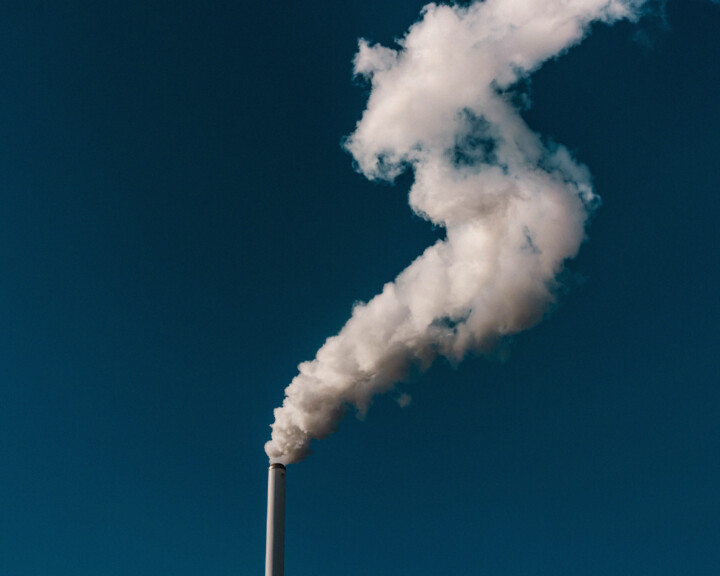
Suddenly, an industry most people rarely thought about is showing up in communities across the country—along with enormous electricity demands, insatiable water consumption, and harmful emissions and pollutants—to say nothing of the potential for data centers to drive utility bills higher than ever before.
Much like solar and wind developers before them, technology companies including Amazon and Meta are jockeying for suitable land for data centers—and encountering some familiar resistance.
Except data centers are quickly becoming the least popular energy facilities. Local data center fights now outnumber those over wind farms in the U.S., according to data from Heatmap Pro. And when it comes to nuclear power plants, fewer people oppose their construction nearby (53%) compared to the nearly three-quarters of Americans who oppose a data center being built in their area, according to Gallup.
And something else stood out to me in the poll: Much of the concern is environmental.
Forty-six percent of Americans said they worried a great deal about the environmental impact of AI data centers. Half worried about their use of resources, including water, electricity, and farmland; 16% cited pollution.
Environmental issues don’t always drive voters to the polls. But data centers are proving to be a kind of undercover climate and environmental issue—one that resonates across the country.
Between January and March, opponents successfully blocked or delayed 75 data center projects worth nearly $130 billion, largely through local ordinances. In July, New York became the first state to impose a moratorium on new hyperscale data centers, instituting a one-year pause while it develops new regulations.
And state lawmakers are moving at a remarkable pace. By mid-July, they had introduced at least 375 data-center bills this year—more than in the previous three years combined. Roughly three-quarters sought to restrict the industry in some way.
And the backlash has increasingly moved onto the ballot.
Candidates in New York, New Jersey, Virginia, and Georgia ran last year on electricity affordability and won. This summer, Democratic congressional candidates Melat Kiros in Colorado, Will Lawrence in Michigan, and Abdul El-Sayed, the Democratic Michigan Senate nominee, made data centers part of their campaigns. Kiros won the Democratic primary for Colorado’s 8th Congressional District, Lawrence won the Democratic primary for Michigan’s 13th Congressional District, and El-Sayed defeated U.S. Representative Haley Stevens in Michigan’s Democratic Senate primary.
All three ran as challengers to the party establishment, pairing opposition to data-center tax breaks and unchecked development with platforms focused on lowering utility bills, protecting water and farmland, and requiring technology companies to pay their share of infrastructure costs.
The issue is also costing sitting officials their jobs.
Last week in Independence, Missouri, nearly 70% of voters recalled a city council member who had backed billions of dollars in tax incentives for an AI data center. Two other council members who supported the incentives lost races earlier this year.
Democratic politicians may have criticized data centers earlier, but Republicans recently made a sharp pivot of their own.
A Washington Post analysis of 4,300 social media posts and newsletters from politicians found Republican messaging about data centers turned sharply negative in the last six months. Democrats shifted toward criticism last year.
The change is notable. Data centers were once routinely promoted as job creators and economic-development wins. Now, Republicans are attacking Democrats for being too friendly to them.
In Wisconsin, Republican gubernatorial candidate Tom Tiffany accused Democratic opponent David Crowley of being soft on data centers and promised to end their tax breaks. In Pennsylvania, Republican gubernatorial nominee Stacy Garrity has called Democratic Gov. Josh Shapiro “the biggest data center cheerleader in the nation.”
That puts some Republicans at odds with Trump, who remains an enthusiastic supporter.
“The only reason that communities throughout the U.S.A. should not want Data Centers is if they want to end up being backwards and poor,” Trump wrote recently on Truth Social. “If they want to be successful and rich, with far lower taxes and jobs all over the place, let Data Reign.”
Still, even Trump has acknowledged the political divergence. Last month he said Republican candidates who oppose data centers don’t need to follow his lead.
Earlier this year, it would have been hard to imagine data centers becoming an issue politicians from both parties competed over to sound more skeptical.
That doesn’t mean they agree on what to do about them. But it does suggest politicians are hearing the same message from voters: The AI boom may be national, but its costs are increasingly felt locally.
Want me to look into The Understory of something? Send me an email!
Correction,
September 14, 2026 10:55 am
ET
The story has been updated to correct the name of the politician who Abdul El-Sayed defeated in Michigan’s Democratic Senate primary, which was previously written as Sen. Gary Peters. The correct name and title should be U.S. Representative Haley Stevens.
Join our membership community. Support our work, receive a complimentary subscription to Atmos Magazine, and more.
Welcome to the Data Center Election