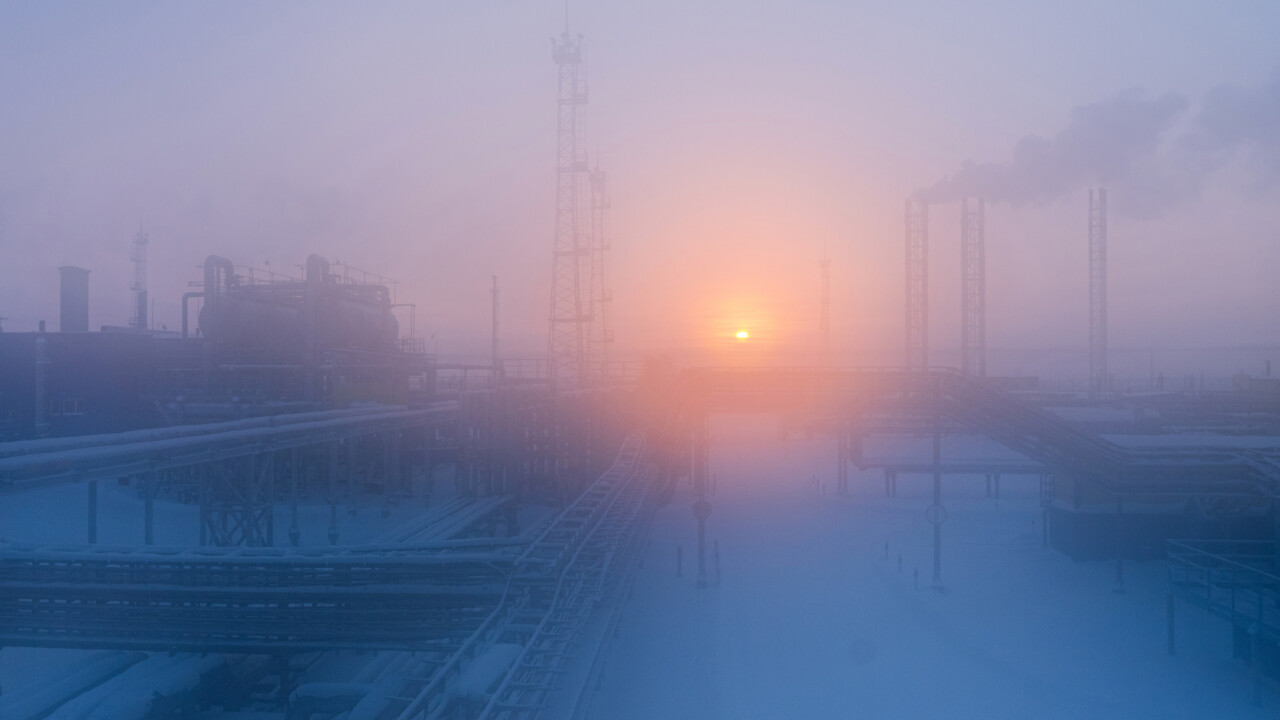
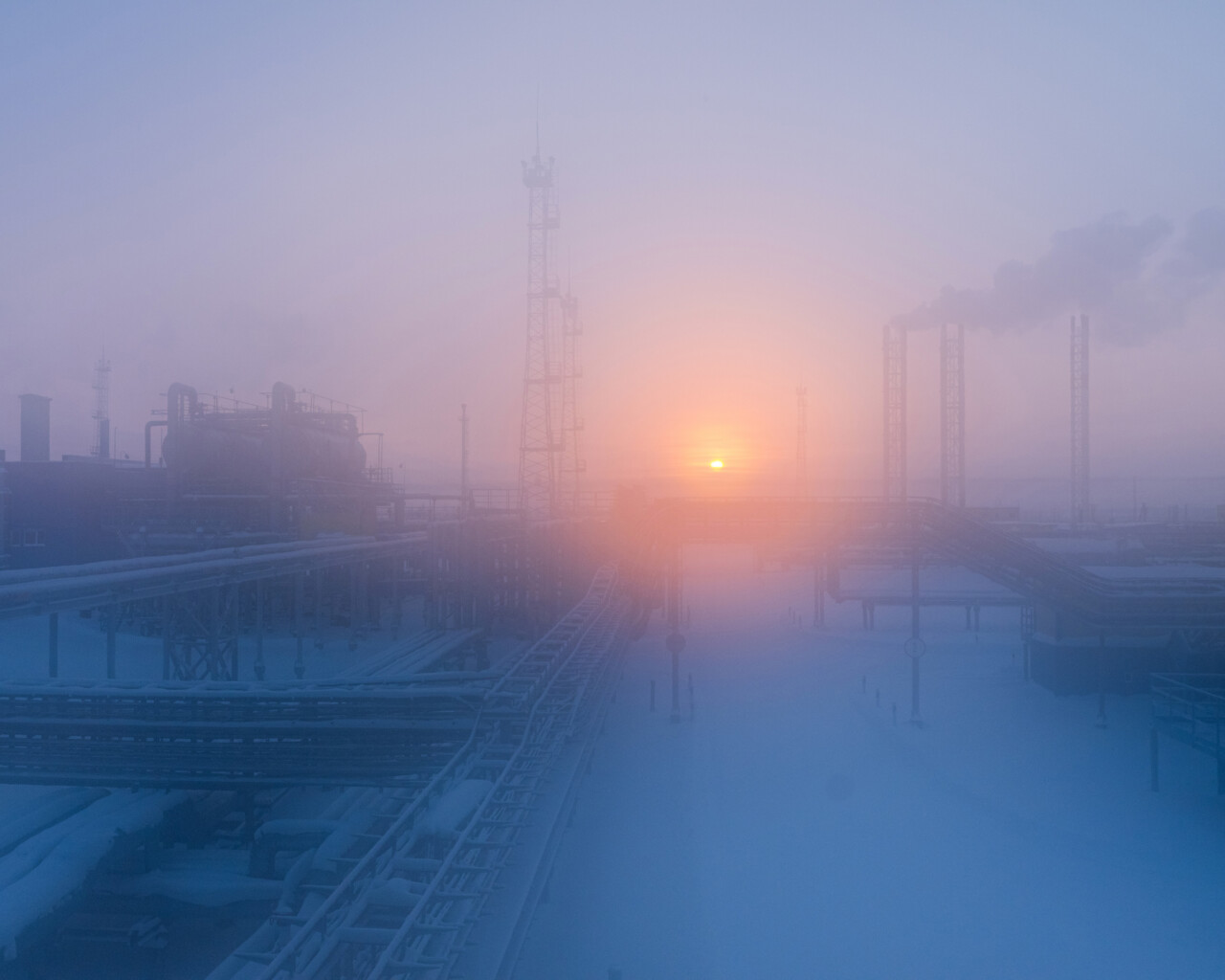
Photograph by Vostock/Getty Images
words by miranda green
Back in September 2024, Donald Trump told a crowd at a campaign event: “We’re going down and getting gasoline below $2 a gallon, bring[ing] down the price of everything from electricity rates to groceries, airfares, and housing costs.”
At the time, the national average price of gas was around $3.30 a gallon. Today, it’s $4.33.
Electricity rates are also up across the country, and airfares rose 23% in the past year. These increases are the result of two attacks Trump made since taking office: one on Iran and another on clean energy infrastructure.
We are now nearly eight months into a war in Iran. And despite many attempts to negotiate an end to the conflict, there is no clear end in sight. The Strait of Hormuz, through which much of the Middle East’s crude oil and petroleum products must pass, remains under Iranian bombardment. The conflict has heightened gas prices globally.
While some positive climate impacts have come from our new, oil-strained reality—used electric vehicle sales are up, and countries are increasing their investments in solar and wind—the United States under Trump still clings to its oath to oil.
That commitment was on full display last Friday, when the U.S. announced a temporary lifting of sanctions on Russian diesel to bring the fuel to American and global markets and lower prices.
I find it hard to read the headlines without thinking it didn’t have to be this way.
The decision to bomb Iran aside, the U.S. has had several opportunities to break free from its reliance on fossil fuels, both the kind drilled here and abroad. But instead of seeing our overreliance on oil as a reason to invest in clean, U.S.-born technology, Trump continues to assault it.
The government in the past year eliminated tax breaks for new electric vehicles and brokered million-dollar deals with offshore wind developers to halt the construction of about a dozen projects. The Interior Department opened up huge swaths of pristine wilderness and federal waters to oil development, and redirected investment toward more liquid natural gas production and accumulation of assets at home and abroad. The same department is now reviewing its previous approval of a massive solar farm on public land in Nevada.
In August, Trump announced the U.S. would control 65 billion barrels of oil in Venezuela, a country the U.S. invaded last December. Last month the U.S. signed a deal with Greenland that included “minerals cooperation.” Trump wrote on Truth Social that the deal included “massive oil, gas, and mineral exploration,” though the Greenland government downplayed the characterization.
Despite all of this, oil prices in the U.S. remain at an all-time high. Where I live in California, gas is averaging $6.22 a gallon. Even with the administration’s “drill baby drill” ethos and calls for national security, the president has had to tap our Strategic Petroleum Reserve multiple times. And now, that reserve is low.
The administration had to pivot, giving us the latest deal with Moscow.
When Trump announced last week on Truth Social that the U.S. was working on a deal with Russia bring in shipments diesel fuel, diesel prices averaged $6.27 a gallon nationally—$2.60 higher than the same time a year ago.
“Between our TOTAL CONTROL of the Strait of Hormuz, and this great announcement on Russian Energy, Diesel Prices for Americans and, indeed, the World, will be COMING DOWN, IN RECORD NUMBERS, AND FAST!” Trump wrote on Truth Social.
The sanctions he lifted were placed on Russia following the country’s 2022 invasion of Ukraine. Now Trump is asking Ukraine to stop hitting Russia’s oil refineries—because he wants the oil.
The announcement and request did not go over well.
Russia’s oil and gas accounts for nearly a third of its state revenue, which means it significantly bankrolls its war on Ukraine. The Centre for Research on Energy and Clean Air estimates Russia has made more than $993 billion in revenue from oil and gas exports since the war began.
Ukraine’s President Volodymyr Zelensky called Trump’s “energy ceasefire” a deal with Russian President Vladimir Putin. After initially halting attacks on Russia for three days, Ukraine reportedly attempted an attack on a Russian refinery Thursday evening.
Members of Congress on both sides of the aisle say the administration’s lifting of sanctions could be a violation of the law following Congress’ 2022 Ending Importation of Russian Oil Act.
Republican Sen. Thom Tillis of North Carolina told NBC’s Meet the Press he believes “there’s a legitimate case for saying the president’s not following the law.”
Senate Democrats voiced their shock in a joint statement: “After launching a war with Iran that has spiked gas and diesel prices for every American, the President is resorting to desperate ‘deals’ with a murderous dictator to attempt to clean up his own mess.”
They added: “This is what failure looks like.”
A bipartisan group of seven senators sent a letter to Trump last weekend asking him to reverse course.
Under the law, the sanctions may only be lifted following specific circumstances.
“The president is supposed to make this determination that Russia has withdrawn its forces and doesn’t pose any further threat of aggression. These are fairly high standards,” Edward Swaine, a research professor at George Washington University Law School, told TIME. He added that the statute is meant to afford Congress “adequate notice to allow it to generate a joint resolution of disapproval.”
Trump announced that Russia would immediately supply 300,000 metric tons of diesel to American and global markets, but it’s unclear what portion would come to the U.S.
Some lawmakers said they expect the release to do little to ease gas prices here.
Trump’s announcement comes just weeks after he signed into law a sweeping sanctions bill against Russia that included sanctions on the energy industry. But there’s another reason Trump’s trying to tamp down gas prices.
The midterm elections are less than a month away. And as the country’s frustration with high prices escalates, Republicans are worried their chances of holding onto the House and Senate are diminishing.
Trump’s 2024 reelection was partly built on promises to lower gas prices. The midterms are looking poised to hold his feet to the fire.
Want me to look into The Understory of something? Send me an email!
Join our membership community. Support our work, receive a complimentary subscription to Atmos Magazine, and more.
Trump Promised Cheap Gas. He’s Turning to Russia To Get It.