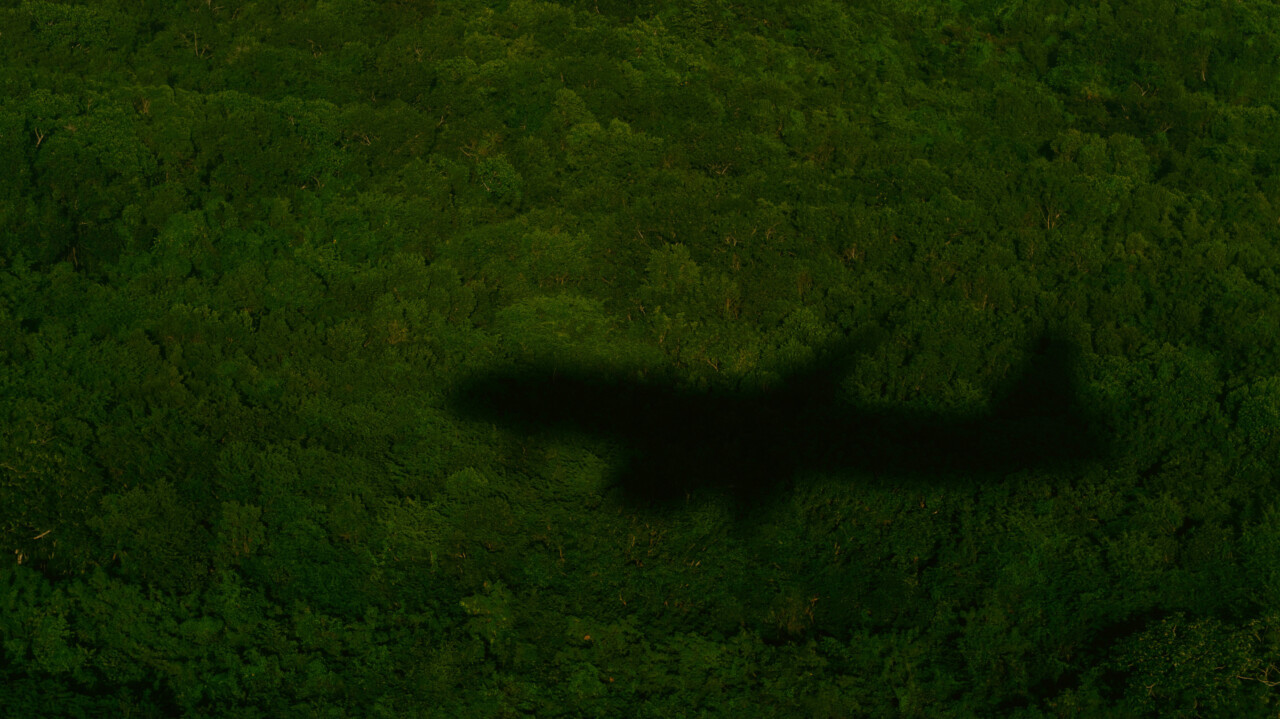
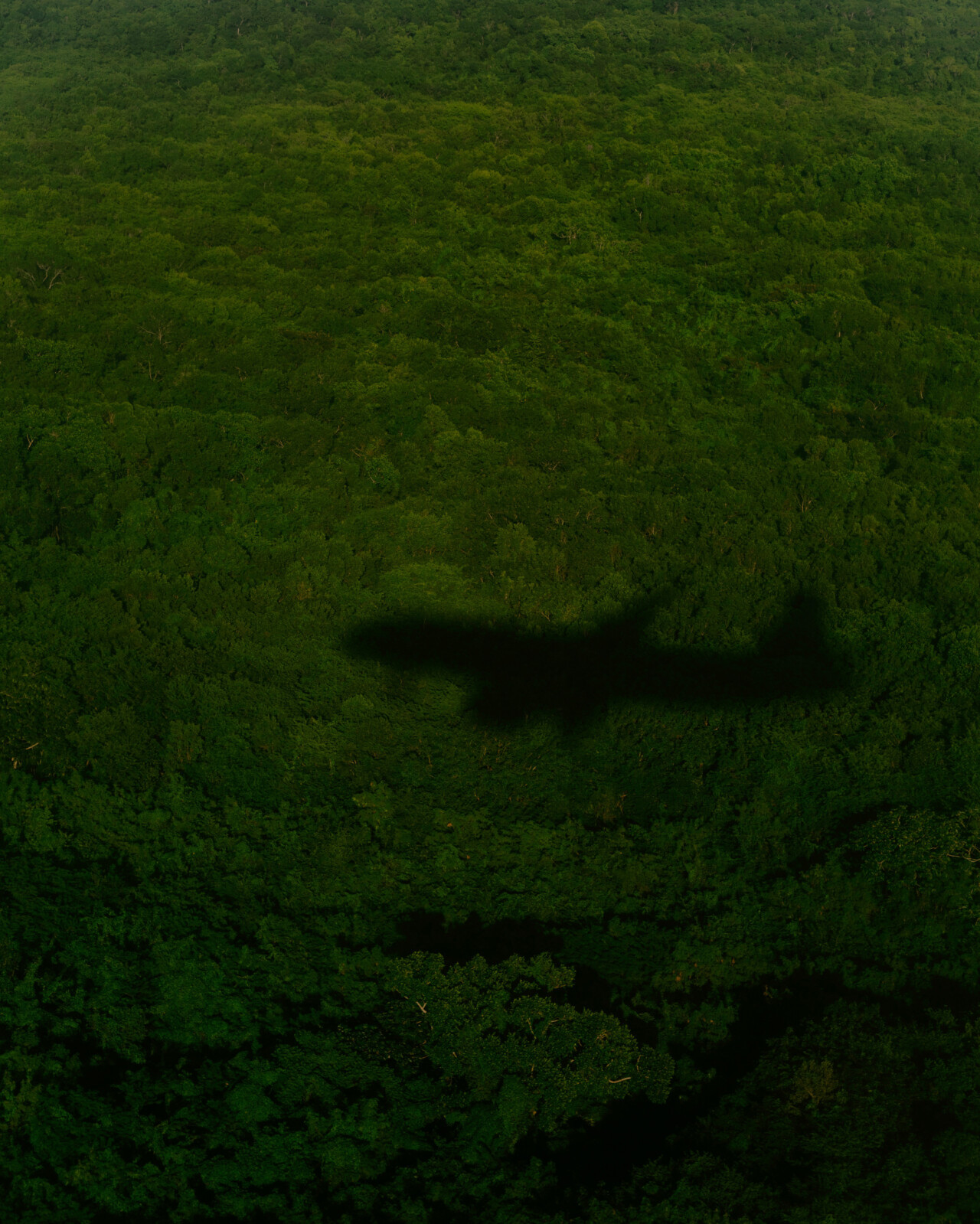
Photograph by Kristin Bethge / Connected Archives
words by miranda green
If your algorithm is anything like mine, your social media feeds have been serving up photos of influencers spending the height of summer sailing across Seattle’s crystal clear lakes, hiking hut to hut on Swiss trails, and jumping into calm turquoise bays around Mallorca.
And if you’re anything like me, the main thing holding you back from jumping on the bandwagon is the airfare.
Thanks in large part to the ongoing war in Iran, ticket prices are astronomical. Airfares were nearly 27% higher this past June than during the same month last year. And workers desperate for a summer respite and a bit of fun are not the only ones feeling the pain—airlines are reeling, too.
Delta told investors it had absorbed “the highest quarterly fuel expense in our history.” United Airlines said on its quarterly call that its fuel bill was up 84% year over year. Alaska Airlines said it lost almost $500 million in the first half of the year, while American Airlines said last week that, despite record revenue, it expected to break even this year.
The surge in fuel prices has had the unexpected effect of driving more people to trade their combustion engines for electric or hybrid vehicles. But when it comes to planes, there’s still no clear, scalable, and sustainable alternative.
There’s no debate about the significant climate impact of air travel.
Globally, aviation accounts for 2% of all carbon emissions and 12% of the carbon emitted by transportation. Climate activists like Greta Thunberg opt to travel by boat when possible—or not at all. (And we are not even going to get into how much less sustainable private aviation is than commercial air travel.)
Traveling without a plane is possible, but it’s severely limiting. It reminds me of a story a friend of mine wrote for National Geographic about attempting to spend an entire week on vacation in Belize without using any single-use plastics. She learned that shampoo bars exist and that water filters work just fine in place of sealed water bottles—as long as you are OK with the aftertaste.
Eliminating air travel involves a similar trade-off for the sake of the planet, but it feels like one we shouldn’t have to make. After all, airlines have been touting their use of “sustainable” fuel for some time.
In 2023, United Airlines ran a marketing campaign appointing Sesame Street’s beloved Oscar the Grouch as its “chief trash officer.” The ad promoted the company’s use of leftover cooking oil and grease to produce sustainable aviation fuel. “Good leads the way,” its tagline proclaimed.
The Department of Energy defines SAF as “an alternative fuel made from non-petroleum feedstocks that reduces air pollution.” It’s essentially biofuel—frequently made using corn or soybean oil—mixed with conventional jet fuel. That means it still emits carbon when burned, albeit less of it.
Companies have made green pledges based on its use. United, for example, has promised to reduce its greenhouse gas emissions 100% by 2050. Alaska Airlines and Hawaiian Airlines offer a rewards program that gives 500 status points for every $100 contributed toward SAF.
Noticeably absent from the Energy Department’s definition is any requirement that SAF come from used vegetable oil or waste, as United’s ad suggested. In the U.S., much of the sustainable fuel used for flights comes directly from fields in the form of unused vegetable oil. World Energy, one of the country’s top producers of SAF, describes its biofuels as “domestically produced” and “made entirely from agricultural feedstocks,” including corn, soybean oil, and crop residues.
That’s a problem, Michael Grunwald, author of We Are Eating the Earth, told me. Most SAF uses a potential food source, pushing the farming industry to feed the population through other means. That can create pressure to cut down more forests for arable land, releasing vast quantities of carbon dioxide into the air—an entirely unsustainable process.
Converting food into fuel might seem greener, but in practice, it can increase global hunger and drive the plowing of more grasslands and wetlands. “People ask me, ‘Well, if SAF is such bullshit, then what should people use?’ said Grunwald. “I’m like, ‘jet fuel,’ and they say, ‘But it’s terrible.’ I’m like, ‘I know, but everything else is worse.’”
Biofuels are among the few fossil-fuel alternatives Trump’s administration supports, in large part because of the agricultural lobby’s deep pockets and vast voting power.
As Grunwald pointed out, when Trump essentially usurped Biden’s signature Inflation Reduction Act with his One Big Beautiful Bill, he eliminated nearly every green energy initiative except farm-grown jet fuels. The bill also barred officials from considering land-use emissions when determining which biofuels qualify as sustainable—a carveout Grunwald likened to “banning consideration of smokestack emissions when calculating which power plants are sustainable.”
Despite the various corporate pledges, SAF remains a nearly infinitesimal share of the market: Just 0.6% of the world’s aviation fuel in 2025 was sustainable. The International Civil Aviation Organization has counted just 360,000 commercial flights using SAF across 46 different airports, mostly in the U.S. and Europe. For comparison, roughly 44,000 planes take off each day in the U.S alone, according to the Federal Aviation Administration.
That’s largely because producing a reliable supply of fuel at the scale aviation requires is no small feat. According to an analysis by the right-leaning think tank, the American Enterprise Institute, to supplement just 15% of U.S. jet fuel demand with SAF by 2030 would require 41 million acres of soybeans—nearly half the total area planted for the crop in 2022.
Hydrogen has also been proposed as an alternative to jet fuel, but environmentalists have been quick to call it a false solution. As with hydrogen-powered cars, critics point out that the energy required to produce blue or green hydrogen can largely negate the climate benefits of burning it.
Scientists are also reportedly developing fuels made from algae, biomass, and municipal waste, but whether these alternatives can be scaled for commercial use remains an open question.
Cheaper airfare would be a major benefit, but cleaner, guilt-free travel is the real prize. And while progress has been slow, advances in technology are getting us closer to that future. Aircraft engines have become more fuel-efficient. And thanks to major gains in battery-storage technology, electric air travel is no longer an idea only found in The Jetsons.
Just last month, Transportation Secretary Sean Duffy flew in an all-electric plane owned by BETA Technologies. The company was the first to land an electric battery-powered aircraft carrying passengers at New York’s John F. Kennedy International Airport last year. The aircraft—which takes off and lands vertically—is being marketed as a clean air taxi and as a cargo vehicle for delivery companies such as Amazon. The company says its planes can charge in 50 minutes for $13 and travel more than 300 miles at a time. Other small electric planes have been certified in Europe.
Today, battery-powered jets are not yet a reality for vacation travelers. But there’s hope that the technology could eventually be used for shorter routes.
As singer Olivia Dean put it in the title of her hit song: “Baby Steps.”
Want me to look into The Understory of something? Send me an email!
Join our membership community. Support our work, receive a complimentary subscription to Atmos Magazine, and more.
Can Flying Ever Really Be Sustainable?