words by Kendra Pierre-Louis
Photographs by Joe Cuccio
If the United States’ electrical grid were a highway, much of it would be clogged with bumper-to-bumper traffic.
The growth of data centers, along with the decarbonization-inspired push toward electrification of everything from heat pumps to electric vehicles, has driven up electricity demand. Across much of the country, many power lines are now “really close to capacity,” said Kevin Kircher, an assistant professor of mechanical engineering at Purdue University. “They can’t accommodate much more energy.”
Unless something changes, the problem is likely to get worse. A January assessment by the North American Electric Reliability Corporation—the nonprofit that oversees regional electrical reliability in Canada, the contiguous United States, and parts of Mexico—found that nine of the 15 grid regions in the U.S., or 60%, were at elevated or high risk of electricity demand outstripping supply by 2030. These grid regions serve some of the country’s most populated areas, including New York and Pennsylvania. In the short term, that imbalance can mean sending more power down transmission lines than they are rated to carry, risking equipment failure. Over time, it can cause power outages, especially during periods of peak demand.
But grid congestion is not uniform, and some regions have found ways to connect new sources of electricity more quickly. Experts frequently point to Texas, which has added more renewable generation and energy storage to its grid than any other part of the country. “Even though it’s Texas and the associated politics, there’s a massive amount of wind, solar, and battery power getting connected there,” said Rob Gramlich, president of Grid Strategies, a consulting firm that helps companies navigate the integration of low-carbon energy onto the grid.
The main bottleneck in expanding the country’s power supply is not generating electricity, but connecting new power plants, especially from renewable sources, to the grid. Known as generator interconnection, this process has become increasingly slow and expensive. If the country wants to keep the lights on, it must make those connections faster and more affordable.
To understand why connecting renewables is so difficult, it helps to understand that the contiguous United States doesn’t have a single electrical grid—it has three. The Western Interconnection covers most of the country west of Texas. The Eastern Interconnection covers most of the country east of Texas. And most of Texas runs its own grid, known as the Texas Interconnection. For the most part, the three systems operate independently. Electricity has a limited ability to move between the Eastern and Western interconnections, while Texas stands largely alone.
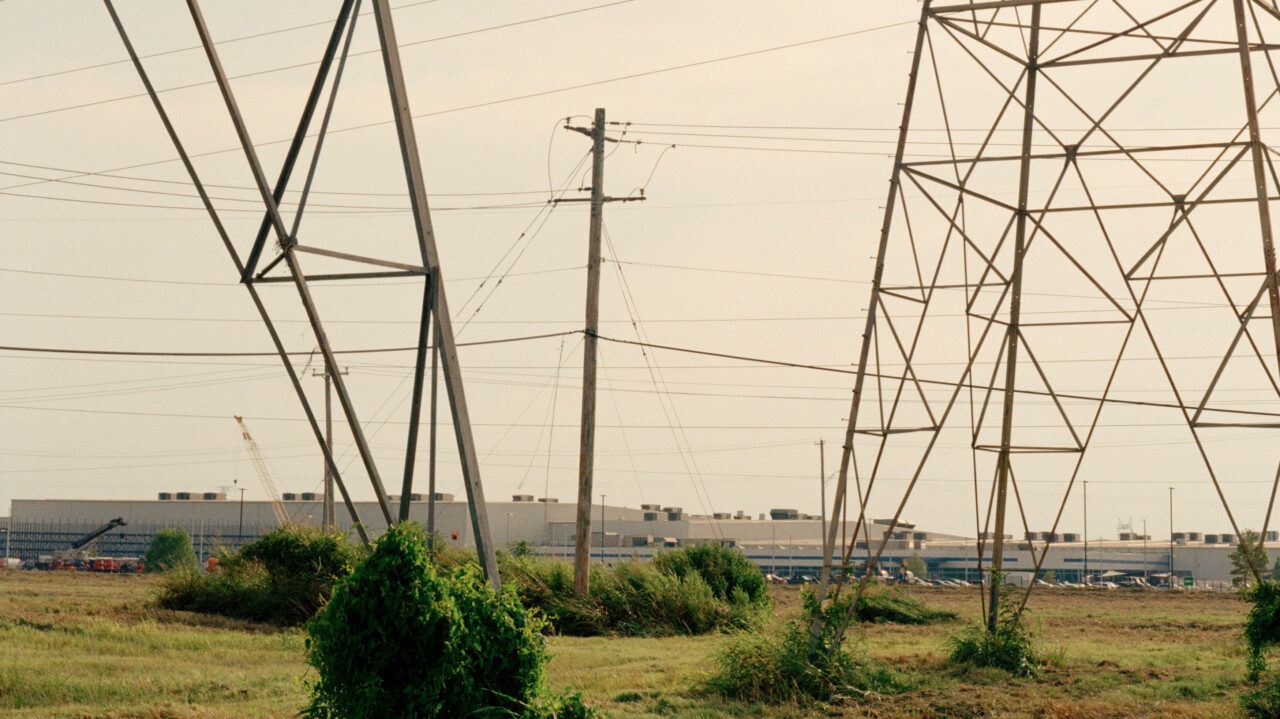
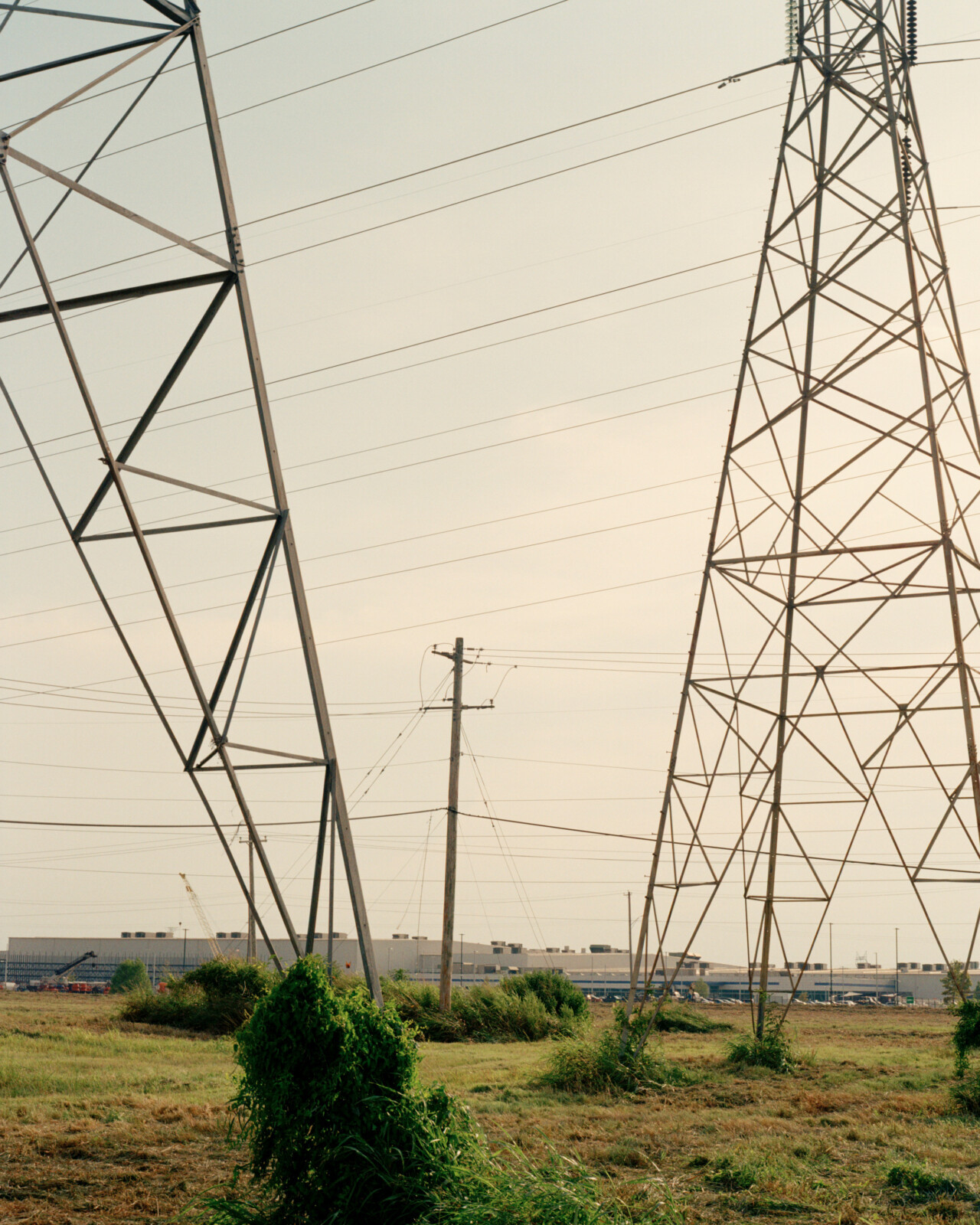
Connecting a new power plant means tying it into the high-voltage transmission lines—the lattice-like structures that run along highways and across open land—on one of those three grids, to transport electricity from the often rural areas where it is generated to the cities and other population centers where it is needed. But power producers can’t simply connect to those lines at will. They must go through an application process designed to protect the grid’s stability and reliability. And that system, Gramlich said, “was never designed to be able to handle this many requests.”
In the past, a handful of large gas plants might have applied to connect, leaving grid operators with relatively few proposals to assess. Solar plants, by contrast, can be built in many more places, and hundreds of renewable energy developers can submit their own applications.
“The process simply got overwhelmed by all of these players and all of these applications,” said Gramlich. The system was built for an era dominated by large power plants. Each proposed project must study how adding electricity will affect the wider regional network, which can span grids in 10 to 12 states. But the findings can quickly become obsolete as other projects enter or leave the queue.
“If you study that impact, but then a couple new generators apply to connect to the grid, that changes that analysis,” he said. “And if a couple other generators who were already in that interconnection queue decide, you know what, ‘I’m not actually going to go forward with this project, I’m going to exit from this queue,’ that changes it too. So, you have this chaotic process of generators coming in and out of the queue.”
All of this assumes that sufficient transmission capacity exists in the first place. From the 1970s through the 1990s, utilities spent heavily building out the electrical grid. But much of the excess capacity created during that period has now been used up. If a new generator wants to connect in an already congested area and a transmission line must be built or upgraded, the developer may be required to cover much of the cost. “You get to pay for a big part of that new line,” said Gramlich.
A massive solar plant in the desert Southwest might be able to absorb that cost. Smaller projects often cannot. “If I’m building a couple-million-dollar solar project and I have to pay half a million or a million for a distribution line to run to my plant that still could be enough at the smaller scale to kind of be a project killer,” said Kircher. This model is sometimes called “invest and connect,” and it governs more than 80% of active interconnection requests in the United States. Before a project can connect, developers may be required to pay for extensive studies and network upgrades.
Texas takes a different approach. ERCOT, the state’s primary grid operator, works under a “connect and manage” system, which allows generators to connect without first studying and funding every potential impact across the wider network. Grid operators then manage congestion as it arises. The result is that Texas leads the country in interconnections. A 2025 report by the Lawrence Berkeley National Laboratory found that, as a percentage of its peak power consumption, ERCOT reached more interconnection agreements in 2024 than any other U.S. grid operator. A similar approach has shown results in the United Kingdom. A reform introduced in 2010 to address a glut of offshore wind projects near Scotland reduced interconnection lead times by five years, according to a 2022 analysis.
In July, New Mexico Sen. Martin Heinrich introduced the Grid Connection and Congestion Management Act, which is intended to make the rest of the country’s grid operate more like Texas’. If passed, the bill would amend the Federal Power Act by requiring a “connect and manage” service known as Basic Access Service for Energy-Only Delivery, or BASED.
Catie Hausman, an associate professor of public policy at the University of Michigan, cautioned against drawing too broad a conclusion from Texas. The state’s grid is distinct from the rest of the country’s, with most electricity generation and transmission contained within its borders—a separation that became a liability in February 2021, when record cold and extreme weather overwhelmed the grid. Outside Texas, Hausman said, efforts to add new power generation are slowed by several overlapping barriers, including lengthy interconnection queues, limited transmission capacity, and permitting delays. “In Texas, none of them are there,” she said. “So, we can’t tell from Texas which barrier removal is the thing that did it or if it was a combination of barrier removals.”
And despite the large amount of renewable energy Texas is adding to its grid, NERC’s assessment found that supply may still struggle to keep pace with rising demand. That is partly because taking power off the grid—for a new subdivision or data center, for example—is governed by a separate process known as load interconnection. A large, new customer asks to connect at a particular point, and the utility must determine whether the local wires, substations, and transformers can handle the demand, or if they must first be upgraded.
The separation between the processes for adding supply and adding demand can create a mismatch. In Virginia, for example, the rapid growth of Data Center Alley has driven a sharp increase in electricity use while generation has lagged, contributing to higher prices across the Mid-Atlantic.
Elsewhere, the opposite problem exists. Wind energy has expanded so quickly in places like Iowa and Minnesota that wholesale prices can fall below zero during some hours, Hausman said. Meanwhile, wholesale electricity prices remain high on the East Coast. A better-connected grid could move more of that inexpensive power to the places that need it. “The renewables developers would see higher profitability in the places where it would make sense to build that wind, and consumers on the coast would see lower prices, which would be good for household budgets,” Hausman said.
Achieving that requires more than processing applications faster. It also requires long-term transmission planning: deciding where new power lines will be needed before individual projects arrive. In regions such as the East Coast, where population centers are dense and excess generation is limited, utilities “are currently earning fairly high profits on their generation assets because prices are high,” she said.
Greater connectivity could benefit consumers and wind producers in the Midwest, but it could reduce the profit margins of some East Coast utilities. Because regional transmission organizations often require the participation or approval of those utilities, research has found that some act to slow transmission planning and construction when it threatens their earnings.
“The main bottleneck in expanding the country’s power supply is not generating electricity, but connecting new power plants, especially from renewable sources, to the grid.”
This is especially challenging for renewables, because there’s a mismatch between where transmission lines were historically built—often to serve fossil-fuel or nuclear plants—and where renewable power is generated and used. “What’s really different today is that where it makes sense to build new power plants is where there’s a lot of wind and where there’s a lot of sun,” said Hausman. “And that’s not necessarily near big demand centers.”
Gramlich argues that part of the problem dates back to the early 2000s, when policymakers tried to create more competitive electrical markets, “by and large against the wishes of the utilities.” At the time, he worked for the Federal Energy Regulatory Commission. Utilities pushed for rules requiring each new generator to pay for any grid upgrades its project made necessary. Gramlich argues that they supported this approach because they “knew it would be expensive and complicated for these entrants.”
There is now a renewed effort to reform that system. Proposals include making interconnection faster and simpler, expanding transmission capacity, and bridging what is known as the Seam between the Eastern and Western Interconnections. Those changes could accelerate renewable energy development, make the grid more resilient to extreme weather, and provide enough electricity for an increasingly electrified economy. But reform faces resistance from companies and institutions that benefit from the status quo, and the costs of delay extend beyond climate targets and electricity prices. As pressure on the grid grows, so does the risk to public safety.
There is precedent for what happens when the system fails under pressure. On Aug. 14, 2003, unusually high temperatures across the Northeast sent electricity demand surging as millions of air conditioners switched on. Broader systemic failures, including a software bug in an Ohio control room, then set off a cascade that left 50 million people across the northeastern United States and southeastern Ontario without power. Depending on the location, the blackout lasted from four hours to two days. It caused the deaths of nearly 100 people, according to an analysis by the National Institute of Health, and caused roughly $6 billion in damages, or about $11 billion in 2026 dollars.
The necessary reforms are increasingly clear. Grid operators can streamline interconnection reviews and reduce the cascading restudies triggered when projects withdraw from or change position in the queue. Utilities and regional planners can build transmission based on anticipated future needs rather than waiting for individual generators to apply. New data centers and other large electricity users can be coordinated with new generation and local grid upgrades. Stronger connections between the nation’s fragmented grids could allow regions to share surplus electricity and respond more effectively to periods of extreme demand.
Texas and the United Kingdom suggest that interconnection delays are not inevitable. But extending those lessons across the United States will require changes to regulation, infrastructure planning, and the allocation of costs—and overcoming opposition from interests that profit from the existing system.
Most of us spend little time thinking about electricity outside of paying our bills or during a power outage. But it heats and cools homes, powers hospital equipment, and moves water through treatment plants. When the grid fails, the consequences are immediate and sometimes deadly. The question is no longer whether the system must be rebuilt for a more electrified future—it is whether the country can move quickly enough to rebuild it before the next crisis.
Join our membership community. Support our work, receive a complimentary subscription to Atmos Magazine, and more.
The Clean Energy Transition Has a Grid Problem. Here’s How to Fix It.