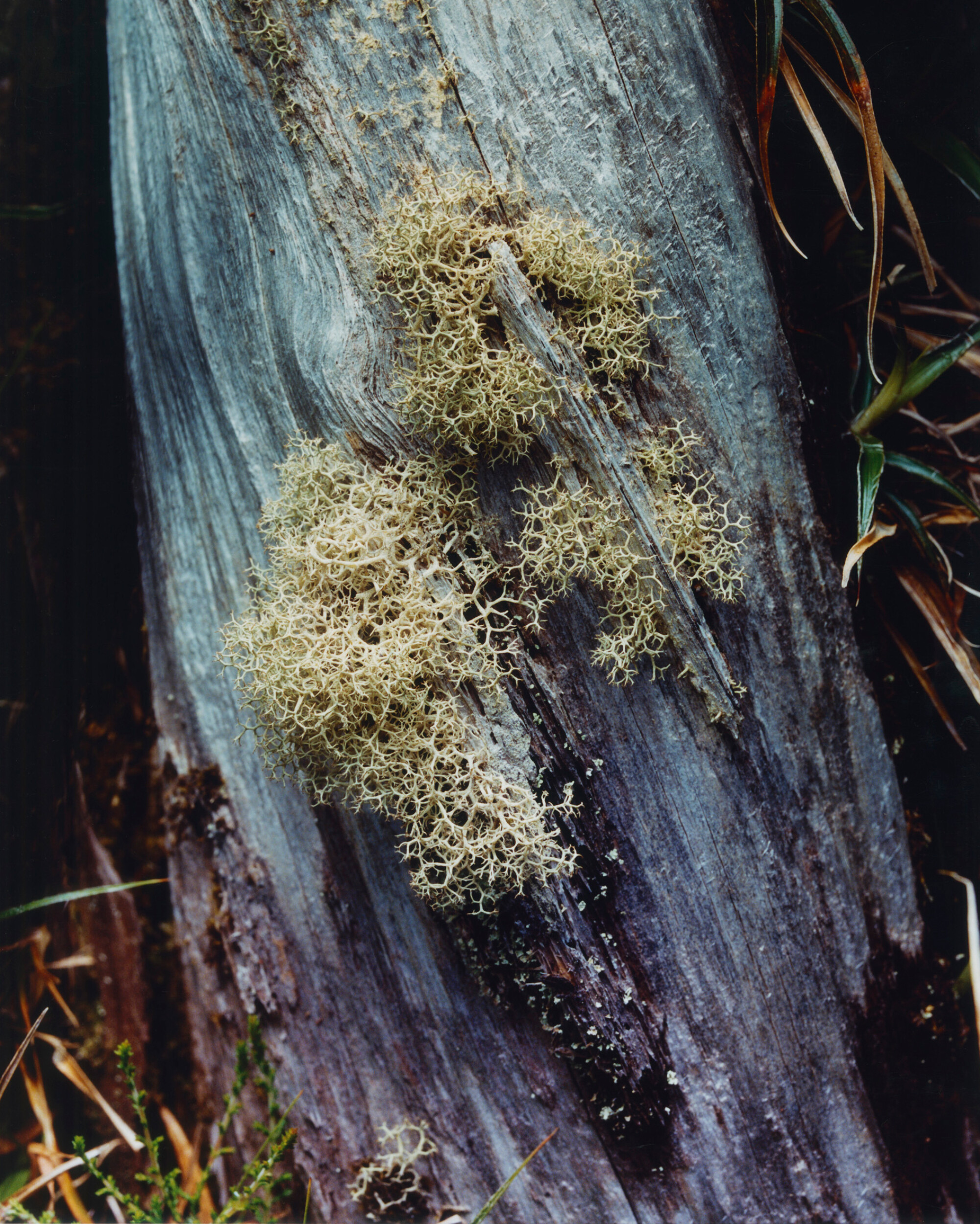
Photograph by Charles Negre
To never miss an episode of The Nature Of, be sure to follow here.
How do we stay open amid uncertainty? In this episode, Willow sits down with Maria Popova, writer and founder of The Marginalian, for a conversation about meaning, wonder, and the unknown. They explore Maria’s idea that “selfing” sits at the root of much of our suffering and how wonder can be an antidote. Moving between the scientific and poetic, the historical and the personal, they trace surprising connections across time in Maria’s new book, Traversal. This conversation is an invitation to loosen our grip on certainty and let ourselves be astonished by the marvels of existence.
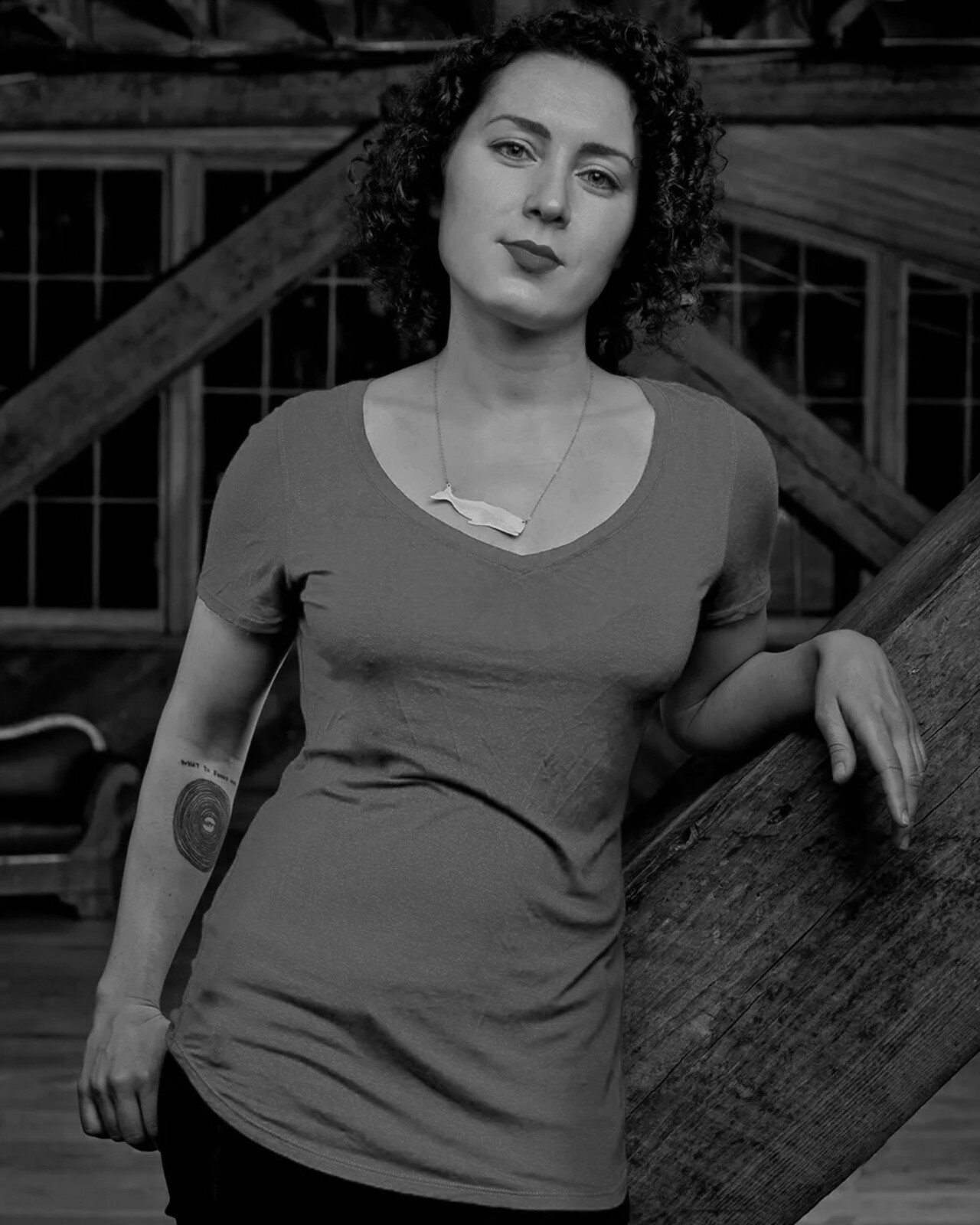
Maria Popova is the creator of The Marginalian—a wide-ranging record of the search for meaning, founded in 2006 and included in the Library of Congress permanent digital archive of culturally valuable materials. Her books and projects include Figuring, An Almanac of Birds: 100 Divinations for Uncertain Days, and The Universe in Verse.
Maria Popova
We are matter trembling with the longing for meaning. And whether we know it or not, we’re constantly making it with every little choice, everything we do as an attempt at meaning.
Narration
When I first met Maria Popova, neither of us knew who the other was, but we knew that we wanted to be friends. In getting to know her over the past six months or so, I have discovered one of the most brilliant minds on planet Earth. You may have encountered her words through The Marginalian, formerly known as Brain Pickings, which reflects a 20-year quest and a search for meaning. Maria and I have built a friendship on a shared love of science and poetry, the throughline of which is wonder.
Maria
We use science to find the truth and we use poetry to give the truth meaning. We can’t really be fully alive without these two wings of life.
Narration
I’m Willow Defebaugh, and this is The Nature Of, where we look to the nature of our world for wisdom and ideas that change the way we live. And this week’s conversation with Maria Popova is full of them. We dig into her new book, Traversal, and how to stay curious amid uncertainty.
Willow Defebaugh
Maria, welcome to The Nature Of.
Maria
What a joy.
Willow
I have to say, because I got to see you talk last night, I was thinking about a word that feels very central to our friendship and to your life and to my life, which is wonder. And you described it as being an antidote to selfing.
Maria
Yes.
Willow
As a place to start, can you share a little bit about what that means?
Maria
Well, I think most of our human problems are problems of selfing, this narrative spiral that borrows inward and inward and inward to the incremental exclusion of all that is not us. And to me, wonder, which is first of all, it requires the suspension of certainty of not knowing, and therefore, the suspension of the self because the self is a cathedral of certainties, in a way, narrative certainties. Wonder is the way out. And for me, it saves me. It saves me every day. I am prone, like all of us, to rumination and all the maladies of selfing, and nothing takes me out more than looking outward, looking at what I don’t fully understand but kind of apprehend with more than the mind.
Willow
So, being in a space of wonder, searching for wonder is a way out of this mind loop where we’re trying to arrive at certainty, where we’re trying to arrive at certainty of the self, certainty of the world.
Maria
Although I will say, searching for wonder might not really be the way. I think when you search, you already have a search image. You already know what you’re looking for. It’s more about being receptive and open to wonder and letting it ambush you when you least expect it. The difference between search and discovery, I guess, which is where the internet has failed us.
Willow
How do you practice staying open to wonder without searching for it in your life?
Maria
You put yourself in the path of it. You put yourself in the path of surprise and possibility and mostly, as you know very well, in nature, because nature is always surprising, always full of wonder. And it is impersonal and deeply intimate at the same time, which I think are two qualities that are necessary for experiencing wonder.
Willow
I want to go back to what you were sharing around selfing being the root of so much of our, dare I say, suffering, and getting outside of ourselves as an antidote to that. I think that that’s so powerful for today because I think everything that we are being trained to interface daily—I think about social media, I think about the internet. It’s who are you? What are you expressing to the world? What is your self? And all of that pushing inward is exhausting. And also when you say, “I am this,” you’re also saying, “I am not everything else.”
Maria
Exactly. Identities are always exclusionary. And to me, identities and opinions are the least interesting parts of people because they’re the least true. They are mutable, but they are worn as a kind of armor or costume of personality that actually conceals what is most true. What do we call it? Soul or spirit or the nature, the essence of a person is never in the identities and the opinions. And yet, we live in a culture that leads with those.
Willow
And it is, as you said earlier, a narrative construction of certainty. It’s our way of saying, “This is me.” Right? And if certainty and wonder can never coexist, it does contour or cover up just the wonder of a soul, of a person.
Maria
Yes. And it’s also kind of absurd given how little choice we’ve had in the bodies, brains, families, cultures, times we were born into. We were given the vast majority of these chance variables, and then, to say, “This is me,” it just sounds so possessive of randomness.
Willow
Right. Especially when we are also stardust, and we are also many other species that coexist within our bodies.
Maria
And will become them, feed them.
Willow
Now that we’ve set the table, I want to speak a little bit to how we met. The first thing that you said to me, you approached me and said, “Did you know you looked just like the portrait of Mary Shelley?”
Maria
That’s not what I said.
Willow
What did you say?
Maria
I said, “You must get this a lot.” And you were like, “I don’t get this a lot.”
Willow
I said, “No,” but I thought in my soul, I wish I did. I can’t imagine why, where you would have gotten that from, but you had just spent seven years in Mary Shelley’s world writing your new book, Traversal.
Maria
Yes.
Willow
What drew you to Mary Shelley?
Maria
I had written a book seven years before. It covered four centuries, it bridged different disciplines, and there would be these visitations from other characters who I ended up leaving out because they weren’t so central, but they came in with very unusual perspectives or encounters. And so, she was one of the people left on the cutting floor of the first book, Figuring. And for me, when things don’t leave me, I know I have to go to them. And so, I would think of—there were a couple of letters of hers that they wouldn’t let me go because they were so poignant. And also, I started seriously writing Traversal a few months before the pandemic, and I had just reread—she has a novel called The Last Man, which is about a 21st-century plague that incrementally kills off all of humanity except the protagonist who is left wandering amidst the statues and museums of Rome wondering about the point of it all.
Why art? How do we make life bearable? And I had just finished reading that when the pandemic happened, and I thought this woman’s a prophet, far beyond Frankenstein. And also, I wanted to save her from her own limiting reputation. She’s held to an image of who she was when she was 19. She wrote something that was, yes, extraordinary and full of these eternal questions, but then, she did so much more after that, and people have no sense of her life.
Willow
And not to mention also the legacy of Frankenstein has been twisted and warped and turned into its own creature. When in reality, the original story holds so much wisdom for our world today, not just about ambition and power, but also about what happens when we treat people as, I’ll say monsters and how treating someone as monstrous turns them monstrous. And look at our world today.
Maria
And that poignant line that the creature—she, by the way, never calls him monster. That’s the movie. She only ever calls him creature. There’s this gutting line where he says, “I am malicious because I am miserable.” And that is the history of the world.
Willow
Hurt people hurt people. So, as you mentioned, Traversal interweaves the narratives of a number of revolutionary scientific and literary minds, but it also really reads to me like a love letter to chemistry, chance, connection. Would you say that these are the central forces of your life, all life?
Maria
I mean, I would like to believe that that’s why we’re here, these things. So, I was in love with chemistry as a young person. I went to high school in Bulgaria, and our high school was very, very science-intense and we had to choose a major in high school, and I chose chemistry and we studied from American college-level chemistry or science textbooks. And I loved all the sciences. I thought there was such a way of touching the heart of reality that we are part of. It’s not this abstract thing that’s separate from culture. It is culture. It is life. But I realized only—probably I was in my 30s, that all my science teachers growing up were women and I never thought about it. You know young people. They’re like, “Oh, this what women do.” I never thought about it.
And then, I was asked, “Why do you write about women in science?” And I was like, “I don’t. I write about scientists.” And then, I realized how much modeling does for us in how we conceive of the world. And so, I’m very interested in people who are in the margins of their time and place, but modeled possibilities that opened entire doorways for others. And so, anyway, Mary Shelley was one of them. Dorothy Crowfoot Hodgkin, people who haven’t heard of her, who is most people. Dorothy Crowfoot Hodgkin is the first and to this day, only British woman to have won a Nobel Prize in science, and she decoded the molecular structure of insulin, penicillin, and B12, the building blocks of life.
But why I fell in love with her is that she used her celebrity to become a cross-cultural bridge and peace activist, even more so than Einstein, who was of course very famously active in that way. She was arrested multiple times. She was denied an American visa. She was called a communist because she hired scientists from India and North Africa and the countries that were supposed to be communists. And she just didn’t care because she thought science does not know these types of identity boundaries, right? Because politics and nationalism are identity.
Willow
I mean, we’re talking about this happening with the Cold War as the backdrop, right? And so, who’s to say what role she played in preventing that from becoming-
Maria
Well, huge. We can say because the Pugwash Conferences, which is the entity that essentially instituted the nuclear test bans—we forget. We live in such an ahistorical time, we forget that the nuclear war did not happen. It actually was prevented, meaning it works. Resistance works, activism works, people putting their minds, their hearts together to say no, works. We could all be dead, meaning we could have never been born if that hadn’t worked.
Willow
I’m reminded of what you were sharing last night about the transit of Venus, right? Which was in a lot of ways, the first truly global scientific experiment. And you were sharing how that’s a welcome reminder for this moment we’re living in where it feels like science is really under attack.
Maria
Yeah. So, we should say, so last night I did a talk with the poet, Diane Ackerman, who writes beautifully about science. Then, we had an audience Q&A and a, I think, youngish woman asked—she said she has always loved space, grew up loving space, and now, it’s become politicized and whose vested interest colonizing Mars and all that. How can we remain excited about the wonder of it? How can we remain excited about scientific discovery when there’s so much corporate interest? And so, I, of course, being a fan of giving our fears a historical calibration, mentioned what Traversal opens with, which is the story of the transit of Venus observation, which is when Venus passes in front of the sun, like a tiny, tiny, tiny black dot, and how transits of Venus are the rarest of all the predictable astronomical events. They happen every 200 and some years, in pairs of two.
So, Edmund Halley, for whom we’ve named Halley’s comet, had figured out that if you observe the transit of Venus from different vantage points on Earth, you could apply basic trigonometry to calculate the Earth-sun distance. So, the yardstick of the universe. We didn’t have one until then. We had a map of the solar system, but nobody knew how far things were. But then, Halley died before the next transit of Venus. It just didn’t happen in his lifetime. So, when it did happen in 1769, scientists around the world used his essentially manifesto and sent different expeditions. Catherine the Great in Russia sent a team. King Georgia III sent a team, hired James Cook to be the commander of the ship. But what was actually happening is that this was a very turbulent time, a lot of wars in different parts of the world. And the scientific vessels got permission to pass unharmed through the warring waters.
So, King George III was like the Elon Musk. I don’t think he was that smart, but he was that—he decided he was going to use the scientific mission as a guise to do what he actually wanted to do, which was to find the great Northwest Passage, this very lucrative trade route over the top of North America up to the other side to Asia, which had only been theorized and most important to find the great southern continent. Antarctica had only been a theoretical notion, and the American colonies were slipping out of his grip, and he wanted land, and he wanted trade routes. So, he totally tried to hijack the scientific pursuit. And in a way, he did, but the thing is the science was still done. We figured out the scale of the universe. We discovered so many other things in the course of that multi-year, enormous endeavor, and it was a way for scientists around the world to unite around this common sky and this common search for truth despite the hungers of power.
Willow
The search for truth prevails, and this moment is not new, right? And I just want to underline what you were sharing, that from that, we were able to conceive of the scale of the universe.
Maria
Well, the solar system. Of course, this is the lovely thing about science is that we always mistake the limits of our knowledge for the limits of reality. So, we thought at the time that the solar system is the universe, even the notion of a galaxy didn’t exist.
Willow
Do you feel personally in this time when there’s such a backlash against science, particularly in this country in which we’re having this conversation, do you feel like an urgency to safeguard the scientific history and catalog it the way that you’ve done with Traversal?
Maria
When people have high resistance to something, the way through to them is not by banging forcefully on the walls of their reservations. The way in is through some sort of Trojan horse method, and I’ve done that with poetry. I used to do a show called The Universe In Verse for many years where I would choose poems that have something to do with science, have interesting people who were neither poets nor scientists read the poem, and then, I would talk about the science behind it. And I was so surprised by how many people opened up to real science. I would talk about the discovery of dark matter, the evolution of flowers. And I’m a huge believer in the Trojan horse. I think there’s no reason, there’s no actual reason for us as human beings to resist what—science is essentially the reverence of reality. We are part of reality. It’s a kind of self-negation to deny reality, right? So, it’s just our conditioning.
And unfortunately, in this country, the conditioning against science is very strong and very structural. Look at elementary and primary education. There’s no real scientific foothold. And so, it’s not so much that I feel an urgency as that I love a creative challenge. I love creative constraint. How much can you do with very limiting parameters, and how many doors can you open when everything is walls?
Willow
First of all, I just want to underline science is a reverence for reality. Chef’s kiss. Beautifully said. And also, what struck me in what you were sharing earlier also is you started, you majored in chemistry in high school.
Maria
Yes.
Willow
Did you arrive at poetry through science? Science came first for you?
Maria
Yes. I am an extremely latecomer to poetry. I would roll my eyes at it the way we do at things we don’t understand because I wasn’t literate in it. I did not have an education in poetry. I didn’t know how to read it, how to relate to it. And then, in my 20s, on a transatlantic flight, red-eye transatlantic flight, I met across the aisle, this older woman who was in her 70s named Emily Levine, who was a comedian, philosopher of science, extraordinary person, extraordinary. And we hit it off so hard, much to the discontentment of the whole coach cabin, and we talked all the way to New York from Edinburgh or wherever we were. And over the years, she took it upon herself to educate me in poetry. And in fact, we’re here recording on the corner of 29th Street and Seventh Avenue. One day, Emily came, she lived in Northern California.
She came to visit, and we went to a cafe that is literally diagonally on the corner here on the other side of the street on 29th and Seventh. And it was a Sunday we went in. It was packed, and she somehow got us a tiny little table, and she said something or other again about poetry, and I once again—in the full hubris of a 20-something—was like, “Oh, that’s poetry.” And Emily gripped the edge of the table, rose to her full height of 4’5”. No, wait, 4’3”. She was shorter than me and began reciting “The Love Song of J. Alfred Prufrock,” that famous T.S. Eliot poem that has the line, “Do I dare to disturb the universe?” And then she sat down, and I looked around, and people had stopped mid-stride in this New York cafe and started applauding. This never happens.
And I thought, OK, maybe there is some power to this. Maybe this stuff does disturb the universe. And so, after that day, Emily started sending me a poem a day that she loved just to educate me. Maybe it was an advantage that I came to it so late and was such a beginner’s mind because all of a sudden it seemed so clearly another door to the same place; that it was so kindred to science, the way that we use science to find the truth and we use poetry to give the truth meaning we can’t really be fully alive without these two wings of life.
Willow
And both are attempts in one way or another to articulate the ineffable.
Maria
The immensity. Yes.
Willow
To capture infinity. But I was struck by that because I actually—we have a shared love of science and poetry, but for me, it was the reverse. For me, growing up, I was such a literature kid. I loved poetry, and then I fell in love with science later as an expression.
Maria
How?
Willow
Honestly, through Atmos really, and I think the more I learned about ecology, the more to me it felt like the poetic expression of nature. And I think also, it’s so easy to take for granted what you learn in school when you’re young. Even, we’re talking about history, right? And it’s like we take certain facts for granted, and then you grow up, and you actually understand that there’s a blueprint and a precedent for so much of what we face. But speaking of science and poetry, we should probably tell everyone about our little—
Maria
Our little side hustle.
Willow
—our little side hustle. Do you want to do the honors?
Maria
So, OK, this comes back to how we met, which was on a loom and a farm.
Willow
The loom is so important.
Maria
The loom is so important. So, I had just done a workshop around a very odd thing that I do that’s so sidewise to what I actually do, which is I woke up one day with the absurd idea, I don’t know why, that I was going to take 19th-century ornithological books that I love.
The other thing that had happened, I’d just done a piece for The New York Times about the evolution of REM [sleep] because I had watched two night herons sleeping in the daytime in Brooklyn Bridge Park and wondered, do they dream? And I thought, surely you can Google that, and you could not Google that.
So, I went down a rabbit hole of FMRI and EEG studies and scientific papers from only the last 15 years. It’s so new that we’ve studied the avian brain, and I wrote this thing for the Times. It turns out they do dream. It turns out they rehearse song repertoires and flights in their sleep. So, in a way, evolution invented REM in the bird brain. REM evolved in the bird brain in order for us to practice the possible into the real. And I thought that was so beautiful.
Willow
We owe birds for dreaming.
Maria
Yes, we do. Yes, we do. So, then I thought I was going to look at images of birds from these books that I love every night, pick one visually, just some kind of bird that appealed to me that day. I would read the scientific description in the book, I would sleep, and in the morning, see what the unconscious mind makes of the language. I would reread the description and cut out words and compose of them little meditations on whatever was on my half-conscious mind that day, friendship, love, heartbreak, suffering, tiny little meditations. And I would design them over the bird illustration from the book, and I made cards of them. So, anyway, I had just done a workshop where I invited people to do their own with the first one I ever did, which was the great blue heron from John James Audubon’s Birds of America. Ten pages he wrote about the great blue heron and the most poetic language, and you did a beautiful one. So, I don’t know—
Willow
Well, also mine was about life and death. So, also, I remember we were on this beautiful grassy meadow or field, and I remember after reading it out loud, I passed by you and you were like, “Very Mary Shelley.”
Maria
Wait, do you have it still? We should read it.
Willow
I have to find it.
Maria
And then, somehow or other, I thought—because I knew we were going to be friends the moment we met. I thought we could start by doing an exercise every Saturday. We would choose a piece of science news, and we would apply that process to make a divination from whatever the news that day was. And we’ve been doing this every single week since what, September, end of September, and we called it Reweaving the Rainbow—
Willow
Because?
Maria
—as a kind of fuck you to poor John Keats, who once indicted Newton for unweaving the rainbow by bringing science to the mystery of nature, with the optics splitting the visible spectrum into the light, and Keats thought the rainbow was no longer magical, and we think it only magnifies the magic, right?
Willow
That’s what science does.
Maria
Yes.
Willow
And you can subscribe to it with a link in the show notes.
Maria
That’s right. We have a free Substack and you can just follow along.
Willow
Free Substack. It’s been such a wondrous process for finding linguistic inspiration everywhere. It’s not just scientific articles. Now, when I read anything, I feel like my mind is trying to arrange everywhere—
Maria
Be careful, because it becomes very dangerous because then you stop actually reading the thing, and your mind keeps making divinations.
Willow
Yeah. I went through that phase. I wanted to circle back to Traversal. And I think probably anyone who’s listening can get a sense by now that you have a remarkable ability for creating an atlas from historical events of connecting the dots between even, I think, seemingly disparate moments in history. And as an example of this, I’d love for you to talk about the eruption of a volcano in 1815 that sent the world into chaos. What are some of the ripples of just that one rupture?
Maria
Right. Mount Tambora in Indonesia erupted an enormous amount of sulfur into the atmosphere and essentially created a cloud cover over Earth that spread around the whole planet and resulted in what was then called the year without a summer. The Thames froze in the middle of summer. Every orchard was decimated by frost, and endless rains, and no crops, no food, no sustenance. And a number of things happened. First, it was the beginning of the understanding that the Earth is a single organism: that an event on one side of the world can impact another. This was in Indonesia. North America, the United States of America, was devastated. There was no fruit, no grain, no nothing. And this global famine resulted in a number of things: a cholera epidemic that killed Mary Shelley’s half-brother, but also the people who find that the best way to complain is to create.
So, one of them was a German man named Karl Drais—he was born von Drais, but he dropped the von because he didn’t want to be a rich kid. So, he essentially tried to solve the problem of the fact that horses were dying because there was no hay to feed the horses, so people couldn’t have transportation anymore. See how systemic that is? It impacted everything. The organizing principle of human life has always been being able to move around, and suddenly, people had no horses. So, he decided to create a mechanical horse, essentially, and he invented the bicycle. The bicycle was born out of the eruption of Mount Tambora. Now, meanwhile, in June, near Lake Geneva, five disaffected youths had gone on vacation for the beautiful Swiss spring and found themselves trapped at the Villa Diodati with endless rains. And just to amuse themselves, decided to do kind of a prompt and write ghost stories.
Willow
As all disaffected youths do.
Maria
Who are drinking laudanum and other opioids—
Willow
Precisely.
Maria
—to pass the time. And Lord Byron was one of them, Percy Shelley was one of them and Mary, Mary Shelley, you were one of them, and you wrote Frankenstein on that stormy boring night out of a volcanic captivity.
Willow
No one understood the source of this, really. It was impossible to conceive at that time that something that happened in Indonesia in one part of the world could have a ripple effect so vast, right? Imagine the pandemic of 2020 unfolding without the internet and no one knowing why this was happening, right?
Maria
Yeah. It’s interesting because one thing it did do is it legitimized meteorology, which was a very young science that was relegated to pseudoscience, meaning physicists who decided to study the atmosphere were like, “Oh, he’s gone off the deep end. He’s never going to have a career.” But the stratosphere had just been discovered. The idea that the sky is like the ocean and has these different layers was brand new, and it was kind of contested and nobody really dared study that as a serious scientific endeavor. And all of a sudden, something happens that is like, “Wait, there’s something to this. Air currents, and turbulences, and layers are real.” Unfortunately, we humans need a very dramatic embodied evidence of whatever we’re questioning until we believe it.
Willow
So, one event produces the bicycle, legitimizes meteorology, births Frankenstein, and arguably all of a genre that would one day be called science fiction, all from one eruption.
Maria
Yes.
Willow
How do you approach the research for all of this, by the way?
Maria
Oh God, well, it was a lot. That’s an extremely research-heavy book. That’s why it took seven years. But I follow tendrils that excite me. This is my attempt to answer some of the biggest questions I live with, which are immense and impossible to actually answer. There’s so many different doorways to them. What makes a body a person? What makes a planet a world? What is life? What is death? Why are we here?
Enormous, absurd questions to begin to tackle, but I very intuitively follow the tendrils that lead me to the interesting doorways, and I come in at those angles that are interesting to me. I could have approached these questions with seven other people’s lives and 25 other events in the history of ecology and politics, and all of that. A million, million other ways, but I think we have the minds we have and the preferences we have, and it just lends to my interests.
One of the themes in Traversal is also the confirmation of tectonic plate theory, which was also extremely controversial. People’s careers were tanked for it. And you can’t understand volcanism without understanding the tectonic nature of the Earth, the idea that there are these plates, there are these fault lines, and everything is so connected to these other questions of how we live our lives. Back to the question of science is not separate. Science is life.
Willow
You also have said that, “We read other people’s lives in some way to learn about our own.” What did you learn about yourself in immersing in these people’s lives?
Maria
Well, I also very much choose the people based on whatever it is I’m living through in my personal life and trying to sort through. I believe in two kinds of self-help. One is science, which unselfs you, right? Unselfs you and it makes it very hard to worry about your breakup when you know you’re suspended between nebulae and microbiomes. And the other is biography, because I find it deeply comforting. First of all, lives that are already foreclosed, there’s something comforting about knowing how a life ended. They can’t disappoint you. You know exactly what happened. Yeah. And also, there’s a wonderful profile of James Baldwin that Life magazine did in 1963, and it’s kind of his most revealing interview. And there’s one line where he says, “You think your pain and suffering are unique in the history of the world, and then you read. I’ve always read biographies, diaries, and letters in order to feel less alone in whatever it is I’m living through because, guess what? Somebody else lived through it and suffered and survived.”
Willow
It’s so interesting because I resonate with that really deeply, but in a different way also, because for me, that’s really how I write The Overview and it’s how I’ve been writing it. But instead of other humans, it’s more than human life. I want to understand how other species have learned to adapt and survive through life. And that brings me such comfort.
Maria
And the beautiful thing you do with that, by the way, that I’ve noticed is that you meet these other life forms on their own terms, honoring the terms of their actual existence, and then, draw the metaphor. Because something that I see happen a lot is people kind of hijacking the scientific reality just to make a human meaning out of it. If I hear one more person using entanglement, I’m just going to claw my amygdala out with a wooden spoon.
Willow
Completely.
Maria
Unless you’re actually explaining what entanglement means in quantum physics, and then, doing the thing. But you do this beautifully, this kind of honoring of the otherness of the other, and then, learning something from it that can be applied to your own lives.
Willow
I appreciate that because my interest or my goal is not to make any other species more human, because we have enough humans.
Maria
More than enough humans.
Willow
More than enough. I want to learn how to be more like every other species, right? It’s like less of trying to bring them into our world and more—
Maria
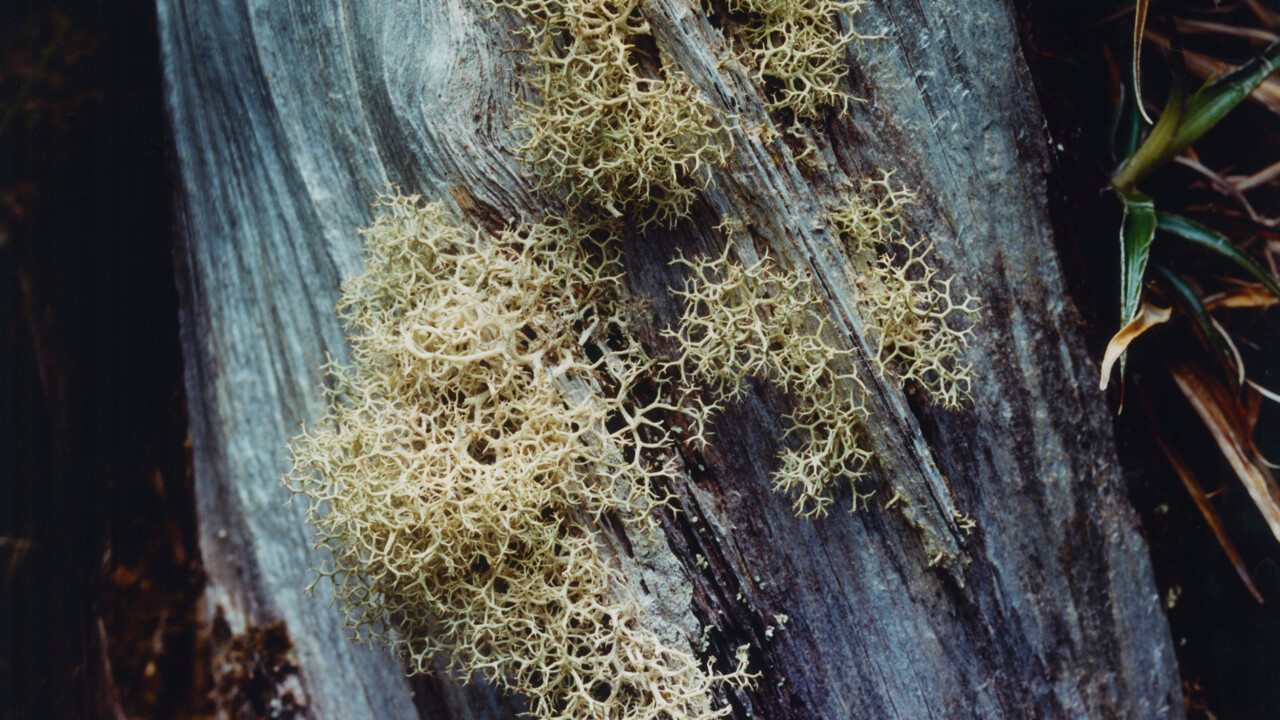
More lichen every other species.
Willow
—stepping into theirs. She says with lichen on her shirt.
Maria
I’m wearing lichen. Yes.
Willow
Something else that I loved is how many queer love stories were also subtly in Traversal, and there’s something healing in a way that I don’t even know that I really knew I was needed. In just seeing love queer letters throughout history, and I’m not saying it’s—it’s obviously not the biggest part of the book, but it’s there, and it’s this quiet reminder that queer people have always been throughout history.
Maria
Exactly.
Willow
Is there one relationship or love story or letter or something that you might want to share?
Maria
Well, there’s so much to say about this. First of all, it’s a little bit like the, why do you write about women in science? I know I write about women. Love has always been love and always many forms, and partly, I like writing about how people lived lives that were in the margins of their permission of their culture, is to really calibrate our complaints a little bit. We are luxuriating in freedoms that these people never had, and they are very beautiful, but they’re also heartbreaking. Walt Whitman’s entire life was a struggle to just be himself, and he wrote all that beautiful poetry out of that pain. It’s not nothing to look back and say even someone of extraordinary talent, accomplishment, genius couldn’t be himself in the permissions of his culture. And so, he had to write these coded poems and there’s this one heartbreaking line that he puts in parentheses in one of the poems and he says in “Sometimes with One I Love,” “I loved a certain person ardently and my love was not return’d // Yet out of that I have written these songs.”
Willow
Something remarkable is also happening this year, which is that the Marginalian is turning 20.
Maria
Oh my God. Can you believe that?
Willow
For anyone who’s not familiar, this is a platform, a monumental record of humanity search for meaning.
Maria
Well, one human’s search for meaning lens through the common record of humanity.
Willow
Sure. It’s so monumental that it is a part of the digital archive of the Library of Congress as being hugely relevant to culture. And I’m wondering if you can share a little bit about what this project means to you. Back when it was Brain Pickings to now, the evolution over two decades.
Maria
Well, it’s been evolving incrementally because it’s very much an extension of me the person, and thank fucking God I’m not the person I was 20 years ago. Who amongst us wants to be who we were in our 20s?
Willow
Hating poetry.
Maria
Hating poetry. That’s right. Let me backtrack a little bit. So, I came to the U.S. from Bulgaria alone when I was 19, sold on the liberal arts education model, meaning thinking there was this system of education in North America that was going to teach me how to live a meaningful, substantive life. And I also thought I’d figured America out because of TV and pop culture, and I went to an American high school, so our classes were in English. I was like, “I got this. I got this land down.” And then I show up, and first of all, my parents had cobbled together $800, which was so much for us to give me for the year. And by the time I’d gotten like bedsheets and textbooks in the first week, I was out of money and also realizing that I had gone from the 99% of Bulgaria to the 1% of America.
I went to a school that extremely privileged people go to, and I was on financial aid. I was working four jobs to pay for school, and I still hoped at least it would teach me how to live. And instead, I find myself in this factory model of education with the 400-person lecture hall and the PowerPoint slides and, very quickly, I realized, oh no, they’re going to teach me how to take standardized tests. This is what’s happening here in order to be a better cog in the corporate machine later. And I just felt so betrayed, and I felt so stuck, and I was working so hard for this very unsatisfying education. So, then I started just going to the library at night on my own, blindly trying to figure out where those answers were. I would pull down Aristotle and Susan Sontag, I’d never heard of. Who was this person?
And I just sort of cobbled it together, and I kept a record of what I was reading. So, meanwhile, one of my four jobs was at this little creative agency. This was in Philadelphia. That’s where I lived my first bit in the U.S. The agency was founded by a wonderful man named Steve O’Connell, who had become very famous very young, because he had conducted the first effective anti-smoking campaign in history. The “Truth” campaign. I don’t know if you remember from the American Legacy Foundation. It’s very smart, which is that all previous anti-smoking campaigns used fear appeal. Don’t do this, bad things are going to happen. And this is going to come back to a lot of parallels in culture today. And he figured out that people just never change behavior that way. So, he united them against a common enemy, which is big tobacco that exploits them and suddenly, smoking rates dropped within a year. Amazing. So, then he starts this agency hoping to change the world with the communication arts.
Willow
Which, by the way, does also have so many parallels to environmentalism, right? For so long, the approach has just been—
Maria
Exactly.
Willow
—don’t destroy the planet.
Maria
Exactly.
Willow
And how well does that work as opposed to one, refocusing our attention on what needs to change, what systemic reform needs to happen, but also maybe helping people fall in love with the wonder of the world?
Maria
Well, re-enchantment, your mission. Your mission, yeah. So, I noticed that what they were circulating for inspiration, like office-wide forward emails, was just other work that other agencies had done. And I, at 21, was like, “Let me tell you how to do your job. This is not how creativity works.” And I was like, “Why don’t you look at things that have nothing to do with your field, and then, combine them in interesting ways?” So, I said, “Let me send every Friday, three things that I learned this week that I think are interesting.” And it could be anything from like a neuroscience paper to Japanese woodblocks from the 16th century to street art from my neighborhood in West Philly. So, they were like, “OK.” So, I start sending these emails and very quickly, they were like, “Oh, can you add my girlfriend? Oh, my dad wants to join.” And I was like, “Guys, I have a full college course load and four jobs. I can’t administer an email.”
And so, I thought, of course, the most obvious solution would be to build a website. Now, this is before blogs. So, I wanted to learn how to do it, but I didn’t have enough money to take a class. So, I ate store-brand tuna and oatmeal for three weeks, which is the cheapest, most nutritious food you can get on a very limited budget. And then, I used the money to take a night class at the University of the Arts in downtown Philly, and I learned to code, and I built the world’s ugliest website, but it was a website. So, at this point, I could just say, “Go to this URL and do your own thing. I don’t need to send anything to anyone.”
And I don’t know how it went from that to now this. I’ve been just me continuously, but incrementally changing, and the little short blurbs of links became little essayettes, became eventually 3,000-word essays, and the nature of what I found interesting changed so much over the years, but my process has always been the same, to stay alive, to stay curious, to help me through whatever I’m living through and to figure out how to live, which I’m still learning.
Willow
And millions of people have followed along with your journey. And also when you say, “One woman,” you mean one woman because it’s all you.
Maria
Yeah. I’m the janitor, I’m the web designer, I’m the administrator. I’m all the, yeah.
Willow
You have written that humanity is here to make meaning out of matter. Do you think that’s a gift or a burden? Not to hand you a binary.
Maria
Well, I don’t believe in gifts because they presume a giver, and I don’t believe in burdens because they are anchored in self-flagellation and self-blame. I think it’s an opportunity, and I also think it’s our destiny.
Willow
To make meaning out of matter is our destiny.
Maria
We are matter trembling with the longing for meaning. And whether we know it or not, we’re constantly making it with every little choice. Everything we do is an attempt at meaning, otherwise we wouldn’t be doing it.
Willow
Just because these have been two different sort of threads in this conversation, like how do you perceive the difference between identity and the self?
Maria
I think all of these things are a kind of performance of personality, and I’m much more interested in what’s beneath that religions have called the soul. I think that’s a little problematic as a religious concept, as a non-religious person, but as a conceptual container, there is something to be said for a thing that is the essence of a person that remains that way.
Willow
So, how do you separate the soul from personality?
Maria
I mean, personality is the performance of the soul, and I think there are varying degrees of authenticity with which it can be done. I was thinking recently about the people in my life that I most love, who are very different from each other, and what they do with their lives and their age and their”—every variety of variable is very different, and I thought, oh, I get it. The one common denominator is that they are entirely themselves in every situation. They’re not contextual modulators of personality in order to suit some sort of external expectation. And I think that is a way of leading with the soul and not the self.
Willow
I had someone once define—you know what? Actually, it was my mother. She defined integrity that way because integrity is showing up as yourself in every situation.
Maria
It’s interesting. Integrity, the word shares a root with integer. Integer, right?
Willow
I was going to say, “integral.”
Maria
Well, also same, integral, but the one, the integer of one, that integrity is reducing and distilling until you’re just a oneness.
Willow
Oh, that also makes me think of what Diane Ackerman shared last night around the universe. It’s the one verse.
Maria
One verse. Yeah.
Willow
Both scientific and poetic. I want to close this beautiful conversation with a word that is also somewhat central to Traversal, which is love. You have this beautiful line where you write that, “Enough might be love’s other name.” How are you thinking about love right now for you in your life?
Maria
Well, like I said, I’m still learning how to live and that means always, always learning how to love better.
Willow
And I think that this equating of love and enough is so profound because I think to know that we are here in the uncertainty of everything.
Maria
Well, that’s actually in reference to a line from one of Emily Dickinson’s letters to her Susan, her person, that says, “Enough is so vast a sweetness I suppose it never occurs – only pathetic counterfeit.” That’s when she felt heartbroken and unmet, and that they couldn’t have the life maybe they could have today if they lived today, but I do think we suffer so much by mistaking the counterfeits of love for love, and I do think a lot of it comes from not understanding our own and the other person’s operating instructions. How the machine works, the magic in the machine, right? So much of our interpersonal heartbreak comes from not knowing how to work ourselves and how to work another psyche, another spirit, another being.
Willow
And to not fall in love with the narrative or the performance of the other.
Maria
And the hardest thing is to not perform ourselves when we connect. To be an integer with one another, what would that be like?
Willow
Beautiful question to end on.
Maria
Thank you, Willow.
WILLOW
Thank you, Maria.
NARRATION
To close out this episode, I thought I would share a couple of the poems or as Maria calls them, divinations, that she and I have written for our collaboration, Reweaving the Rainbow. Mind you, these were both written using words found in just one scientific article.
Here’s mine: You are looking in the mirror with the hopes it might validate the scattered celestial that struck earth to become a body // Slow down and reflect on the rhythms and cycles lit by time // Insects with their lifetime of hours, the night sky blooming with moons, and you will see how small, how enormous this life really is.
Here’s Maria’s: See how everything mirrors everything? Creatures become other creatures as moon cycles unfurl to charge life with light while we bloom and glow // Flowers that think no thought of the fossil, bright streaks of the possible coming and going across the dark sky of time.
You can follow along our journey at reweavingtherainbow.substack.com. The Nature Of is an Atmos podcast produced by Jesse Baker and Eric Nuzum of Magnificent Noise. Our production staff includes Emmanuel Hapsis and Sabrina Farhi. Our sound designer is Kristen Mueller. Our executive producers are me, Willow Defebaugh, Theresa Perez, Jake Sargent, and Eric Nuzum. Atmos is a nonprofit that seeks to re-enchant people with our shared humanity and the Earth through creative storytelling. To support our work or this podcast, see our show notes or visit atmos.earth/biome. That’s A-T-M-O-S dot earth slash B-I-O-M-E. I’m your host, Willow Defebaugh, and this is The Nature Of.
Join our membership community. Support our work, receive a complimentary subscription to Atmos Magazine, and more.
Maria Popova on Turning Matter Into Meaning