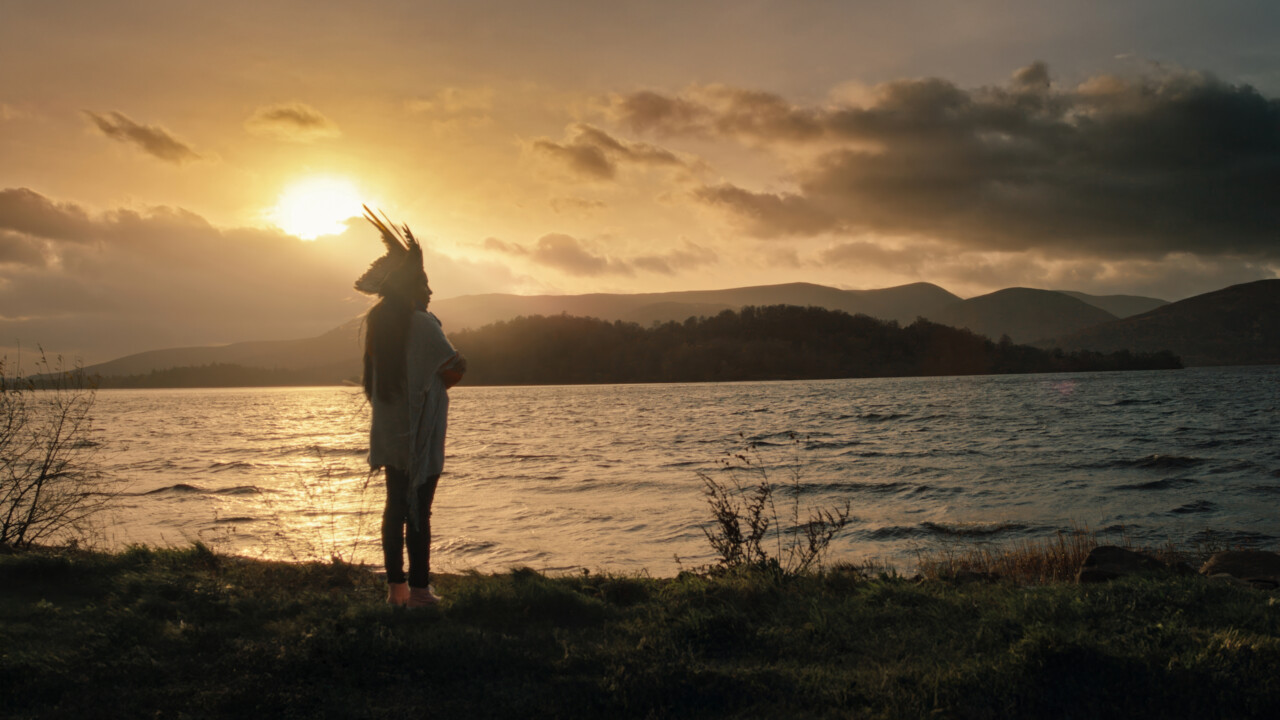
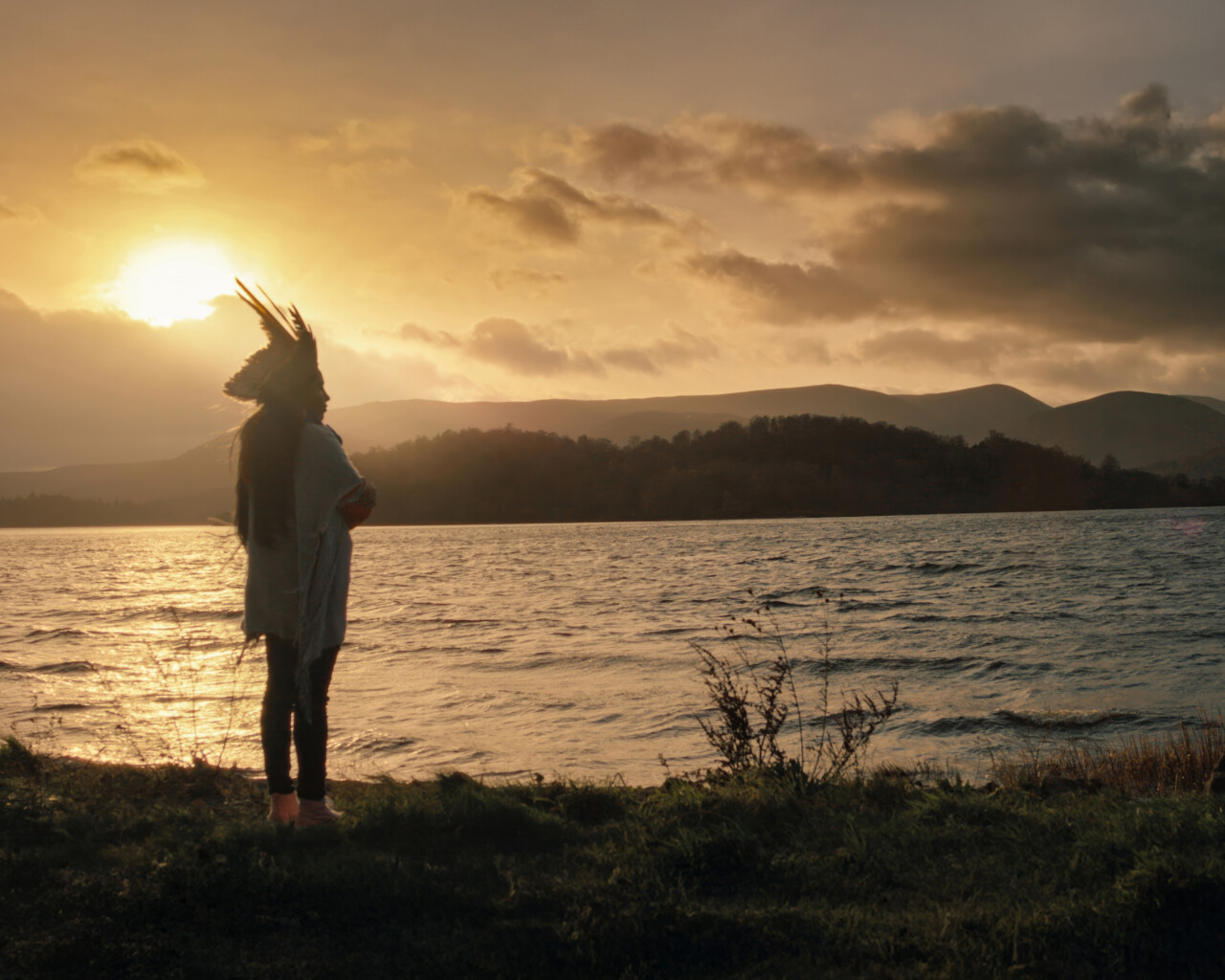
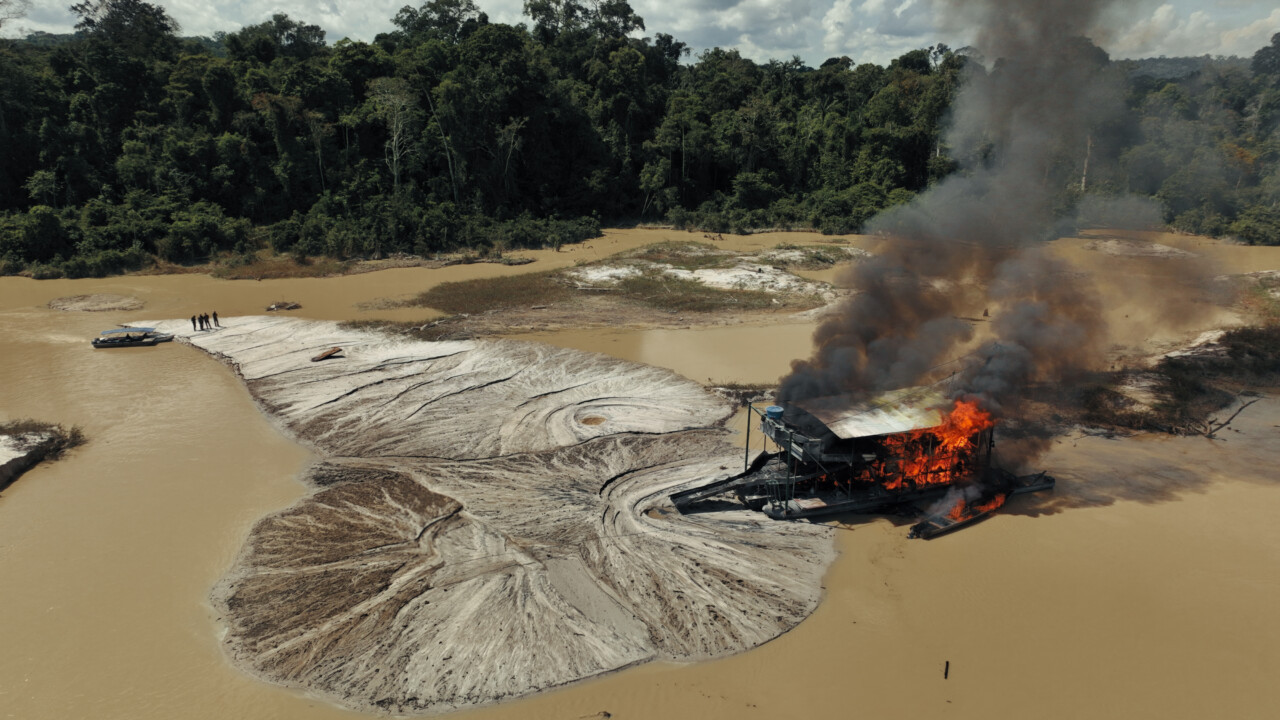
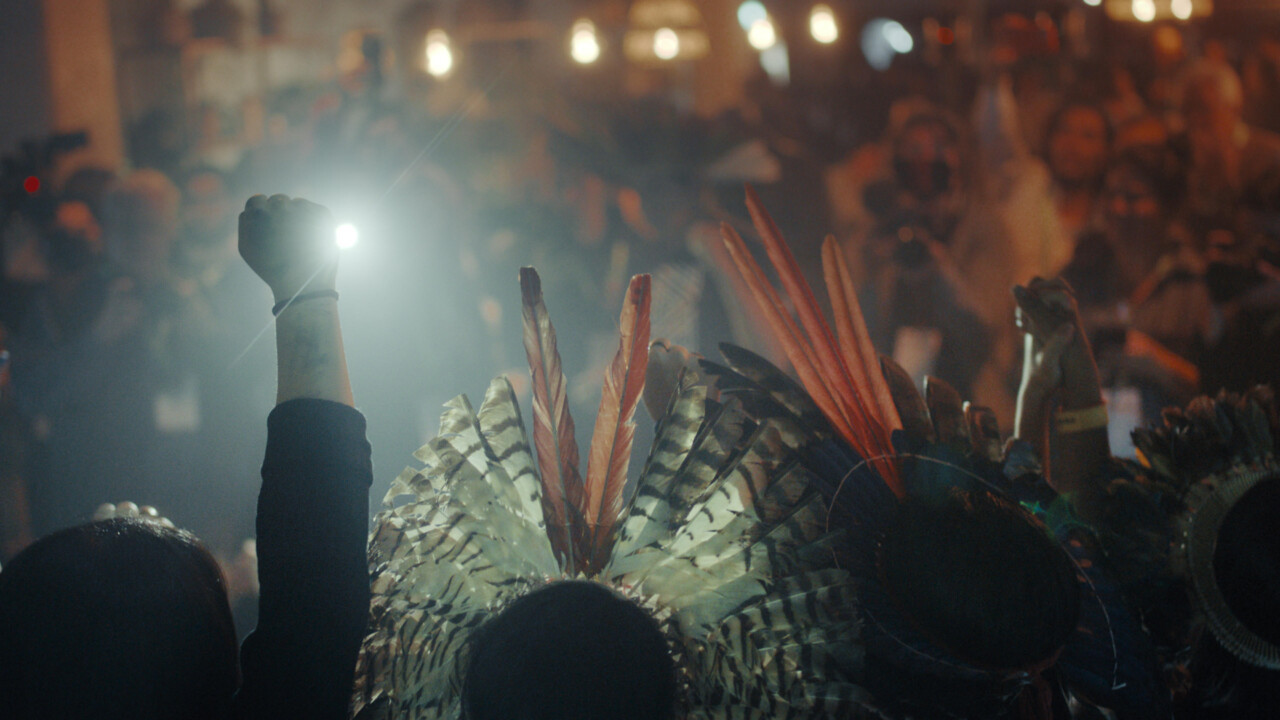
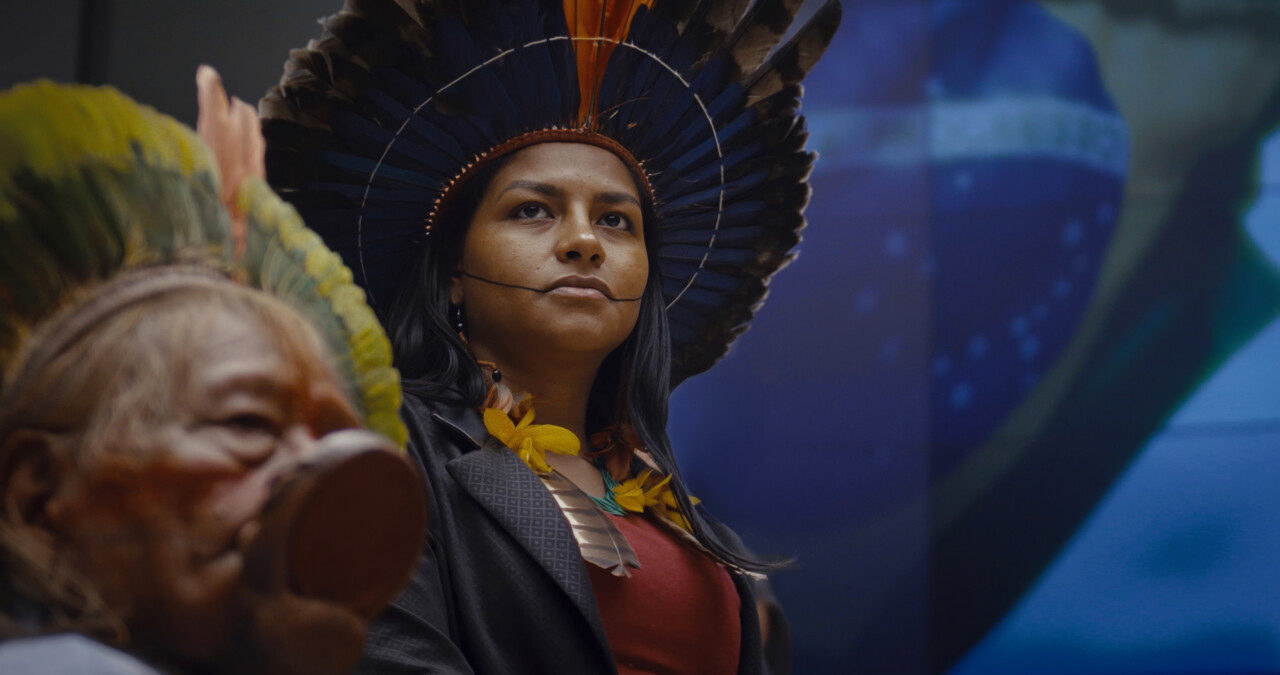
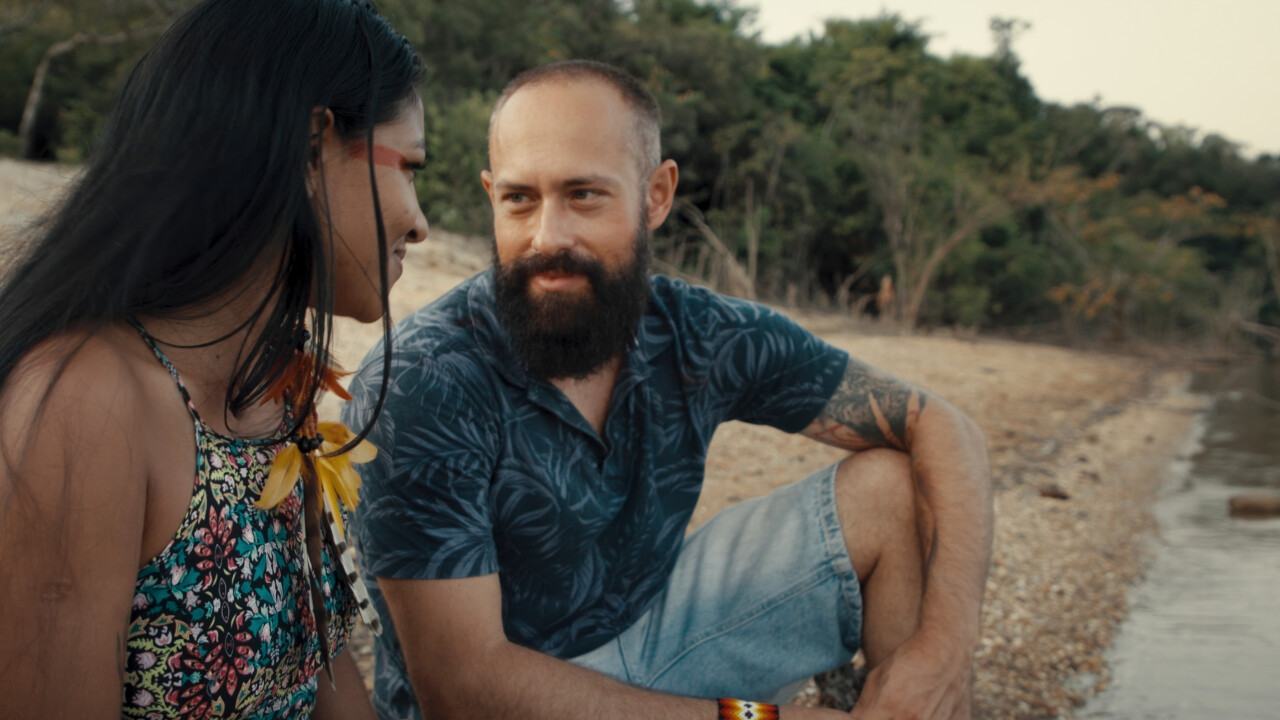
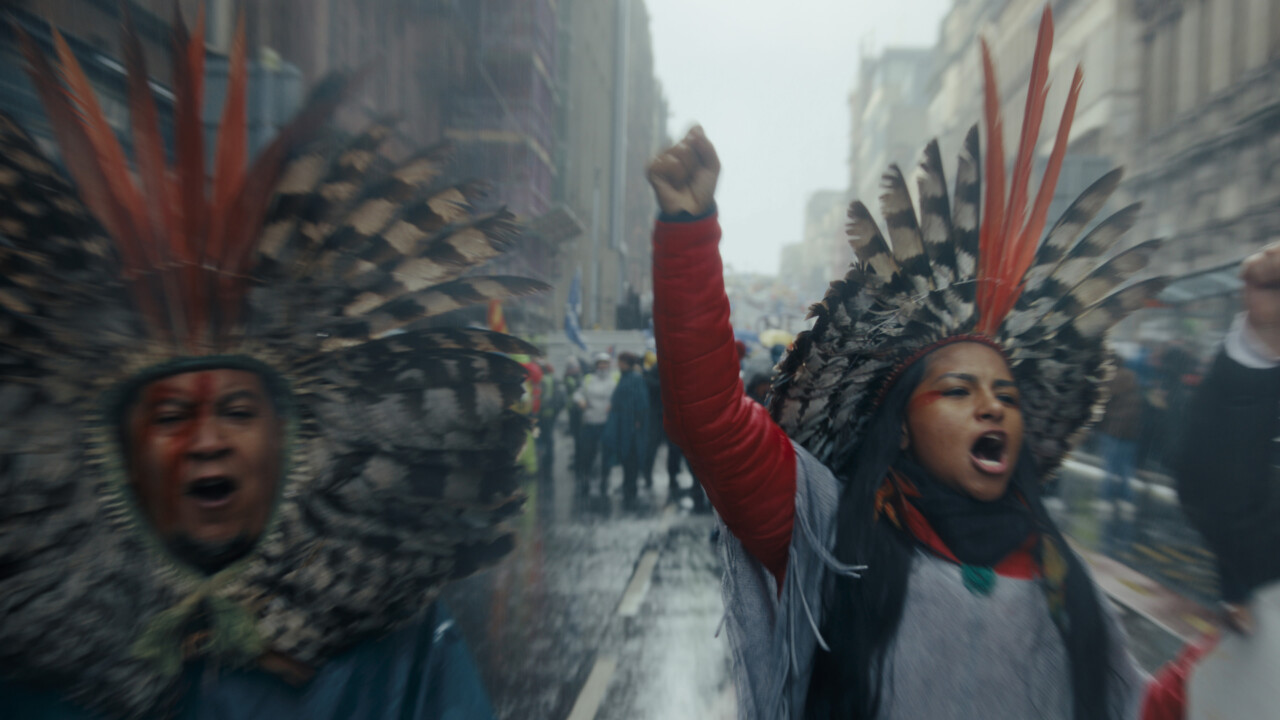
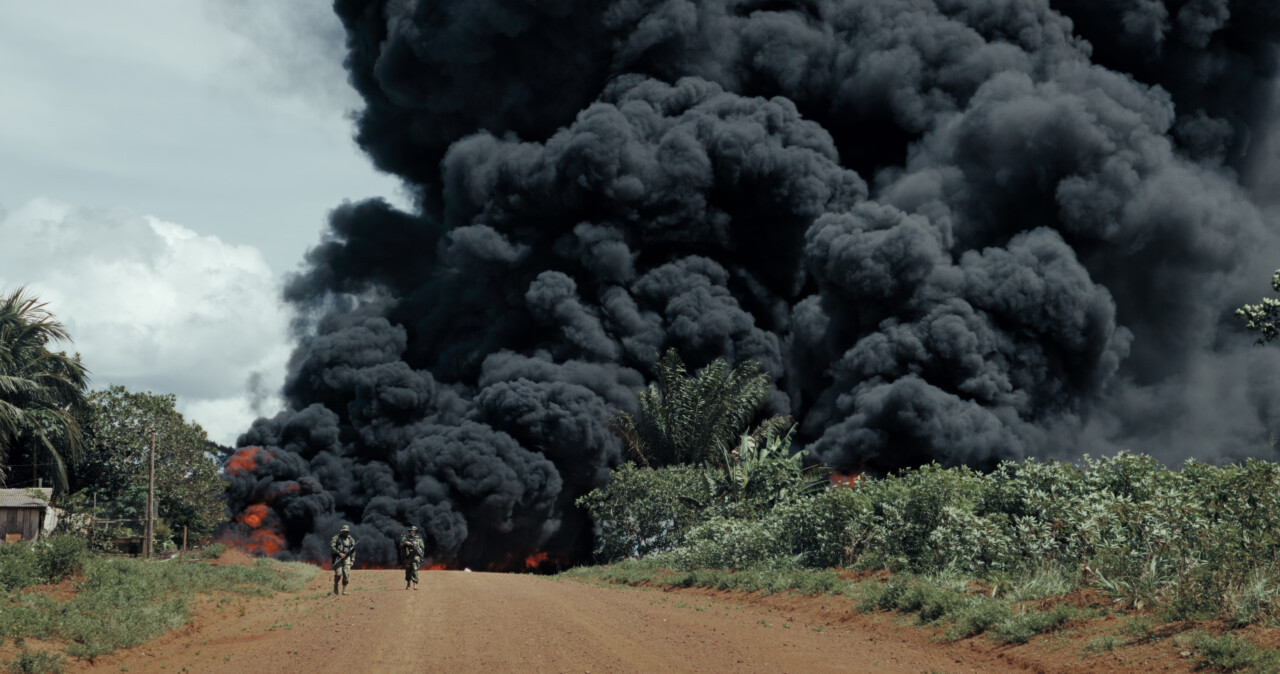
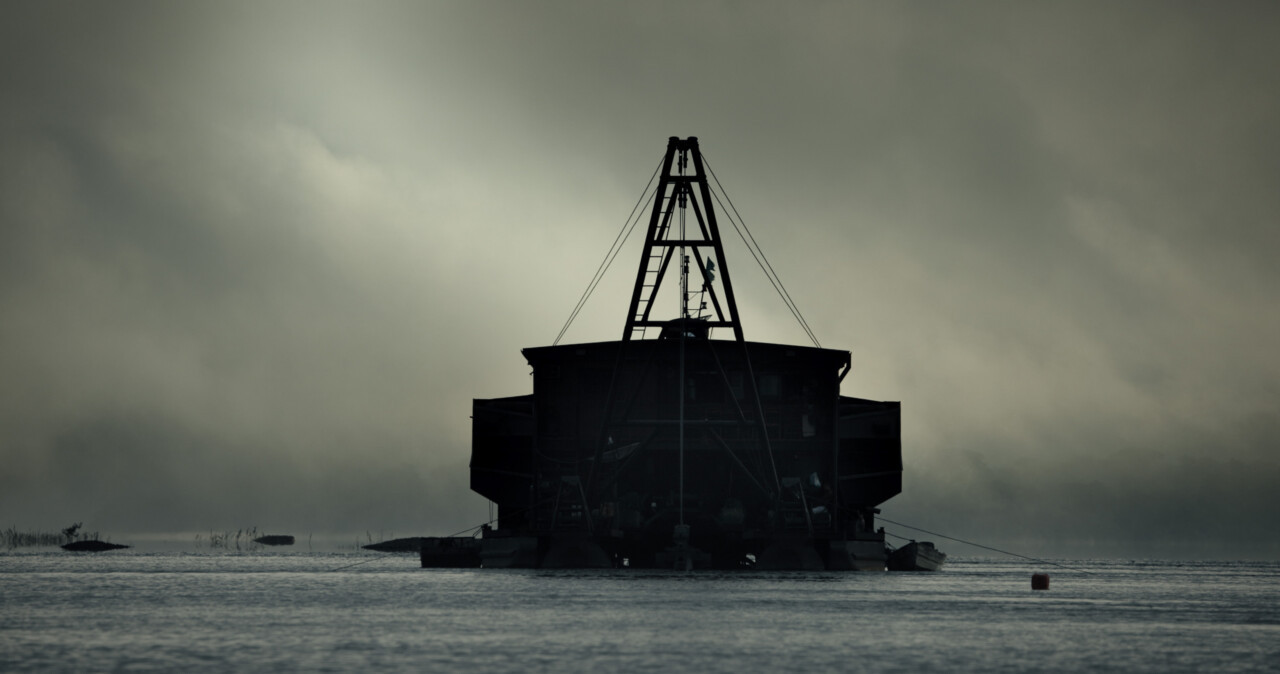
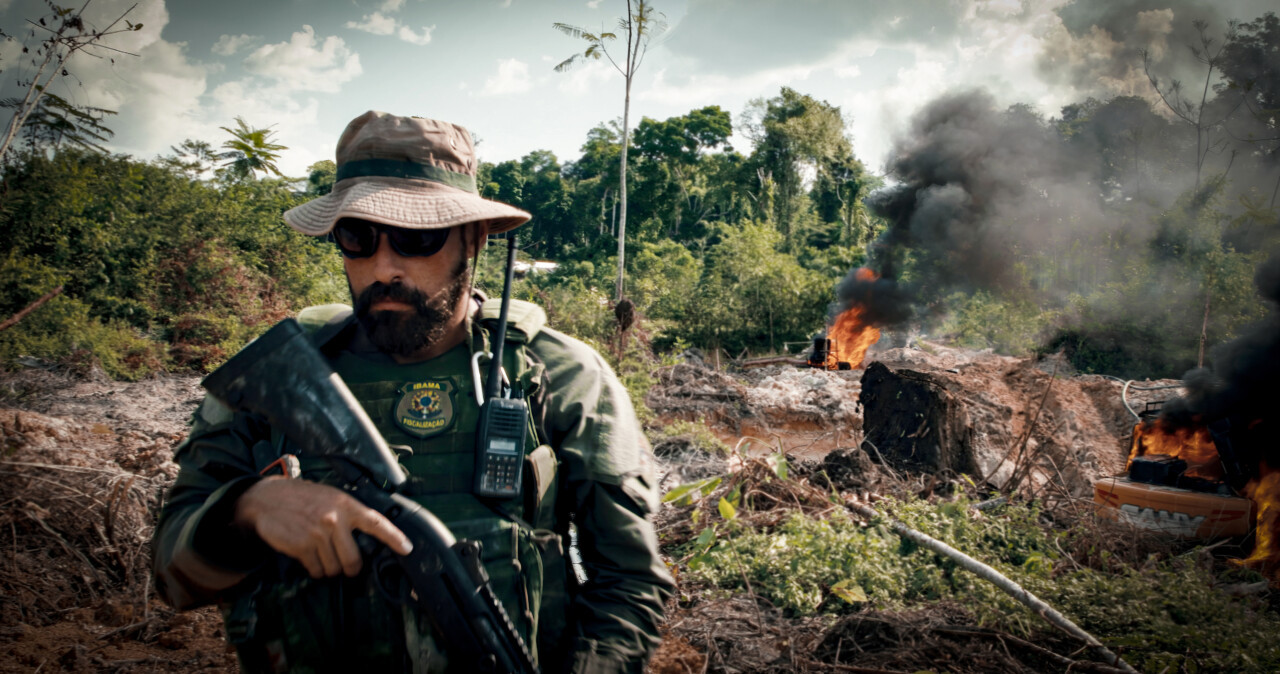
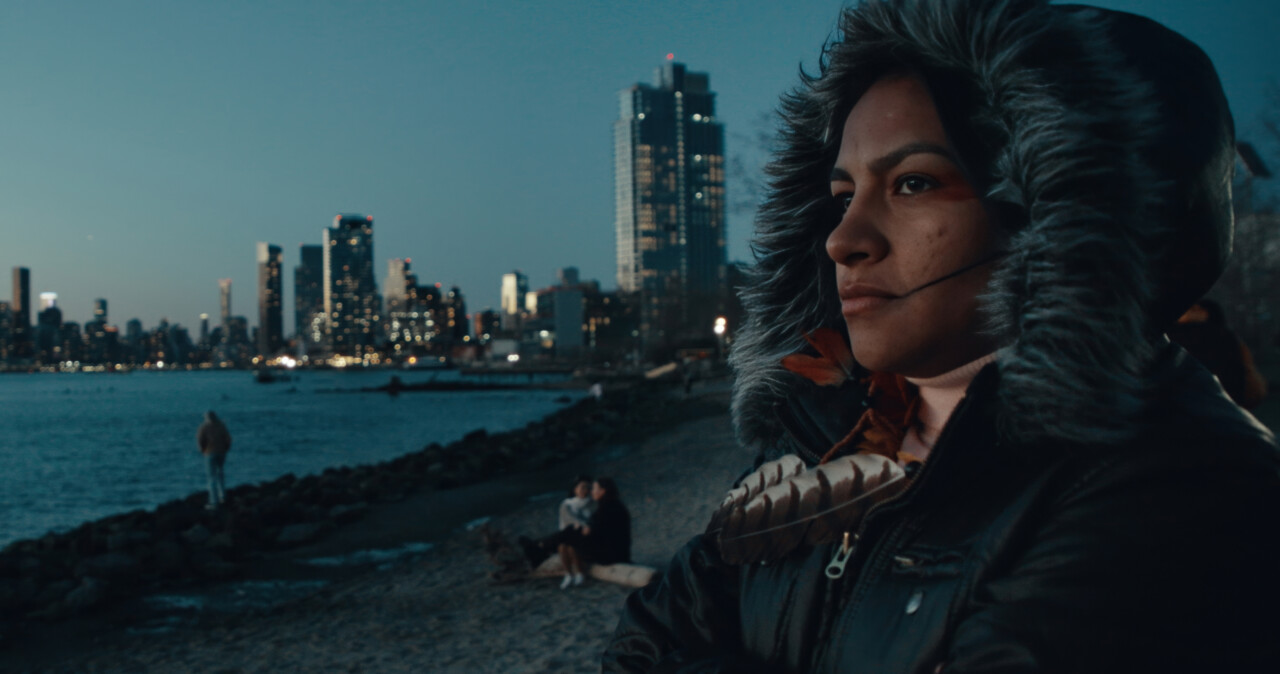
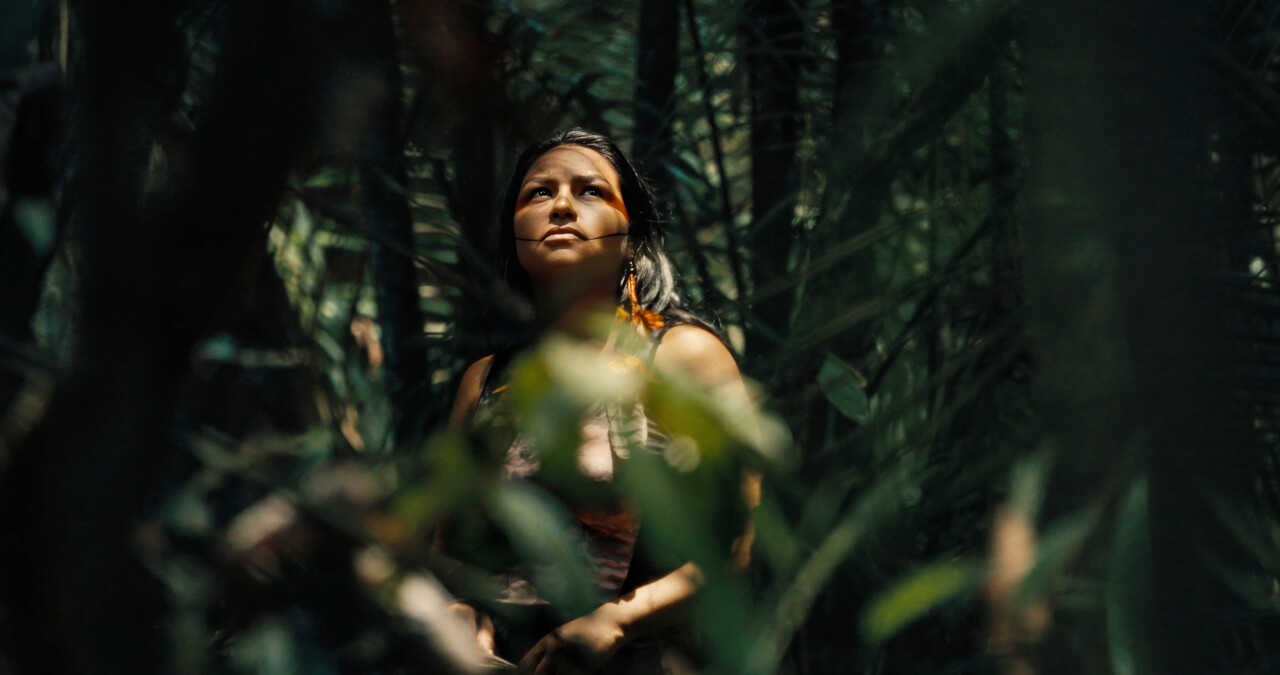
A still of Juma Xipaia from the filmYANUNI
words by daphne chouliaraki milner
When Juma Xipaia first agreed to let filmmaker Richard Ladkani follow her through the Brazilian Amazon, she was wary of becoming another Indigenous person whose story was told by outsiders. Her life was already shaped by danger: As an Indigenous leader defending Xipaya territory against illegal mining, land-grabbing, and corporate exploitation, she had survived repeated assassination attempts. She wanted something more from the project and hoped the film could become part of the struggle to protect it.
YANUNI, the documentary that emerged from the collaboration, follows Xipaia from her home territory to the political frontlines of Brazil, where she became the country’s first secretary of Indigenous Rights. During filming, Xipaia became a mother. The experience changed the stakes for her, turning the film from a portrait of environmental defense into a story about inheritance: what it means to fight for a forest as territory, livelihood, and culture, but also as a future her children might still be able to inhabit.
Xipaia is both the protagonist of YANUNI and one of its producers, helping shape how her film and community were represented. Below, she speaks with Atmos about the difficulty of watching her own life back, the politics of telling Indigenous stories, and why motherhood transformed her understanding of what it means to protect the Amazon.
Daphne Chouliaraki Milner
I wanted to start off by asking you what it was like to watch YANUNI for the first time, and what did you see in the film that felt most true to your life?
Juma Xipaia
I think the most difficult part for me watching the film was to witness that reality, to see myself and see the whole context. And I think that it was very interesting because with YANUNI, I learned how to overcome this obstacle. I wasn’t able to see myself on video before or to hear myself on camera or recordings of myself. I found that very difficult before, and I resisted that very much. What is it going to be like to have to relive everything that I know that happened, and everything that was recorded during the filming of YANUNI? And at no point did Richard, myself, or anyone stop to write a script of any sort.
Over my time with Richard, I learned to sit down and watch the videos. It wasn’t easy for me to watch all of the footage during the editing process—and I had to go through everything, watch it, approve it, give feedback about subtitles, editing, transitions, and everything that needed to be considered. It was very intense to relive everything; to just stop there and go through it again and again. Reliving everything that’s happened through the editing process was, for me, one of the biggest challenges that I had to face. It meant that I had to go through all of the impact that I had felt before. This film is actually my real life; it follows my movements, and it documents the very real effects on my life.
Daphne
You mention how challenging the editing process has been for you. Why was it so important for you to have a role in shaping how your story was told?
Juma
When the film proposal first came to me, I was reluctant because I thought it was just going to be another film about the Amazon. They’re going to follow me around, but then what comes after that? Because I was already in a very violent context. Over four years, I was kept forcibly silent and I was really struggling even to cross the street and exercise my rights to study, for example.
I wanted the film to become a tool for the movement toward promoting the rights of Indigenous populations, and so that people could understand why we are defending the Amazon with our own lives—because it’s not only for ourselves. To me, it represents everything: our way of life, our livelihood, also the future, and we need to really preserve it. So, in the first conversation with Richard, I said that I did not only want to talk about the negative impact; I wanted to show exactly who I was and what we do. And I told him that I am not going to follow a script. There was nothing I should be reading or planning to say because everything I wanted to say was coming instinctively from inside me.
We were also questioned about the fact that it was Juma’s film, but then Juma is also editing and producing. Is that bias? Is there a conflict of interest? And my response to that criticism was, OK, but what if it were a man? Was it going to be the same?
When the film proposal first came to me, I was reluctant because I thought it was just going to be another film about the Amazon. They’re going to follow me around, but then what comes after that? Because I was already in a very violent context. Over four years, I was kept forcibly silent and I was really struggling even to cross the street and exercise my rights to study, for example.
I wanted the film to become a tool for the movement toward promoting the rights of Indigenous populations, and so that people could understand why we are defending the Amazon with our own lives— because it’s not only for ourselves. To me, it represents everything: our way of life, our livelihood, also the future, and we need to really preserve it. So, in the first conversation with Richard, I said that I did not only want to talk about the negative impact; I wanted to show exactly who I was and what we do. And I told him that I am not going to follow a script. There was nothing I should be reading or planning to say because everything I wanted to say was coming instinctively from inside me.
We were also questioned about the fact that it was Juma’s film, but then Juma is also editing and producing. Is that bias? Is there a conflict of interest? And my response to that criticism was, OK, but what if it were a man? Was it going to be the same?
“Motherhood really turned me into an even more humane person, someone who was even more committed to life, to all living beings—not only Indigenous peoples and the territory, but the planet itself.”
Daphne
And, of course, you became a mother during the filming of YANUNI. The film is even named after your daughter. How did motherhood shape the way that you understand the stakes of the work that you were already doing?
Juma
Everything. Motherhood defines everything. When I think about the future, that’s why there’s so much concern, and we are in such a hurry: because for us it’s urgent to understand the past, understand what’s happening in the present, and to defend ourselves, and try to change the future. The future is happening right now through the actions that I carry out, through what I teach my children, what I feed them, and the space where they live. So the future is now—not only for myself and my children, but for everyone.
When I had children of my own, I started experiencing fear. I started thinking and rethinking. I started seeing the world around me with closer attention, and that’s what my children helped me understand. Before them, I was very focused on the present. But when I had children, I became much more concerned about the future: What is the future that we really want for them?
I don’t want my sons and daughters to have to go through violent situations and to be silenced just as I was. I want them to have a forest. I want them to be respected. I want them to have their dignity, to live happily, and to be able to enjoy territory with clean water and clean air, because nowadays they do not have the same childhood as I had. Back in my childhood, there were many fruits, there was so much clean water and freedom. I was free to wander around the rivers, wander around the forest, and to be a child. But today, due to all of the limitations, insecurity, threats, mercury contamination in the rivers, land grabbers, and invaders in the forest, I can say for sure that my children do not know freedom—real freedom. Many children around the world do not know what it is like to be free, and I only know that because I did have that privilege. I did live in freedom.
That’s why I want to continue to defend our rights just as our ancestors did, to make sure that there will be freedom for future generations, not only a freedom to speak or to write, but to live as well. Motherhood really turned me into an even more humane person, someone who was even more committed to life, to all living beings—not only Indigenous peoples and the territory, but the planet itself. And I feel that it’s urgent to do all of this work.
Daphne
What do you hope someone understands differently after watching YANUNI? What do you hope that people will take away after watching the film?
Juma
The main purpose of making this film was to turn it into a tool to galvanize our movement and promote the territory around the world. I didn’t want to be seen as a character in the film. I didn’t want the Amazon to be seen as an object or a subject.
Sometimes I go online and see the impact that the film has had, and I wonder if people really get the message, if they really understand. For thousands of years, people in my family have been reporting, we have been denouncing, but few people really stop to listen, understand, share, and participate in the advocacy. But if Leonardo DiCaprio speaks, many people do stop and turn to listen to what he said. I am obviously very grateful. I learned so much, and DiCaprio is an amazing person. I think that he is also brave, because there are few people who will give their name, their image, and their reputation to something so big as the defense of the Amazon.
I want people to connect with YANUNI. I don’t want people to just watch YANUNI as another film about the Amazon. My wish is that this connection will reach their hearts and their souls, because that is where I think real transformation takes place and we go from the individual level to the collective level.
“Many children around the world do not know what it is like to be free, and I only know that because I did have that privilege. I did live in freedom.”
We are on the same boat, we are on the same planet, we share a home, and therefore we need to take care of it together. This is collective work. Not everyone needs to come here, to the Amazon, to defend it. You can do it from your own home or anywhere in the world, because the impact that we feel here in the Amazon is not only funded by the Brazilian government. The mercury that contaminates the Amazon does not come directly from Brazil; it comes from other countries. And the gold that is mined here does not remain here in the Amazon or in Brazil. It is taken to other parts of the world, especially Europe and Asia.
So I hope that people can not only watch, but also really listen, take a look at themselves, and allow themselves to reconnect. I hope that people can really wake up and want to wake up to all of this. It’s important to support people and grassroots organizations, to protect those who protect. And this is one of the main lessons.
Join our membership community. Support our work, receive a complimentary subscription to Atmos Magazine, and more.
Juma Xipaia on ‘Yanuni’ and the Forest Her Children Will Inherit