Photograph by Lauren Withrow / Stills
words by MIRANDA GREEN
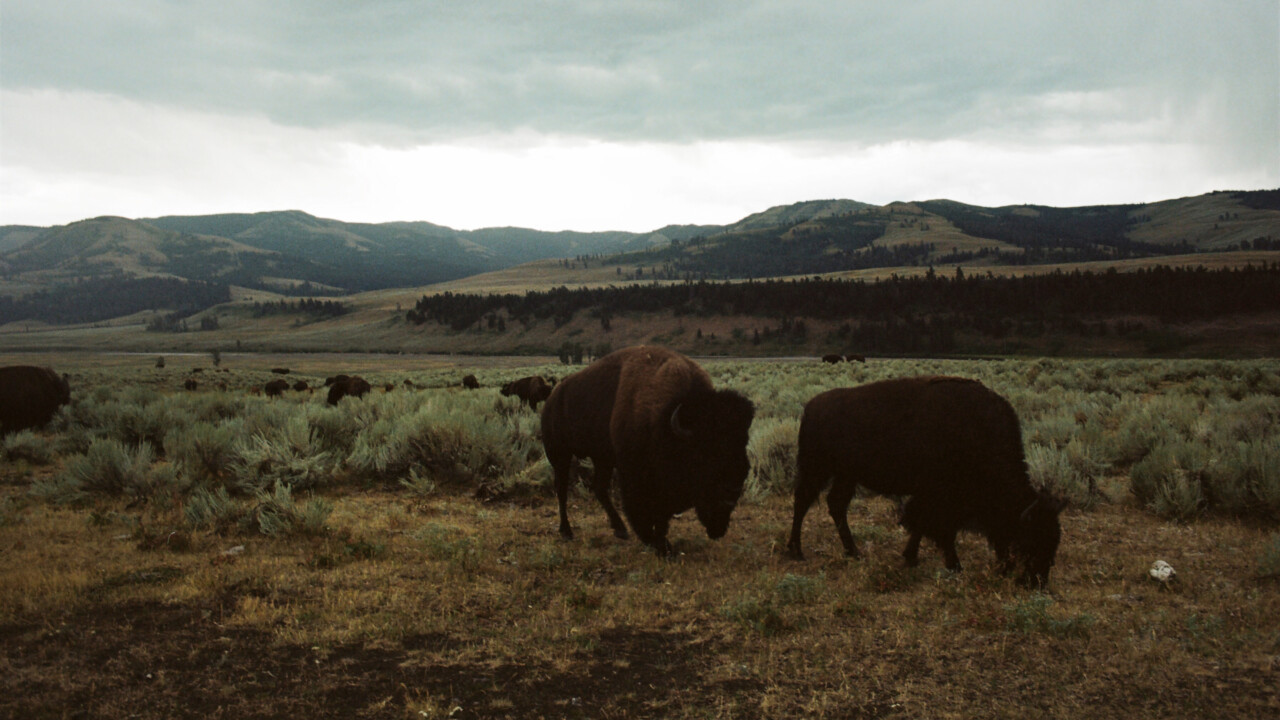
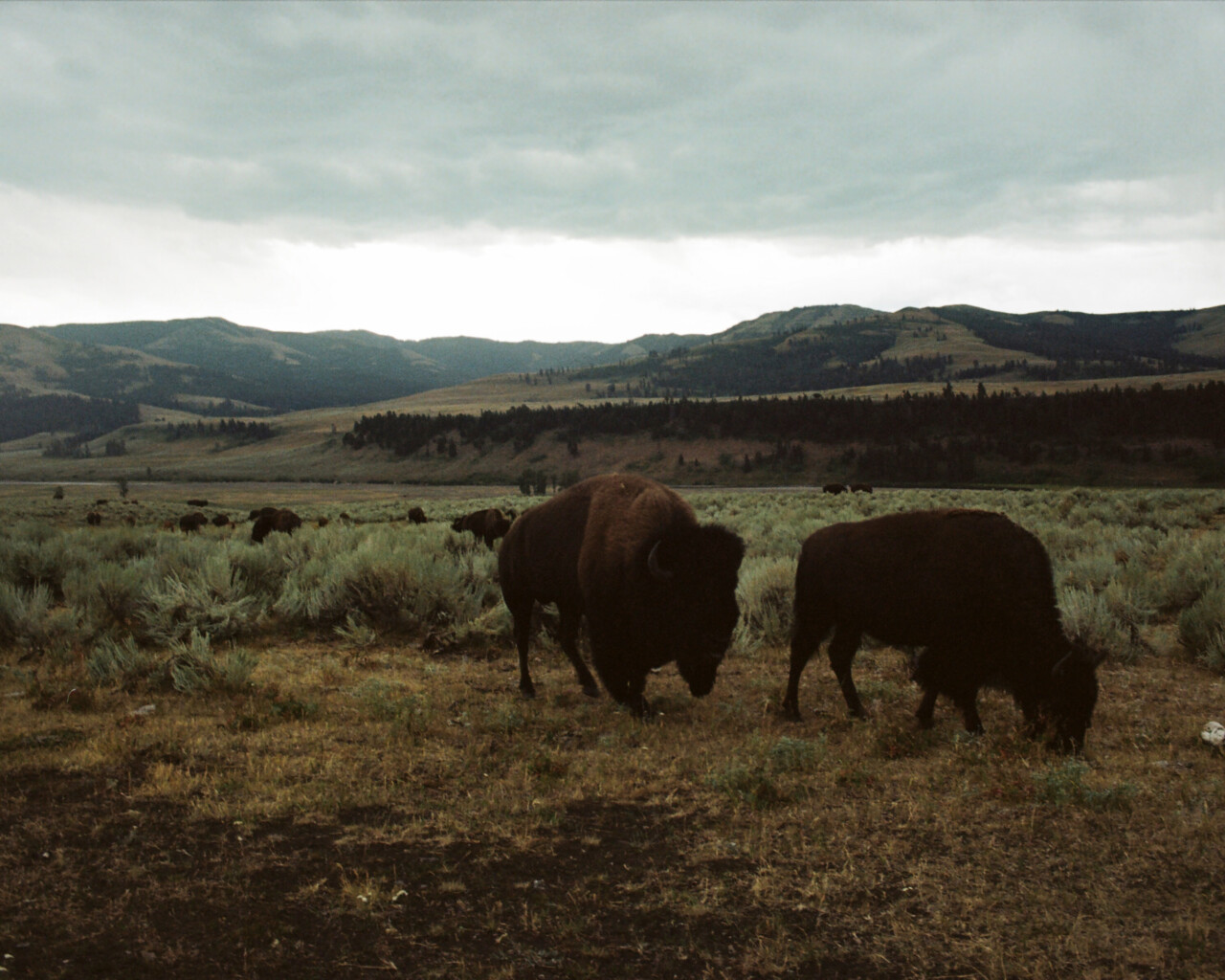
The American bison was once the living mascot of the western plains. It’s estimated that more than 30 million of the nearsighted beasts populated the United States in the 16th century. But as settlers moved westward, the fuzzy giants became an inconvenience.
Hunting bison quickly morphed from a means of survival—commonplace among Native nations—to a game of sport. Advertisements enticed wannabe cowboys to venture west and take their aim at the largest land mammal in North America. Widely circulated illustrations portrayed bison as dangerous beasts akin to rhinos. These efforts were made in part to vacate the land so it could be better homesteaded while also robbing Native Americans of one of their primary food sources and cultural foundations.
The introduction of horses, then guns, accelerated the depletion of bison herds. By the late 19th century, the animal was nearly extinct, having been entirely eliminated west of the Rocky Mountains and east of the Mississippi River. A famous 1892 photograph perfectly depicts the carnage: A man stands in front of a towering mound of bison skulls, nearly two stories tall. Another man stands atop it, skull in hand. The picture was taken outside of a processing center in Detroit, where the bones were turned into fertilizer and glue.
Today, the U.S. is home to an estimated 500,000 American bison, with only 30,000 living in the wild in what are called conservation herds. Indigenous nations and various organizations, including the nonprofit American Prairie, seek to repopulate the Great Plains with bison, seen by scientists as a healthier addition to prairie ecosystems than cattle. But a new decision announced earlier this month by the Interior Department will make it harder to protect a portion of those animals.
The Trump administration in May issued an eviction notice for 940 bison that have been grazing across public lands in Montana. Critics suggest the shocking reversal was politically motivated.
Interior Department Secretary Doug Burgum in December took over jurisdiction of an appeals case that challenged a 2022 approval by the Bureau of Land Management to allow American Prairie bison to graze on 63,000 acres of federal land in Montana. His decision to reverse that approval doesn’t impact Native American nations that also conserve herds of bison across the American West.
Yet, Burgum’s move is widely seen as political: His newly appointed top deputy previously was a private attorney for three pro-ranching groups opposed to bison grazing. Bison and cattle often compete for the same access to food sources. The reversal could score Trump and Republicans political points in Western states, where Trump’s tariffs and the war in Iran have led to skyrocketing prices on fertilizer and diesel. Democrats have been attempting to capitalize on the anger over those prices to flip congressional seats blue.
Conservation efforts for the American bison started in the 20th century. Those groups, paired with Endangered Species Act protections and the growth of national parks—including Yellowstone, America’s first—helped bring the bison population back. But not everyone has seen the animal’s reintroduction as a virtue.
For as long as conservationists have sought to reintegrate the species, ranchers and business owners have fought to limit their stock because they are seen as a nuisance or threat to livestock. The BLM wrote in its decision that the bison should not be able to graze on the federal grasslands because they are not livestock being raised for food.
The American Prairie Reserve has spent two decades buying ranches and grazing leases in northern Montana for bison to roam, according to The New York Times, and it’s vowing to fight the ejection order.
“It is a textbook example of the government moving the goalposts and changing the rules in the middle of the game to reach a predetermined outcome,” Mary Cochenour, a lawyer for American Prairie, told Inside Climate News.
Some might view the administration’s decision about bison grazing in Montana as an insignificant decision. But what it highlights is the willingness of the Interior Department, and the White House by extension, to go to bat for friendly industries, even on a case-by-case basis. That allegiance to private industries and extractive businesses is being played out time and again when it comes to its decisions about America’s public lands.
In his early days in office, Trump implemented policy changes to expand oil drilling on public lands. His administration has supported eliminating protections for other species, including wolves, as I’ve written about before, largely due to the ire of ranchers. In fact, it’s challenged the Endangered Species Act more broadly, potentially illegally pausing it to initiate new drilling in the Gulf of Mexico. Just last week, it scrapped a Biden-era rule put in place to protect millions of acres from industrial development in the face of climate change. And this Monday, the Senate confirmed Trump’s contentious pick to lead the BLM: a New Mexico congressman who has advocated for leasing public lands to industry. The BLM oversees 700 million acres of underground minerals, including major reserves of oil, natural gas, and coal. And of course, that doesn’t take into consideration the hundreds of miles of federal waters the administration intends to drill for oil and mine for rare earth minerals.
Taken together, these actions reveal the administration’s unified position on the future of our public lands—and it’s not one primarily focused on protection.
Want me to look into The Understory of something? Send me an email!
Join our membership community. Support our work, receive a complimentary subscription to Atmos Magazine, and more.
American Bison Survived Extinction. Can They Survive Politics?