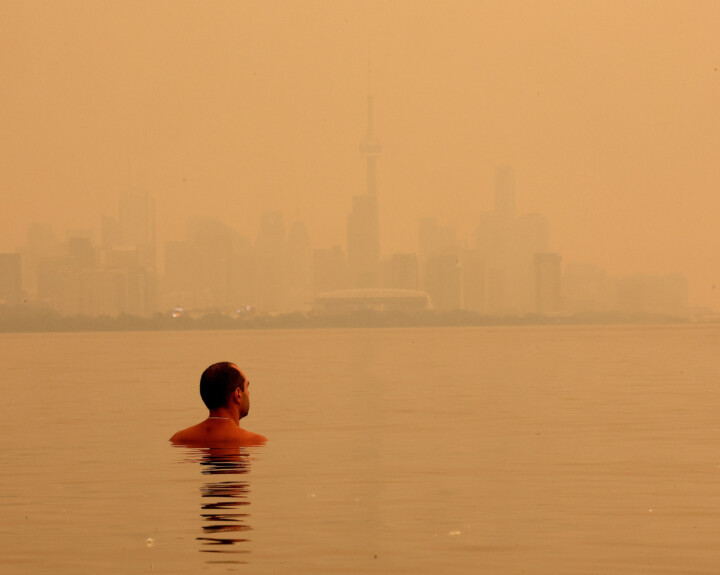
Photograph by Amy Woodward / Connected Archives
words by miranda green
Six years after two Columbine High School students shot and killed 12 of their classmates and one teacher in the deadliest school shooting at the time, Congress passed legislation, not to ban guns, but rather to shield the gun industry from future lawsuits.
President George W. Bush in 2005 signed into law the Protection of Lawful Commerce in Arms Act, effectively shielding gun dealers, distributors, and manufacturers from liability when their firearms are used in crimes. Since then, no charges against gun manufacturers for negligence have gone to trial.
Now, as Americans are entering the hottest part of what experts predict could be a record-shattering year of extreme weather, Republicans have introduced a new congressional bill to shield the fossil fuel industry. Like the gun industry law, this would prevent lawsuits that aim to hold fossil fuel producers responsible for any climate-change-driven impacts.
The “Stop Climate Shakedowns Act of 2026” was introduced this month by Wyoming Rep. Harriet Hageman and four GOP senators, including Ted Cruz of Texas. It’s a near-direct response to a surge of local climate lawsuits brought against the fossil fuel sector.
“Radical environmental groups have waged a coordinated campaign to weaponize our judicial system against American energy producers, including many in Texas,” Cruz said in a statement. “They’re using meritless lawsuits to bankrupt our energy industry, kill good-paying jobs, and drive up the cost of electricity and gasoline for hardworking families. I am proud to lead this bill to stop that abuse to protect American jobs, lower energy costs, and defend American energy dominance.”
I wrote about some of these state climate bills last month. There have been at least 30 cases brought by states, counties, cities, and tribal governments against oil and gas companies, according to tracking provided by the Center for Climate Integrity. The lawsuits take many forms: Some were brought against companies on racketeering, antitrust, or fraud charges; others sought damages and financial compensation to support climate mitigation. Vermont and New York were the first two states to pass climate superfund laws that aim to recover costs from fossil fuel producers and use those funds for climate adaptation projects.
The new congressional bill could stop lawsuits like these in their tracks, forcing the dismissal of pending suits against polluters, voiding superfund laws, and blocking any future efforts to hold the industry responsible. The bill is a big play by Republicans in Congress, many of whom represent major oil and gas states and take donations from the industry. Cruz received more than $1 million from the oil and gas industry for his 2024 campaign, making him the top congressional recipient from that sector, according to OpenSecrets.
The congressional bill follows earlier efforts this year to pass bills in local legislatures that would shield fossil fuel companies from state lawsuits. Utah’s bill is already in effect, and Tennessee’s will take effect this summer. At least three other states are considering bills with similar language. A ProPublica investigation found that the state bills were largely drafted by various political groups that were linked to conservative activist Leonard Leo, a major Trump donor who has been responsible for stewarding conservative judicial reform.
The latest federal bill also comes as three major climate lawsuits were poised to move ahead in Massachusetts, Honolulu, and Boulder, Colorado. Honolulu’s is the farthest along, after surviving the Trump administration’s efforts to block it (a judge rejected those efforts earlier this month). But the Supreme Court threw a curveball in March when it agreed to hear an appeal brought by Suncor Energy and ExxonMobil that challenges Boulder’s right to bring a lawsuit against the corporations in state court. Experts told me they view the SCOTUS decision to hear the case as a bad sign for the future of similar state lawsuits.
It’s unclear how the federal bill might impact other laws related to climate change. For example, the Hawai’i House of Representatives this month advanced a bill that would allow the state and insurers to bring charges against the fossil fuel industry for skyrocketing home insurance costs driven by climate-fueled disasters. The Hawai’i state senate already approved the bill last year, now it’s in conference, waiting on an agreement on final language.
This isn’t the first time the federal government, fossil fuel industry, and local Republican legislatures seem to be working hand in hand.
The Department of Justice sued two California cities this January, and a New Jersey township in April, over bans they’d implemented on building natural gas lines in new construction. It comes five years after Berkeley, California became the first American city to ban natural-gas hookups in new construction in 2019, but part of its rule had to be reversed after a successful lawsuit brought by the California Restaurant Association. A swelling of support nationwide for the Berkeley bill has been countered by preemptive, anti-gas-ban bills that have passed in at least 20 states since 2020, with frequent full-throated support from the fossil fuel industry. At the same time, reporters revealed that the gas industry was trying to fix its image by hiring influencers to spread the benefits of “cooking with gas.”
It’s easy to see how a climate accountability shield bill has made its way to Congress. The fossil fuel industry has for years countered local efforts to curb emissions and has now found an eager listener and advocate in an administration that is reinvesting in fossil fuels while the rest of the world shifts to renewables.
Now the fossil fuel producers are looking backward to 2005 for inspiration on how to hedge off climate culpability. But we aren’t living in a 2005 climate. The impacts of fossil fuels, shield law or not, are already right in front of us. Yes, this bill could protect companies from legal blame, but it won’t shield them from public perception and scientific fact.
Want me to look into The Understory of something? Send me an email!
Join our membership community. Support our work, receive a complimentary subscription to Atmos Magazine, and more.
Congress Once Shielded Gun Makers. Now It’s Fossil Fuel Companies’ Turn.