words by omnia saed
photographs by max miechowski
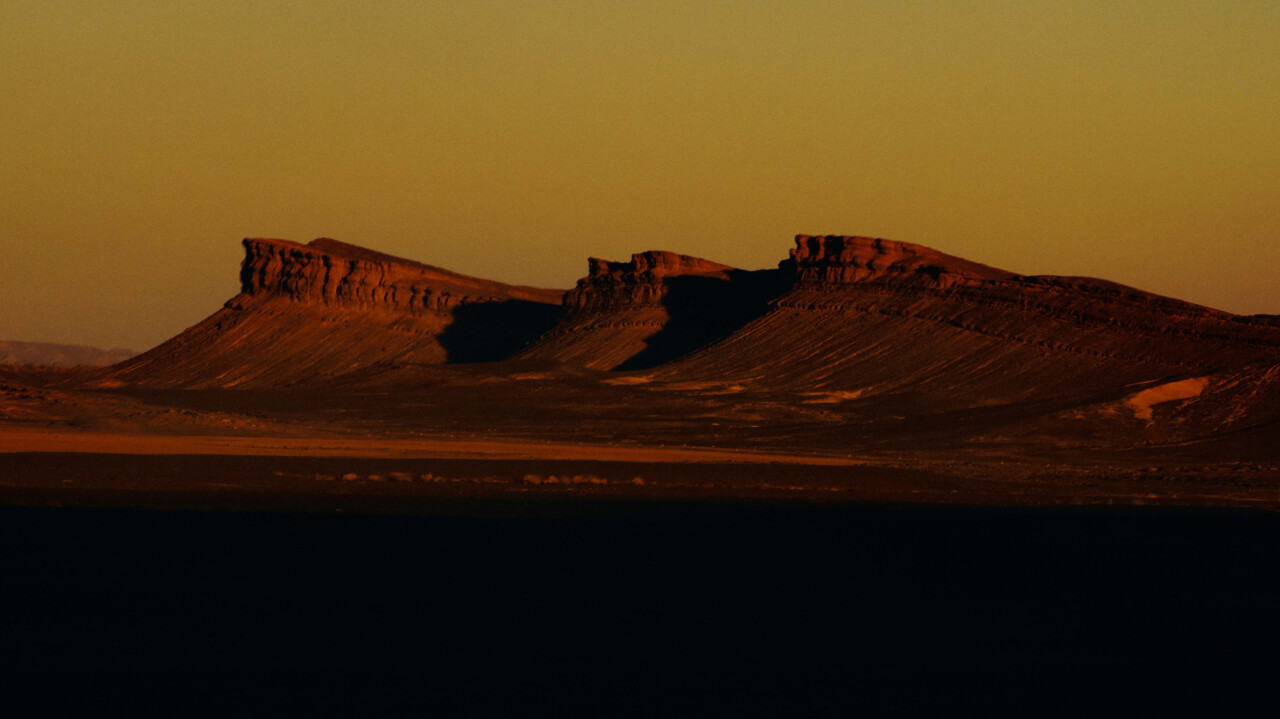
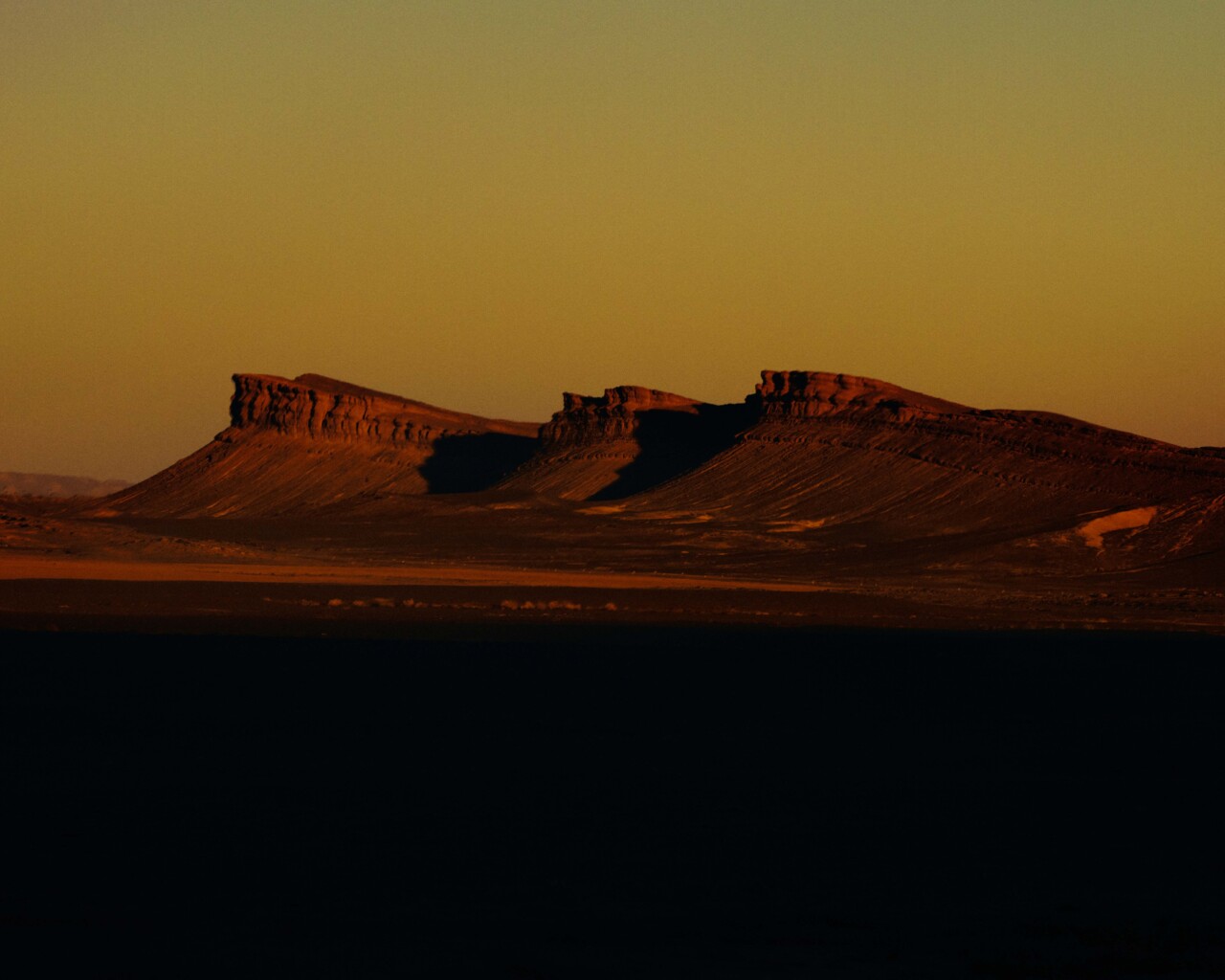
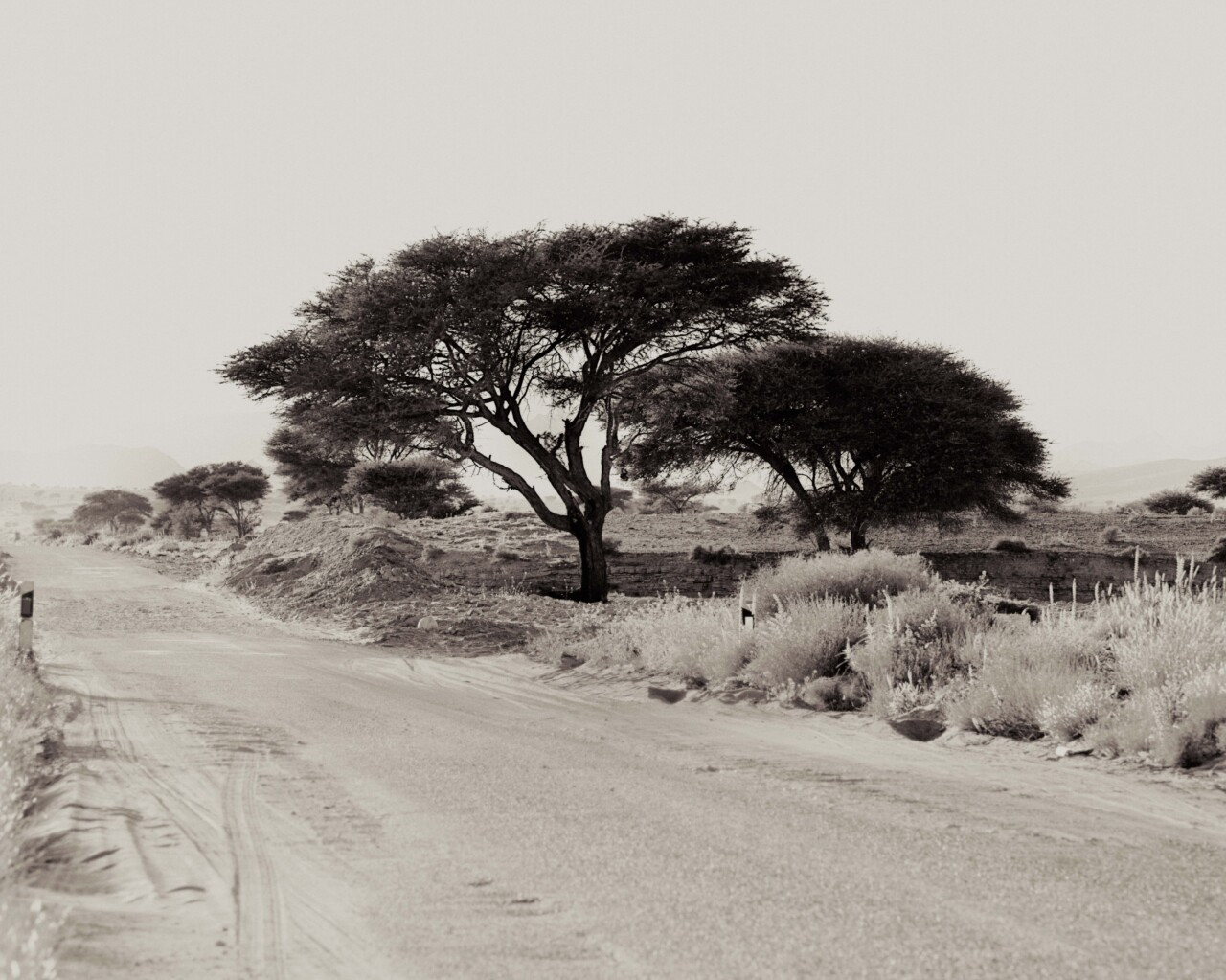
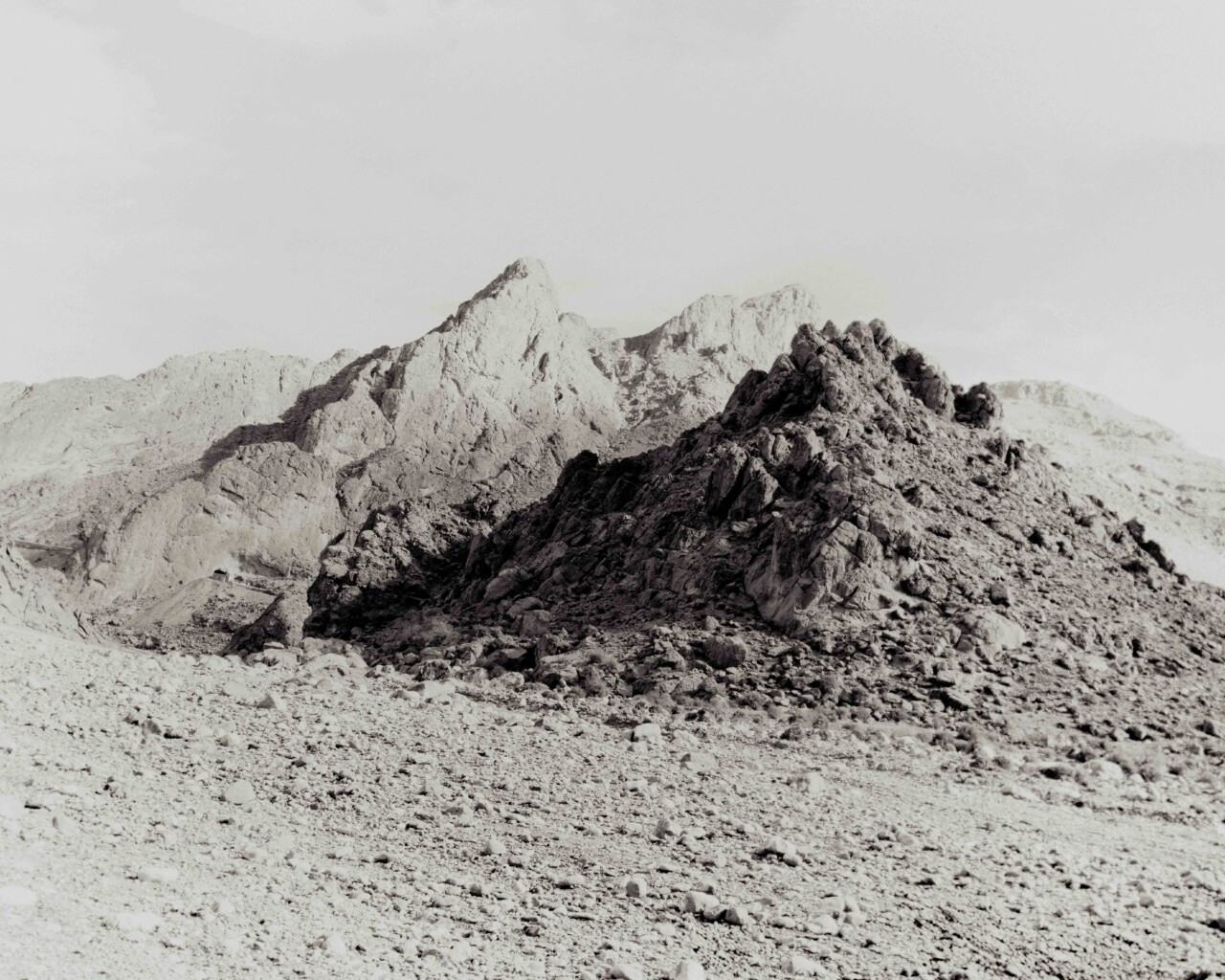
Beneath the desert landscapes of Morocco’s Anti-Atlas Mountains and plains of Tafilalt lies an ancient seabed rich with fossilized trilobites, ammonites, orthoceras, and other prehistoric marine life preserved with startling precision: curled spines, segmented shells, entire creatures suspended as if the ocean vanished only yesterday.
More than 300 million years ago, these marine organisms lived and died along the seafloor, where layers of sediment eventually buried their remains. Over immense stretches of time, that sediment hardened into stone, preserving their bodies and every little detail of their anatomy. Millions of years later, tectonic forces pushed the primordial seabed upward, creating the mountains and plains of present-day Morocco while exposing the fossils of marine creatures and dinosaur bones across multiple eras of Earth’s history. In the silence of the Anti-Atlas, fossils are one of the few reminders that water once moved through this landscape—a place that’s served as a kind of pilgrimage for scientists and collectors since the late 1980s—at all.
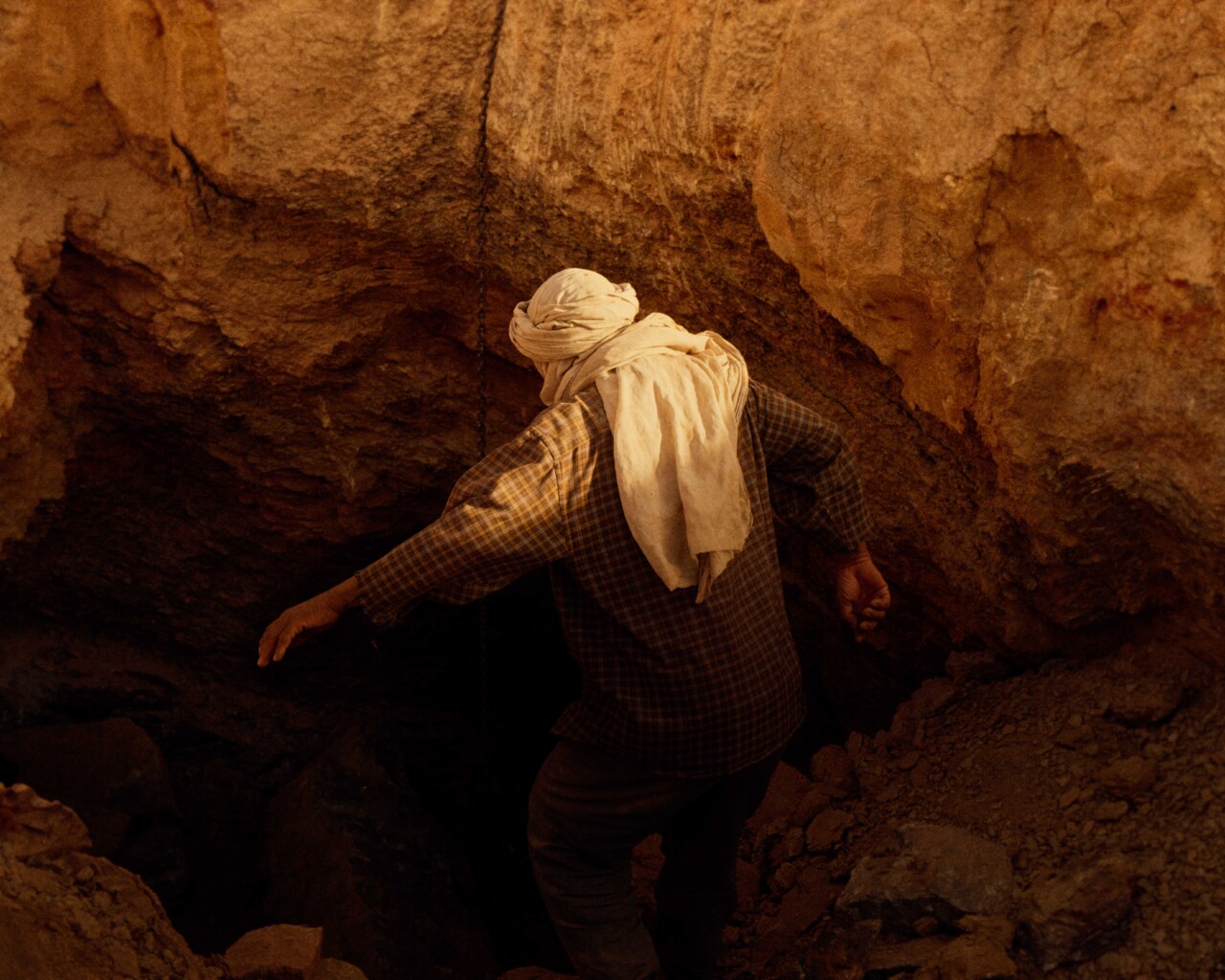
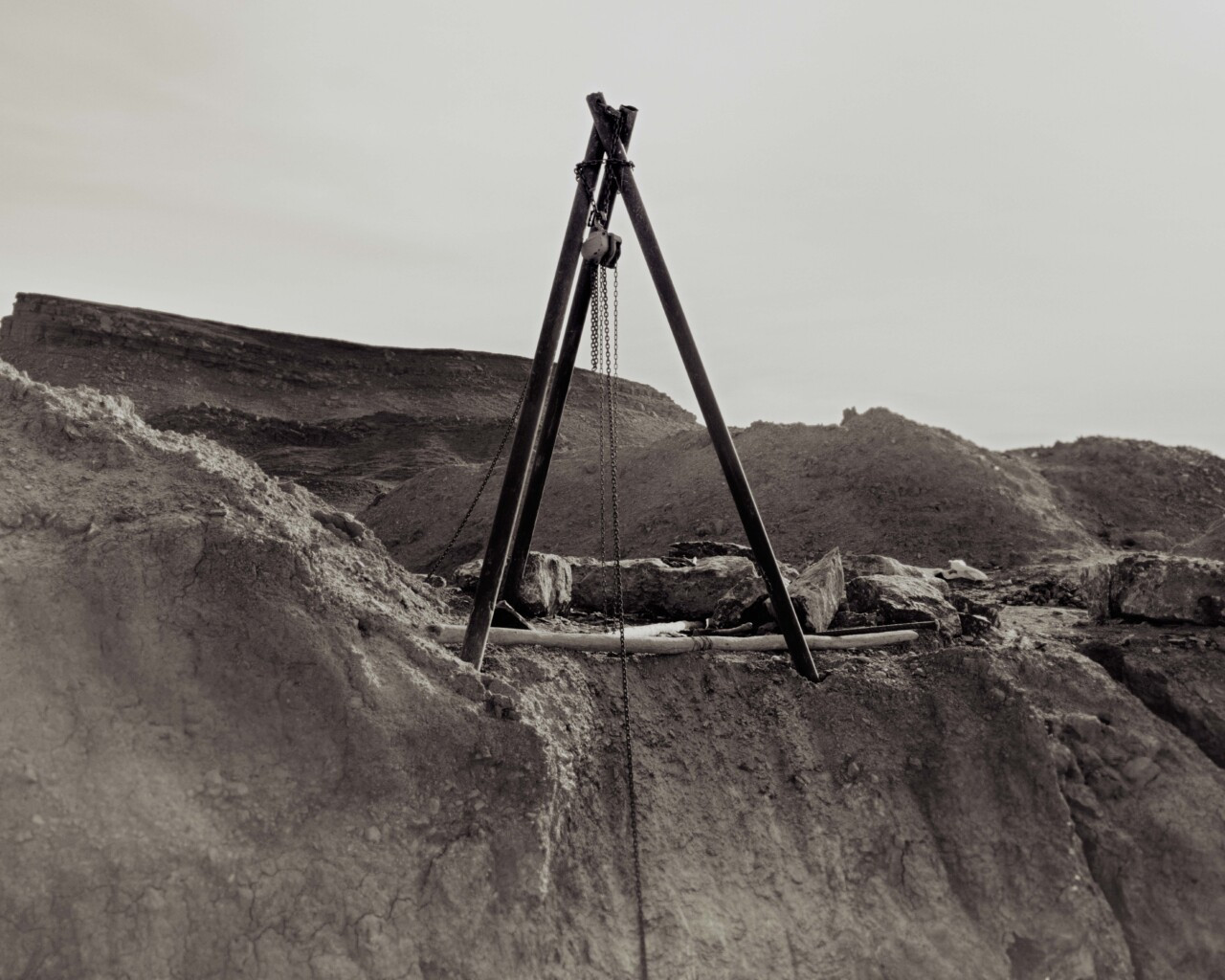
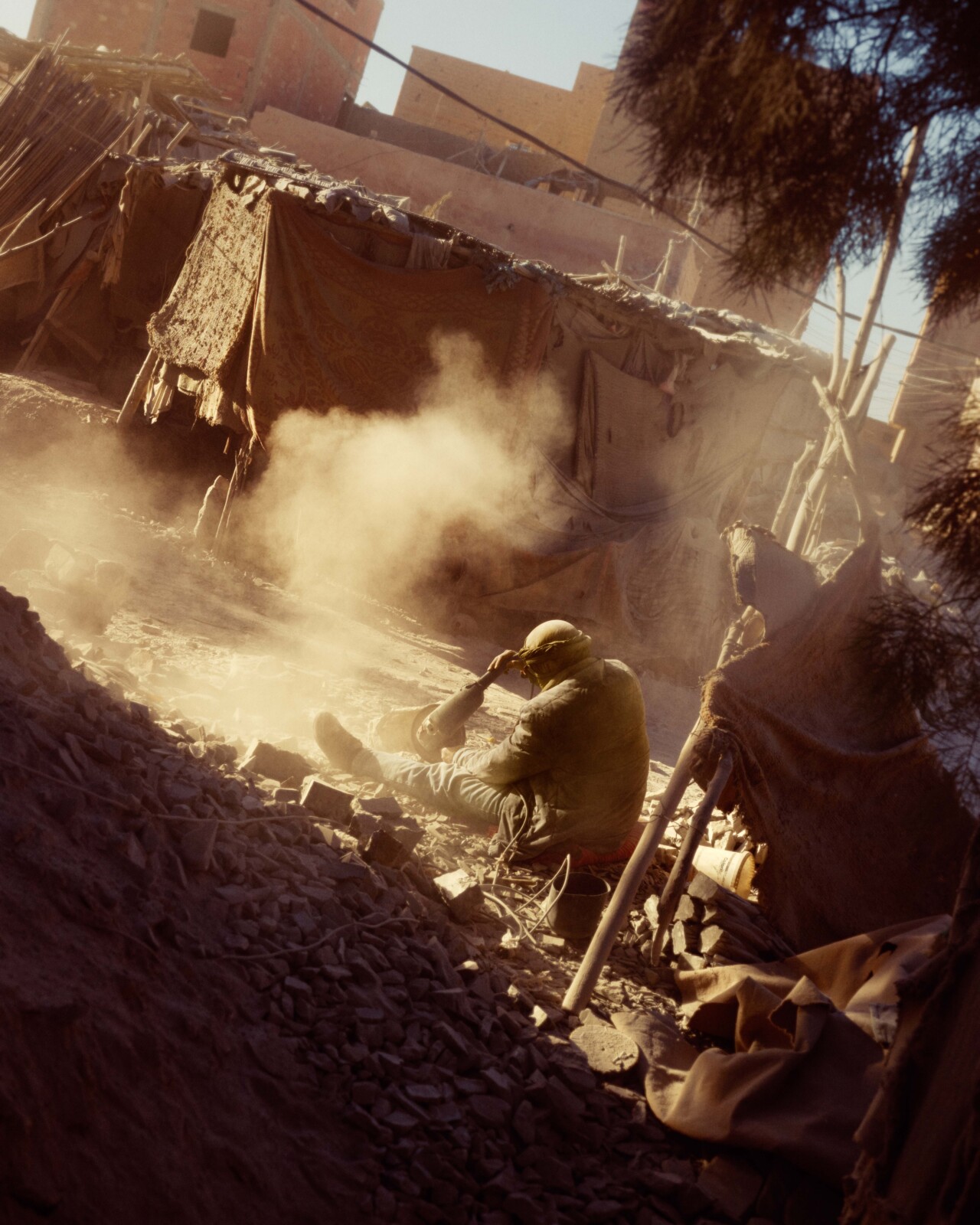
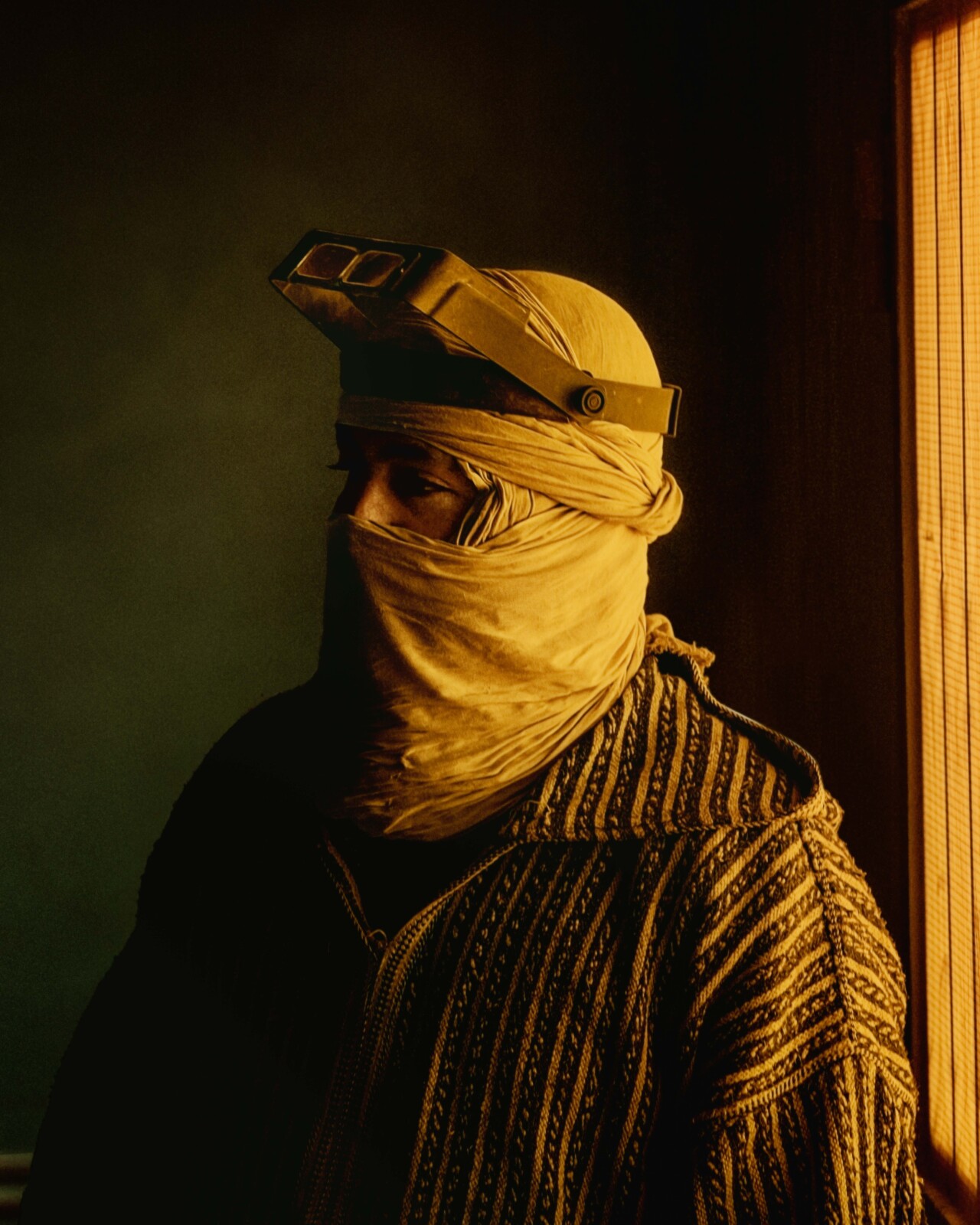
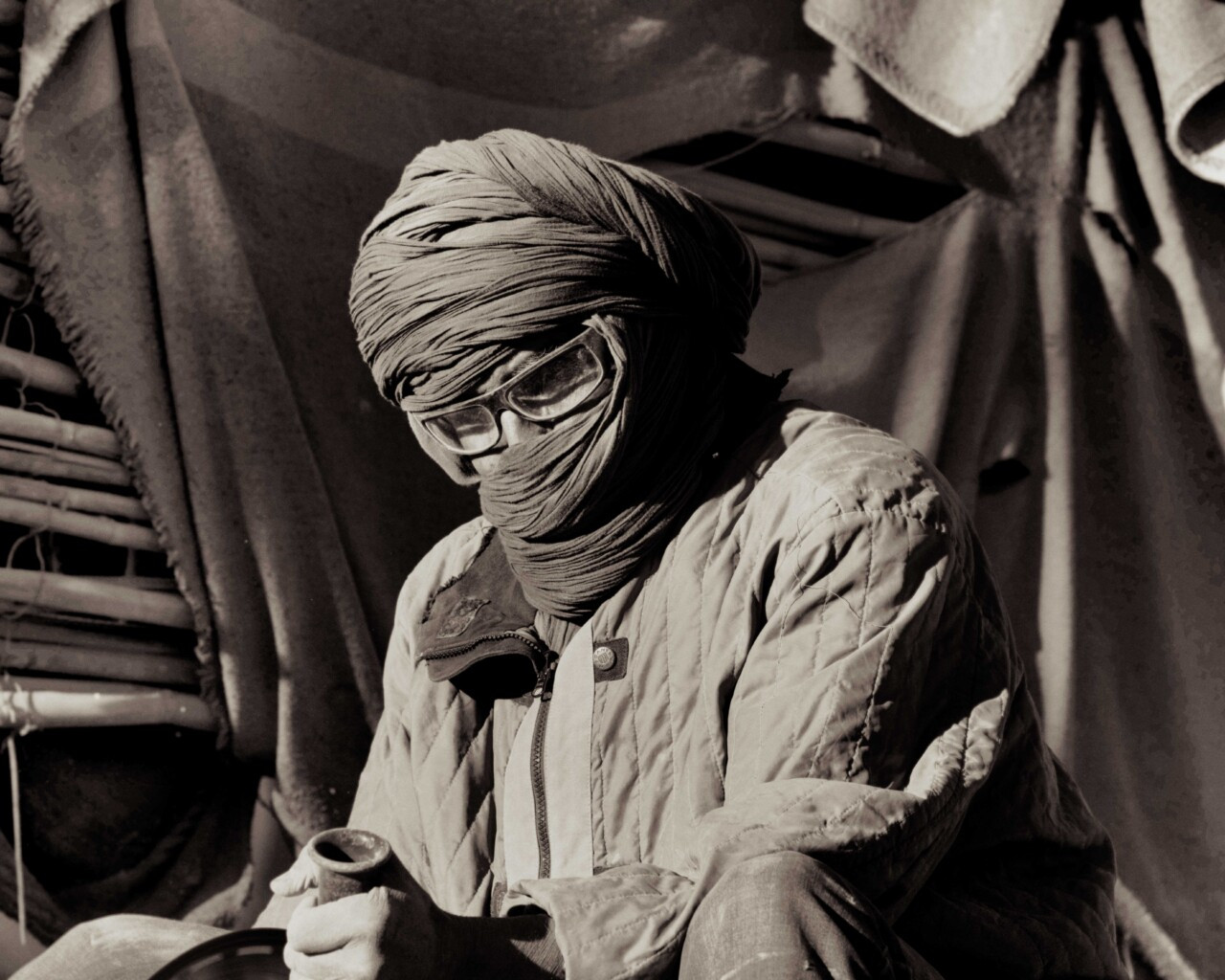
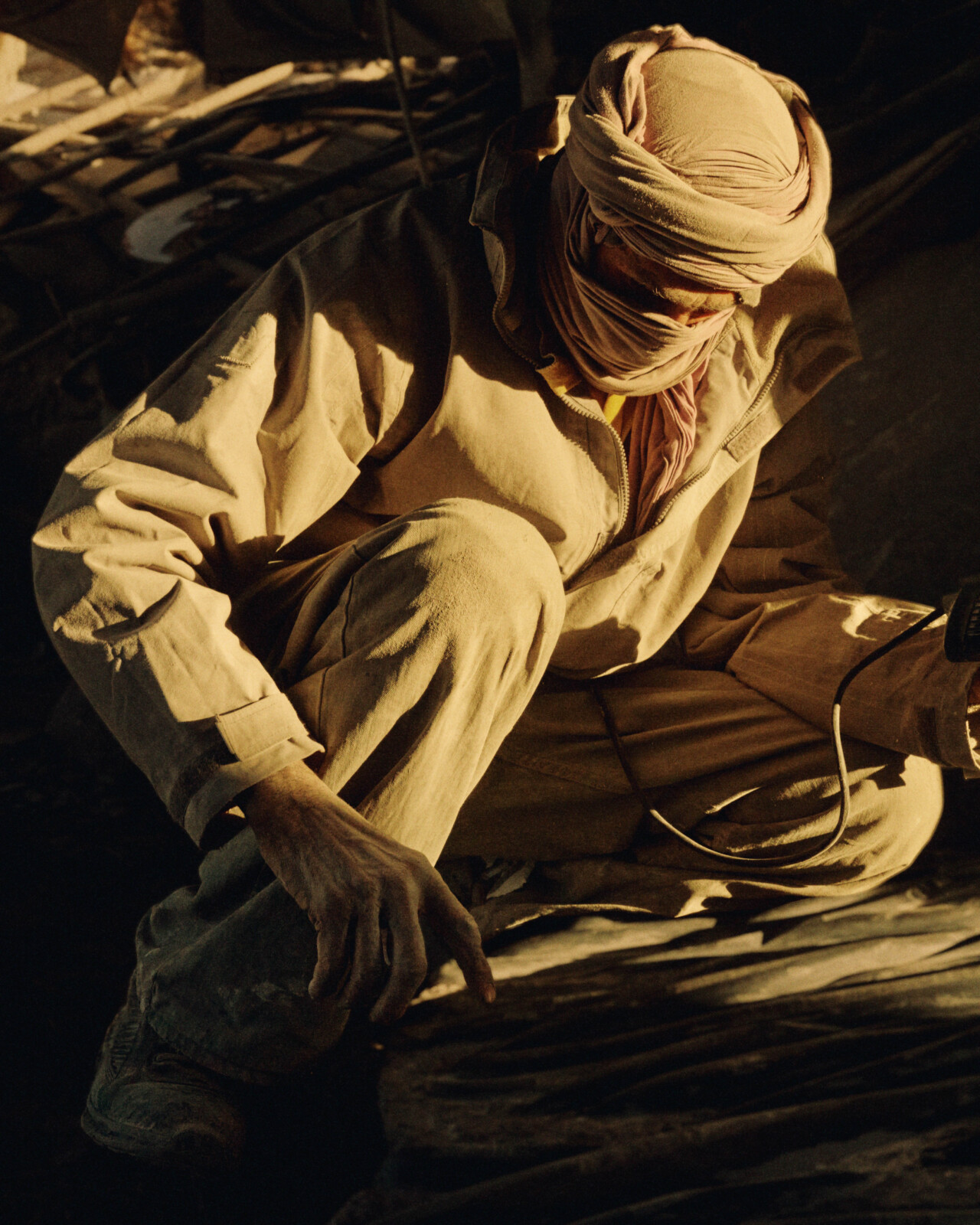
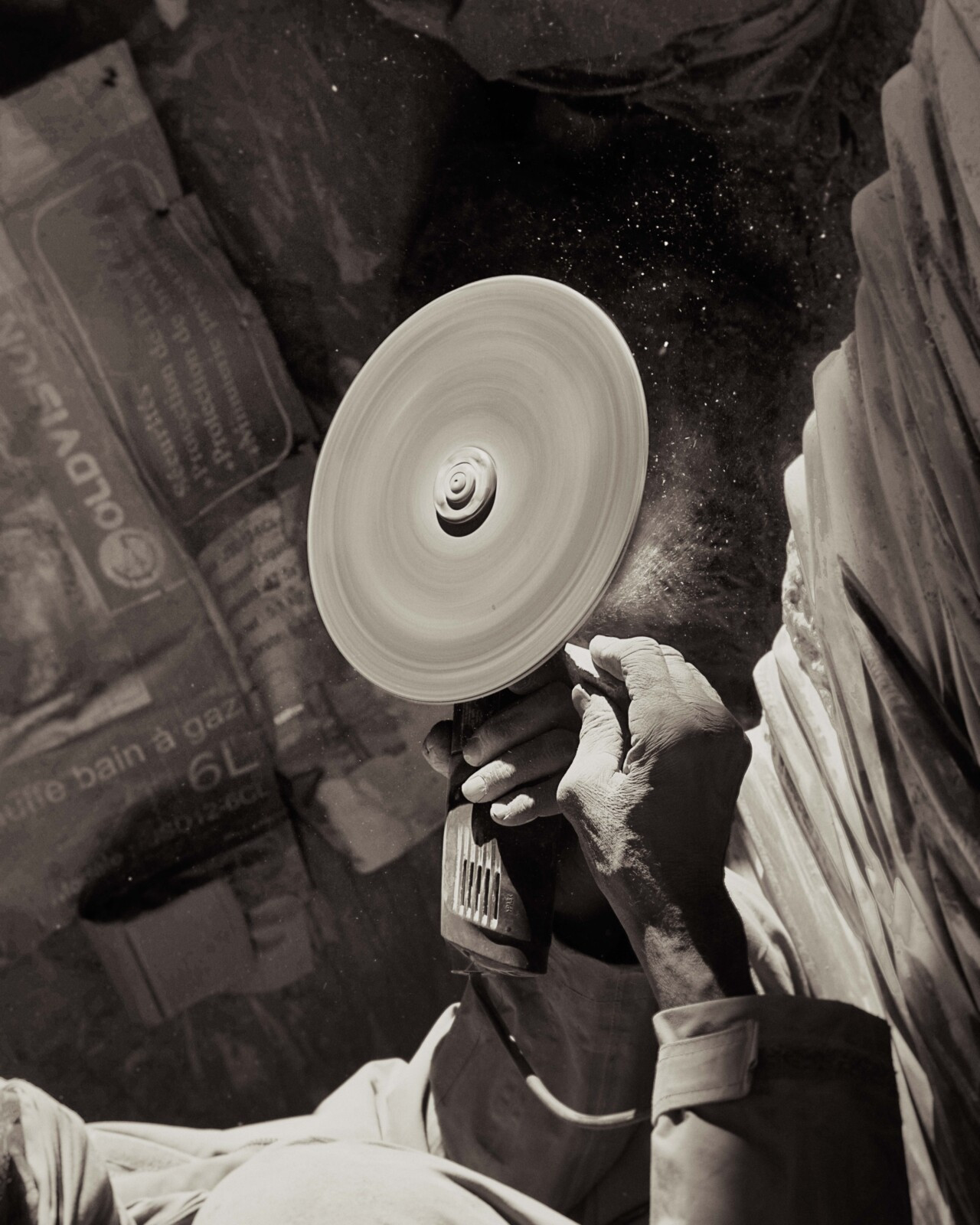
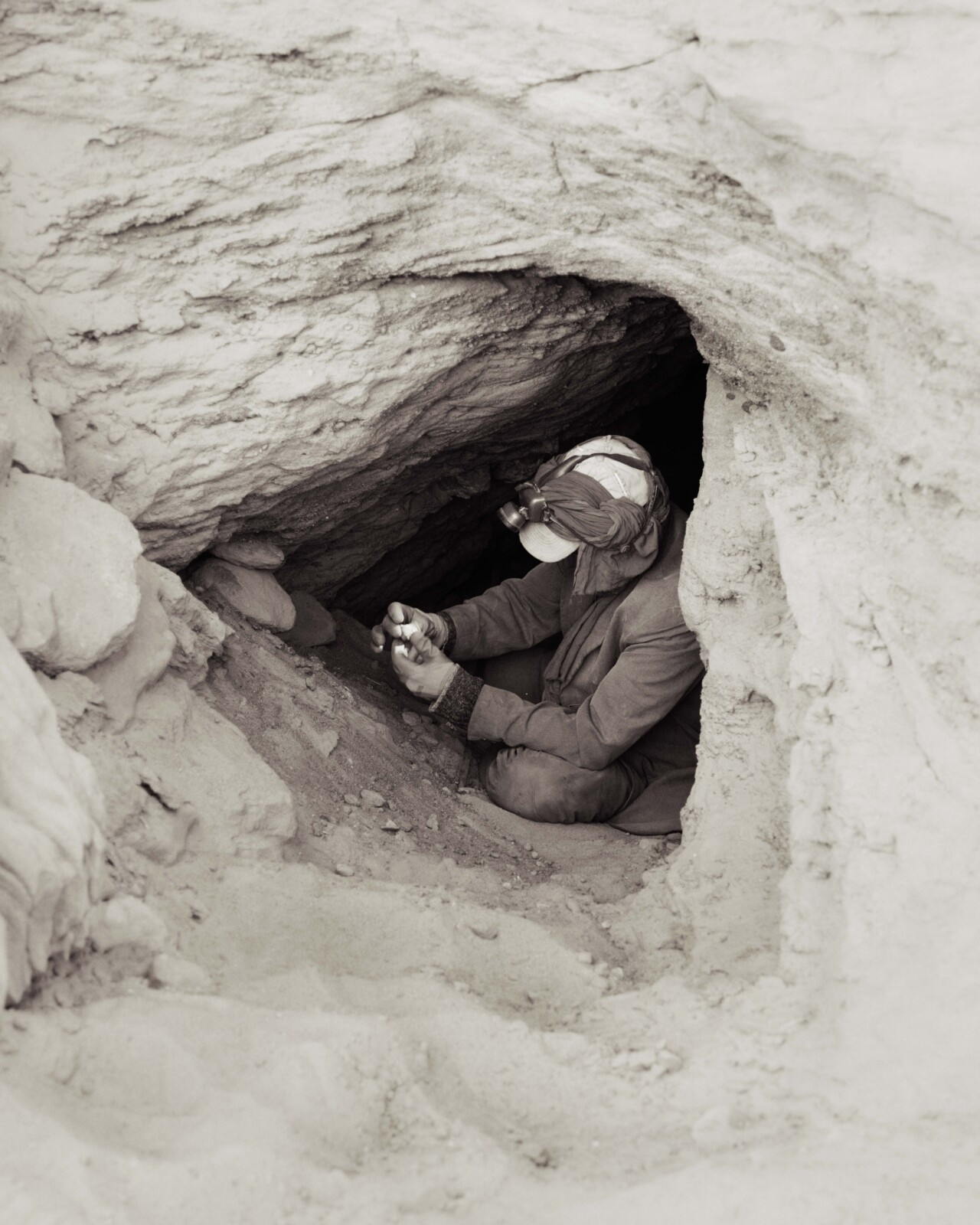
Today, miners uncover the region’s fossils by hand. In the desert heat, small teams comprised mostly of Amazigh with deep ties to the land work in shallow trenches and narrow pits, using picks and chisels to free fossils from stone. The labor is meticulous, repetitive, and physically demanding, unfolding over long hours in heat and dust. Because the fossils are fragile, miners rarely use dynamite. Instead, they work painstakingly slowly to extract each specimen intact.
A 2000 New York Times article captured the region’s fossil economy through Amar Taghlaoui, a foreman near Erfoud, who described the desert as the remains of an ancient sea. “It was a sea. But God has willed it dry,” he said. “We’re like fishermen living off the sea … except that our sea is dead.”
For many miners, the work is also a matter of survival. Drought and desertification have made traditional agricultural and nomadic livelihoods more precarious, so fossil digging has become one of the few reliable sources of income in parts of southeastern Morocco. The country’s fossil trade generates roughly $40 million a year and employs tens of thousands of people. But the miners who extract the fossils often see little of the money they generate. Most of the profit flows to dealers, exporters, and collectors overseas.
Fossils resurface at mineral and fossil shows in Tucson, Arizona, Denver, Munich, and Tokyo, where they are bought, sold, and recirculated. Some enter private collections. Others make their way to museums and research institutions, helping scientists reconstruct the history of life on Earth. But without the diggers, many of these fossils would have remained buried. Their labor makes discovery possible, even as they remain furthest from its rewards.
“Of course, I don’t like it, but there’s no alternative,” one miner told Atmos. “It’s very difficult, but I haven’t found another job, so I continued with it.” Another described how much the work had dwindled over time: “In the past, there were about 70 people working here,” he said. “Now we are around eight to 10 people.” There’s a strange irony in that. The fossils carry traces of one collapsing world. The people excavating them are living through another.
Most of what diggers are searching for are trilobites, marine arthropods that lived hundreds of millions of years before the first dinosaurs. They survived for nearly 300 million years before disappearing in the Permian mass extinction, which wiped out roughly 90% of life on Earth.
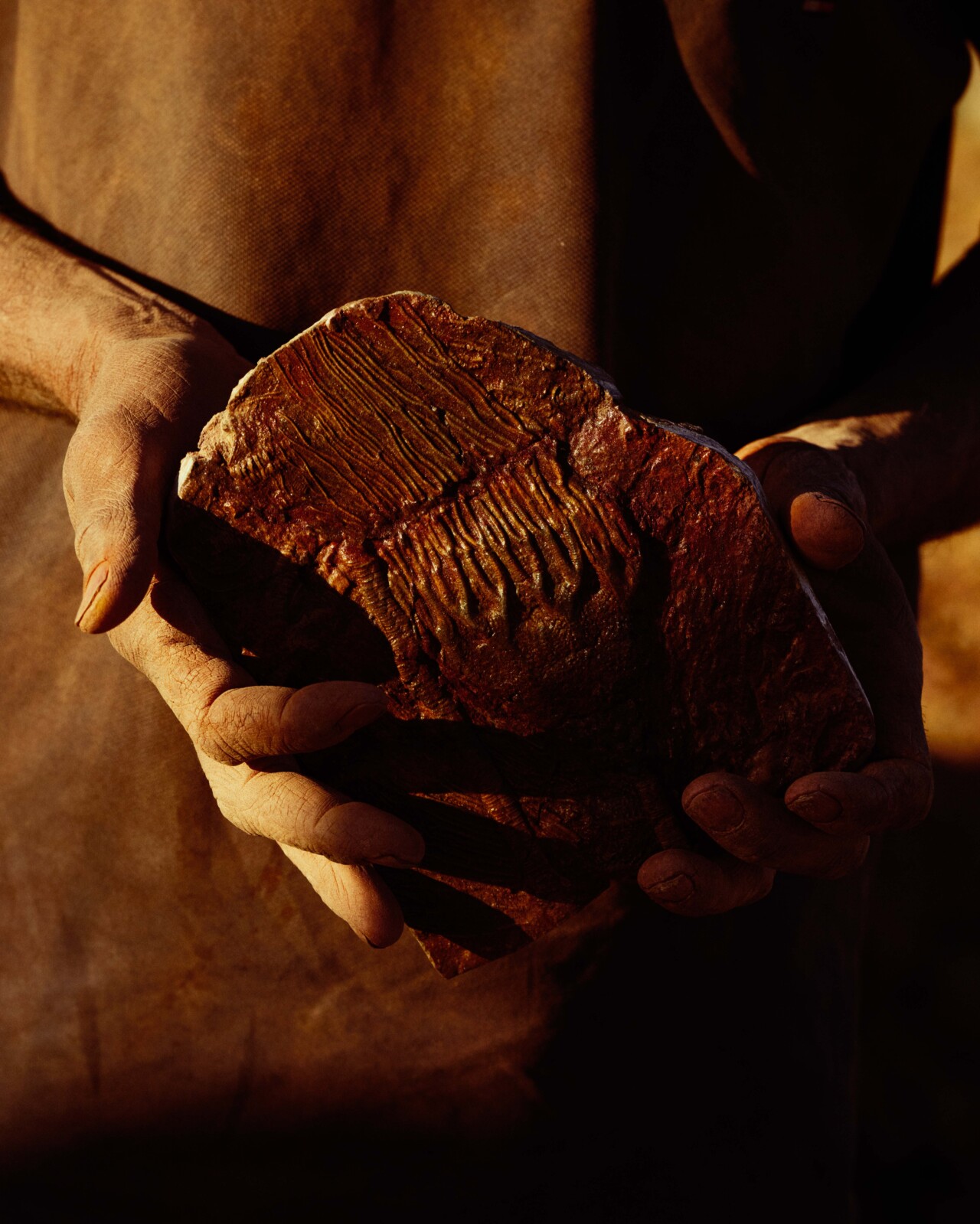
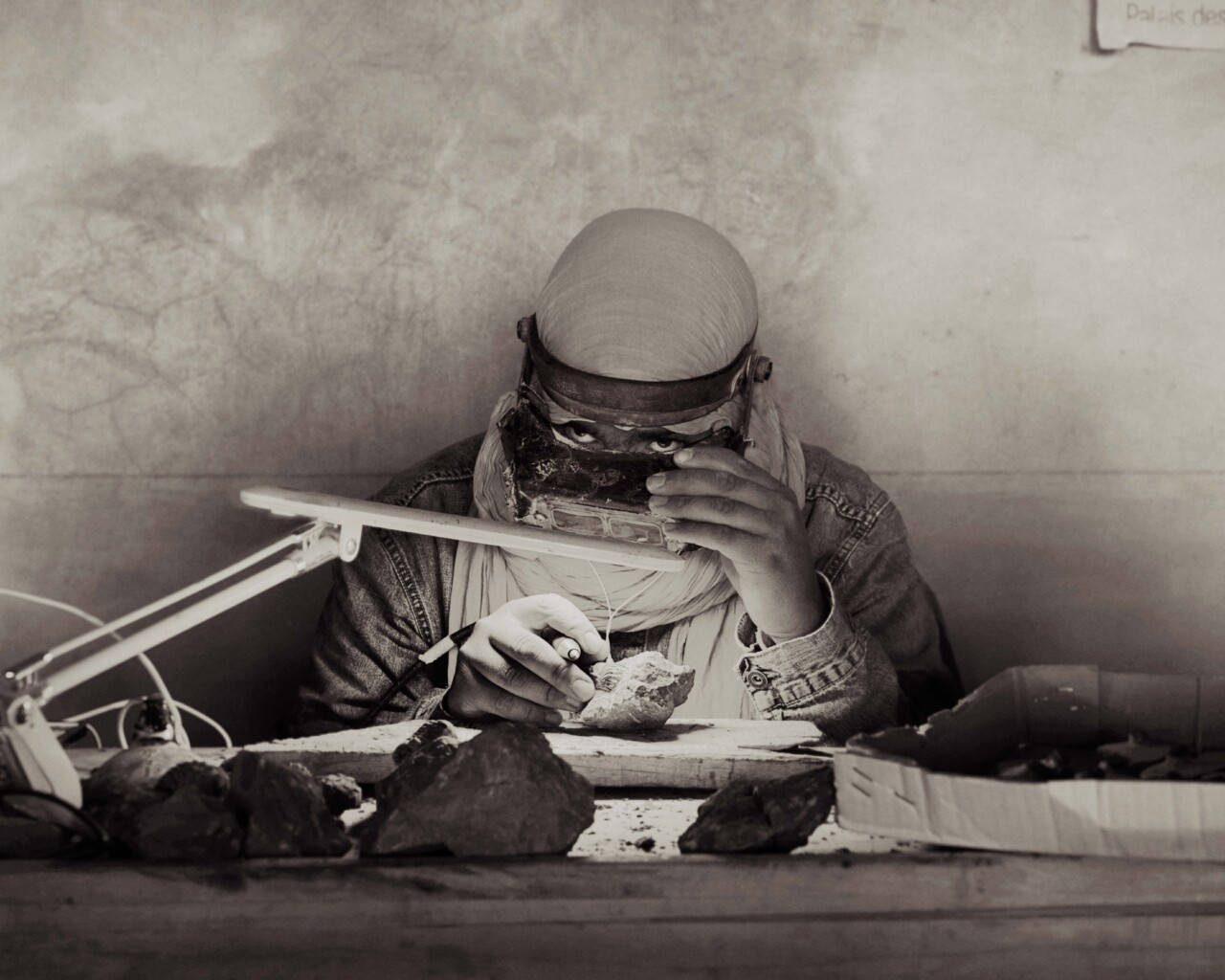
What gives Moroccan trilobites their uncanny clarity is the violence of their preservation. Many were buried almost instantaneously beneath underwater avalanches of sediment, protecting them from scavengers and slowing decay before time could erase them. Pressed into stone, trilobites can appear almost newly made: curled tightly into defensive postures, armored with long spines or elaborate ridges, their raised calcite eyes still capable of suggesting the light they once detected hundreds of millions of years ago. That realism is part of what makes them so scientifically valuable—and so easy to counterfeit.
More than 20,000 species of trilobite have been identified, though much about their lives remains unknowable. Scientists can infer anatomy, movement, and even evolutionary relationships, but the texture of trilobite life—their behavior, mating rituals, social interactions, or perception of the world—is largely inaccessible.
“These fossils from Morocco are 300 to 500 million years old,” Diego García-Bellido, co-author of The International Fossil Trade from the Paleozoic of the Anti-Atlas, Morocco, told Atmos. “They are telling us about a planet that goes through cycles, glaciations, and climate shifts. This has happened over and over again.”
The trilobites emerging from Morocco’s desert are evidence of a world that no longer exists. And once they leave the desert, they become part of a much more contemporary story: a modern marketplace that includes museums and research institutions, but also private collectors, luxury décor markets, and, at times, illicit trade. They become scientific evidence, commercial objects, and collectors’ items, categories that carry very different stakes. A fossil with clear provenance can help reconstruct the history of life on Earth. A fossil stripped of context may still have financial value, but much of its scientific meaning is lost.
For García-Bellido, a fossil’s meaning depends on knowing where it came from. “A fossil without provenance is just a pretty rock,” he said. Researchers estimate that thousands of Moroccan fossils circulate through commercial markets each year, many without detailed records of where they were found—information scientists rely on to reconstruct ancient ecosystems. A trilobite predates mammals, flowering plants, and most forms of life recognizable today. It belongs to no single person or institution. It carries meaning for science, for the landscape it came from, for the people whose labor unearthed it, and for the planetary history it records. “This is our heritage,” he said. “It’s Earth’s heritage. It’s not just mine.”
For Nigel Hughes, one of the world’s foremost experts on trilobites, that is what makes possession a limited way to think about fossils. “I’m not a person who possesses fossils. It is not important to me,” he said. “What matters is what we learn from the fossil.”
Hughes described the experience of splitting open a rock and finding a trilobite inside. “The last thing that looked at it was living 500 million years ago,” he said, adding that fossils are records of how life and Earth have transformed together across immense stretches of time. Trilobites helped scientists establish the geological timescale, the framework used to understand when major changes in Earth’s 4.5 billion-year history occurred, long before radiometric dating existed. “The Earth has a deep history,” he said. “And we’re able to learn from it if we choose to.”
The fossils emerging from Morocco’s desert do not simply tell the story of extinct creatures. They reveal a planet shaped by continual transformation: oceans becoming deserts, climates reorganizing themselves, worlds collapsing and reforming over and over again. Split open, a trilobite can seem almost impossibly intact, as though deep time has briefly surfaced into the present. What it preserves is change itself—proof that Earth has never been still, and that humanity is part of the same restless system.
In the end, every trilobite begins the same way: with a miner digging through the remains of a dead sea while the world around him changes once again. Perhaps the question is no longer who owns deep time, but what it means to inherit it at all.
Editor’s Note: Interviews with miners were carried out by photographer Max Miechowski.
Join our membership community. Support our work, receive a complimentary subscription to Atmos Magazine, and more.
In an Economy Built on Fossils, Who Owns Deep Time?