Image by Truth & Beauty / Moritz Stefaner Justin Stewart – SPUN
words by WILLOW DEFEBAUGH
“The signals say: A good answer is worth reinventing from scratch, again and again. They say: The air is a mix we must keep making. They say: There’s as much belowground as above. They tell her: Do not hope or despair or predict or be caught surprised. Never capitulate, but divide, multiply, transform, conjoin, do, and endure as you have all the long day of life.”
—Richard Powers, The Overstory
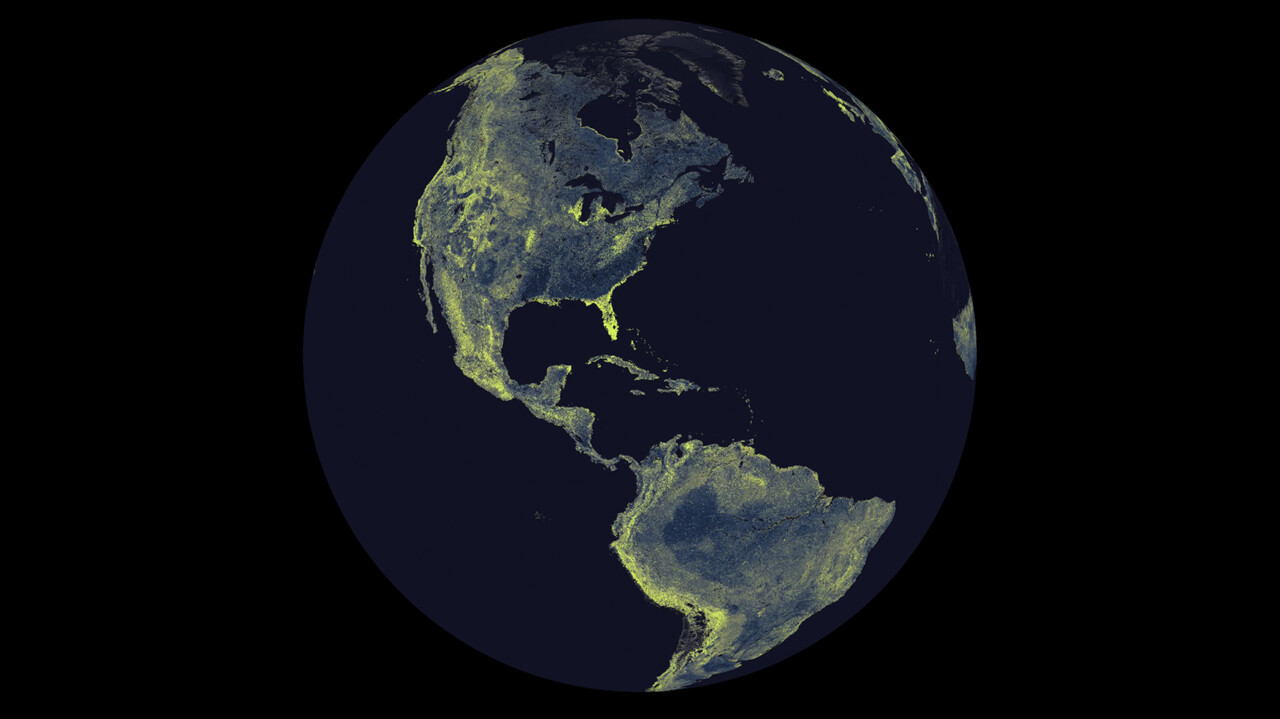
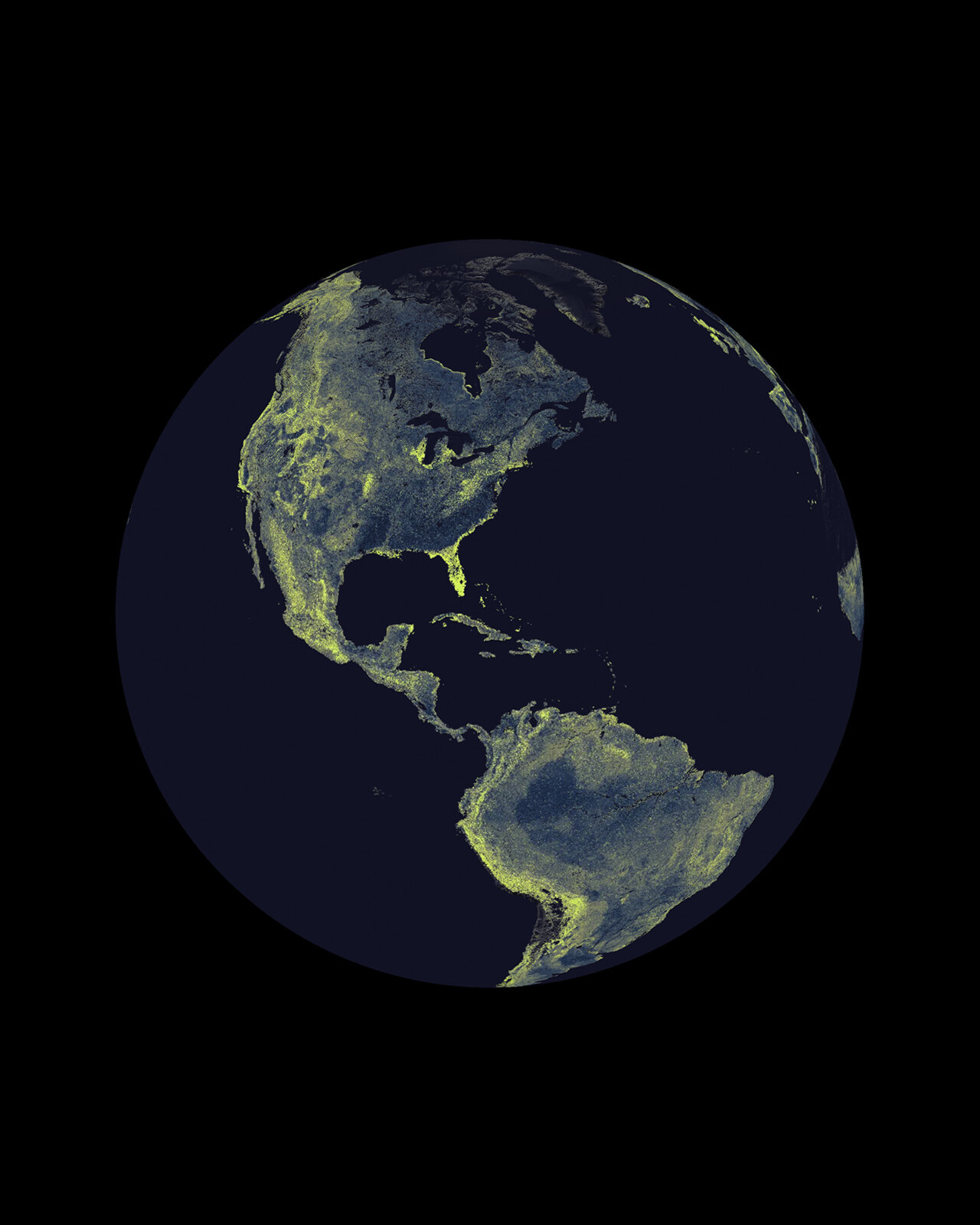
In the substrates of the Earth, life pulses unseen. Below the surface on which all our human feats and follies unfold, arbuscular mycorrhizal fungi form a vastly interwoven matrix, joining and reinforcing the roots of plants. The planet’s topsoil contains 68 quadrillion miles’ worth of these filaments, according to a new paper published in Science, a living labyrinth that could stretch from here to the sun nearly 1 billion times.
The ancient symbiosis between plants and arbuscular mycorrhizal fungi reaches back at least 400 million years, when our species was barely a glimmer in the eye of evolution. This means fungi were partnering with plants before birds were pollinating or mammals were dispersing seeds; without fungi, plants might not have proliferated on land. Over time, this mutualistic relationship has only flourished; today, it feeds more than 70% of terrestrial plant species.
It works like this: The arbuscular mycorrhizal fungi gather precious water and nutrients from the soil for the plants, in exchange for carbon-rich sugars and fats alchemized from sunlight by the plants through photosynthesis. The fungi’s threadlike filaments extend the reach of the plant’s roots, dramatically increasing their capacity to mine for minerals and moisture belowground. Among their tangled hyphae and roots, the boundaries of identity blur.
Mapping this fungal labyrinth required its own herculean effort of planetary symbiosis. An international team of researchers from the Society for the Protection of Underground Networks used data from more than 16,000 soil samples taken around the world. Aided by machine learning and a high-resolution imaging robot, the SPUN team was able to predict and measure the maze’s magnitude and reach—illuminating long-veiled patterns that sustain the Earth.
Beyond bolstering botanical wellbeing, the mycorrhizal fungi help uphold planetary balance. They collectively contain around 300 megatons of carbon, according to the study, which is four to six times the amount housed in all humans. This makes them a vastly overlooked carbon storage system. The researchers found that these fungal networks are especially dense below grasslands, which often receive fewer conservation protections than forests.
In 1997, Suzanne Simard, ecologist and recent guest on The Nature Of podcast, unveiled through groundbreaking research how trees can exchange carbon through mycorrhizal networks. Nearly three decades later, SPUN’s map widens our view of these webs to a planetary scale, revealing how they extend far beyond the edges of forests across the Earth. When you watch the sway of grass in a prairie, or flowers in a meadow, you’re only seeing half the story.
Not all growth is visible. As much happens in the loam of living as it does above. And it does so through relationship: abundance liberated through the dissolution of individualism. As obligate symbionts, arbuscular mycorrhizal fungi are largely unable to complete their life cycles on their own. They embody a dependence that reaches into the dark unknown—a maze we may spend our lives endeavoring to map, one that stretches far out into the cosmic soil—and gives back.
Basemap vector tiles Protomaps, derived from © OpenStreetMap contributors, available under the ODbL Satellite imagery EOxCloudless (cloudless.eox.at), contains modified Copernicus Sentinel data 2025 Terrain and hillshade Derived from the Mapterhorn open global DEM
Join our membership community. Support our work, receive a complimentary subscription to Atmos Magazine, and more.
A Hidden Universe: Underground Fungi Could Stretch to the Sun Nearly a Billion Times