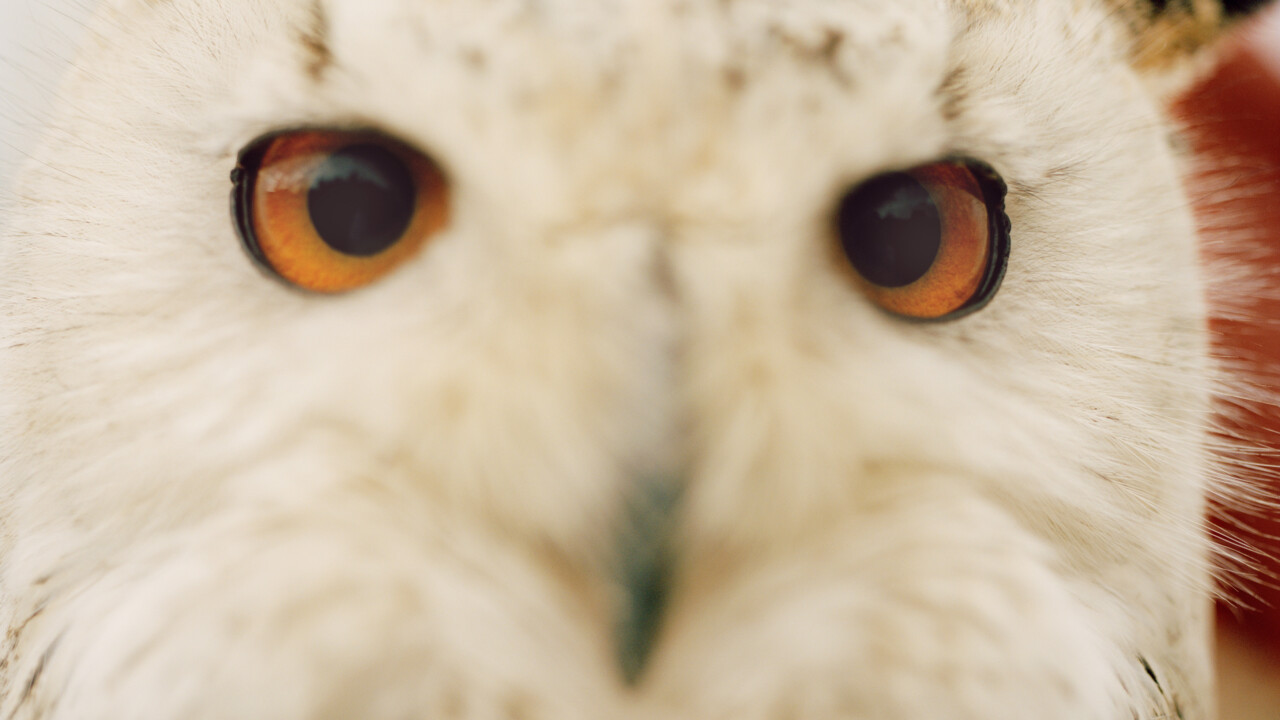
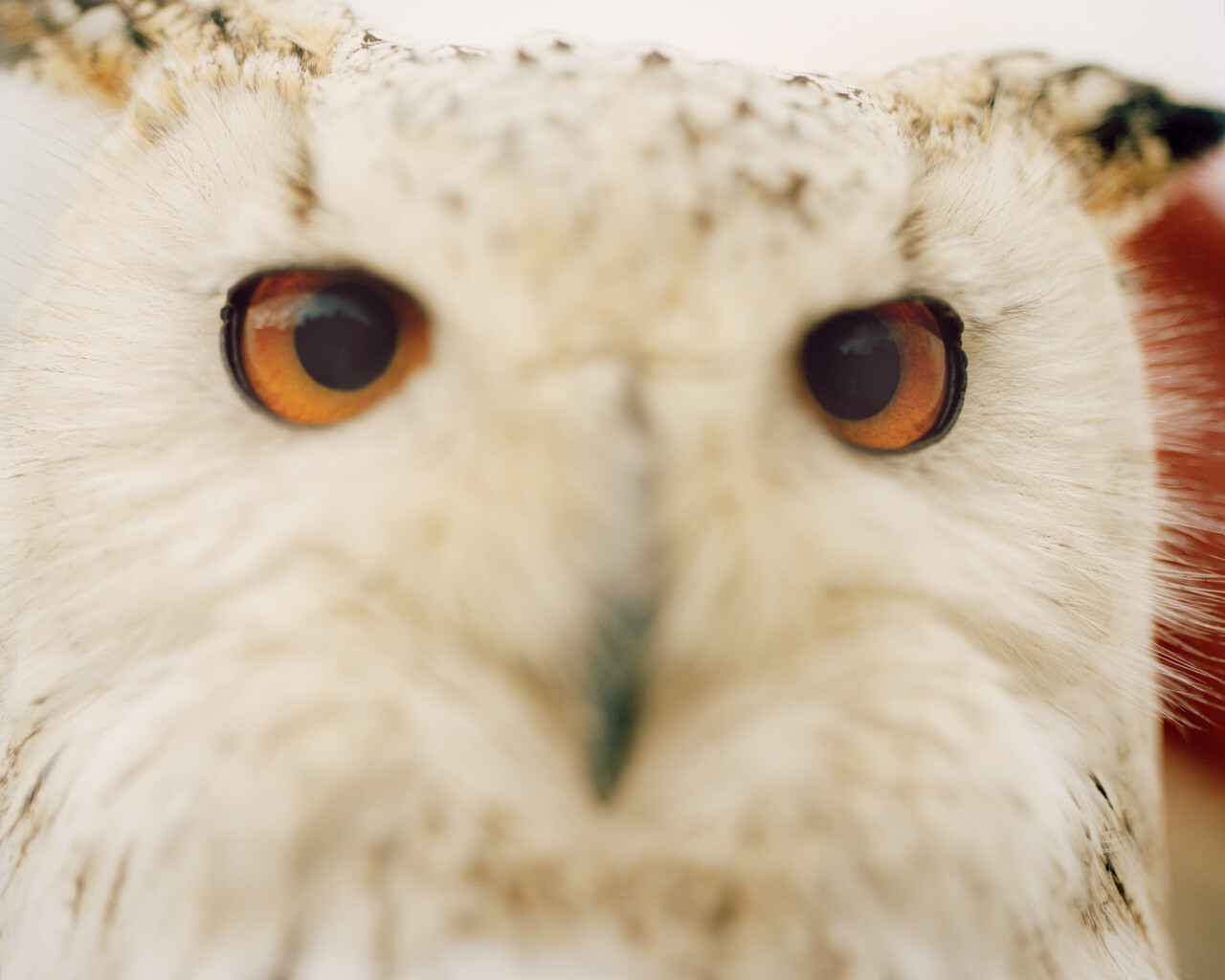
Photograph by Bea De Giacomo
words by willow defebaugh
“We are drowning in information, while starving for wisdom.”
—E.O. Wilson
In Greek mythology, Athena is often depicted with an owl perched on her shoulder. This Athene noctua was a symbol of her role as the goddess of wisdom and strategy. To this day, we associate these birds with wisdom; we even refer to a group of owls as a parliament, what is meant to be a convening of intelligent minds. I wonder what they might whisper in our ears in this Information Age, when knowledge has never been more abundant yet wisdom seems scarce?
Owls belong to an order of birds called Strigiformes. The 250 species known to exist can be found in just about every ecosystem—from the desert owl to the great horned owls that inhabit coniferous forests to the snowy owls of the arctic tundras. The smallest, the elf owl, is only about half a foot tall; the largest, the Blakiston fish owl, can reach two and a half feet. Beyond their signature sharp claws and hooked beaks, owls share a keen ability to discern what others miss.
Across the ages, owls have been believed to be prescient—able to foretell the future. While we may never be able to verify that credulous belief, we do know they have expert vision. They are able to see in the dark thanks to their big eyes, which in some species are even larger than human eyes. Perhaps stranger still, rather than spheres, their eyes are long and tube-like in shape. As such, they are unable to move their eyes in their sockets, but instead possess the ability to rotate their necks 270 degrees around.
Owls know that there are other ways of looking at the world. If you’ve ever spotted one at night, you might have seen their eyes glowing eerily. The haunting, orange-red hue these nocturnal creatures exhibit is thanks to a phenomenon called eyeshine. An additional layer of tissue behind their retinas reflects visible light, giving them the ability to see exceptionally well in the dark—an invaluable tool, when the majority of your time is spent shrouded in shadow.
It’s not just their unusual sight that allows owls to expertly perceive their surroundings; they also have a sharp sense of hearing. Most species have asymmetrical ears, which are helpful for pinpointing a sound in space. When the time comes to act upon their senses, they do so with finesse and precision: thanks to having both a wide wingspan and soft feather tips over stiff ones, owls are able to soar and swoop with silent grace. This makes them expert hunters, able to surprise prey including rodents, insects, fish, and even the occasional large mammal.
Meanwhile, we humans have learned to gather information at unprecedented speeds, but at a cost. In 2008, researchers at UC San Diego estimated that the average American consumed about 34 gigabytes of information and 100,000 words every day. That was before smartphones and algorithms transformed the internet into an endless stream of personalized information. Research shared in 2023 found that the average person now spends just 47 seconds focused on a screen before switching their attention elsewhere.
The accumulation of information that we call knowledge is a far cry from wisdom. Wisdom is less about knowing everything than it is about learning where to look. The modern age requires continuous discernment as to where we perch our attention, as well as a willingness to rotate our perspective and take a wider view. Information alone can sculpt a grim effigy of our future, but it is not carved in stone. Not so long as there is still a world here waiting for us to perceive it.
Editor’s Note: This is an edited version of a newsletter edition first published in 2023. To read more from the archive, check out The Overview book.
Join our membership community. Support our work, receive a complimentary subscription to Atmos Magazine, and more.
Athena’s Owl: Wisdom for the Information Age