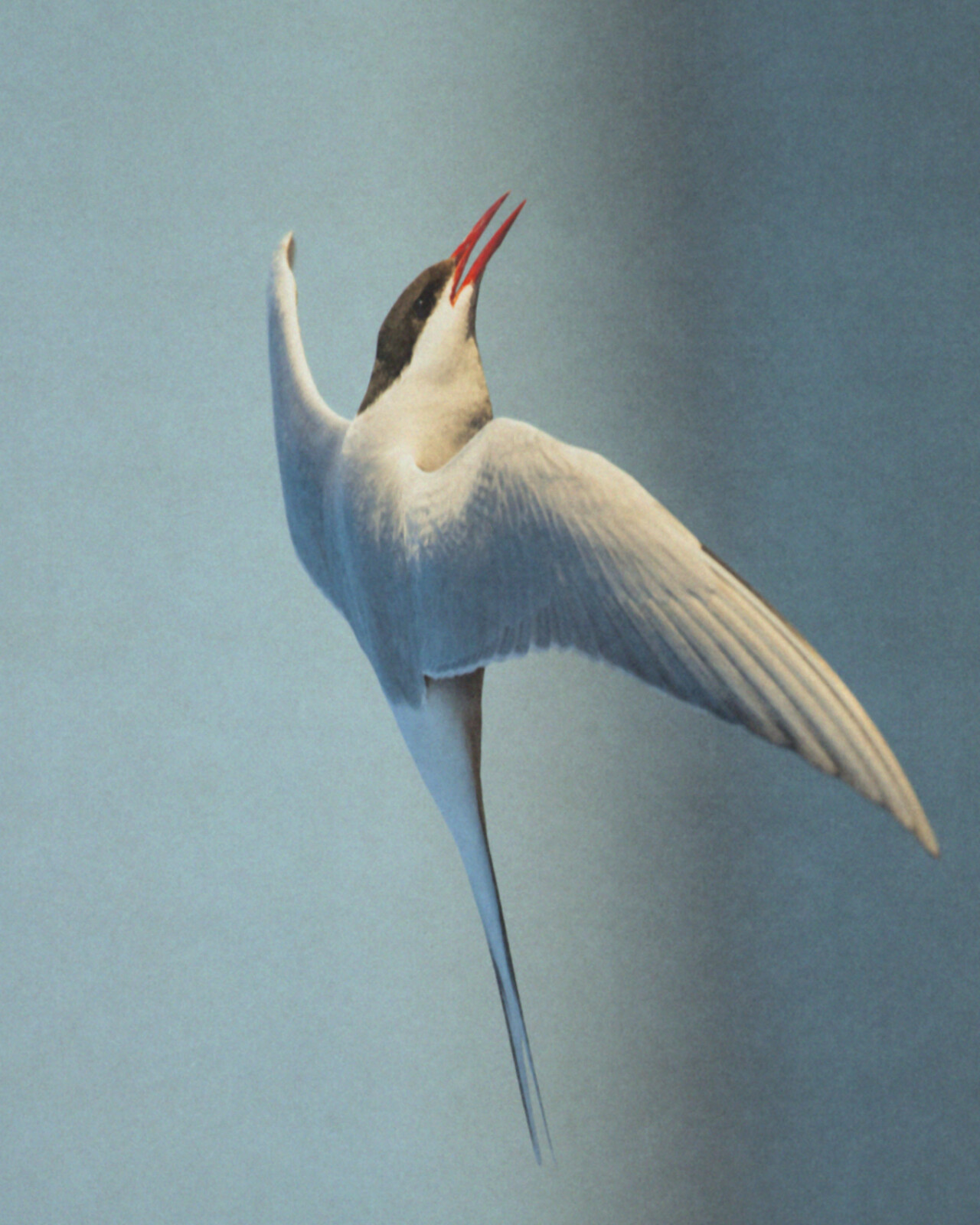
Photograph by Paul Souders / Getty Images
words by willow defebaugh
“Every day is a journey, and the journey itself is home.”
—Matsuo Bashō
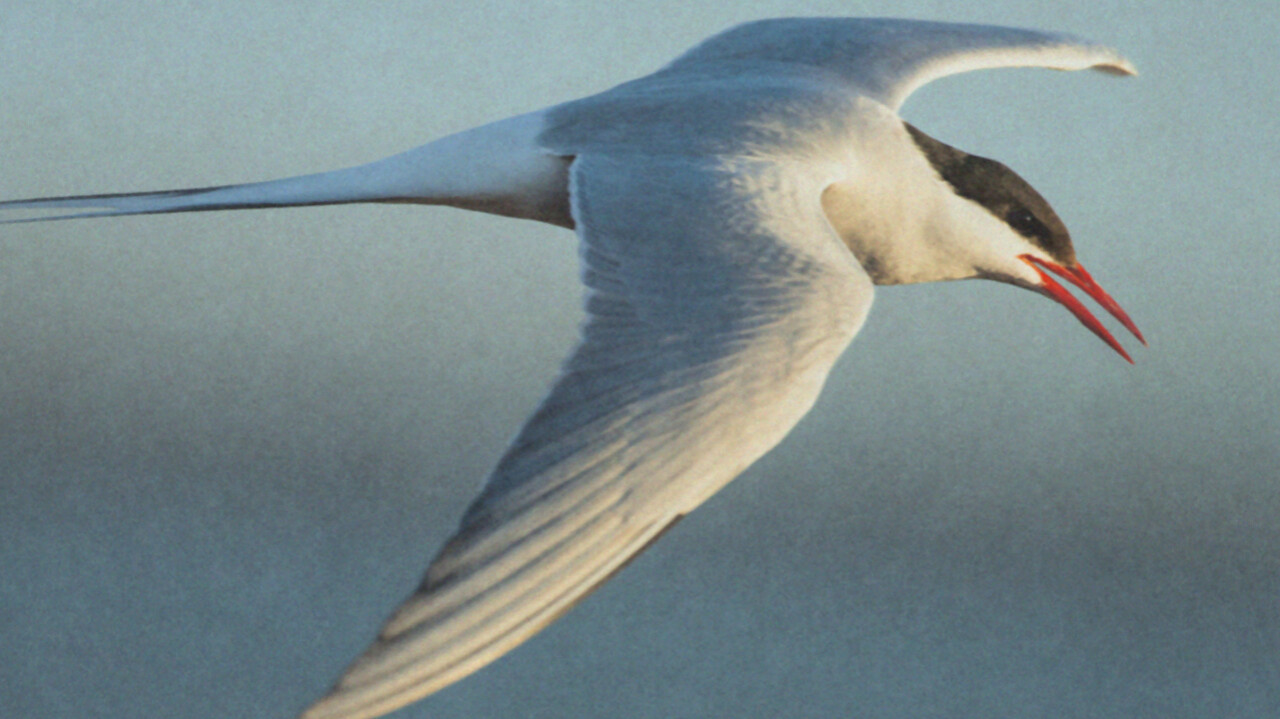
There are moments in life—increasingly fleeting, precious—when the Earth itself seems to still. When the air around you feels taut as a bowstring, as if a single breath might loose the arrow. Only it’s not an arrow, not in this particular moment, though its shape is just as sharp: white and black fletchings, expertly fashioned for flight. Those wings belong to a bird you have read about but never seen, known for making the longest annual migration of any animal: the Arctic tern.
Arctic terns fly up to 60,000 miles each year from the Arctic to the Antarctic and back again. They may travel the equivalent distance of up to four round trips to the moon in a life that can span three decades. Eternally evading the harshness of polar winter, they chase the undying glow of summer when life is at its most abundant. They spend over three quarters of their year under the sun, more than any other wild-living thing: forever fleeing the darkness, flying for the light.
The sun itself may be one tool Arctic terns use to navigate their worldward voyage, though it is not their only compass. They likely chart their paths using some combination of Earth’s invisible geomagnetic field, visual landmarks, experience, and celestial awareness—the position of the sun interpreted through their internal clocks—while adjusting their journeys according to winds and the availability of food. In the course of living, nature offers many compasses.
The Arctic tern’s trip is asymmetrical. They take around three months to travel southward, while only about a month to return north. At just about 4 ounces, they can cover hundreds of miles a day, with some birds averaging more than 400 miles daily. Their narrow, elongated wings generate lift and reduce drag in order to travel far with minimal energy, while their forked tails give them fine control as they maneuver and change direction. They are built to endure.
In this unparalleled pole-to-pole journey, Arctic terns forsake the straightforward path. A study tracking 11 of these birds revealed an unexpected stopover. Rather than flying directly south, the terns flew southwest to the middle of the North Atlantic, where they stayed for around 25 days to refuel. Oceanography appears to draw Arctic terns to this place: What might look like empty, open water is a place where warm and cool currents converge, making for rich feeding grounds.
Their boreal summer is spent among the colony: breeding and rearing their young along rocky coasts, beaches, and tundras. Walk too close to their nests, and they will swoop down and strike you with arrow-like precision. Meanwhile, their austral summers in Antarctica are more dispersed: With no nests to defend, Arctic terns spend their time molting, feeding in food-rich waters, and resting on ice. Even in a life of perpetual summer, purpose has its seasons.
Do Arctic terns ever lose their way as they chase the curve of the Earth? Do they know the moon is within reach while they seek the midnight sun? The journey of a life is no small thing. We pass our days searching for maps when all around us—within us—are compasses. Surely that is what led you to this place where everything is silent and still, save for a flock of birds soaring on the draft of an answer: You can never be lost when the length of the world is your home.
Join our membership community. Support our work, receive a complimentary subscription to Atmos Magazine, and more.
The Worldward Voyage of Arctic Terns