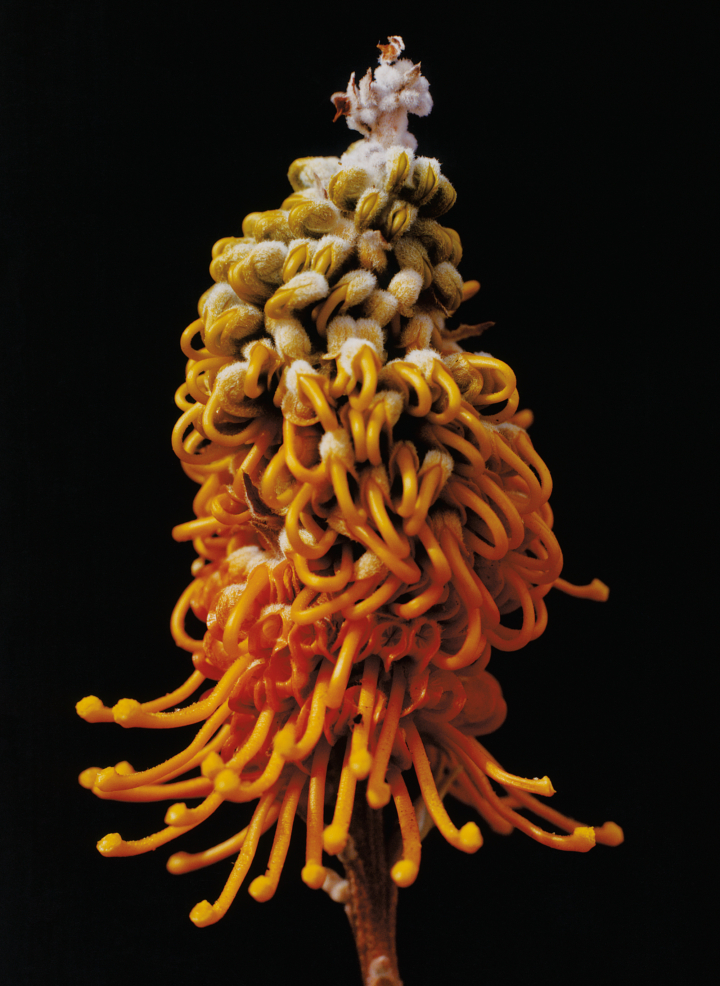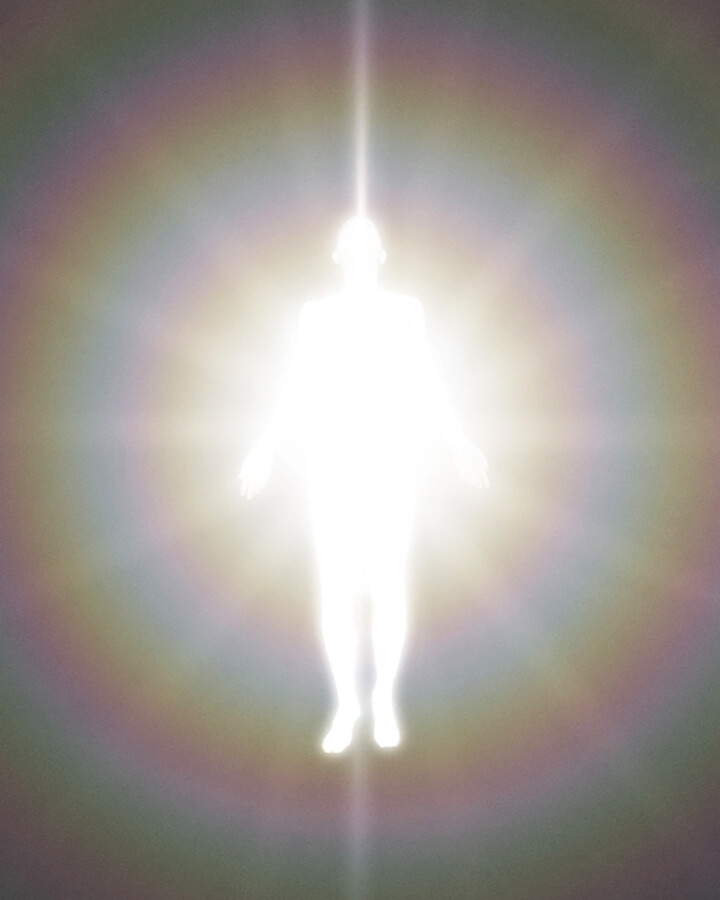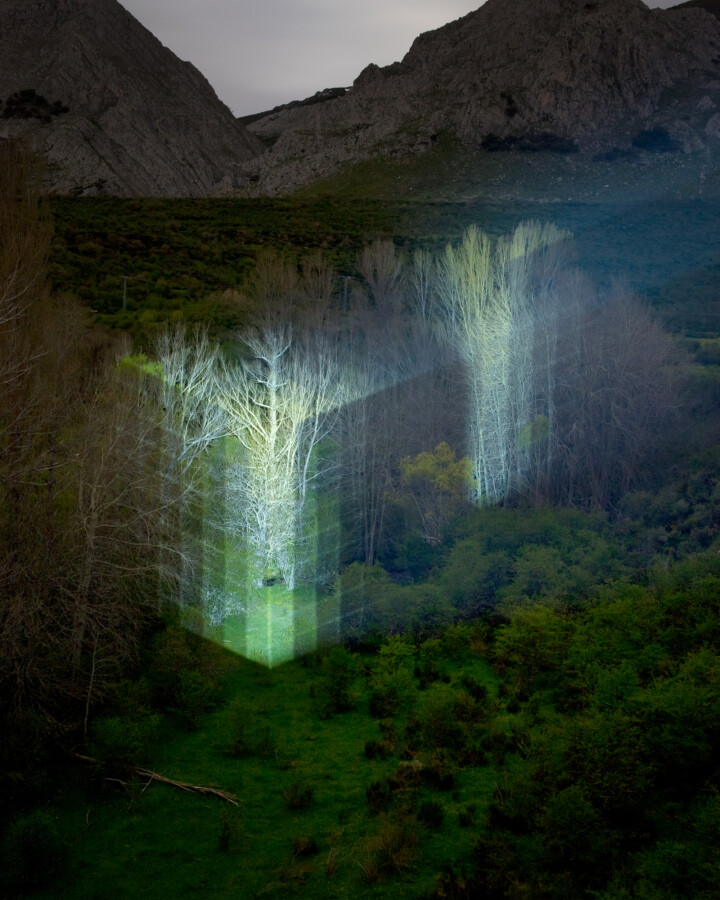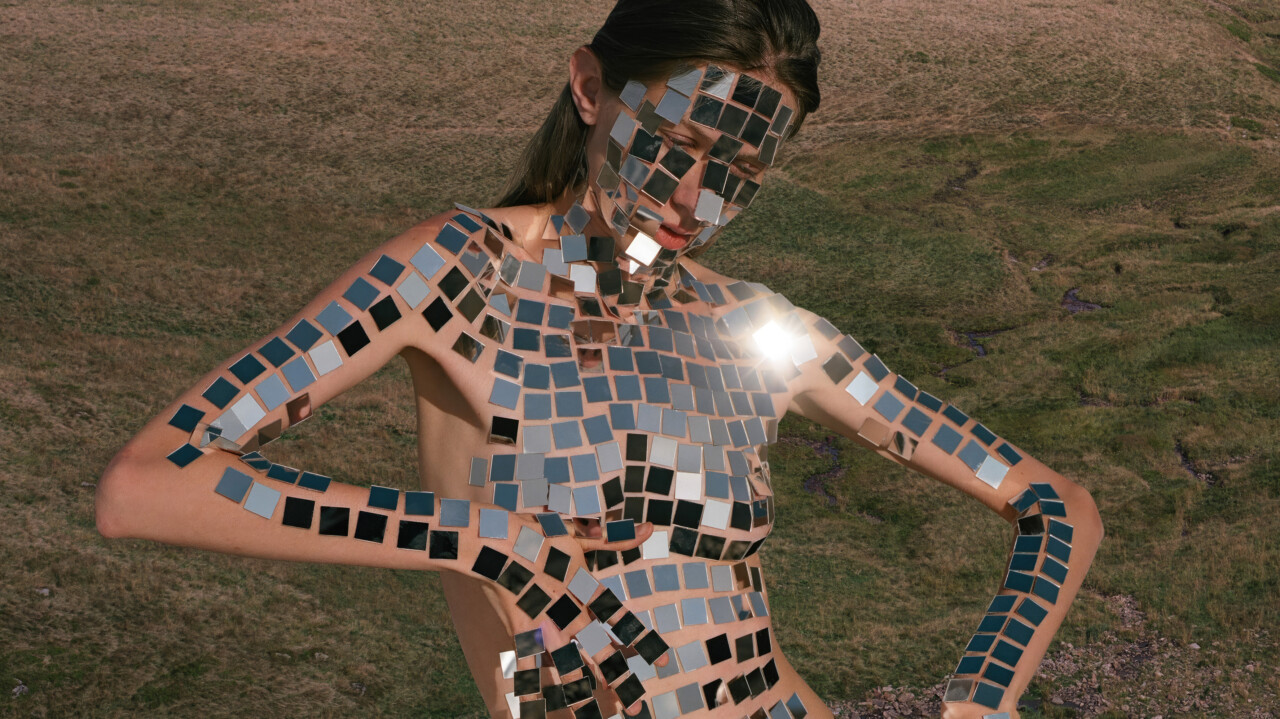
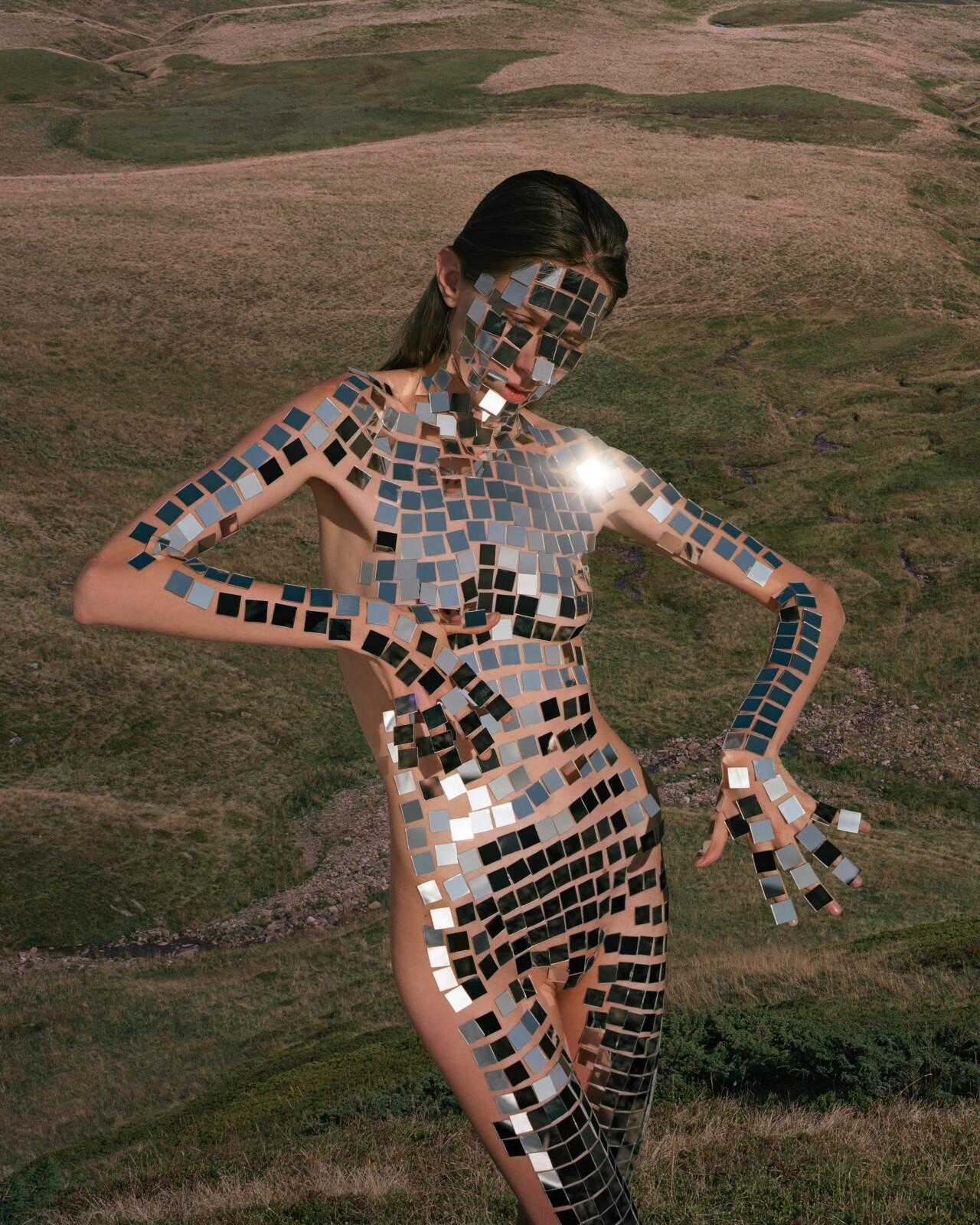
Photograph by Synchrodogs / Connected Archives
words by willow defebaugh
“How wonderful that we have met with a paradox. Now we have some hope of making progress.” ―Niels Bohr
We live in a universe of particles and waves. In classical physics, particles were believed to occupy specific places and follow definitive paths, while waves spread out and create distortions. These categories were thought to be mutually exclusive. That changed in the 20th century with a series of discoveries that found light could not be contained neatly in one of these categories; rather, it bent them. What gives shape, color, and texture to our lives turned out to be a paradox.
In some experiments, light acts as a wave, spreading out and producing patterns of interference. In others, light acts as a particle, arriving in distinct packages called photons. Danish physicist and philosopher Niels Bohr, who won the Nobel Prize in 1922, proposed that these apparently contradictory ways of understanding light were in fact complementary: each revealed an aspect of reality that would be incomplete on its own, but together illuminated a holistic picture.
Bohr’s revolutionary notion of complementarity brightened our understanding of the universe. Many of his fellow physicists embraced this way of perceiving the quantum world that thrums behind this one. Through the lens of complementarity, opposites do not negate one another, and duality reveals more dimensions of existence. Rather than contradiction being taken as evidence of falsity, it opens the door to a wider view. Paradox expands our understanding.
In an essay published in 1949 that reflected upon decades of dialogue and debate with fellow physicist Albert Einstein, Bohr famously remarked that the opposite of a fact is a falsity, but the opposite of a “deep truth” often contains another deep truth. The profundity of this statement has broader applications than just quantum physics. After all, how we observe reality scientifically can hold a mirror to how we live our lives personally, culturally, and ecologically.
On a personal level, I am learning to embrace complementarity. As a trans woman of mixed ethnicity, I do not fit neatly into categories. I am both scientific and spiritual, superficial and deep, independent and symbiotic. Each of these truths reveal dimensions of myself that could not be captured in isolation. When I try to contort myself into boxes, I find only confinement. When I welcome paradoxes, I find myself expanded. New dimensions of life open to me.
We are living in a time of competing cultural truths that goes beyond the twisting of facts into falsities. In the United States and many other countries, it can feel as if we are living in fragmented realities. And yet, some realities can only be understood from multiple perspectives that might seem contradictory at first glance. What if we allowed our truths to coexist rather than constantly trying to convince each other to see the light, when light itself is a paradox?
Nature is full of paradoxes. I have written many essays about collaboration and interdependence, largely to counter dominant scientific narratives of competition and natural selection. But these are also undeniable aspects of nature, which could never be just one thing because it is a word we invented to encompass everything. It is a balance of stability and chaos, life sustained by death, individual yet relational, both brutal and beautiful—and all of it, complementary.
Join our membership community. Support our work, receive a complimentary subscription to Atmos Magazine, and more.
Complementarity: The Beauty of Embracing Paradox