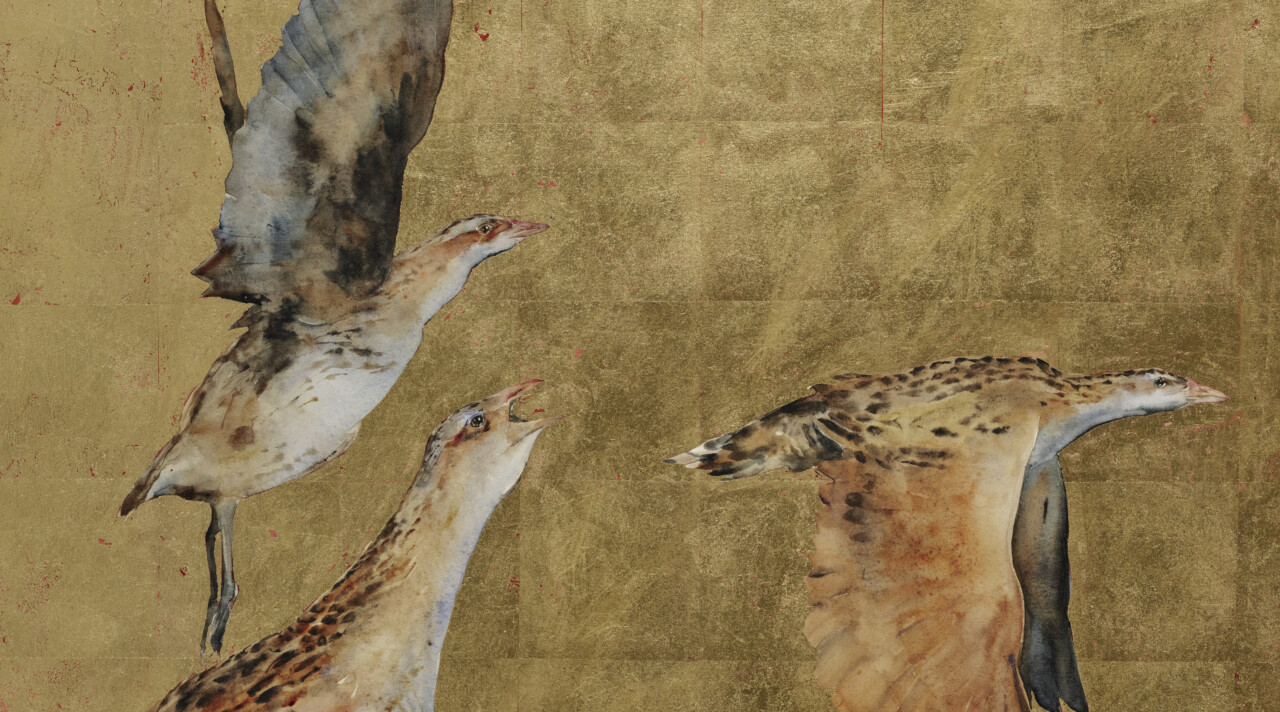
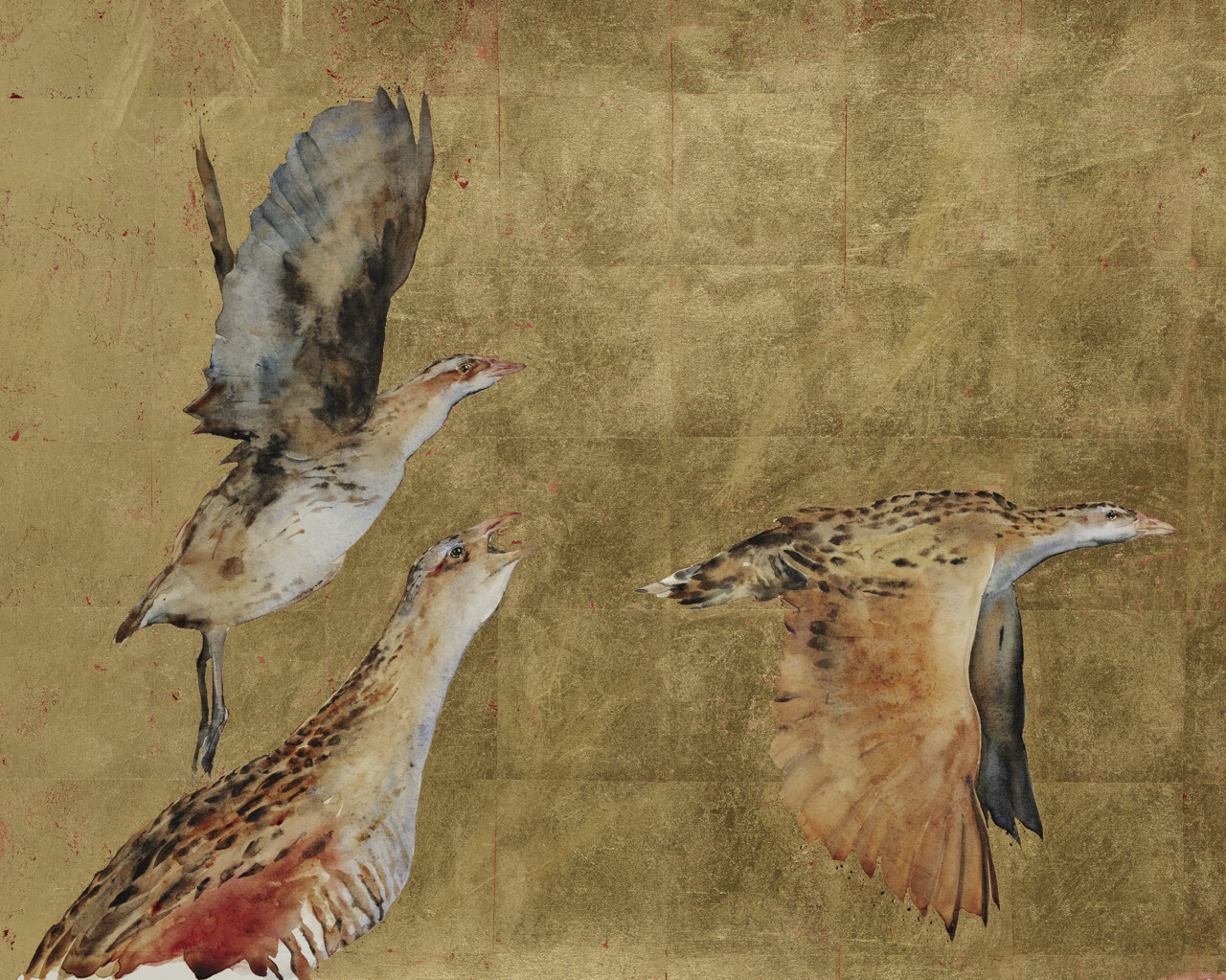
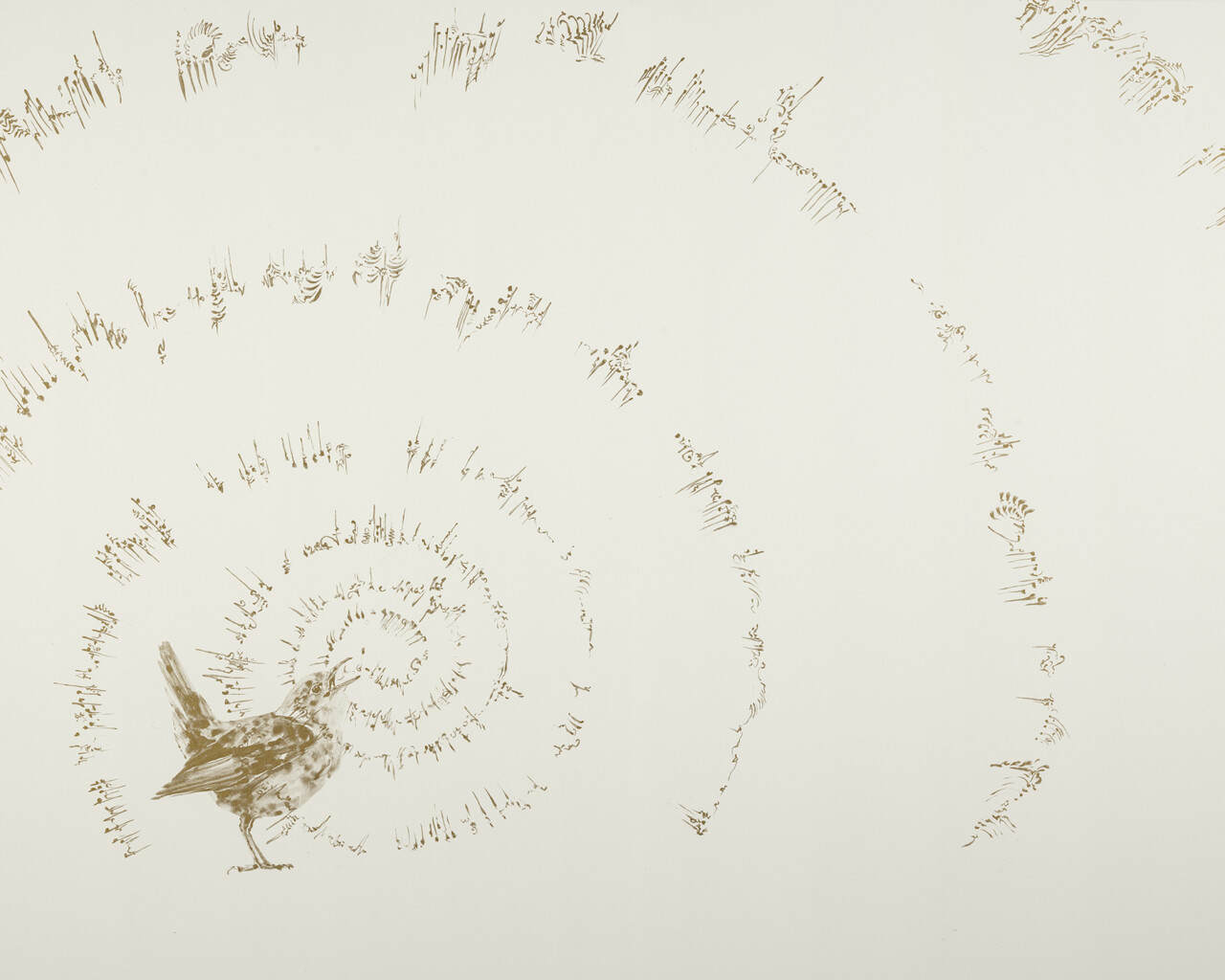
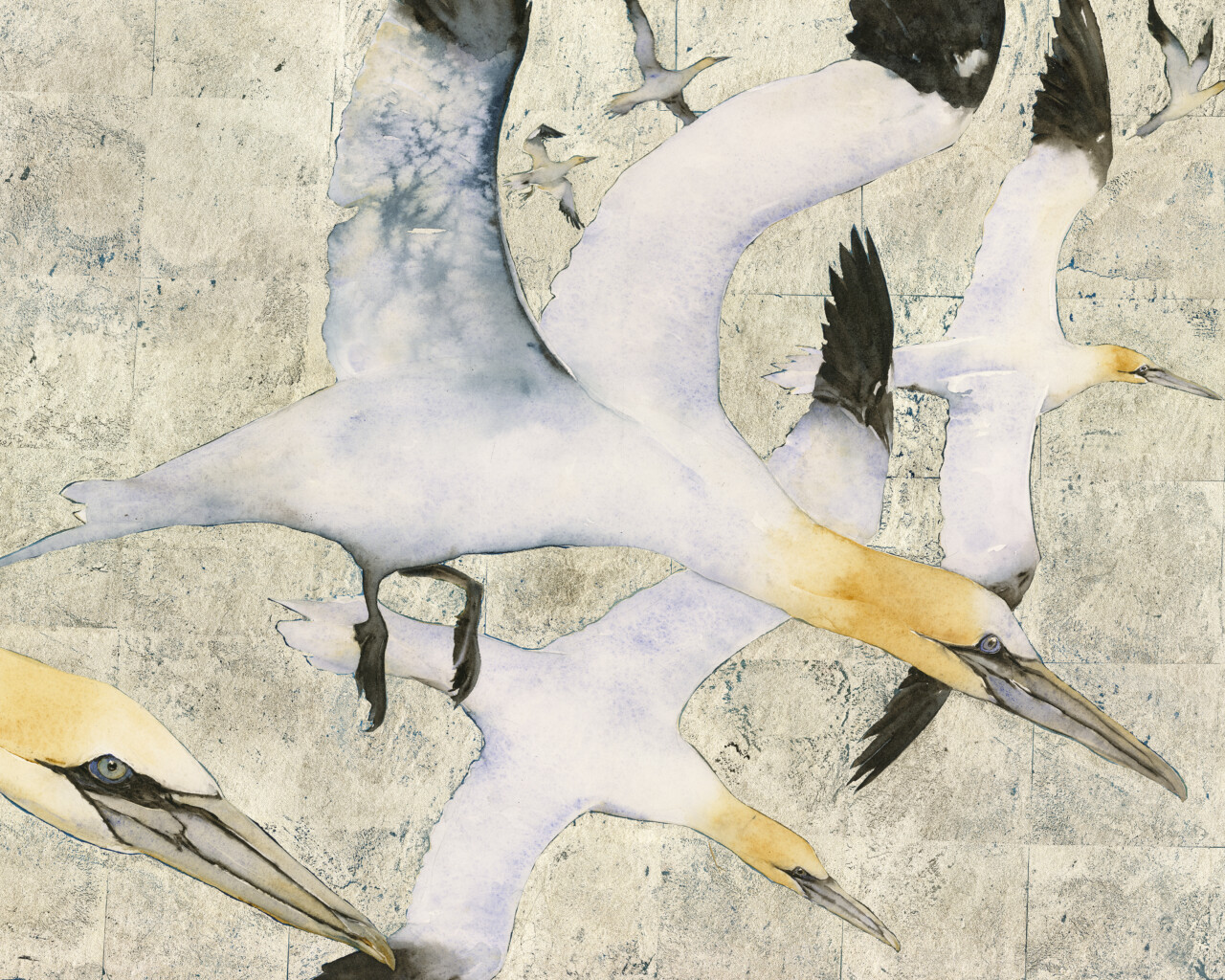
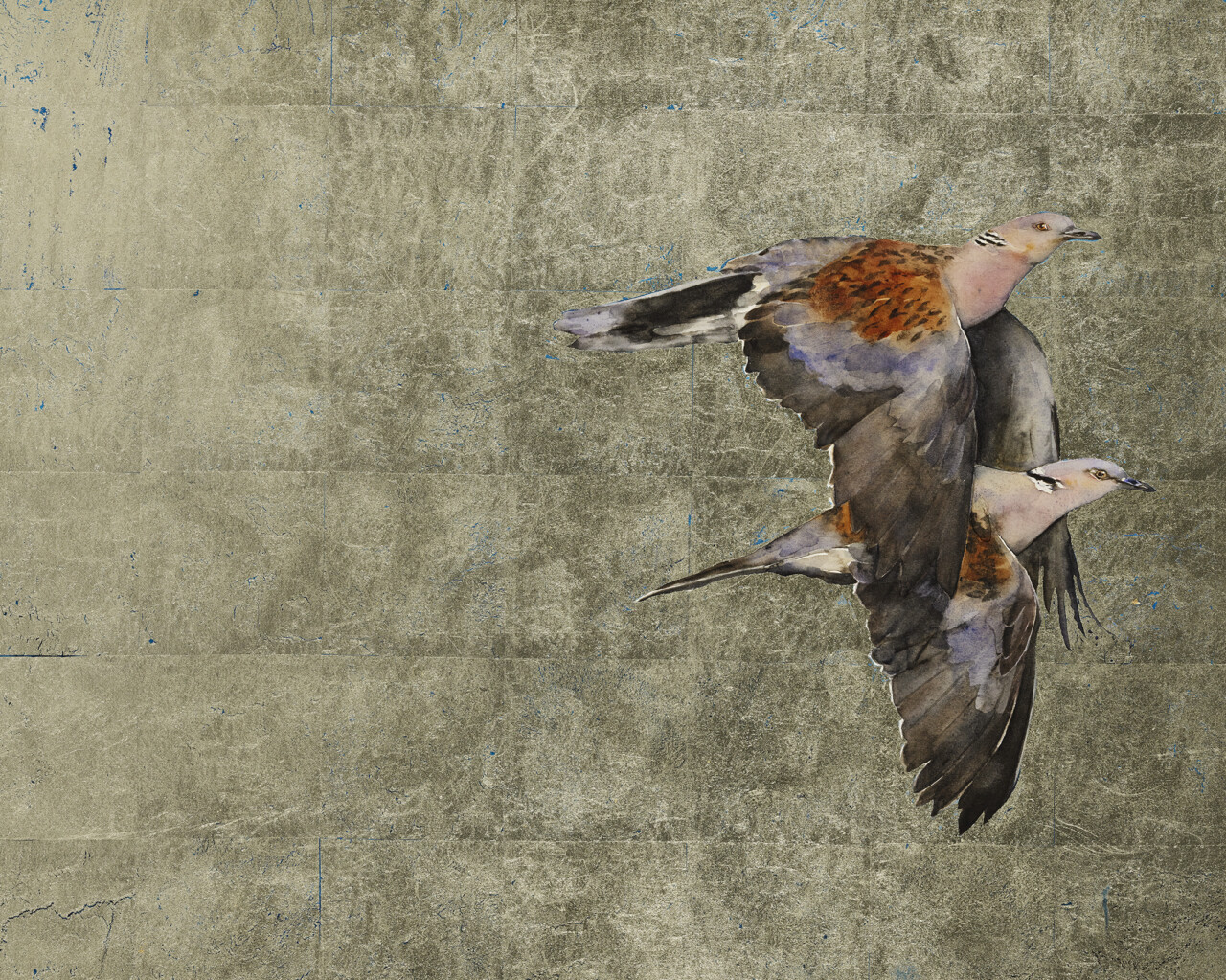
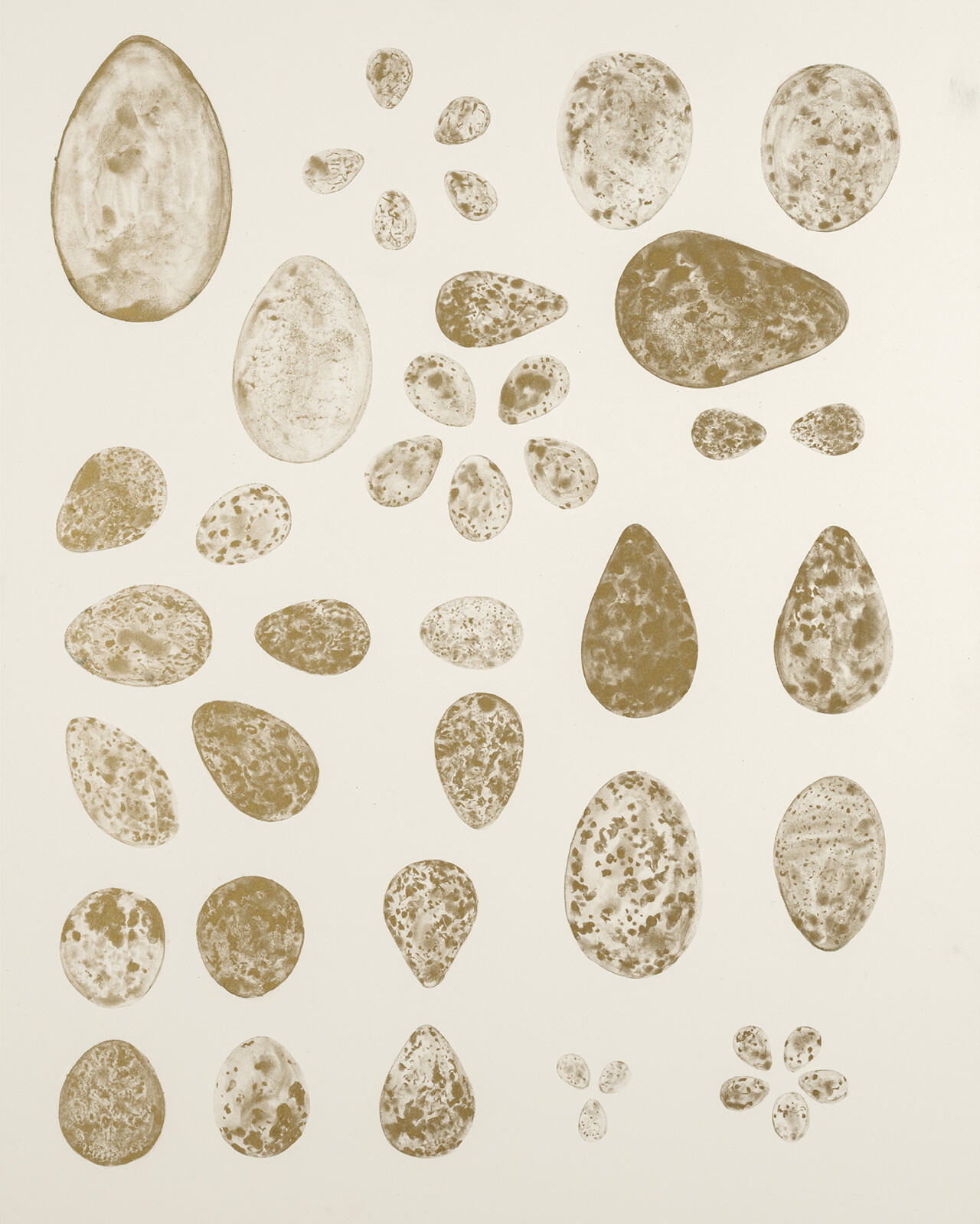
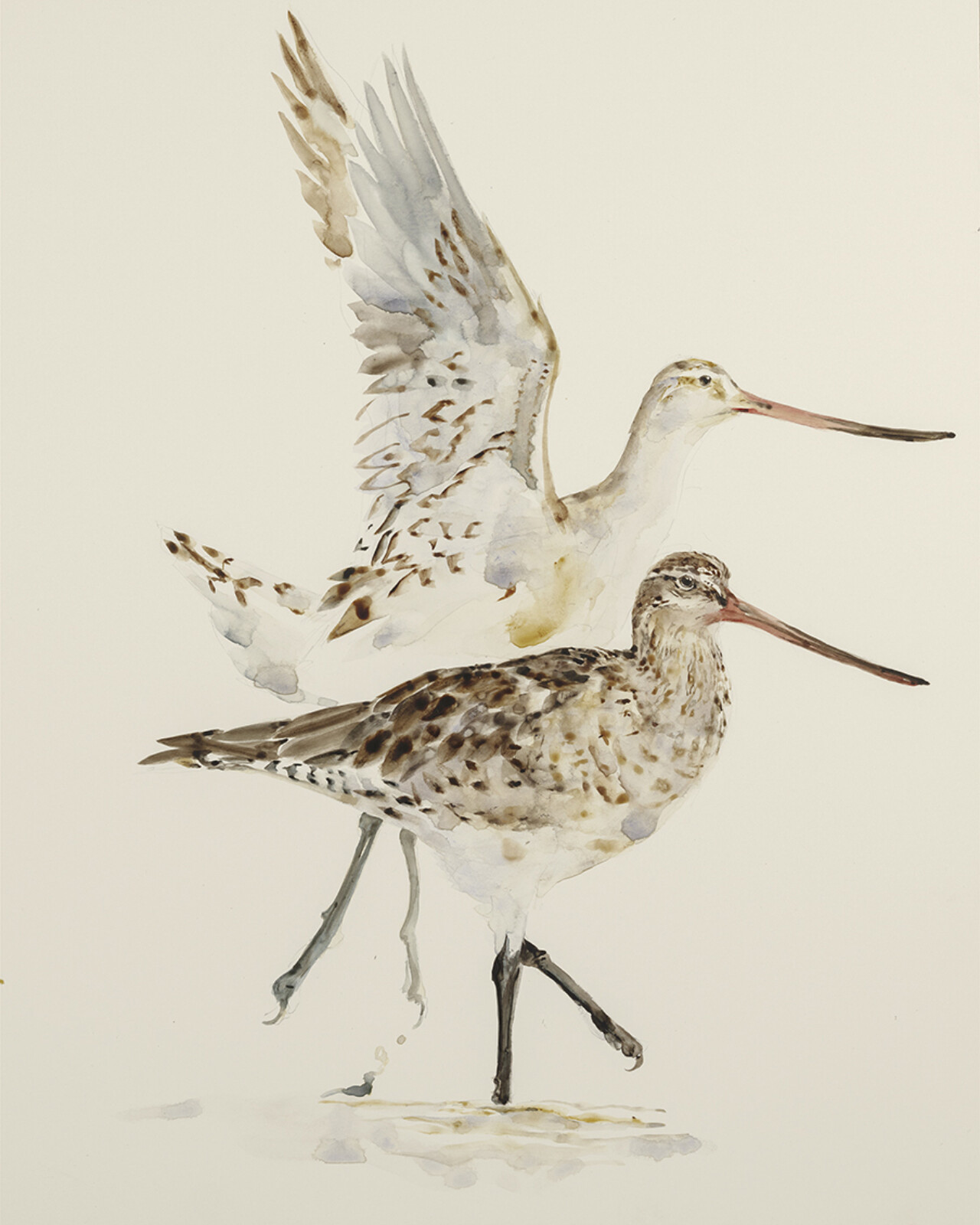
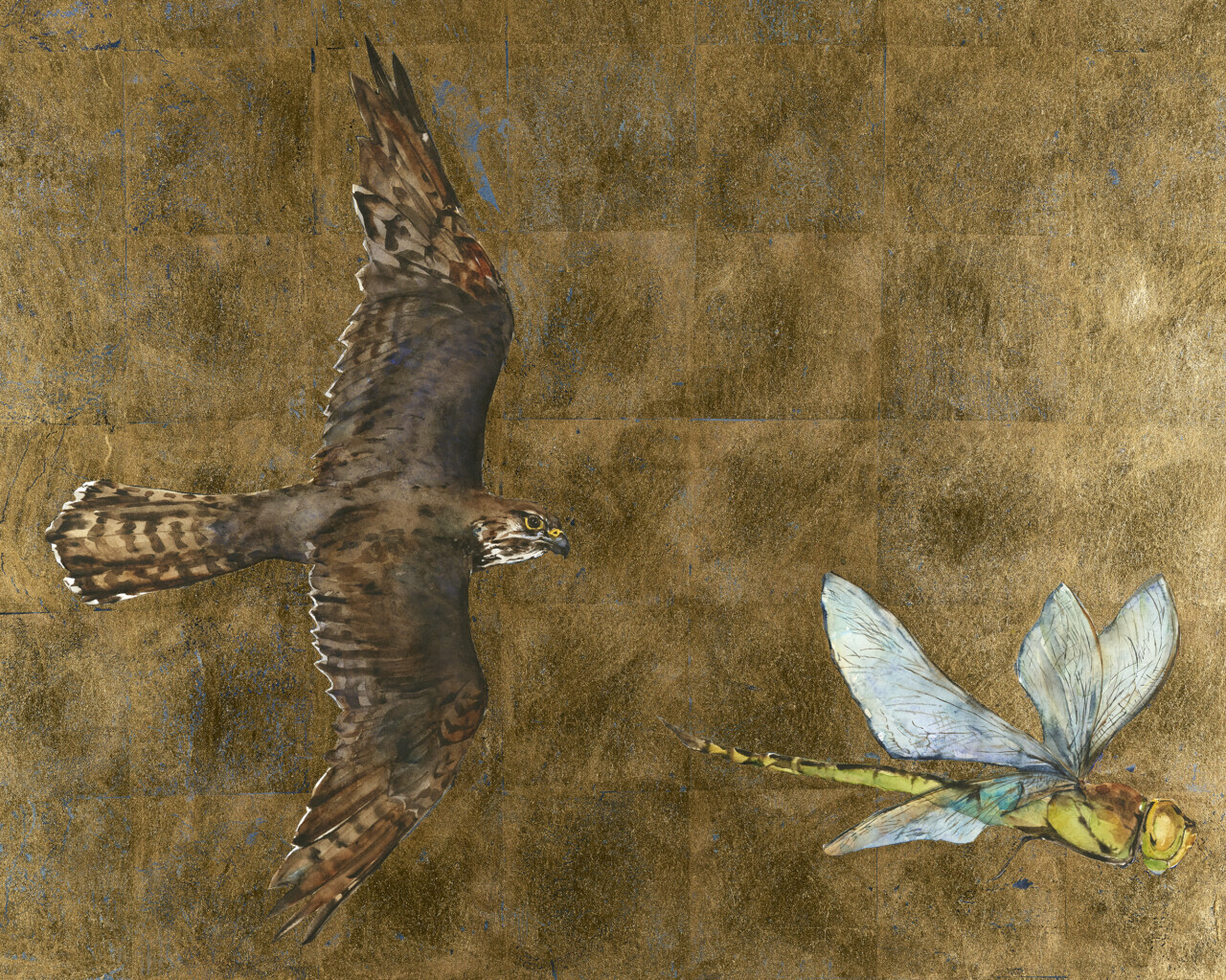
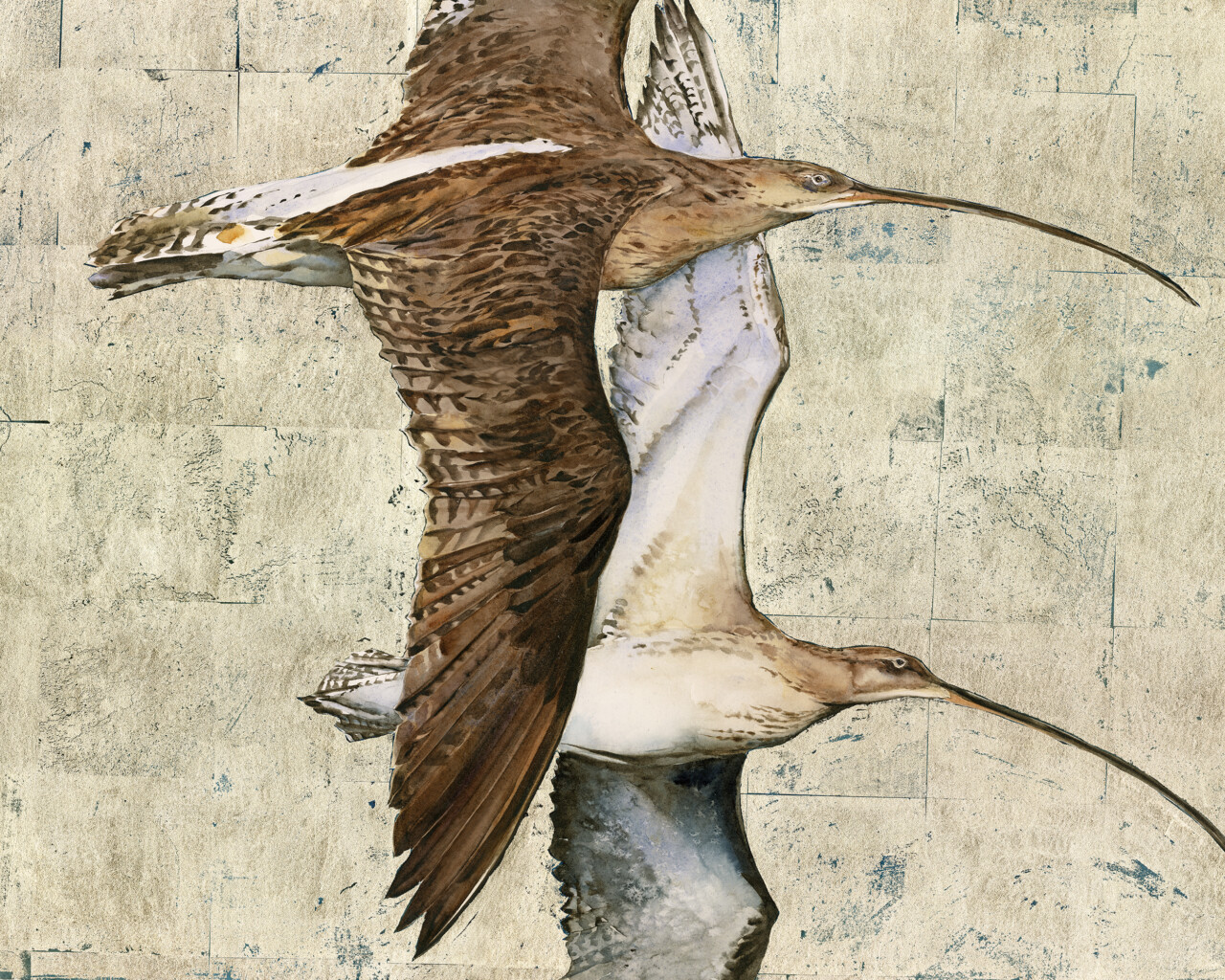
Corncrake (Crex crex)
Illustrations from The Book of Birds: A Field Guide to Wonder and Loss
Words by Robert Macfarlane and Jackie Morris
A great thinning of the skies is underway. There are 3 billion fewer birds in North America than half a century ago. Five hundred million fewer in Europe. Seventy-three million fewer in Britain. Worldwide, over 60% of bird species are in decline. That which was once called “common” is becoming rare: The “common eider” is now in the same global conservation category as the jaguar. Dawns and springs are quieter; the air, emptier. An ancient avian orchestra is falling silent. An almost unimaginable abundance has been lost.
In August 1861, the American naturalist A. S. Packard described vast numbers of migrating curlews appearing on the south Labrador coastline. “We saw a flock,” he wrote in his journal, “which must have been a mile long and nearly as broad; there must have been in that flock four or five thousand! The sum total of their notes sounded at times like the wind whistling through the ropes of a thousand-ton vessel.”
Two decades later, the English naturalist Richard Jefferies described the profusion of bird life at the edge of London: “The bevies of chiffchaffs and willow wrens … the chorus of thrushes and blackbirds, the chaffinches in the elms, the greenfinches in the hedges, wood-pigeons and turtle-doves in the copses, tree-pipits about the oaks in the cornfields; every bush, every tree, almost every clod … seemed to have its songster.”
Absence is harder to track and feel than presence. The ghosts of gone birds fade quickly from memory. Shifting baseline syndrome habituates us to sparser skies.
It does not have to be this way—but we will not save what we do not love, and we rarely love what we cannot name. Noticing is the first step to naming; naming the first step to knowing both things and the relations between things. Knowledge may lead to wonder, wonder to care, care to action, action to change. But this is a fragile chain, easily broken—its links must be reforged and rejoined, over and over again.
The Book of Birds attempts that work of reforging. It is a field guide, inspired in part by classics of this genre with which we ourselves grew up, pored over, and learned from: the Reader’s Digest Book of British Birds and Book of North American Birds, The Observer’s Book of Birds and The Observer’s Book of Birds’ Eggs, the Collins Birds of the World, Thomas Bewick’s A History of British Birds, and even John James Audubon’s ethically murky The Birds of America.
Ours is a field guide with a difference, though. It asks not “What is that bird?”, but “Who is that bird?” It wishes to help its readers to identify birds, of course, but also to identify with them. Instead of photographs—paint. Alongside data—metaphor, story, poetry. In place of definition—relation. As well as classification—something like love.
Central to the book’s structure are the “Seven Wonders,” which together create the everyday miracle that we simply call “Bird”: the wonders of Nest, Egg, Beak, Song, Feather, Flight, and Migration. Between each of these wonders, in seven groups of seven, come entries for 49 birds—from avocet to woodcock, bar-tailed godwit to yellowhammer—all of whom are, or have recently been, on a so-called “Red List” or “Amber List” of conservation concern. Each is beginning to glitch, to struggle, to sputter. Each is slipping from our cities, fields, hills, rivers, forests, coasts, and seas. Each has somewhere started the slow slide toward the absolute dark of extinction.
In response, we have tried to pull these species back into focus and fullness. We have sought in word and paint to evoke something of each bird’s astonishing is-ness—what makes sparrowhawk sparrowhawk, what makes bittern bittern. Though it has been created in an age of loss, at heart this is a book of hope. The art is intended as honouring and celebration; the words are meant to be spoken aloud, as a form of conjuring back.
What is lost when birds are lost? Above all, the creatures themselves, in their own splendor and right. And for humans—language, story, beauty, possibility, imagination, lifts of the spirit, ways of being otherwise. Birds are our place-makers, heart-lifters, memory-keepers, almanacs, and clocks. They stitch the world’s parts together: earth to sky, river to woodland, mountain to ocean, country to country, hemisphere to hemisphere. Without them, things start to fall apart.
During the seven years we spent making The Book of Birds, the words of two writers guided us especially. The first was Bertolt Brecht’s observation from 1939: “In the dark times, will there also be singing? / Yes, there will be singing about the dark times.” The second was the set of three instructions given in 2008 by the poet Mary Oliver: “Pay attention. Be astonished. Tell about it.”
Yes. This is what we have tried to do.
Editor’s Note: Excerpted from The Book of Birds: A Field Guide to Wonder and Loss. Copyright (c) 2026 by Robert Macfarlane. Illustrations copyright (c) 2026 by Jackie Morris. Used with permission of the publisher, W. W. Norton & Company, Inc. All rights reserved.
Join our membership community. Support our work, receive a complimentary subscription to Atmos Magazine, and more.
Robert Macfarlane on How to Love Birds in a Time of Loss