
words by victoria malloy
photographs by clara balzary
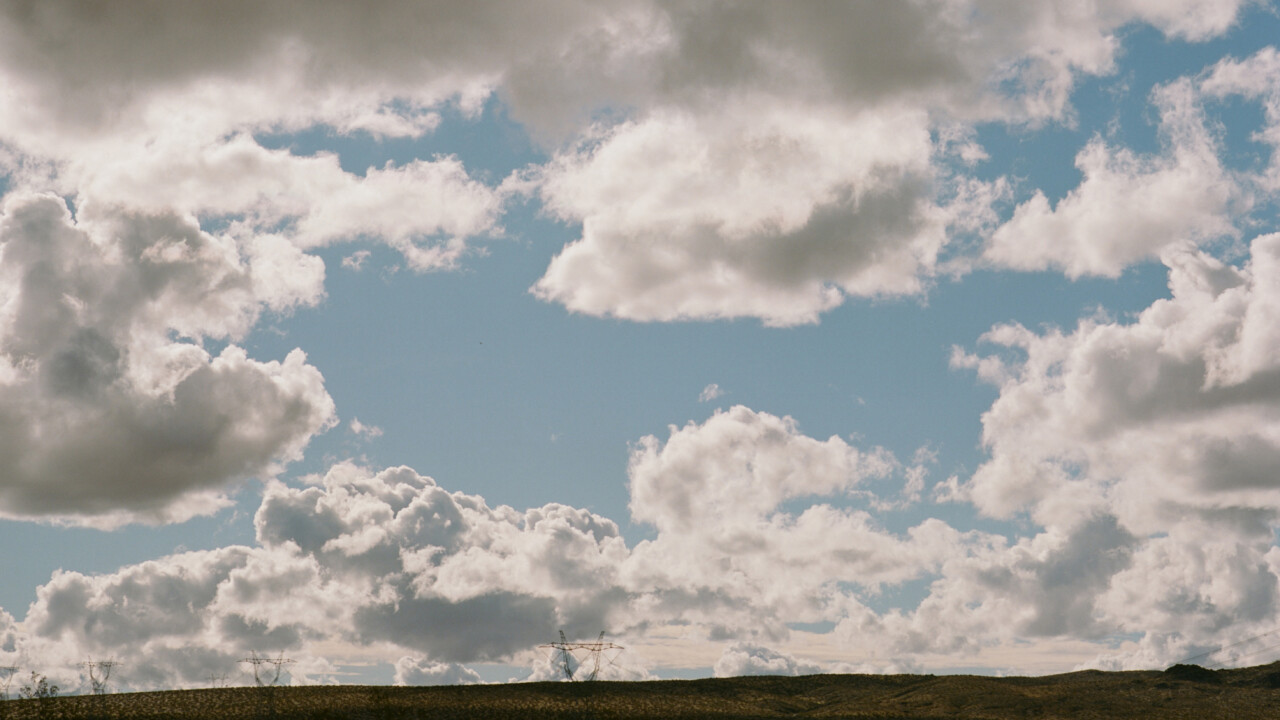
What does a cloud smell like? Until recently, there was no real way to know. Now biotechnology is turning the microbes and molecules carried through clouds and rain into a new palette for fragrance—one that could reshape how scent is made and how we experience the natural world.
Rain has a smell, but much of what we recognize as petrichor comes from the ground, from compounds released by soil and vegetation when water hits. As raindrops fall, they move through a living atmosphere, gathering microbes, molecules, and particles along the way. That invisible world, suspended above us and carried down in rain, is what biotechnologist Jasmina Aganovic and her team set out to make perceptible.
The perfume industry’s relationship with nature has traditionally been one of extraction, relying on flowers, woods, resins, and other botanical materials. But producing those ingredients can be resource-intensive: It can take more than 3,000 pounds of rose petals to produce a single pound of rose oil. Demand for prized ingredients such as agarwood, rosewood, and sandalwood has also contributed to overharvesting and illegal trade, putting pressure on wild populations and prompting international protections. Climate change is adding another strain, making the growing conditions many fragrance crops depend on increasingly unpredictable.
Aganovic wants to change that. The MIT-trained scientist and founder of beauty biotech firm Arcaea and first-of-its-kind perfume brand Future Society sees biotechnology as an opportunity to move fragrance beyond extraction, creating scents without harvesting the plants and landscapes they evoke.
“One of the original provocations behind this work was questioning the idea that nature is somehow dictated by gravity, that nature is primarily what grows from the ground or what we can physically collect,” Aganovic told Atmos. “Nature is everywhere around us, including above us.” So she turned her focus to the atmosphere, treating it as a living system filled with microbes, molecules, and chemical interactions that could offer an entirely new palette for perfumery.
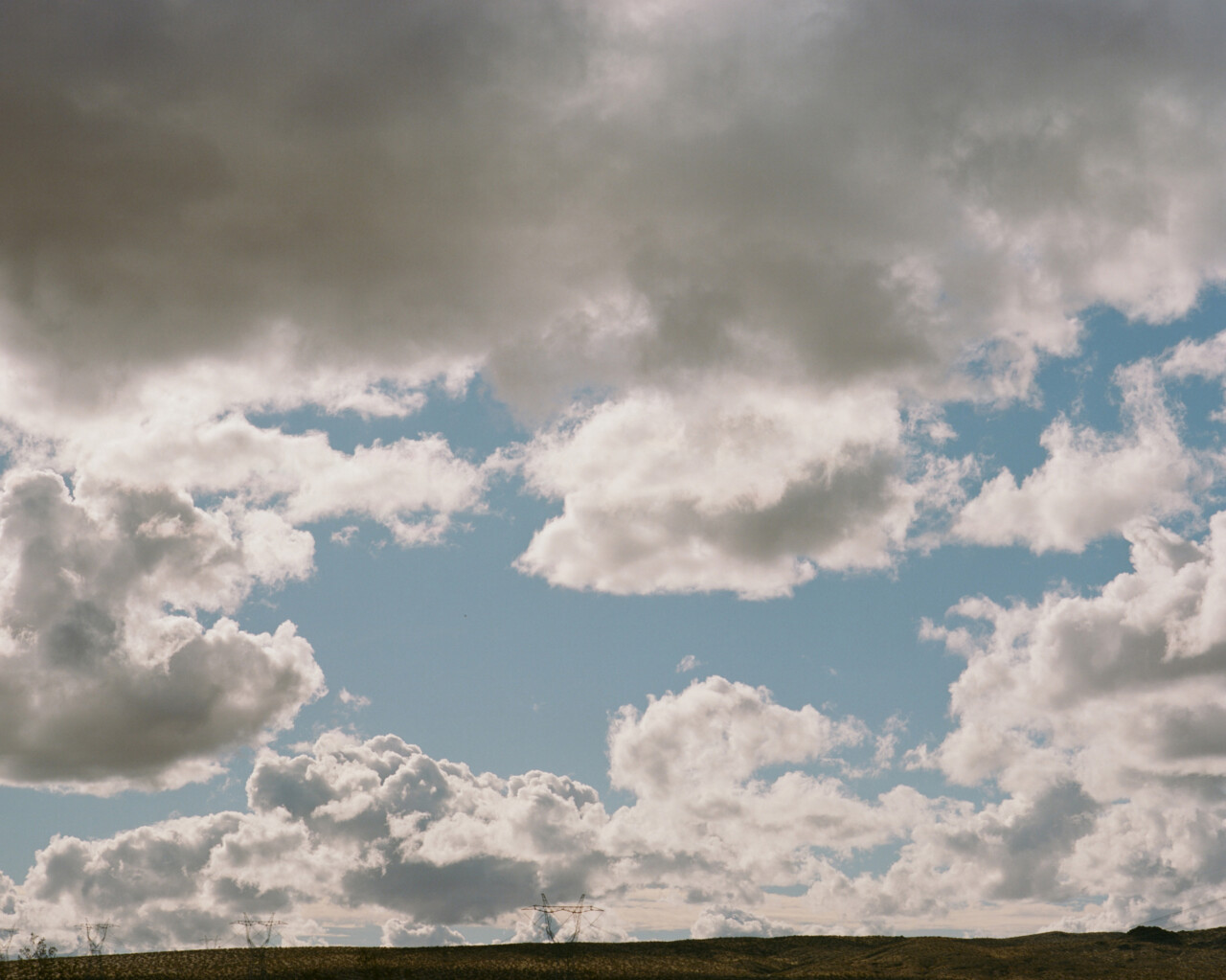
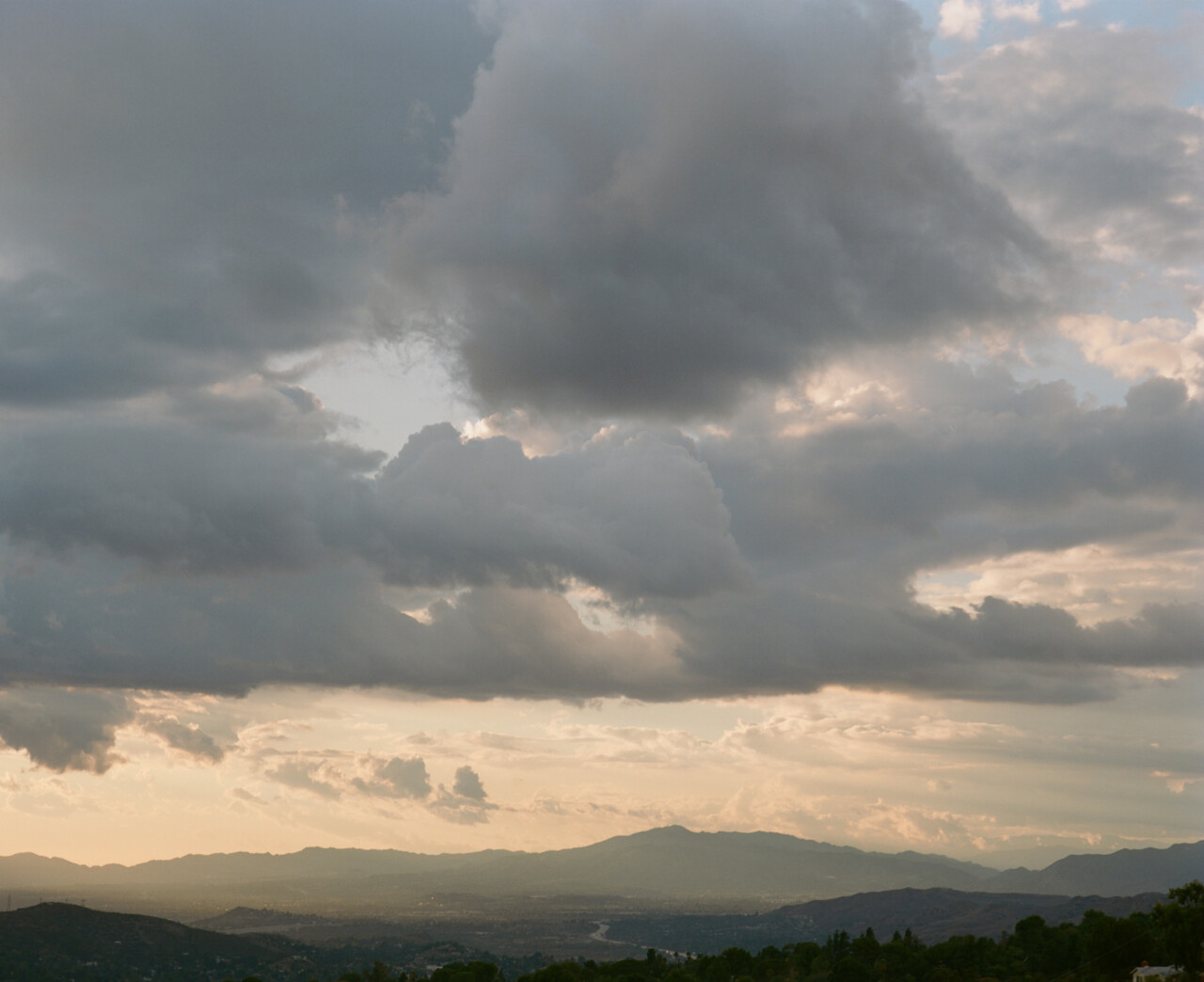
To explore that atmospheric palette, Aganovic chartered a small propeller plane above Boston and flew directly into the clouds. The idea was inspired by research examining how microbial life in the clouds had shifted during the pandemic-related decline in human activity. Petri dishes held outside the aircraft collected live microbes, which were later cultured and sequenced in the lab. The analysis revealed scent molecules that had never before been used in modern perfumery, offering a way to translate an otherwise imperceptible part of the natural world into something people could experience through smell.
In the lab, Arcaea scientists Brandon LaBumbard and Feranmi Aboderin began with something invisible to us: a microbe suspended in a cloud. They cultured the microbes—including Bacillus, Rhodococcus, and Pseudomonas, which are adapted to the extreme conditions inside clouds—into colonies, then isolated and sequenced them. Using that genetic information, the scientists identified scent molecules the microbes could potentially produce. Cross-referencing those compounds against scent databases yielded a final “smell list” of 57 molecules associated with 13 microbial species.
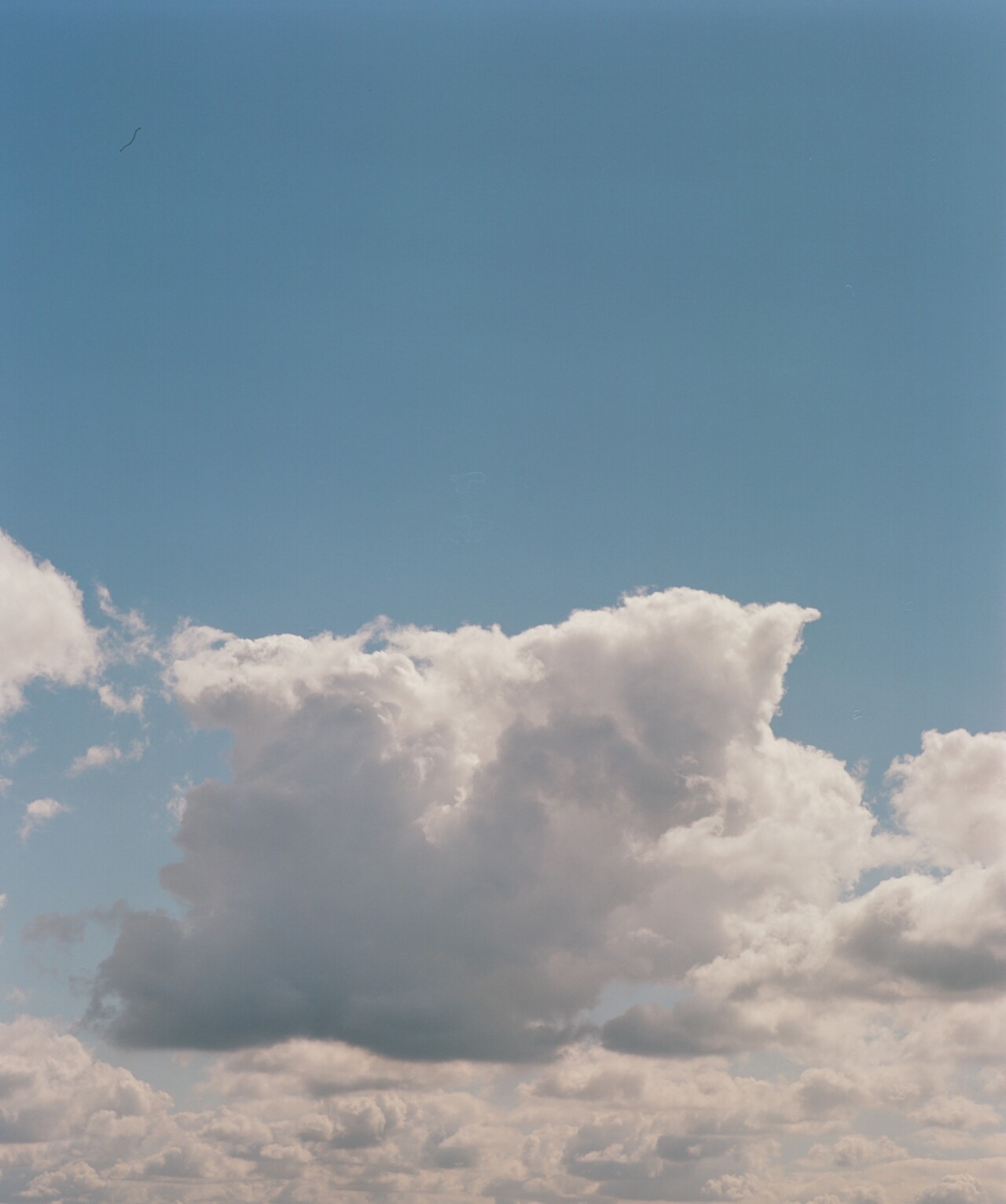
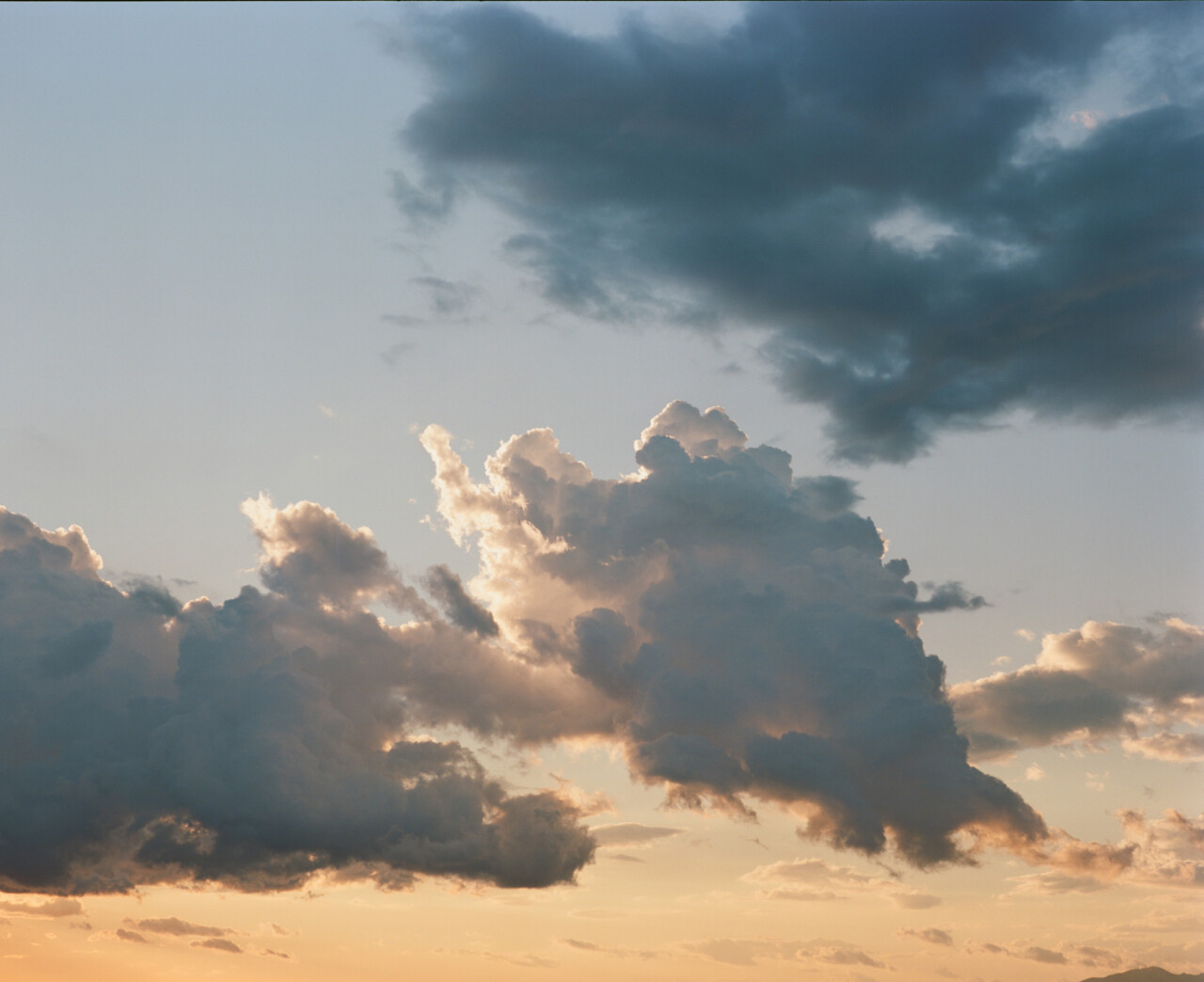
Future Society then enlisted Daniela Andrier to translate that molecular palette into an aesthetic interpretation of the clouds, rather than a literal one. Among the molecules they identified were aldehydes, sweet volatiles, floral metabolites, and mineral notes. They even found vanillin, which Andrier translated into the formula as a diffused sweetness that seems to float. The result was Cloud Reverie, an airy, powdery, and subtly sweet fragrance with notes of vanilla, iris, sparkling aldehydes, aquatic blooms, and musk. Andrier imagined a cloud as an iridescent, translucent veil of light, with iris lending a mysterious, luminous quality and musk creating a sense of cocooned comfort. “I truly hope that people will smell it like they’re on a little cloud while wearing it,” she said.
“There is something profound about gaining access to a part of the world that has always been there but that we haven’t previously been able to experience. It creates a different kind of intimacy with nature.”
Clouds are only one part of the atmosphere’s microbial story. The company’s Wandering Rain scent follows water on its journey through the atmosphere before it touches the Earth, exploring the microbes, particles, and molecules it picks up along the way. Researchers gathered rain using a tent-like apparatus that funneled water into a beaker, then identified 46 microbial species and 74 unique scent molecules within the droplets. Perfumer Michael Nordstrand translated that molecular palette into a cool, fresh composition with notes of black tea, blue lotus, pear, eucalyptus, violet leaves, and musk, revealing his interpretation of the story hidden within the molecular data.
A single raindrop, it turns out, carries many traces of the world it has traveled through. “The raindrop is the extension of the cloud,” LaBumbard said. As it falls, it passes through more of the atmosphere, picking up microbes and particles along the way.
What surprised the scientists was just how biologically rich rain could be. Aboderin expected falling droplets to collect microbes, dust, and other particles, but not such a diverse microbial community or such a broad range of compounds. “I feel like the interesting thing we discovered is how many microbes are actually present in rain, as in the diversity of those microbes and the capacity to produce different types of compounds as well,” he said. “It’s a lot richer than I would have expected it to be.”
For Aganovic, the significance of the work extends beyond creating novel fragrances. “There is something profound about gaining access to a part of the world that has always been there but that we haven’t previously been able to experience,” she said. “It creates a different kind of intimacy with nature. Suddenly something abstract becomes sensory and personal.” Nordstrand sees that impulse as fundamental to science itself. “A basic mandate of science is to observe and to question, and in doing so, to deepen our understanding and appreciation of the natural world,” he said.
But knowledge alone does not always produce that sense of intimacy. Experiencing something through the senses can make an invisible process feel immediate and, in doing so, restore a sense of enchantment to parts of the natural world we might otherwise overlook.
Neuroscientist Karina Del Punta, founder of neuroXnature—a practice that combines science, nature and creative experience to deepen people’s connection with the natural world—argued that translating otherwise invisible processes into sensory experiences can make them feel more immediate. “By giving sensory form to what ordinarily lies beyond our perception,” she said, “such translations can, for example, make the microbial and molecular activity unfolding in the air we breathe, the soil beneath us, and our own bodies seem less like a scientific abstraction and more like an active presence.”
By turning atmospheric biology into scent, Aganovic is offering a new way to encounter a world we thought we already knew—and inviting us to consider how much of it exists beyond the reach of our senses.
“Human perception is incredibly limited,” she said. “There are wavelengths of light we can’t see, frequencies we can’t hear, molecules we can’t smell, and entire microbial ecosystems operating at scales we can’t perceive.” For most of human history, those limits have shaped how we understand nature. Technology, Aganovic believes, is beginning to push against them, giving us access to dimensions of the living world that were always there but largely imperceptible to us.
That shift also challenges the idea that humans somehow stand apart from nature. “One of the most fundamental human mistakes is believing we exist somehow outside the web of life,” Nordstrand said. “We often see the planet as a catalogue of resources when it is actually a complex system of relationships, exchanges, and transformations, many of which are taking place beyond the limits of our perception.”
Smell offers one way into that web. “Our senses are where the world meets us,” said Del Punta. “Through them, what surrounds us becomes perceptible, felt, and ultimately relatable.” Sensation, she added, can make nature feel less distant. Our noses can sometimes register what our eyes cannot: Sailors have reported smelling land before it comes into view, as airborne compounds carry traces of a landscape across the horizon. Smell is also closely tied to memory. Odors elicited more specific, vivid, and emotionally arousing autobiographical memories than verbal cues, according to a 2024 study, helping explain why a scent can so quickly summon a forest, garden, coastline, or rain-soaked earth.
It’s no surprise, then, that research suggests nature’s smells can shape how we experience and connect with the places around us. Through smell, we continually encounter airborne chemicals released by vegetation, microbes, bodies of water, and other parts of our environment. In that sense, we are participants in an invisible chemical exchange with the world around us. “It is one thing to know intellectually that the air, soil, and our bodies contain vast molecular worlds and communities of microorganisms,” said Del Punta. “It is another to experience a sensory expression of that hidden world.”
That translation can also produce something unexpected: a sense of recognition. “What surprised me most were the stories that emerged from the science,” said Aganovic. When the team studied clouds, she added, the resulting scent was strangely familiar—airy and cool, with a hint of sweetness, somehow resembling our imagined idea of a cloud. It left her wondering whether our sensory associations sometimes contain traces of things we recognize without consciously understanding them.
The work has also changed how Nordstrand experiences rain itself. While reading Ferris Jabr’s Becoming Earth and reflecting on Earth as a living, evolving organism, he stepped outside as a summer storm rolled in. He watched the lightning. “It was a numinous experience partly because of everything I have learned about rain,” he said.
“It is one thing to know intellectually that the air, soil, and our bodies contain vast molecular worlds and communities of microorganisms. It is another to experience a sensory expression of that hidden world.”
For Del Punta, that sense of enchantment is not at odds with scientific understanding. It can make familiar things feel stranger, richer, and more astonishing by revealing the complexity hidden within them. “Learning that a cloud is a temporary architecture of droplets and aerosols, capable of hosting microorganisms and continually reshaped by temperature and motion,” she said, “could transform an everyday sight into an encounter with astonishing complexity and a source of awe.”
Aganovic agrees. “It’s difficult to care deeply about something you perceive as empty,” she added. “But the more closely we look at nature, the less empty any of it becomes.” At the microbial and molecular level, seemingly simple things—clouds, soil, even our own skin—are extraordinarily active and interconnected systems.
Expanding what we consider “nature” may also expand how we understand ourselves. Psychologists use the term environmental identity to describe the extent to which our relationship with the natural world becomes part of our sense of self. Seen this way, the boundary between human and nonhuman life becomes less fixed. “It invites us to recognize that nature does not end where the human self begins,” Del Punta said. “That recognition may influence how we relate to the natural world.”
Perhaps that is the deeper promise of making the invisible visible: revealing how much of the natural world remains undiscovered. Wonder can change what we notice, and what we notice can change what we choose to protect. “Sometimes the desire to protect something,” Aganovic said, “begins simply by realizing how extraordinary it is.”
Join our membership community. Support our work, receive a complimentary subscription to Atmos Magazine, and more.
Bottling Clouds: The Sky Is Full of Scents We’ve Never Smelled