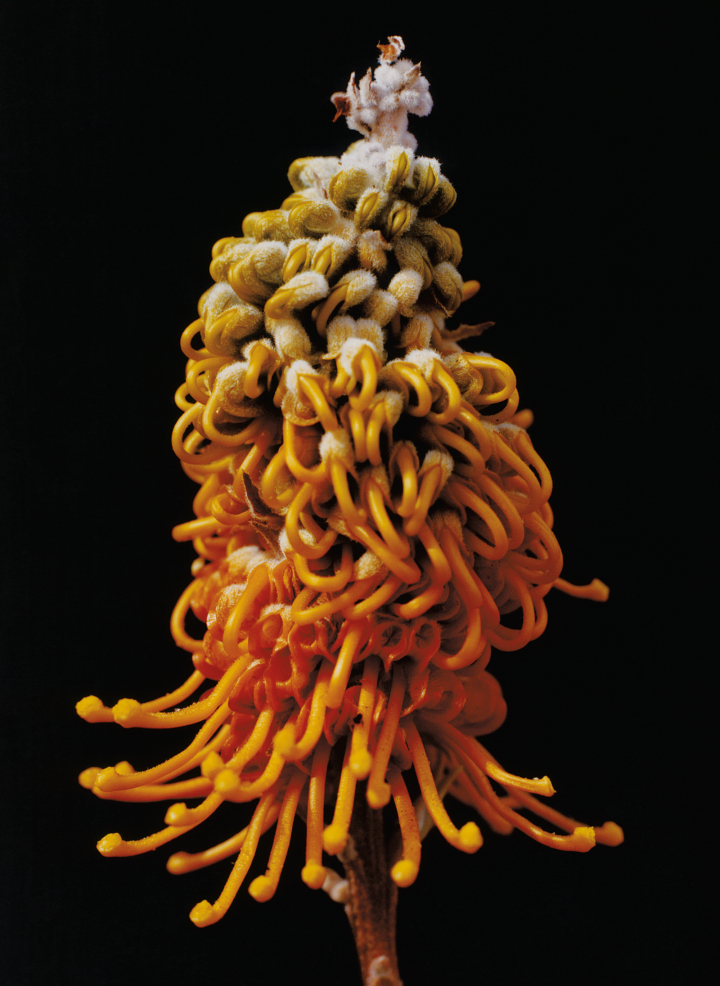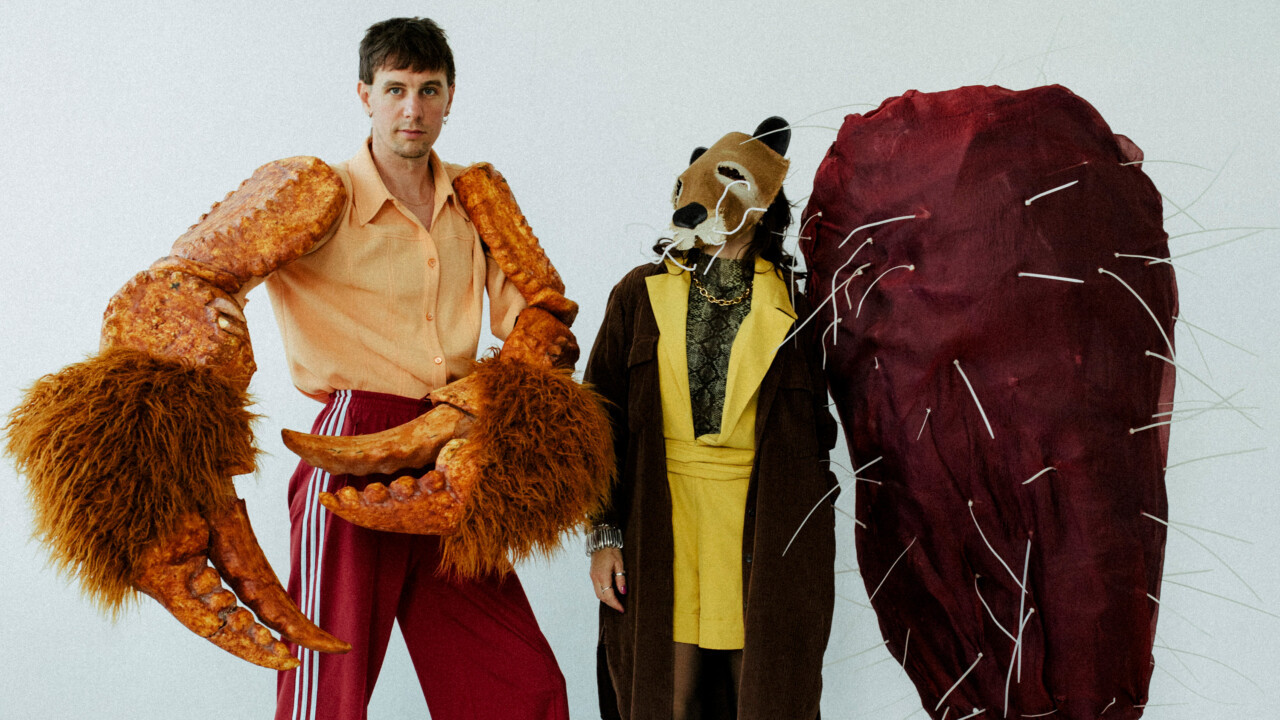
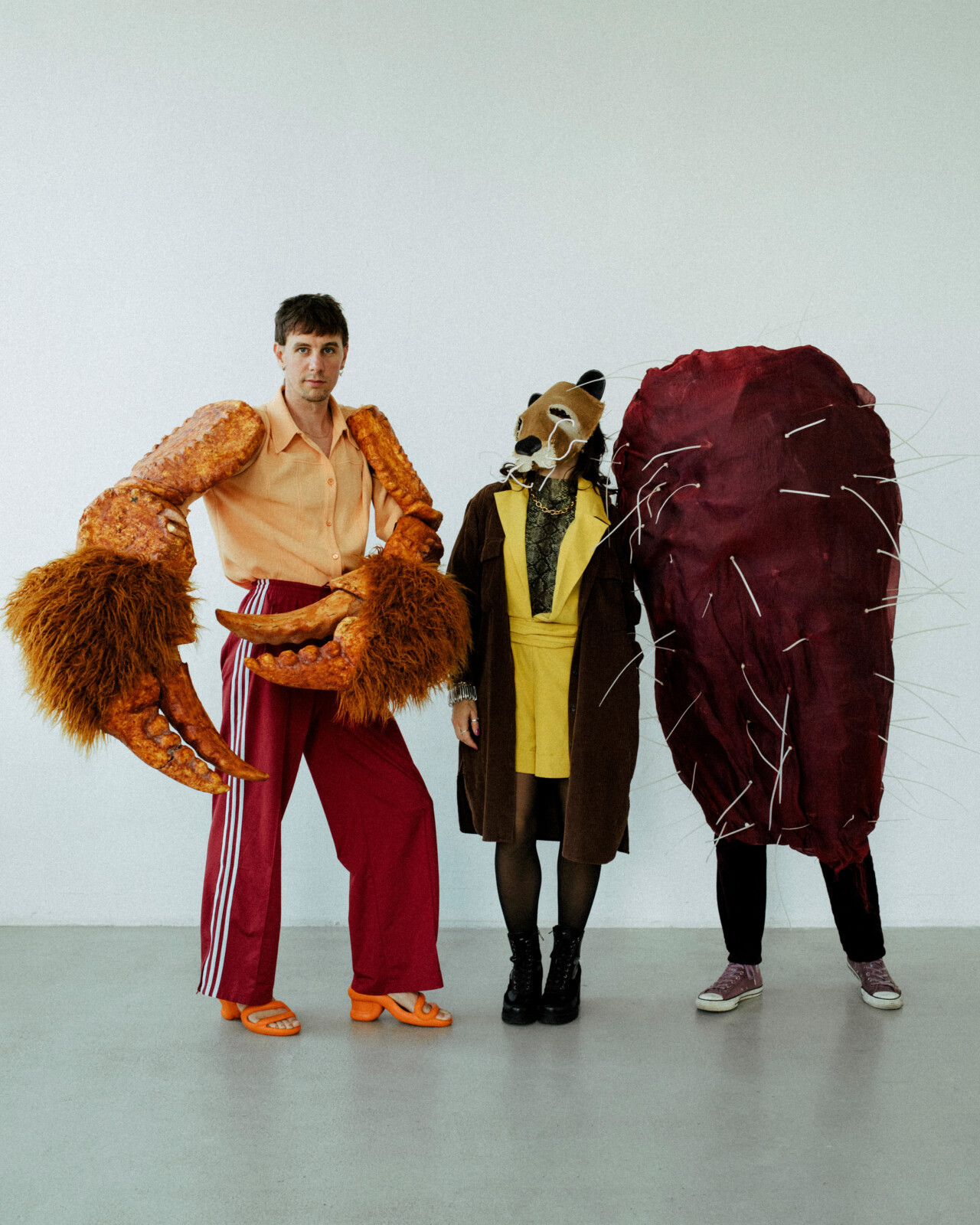
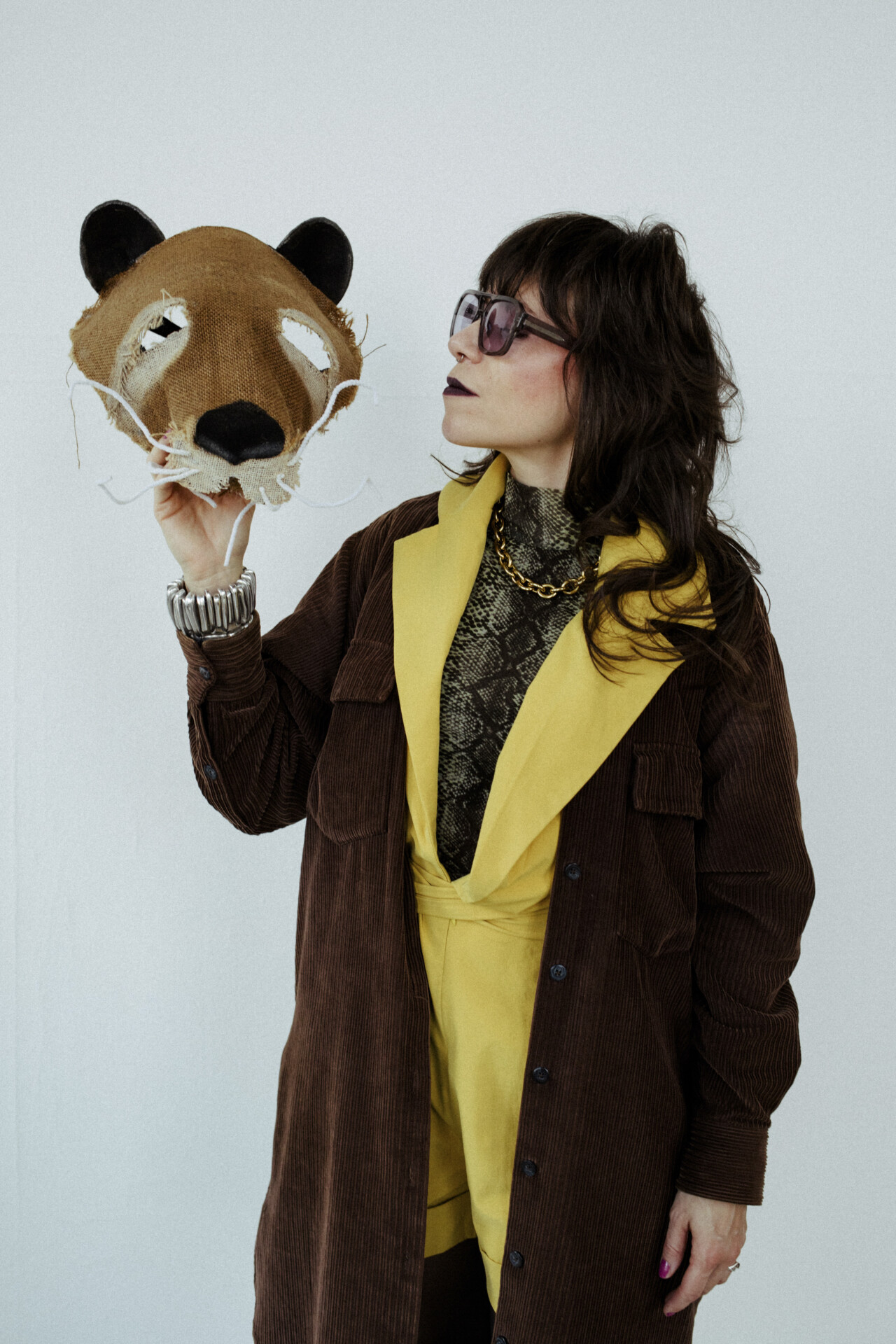
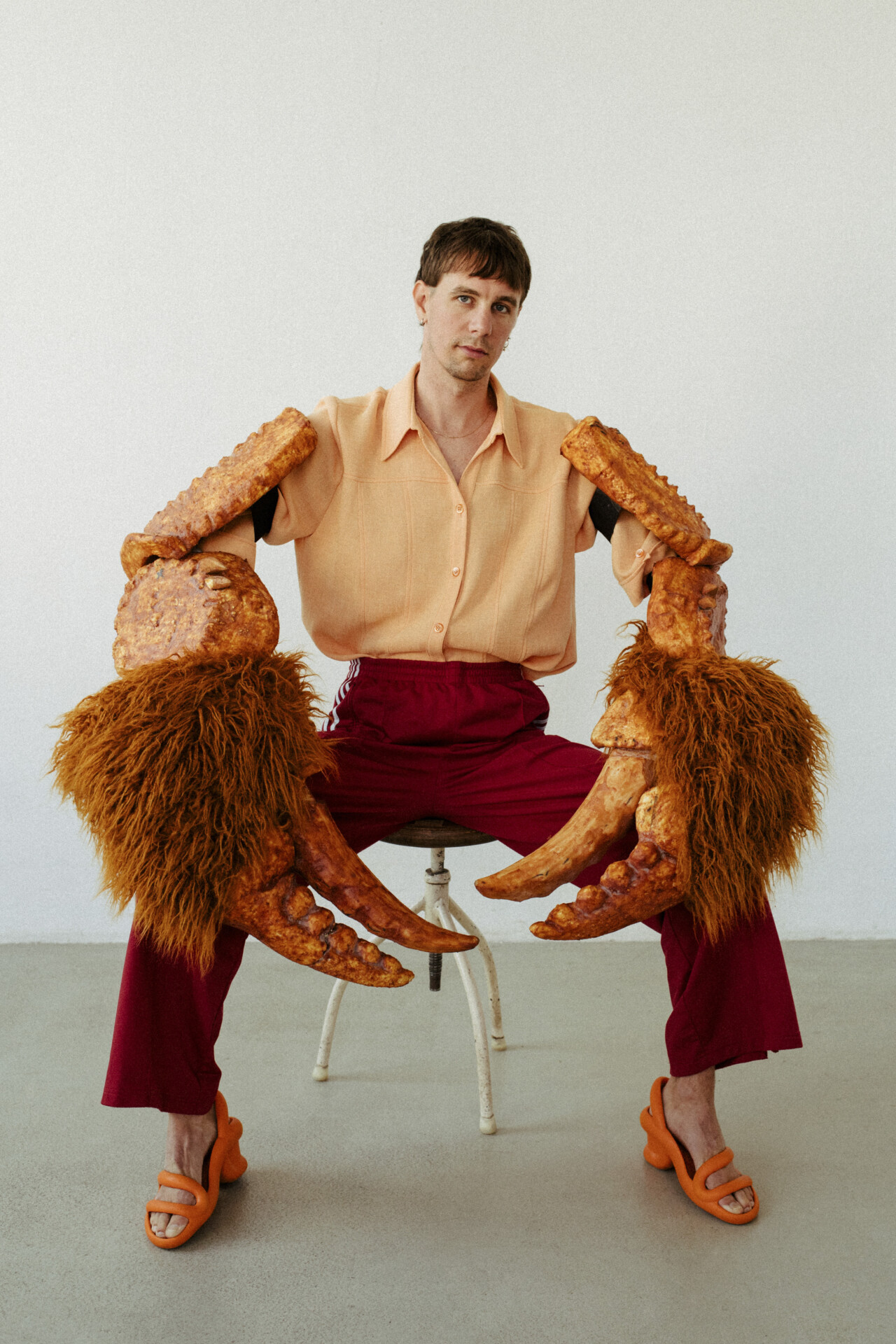
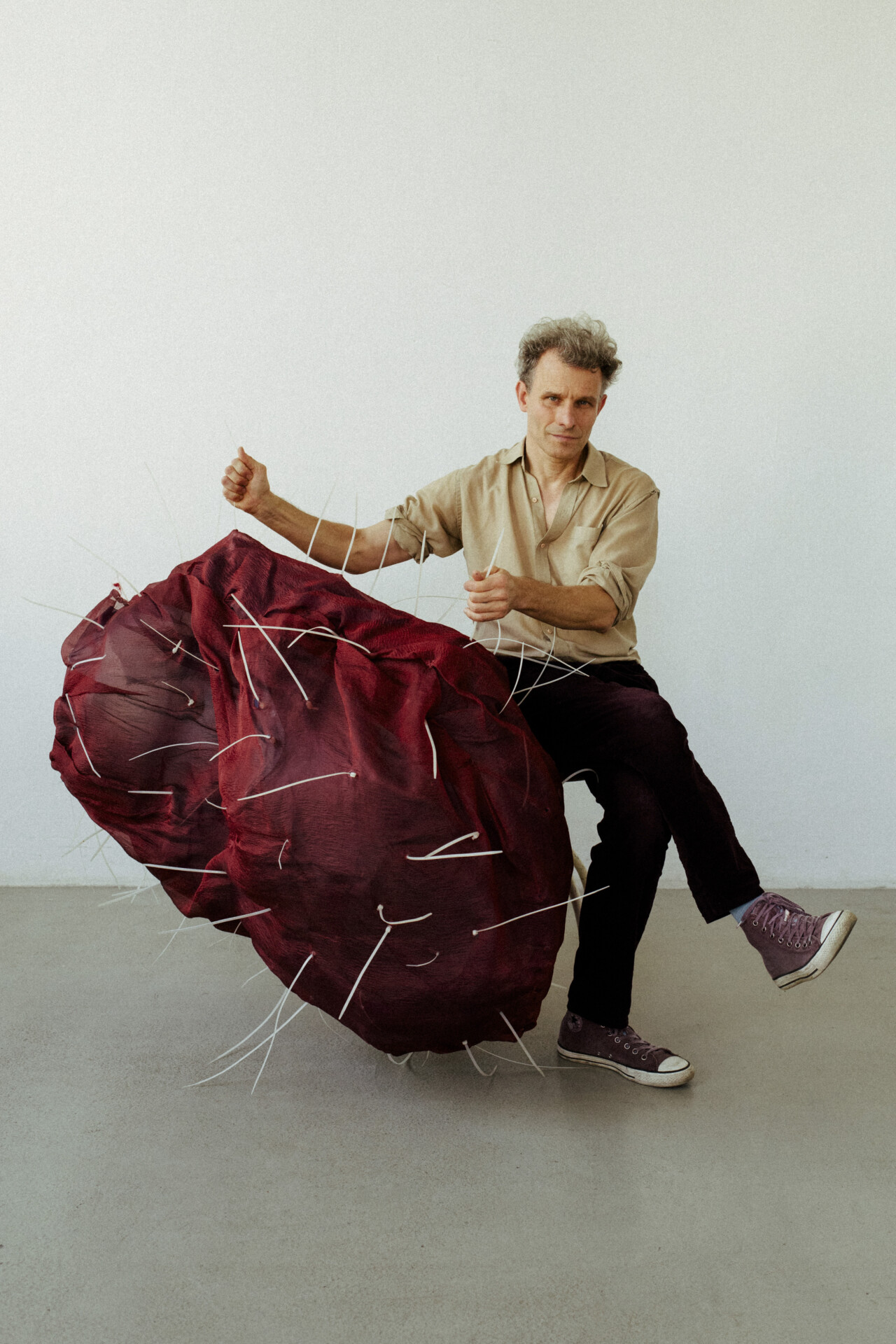
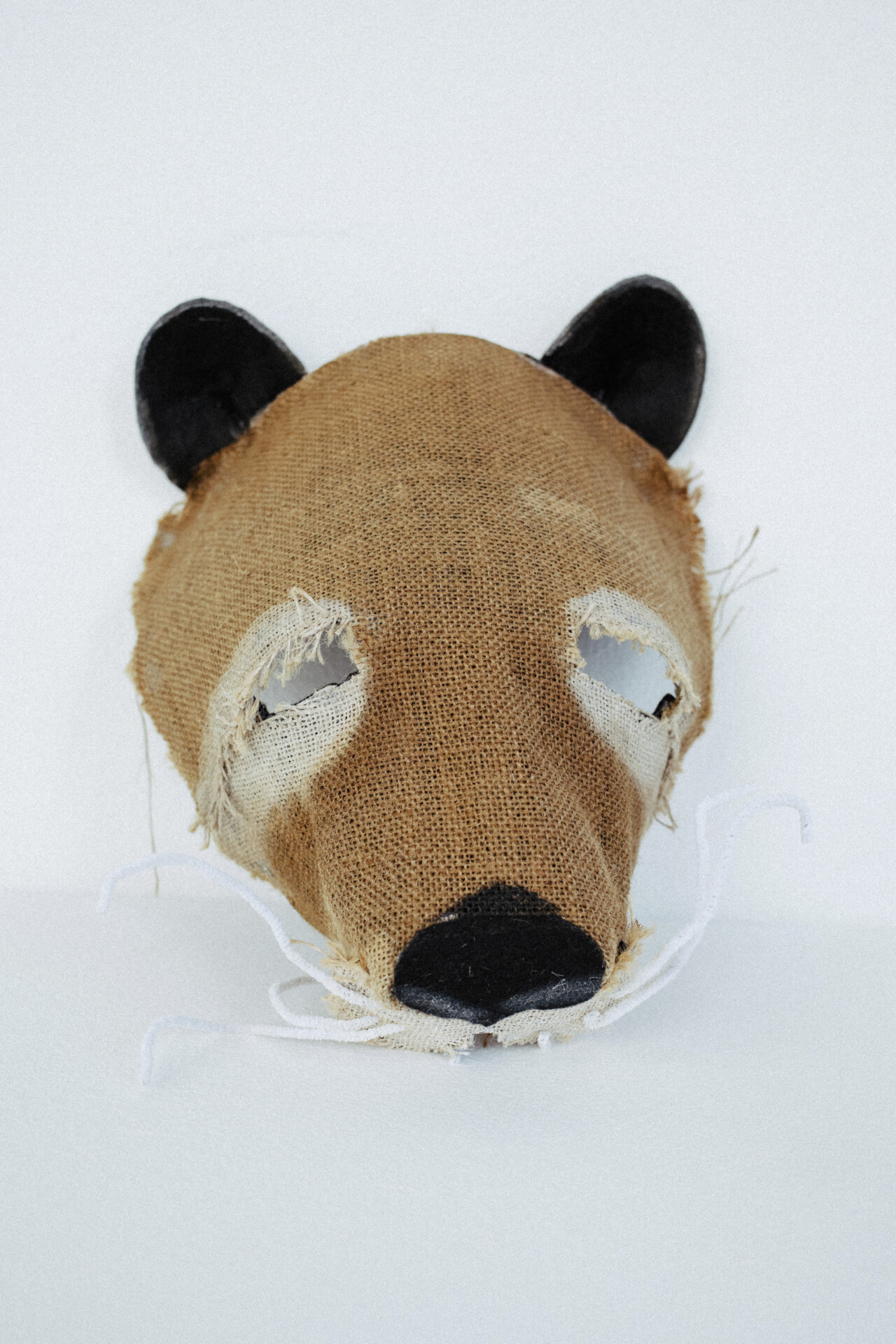
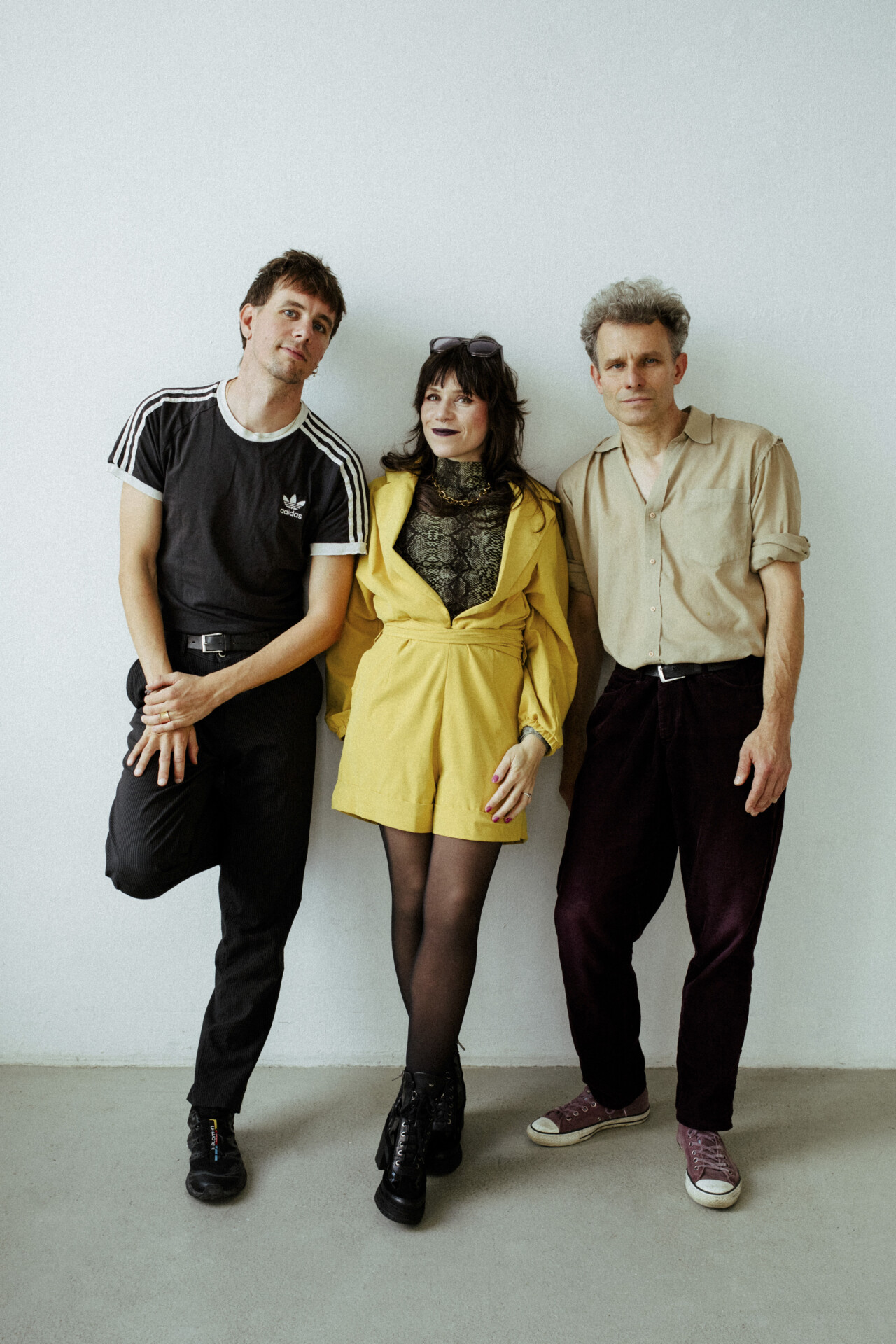
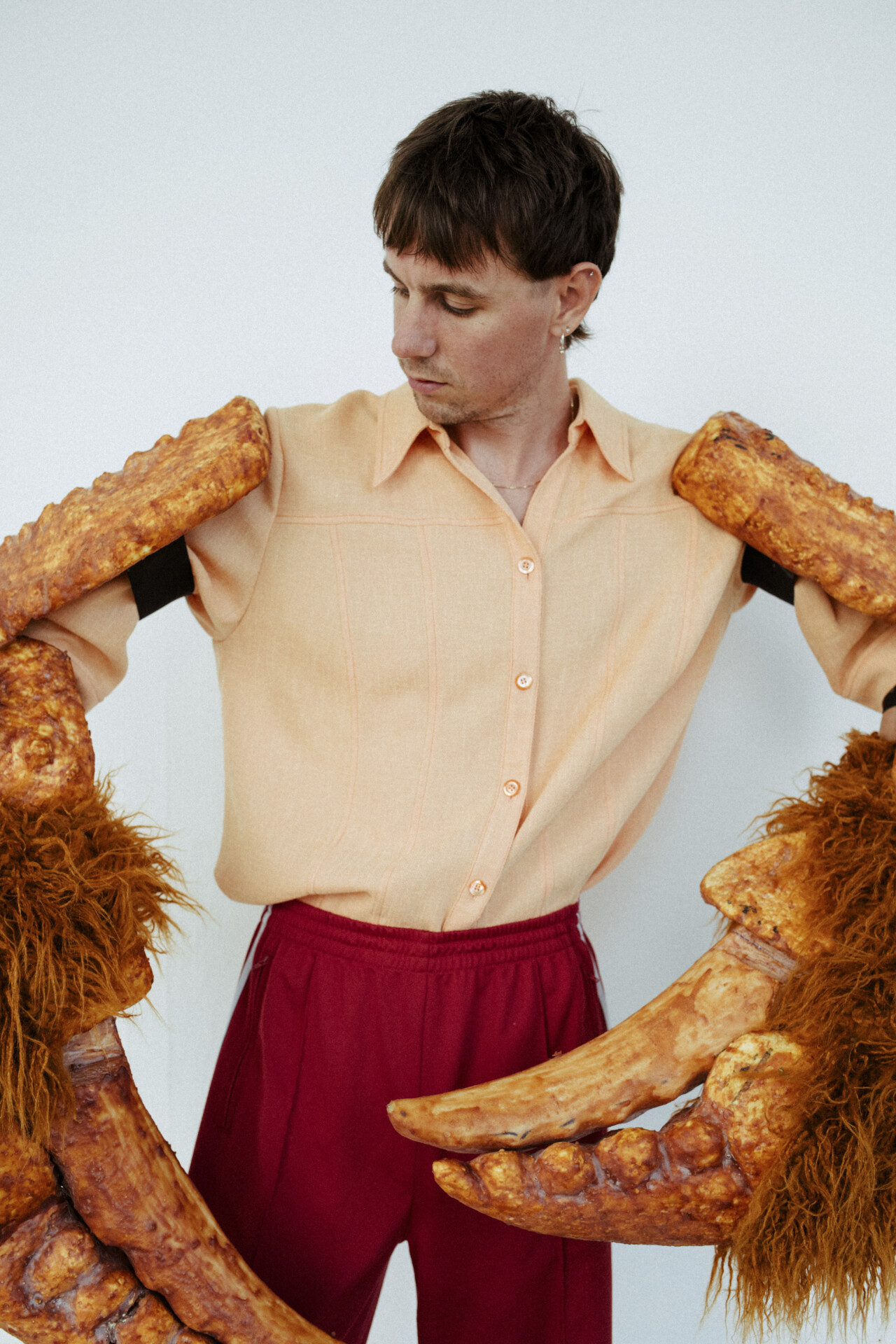
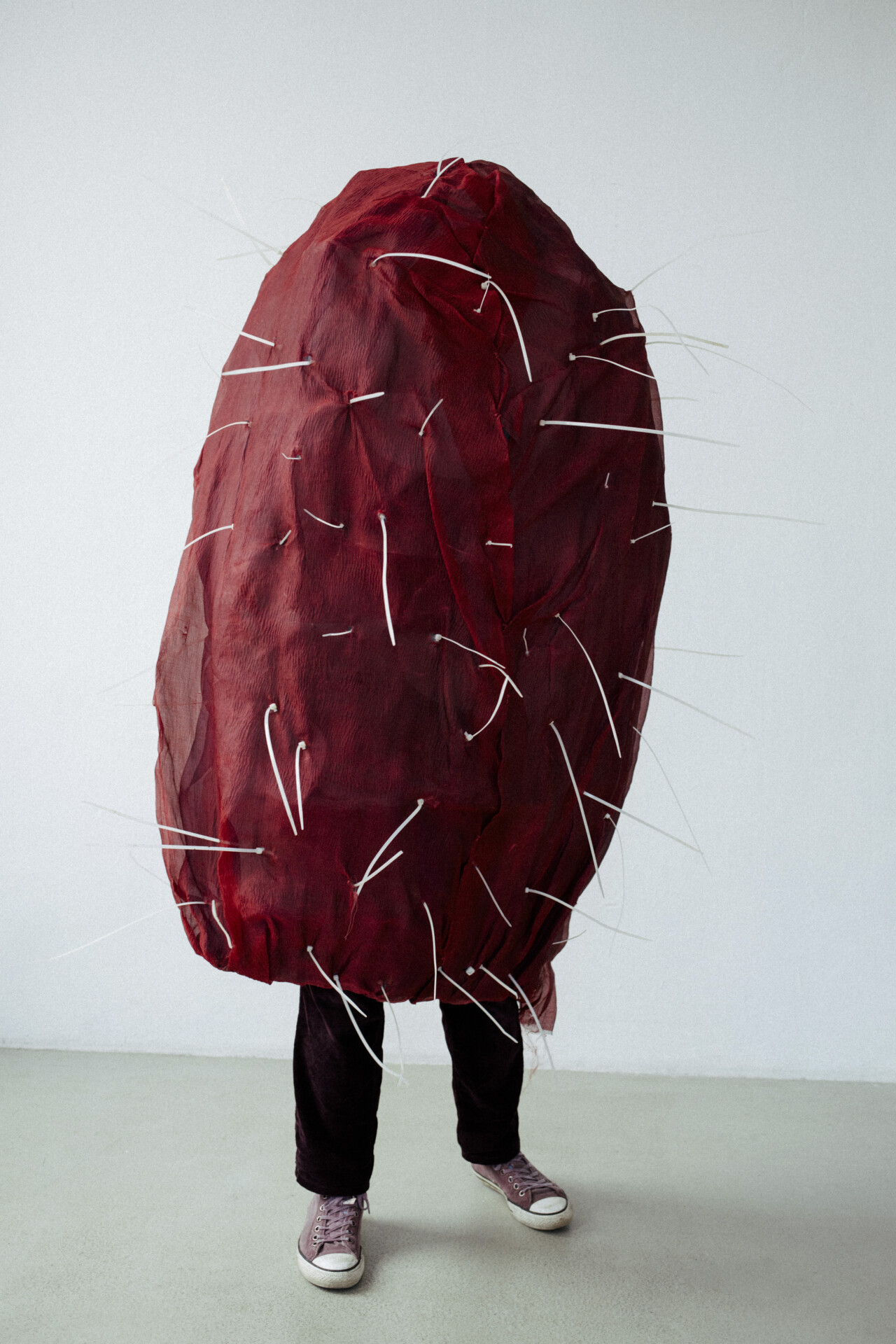
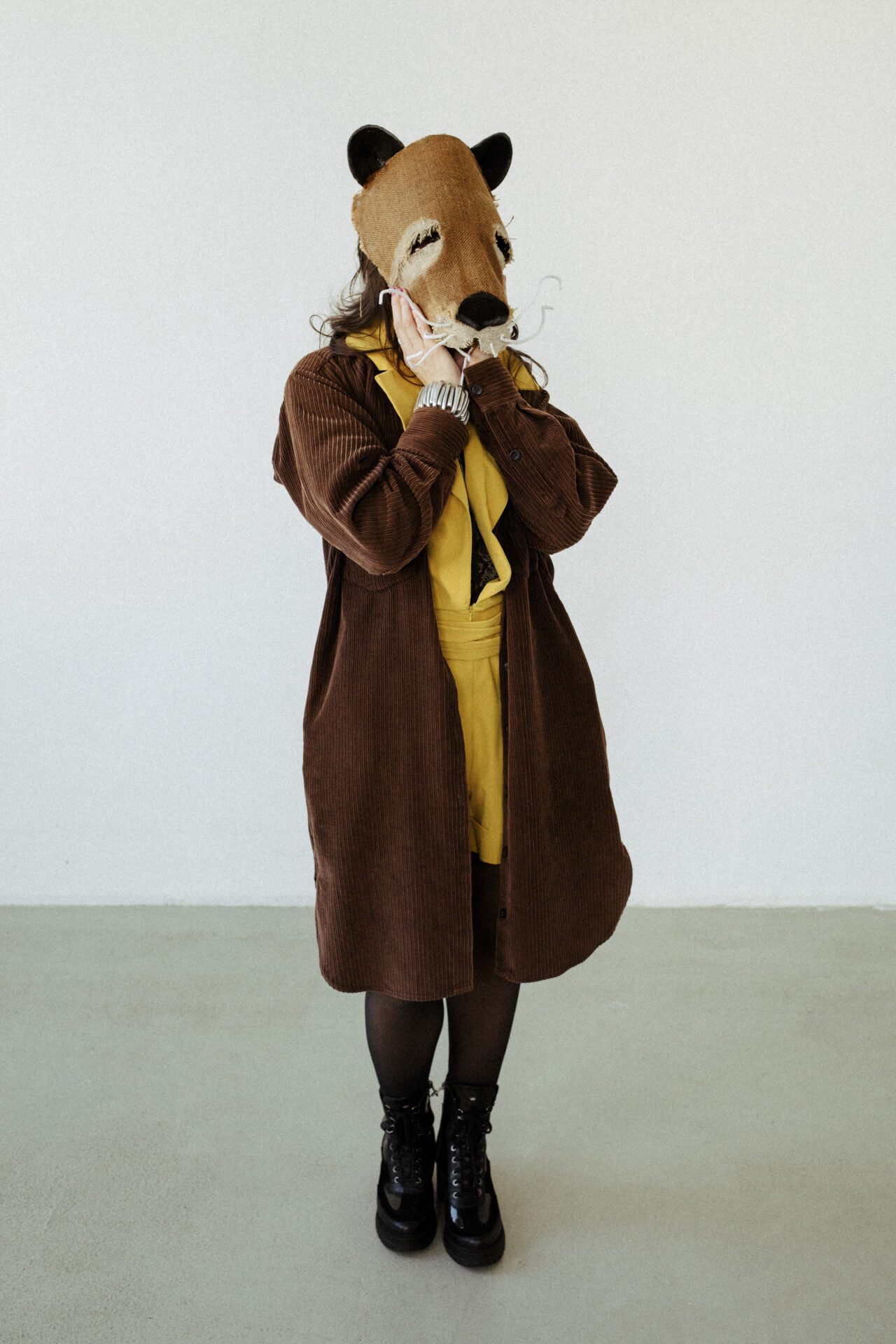
Léon Gross, Božena Bjarsch, and Georg Reinhardt model interspecies council costumes they donned during the Confluence of European Water Bodies.
Words by Becca Warner
photographs by Marlen Mueller
This week, as Americans prepare to decide who will hold political power in the midterm elections, a more unusual democratic experiment is unfolding thousands of miles away. It begins with a different question: Who gets represented in the first place?
Shaded from Berlin’s bright September sunshine, I’m sitting with more than 150 people on a floating wooden platform in an urban wetland along the Spree River. Around me are the representatives of snails and sponges and beavers and bitterlings. I am a water moss.
We are gathered for an “interspecies council,” an experiment in imagining the river’s future through the perspectives of the creatures who live there. Like every river, the Spree is home to many species—and they do not always want the same things.
Each of us is assigned a species, handed an envelope about its life in the river, and asked to consider the proposals from that species’ point of view. It’s an ambitious exercise that asks humans to inhabit other creatures’ perspectives and, in doing so, give them something resembling a political representation.
The council comes at a time when the river is under intensifying pressure, facing prolonged droughts and increasing conflicts over water use. The event is part of a larger program called the Confluence of European Water Bodies, which brings together artists, scientists, Indigenous people, lawyers, and policymakers from across Europe.
The Spree Species Council is part of a small but growing movement experimenting with ways to include more-than-humans in democratic decision-making. The U.K. government has run an interspecies council to make decisions about the Roding River, with people adopting the perspectives of the grass snake, the reed warbler, the tuft duck, and soil. Earlier this year, an interspecies council in Norway brought residents, farmers, and politicians together to represent the musk ox and the cloudberry. And in Tonga, a proposed law could recognize whales as legal persons represented in court by human guardians.
More-than-human democracy is still in its early stages, but at its core is a radical attempt to make political systems answer to the living systems they govern.
Marianna Sonneck is part of Club Real, which organized the Spree Species Council. “Our starting point was the idea to overlay an ecological system and a political system,” she said. “What would happen if you radically enlarged the number of political subjects [to include] all living beings?”
“More-than-human democracy is still in its early stages, but at its core is a radical attempt to make political systems answer to the living systems they govern.”
Sonneck hosts the Spree Species Council in the role of a purple loosestrife, a flowering river plant. The proceedings begin. Six species take to the lectern to make their case for the future of the Spree.
First is the otter, a species that needs plenty of space to roam and hunt. She proposes giving the river more room to spread across its floodplains, benefiting the wider ecosystem in the process.
Next, two bacteria take to the stage with a less intuitive proposal. Mining south of Berlin requires groundwater to be pumped from the soil into the Spree, setting off chemical processes that provide an abundant energy source for iron-oxidizing bacteria (Ferrobacillus ferrooxidans) and sulfate-reducing bacteria (Desulfovibrio vulgaris). If the mining stops, the river will shrink and the bacteria will lose that source of energy. Their proposition: Humans should keep pumping the mines dry.
The damselfly and mitten crab then team up to argue for the rights of nature by giving the species of the Spree legal rights of their own.
The final motion comes from the ide, a river fish. He thrives in flowing water, but the smooth walls of canals without habitat or rest zones make it difficult to travel to richer habitats. The ide proposes installing human-made “vertical wetlands,” structures where plants could grow quickly to provide food, shelter, rest, and even cool the water in summer. They’re a practical, emergency solution—but this is just “first aid,” one bacterium argues in response. The ide counters that this is precisely what the Spree needs right now.
The rest of us discuss these proposals through the eyes of our adopted species. I try to think mossy thoughts. But there is an obvious tension here: In speaking as the moss, am I really speaking for it? Sonneck wrestled with the same question while preparing to represent loosestrife.
“This is a real dilemma,” she said. “My ancestors maybe were able to do this, but we have forgotten. It’s reassuring that in other parts of the world, there are people who still have such heritage.” Before the event, she spent time sitting with loosestrife and researching the plant’s medicinal properties and mythology. Many of us may never be able to do more than attempt to inhabit another species’ perspective, she said. But making that attempt—with humility—is important.
These are acts of imagination, and the decisions made at an interspecies council are not legally binding. The point is to experiment with an alternative to our current political model: to ask unfamiliar questions, test different forms of representation, and see what they reveal.
Jakob Kukula, who represents the damselfly and is a cofounder of Symbiotic Lab, calls it “serious play.” “It’s not just for fun, but also to test and understand what are the different realities that we could live together with,” he said.
The exercise takes on a sharper political edge beyond the wetland. As the river species made their cases in Berlin, real votes were being counted elsewhere in Germany. The Alternative für Deutschland, a far-right party calling for “remigration” while rejecting action on climate change, had a historic win in the state of Saxony-Anhalt. The interspecies council was “a really cool antithesis” to those results, said Léon Gross, the mitten crab and a co-leader of Symbiotic Lab. “Rather than excluding even more communities and groups from our democratic decision-making, we do the total opposite, and we enlarge the circle of empathy.”
The starting point for inclusion, Sonneck said, is not “who should be present and who can be ignored or removed.” The interspecies council asks who is here, now. When one representative refers to a species as “invasive,” Sonneck—still speaking as the loosestrife—responds quickly: “It’s nature; you have a place here. No one is illegal.”
And in this version of democracy, no one is too small to count. Božena Bjarsch, who speaks as the otter, is Sorbian, a small Indigenous population in eastern Germany that has lost much of its land to the coal industry. As a Sorb, “you have thoughts about other minorities and other species who need help. You see the small people,” she said.
“What would happen if you radically enlarged the number of political subjects to include all living beings?”
Extending empathy beyond our own species may, in some cases, be easier than grasping the perspective of another human. “It’s easier to get in the mindset of a bacterium for me than to get into the real mindset of an AfD voter,” said Katharina Lindt, a water policy researcher representing Ferrobacillus ferrooxidans. Seeing the issue from another species’ point of view could also create unexpected alliances, she said. “If you really become some other species, then your opponents are different. You could collaborate playfully with each other even though in real life your political interests might be very opposed.”
The event deliberately blurs familiar boundaries between “us” and “them,” and between humans and the rest of nature. “In environmental thinking, we tend to create these antagonisms between culture and nature, and that’s something we want to deviate from,” Gross said.
The interspecies council is “claiming a very strong new story,” said Kukula, differentiating it from Western narratives he characterized as centering “patriarchy and money and power.” The question now is how to involve more people in experiments like this, “and make this a normal thing.”
We are far from bringing the perspectives of crabs, fish, and bacteria into the halls of power; institutions that still don’t represent humans equally. But Gross sees these experiments as a first step toward changing how people understand their relationship with other species. Before redesigning our institutions, he said, we must first “shift how we relate to more-than-humans [and] acknowledge them as sentient beings. Exercises like a multi-species parliament are first playful, and then they become more serious.”
Still, Gross cautioned against letting the idea get trapped in theory and performance art. “It’s really just: What does the river mean to you? How do you feel when you’re there? What was your memory as a child? Very simple language to make this a really democratic movement.”
By the end of the afternoon, the abstractions of the exercise become suddenly concrete. We form a disorderly line to cast our votes, dropping a steel ball into one of four metal cans representing the proposals. The cans are then weighed against one another. With a decisive clunk, the otter’s motion to “let the Spree breathe” wins.
Bjarsch—the otter—returns to the stage. “It’s not just a win for the otter. It’s a win for the Spree and for all you species,” she tells the crowd.
The experience has left Bjarsch optimistic about what politics might look like if perspective-taking became a more common practice. “It’s really helpful for us to change our perspective, to think in another way [about] what other species or other human beings need,” she said. If people practiced this more widely, she believes the positive impact could multiply fast. “There will be changes like a domino effect. It would be amazing,” she said. “I’m very hopeful.”
Mitten crab mask Quirin Bäumler and Georg Reinhardt Otter mask Crooked Crow Masks
The Confluence of European Water Bodies took place in collaboration with the Berlin University Alliance. Scientific support came from the Leibniz Institute of Freshwater Ecology and Inland Fisheries.
Join our membership community. Support our work, receive a complimentary subscription to Atmos Magazine, and more.
What Happens When an Otter, a Crab, and a Damselfly Get a Vote?