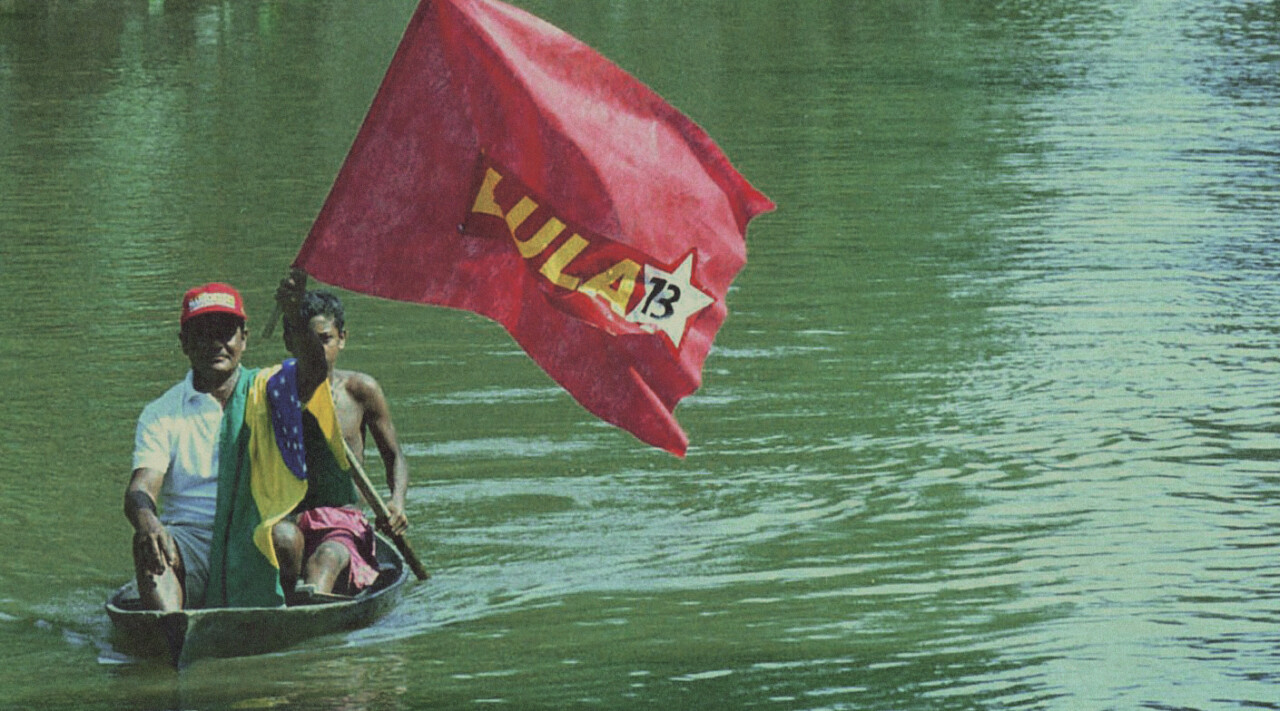
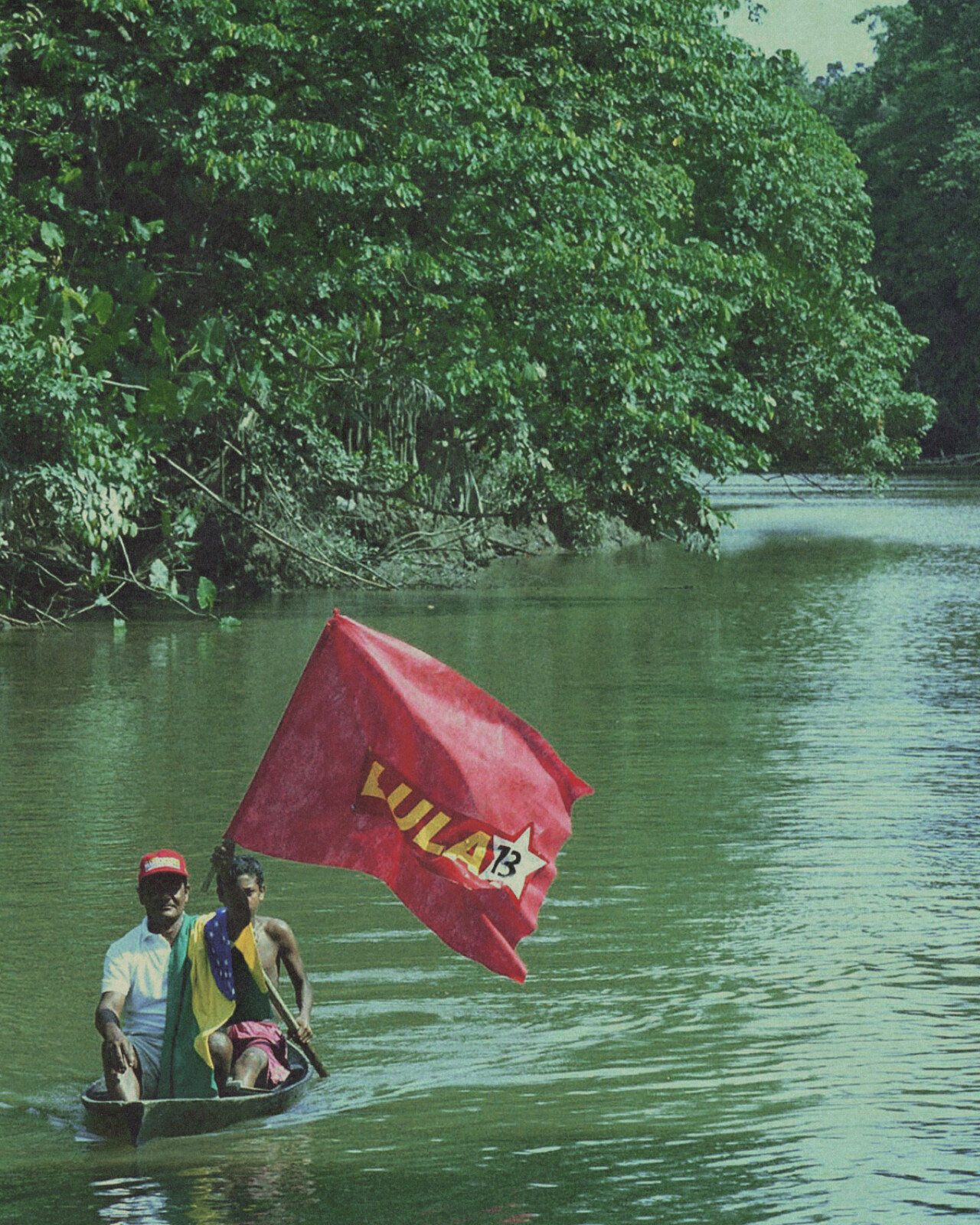
Photograph by Paulo Amorim / Getty Images
words by miranda green
The Amazon Rainforest is often called the “lungs of the Earth” for its high density of trees taking in carbon dioxide and releasing oxygen. But for centuries, explorers and later rulers saw it as a place to plunder.
Rubber barons, gold miners, ranchers, and loggers all contributed to shrinking the jungle’s forest cover by about 17%.
Protecting the Amazon’s biodiversity, related ecological benefits, and the Native nations that defend both has long been pitted against short-term economic or political gains that come from extracting from the forest. A battle over the Amazon’s future has largely shaped Brazil’s past two elections.
Trump-aligned president Jair Bolsonaro in 2020 advocated for mining the Amazon and dismantling enforcement agencies. Succeeding Bolsonaro was President Luiz Inácio Lula da Silva, elected in 2022 to a third, non-consecutive term. Lula flipped the script by reinforcing Indigenous rights and native health while stomping out illegal mining. He created the country’s first Ministry of Indigenous Peoples in 2023.
Lula also welcomed the world to Belém, Brazil, last year as part of the 30th United Nations Climate Change Conference. And under him–between August 2025 and March 2026–deforestation in the Amazon fell 36% compared to the prior year, hitting its lowest levels ever. Brazil’s Climate Observatory also found that greenhouse gas emissions fell by 6% in 2025 following a 13% drop in 2024.
Contributing to that drop were large military incursions by Brazil’s IBAMA tactical enforcement unit, which finds and burns down illegal mining operations. (Atmos has a really fascinating interview with Juma Xipaia, an indigenous leader and activist whose husband is part of IBAMA, that’s worth reading. And if you haven’t yet seen the film YANUNI, go do yourself a favor and watch it).
The clear changes in the Amazon under Lula made his nail-biting reelection this week against Bolsonaro’s son, Brazilian Sen. Flávio Bolsonaro—who said he doesn’t believe climate change is real—all the more poignant.
This week represents a small cascade of wins for left-leaning leaders. In Serbia’s parliamentary elections Sunday, long-serving strongman Aleksandar Vucic conceded his party’s historic loss to a leaderless, student-led movement created in opposition to his Vladimir Putin-endorsed government. The students leading that movement managed to synthesize specific debates over lithium and other mining controversies, as well as other environmental issues, into their broad call for complete institutional overhaul, academic freedom, and legal accountability.
While Vucic accepted defeat, he also tossed barbs at Serbia’s independent media and alleged interference by an “American deep state.”
In Brazil, Lula’s victory was the first swing toward progressive candidate wins, after seven Latin American countries elected conservatives to power in the past 18 months. Those countries include Chile, El Salvador, and Colombia—the last of whom’s previous president repeatedly spat with Trump over drug cartel claims.
Flavio Bolsonaro at first disputed Lula’s win, calling for it to be invalidated. He and his family fled Brazil Tuesday for the United States, where the State Department confirmed they would receive visas. Brazil’s Supreme Court earlier this week demanded Bolsonaro turn over his passport, after it was announced he was being investigated for a money-laundering scheme in which he denies wrongdoing.
Also Sunday, perhaps soaring on the winds of change, Venezuela’s democratic opposition leader María Corina Machado returned to Venezuela to run for office. Machado famously won the Nobel Peace Prize in 2025 for her unsuccessful efforts to help her fellow opposition leader be verified in Venezuela’s 2024 presidential election.
She presented the award to Trump at the White House this past January, not long after the U.S. had invaded Venezuela and removed its dictator Nicolás Maduro. She’s pushing for the country to hold elections next year. While Machado has support from some U.S. politicians, Trump has opted to work closely with interim President Delcy Rodríguez on oil deals. Leadership in Venezuela has massive implications for the country’s environmental future, where its oil is considered the dirtiest to burn. Emissions from oil and gas operations are six times the global average.
The recent victories are of particular interest just days before midterm elections in the U.S. A new poll shows that Democratic candidates running for Congress (52%) are leading Republican candidates (44%) among likely voters nationally.
As I wrote before, data centers and energy bills, as well as high gas prices, are core issues for voters in this election.
At his acceptance speech Sunday, Lula made a nod to international politics and disputes, telling supporters: “I doubt that Russia, China, or the United States has an army as victorious as the army of democracy of this country.”
He said: “This election was a defeat for denialism, a defeat for lies.”
But Lula will soon face a major stress test.
He is tasked with moving his country ahead economically while dealing with the looming threat of climate change, which is already impacting the Amazon by causing more intense droughts and flash floods and disrupting the mechanisms controlling regional rainfall. One study estimates that 10% to 47% of the Amazon could face numerous threats by 2050 that have the potential to change parts of the rainforest into different ecosystems.
Last fall, Lula’s administration formally recognized 20 Indigenous territories, and gave them stronger rights to protect forests on their lands. But Brazil still faces a conundrum of what to do with its own rich oil reserves. It’s the world’s seventh-largest oil producer, and continues to drill in the Amazon.
While Lula has embraced his role as a champion of the Amazon and Indigenous peoples, his climate policies remain somewhat stuck in the past: Under his leadership, Brazil’s state-owned oil and gas company, Petrobras, in May invested $500 million to drill 22 new wells in the Amazon after nearly a decade of inactivity.
At the time, Lula acknowledged that he supported a gradual phasing-out of fossil fuels, but said revenues from hydrocarbons were necessary for that transition.
During the announcement about the investment, Lula declared: “We love Brazil, we love Petrobras, we want to live well, work well, study well, and that will only be possible with economic growth.”
How he squares that circle remains to be seen.
Want me to look into The Understory of something? Send me an email!
Join our membership community. Support our work, receive a complimentary subscription to Atmos Magazine, and more.
Is Brazil’s Vote a Turning Point for Climate Politics?