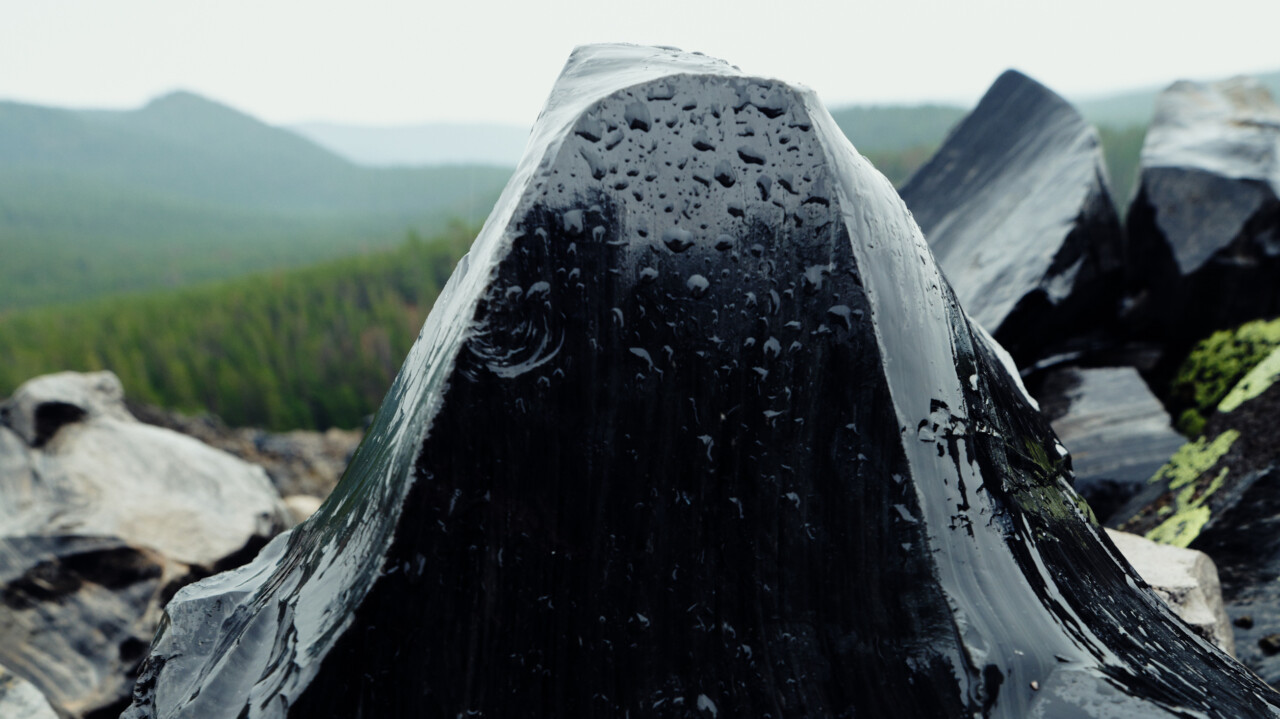
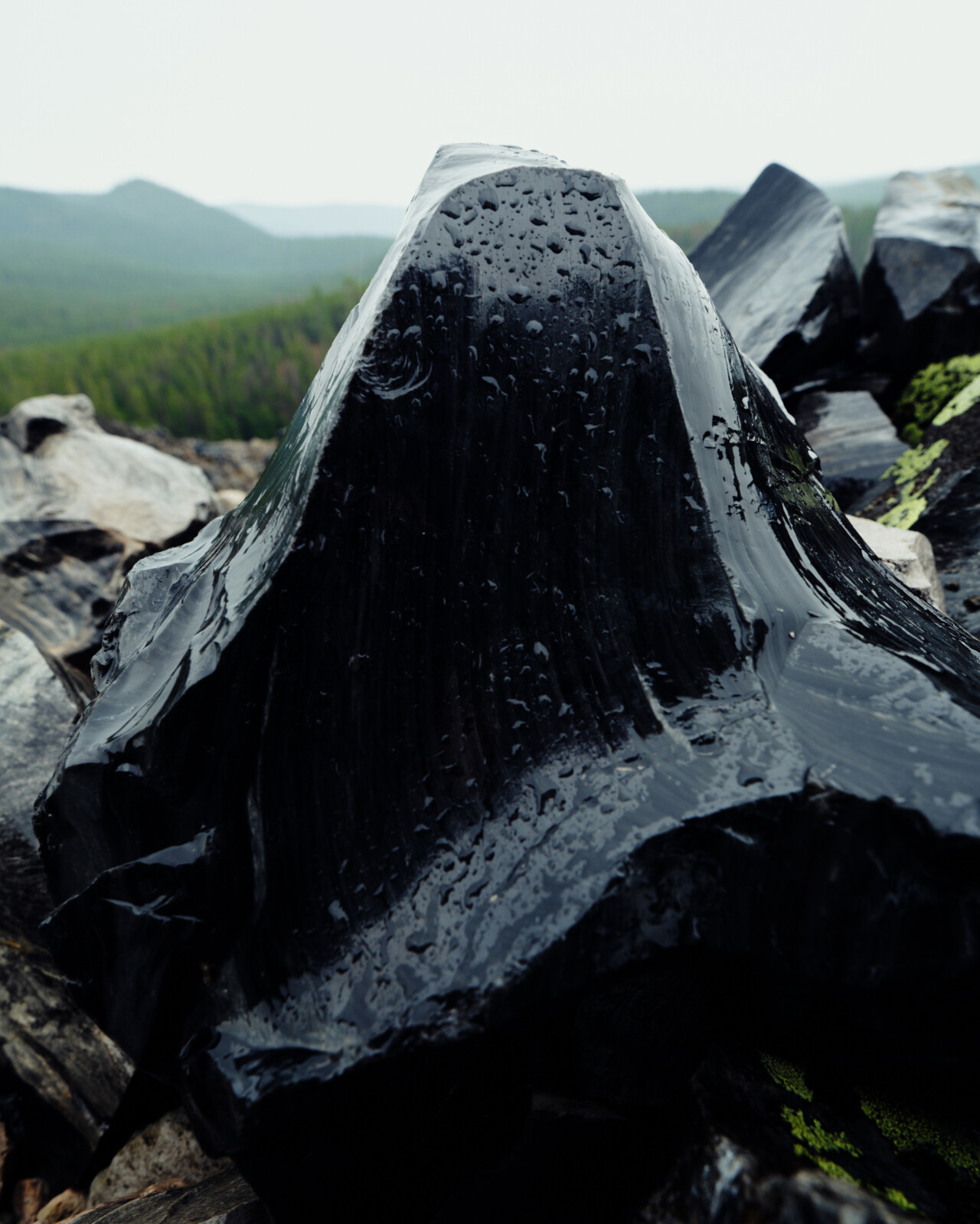
Photograph by Collin Hughes
words by willow defebaugh
“Every atom in this body existed before organic life emerged 4,000 million years ago. Remember our childhood as minerals, as lava, as rocks? Rocks contain the potentiality to weave themselves into such stuff as this. We are the rocks dancing.”
—John Seed
Steady as a rock. Solid ground. Set in stone. The metaphors we pull from geology always suggest stagnancy; that what’s sedimentary is sedentary. But in the long view of geologic time—and nature more broadly—everything changes, mountains and monoliths included. Every pebble, every grain of sand is a testament to impermanence, inseparable from the ever-evolving Earth. We call the endless series of transformations that stones go through the rock cycle.
Rocks take three main forms: sedimentary, metamorphic, and igneous. The formation of sedimentary rocks is anything but static. Their journey begins with rocks being battered into pieces, weathered down by the forces of our world. Wind, water, and ice then transport those fragments to foreign places and fresh starts. Once settled, the sediments gather, gradually compacting and cementing together. Stability forms from the rubble.
Metamorphic rocks are those altered by intense heat, pressure, or chemically active fluids. Deep beneath the Earth’s surface, under clashing tectonic giants and searing temperatures, their minerals rearrange and recrystallize without melting, sometimes forming entirely new minerals. This process can unfold over eons, transforming the rock’s internal structure without necessarily changing its outward shape. Metamorphosis begins from within.
Igneous rocks form when rocks deep within the Earth melt into magma. With intrusive igneous rocks, this magma gets trapped deep beneath the surface where it slowly cools and solidifies over thousands to millions of years. Extrusive igneous rocks solidify above ground after magma rises toward the Earth’s surface and erupts as lava from volcanoes and fissures, then quickly hardens. In the realm of rocks, unseen shifts can lead to explosive change.
Rocks flow through these three forms as the Earth remakes itself across geologic time. If a substance as seemingly solid as stone can transform, what about people? So much of our human world and the systems that uphold it seem unyielding and immovable. But geology reminds us that metamorphosis is always happening under the surface, even when it feels as if nothing is happening. Stillness is not the same as stagnation.
When our circumstances feel immutable, we can remember that every pebble is a possibility. There is comfort to be found in the ground beneath our feet, however imperceptible the shifting terrain may be. We are carved from impermanence, made of elements borrowed from stone and atoms older than life itself. The timescale of change can be unfathomable. Humans dream in days and years, but mountains dance across millennia.
I don’t believe human beings are inherently hard to change. People change all the time. Like the Earth, we are battered by the elements and scattered to the wind, only to come together in new constitutions and communities. We are repatterned by pressure, the immense weight of it all. We are reforged in flame. We travel to our cores and erupt with possibility. And while some structures may take longer to break down, nature knows best: Nothing is set in stone.
This is an edited version of a newsletter edition first published in 2021. To read more from the archive, check out The Overview book.
Join our membership community. Support our work, receive a complimentary subscription to Atmos Magazine, and more.
The Rock Cycle: Why Nothing Is Set in Stone