


words by jasmine hardy
photographs by pie aerts
In partnership with Davines
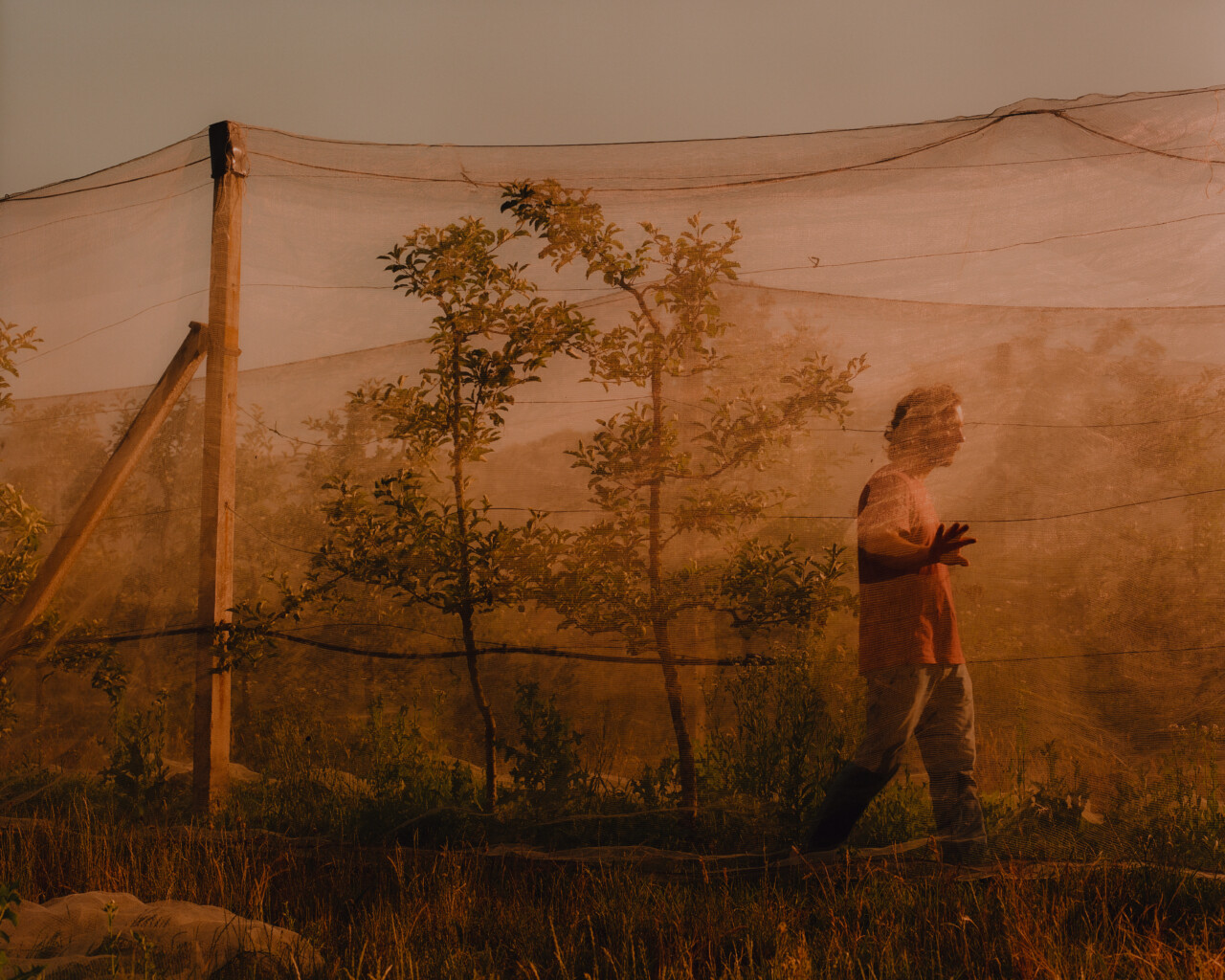
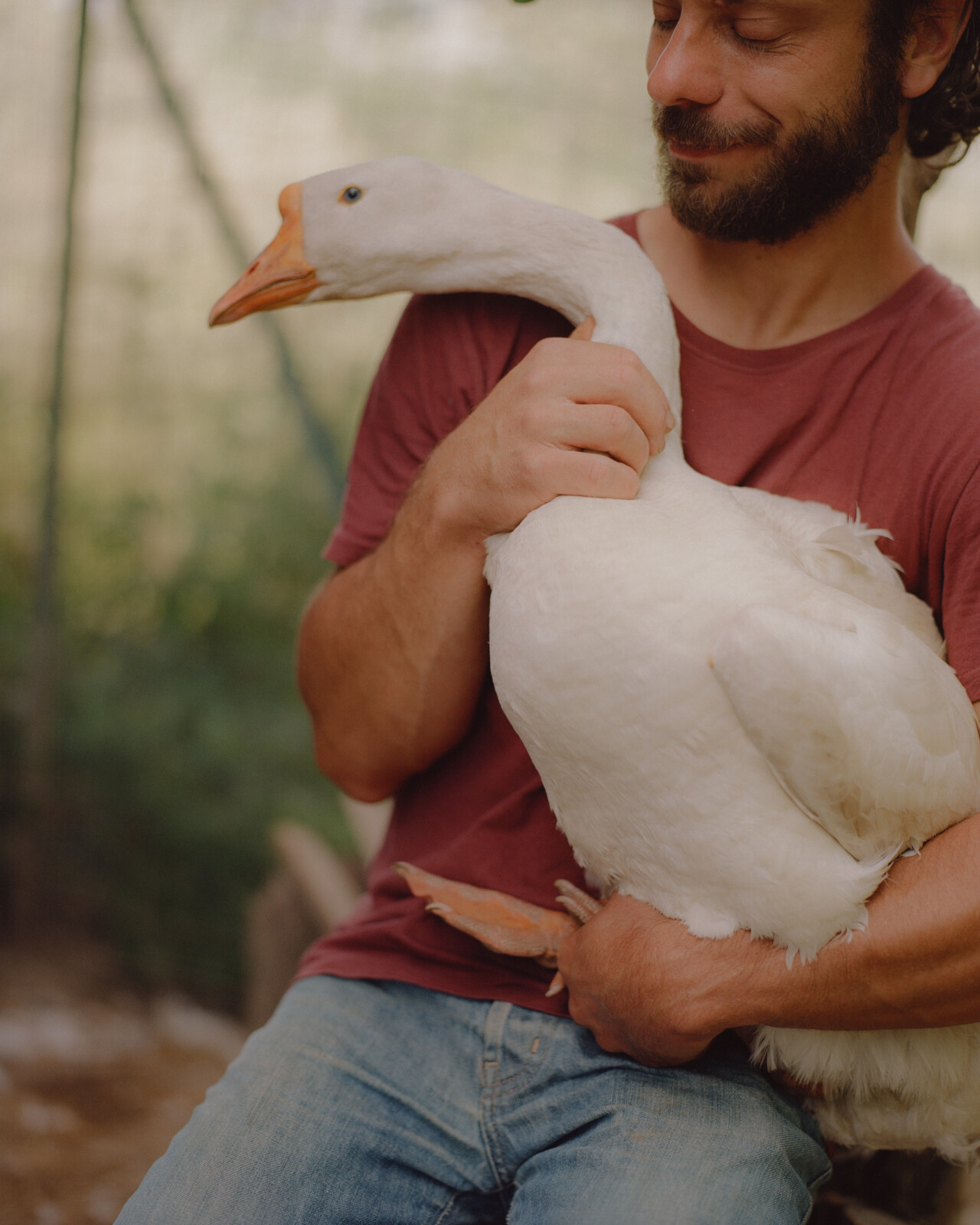
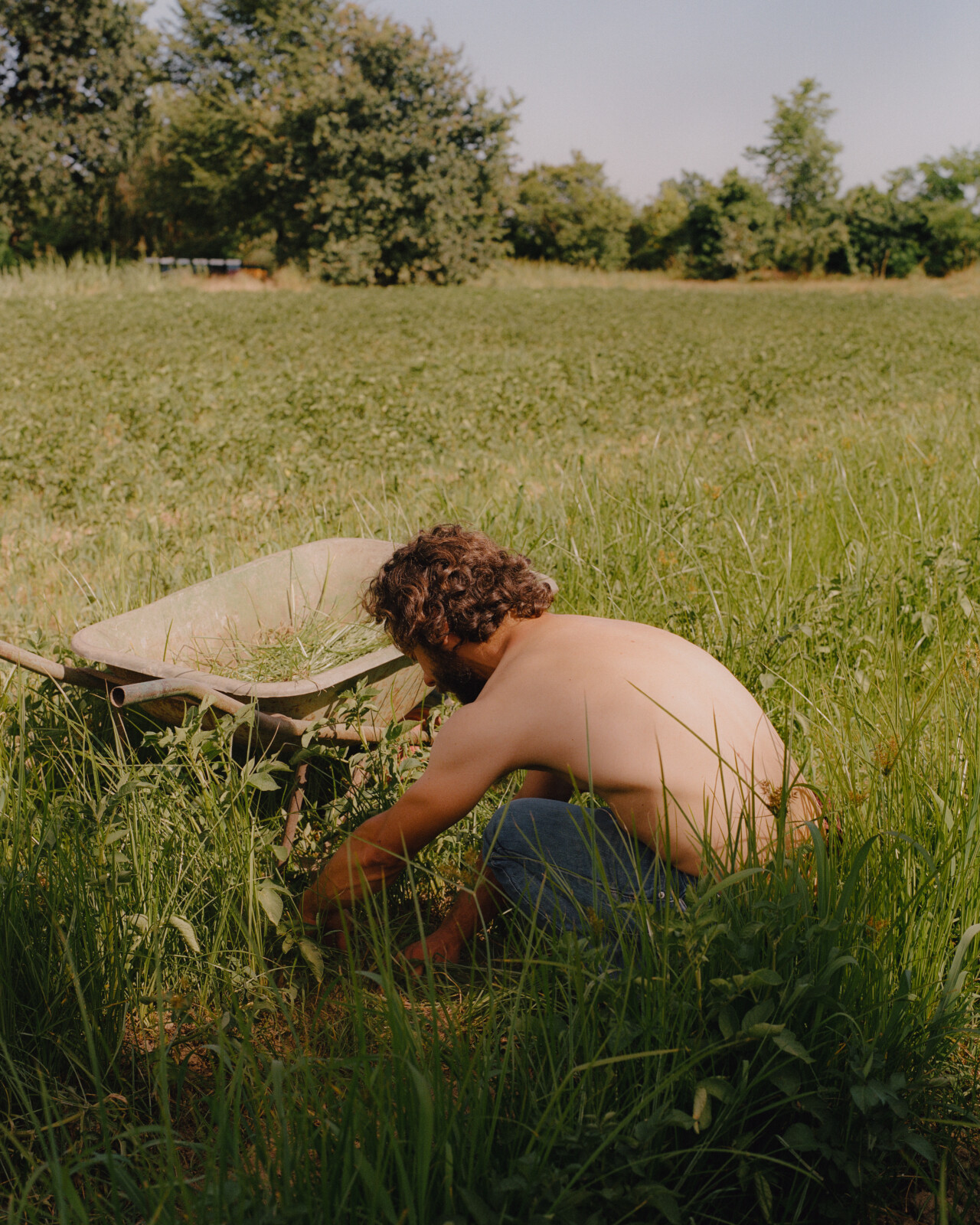
In the warm countryside of Northern Italy, Michele Aina leads me down a row of tall grass, motioning to plots of potato plants on our left and squash on our right. The clucks and crows grow louder as we approach a chicken coop, startling a flock of white Italian geese who quickly waddle past us, their webbed feet trampling potato sprouts. Aina’s farm is filled with life, and every living thing on it—the buzzing insects, the egrets circling overhead, the sweat-slicked workers tending to the crops—plays a role in keeping this life going.
For Aina, the key to a bustling farm comes down to surrendering to the needs of the land: “I am sort of a listener of what is the request of nature,” he said.
Following nature’s lead is the basis of regenerative organic farming, in which agriculture functions as one connected living system. It combines organic methods—farming that avoids synthetic pesticides and herbicides—with regenerative practices, which actively restore the land rather than simply sustain it. Regenerative organic certification recognizes that when farmers work with the cycles of nature, the soil is better able to support life.

Regenerative organic farming is changing the way we grow food while also transforming the ingredients behind the beauty products we use every day. As brands and consumers pay closer attention to how ingredients are grown and sourced, regenerative practices are becoming part of a broader reimagining of what beauty can be.
Experts emphasize that when healthy plants grow from healthy soil, those crops can be used in many ways, including in cosmetics. Many consumers already associate beauty and wellness with personal and environmental health. In that sense, the beauty industry is uniquely positioned to help catalyze change.
The Italy-based beauty company Davines Group, comprised of the Davines haircare brand and its sister skincare brand Comfort Zone, aims to be a leader in this space. The company recognizes that the way ingredients are grown, harvested, and stewarded is essential: not just for beauty formulation, but for repairing our relationship with the Earth. For Davines Group, our re-enchantment with nature begins in the soil of regenerative organic farms across the world.
“If we can influence agriculture, then we’re also going to have benefits for biodiversity, climate change, mitigation, all these aspects,” said Dario Fornara, Research Director for the European Regenerative Organic Center at the Davines Group Village in Parma, Italy. “It would make sense to start from agriculture.”
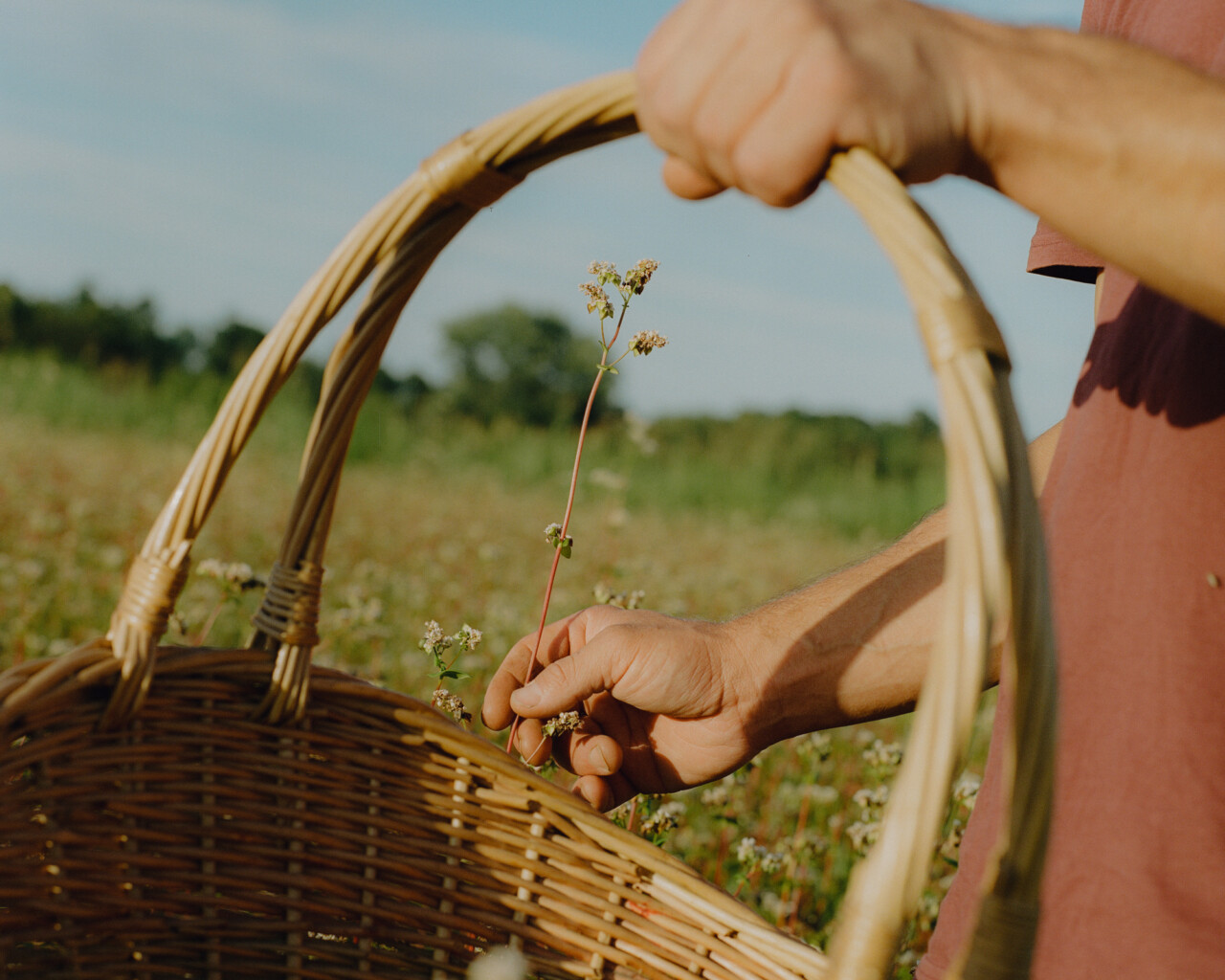
At Aina’s farm, the mid-afternoon sun beams down on a field of buckwheat, some of which will soon be harvested and transported to a Davines Group lab. Its antioxidants and polysaccharides will then be extracted and added to a translucent bottle of shampoo. The label reads: “With certified* regenerative buckwheat extract. From Mr. Michele Aina’s farm, Romentino, Novara, Italy.” Ingredient transparency is a value shared by Davines Group and its farmers—one they hope will encourage a broader cultural shift in consumer choices, in cosmetics and beyond.
“If you know where something comes from, you can make better decisions,” said Aina.
The active ingredients in Davines’ new Essential Haircare line come from the soil of regenerative organic farms in diverse ecosystems: green coffee from Peru, baobab pulp from Burkina Faso, and a range of ingredients from various Italian farms. For some of these farmers, this is their first time using regenerative organic methods, introduced through Davines Group’s training programs.
These newly converted farmers have learned to strengthen their agricultural systems by using classic regenerative organic certified methods. These include crop rotation, in which different crops are planted sequentially on the same plot of land; companion planting, in which mutually beneficial plants are grown near one another; cover cropping, in which less economically valuable crops are planted during off-seasons as a kind of living mulch; and more. Each method aims to measurably improve soil health, which stands as the cardinal goal of regenerative organic agriculture.
“Soil is the living foundation of every ecosystem and every supply chain,” said Rodale Institute CEO Jeff Tkach. “These practices increase soil organic matter, which is an important indicator of resilience.”
In a climate-altered world with rising carbon dioxide levels and declining biodiversity, healthy soil is like gold. It supports carbon sequestration, water filtration, biodiversity, and resilience to climate stress. Organic systems can yield up to 40% more during droughts compared to conventional systems on the same land, Tkach explained. They also use 45% less renewable energy and produce 40% fewer carbon emissions.
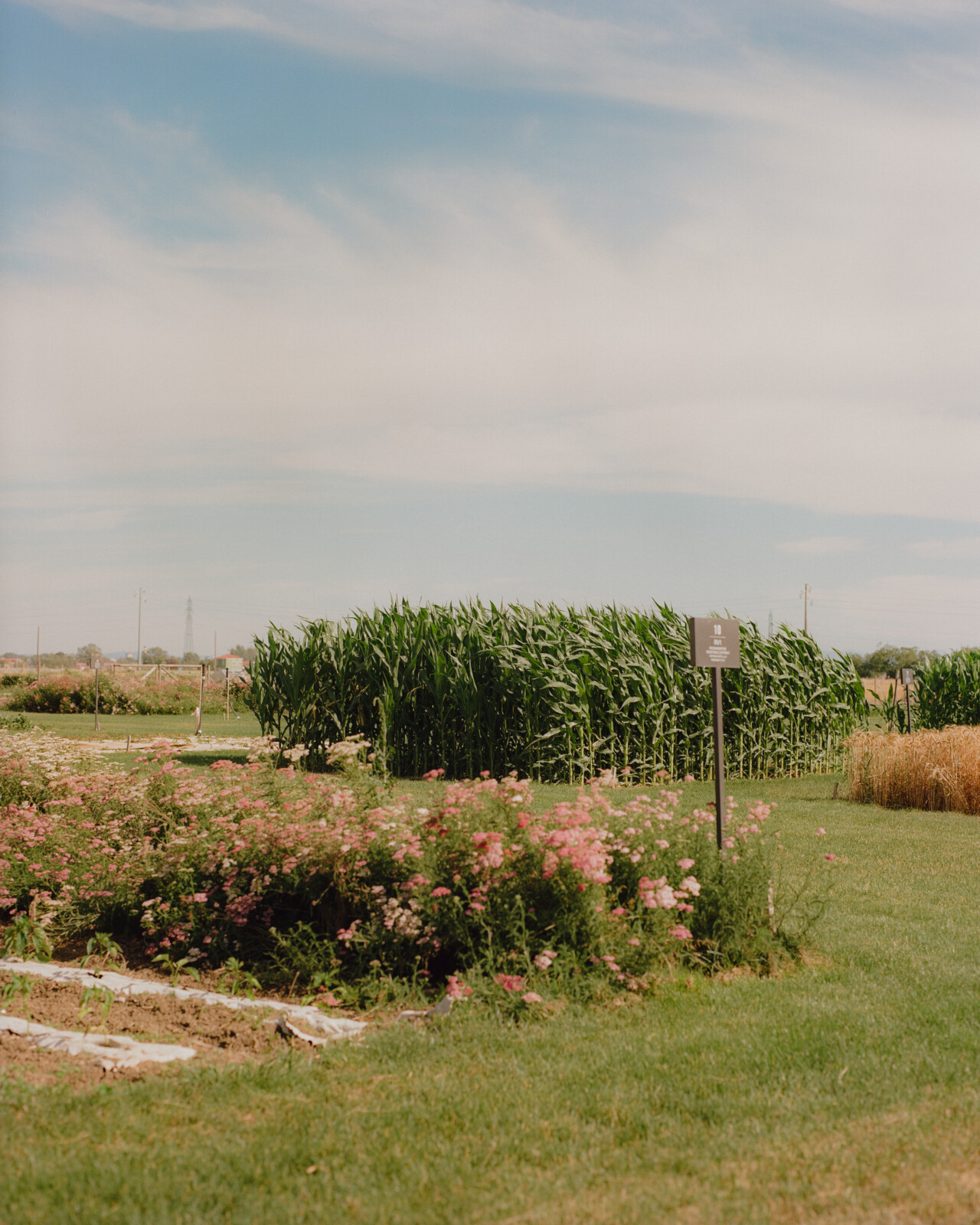
In addition to relying on outside research, Davines Group leans on the company’s own scientific research to test key differences between conventional and regenerative organic farming. At the European Regenerative Organic Center, a research and training hub the Davines Group co-founded with the Rodale Institute, scientists conduct experiments on 188 research plots. Crops are rotated and treated with either conventional or regenerative organic farming methods, and then compared. At this stage, scientists look for notable differences in the plants’ biochemistry and nutrient density, ultimately informing which ingredients get incorporated into their products.
“It’s about promoting a pathway, a paradigm, which is more regenerative and sustainable,” said Fornara. “There is no other way to go, because if we continue this way—mainstream, intensive, chemical-based agriculture—it’s not good for the environment, it’s not good for us as human beings.”
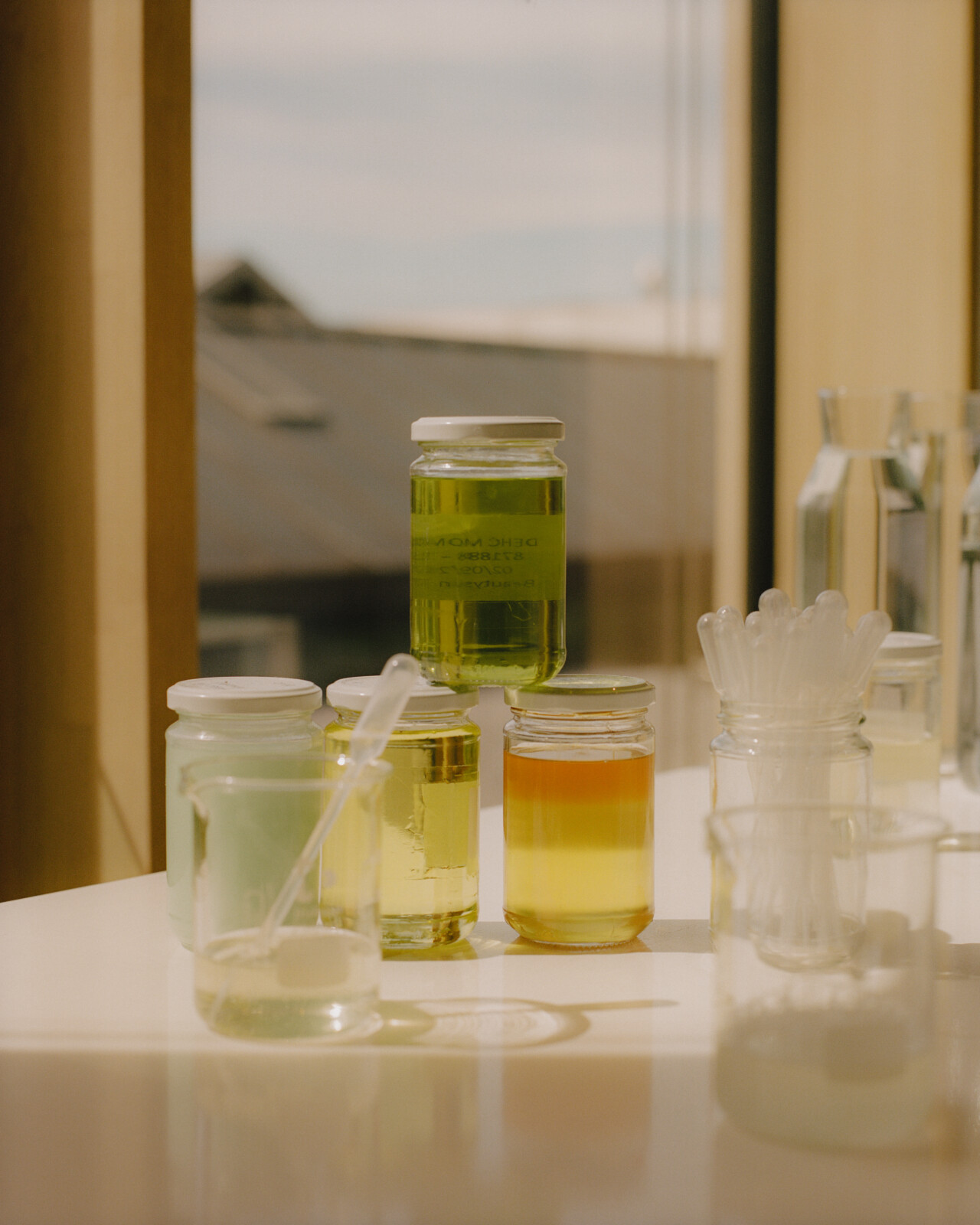
The next level of testing occurs in the Davines Group labs, where ingredients extracted from the healthiest crops are put to the test.
In the R&D laboratory, nestled toward the back of the Davines Group Village, a floor-to-ceiling window looks onto the company’s flower-filled scientific garden. It’s early summer, and the plants are in full bloom with pollinators floating easily through Italy’s warm, still air. Inside the lab are the familiar tools of scientific testing: microscopes to observe the size and strength of hair fibers, beakers to transport extracts, and scales to weigh the biomass of key ingredients.
This lab is where the reformulated Essential Haircare line was born around four years ago. Davines selected plants with the most effective active ingredients and used them to design and formulate internally. The resulting range includes active ingredients such as clementine peel, apricot, apple, lupin, buckwheat, and more. During the multi-year process, Davines chemists monitored each ingredient for three months to test its stability, observing color, smell, and other properties.
The chemists acknowledge that there are noticeable differences when formulating with regenerative organic sourced ingredients. “Our commitment is to achieve the same, or even better, performance as conventional formulas while improving their sustainability profile. We know that with ROC ingredients, we can reduce the impact in terms of CO2 in the environment, and this, for us, is a strong commitment that we have with these ingredients,” said Davines Haircare Head of R&D and Innovation Elena Zanca.
Beyond climate impact, Davines Group says its work is also motivated by human welfare, with the company sourcing ingredients from countries like Burkina Faso to support the economic livelihoods of its female farmers. “We want to support social empowerment for women and local communities, social equity for workers and farmers, and also the healthiness for animals that work inside these farms,” said Zanca. “[There] are so many things from an ethical point of view to take into consideration when you use and you choose this kind of regenerative organic agriculture, and what is behind the plant and the ingredients.”
This commitment to the well-being of humans and nature has inspired Davines’ latest tag line, “For A Good Life.” Ultimately, life is a series of decisions with inevitable impacts. Even a choice as seemingly simple as which shampoo to buy is tied to questions of purpose, intention, and impact on nature and humanity.
In an industry where supply chains and ingredient sourcing are often opaque—and where environmental claims can be difficult for consumers to verify—Davines’ mission offers a more transparent model. Regenerative organic certification adds accountability and removes some of the guesswork: the sources are literally written in black and white on the front of the packaging.
Within an industry so entrenched in harmful practices, Davines Group raises the larger question of whether the future of beauty can become more ecologically and socially responsible. What if a broader culture shift is possible—where beauty products are not isolated consumer goods, but expressions of our relationships between land, labor, science, and care?
However, one might first ask if these methods of ingredient cultivation can realistically scale to keep up with the demands of such a competitive beauty industry. For Tkach, that’s the wrong question: “The question isn’t whether regenerative organic agriculture can scale, it’s whether all stakeholders are ready to invest in the transition together.”

Italian farmer Aina has noticed that some older farmers are resistant to change, but he says that when farmers see what is possible through regenerative organic agriculture—including long-term profitability and freedom from industrial rules—change becomes much more attractive. Education programs from companies like Davines Group can also lower the barrier to entry.
As for whether larger beauty companies will adopt practices more aligned with the needs of nature, Davines Group is looking at whether the philosophy behind regenerative organic farming can spread across industries, even if that shift doesn’t yet include the largest corporations.
“It goes even beyond agriculture,” said Fornara. “Regenerative is a term that’s been used in business as well. Making sure that we use natural resources in a sustainable way and allow them to regenerate has to do with soil, plants, the use of water, energy, solar panels. [We must] try to do business in a way that you pay attention to the environment and the well-being of people—it’s not just about making money and selling products. Maybe the change is not coming from the top-down, but from bottom-up: small, medium farmers and companies like Davines and others, to push this movement.”

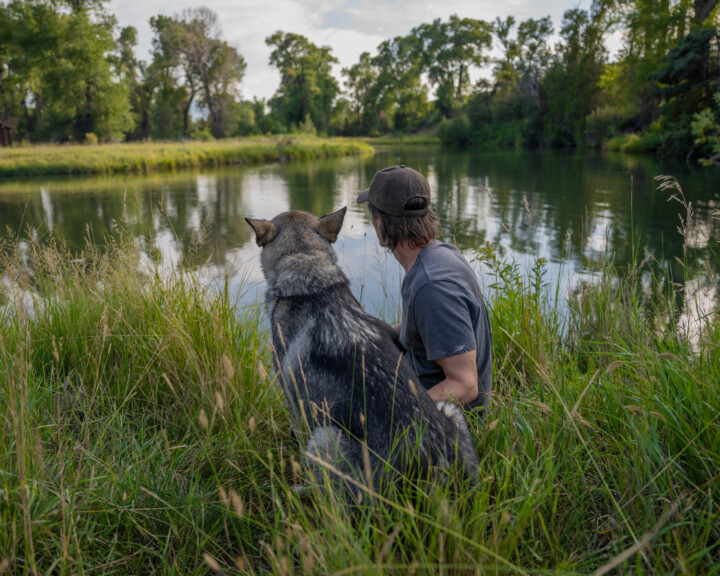
Back in the Italian countryside, Aina sits with his sister and father, reminiscing on the origins of their farm over wine and fruit from their orchard. Speaking in rapid Italian, they complete each other’s sentences, joking about the incessant insects, their quirky German shepherds, and the ordinary details of life on the farm.
Aina’s family has been practicing regenerative organic agriculture since before there was a name for it. Over the years, their farm has become a trusted source of meaningful production in the community as schools and organizations regularly schedule visits to learn more about the farm’s processes. For the Ainas, this curiosity and commitment—even on a small scale—is where the seeds of change begin to sprout and then bloom across society.
“This farm and farms similar to this one not only produce vegetables and grains and food,” Aina said. “They are also places where you produce culture.”

Join our membership community. Support our work, receive a complimentary subscription to Atmos Magazine, and more.
What Regenerative Organic Farms Can Teach the Beauty Industry