Good Neighbors Edition 3, 10.01.26
This is the third edition of a six-part series, Good Neighbors, that visits six rural communities where everyday people trade culture wars for coalitions focused on protecting the planet.
When the rain started falling at around 3 p.m., Matt Bormann knew his work was finished for the afternoon.
He ducked into the equipment shed on his corn and soybean farm in rural Iowa, mixed a Crown and Coke, and sat down to chew the fat with his friends. They proceeded to vent about some growing practices Bormann saw on other farmers’ fields that he knew would result in soil erosion. His pals, also farmers, affirmed his frustrations and offered similar stories of their own.
If you’re picturing a gathering of coveralled, weather-beaten men with pieces of grass dangling between their teeth, seated on matted bales of hay and overturned drywall buckets, you’ve got it wrong. It was the fall of 2023, and Bormann was alone, forming this disgruntled peer group of early- to middle-aged agriculturalists on Snapchat.
“I go inside at around 4:30 to start on some supper,” recalls Bormann, a husband, father of three, and fifth-generation farmer. “By around 8 p.m., the group had grown to 16 people, and there were requests for more people to be added. Soon it was up to 25.”
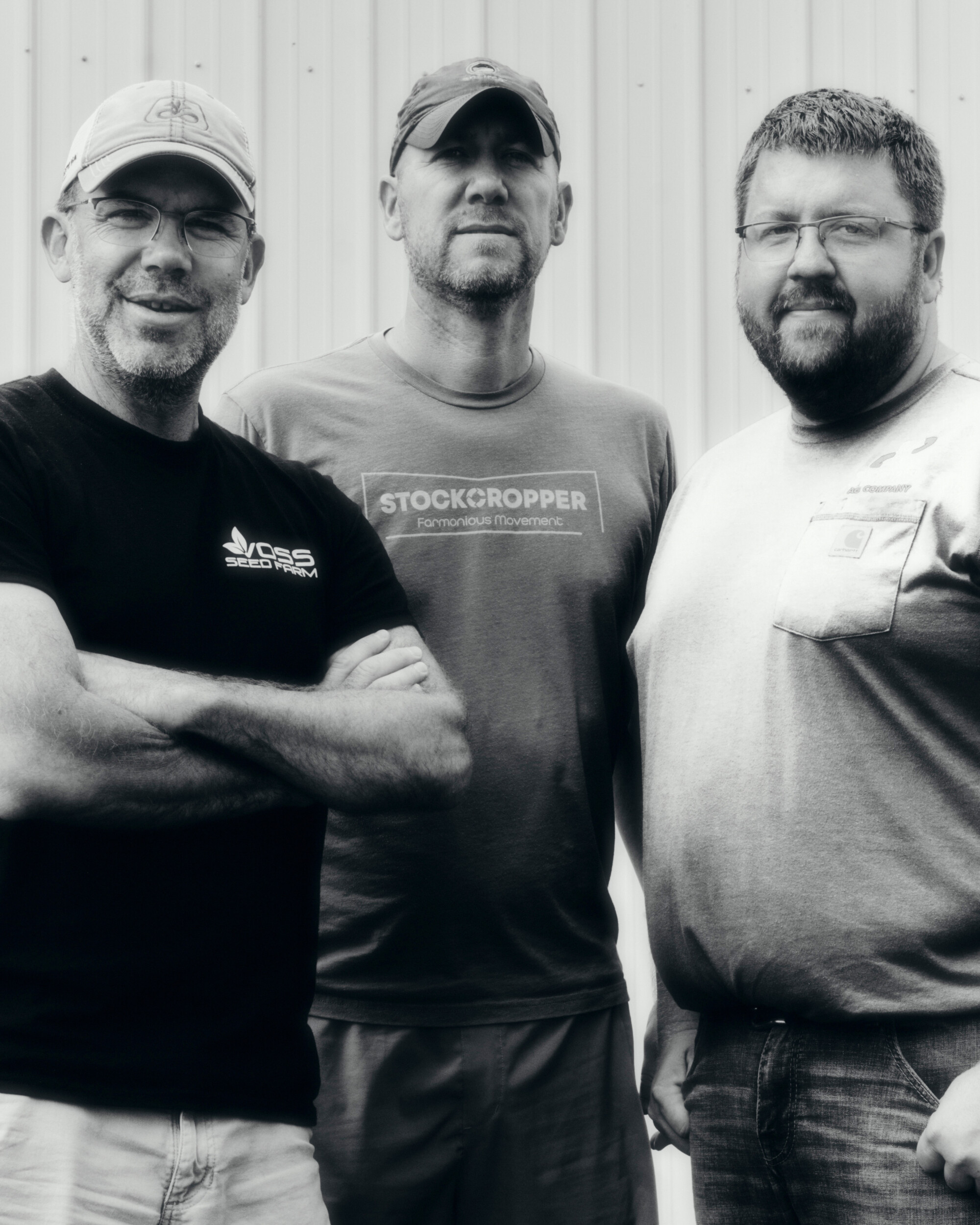
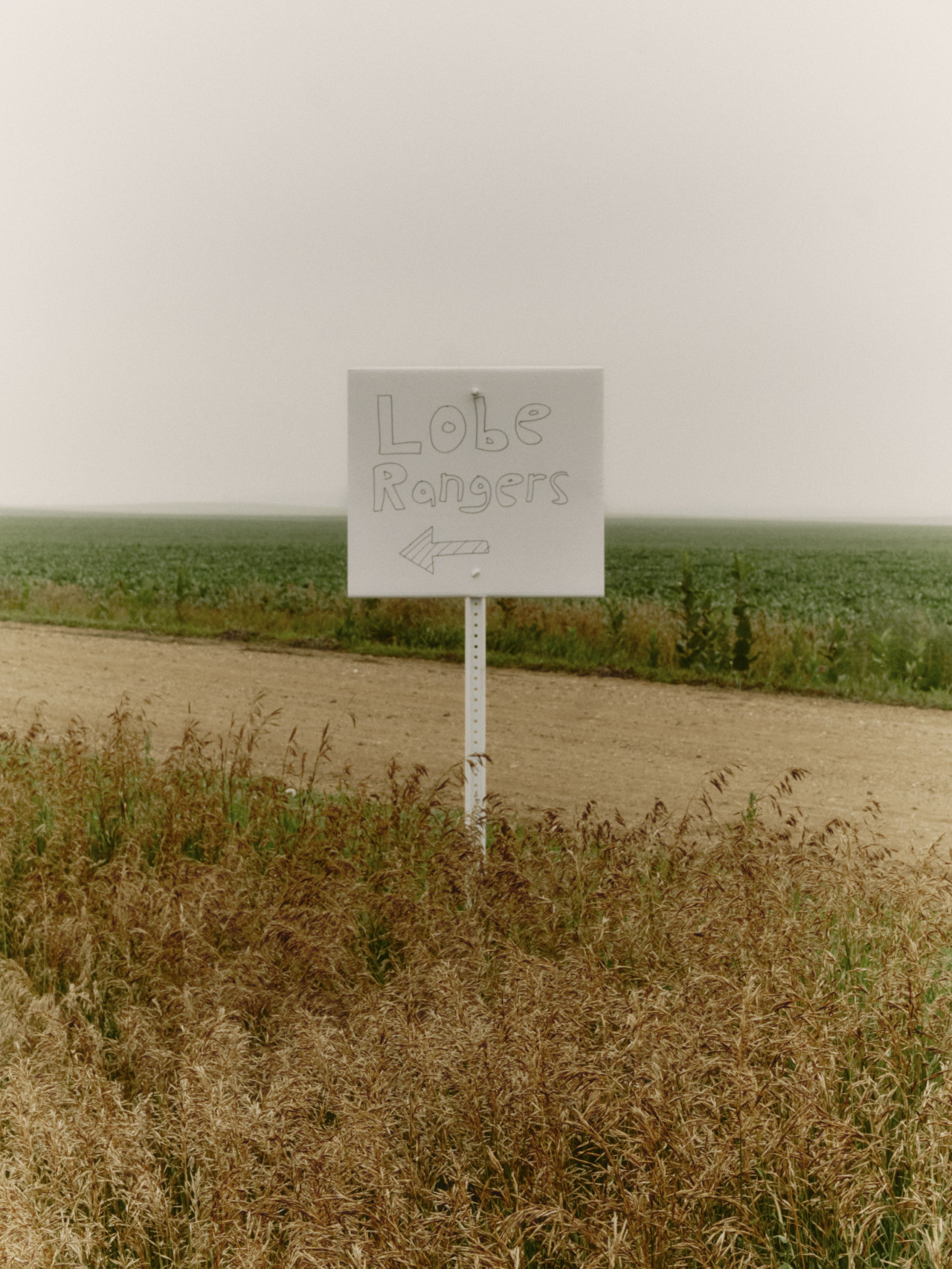
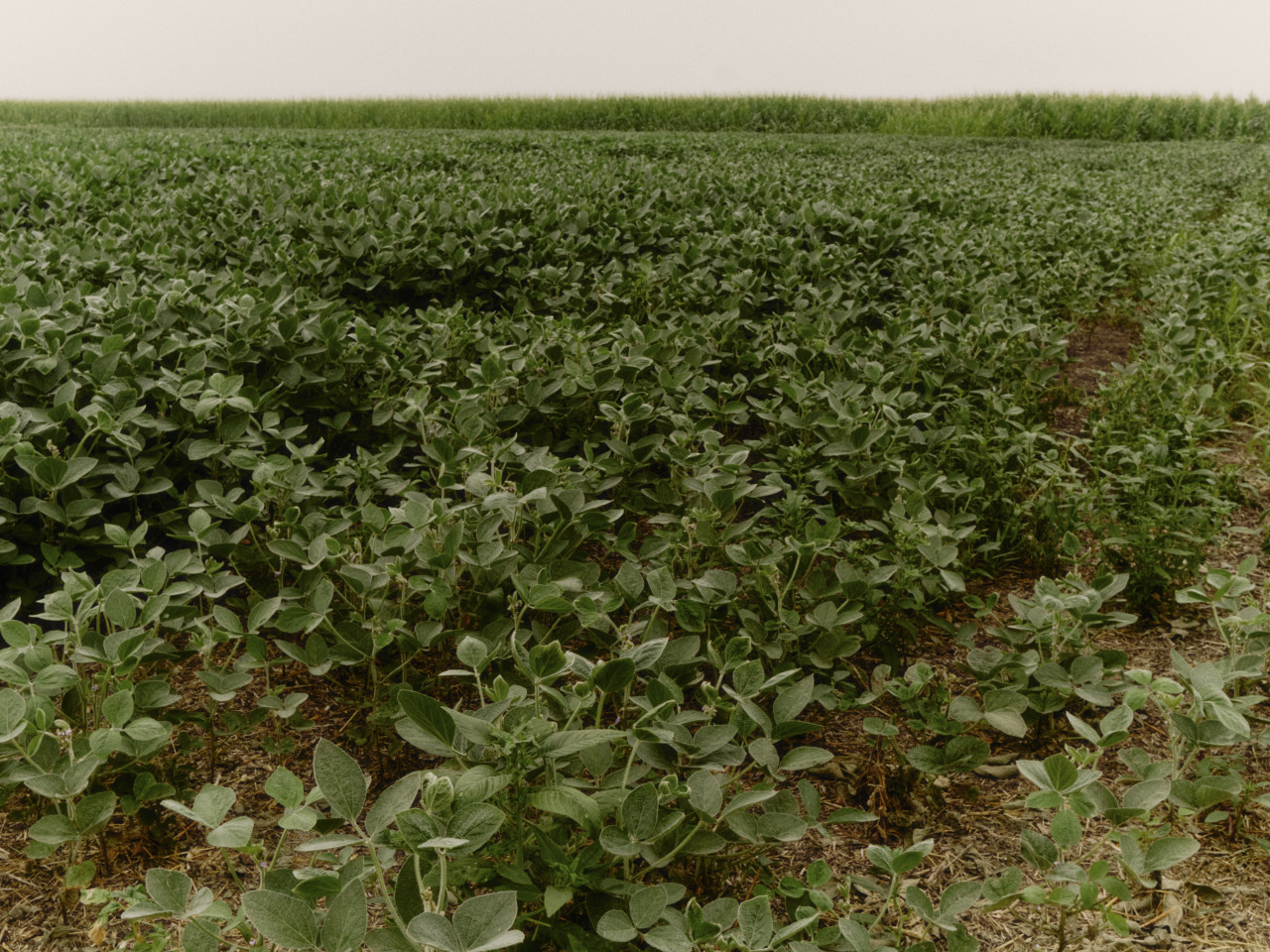
Two of those new members were Zack Smith and James Hepp. Today, the trio is known as the Lobe Rangers, a reference to a 14,000-year-old glacial deposit called the Des Moines Lobe on which all three farm full-time. They primarily grow corn and soybeans, and each has utilized a variety of environmentally conscious and increasingly trendy practices, like no-till and cover crops, for well over a decade.
But these guys aren’t your average alternative, eco-friendly ag types, either. They come from careers selling fertilizers, pesticides, seeds, crop insurance, and equipment. They’ve served as board members for various big ag industry groups and completed four-year agriculture degree programs. Two are Republicans; the third is an Independent. And yet, they host field days at their farms and travel around the state to convince other farmers, industry leaders, politicians, and regular Iowans to get on board with a more conservation-minded approach to growing crops.
Their urgency stems from a combination of concerns. All three have lost loved ones to cancer, and some have lost immediate family members. They’re also worried about the future prosperity of the little guy in an industry that consolidates at a breakneck pace but still relies on the slow churn of the generational pecking order. Changes to family farm operations are hard-fought yet necessary to avoid getting run over by what Hepp likens to a finicky hamster wheel.
“We have a generation issue,” Hepp says, sharing a common insight he hears from other farmers around his age.
“They’re 30. Grandpa’s 80, and he’s still in charge. Sixty-year-old Dad is kind of in charge. [These younger farmers] want to do what we’re doing, but [Dad and Grandpa] won’t let them. And the 60-year-old dad will go until he dies, so the 30-year-olds won’t be able to touch the farm until they’re 60, and when you’re 60, do you really want to try new things?”
Now in their late 30s and 40s with operations of their own, the Lobe Rangers have a lot of farming ahead of them. When they stare down the future of agriculture in the region, they know regulatory changes concerning nutrient use and water quality must be coming. So they decided to catalyze a culture shift at the ground floor rather than wait around and see what the government might eventually force them to do.
“Farmers need to start shaping the regulations, which we’re going to be working under anyhow,” Bormann says. “We know this stuff works. There’s too much denial in this business when we know there are truths that can make farming better. This isn’t rocket surgery.”
Hepp and Smith snicker at Bormann. He grins back at them.
“I love botching that quote on purpose.”
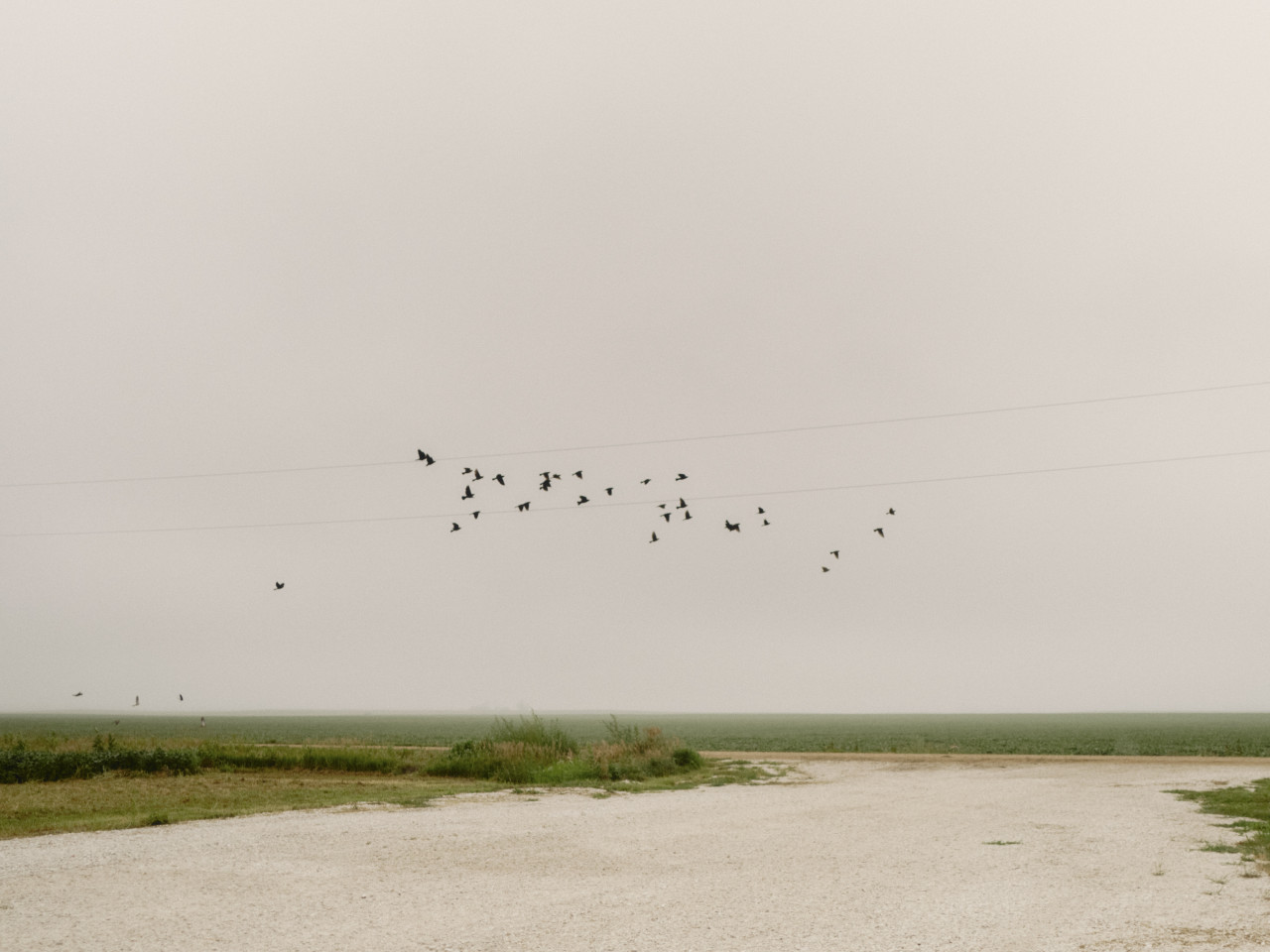
In 1997, the Environmental Protection Agency established a national task force to address hypoxia issues in the Gulf of Mexico. Hypoxic events happen when excessive nitrogen and phosphorus in the water encourages mass algae growth. When all that algae dies, its decomposition process consumes egregious amounts of dissolved oxygen, literally choking fish and other aquatic life to death. If you’ve ever seen a photo of a fish kill, let alone seen—or smelled—one in person, you know how severe these events can be.
As it turns out, the bulk of that nitrogen and phosphorus pollution was coming from the Mississippi River. The task force responded In 2008 with an action plan requiring the 12 Mississippi River states to chart a course for reducing nutrient pollution into the Gulf. In 2013, a combination of Iowa agencies released their recommendations, known as the Iowa Nutrient Reduction Strategy, warning that the state would need to lower its nonpoint source nitrogen pollution by 41% to achieve the goals set by the EPA.
Point source pollution can be traced back to a specific origin. Common examples include wastewater treatment facilities, broken pipes, and other industrial infrastructure. Nonpoint source pollution, on the other hand, stems from multiple sources that are spread out over a large area and practically impossible to trace. The most common example is runoff, be it from roads, lawns, or—in this case—agriculture.
The Iowa Nutrient Reduction Strategy outlined action on both. Iowa point source polluters have taken huge strides to address their contributions to the crisis, but some 90% of the pollution entering the Mississippi River from Iowa stems from nonpoint sources. Since Iowa is one of the top agriculture states in the nation, second only to California in ag revenue with just 8% of the population, nonpoint source pollution in the Hawkeye State is as good as synonymous with agriculture.
“We are swimming in a toxic soup of shit out here. I know; I used to sell all of it.”
But as is the case with most agricultural conservation efforts, farmers are not required to participate in the nutrient reduction strategy. Instead, they’re incentivized to make voluntary changes through a series of state and federal programs like the USDA’s Conservation Reserve Program, which essentially pays farmers a rental fee to not farm certain pieces of land. Other programs might offer financial incentives and cost-share opportunities for farmers to leave nutrient-filtering buffer strips of vegetation along waterways or update how they drain irrigation water. But ultimately, farmers have to want to change their practices—which, as the Lobe Rangers frequently point out, might be why the nonpoint needle has hardly moved over the last decade.
“Voluntary participation in the nutrient reduction strategy isn’t getting us to the level of change that we need,” Bormann says. “It sounds great, but we’re just not getting there.”
All of this feeds into the elevator pitch of their 501(c)(4), which Smith recites with mechanical precision.
“We have a problem, we have a backdrop document that’s been around for 13 years, and we’re three farmers that have been successful at following the document,” he says. “We’re proof that you’re not going to go broke, and you can farm better and not poison the river or lead to negative externalities that we’ve ignored in ag for the last 50 years.”

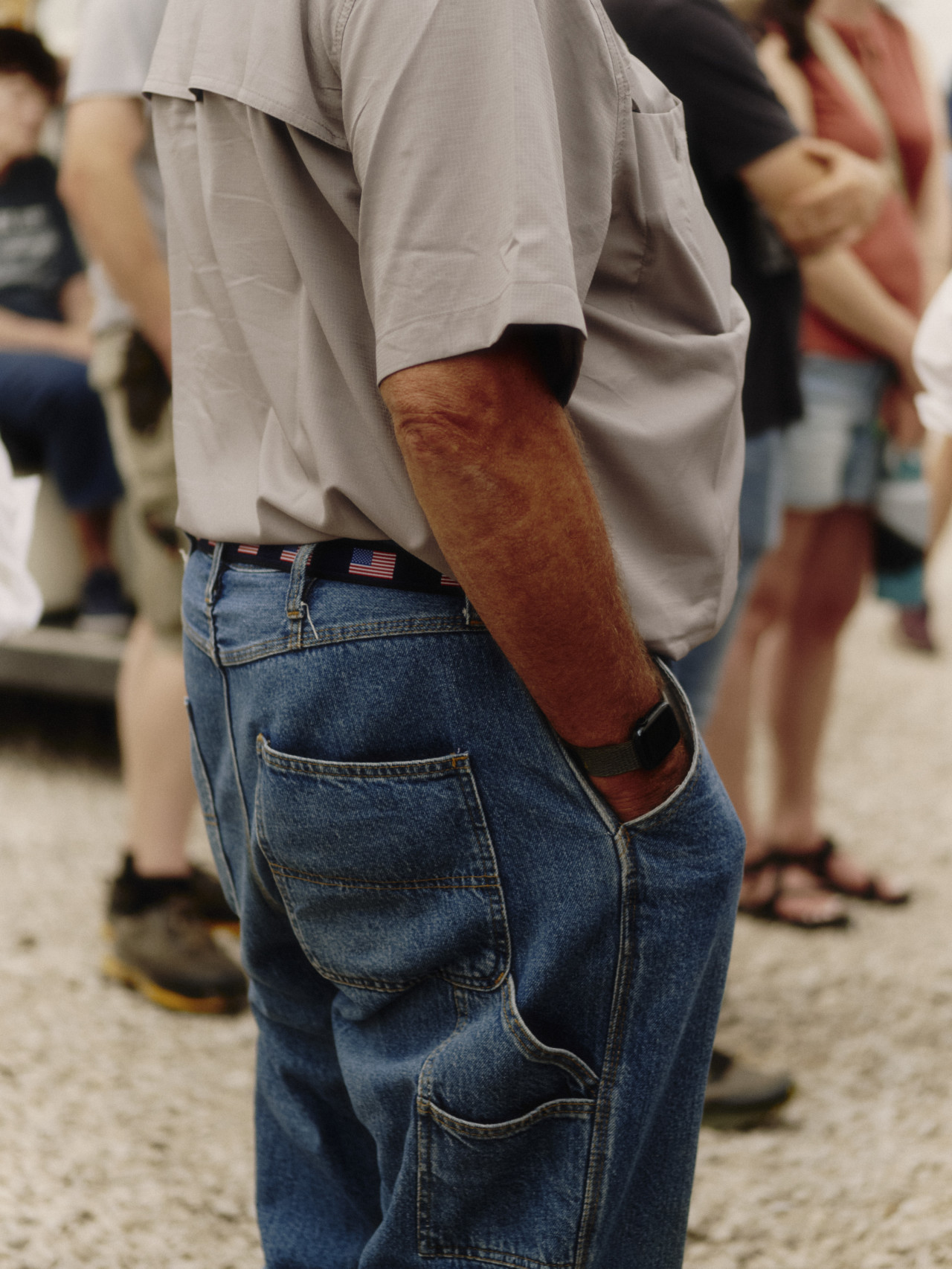
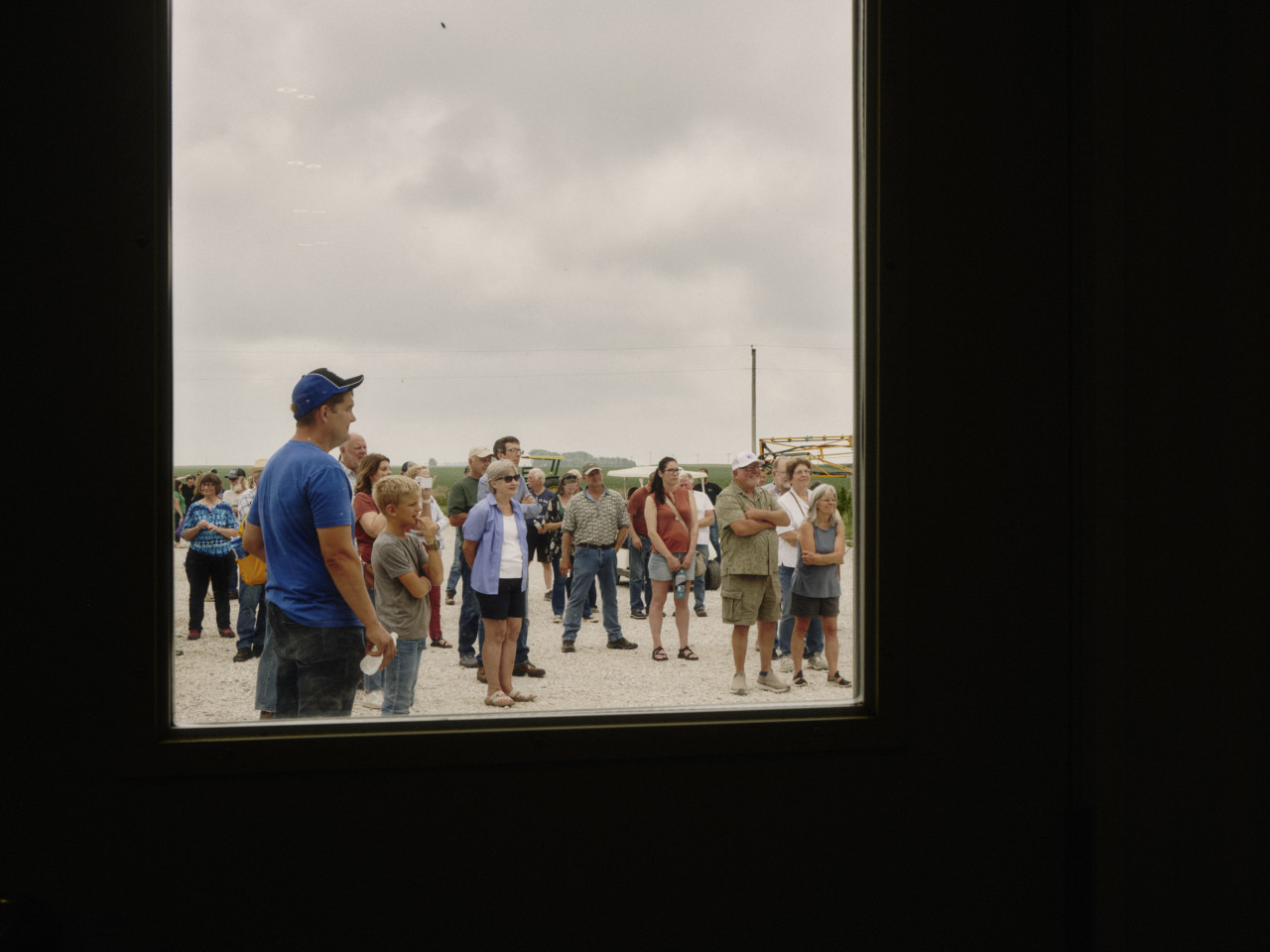
During a field day at Hepp’s farm, this messaging is on full display. By 9:15 a.m., the driveway is packed with Subarus, EVs, and diesel pickup trucks. Some 150 people filter into the oversized garage, where a flatbed trailer serves as a stage facing long rows of family-style tables.
The mood in the room is fresh and energized. The austerity of the large American flag hanging high on the back wall is relaxed by ‘90s alt rock band CAKE’s “Going the Distance” pouring from professional-grade speakers. A merchandise table displays clever Lobe Rangers T-shirts; on one, the logo’s masked ranger sports a red DEVO hat in place of his usual Stetson, the words “Whip It Good” emblazoned across the chest. In keeping with the theme, Smith holds his iPhone up to the microphone and plays the sound of a cracking bullwhip to get the morning started.
The three men introduce themselves and their mission, then rattle off the agenda for the day: a morning session with an agronomy professor; field demonstrations; lunch provided by a group of local pork producers; a panel on municipal waterworks and water quality; and finally an open Q+A.
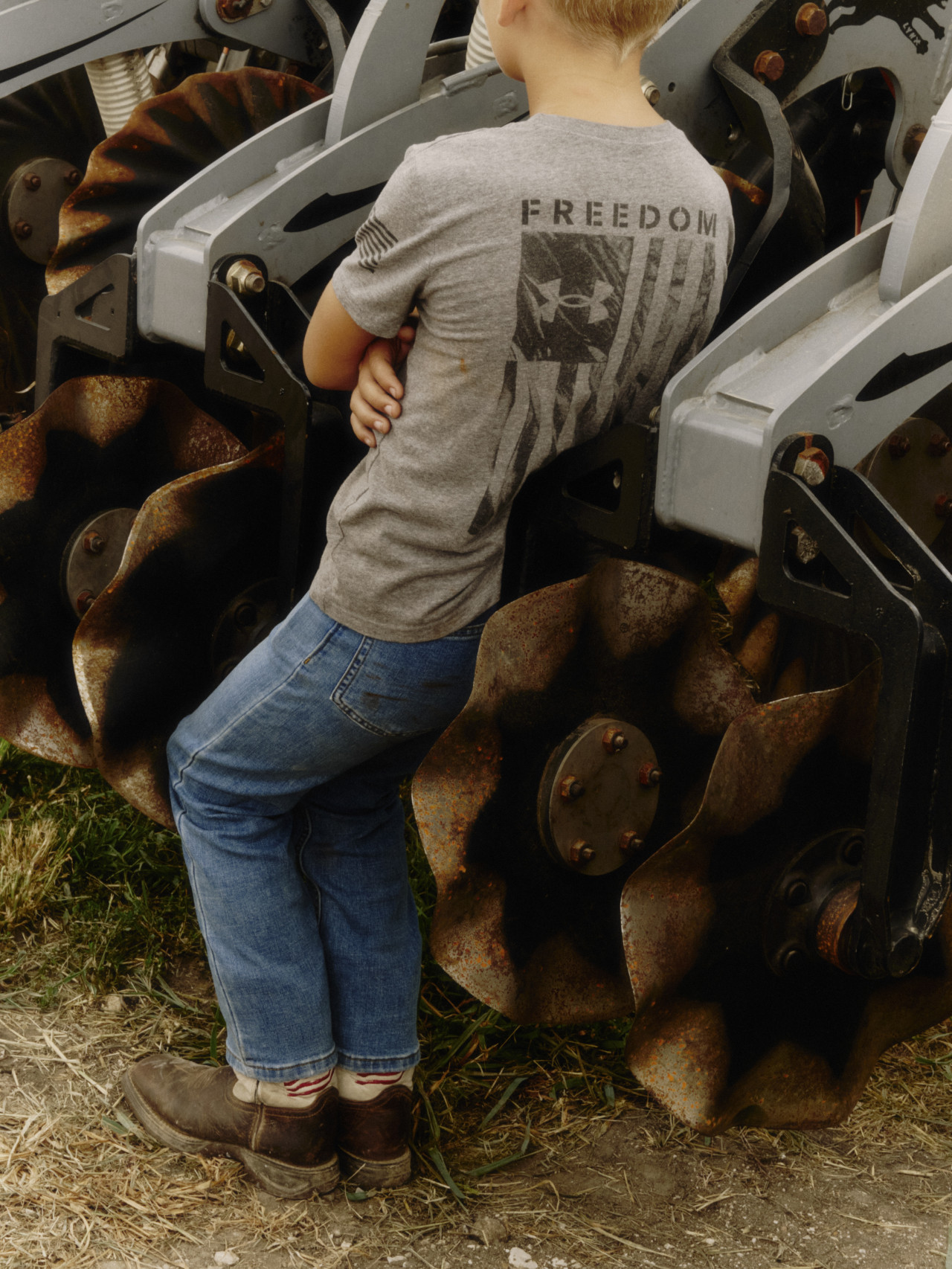
Out in the humid, 90-plus-degree haze, Smith and Bormann present the strip tiller, which only tills narrow lines of soil for planting while leaving the surrounding land and crop residue undisturbed. Strip tilling is a more precise alternative to full-width tilling, which turns all the soil rather than just some of it. Both strip- and no-till practices are commonly referred to as “conservation tilling,” since both can improve the health of the soil, sequester more carbon, and prevent soil erosion.
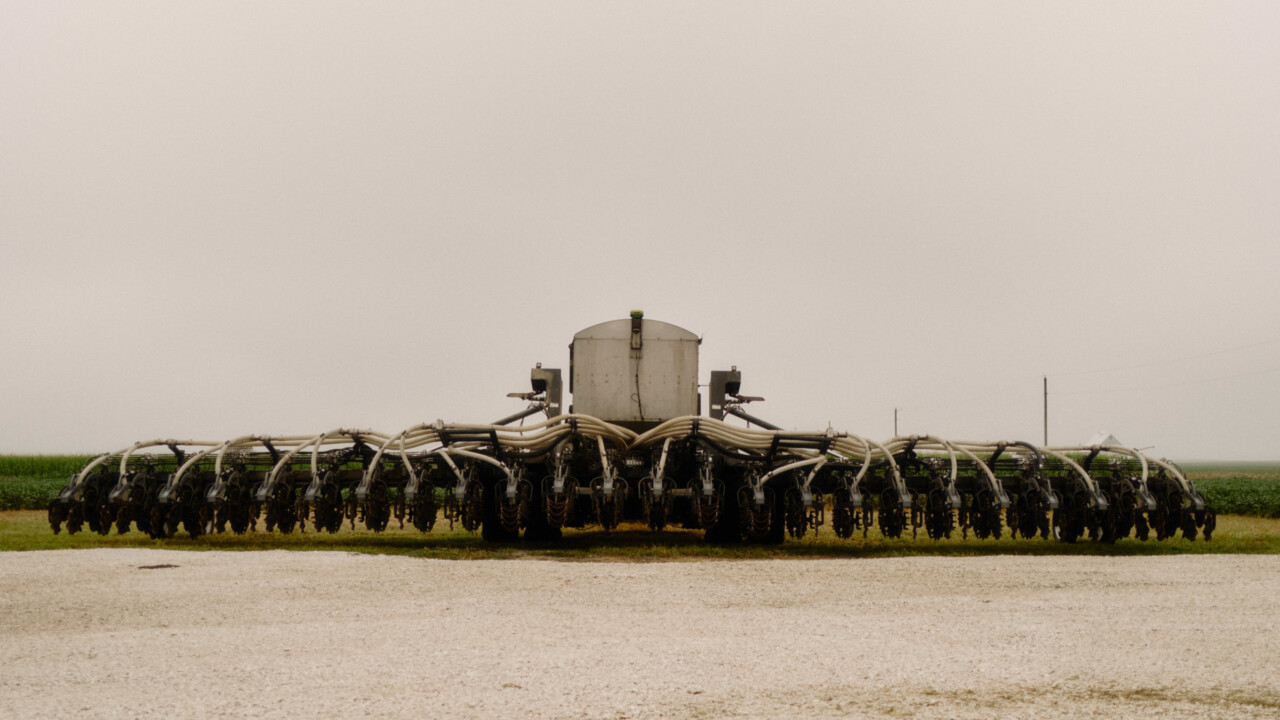
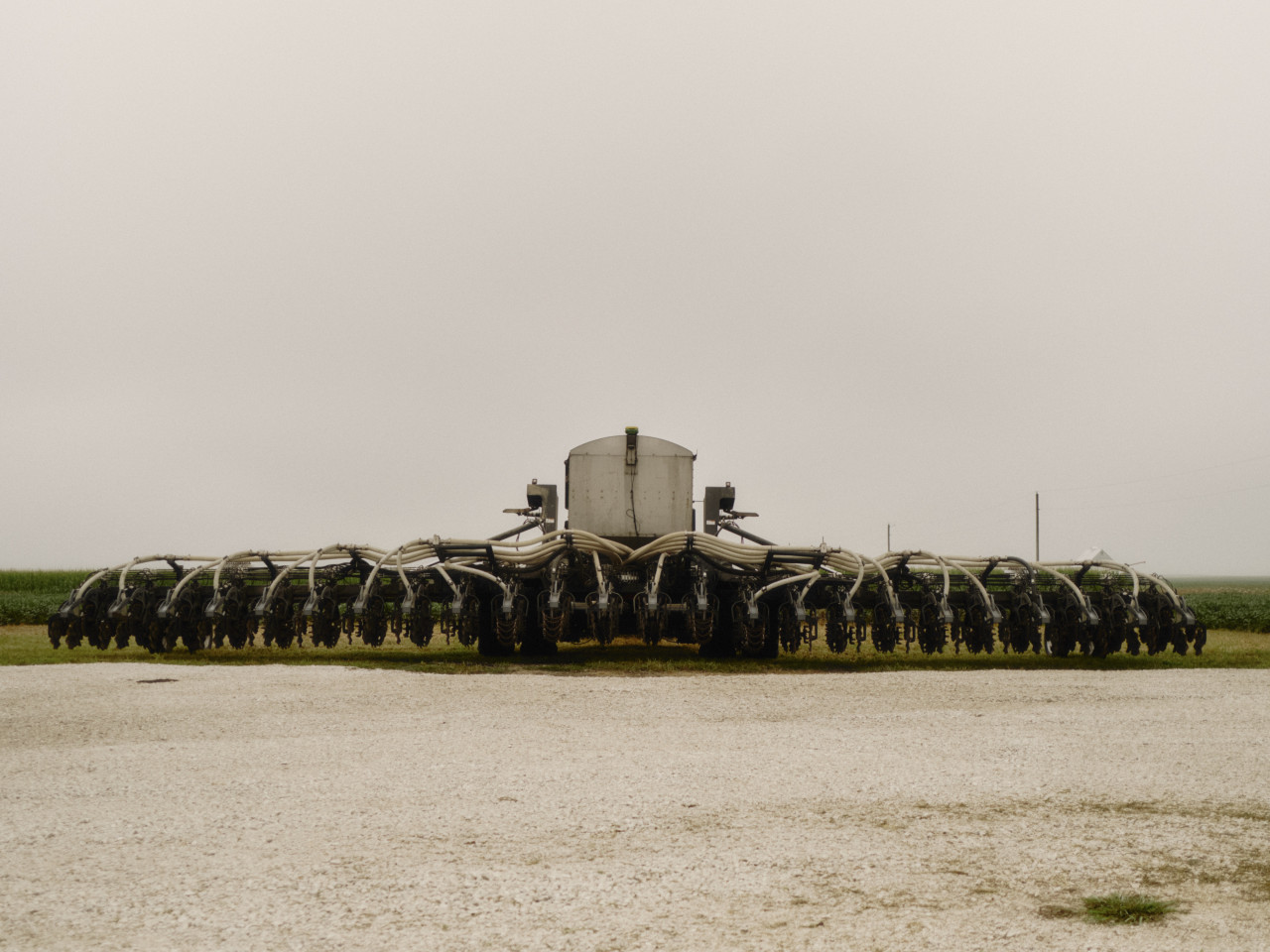
Hepp walks participants through the inner workings of his precision sprayer. He applies the bulk of his fertilizer during the growing season rather than outside of it, using a series of dangling hoses called “Y drops.” This method ensures the nutrients dribble straight into the root zone of the growing plant, rather than broadcast across an entire field only to be washed into the river with the very next rainfall—something that’s not just bad for water users, but a waste of all the money the farmer spent on the nutrients in the first place.
Increased rainfall is another central theme of the field day, even if climate change isn’t directly named. Virtually no one disputes a stark finding in the 2017 National Climate Assessment: that precipitation from the heaviest 1% of storms in the Midwest rose by 42% between 1958 and 2016.
“On Monday morning, we were ready to go to work at 7:15, but then we got two and a half inches of rain in about 35 minutes,” the presenter at the rainfall simulator, who runs a 100% no-till operation, says. “That’s how we get rain now. We don’t get these long, all-day deals. We get it all in about five to 10 minutes.”
The simulator dumps water over a lineup of four soil plugs. One plug comes from a full-till field, one from a no-till field, one from a no-till field planted with a cover crop, and one from a perennial pasture, or a year-round mixture of grasses and forbs popular with livestock producers. Each plug is angled so it drains into its own clear bucket. The runoff from the full-till plug is the most severe, running into the bucket like hot chocolate from a carafe. The no-till plug without the cover crop and the perennial pasture plug showed improvement over the full-till plug, but the runoff is still obvious. The plug with the cover crop produced the least runoff, and the water that did run off was much cleaner, which the presenter attributes to the cover crop’s filtering effect.
Then he points back at the full-till bucket, full of brown water.
“That washed the soil away,” he says. “Where I come from, we just sold a farm for $17,000 an acre. That would make me sick. I just paid for that, and it’s leaving. The chemical is leaving. I’m not giving this shit away anymore. It’s too expensive, and we need to keep it where it belongs.”
On June 25, exactly a month before the field day, the Supreme Court sided with industrial ag giant Monsanto, the maker of Roundup, in a legal battle over labeling pesticides with cancer warnings.
A farmer from Missouri named John Durnell sued Monsanto in state court in 2019 after developing non-Hodgkin’s lymphoma, which he attributed to using Roundup—a glyphosate-based pesticide not labeled for cancer risk—for multiple decades. The Court ruled 7-2 in favor of Monsanto, potentially preventing future failure-to-warn lawsuits if the EPA approved an herbicide without a cancer warning label. Justice Neil Gorsuch, who is more traditionally conservative, joined a dissent penned by Justice Ketanji Brown Jackson, who is more traditionally liberal. Like most Supreme Court opinions, both the ruling and the dissent are full of court precedent and legal jargon outlining why the majority ruled the way it did, and why Jackson considers the majority to be wrong.
But the on-the-ground implications of glyphosate use revolve around science and emotion, not jurisprudence. In 2015, the World Health Organization’s International Agency for Research on Cancer classified glyphosate as “probably carcinogenic to humans.” In 2025, scientists from the United States and Europe published a study showing evidence that long-term glyphosate exposure coincided with increased occurrence of malignant tumors in rats.
Back in Iowa, the nexus between water quality and public health has become a dinner table issue for political candidates from both sides of the aisle. During the final Q+A of the field day, one attendee puts out a call to the room to consider what questions they might ask candidates in the coming election season regarding water quality. A woman named Lois DeWaard raises her hand, requesting the microphone. She identifies herself as a member of the general public and thanks the Lobe Rangers for their efforts. Then she takes a deep breath and starts sharing her story.
“My younger sister, who is 63, is currently undergoing treatment for cancer,” she says. “My husband is a two-time cancer survivor, and he is only 71. He grew up in north central Iowa on a farm in Hancock County. Four of his five siblings have either had cancer, died from cancer, or are currently undergoing treatment. So my question to our political candidates would be: When is it enough?”
DeWaard’s voice cuts through the jocular tone of the room. Because yes, the field day is about farmers improving their efficiency and avoiding washing dollars down the drainage ditch. But below the cheerful, plucky surface, everyone seems to carry the same weight DeWaard does; a weight that accumulates when a job, a career, a whole industry is simultaneously a lifeline and a potential death sentence. Iowans can’t live without industrial agriculture; and yet, many have been unable to live with it.
The Lobe Rangers recall heated interactions with more environmentally motivated contemporaries over their continued use of glyphosate. But for them, the public debate should be less about what glyphosate is or is not capable of and more about what else scientists and public health professionals are overlooking while focusing on an all-out assault on Roundup—something that, as far as they’re concerned, an overwhelming majority of farmers don’t apply responsibly in the first place.
“We are swimming in a toxic soup of shit out here,” Smith says. “I know; I used to sell all of it. One of the things that doesn’t get talked about are all the neonicotinoid insecticides that are on every seed, and the impact we’re having on the insect community in this state. We don’t get lightning bugs the way we used to. We need to be skeptical and aware of all of it. It’s too easy to just say ‘glyphosate.’”
In other words, nutrient pollution from agriculture—and its associated fallout—is probably more complicated than politicians, activists, and lobbyists have made it out to be. Meanwhile, farmers and their communities have been swept along, exploited, and largely left behind to squabble with each other and put each other down for daring to try something different.
But the Lobe Rangers feel they have been massively rewarded for the risks they have taken. They feared losing the respect and trust of their neighbors and friends, and in some instances, those fears have come true. But overall, the feedback has been overwhelmingly positive. They’ve grabbed the attention of media, industry leaders, and candidates for various elected offices, some of whom are in attendance at the field day. Invitations for podcast appearances and in-person events have flooded in.
“I’ve had retired teachers, police, doctors, and other farmers reach out saying they like what we’re doing,” Hepp says. “I had one guy say, point blank, ‘I really appreciate what you’re doing, and while I don’t think it’s as bad as they say, it ain’t as good as they say, either.’”
This seems to be the main takeaway for field day attendees. Aside from the chance to improve water quality and public health outcomes, the chance to be a better neighbor to the farm, county, and state next door, daring to become a more conservation-minded farmer might even mean getting to play a little offense for once.
“I want innovation,” Hepp says. “I want us to force ourselves to think. We put people on the moon. You’re telling me we can’t figure this out?”

In the next edition of Good Neighbors, we head down to Texas, where farmers, ranchers, law enforcement officers, environmentalists, and community members together battle the federal government’s attempts to build a border wall through the famed Big Bend region.
Join our membership community. Support our work, receive a complimentary subscription to Atmos Magazine, and more.
Three Iowa Corn and Soy Farmers Challenge the Industry That Raised Them