




words by Daphne Chouliaraki Milner
photographs by Sergiy Barchuk
The climate debate is no longer confined to whether the planet is warming. Increasingly, it is about what comes next: which solutions can work, how quickly they can scale, and what they cost financially, culturally, and environmentally.
Those questions can be surprisingly difficult to answer. Solar panels require mined raw materials, as do electric vehicle batteries and other clean-energy technologies. Aviation remains stubbornly difficult to decarbonize. And amid a constant stream of studies, statistics, headlines, and competing claims, even seemingly simple numbers can obscure as much as they reveal. That’s especially true in an age of disinformation, when numbers can be stripped of context and made to tell a very different story.
That tension sits at the center of Hannah Ritchie’s 2026 book, Clearing the Air, which takes on 50 questions the climate data expert is most frequently asked about tackling climate change. Ritchie’s answers contextualize solutions, comparing their costs with the systems they would replace and distinguishing genuine trade-offs from numbers that sound alarming in isolation.
In the conversation below, Ritchie discusses why data can sometimes make climate problems harder to understand, what “cautious optimism” looks like in practice, and lays out the two questions she thinks readers should ask whenever they encounter a startling new statistic.
Daphne Chouliaraki Milner
You’ve spent years looking closely at the data behind climate change. What did you want Clearing the Air to give readers that you felt was missing from the broader climate conversation? What planted the seed for you?
Hannah Ritchie
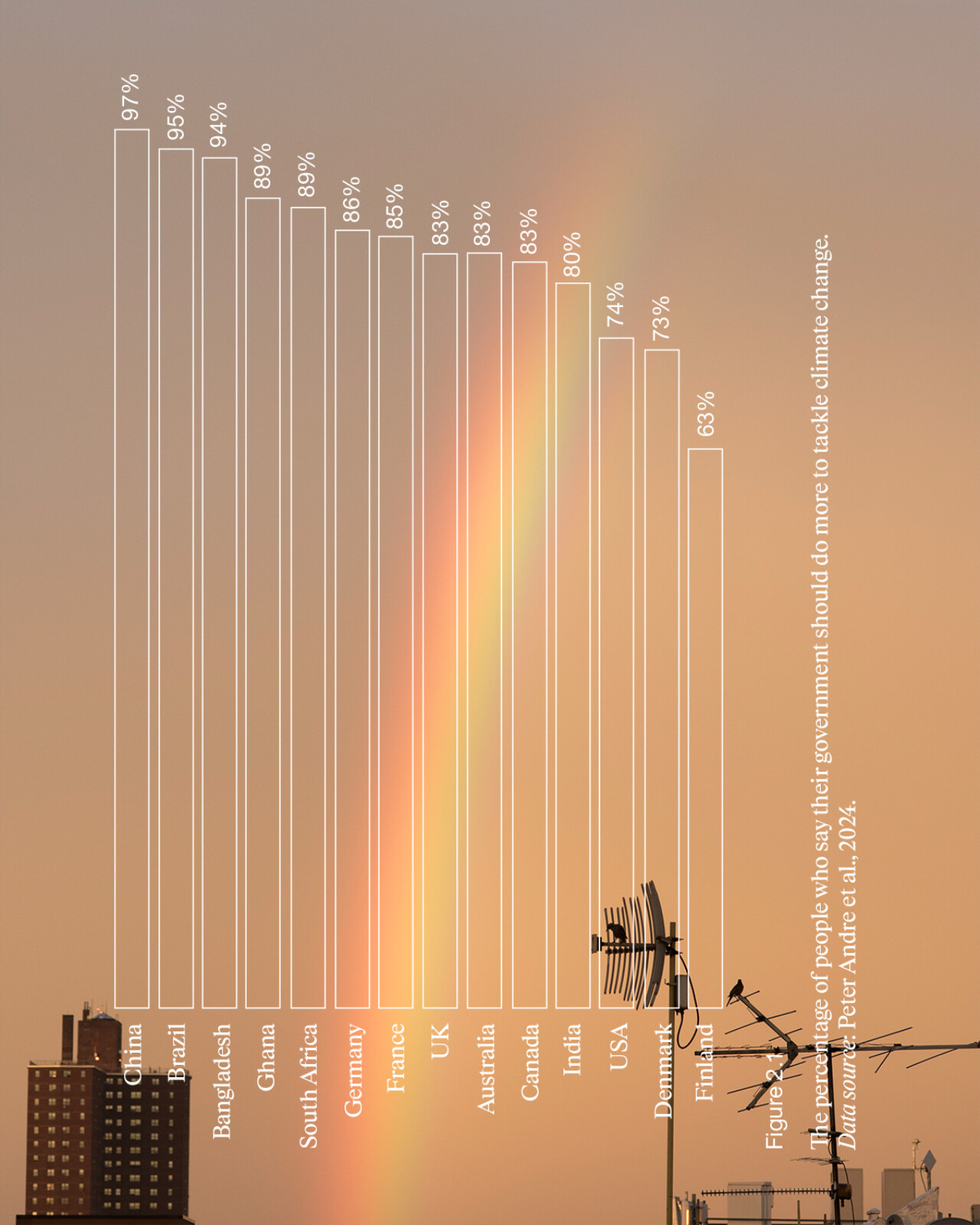
Clearing the Air doesn’t discuss, “Is climate change happening?” necessarily. “How bad is it going to be?” I’ve taken for granted in the debate now that most people are there and they get it. And actually, when you look at surveys across the world, people do believe in climate change and are worried about it, and want the government and society to do something about it.
So it really focuses on the 50 most common questions I get asked about solutions and how we go about fixing it. My previous book was on environmental sustainability, and climate change was just one chapter. And I found that when I was doing interviews, or doing book events, or speaking to people about it, they had many, many more questions about specific solutions to climate change, whether that’s clean energy, electric cars, mining, foods.
My perception was that people were really struggling with the amount of conflicting information that they were seeing online or in the news, and were feeling a bit paralyzed and stuck about what it is that we should be doing and what the impacts of that would be. So I really wanted to take on those 50 common questions and give people, hopefully, a very succinct answer that was grounded in data and grounded in evidence on how they should be thinking about these questions.
The title is Clearing the Air, so people come away with a clearer understanding of, yes, these are the solutions that might work. Here are some of the impacts and the trade-offs, but actually there are things that we can do to mitigate those impacts as well.
Daphne
So much of the book is about helping people navigate conflicting claims around climate solutions. As a data specialist, how do you see the role of data in helping people understand those solutions without becoming overwhelmed?
Hannah
I think the data’s great, and I love data and I love numbers, but I actually think sometimes it can do more harm than good. And I think that’s because people put so much credence on a number. So if there’s a news article and there’s a number in there, that’s this solid fact about the scale of this problem, and people then take that for granted. And what’s often missing there is a sense of context.
For example, a big concern for people is how much land or mining solar energy might require. And you can very easily publish an article that says powering the world through solar would generate 10 million metric tons of panel waste by 2050. And people see “10 million,” and think it sounds huge—that it cannot possibly be sustainable; that it’s terrible; and that we can’t possibly do solar power.
I think what’s often missing there is the context of: Is 10 million a big number or a small number? What’s the scale of waste for fossil fuels or other alternatives today?
So I think data used poorly can actually be a detriment. But what I try to do is use data to give people a sense of context and scale for this stuff, which I think is often lacking and is often why people get so confused about this.
Daphne
You framed the book around the most common questions you get asked. Did you have specific criteria for the kinds of questions you wanted to include or the way you paced them?
Hannah
It was definitely framed around the most common ones I get. There are some questions I get where data’s actually not going to give an answer, or actually it’s not a scientific question, or a numerical question. It’s more philosophical or moral. And that’s not necessarily my job, to tell society what our morals should be or how we should think about it philosophically. So I take those questions on less, even though there’s always some philosophical or moral element to all of this. But I try to take on questions for which data is actually useful in providing some answer.
The way the book’s structured is trying to guide people through the most common questions, but also the range of topics that people have questions on. And there’s some sequence to it from front to back, where the front end is arguably the stuff that’s much easier for us to fix and people still have a lot of questions about it. We actually know how to decarbonize electricity, and we largely know how to do it for road transport. And as you get further and further to the end of the book, there’s the harder stuff like the cement, and the steel, and the aviation, and do we do geoengineering? So that’s also the flow of the book: You start off with the easy stuff, and then progressively it gets harder.
Daphne
Did researching the book change your own mind about any particular climate solution?
Hannah
I don’t know how to change my mind on, “Is this good or is this bad?” It’s absolutely true that many of the questions in the book I didn’t have a sense of before I went into it and crunched the numbers. I had some inkling, but I didn’t know how much mining we would need for electric vehicle batteries or solar panels. So part of it was also just fun for me to have this open question and then be determined to go and hunt for the answer.
Even me, who has been steeped in the data for a really long time, will often have these moments of like, “Oh, I have no sense of scale for this whatsoever.” I’d be thinking in thousands, or millions, or billions. And if that’s me doing this every day, then of course a person who has another job and another life is not going to have a sense of scale either. And I think that is just part of the challenge, and part of why I wanted to write this book.
“The title is Clearing the Air, so people come away with a clearer understanding of, yes, these are the solutions that might work. Here are some of the impacts and the trade-offs, but actually there are things that we can do to mitigate those impacts as well.”
Daphne
One idea you tackle in the book is whether it may already be too late. Why was that so important for you to address directly?
Hannah
Because I get those comments a lot, and I think they come from a very genuine place. I think there are genuine people who think that it’s too late for us to do anything about this problem. If that’s the mindset that everyone has, then what’s the point in us even trying? And my point is that there is definitely a reason for us to try here. There is stuff that we can do about this problem to make things better for ourselves and for future generations. I think we owe it to try. But actually the mindset of, “It’s too late, what’s the point?” is really damaging and a real barrier to that.
As I get that question so often, it felt like the natural first question to address in the book. So everyone’s geared up for, like, “Yes, OK, let’s go. Let’s then figure out what it is that we need to do.”
Daphne
The book is deliberately hopeful. How do you distinguish between data-based or evidence-based hope and optimism for optimism’s sake?
Hannah
It’s always a hard balance, and I often frame myself as cautiously optimistic because I think both hope and optimism—and people conflate them—can have this perception as being very naive. If you say you’re optimistic, then we’ll just expect that things will get better. And that’s just not my viewpoint whatsoever. I don’t think things will just magically get better on their own and will be fine. There is the opportunity there for us to solve this problem and build a better world, but it will take active effort and it’s not going to happen on its own. We have to do that.
I think that’s often a fine line between where naivety lies and where just stubborn or determined optimism is. I do try to be fairly balanced and also not be too optimistic. I think a very good example is the 1.5-degree [Celsius] target. I’m just not so blindly hopeful that we will meet that, because we won’t meet that. And that’s just the harsh reality.
And there are also just solutions for which I could easily say, “Yeah, yeah, it’ll get easier for us to solve aviation. We’ll get there fine.” I also don’t think that’s true. There are solutions there, but there will also be, in some sense, trade-offs, or getting there won’t be easy and will take substantial time.
So I just try to strike that balance of trying to provide that bit of oomph that there’s something we can do, but at the same time not be so blindly optimistic and say, “Yeah, we can meet 1.5 degrees. And by the way, decarbonizing planes will be easy.” Because it won’t.
Daphne
Were there specific solutions you came across while researching the book that made you think, “I wish more people knew about this, or understood how transformative this could be”?
Hannah
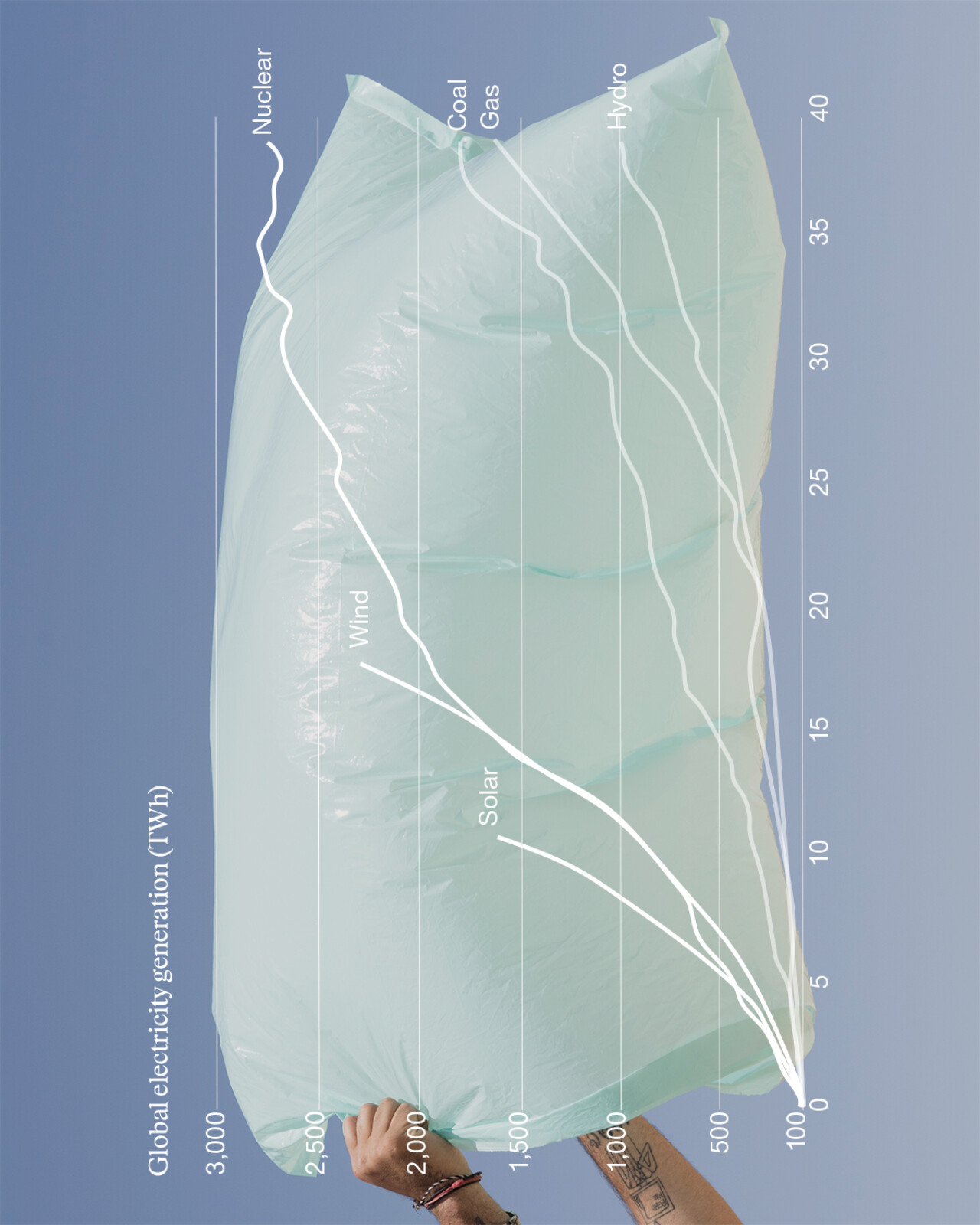
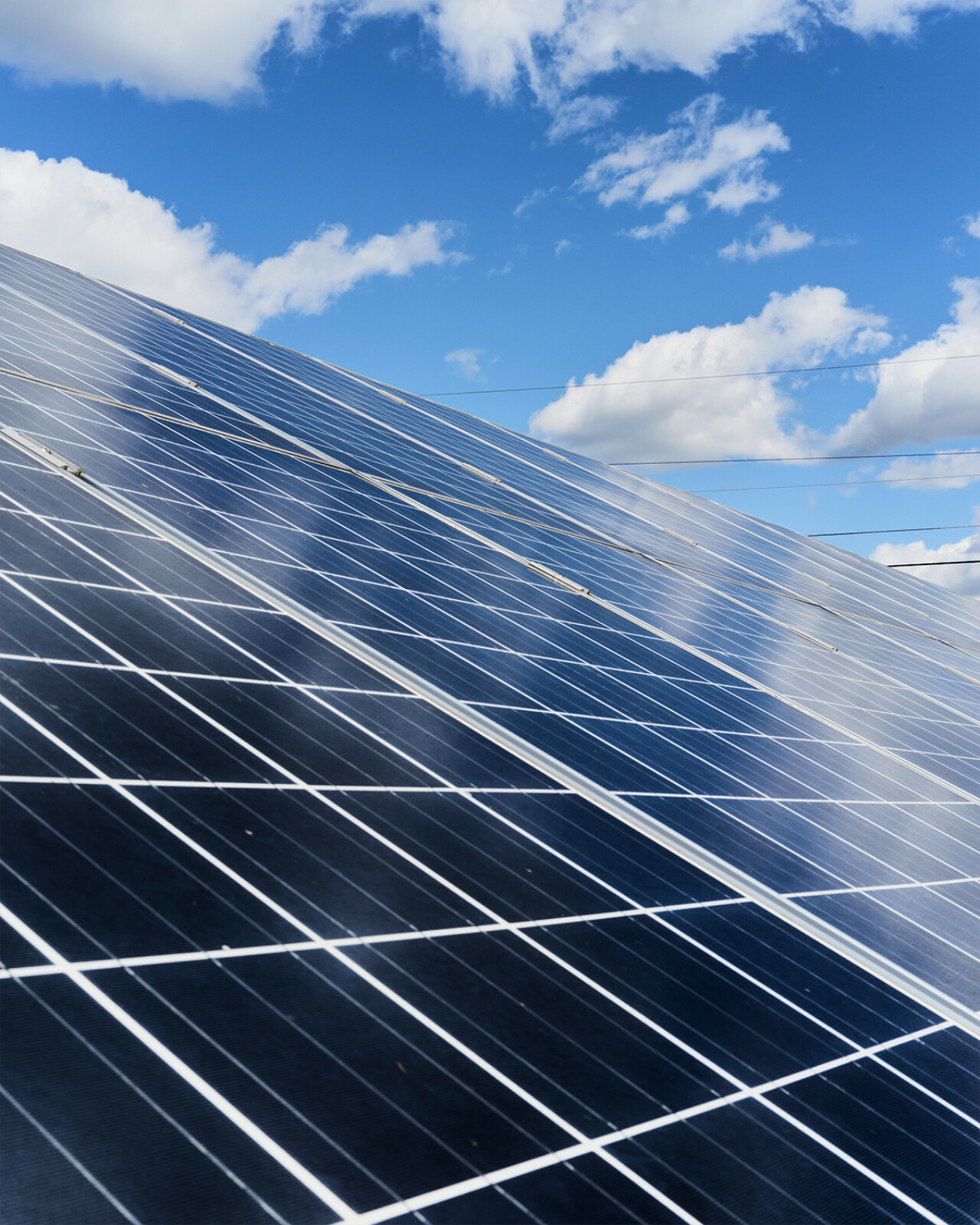
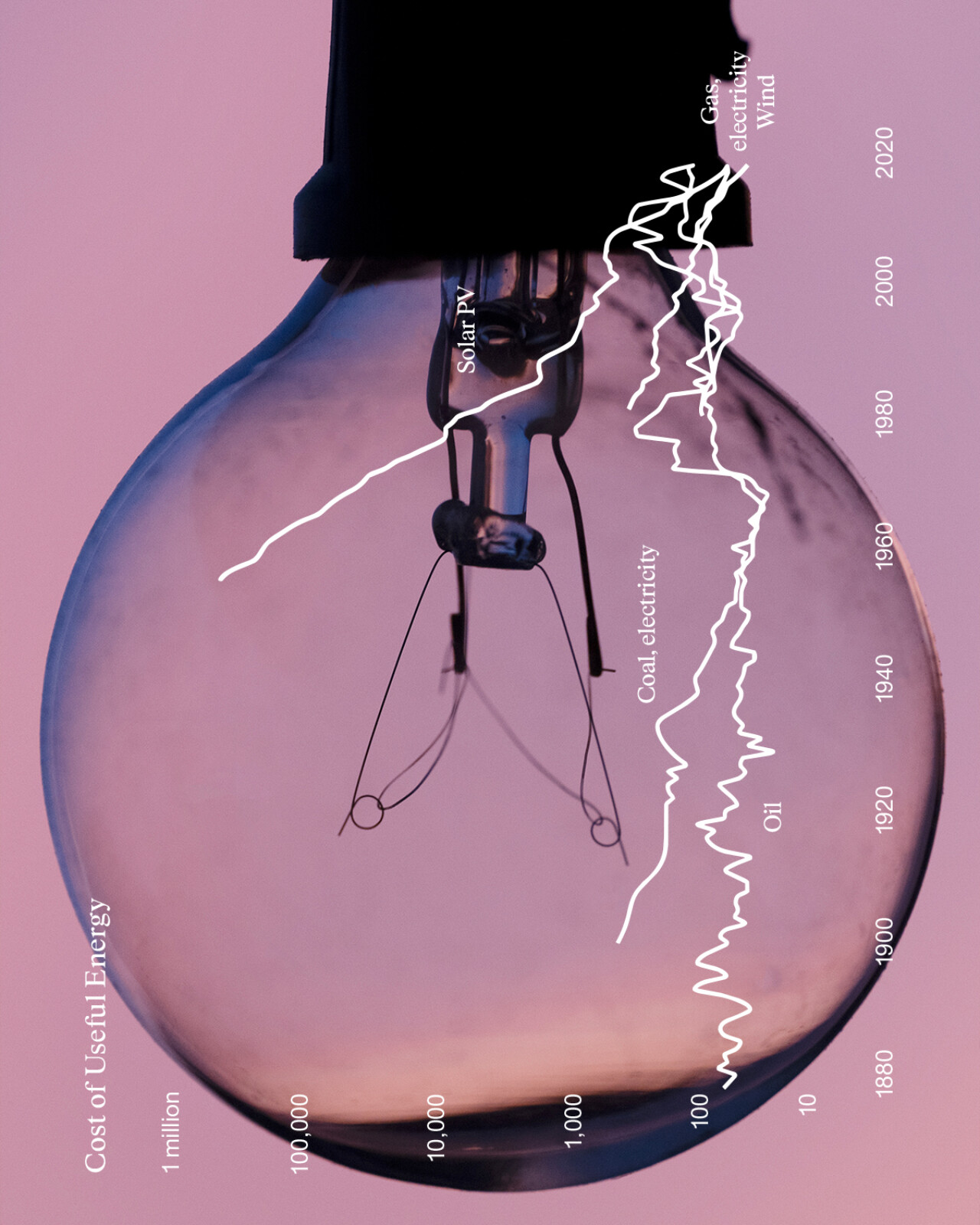
I often think about what seems like the very basic stuff. I think we still vastly underestimate how dramatically the economics of solar have changed. The price of solar went down rapidly and then the argument was, “Well, OK, but it’s not sunny all the time, so what are you going to do about that? Batteries are really expensive.” And now the cost of batteries has dramatically plummeted. That means solar paired with batteries can, in many parts of the world, provide extremely cheap power—cheaper than coal or gas—pretty much 24 hours a day.
I think we’re still really coming to terms with what that transition and that change mean. But I think for huge parts of the world, it’s hugely transformative, not just from a “Can we solve climate change?” perspective, but just: Can countries provide for themselves reliable, cheap power without relying on fossil fuel markets and without relying on other countries? Can they have that domestic energy security at the same time?
I always say that I would love it if everyone just wanted to do this because they’re concerned about climate change. But I also think that’s unrealistic for many people. Either they cannot afford it or, coming back to the moral question, the moral balance for them tips in an opposite direction. But the fact that we have seen this kind of economic transformation of these solutions has really changed the game in the last 10 to 15 years. Because what actually just makes economic sense is also now what makes sense from an environmental point of view. It’s exciting to see those co-benefits at the same time.
Daphne
Readers come across a lot of data every day, on social media and in legacy media, and it can be overwhelming. If they remember only one principle for evaluating the next big claim or study they hear about climate solutions, what should it be?
Hannah
So I’m going to give you two.
One is: Is that a big number? And that’s now my approach. I have studied climate change and energy stuff for years. But of course, when I’m thinking about something outside of that sphere, which I have no expertise in, I’m also completely lost because I just don’t have any sense of the numbers. So now, as a general rule, whenever I see a number, I try to think, “Is that a big number?” And the problem we have is that anything over 1,000, as humans we think it’s ginormous, and often it’s not.
So I’d encourage considering: Is a saving of 1 million tons of CO2 big or small? It sounds really big. In the global context, it’s actually relatively small. When you’re talking about land use or mining, try to give a sense of how much of the United Kingdom’s land that actually is. Actually, probably it’s like half a percent or something. So that’s the first principle: Ask, is that a big number? And try to give context.
And then I think the other one is thinking about what the counterfactual is. Because, as I say in the book, there is this problem of us always looking for this perfect solution that has no impact whatsoever. So whenever someone sees that this solution has some impact, whether it’s land or mining or whatever, they automatically think, “Oh, we can’t do that because that’s bad because there’s some impact.” In those instances, I think it’s really important to consider the counterfactual. We aren’t striving for a world where we produce zero energy and have zero impact, because that’s just not going to happen.
The counterfactual is: If we don’t do this transition, if we stick with the status quo, what are the numbers there? And the comparison I sometimes use is that when you add up the amount of mining we need to do for a clean energy system, it sounds really big. So building out a global clean energy system, the stuff that we need to mine amounts to tens or hundreds of millions of tons, and that has an impact, and we have to take that seriously.
But the counterfactual is that we stick with the current system where we mine 13 billion tons of fossil fuels every single year. So the amount of mining for the full energy transition is less than one year of digging up fossil fuels for energy. I think that’s really, really crucial. The counterfactual is not zero energy production because we need energy in some way. The counterfactual there is where we would be if we didn’t do that transition and stuck with what we have right now.
Editor’s Note: This interview has been condensed and edited for purposes of length and clarity.
Join our membership community. Support our work, receive a complimentary subscription to Atmos Magazine, and more.
This Climate Data Scientist Explains What the Numbers Really Mean