







Words by Jack McGovan
Photographs by Julien Sage
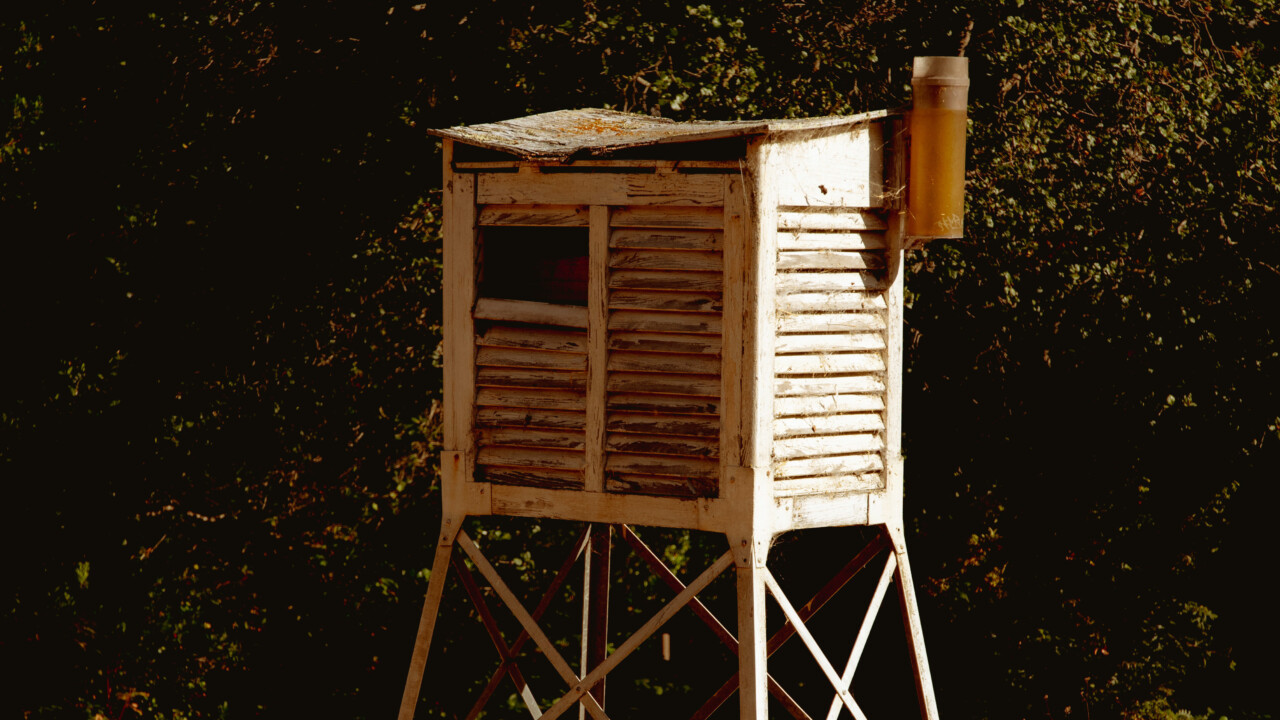
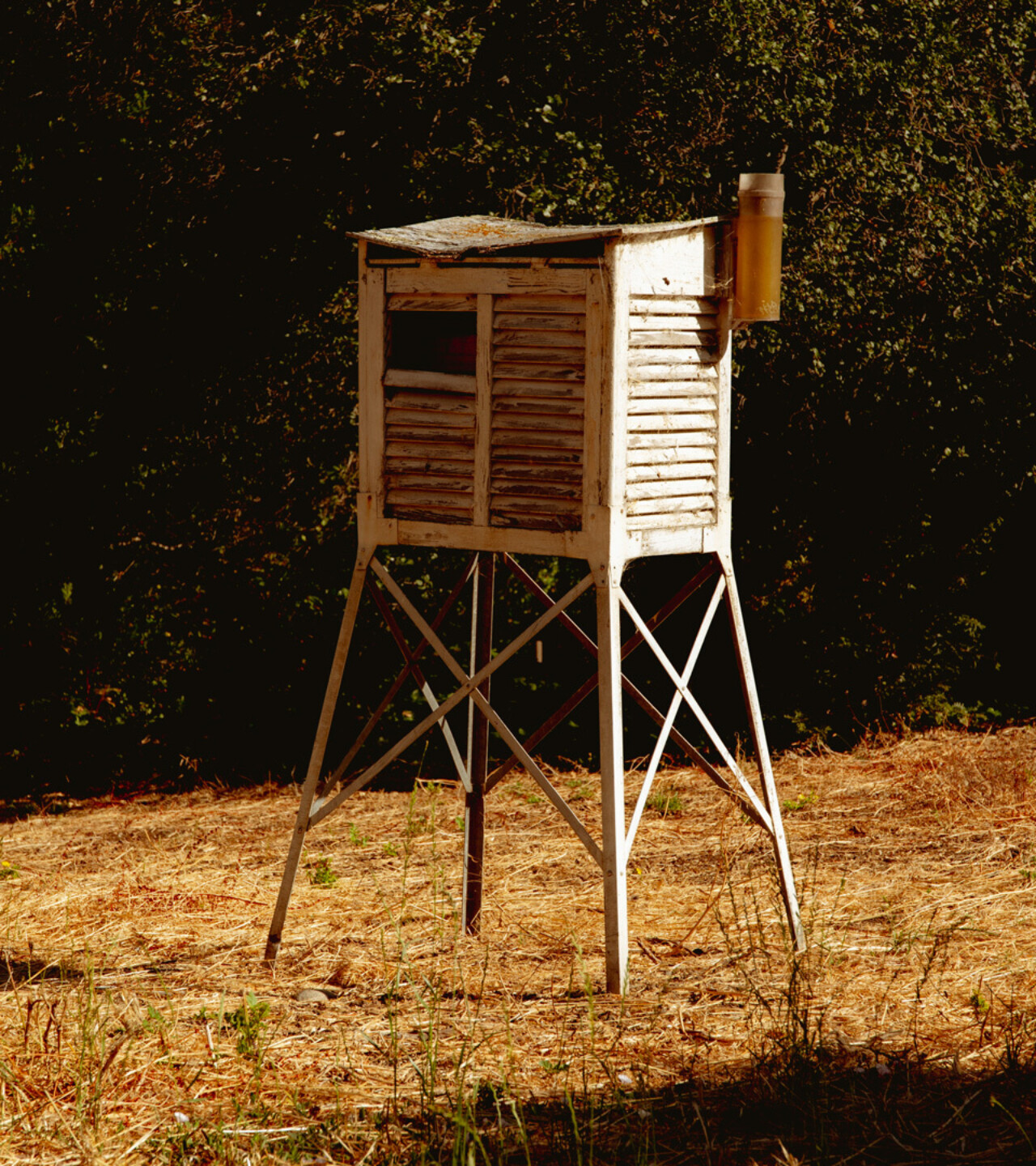
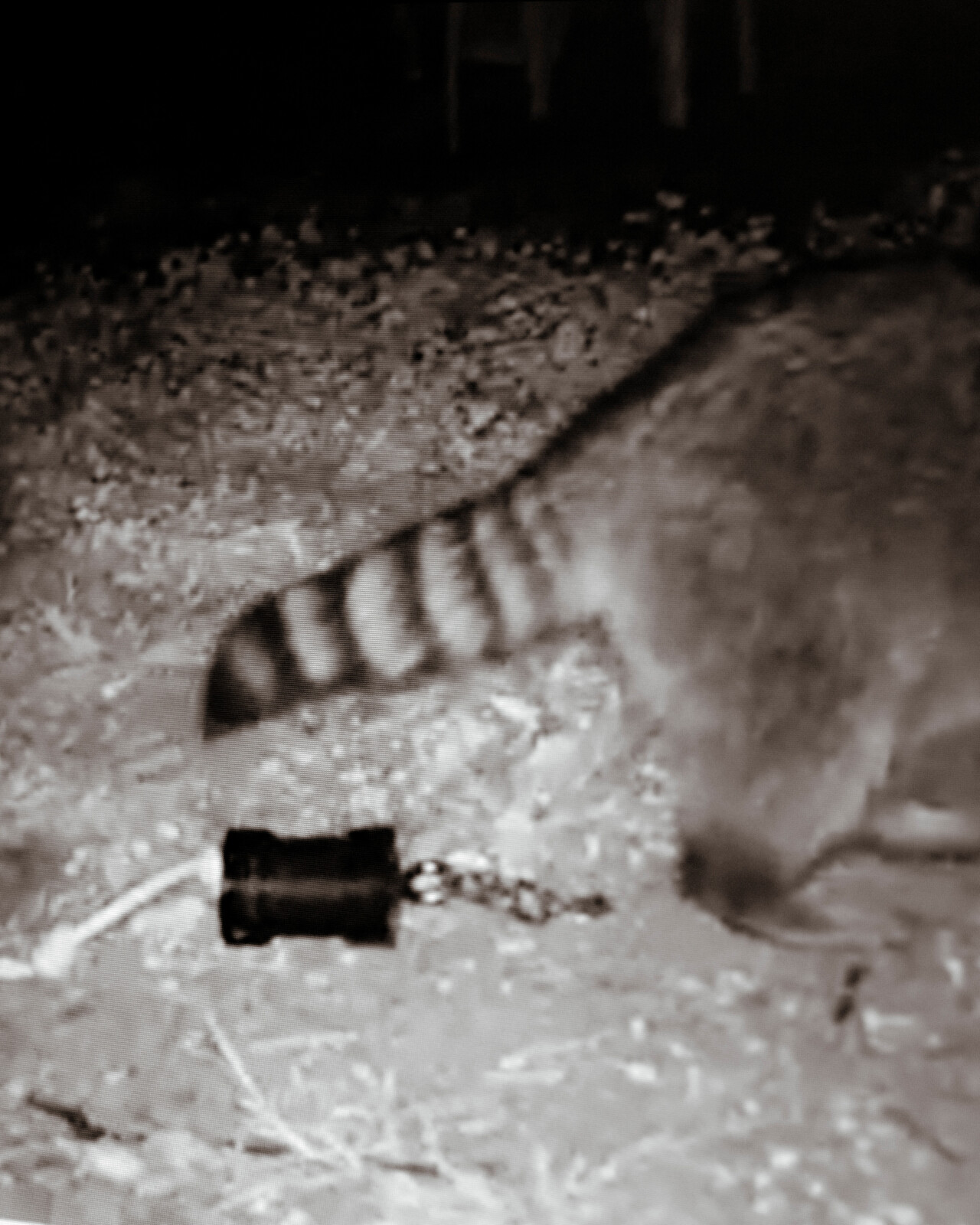
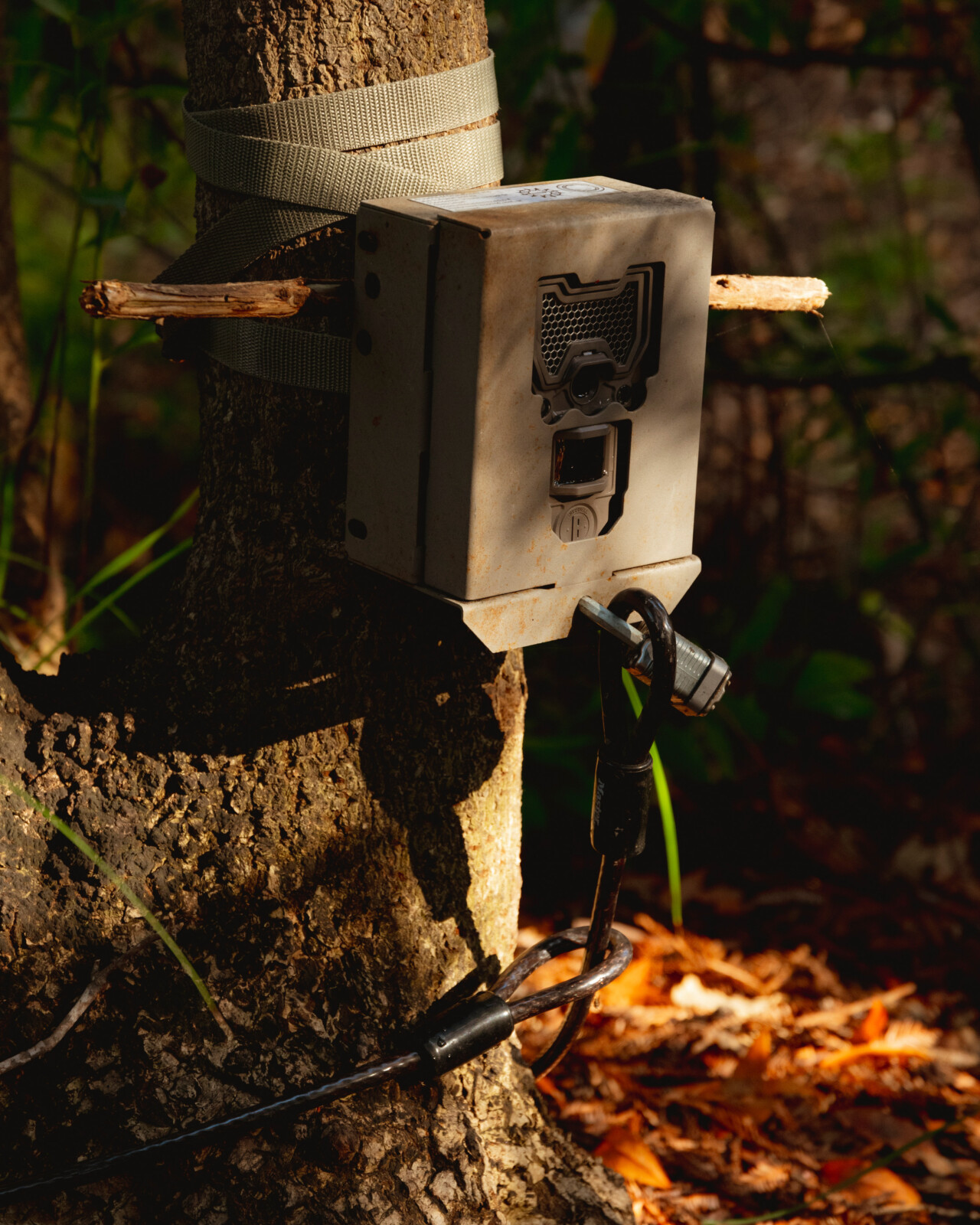
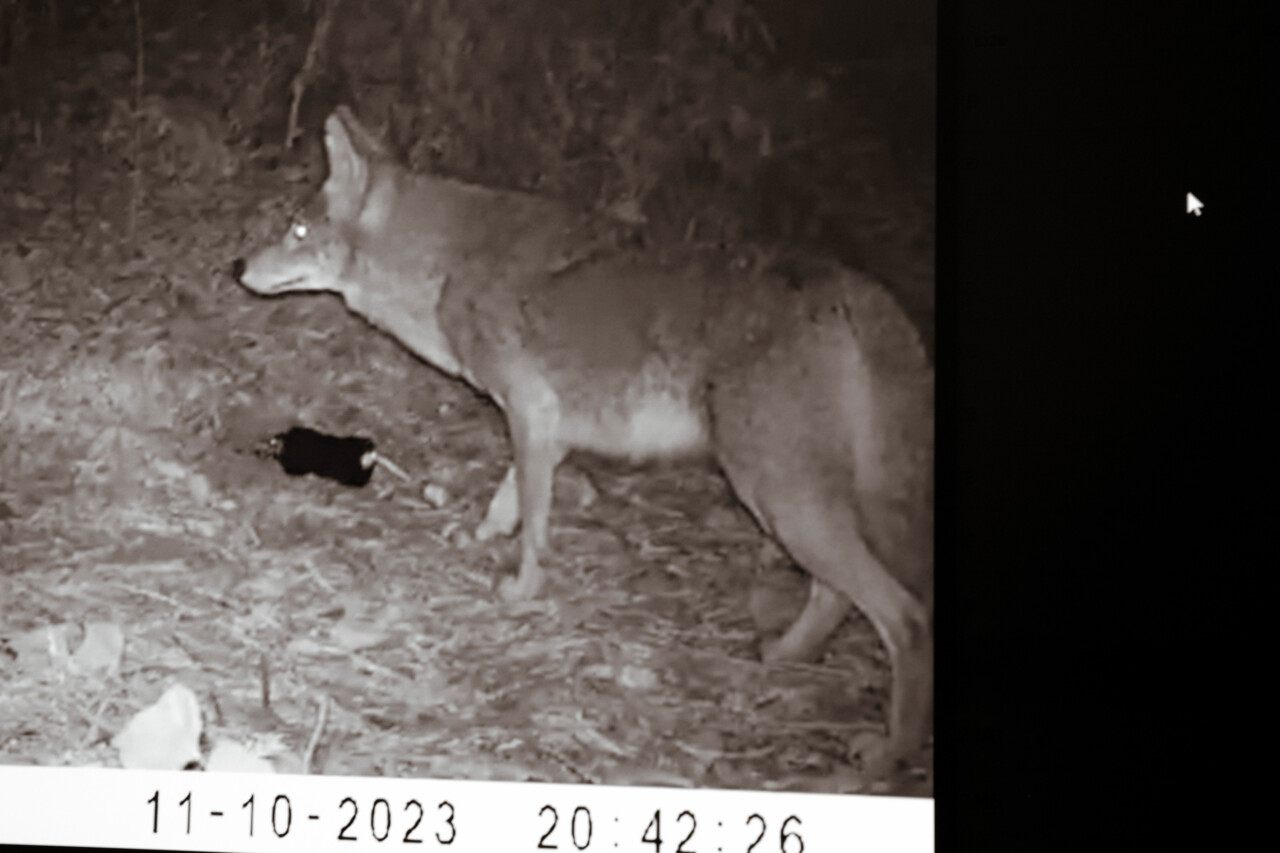
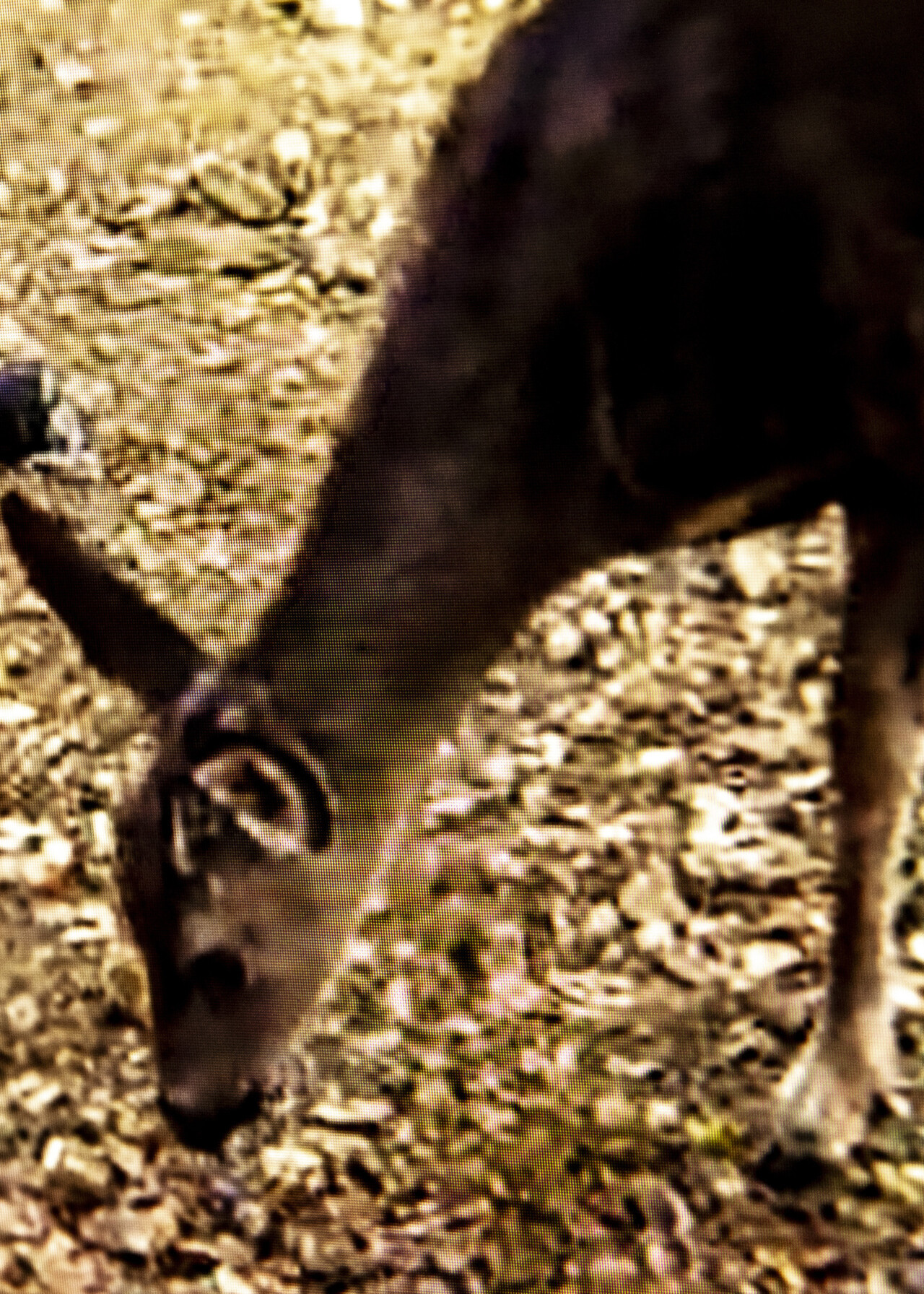
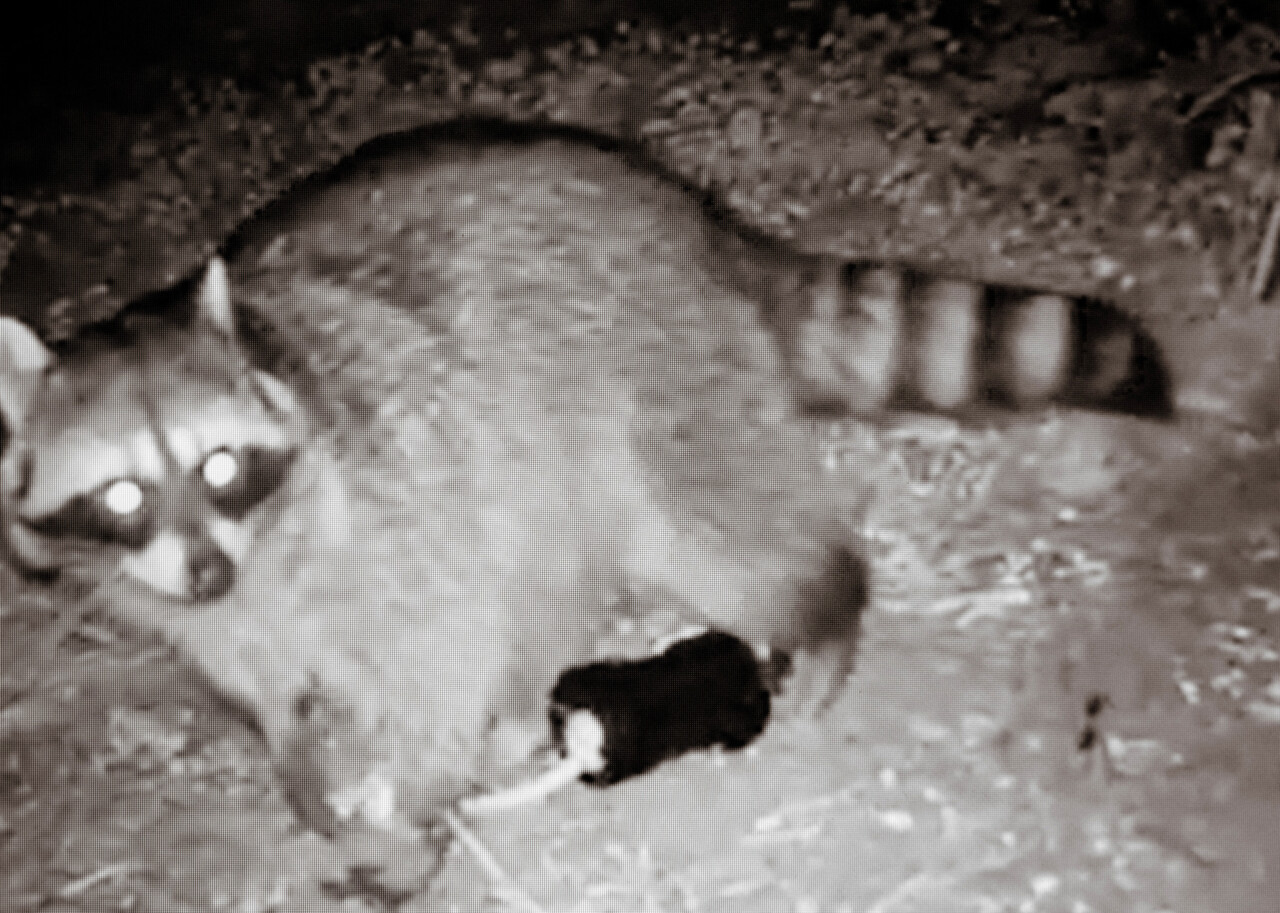
Raccoons scouring the sun-baked hills of California’s East Bay got themselves into more than mischief in 2023. Their dexterous paws helped them solve treat-filled puzzle boxes that researcher Lauren Stanton had left in green spaces and people’s gardens. The aim was to test the cognitive abilities of raccoons and other mesopredators in the area, including bobcats, red foxes, and opossums.
A key part of the experiment was the animals’ autonomy to choose whether to interact with the puzzle box. There was no coercion; only the offer of a treat if they succeeded. Because the animals were free to simply move on, Stanton argued, the raccoons could be seen in some sense as consenting to the experiment. “I’ve actually been surprised with regard to raccoons and their willingness to consent in the wild,” said Stanton, a postdoctoral researcher in cognitive ecology at the University of California, Berkeley.
Stanton’s work is part of a broader shift in conservation science, as some researchers develop experiments that allow animals to choose whether or not to participate. Animals in captivity or distress do not behave as they would in the wild, which can—and does—distort results. Invasive methods also carry greater risks. Tagged animals, for example, are more likely to die than untagged animals. Supporters of these newer approaches argue that moving toward consensual methods is not only more ethical—it’s better science.
Sarah Marshall-Pescini, a senior scientist at the University of Veterinary Medicine in Vienna, has been studying a population of free-roaming dogs in Rabat, Morocco, since 2016. Over the years, she and her team have taken saliva swabs from the dogs to conduct genotype analyses and better understand the group’s social structures. Most of the dogs are friendly with humans, and allow researchers to approach. Others are more wary.
One of Marshall-Pescini’s former doctoral students, Martina Lazzaroni, designed a remote swabbing system to sample the shyer dogs. A piece of meat was placed at the narrow end of a funnel, similar to those used in chemistry classrooms, with the swab positioned at the funnel’s wider opening. As the dogs reached for the meat, they left traces of saliva behind. A paper published in October found that while the DNA concentrations from this funnel method were lower, they were still high enough to produce genotype analyses of similar quality to those obtained through direct swabbing.
More importantly, the method allowed the researchers to sample dogs that had previously avoided them, giving the team a more complete picture of the group. “We wanted to sample as many as possible of the animals in our population, also to avoid being biased and only effectively managing to sample the ones that are more social toward humans,” said Marshall-Pescini.
Amanda Ridley, a professor of behavioral ecology at the University of Western Australia, has formed a unique relationship with a population of pied babblers in the Kalahari Desert since 2003. She’s trained the birds to weigh themselves on scales, a useful metric for her research into reproductive success. Weighing the birds before and after breeding attempts helps reveal the physical cost of reproduction.
Getting the birds to that point took time. Ridley first had to help the population get accustomed to her presence by walking near them and avoiding behaviors, such as staring, that might have confused her for a predator. Over time, she introduced the scale, giving the birds time to adjust to the device before offering mealworms or other small treats. Eventually, the birds came to associate the scale with food. “When you’re working with animals in the wilderness, there is a really important and intense habituation phase at the start,” Ridley said.
Even as more wildlife researchers begin to take animal ethics seriously, the field as a whole still lags. One analysis found that only 22% of wildlife genetics studies used non-invasive methods, with most relying on lethal or invasive strategies. Another analysis by Wild Animal Initiative, a nonprofit focused on wild-animal welfare, found that welfare-related terms appeared in just 1% of conservation studies published in peer-reviewed journals.
Mal Graham, strategy director at Wild Animal Initiative, said the organization—which has provided funding for Stanton’s raccoon puzzle-box research—has guidelines encouraging researchers to seek consent wherever possible. “I don’t think we’re at the point where we can answer every wildlife question in a way that involves consent, but I absolutely think that we should be pushing ourselves harder,” they said.
The puzzle-box experiments Stanton carried out in the East Bay are the latest iteration of work she has been refining since 2015. She first tested the boxes on captive raccoons, who ended up breaking things or acting in ways she had not anticipated. That early work helped smooth the path for experiments with their wild counterparts. “Working as non-invasively as possible is important to me, and it should be a goal of all of us who do this type of work with wild animals,” she said.
While it is not yet possible to answer every wildlife question with consent-based methods, the deeper issue may lie in the questions being asked in the first place. “Foregrounding ethics can foreclose certain avenues of research, but at the same time it opens so many more,” said Christine Webb, a primatologist at New York University.
Webb pointed to a journal article she wrote in 2020 in response to an experiment in which rats were taught to play hide-and-seek, only to be killed at the end so researchers could investigate the neurological underpinnings of their playful behavior. If ethics had been taken more seriously, she said, “a whole treasure trove” of questions could have opened up “on the basis of this incredible relationship that had developed” between the rats and the researchers.
The idea of consent, however, is far from straightforward. An animal may willingly interact with a puzzle box or funnel, but it does not necessarily understand the meaning of or consequences of that decision in the way a human research participant would.
“It seems we should be starting with the ethics and the kinds of relationship that we want to be in with the natural world and with other forms of life and then develop the scientific questions from that ethical orientation.”
That lack of understanding is one reason Liv Baker, a conservation behaviorist at the animal ethics think tank PAN Works, is cautious about using the word consent to describe such experiments. She said she has “learned enough scientific humility” not to rule out the possibility that humans might one day explain the true intent of experiments to animals. But that’s not something researchers are currently doing. “True consent would foreclose the vast majority of research we do with animals,” she said.
For Baker, the central question is whether the animals themselves stand to benefit. Experiments can still be “extremely worthwhile,” she said, even if animals cannot offer full consent. If there has been a serious ethical deliberation, strict scrutiny of the methods, and clear benefits for the animals involved, there may be a case for proxy consent—similar to the way decisions are made for children or people with atypical cognitive abilities.
Moving wildlife research toward a model in which animals are treated as participants, rather than subjects, will require more than new experimental designs built around choice and consent. “Ethics and ethical bodies often act as a rubber stamp to approve science, rather than a starting point for developing scientific questions and methods and values, and that part of the issue is baked into scientific training,” said Webb.
Too many scientists, she added, see ethics as an administrative burden or as something driven by emotion, rather than as a rigorous field of philosophy grounded in rational principles and argument. “It seems we should be starting with the ethics and the kinds of relationship that we want to be in with the natural world and with other forms of life,” she said, “and then develop the scientific questions from that ethical orientation.”
Join our membership community. Support our work, receive a complimentary subscription to Atmos Magazine, and more.
Puzzles, Treats, and Consent? The New Frontier in Wildlife Studies