




Words by Daphne Chouliaraki Milner
photographs by rachele Daminelli
Negative feedback loops, which amplify the effects of climate drivers, are among the scariest processes in climate science. Melting ice in one example exposes darker water and land, which absorb more heat, causing more ice to melt. But ecologist Tom Crowther focuses on their opposite—positive feedback loops—as one of nature’s most powerful engines of repair.
Crowther has spent years studying how degraded landscapes can recover when people and ecosystems begin reinforcing one another. In his new book, Nature’s Echo, he shows how feedback loops do not exclusively drive collapse. These processes also shape galaxies, planets, societies, economies, forests, and the spread of regenerative action.
The result is a climate book unusually centered on joy and promise and refreshingly distinct from the everyday climate coverage we’re used to. Without minimizing the scale of the climate crisis, Crowther argues that anxiety can reproduce itself, while wonder, purpose, and pleasure can build momentum of their own. From Costa Rica’s forest recovery to rural restoration projects in Ethiopia, Ukraine, India, Iceland, and beyond, he sees evidence that nature and livelihoods can improve together—and that each often depends on the other.
Below, Atmos sits down with Crowther to discuss feedback loops, ecological optimism, and how small acts of regeneration can become systems of change.
Daphne Chouliaraki Milner
What first planted the seed for Nature’s Echo? Was there a specific moment when the book’s central idea came into focus?
Tom Crowther
I have always been obsessed with nature, and with the desperation for more and more people to realize how incredible it is. But this book actually happened after I did a TED Talk about global restoration.
Funnily enough, it was the publisher who reached out and said, “Do you want to do a book about trees?” And I said, “No, that’s too one-dimensional. I’m not interested.” They said, “Why don’t you just think about the top 10 things that you find fascinating in the world, write them down, and see if there are any similarities or throughlines?”
I wrote them all down, and immediately the feedback loops just exploded through. I thought it would be a couple of days of brainstorming, but it was literally 10 seconds. I immediately got so excited about the prospect of working on a book about feedback loops because they underpin everything I care about.
Daphne
In the context of climate coverage and the ways our own behavior drives climate collapse, feedback loops are often positioned as negative in public discourse. Could you explain what a restorative feedback loop looks like in nature?
Tom
You’re exactly right. I’ve studied feedback loops for a lot of my career, and in the climate conversation, they are terrifying. The more carbon we emit, the warmer soils get. So they release more carbon, which makes it warmer, so they release more carbon, so it gets warmer. I’ve done a lot of research on that particular topic, and there are hundreds of other global feedback loops just spiraling out of control.
But feedback loops are also the most beautiful, elegant, and simple things. They have existed in everything that has ever existed since the dawn of the universe. After the Big Bang, matter was evenly spread, but there were certain areas where it was denser than others. Those dense areas pulled in more matter, which made them denser. So they pulled in more matter, which made them denser, and they pulled in more matter. That simple process ultimately formed the stars, and the world as we know it took shape since. The distribution of everything in the universe has come from those little feedback loops. They are agents of change.
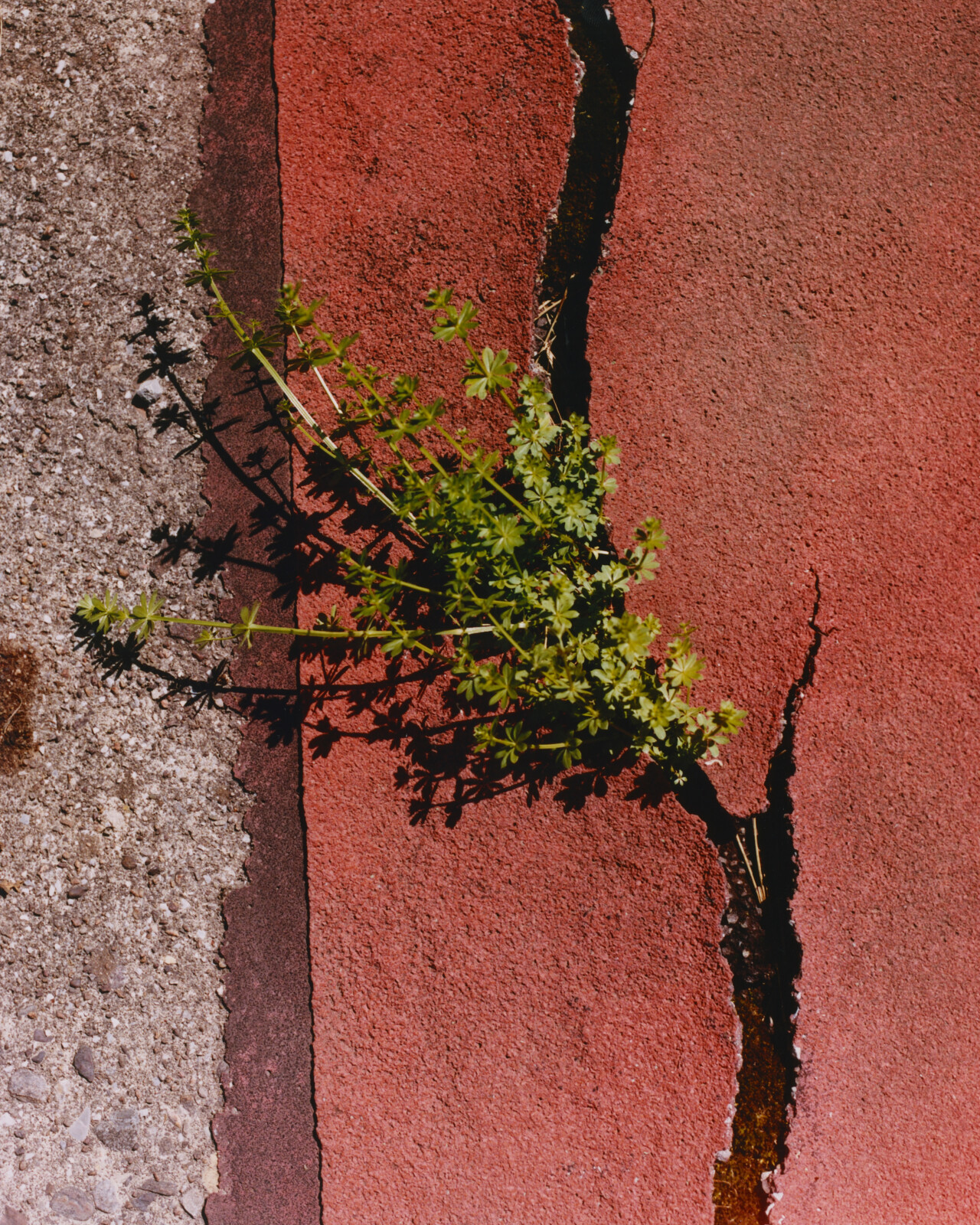
The cool thing is that feedback loops can go in any direction. They are all over the place with regeneration, too. Every time a rural community makes more money from bringing back nature, that incentivizes them to bring back more nature, which brings them more money, which incentivizes more nature. I’ve been lucky enough in my career to see this in hundreds of thousands of locations around the world. A degraded landscape is never the most valuable opportunity for local communities. When nature starts to take hold, livelihoods improve, which improves nature, which improves livelihoods. That was the thesis of my work before starting this book.
“When you focus on the things you can control, you can start to nourish the things that bring you joy.”
Daphne
Why this book now? Did you feel there was something missing in the way we talk about climate and ecological crisis, and the promise of regeneration?
Tom
There are two reasons. One is that we have a society dominated by climate anxiety. It is completely understandable and relatable. I’ve certainly been there myself. But if we take a step back and look at the feedback loops shaping our universe, and the causal nature of our existence and our beliefs, panic and anxiety only propagate more panic and anxiety.
Since climate change was announced as an existential threat, military budgets have gone up exponentially every single year, because defensiveness invites protectionism. But there is a second wave of reactions that is talked about less in the media. It is another equally incredible, burgeoning feedback loop, where millions of people across the globe are finding joy in regenerative opportunities. Whether it is upcycling clothes to get more Instagram followers, vegan diets that taste better or farmers doing regenerative agriculture to improve their yields—whenever doing something good brings you more joy, a better lifestyle, better health, or better fashion choices, that incentivizes you to do more of that action.
Those loops are also silently growing across the planet. If we allow our attention to nourish those loops as much as it currently nourishes the panic loops, they have the potential to build with staggering momentum. When I was writing this book, I was thinking about the next generation who are panicking about climate change, because I truly believe they have the potential to transform everything just by the way they look at the world.
Daphne
That also speaks to people who feel climate anxiety and are doing things—like planting trees or cleaning up beaches—but often feel that what they do isn’t enough. Can you explain what the impact of a positive feedback loop might look like in practice for someone taking what they see as a small action?
Tom
The first thing is recognizing that you are inseparable from nature. The little loops you are creating are not separate from the rest of the system. In the book, I talk a lot about how it is impossible to delineate you from the rest of the natural world—not just philosophically, but scientifically, too. You are inseparable from the loops that give rise to you. It is a very Western concept that we are fixed entities. Many cultures have a more process-based understanding of how we interact with the rest of the world. We are an area where nature is humaning. We are not a distinct entity.
When you realize that, you realize your actions, whether you want them to or not, are contributing to feedback loops. If you find a regenerative solution that you enjoy doing, the individual action itself will likely have a proportional contribution. But the joy you get out of it will make you intrinsically more motivated to do it again. In the process of doing it again, you will probably gain more joy, which might incentivize you to do it again.
That process will also feed into all the people around you who see how much joy you are getting from it. They will probably not do it if it looks like a brutal, horrific chore, and you are doing it because you feel guilt. But if you are seen to be loving this spectacular thing that is enriching your life, those around you can’t help but feed into that process.
Feedback loops will happen whether we want them to or not, but they will always propagate the qualities we put into them. If we are acting out of fear, guilt, anxiety, and terror, those are the qualities that will be propagated. But if we can find the resolve to act out of appreciation for this moment on this incredible planet, then those are the qualities that get to propagate through our actions. And they grow indefinitely.
Daphne
What makes this book feel so urgent is that it is deeply optimistic. You’ve just spoken about the importance of joy—how important are joy, wonder, and possibility in sustaining the climate movement?
Tom
Every organism that has ever existed has existed in the face of unparalleled change. Since the first microbes emerged on this planet 3.5 billion years ago, they had a way worse prospect than we do right now. They had almost certainty of death, and yet life found its way to propagate. It is this process of life that seems to go against entropy that is incredible.
It makes sense that our consciousness focuses on the bad things that come with change. If you are being attacked by a tiger at the same time as seeing a cute bunny rabbit, it is good that your consciousness is focused on the tiger. But we also need to remember that there are billions of people doing incredible things for the world, all under our feet, quietly building momentum and feedback loops.
I talk a lot about them in the book: cultural ones, scientific ones, social ones. There are even industrial-level tipping points that are already being reached around electric vehicles and renewable energy. These things are becoming cheaper than the conventional alternatives. You don’t have to work for it. They are inevitably going to take over.
As we move toward a resource-constrained world, sustainability is becoming more and more fundamental to our existence. We have the opportunity, in this brief 80-year stint that we get on the planet, to nourish whichever of these loops we would like to. We can choose the ones that bring us joy and enthusiasm, and they will grow with incredible power.
Daphne
When did you begin to believe that optimism was scientifically and ecologically warranted? And how would you explain that to someone skeptical?
Tom
Like everyone in our generation and the generation since, I grew up feeling quite a lot of anxiety. I loved animals and wildlife, and I used to be devastated every time I saw a news report about orangutans losing their home or polar bears being unable to find food. After long enough, my belief that we were doomed was immovable. It was as solid as your belief that a chair is a chair.
But I was fortunate enough to encounter a teacher who said, “Look, the first place to start is focusing on the things you can control. You have to accept what you can’t control and focus on what you can.” When you focus on the things you can control, you can start to nourish the things that bring you joy.
Through my career, joy has really been a motivating force for me. I always thought, maybe we are doomed, but at least my little actions can make us 1% less doomed, or a thousandth of a percent less doomed. In the process, I have encountered unbelievable evidence that has completely tipped me in the other direction.
I work on global restoration. I built an online platform called Restor, where rural land stewards can draw around their area, show where they are, and show what they are doing. We share data with them and hopefully help them get finance. Hundreds of thousands of these projects have come online on the platform, and it is unbelievable how many ways people are finding solutions to make more money because nature is thriving, whether through ecotourism, shade-grown coffee, or agroforestry. There are a million ways in which nature’s revival improves livelihoods.
You can go on the platform now, and it is like Google Maps, but every dot on the world is a good thing. When you see that feedback loop of regeneration, you think, “Oh, that will never stop, because people keep making more money because nature is better. So nature and people are thriving together.”
“When I was writing this book, I was thinking about the next generation who are panicking about climate change, because I truly believe they have the potential to transform everything just by the way they look at the world.”
Daphne
Do you have a favorite example of a system that began to heal itself once the right conditions were restored?
Tom
As an ecologist, I tend toward ecological examples. I love the story of the Iberá Peninsula in Argentina, where overgrazing by cattle was leading to massive ecological degradation. Wetlands were drying out, vegetation was disappearing, and that meant the wetlands dried out even more. Then people started killing the apex predators, so they could not feed on the natural grazers. The natural grazers added to the managed grazers, and they dominated the vegetation for a long time. Communities in the region lost their livelihoods as the land stopped producing.
To turn it around, rather than planting loads of trees or culling all the grazers or overly managing, they reintroduced apex predators. When they reintroduced ocelots and jaguars, the entire system came flooding back. They fed on capybaras and grazing deer, which opened up wetlands so other species could come. Once those species arrived, they made opportunities for more species. Now it is a thriving, lush environment, and it is making livelihoods for thousands of people. There is an entire economy based on ecotourism, including chefs, cooks, and hotels. It is a thriving landscape just because they brought back the apex predators.
Another example is Costa Rica. The worst feedback loop dominating our planet, in my perspective, is the one between poverty and degradation. Billions of people live in direct contact with nature, with no financial security, which means they are forced to use or degrade the natural capital around them, which in turn makes them poorer. Costa Rica was the first country to turn that loop in the other direction. It distributed just 0.1% of its wealth to rural land stewards to alleviate the economic drivers of degradation and incentivize nature recovery. In the process, its economy went up by seven times. Nature rebounded from 25% vegetation cover to about 60% over the last 30 years. Carbon storage increased. Water storage increased.
My research group and I did a study where we listened to the soundscapes of recovering ecosystems. The acoustic recovery is unbelievable: from the static sound of a degraded pasture to the high- and low-frequency sounds of thousands of birds, animals, howler monkeys, and insects. We statistically compared those sounds to the 100,000 most frequently downloaded songs on the internet, and we showed that the recovering ecosystem sounds statistically closer to music than the degraded ecosystems. Costa Rica has become objectively more beautiful sounding while the economy has boomed, all because it distributed a tiny amount of money to build socio-ecological feedback loops.
Daphne
For people who feel emotionally exhausted or overwhelmed, what do you hope this book changes in the way they understand their role in the world?
Tom
My dream would be that 8 billion people wake up tomorrow not overwhelmed by the fear of the future, which is very uncertain, but thrilled by the opportunities we have to engage in regeneration. Whether we save the planet or not, the opportunities we have to enrich our lives are spectacular, and that is what life is really about.
Whether our species thrives in 100 years or collapses, all you have to do with your time on the planet is try to enrich yourself with this incredible process. And when regeneration is driving that enrichment, it is the most rewarding thing you can ever do. So it does not really matter if you succeed or fail.
Editor’s Note: This interview has been condensed and edited for purposes of length and clarity.
Correction,
July 16, 2026 12:00 am
ET
This article had mistakenly claimed that Tom Crowther is a professor of ecology at the Department of Environmental Systems Science at the Swiss Federal Institute of Technology in Zurich. This has been corrected.
Join our membership community. Support our work, receive a complimentary subscription to Atmos Magazine, and more.
A Scientific Case for Climate Optimism with Tom Crowther