Photograph by Charles Negre
To never miss an episode of The Nature Of, be sure to follow here.
Hope isn’t found in looking to the future; it’s in the past. This week, Willow sits down with legendary writer and activist Rebecca Solnit for a conversation about uncertainty, change, and the stories we choose to believe about what’s to come. Together, they explore why hope is not naïve optimism when rooted in evidence, and how history reminds us that change often arrives in unexpected ways. Drawing from Rebecca’s new book, The Beginning Comes After the End, this conversation examines the progress made in the last 70 years as cause for hope—and proof that the impossible happens all the time.
Rebecca Solnit is the author of more than 25 books, including Orwell’s Roses, Hope in the Dark, Men Explain Things to Me, A Paradise Built in Hell: The Extraordinary Communities that Arise in Disaster, and A Field Guide to Getting Lost. A longtime climate and human rights activist, she serves on the boards of Oil Change International and Third Act. Her newsletter of essays and analyses can be found at meditationsinanemergency.com.
Rebecca Solnit
Hope is a frilly pink dress: People don’t want to expose their knees, and they feel vulnerable. Despair is a black leather jacket everybody feels really cool in.
Narration
I don’t know when hope fell out of fashion, but I do think that Rebecca Solnit is right. Despair is this alluring, sleek leather jacket that often feels like the more popular choice today. And maybe it is because hope itself is vulnerable. It’s actually scary for us to admit that we don’t know how things are going to turn out. Part of what I love so much about Rebecca’s work, and by the way, she has literally written the book on hope, is that she points to a vision of hope that’s not tied to the future but rooted in the past. Her latest book, The Beginning Comes After the End, catalogs the many transformative victories in social progress, environmental progress, that have defined the last few decades. It’s a way of arming yourself or equipping yourself with knowledge and confidence that the world itself has changed many times and is actually always changing.
Rebecca
You can’t see change unless you’re slower than change in the sense that you stay still long enough to see that things are not what they used to be.
Narration
I’m Willow Defebaugh and this is The Nature Of, where we look to the nature of our world for wisdom and ideas that change the way we live. This week, I’m sitting down with the legendary writer and activist Rebecca Solnit to talk about her new book, The Beginning Comes After the End, why hope is not elusive, and the comfort we can all take in a world that’s always changing.
Willow Defebaugh
Hello.
Rebecca
Well, hello.
Willow
Thank you so much for joining today. I’m so happy to have you here on the show. It’s an honor.
Rebecca
I love what you all do, so I’m thrilled.
Willow
I have been delighted to discover that you and I have a shared love for the butterfly as an emblem for these times that we are living through. So I was curious if you could start by sharing why you think that they are such a fitting symbol.
Rebecca
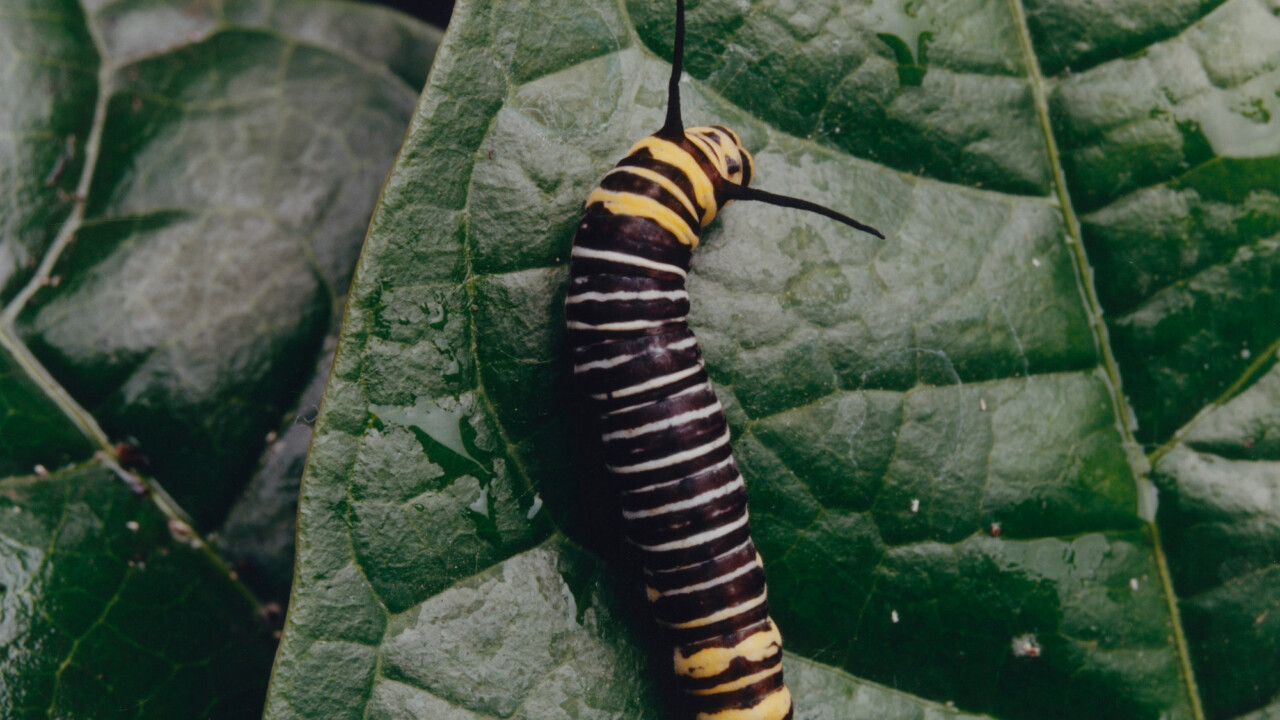
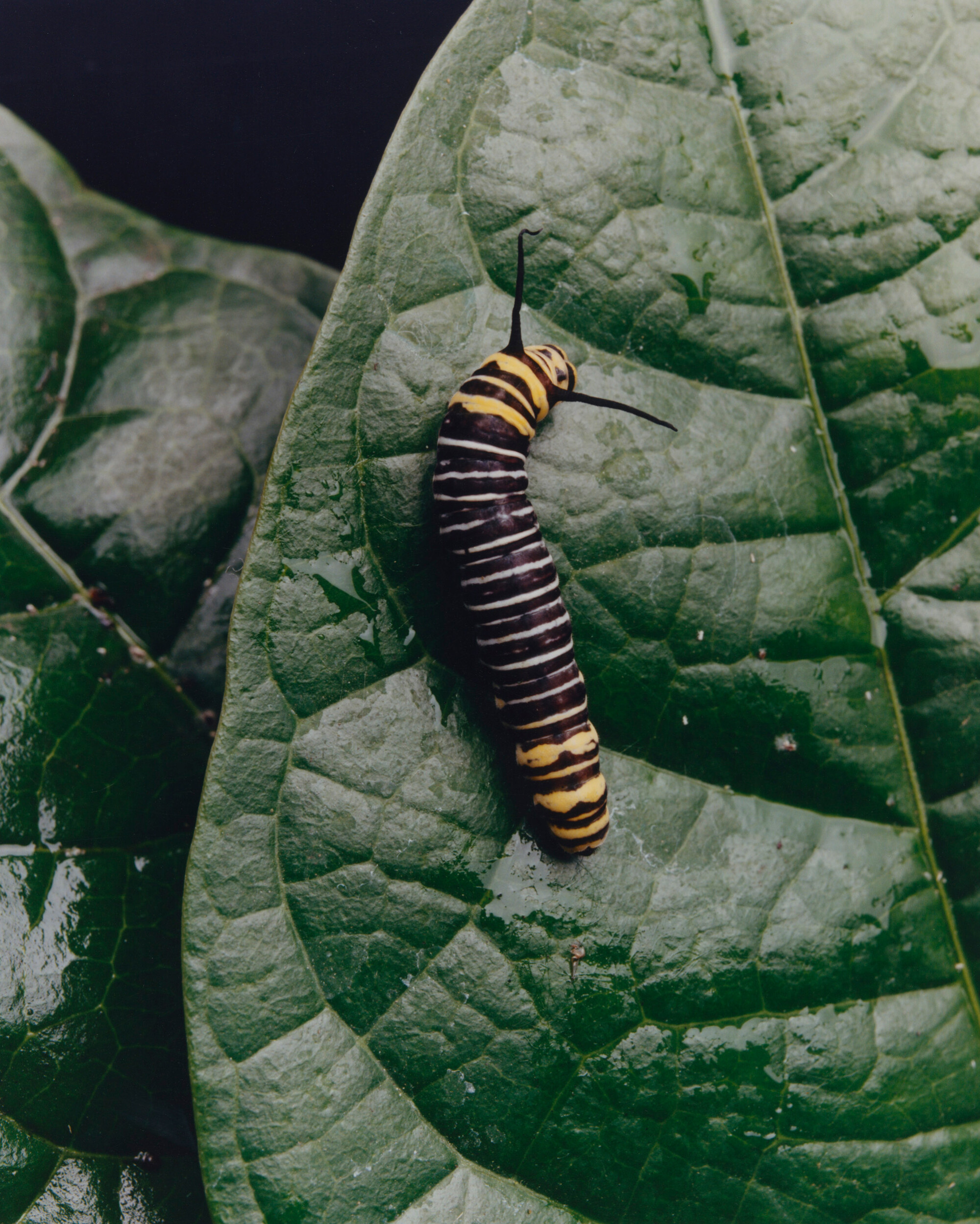
Butterflies are one of the life forms that goes through the most astonishing transformation in its life cycle. We can talk about an acorn turning into an oak tree, the liquid inside an egg becoming an eagle. But the fact that the butterfly has its whole life as a caterpillar chomping leaves, and then kind of literally liquidates itself and emerges as something completely different in form, in habits, and diet. It’s not what people often want transformation to be: this kind of beautiful flowering. It’s this kind of rough, violent business. Inside the chrysalis, it liquidates. And I’ve watched butterflies hatching. If they don’t struggle out of the chrysalis fast and fully extend their wings while the fluid that plumped up their bodies goes to stiffen out the wings, those wings will never be right. They’ll never fly, and they’re doomed. So it’s a brutal rite of passage, but it also just signifies that things can become radically different things.
I think one of the unconscious biases in our time, this idea that we live in a stable world, a steady world, that things will be pretty much what they are, which comes out of a kind of amnesia, that in many ways our society has gone through that struggle in the chrysalis over and over again, liquidated its assumptions about gender and women and patriarchy, about race, about nature, and come out something really different. And the whole argument of The Beginning Comes After the End is that we have transformed the world so profoundly over the past 70 years that we, in effect, live in a radically different society and maybe civilization, one that would be incomprehensible to somebody from 1955 or ’56. And that what the right is doing is a massive backlash to try and return us to their version of the good old days, which—for anyone who’s queer, or female, or non-white, or non-Christian, or lots of other things—are of course the bad old days.
Willow
And there’s some species of butterflies and also moths that actually spend more time in the chrysalis than they do as adult butterflies, which I think underlines what you were sharing; also, the fact that our world is always in transition. We think that change is just something that maybe happens overnight, or something that we choose to do or not to do. But the reality is change: It’s the baseline, and it’s ongoing.
Rebecca
And something I’ve really come to terms with is that you can’t see change unless you’re slower than change in the sense that you stay still long enough to see that things are not what they used to be. But I find that people can’t see it because they don’t have what scientists call baselines. What is the before that lets us see the after? What was the condition of women before feminism that lets us see that feminism profoundly changed the lives of women and the way all of us think about gender and relationships, equality, and everything else? There’s a wonderful phrase by the theologian Walter Brueggemann that hope comes from memory in the same way despair comes from amnesia.
And I think that hope is backward-looking; to look at how profoundly things have changed and how they changed. And if you look at the things I talk about in this book, all of them were changed through the efforts of people sometimes starting with somebody exceptionally brilliant or Rachel Carson writing Silent Spring, but that book wouldn’t have mattered if it hadn’t generated a movement to address DDT in particular—pesticides in general—hadn’t transformed public awareness and led to those public actions.
So if you have those baselines, what was the American understanding of nature? This kind of unsystematic, unconnected notion of stable objects, isolated objects, you can dump pesticides on something to kill and it won’t go downstream, down wind, affect everything else, transformed by Rachel Carson into seeing, oh, everything is connected to everything else; which is why we can’t throw poisons, whether it’s radioactive fallout, or DDT, or these other things into the environment. Because they just keep traveling; because everything is connected to everything else. We understand nature in a profoundly different way than we did before the modern environmental movement.
So if you can see systemically, you see change and relationship, and that means seeing baselines and seeing things over time, which is wonderful equipment for understanding where we are and how to protect what we love and change what we don’t. And so much of what I’ve written the last 20-something years, I think of as equipment in a way. I want people to read it, I want them to maybe enjoy the writing, but I also wanted to give them tools to go out into the world and participate in how we change the world because that it’s changing is inevitable. How it changes depends on how we show up.
Willow
Yes. Yes. Beautifully said. The quote that you shared: that hope is tied to memory and despair is tied to amnesia. I mean, that’s so perfect because I was very moved in reading your book by how your vision of hope is really tied to the past, not the future. We often think of hope as something that’s tied to, will things turn out OK, right? It’s very future-dependent. And I’m wondering if you can just share some examples that you gathered in the book of progress in recent history that people listening might find surprising or inspired, in kind of establishing that baseline?
Rebecca
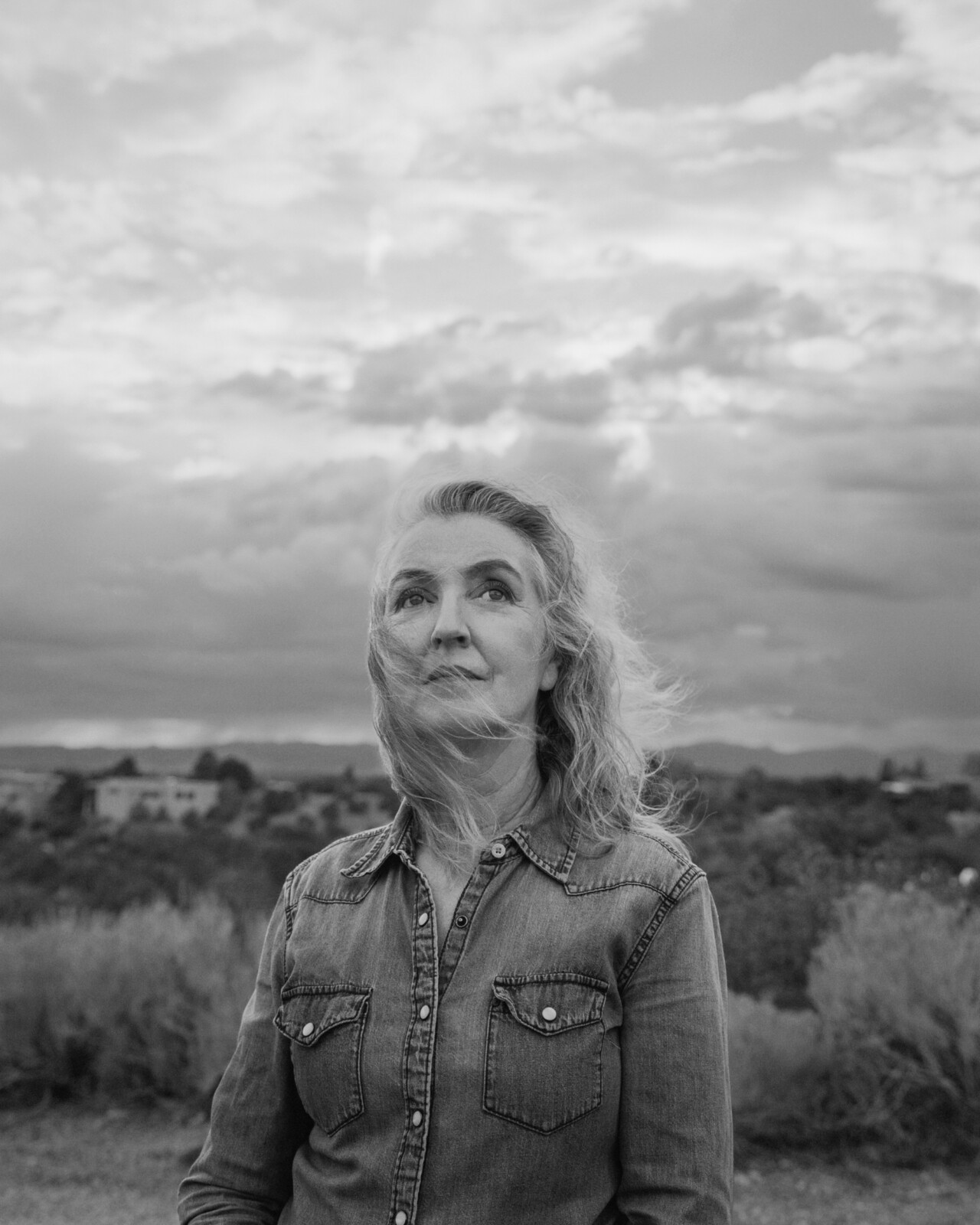
As you point out, something really important is we never know what will happen, but we can certainly know the past, and the past equips us for hope by showing us how deeply unpredictable things are, how much all the good changes are because of people showing up. One of the big things that made me start to kind of lurch toward hope decades ago was the fall of 1989, when nonviolent civil resistance helped to topple many satellite regimes of Eastern Europe one after the other, in ways even the participants absolutely had not anticipated. And I’ve lived through a lot of this because I was born in 1961, the year the Berlin Wall went up. I got photographed for an article by a German photographer recently who grew up in West Germany, where he thought the Berlin Wall was permanent, the division of Germany into two countries was permanent.
Our whole lives would be spent in that reality. The Soviet Union would outlive us. And then we talked about how amazing that year was when we were so young and everything changed, but everything has changed. When I was a young environmentalist, it was really normal to talk about nature and culture as two separate and more or less equal spheres. Human beings were holy in culture. Nature was this pretty stuff out there, kind of decorative, kind of anachronistic, not that relevant. An East Coast artist said, “You don’t understand, for us in the East, nature is in the past tense.” And at that time, I just wanted to shout, “You’re holding a paper cup of coffee in your hand. The paper is from a tree. The water is from the Adirondacks watershed, one of the first preserves in the United States to feed New York clean water. The coffee comes from a tropical landscape. The milk comes from a pastoral landscape. You are holding four landscapes in your hand while thinking nature is very far away from you, and then you’re putting that coffee, that milk, that water in your body because you are nature yourself.”
When I was a young environmentalist, people told a story as though human beings were inherently destructive of nature. The whole conservation movement was basically a movement of separateness. Industrialism, capitalism will inevitably destroy everything we don’t put a fence around and protect. So we will create national parks. We will create preserves and sanctuaries, and we will not necessarily be at odds with industrialism. And the Sierra Club, into the 1960s, had, among other things, a Standard Oil [now Chevron] engineer on their board. They did not see that as oppositional to their agenda in ways that are inconceivable now because the conservation movement was not the environmental movement.
The environmental movement arises from the fallout of nuclear testing in the 1950s, from the crisis of pesticide pollution in the 1960s: to recognize that everything is connected to everything else. But the visibility of Indigenous people told a more upbeat story about everything being connected to everything else. If human beings have lived in this hemisphere for more than 10,000 years without destroying it, human beings can have many kinds of relationship to nature, are not necessarily destructive or not necessarily alienated. There are other ways to be. And I think that began a deep yearning to stop the war against nature that environmental destruction and climate chaos are that you see. So that’s one of the great revolutions I’ve witnessed among the many in my lifetime that I want everyone to have as that equipment.
Willow
Yeah. I mean, it’s also revolutionary that we’re living in a time when the majority of people do want to see action on climate. I mean, that’s huge. And you also go into the ways in which the green energy revolution—I mean, talk about where we were at the start of the century. I mean, it’s huge. I think it’s so seductive to focus so much on the rollbacks that we are seeing right now, which we cannot sweep to the side because it is disparaging. But as you say, if we can stand still for a moment, if we can widen our perspective and look at where we are in the context of the last few decades, there is a lot to be hopeful about.
Rebecca
Yeah. Another thing most people can’t see, and I really didn’t see until I read this wonderful little history of the coal and human history, is that at the turn of the century, the year 2000, we did not have an alternative to fossil fuel because the alternatives were expensive, primitive, wholly inadequate to replace fossil fuel. Battery storage did not exist in the way it does now. The intermittency of solar and wind meant something else, but also they were expensive and they were just inadequate. We’ve had an energy revolution that, because it’s kind of wonky and technical and also incredibly incremental, even I as a climate activist hadn’t really understood until I read that book and realized, oh, we’re in a completely different place now than we were then. And that’s what happens when you start to see time in the span of five years, 10 years, 20 years, 50 years, a century rather than last week.
It’s just a radically different energy landscape. Even the idiotic war on Iran and the blockading of the Strait of Hormuz has prompted a lot of individuals to seek out electric cars and a lot of nation states and other entities to recognize, yet again, that fossil fuel is a really unreliable, manipulated commodity even in terms of supply, let alone in terms of impact, as opposed to renewables, which are always localized, domestic, don’t involve you in the ugly geopolitics in a world war. Three quarters of human beings live in net-fossil-fuel-importing countries reliant on those international relationships that can go so wrong. So yeah, we’ve also seen this incredible energy revolution that, if you understand, it’s incredibly exhilarating and exciting, but it’s so invisible. And so I feel like the good news, in a way, is equipment to face the bad news.
In this case, the bad news is climate chaos. The good news is we know exactly what to do. We have everything we need to do it. The obstacles are all political. We have to defeat the fossil fuel industry and the powers aligned with it to bring on the end of the age of fossil fuel.
Willow
Yes. I want to circle back to something you said: that it’s very hard for hope to coexist with certainty. I find that there’s a kind of way in which hope is, kind of fallen out of fashion. I think it connects in a way to a certain amount of control, or dare I even say arrogance, like wanting to assume that we know this is going to turn out this way because it’s so hard for us to sit in the uncertainty, but the uncertainty is also where hope exists. It’s a humbling of saying, “We don’t know how this is going to turn out yet.”
Rebecca
Yeah. It constantly just kind of makes me sad to see people trade the real power of participating in change for the fake power of pretending they know what will and won’t happen. That can never happen. That’s impossible. Whether it’s the good thing that can’t happen, the bad thing that will happen inevitably, or the opposite. When the Iraq war broke out, the Bush administration’s invasion of Iraq in 2003, I had been very active in the protests against it and I saw a lot of people I was close to and a lot more people I cared about, really go from the fact the war had started anyway to a kind of tailspin of non-facts going from, we did not stop the war, which was true, to we didn’t do anything, which was deeply untrue. I believe Türkiye withdrew its permission for the U.S. to launch military flights from there because of Turkish anti-war protests, and it was a global movement. And I think we delayed the war. We gave Iraqis time to prepare to survive attacks. Lots of things happened.
And just recently, my friend Antonia Juhasz, an absolutely brilliant oil policy analyst and climate journalist, told me something that all these years I hadn’t known: The Bush administration had wanted to invade Iran back then. And one of the things that prevented them was the power, the impact, of the anti-Iraq war movement. So maybe we prevented a whole other war that we never knew about because it’s so hard to know what didn’t happen. And that’s one of the things I’ve learned about hope, is that change is very hard to see without stories because often your victory literally looks like nothing. The woman who didn’t die from lack of reproductive care, the forests that didn’t get cut down, the species that didn’t go extinct, the children that didn’t get asthma from the coal plant that wasn’t built or that was shut down, the thing that didn’t happen or that stopped happening.
But yeah, I’ve seen so much of this kind of change that people don’t really perceive, and I’ve seen so often people not learning those lessons, and I think people are reluctant to say, “I’m worried about what will happen. I’m feeling really anxious,” which is a kind of vulnerability that’s also true. And so they pretend to have objective knowledge. And it’s partly that also, I think that people are uncomfortable with uncertainty, and I see uncertainty as another word for possibility, only in a world where the future is not yet decided can we participate in it. There are many possibilities of what will happen, how we show up may determine what happens, may choose the best rather than the worst possibility.
But I also think there’s a kind of authority that comes with objectivity or the pretense of it. I know what will happen, and it really always feels in a way, particularly as we now talk to lots of strangers on social media, kind of like a way to save the self, to give the self authority, confidence, power, standing, but it’s bullshit. Versus saying, “We don’t know what will happen. We have to take the risk of engaging with the reality and trying to shape the outcome.” Which is so worth doing.
Hope is seen as optimism, as naivete. And it’s funny because there’s something I call naive cynicism, which is that posturing, that assumption, you know what will happen, that posturing that also often means pretending we have no power, the evil forces always win. It’s about a kind of personal safety that gives up caring and acting for the greater good. And when I wrote that essay in response to the Iraq war that became the book Hope in the Dark that came out in 2004, the essay came out in the spring 2003. It was really the first thing I did on the internet, and still kind of the most viral thing other than “Men Explain Things to Me” I did on the internet. And it was really amazing because you never know, speaking of uncertainty, you write something and will it get published? Will somebody see it? Will it resonate with people or not?
And it resonated so much, and it was such a meaningful arena for me, I turned it into a book. And then to try and keep hope alive, as Jesse Jackson used to have crowds chant, I went on tour for years trying to keep people from giving up during the Bush administration. What I ended up saying, coming home from those tours saying, is, hope is a frilly pink dress: People don’t want to expose their knees, and they feel vulnerable. Despair is a black leather jacket everybody feels really cool in. Because, unfortunately, I think a lot of what comes out of our mouths is a kind of self-creation, which at best is a beautiful creative act, but at worst is just cool kids posturing and despair and cynicism. And one thing I’ve found, if you say that a good thing might happen, everyone will want to knock you down right away. It’s much safer to say that it can’t happen or a bad thing will happen.
Donnie will never win. I remember when Obama couldn’t win. I remember when marriage equality would never win. I remember a lot of things that could never happen that happened, and people normalize them in retrospect and forget that the impossible happens regularly.
Willow
I want to highlight what you were sharing around how vulnerable and how hard it can be to just say, “I’m worried about what might happen.” Because that is so huge, and the way you articulated that was so clear. We avoid doing that, and instead we create this kind of shared cultural lexicon where our everyday exchanges are, “Oh, well the world’s ending,” or, “We’re screwed.” And our language, particularly on the internet, shapes our experience of reality; and that kind of posturing—like we know what’s going to happen—it contributes to creating our experience of the world as opposed to us just being vulnerable enough to say, “I’m worried about how this is going to turn out.” Which does not erase the possibility that it will turn out well. It’s just admitting to being human and to worrying sometimes, which is so different.
Rebecca
Actually, the way you frame it is so helpful because what it really raises is maybe in the age of social media and the loneliness pandemic, we don’t spend enough time in those kinds of safe, intimate, face-to-face places where we can say, “My god, I can’t sleep at night because things are so crazy. I am so stressed out. I am hypervigilant.”
Willow
Sometimes it’s also deeply counterproductive in how it molds our worldview, because I know for myself as a trans woman, if I am just consuming the constant rollbacks and attacks against my rights, I start to develop this view of the world that’s like, the world hates me and I am unsafe. But what I actually find is, like, when I fly across the country, when I talk to strangers, like nine times out of 10, I have very friendly, kind, normal interactions with people, and I actually have to remind myself that that is the real world. And it’s not to say that my rights aren’t under attack and that so many of our rights aren’t under attack, but it’s dangerous because I think the double-edged sword of keeping up to date with everything, we forget to touch grass and as you’re saying, just have conversations with people, and find that we actually also do have things in common with people who the media and social media are training us to turn away from.
Rebecca
That’s this balance we have to strike, and it’s part of why I wrote The Beginning Comes After the End is, I think in the big picture, we’re winning. And the right is pushing back against trans rights, trans visibility, trans participation, because it’s something that’s actually flowered and expanded over the past several years and few decades. And I see the entire right-wing project as blowback and regression. And I hear the right basically telling us five things. The last two are very familiar to almost everyone. The first three are the context for those last two, and I don’t think people hear them.
The first one they’re telling us—and by us I mean everyone who believes in universal equality, universal human rights, environmental justice, climate action. The first thing they’re telling us is, you all are very powerful. The second thing is, you have changed the world profoundly. The third thing is, all that different stuff you do, trans rights, women’s rights, anti-racism, disability rights, children’s rights, immigrant rights, and the rights of nature, are actually all connected. Something we often don’t say ourselves, that there’s an underlying thread of non-separation of care, et cetera, that we don’t really pursue that often.
So those are the three things they’re telling us that are actually like, “Wow, we’re rocking it.” The two things everybody hears is, “We fucking hate it. We want to change it back.” That, I think, is a reminder that we have changed the world, because literally their whole plan is to change it back and that’s part of what I want people to see.
Willow
I actually think that a huge part of why trans people have been such a focal point, is that we represent change. Sometimes I think it has nothing to do with gender. It actually has so much more to do with change.
Rebecca
And so that’s what’s so interesting about it, is if you don’t like being shut up in tiny boxes—which is what categories are—if you understand that categories are leaky, I think trans presence is an invitation to the rest of us. If you’re attached to your airtight categories, which I think is mostly about patriarchy, because patriarchy needs men to be more powerful, more privileged than women, have the right to dominate women, which means that masculinity—biological maleness—has to be an airtight category, and so does femininity. Then trans stuff, which is about the fact that the door is open on the cage, you can wander out of it. If you don’t love caged life, maybe it’s not your cage.
Willow
Yeah. And I’m so happy that you brought up categories because I was like screaming when I was reading this part of the book where you were talking about categorization really in a lot of ways being at the center of this tension between the old world and the new world, because the vision of the new world being born that you put forward is really defined by interconnection, and categories are more synonymous with isolation, right? And that’s the old world. That’s the vision of the old world that you’re talking about because categories keep everything in their quote-unquote, “right place”. They keep everything separate and isolated.
And what I think is beautiful about the inevitability of the new world is that that is simply not the world that we live in, that everything is separate. I mean, science is changing. You alluded to this earlier, that we understand now that life on Earth is not solely driven by isolated individual beings in competition, right? Interconnection is equally a huge part of what drives life forward and allows life to thrive. And I love that you narrowed in on interconnection because it’s inevitable, because it is actually the baseline of life here. And so, of course, anything that challenges that, that challenges category is going to be a threat.
Rebecca
The old world that’s dying is a world of hierarchy, colonialism, segregation, inequality, separating men from women, white from non-white, humans from nature. All those categories are broken down in so many ways. So categories are where thoughts go to die when they become where you have to stop thinking, and that’s what people do all the time. That person is entirely bad, so I just labeled him bad and I never have to think about him again, even though he’s actually done these good things. This person is entirely good, so I’m going to deny that they’ve done actually—they voted for this crappy stuff in Congress, or they’ve done these other crummy things. Overgeneralizations, this lack of nuance, categories, are leaky as one of my little go-to aphorisms.
We’re in a really interesting position right now in this country where a lot of people who supported Trump either just voted for him in 2024, are regretting their vote. A lot of other people are turning away, and there’s that question, are we going to retain the righteousness of, you were in the wrong category? And for me, you are in that category forever. Or are we going to let people transition? The person I always go back to is Daniel Ellsberg, who was a big part of the war machine in Vietnam, even volunteered and enlisted and fought in Vietnam, and then became the guy who blew the whistle, which he could only do because he was working for the Rand Corporation as part of the war machine and had access to all that information. Edward Snowden, Chelsea Manning, our whistleblowers are people who changed their minds in ways that were consequential because they had been deeply inside the machinery they came to oppose. So that’s also a question for me. Do we let people change? Which is, again, about, do we let somebody out of their category?
Willow
Yeah. I mean, I think the risk there is if we don’t, then what is it we’re actually working toward? Because if we’re not actually trying to get people to change, isn’t that the goal—is to get people to change and to bring more people into our movements, right? Then if it feels like, if we’re trying that, but then when people do change, we don’t welcome them in, then it feels like what it was actually about was us just trying to maintain our righteousness, not actually try to expand our movement.
I think that that’s a real challenge. I do feel there’s been some movement recently in the right direction there. But I think, particularly even in the environmental and climate movement, the mindset has not always been, how do we get as many people to join as possible? Oftentimes, it takes the shape of, like, is everyone acting exactly rightly how I want them to in order for me to let them in?
Rebecca
Yeah. My friend Yotam Marom has written about that really beautifully. Do we want to win? Or do we want to be perfect? Because those are different goals. And he said this beautiful essay, I quote in the updated Hope in the Dark, at some level a lot of people on the left don’t really believe we can win in their most visceral, emotional, deeper selves. And if you can’t win, all you can do is be perfect. And being perfect means being right about everything and punishing people for not being right about everything. There’s some relationship a lot of people have pointed out between America’s Puritan legacy and parts of the left, the idea that there are the elect and the damned, the pure people and the impure people, or you can have the people in our faith and the barbarian infidel outsiders. And then there’s a narcissism to thinking, you are so perfect and amazing. Only people exactly like you are good people.
I always say, how can I even demand that? I disagree with my former self all the time. I learn things all the time. I understand things in different ways. I have benefited from the way we collectively have understood deep things about nature, gender, indigeneity, colonialism, interconnection in new ways. We’re all riding that wave. And that, again, is what a historical perspective gives you: is that it all changes. We’ve never been in anything final, and we never will be.
Willow
And part of that also—and understanding that history has changed, the world has changed nature as a constant state of change—is that people are changing. I was so excited you brought up something I hadn’t heard of, which was processual biology in the book. Can you just share a little bit about that, because I was so excited?
Rebecca
Well, everything living that we describe as an individual being, whether it’s a one-celled amoeba or you and me, is better described as a process because to be alive is to be constantly taking in and putting things out, whether you’re exhaling or giving birth to babies or novels or podcasts. And it’s funny because there’s this whole idea of the rugged individual, the autonomous individual, the self-made man who pulled himself up by his own bootstraps. Did he give birth to himself? Probably not. Did he raise himself from infancy? Nope. Can he live without food for an extended period? Nope. Can he live without water? Not even for a week. Can he live without breathing? Not even for 10 minutes. Therefore, he is not an autonomous individual. He is a process living in constant interrelationship with the natural world and other beings. And I felt like processual biology represents something else that I find super exciting.
We understand the world as interconnected and symbiotic because science has become so much more sophisticated than the science that people like Jane Goodall and Lynn Margulis and Rachel Carson struggled with. Each of those women, along with Suzanne Simard more recently, struggled against the old description of nature to describe a world of more interrelation, more symbiosis, more connection. Goodall, that human beings are not so different than animals and vice versa, than the big-deal male scientists at the time insisted. Lynn Margulis, to say their origin of complex life was not through separation as in classical Darwinist evolution, but through symbiosis of different life forms. Rachel Carson to say we can’t put poisons into the environment because everything is connected to everything else and the poisons do the job they’re intended and then they keep going, whether it’s rat poison killing owls and raptors and good predators or the DDT ending up in our own bodies and giving us cancer. And Suzanne Simard saying, contrary to Margaret Thatcher, who said there is no such thing as society.
I like to say Simard said there is such a thing as society even without human beings because a forest is a complex symbiotic communicating society. So we’re moving through scientific description into a brand new understanding of nature through science that beautifully aligns with the old story because there’s this Thomas Berry idea that was a very good one at the time, that the old stories no longer serve us. We need new stories. But the oldest stories, the Indigenous stories, the stories of people who never left that close, brilliantly informed relationship with nature was always that we are not separate from nature, that nature is intelligent and complex, that it is our brothers and sisters, our relations, and that we have to learn how to live within its limits to cooperate with it.
Willow
And so the beautiful circularity is that the new world struggling to be born is also in many ways the old, old, old world before, or at least it has elements of it. And I’d like to close by recalling an exchange that you had and wrote about in the book with an astrobiologist about dying stars. What wisdom do dying stars have for us in this moment?
Rebecca
My wonderful friend, David Grinspoon, who’s an astrobiologist, kind of a planetologist in the sense of kinds in the novel Dune, and who recently quit NASA or was laid off as NASA morphs, said this beautiful thing to me when I was writing this book, that a dying star doesn’t look like it’s dying because first it’s supernovas, it gets bigger. And if you look at it, you think it’s getting more powerful, but that’s actually a stage of its death throws because it will go from that supernova to collapse. And that maybe, he said, that’s what’s happening to the right in this country. And if you really pay attention to the right, they’re frightened, they’re angry, they’re lashing out, they have a sense of desperation. They’re the ones who think they’re losing. If you feel that you are popular and successful and that lots of people agree with you, you trust the democratic process because you think you’ve got the majority. The fact the right has been at war with democracy is a sign of their weakness.
So David gave me this beautiful metaphor that they are the supernova on their way to the collapsing star. Of course, we don’t know what will happen, but that’s one metaphor for looking at all this noisy thrashing and attempt to take over the media and suspend the Constitution and steal all this money and corrupt everything. But what if we’re winning?
Willow
Beautiful. Well, it’s a perfect place for us to end. Thank you so much for all of your wisdom and your knowledge, Rebecca. I’m so honored to have had you on the show, and I hope that we have many more conversations in the future.
Rebecca
Well, come over for tea when you visit your brother.
Willow
I will. Happily.
Rebecca
Or we’ll take a walk.
Willow
Perfect.
Narration
One of the most profound insights that I gleaned from this conversation was when Rebecca said that change becomes very hard to see unless you are slower than change, unless you’re standing still. Now, most of us are in the fast-paced busy-ness of our daily lives and the flurry of headlines that are constantly being thrown at us on social media, and in the news, and everywhere else.
So my invitation for you as you walk away from this conversation is to slow down and try to widen your perspective. I think picking up a book like Rebecca’s that can ground some of the more recent events and rollbacks in a wider historical context might just give you that hope that Rebecca’s arguing is still worth searching for.
The Nature Of is an Atmos podcast produced by Jesse Baker and Eric Nuzum of Magnificent Noise. Our production staff includes Emmanuel Hapsis and Sabrina Farhi. Our sound designer is Kristen Muller. Our executive producers are me, Willow Defebaugh, Theresa Perez, Jake Sargent, and Eric Newsom. Atmos is a nonprofit that seeks to re-enchant people with our shared humanity and the earth through creative storytelling. To support our work or this podcast, see our show notes or visit atmos.earth/biome. That’s A T-M-O-S.earth/B-I-O-M-E. I’m your host, Willow Defebaugh, and this is The Nature Of.
Join our membership community. Support our work, receive a complimentary subscription to Atmos Magazine, and more.
Rebecca Solnit: Why Cynicism Feels Smart—and Isn’t