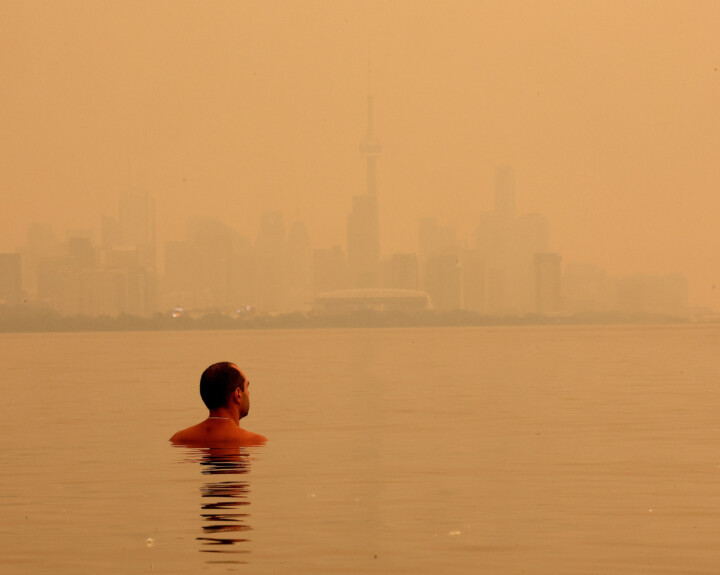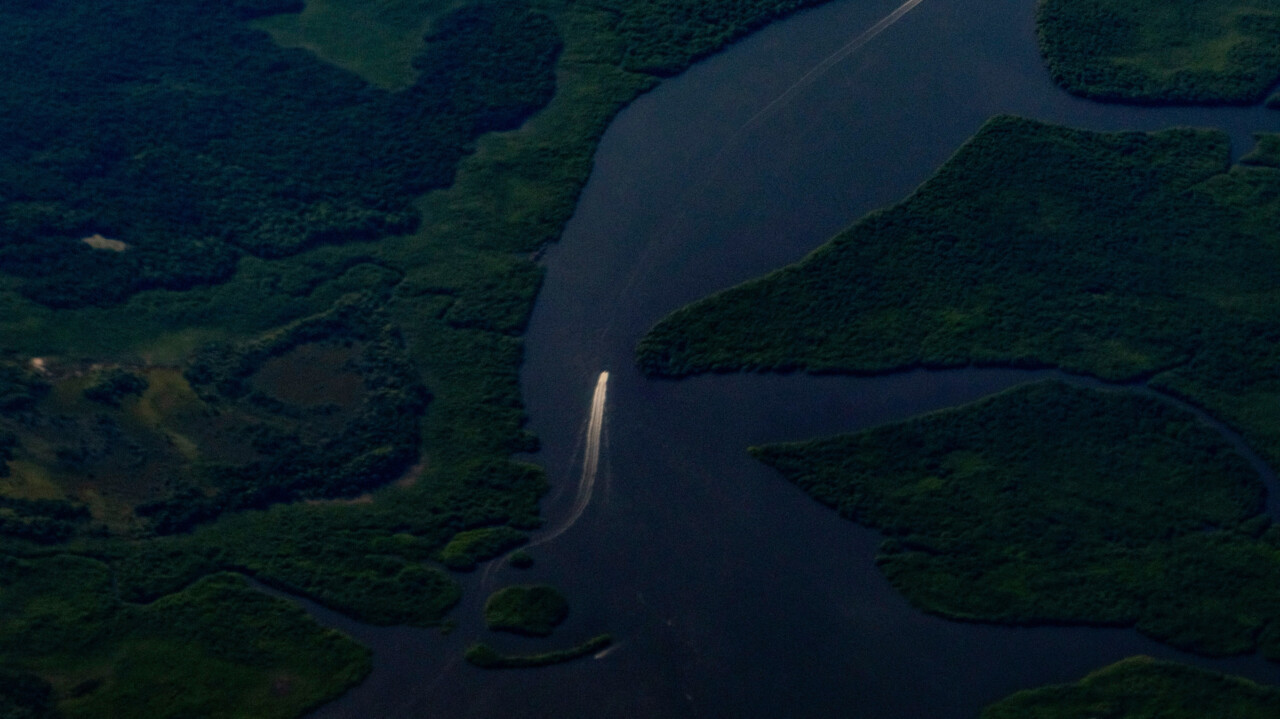
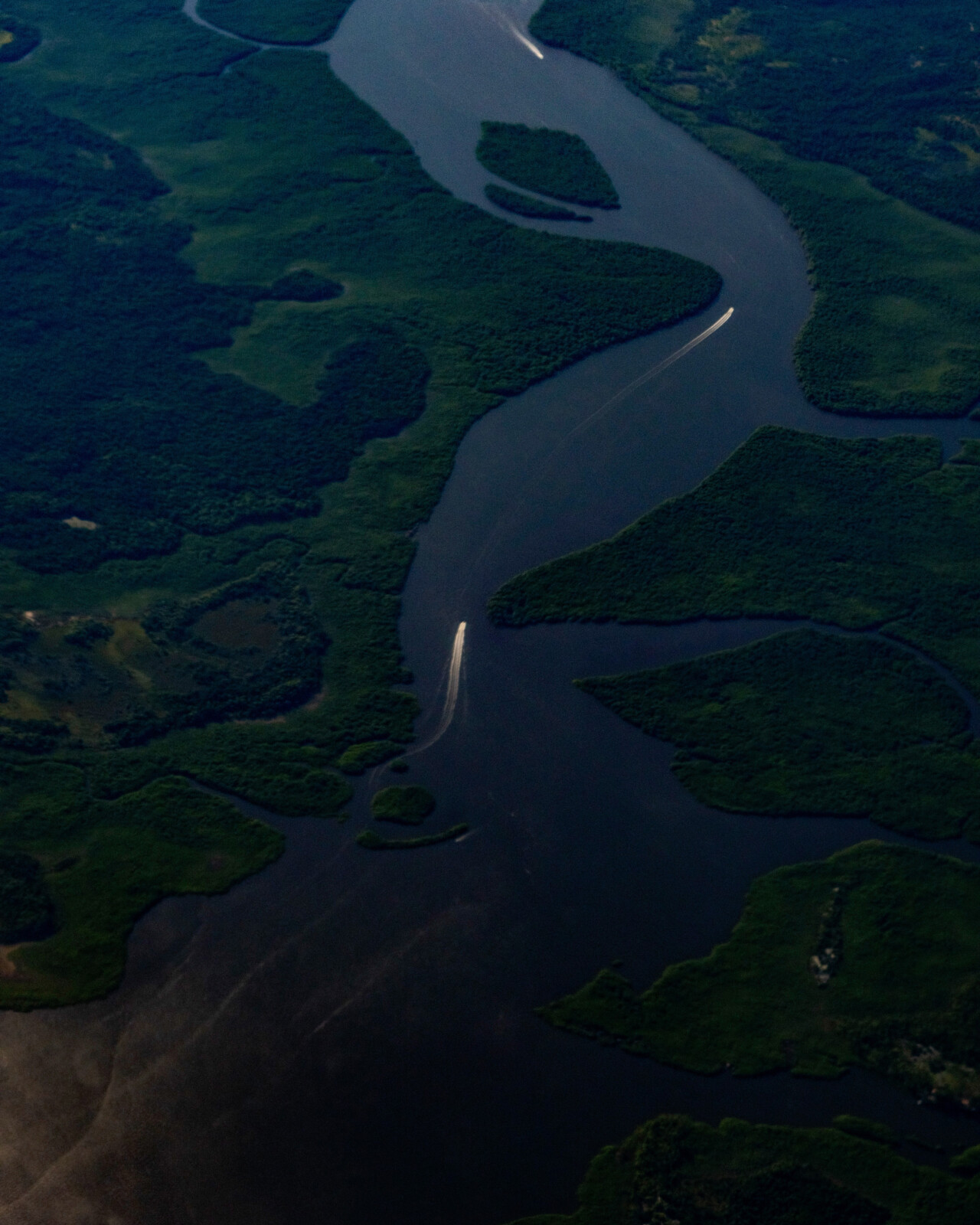
Photograph by Kristin Bethge / Connected Archives
words by miranda green
It’s been a hard summer to bear, whether you’re climate-minded or not.
Between news of historic fires burning across Spain and France, major flooding events in Texas and New York, and extreme heat likely to be exacerbated by a looming El Niño, we are witnessing the impacts of greenhouse gas emissions in real time all across the world. And the reality is more pervasive, more chaotic, and more threatening than some of us could have imagined.
My career is built on writing and talking about climate change. But I’ll admit, there have recently been plenty of instances when I’ve wanted to bury my head in my pillow.
It often hits me during the quietest, most personal moments, like my afternoon walks. As I’ve watched daily temperatures rise from 88 to 89 to 90 degrees Fahrenheit, and felt it with every sweaty step, I’ve found myself thinking: This worries me.
It’s too hot, too soon. Fire season usually hits in the fall, but due to the heat—which turns vegetation into kindling—it’s starting to lengthen here.
This summer is already on track to be the third-hottest ever recorded, behind 2025 and 2024.
So when I read a recent LinkedIn post from Toronto Star climate journalist Marco Chown Oved, who has been covering his country’s historic fires, his despair deeply resonated.
He wrote:
“It’s a rare day I get accused of being a climate defeatist. But with wildfires, it’s hard to come to any other conclusion. I’ve spent the last four years writing about exciting climate solutions and the amazing people putting them into action. I often tell folks this is the most motivating, hopeful beat I’ve ever been on.
But the ship has sailed on forest fires (especially in Canada). No amount of Fire Rangers, helicopters, waterbombers or tree thinning is going to change the simple fact: warmer temperatures means dryer forests means more fires. Net zero tomorrow means the same kind of fires we’ve been seeing for the last few years will continue for the next century. That’s the best case scenario.”
When it feels like we are trapped in one endless loop—with fossil fuel emissions fueling fires that release more carbon dioxide, which fuels more warming and drought, which then leads to more fires—it’s hard to see an off-ramp.
We are taught as humans that we must look forward and be resilient. But what does resilience look like when we might be reaching our climate breaking point?
The global picture is beyond concerning. And it’s hard to feel like climate-mitigation efforts in the United States are anything but a worst-case scenario.
Instead of prioritizing clean energy and leveraging the power of forests and public lands to absorb carbon, reduce heat, and clean the air, the White House is moving in the opposite direction.
The Trump administration recently reduced the size of Bears Ears and Grand Staircase-Escalante national monuments by millions of acres. One of Trump’s arguments was that it wasn’t available for recreation—but that simply isn’t true. As a way to fight fires, the president himself has argued that the solution is logging more trees, an approach whose effectiveness is heavily disputed and that could release more stored carbon. His administration is looking to repeal the “Roadless Rule,” a landmark conservation policy that stopped all road building and logging across 60 million acres of federal forests.
When it comes to what should happen on federal waters and lands, the White House has tipped the scales to benefit fossil fuels. Offshore, we’ve already seen the administration buy out eight wind leases and instead funnel some of those investments to liquid natural gas development in Texas and natural gas-fired power plants across the Midwest.
Last week, the Department of Energy announced that it would spend $100 billion to convert a shuttered uranium enrichment facility in Kentucky into a data center campus powered by gas plants. It’s the third such project announced by the administration to convert Cold War-era facilities into data centers. But it is far from the most contentious use of federal land.
In Nevada, the Interior Department also recently approved plans to build the first-ever data center on federal land. The kicker is that the site was previously permitted for a large, utility-scale solar array.
Resiliency to the Trump administration appears to mean adapting, amassing power, and coming out on top—all while dominating energy and technology, and producing more oil and gas.
While federal efforts in the U.S. to reduce the impacts of climate change have largely shifted to other priorities, there is one global silver lining: nature.
It turns out that the Earth is naturally climate resilient, according to Johan Rockström, director of the Potsdam Institute for Climate Impact Research in Germany.
“Fifty percent of the carbon dioxide from the greenhouse gases we add is not in the atmosphere, trapping heat,” he told NPR. “It’s actually stored, half of it in the ocean and half of it on land. So a healthy planet has this extraordinary biogeophysical capacity to buffer and dampen, basically cool the planet.”
The problem is that our planet, and its natural carbon sinks, are already showing signs of distress. We have not yet reached a tipping point, but alarm bells are going off.
“Forest systems are getting weaker and no longer able to take up as much carbon. The ocean is warming faster than we had expected,” he said. “Ice is melting faster than we had expected. This is a stress response of a planet that is trying to do everything it can to buffer and dampen change.”
The data is stark:
Nature can be healing, but it is also being threatened by industry and humans. Trees store carbon, but that carbon returns to the atmosphere when the trees are cut down or burned. As oceans heat up, their capacity to absorb carbon can also weaken.
But there have been some positive signs. Fires are down significantly in Africa and Asia, thanks to increased fire management and agricultural practices that have led to major reductions in global carbon emissions. This year’s carbon emissions from burning are the lowest since satellites first measured nearly 25 years ago, according to data from Copernicus.
Communities are also recognizing the need to rewild spaces, from replanting forests and restoring estuaries to removing dams to connect rivers.
And according to Rockström, “The window is still open to avoid the most catastrophic outcomes” of climate change. To do that, we have to collectively face the climate reality we are living in and demand action, he said. We cannot continue treating climate change as tomorrow’s problem.
The Earth is fighting to keep us cool. It is absorbing our carbon, storing our heat, and cushioning the damage we continue to inflict on it. It is strained, but it has not given up. Neither can we. Because what is resilience, if not the ability to keep fighting to bounce back, over and over again?
Join our membership community. Support our work, receive a complimentary subscription to Atmos Magazine, and more.
Being Resilient in the Face of Climate Chaos