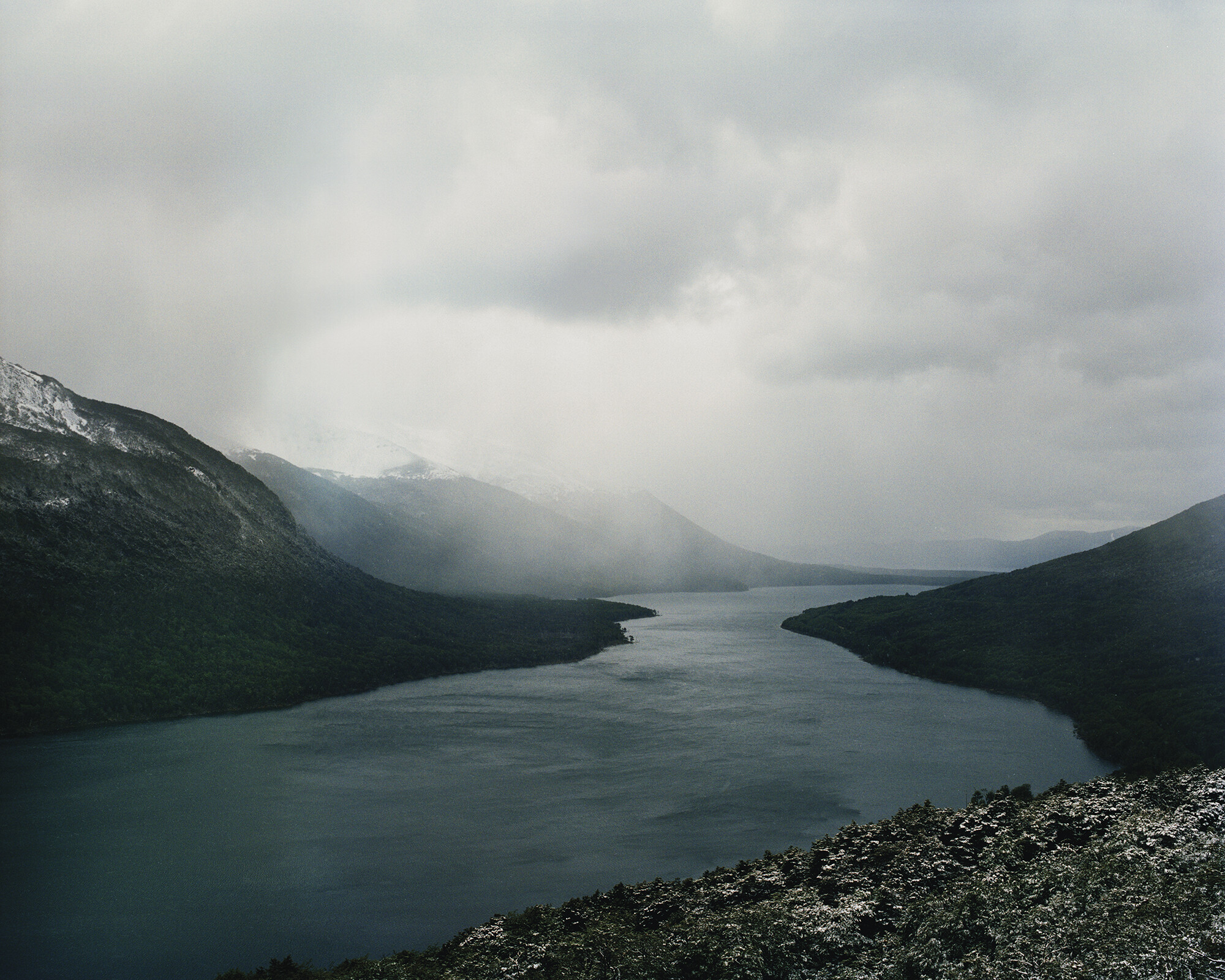
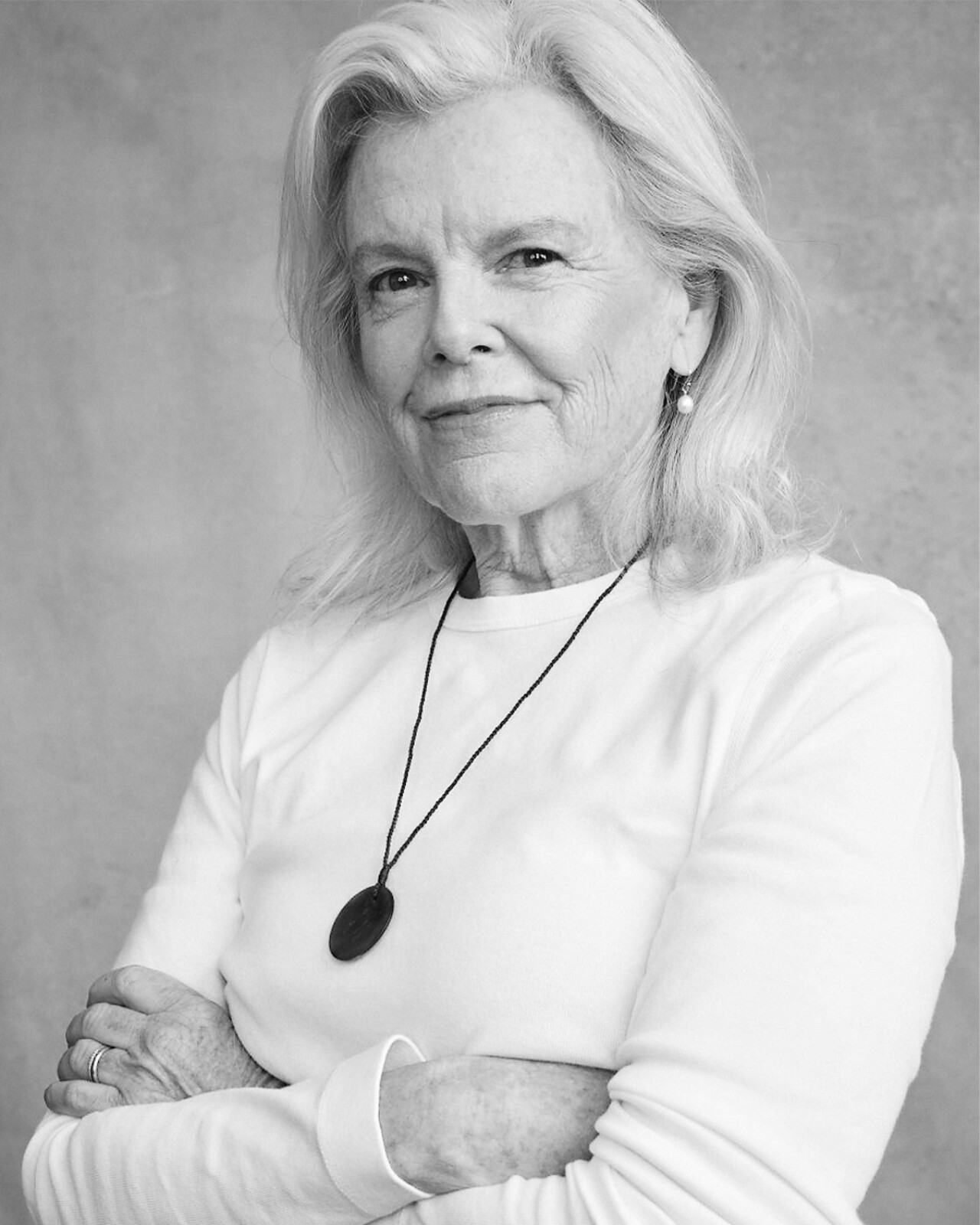
Photograph by Derek Henderson / Trunk Archive
To never miss an episode of The Nature Of, be sure to follow here.
What does it mean to rewild ourselves? This week, Willow speaks with legendary conservationist and former Patagonia CEO Kris Tompkins about her decades of work rewilding and protecting nature—including over 16 million acres of land and over 30 million acres of ocean. In their conversation, they delve into rewilding as a way to stay connected to the living world, even in the face of grief and loss. At the heart of this episode is a simple idea: When we remember that we are part of nature, we discover a deeper sense of purpose and possibility.
The president and co-founder of Tompkins Conservation, Kristine Tompkins is an American conservationist, and former CEO of Patagonia, Inc. For over three decades, she has committed to protecting and restoring key ecosystems and biodiversity by creating national parks, bringing back wildlife, seeding activism and creating economic vitality. Kristine and her late husband, Douglas Tompkins, helped create or expand 16 parklands, protecting over 16 million acres in Chile and Argentina, in addition to three marine protected areas of over 31 million acres, a legacy that continues through now independent Rewilding Argentina and Rewilding Chile. Considered the foremost conservation philanthropists in history, the couple’s story is told in Wild Life by Oscar-winning directors Jimmy Chin and Chai Vasarhelyi.
To address global biodiversity loss and climate change, Kristine advocates for a continental vision for rewilding in South America through the Jaguar Rivers Initiative and the Andean Corridor. Rewilding is bringing back over two dozen species that have gone locally or nationally extinct, including the jaguar, red-and-green macaw, and giant river otter in Northeast Argentina, and Darwin’s rheas and extremely endangered huemul deer in Chile.
Kristine was the first conservationist to be awarded the Carnegie Medal of Philanthropy and served as Patron for Protected Areas for the UN Environment Program from 2018-2022. In 2024, she followed up her 2020 TED Talk, Make the World Wild Again, with over 2 million views, with A Bold Plan to Rewild the Earth—at a Massive Scale, on the TED mainstage in Vancouver.
Kris Tompkins
I think it’s almost impossible to be too audacious in this realm because in conservation and rewilding, you set the bar very high because you know you’re going to lose some of it. But never ever lose sight on what you’re going for.
Narration
The first time I met Kris Tompkins, I knew I was standing in the presence of greatness. She is a conservation hero and a true force of nature. Not only did her and her late husband, Doug, help create the outdoors industry as we know it, but they helped protect over 16 million acres of land in South America and create 16, soon to be 17, national parks. When I’m around Kris and I hear her speak, I feel such a sense of purpose and confidence that together we can accomplish anything. The backbone of everything she does is a belief in the wildness of this world.
Kris
If I have a rod in my spine that directs how I see things, not always how I behave, it is that inherent belief that all life has intrinsic value. It does not need humans to place value upon it. It exists in the absence of us.
Narration
I’m Willow Defebaugh and this is The Nature Of, where we look to the nature of our world for wisdom and ideas that change the way we live. And no one knows the wisdom of wild things like this week’s guest, Kris Tompkins. Together, we talk about how to dream audaciously on behalf of this planet and what it means to rewild ourselves and the world around us.
Willow Defebaugh
Kris, welcome to The Nature Of. Thank you so much for being here.
Kris
Well, I’m so happy to be here. There are a lot of common threads between us, and that’s not so easy to find. So when you do, it’s precious.
Willow
Agreed. I’m going to start out by asking you something I like to ask all of my guests, which is: What is one thing that nature has been teaching you lately?
Kris
How tiny I am in the arc of things, in nature, and it puts everything in its rightful place in terms of importance, in terms of my role in things, because I’m pretty tough on myself. I work like a dog, and I realize that I am just this little bitty cog out there. And that, for some reason, makes me feel perfectly wonderful that I’m so tiny; and the only place to get that is in nature.
Willow
It’s funny you say that. I’m going to Svalbard in a couple of weeks, and I’ve been thinking a lot about my intention for the trip, and the thing that keeps coming up is that I just want to feel small. We don’t have enough of that I think in our world today, is places and things that make us feel small; and nature is so beautifully gifted at that.
Kris
Yeah. And in fact, I think in this age of modernity and technology, you’re encouraged as an individual to feel as large as possible, rather than something that you’re so much a part of something. Every breath you take, every step you make, and you’re going to feel tiny up in the Arctic. You’ll be pleased.
Willow
I can’t wait. And I mean, how much of our suffering comes from this, trying to make ourselves big all the time? It’s exhausting.
Kris
It’s exhausting, and it’s actually counterproductive, and you lose sight of being brothers and sisters, aunts, uncles, grandparents, parents to mice, to every other species out there. Three-thousand-year-old trees, it doesn’t matter. Once you lose that connection, we do so at our peril, which is really counterintuitive for most people. They have to conquer nature to feel safe.
Willow
Yeah. I was really delighted to discover that one common thread between us is deep ecology. I’m curious how you think about that in your own life today and what it means to you.
Kris
First of all, Arne Naess, the father of the intellectual creation of the idea of a deep ecological mind, was a good friend of ours. So I was able to hear him speak about what is the floor of a deep ecological mind. And it really is so simple to me in, my version, is that all life has intrinsic value. It’s so easy to say it, but if you actually believe it, it really throws the brakes on a lot of the way you look at things, the decisions that you make. It really asks a lot of us once you take that on.
Willow
It does.
Kris
But yeah, for me, if I have a rod in my spine that directs how I see things, not always how I behave, it is that inherent belief that all life has intrinsic value. It does not need humans to place value upon it. It exists in the absence of us.
Willow
Beautifully put. Well, I feel that now we have found the floor of this conversation, so I want to get a little bit into your story and what brought you here for any of our listeners who might be learning about you for the first time. So, both you and Doug really helped shape the modern outdoors industry, the way we think about it. Doug, with founding The North Face and Esprit, and you with working at Patagonia for decades and eventually being its CEO: What did that chapter of your life teach you?
Kris
Well, first of all, I was hired by Yvon Chouinard, who was the founder of Patagonia. He is definitely one of the pillars of my own thinking, besides being one of my best friends. Now, 53 years later, we learned a lot together creating Patagonia in the early years; that’s for sure. It was the possibility of creating a company that asked more of itself than simply to design outdoor clothes, sell them, make a profit, and roll it over and over and over again. That we would try to do two things at once with really equal power, which was to build a business, make clothes, but at the same time, recognizing that those clothes create toxins, that you’re putting things back into the system that are bad for nature. So how do you work on these two seemingly disparate goals at the same time?
Never start a company without also trying to mitigate its impacts at the same time.
So that was really kind of a life lesson for me. I was really young. I was 22 when we started Patagonia. So Yvon was an extraordinary entrepreneur, and I was the person who liked to pull things off; to take something that’s difficult, complex, and make it happen. So we were a great partnership, in a way, from the beginning. And of course, learning from Yvon and Malinda Chouinard about what was happening in nature, now this is in the mid ’70s, I didn’t know anything. It was like the most extraordinary launching pad in a young life that anybody could have. And I attribute a lot of what evolved hence to the two of them.
Willow
I’m really struck by the parallel in what you were sharing earlier about, how does one live with a deep ecological mind? There’s an inherent tension that comes with that when you’re living in the world that we live in today. And what you were just sharing about your shaping Patagonia is like, that’s living that tension, is I want to create a modern business, but also be aware of my impact. And I think that there are so many people who can relate to that struggle, who want to give back to the planet, think about starting a business, they run into so many of those same questions and challenges. And I like that you’re underlining that that tension is a good thing, because I think so much of our world today is, how do we get away from discomfort? How do we get away from tension?
Kris
And I feed off of that. I go the other direction.
Willow
So you’ve alluded to you looking for that space, the tension. And have you always been that way? Where do you think that comes from?
Kris
I think I have been a little bit that way most of my life. Our father would die when I was really young. We were living in Venezuela, and so I don’t really remember what he was like, but from what family says and so on, I’m probably a lot like our father. I mean, who would move their family to Venezuela in 1958 because he was in the petroleum business and could see that these big territories were going to open up, things like that. So parenthetically, I would say, probably comes from him. And the influence of Yvon and later Doug. These guys are entrepreneurial; I never saw myself as being entrepreneurial. I’m also a little bit of a hand-ringer. But if somebody else says, “Okay, let’s go over there,” I’ll say, “Yeah, we’re going there, and we’ll all work together, and we’ll get there.” And I think the same thing happened when we decided to start trying to conserve nature. It’s almost exactly the same story.
Willow
Yeah. So I mean, what was the moment? How did you decide to walk away from Patagonia, this entity that you helped shape?
Kris
Oh, it was love. It had nothing to do with the company and the work. I was a young female CEO, which at the time, they didn’t exist. There were two or three others, maybe somewhere. I was good at what I was doing, but I’d been there; I was 40 years old, and I’d already been there 22 years, and I just thought: I need to do something else. And then I met Doug Tompkins, who was still at Esprit in those days, but he was having this internal conflict, which I was not having. He was in the fast fashion business, and here he was this heart-burning, deep ecologist on the inside.
And finally that conflict just became too much, and it just blew up, and he sold his half of the company. And we met not long after that, and that was it. It was like a match to a flame. And I visited Chile with him for—I went down for 10 days, stayed five weeks, came back and told Yvon and Malinda that I was going to retire, not from the company, but from that job; I’d still be on the board and so on. And I moved 6,000 miles to the south from the coast of very intense, extreme south of Chile, and am still working down there today. So it was a great move. No regrets.
Willow
You have described your relationship with Doug as being the strongest bond that two people can have because it was a connection really shaped by a shared love of nature and protecting nature. How did that love for nature shape or fortify your love?
Kris
We were mad about each other, that’s for sure. But I think what solidified this unbreakable bond that we had, and even though he’s been gone for 10 years, still have, is that we were fighting down there in really extreme circumstances. Some of it was fighting, but working down there together in very extreme conditions and so on. That really bonded us because in the early ’90s in a roadless area down on the coast of Chile, we really had to depend on each other. No phones, no nothing, no electricity. And that was the glue, I think, that withstood untold things, whether it was politics or just that we were flying all the time. Doug was a bush pilot in very tough weather, all those things.
Those are the kinds of moments when you have to depend on one another so much more deeply than we have to if we’re sitting in San Francisco or someplace else. I think it either tears you to smithereens or it bonds you for life. And in our case, it set it in stone, happily.
Willow
What was it about that place? Was there a moment where things shifted from just feeling in awe of the wilderness there, to feeling a responsibility to it?
Kris
Well, we went down there to actually go to work. It wasn’t like we moved so far south just to be in wildness. Doug already had his foundation. He was funding things in the United States, had to do with forest conservation, all sorts of things. He wasn’t starting at zero, and at Patagonia, we’d been involved in the environmental movement for a while by then. But Doug bought a piece of property. It was probably 50,000 acres or so. And then shortly thereafter, another property came up for sale: big forests.
And so he bought the second one and pretty soon we started aggregating these territories and we just began to think that, well, maybe we can make national parks out of what we do, give them back to the nation, back to all Chileans, and so on. And that’s how it started. It’s not that we arrived there and really understood how this would unfold. And then it just kept growing, growing, growing. Then we began to look inside the national parks we were donating and what species were missing. And so very early on, we started what’s today called rewilding. So it was an organic beginning, like most things in life.
Willow
Yeah. It was an organic beginning that became what is widely regarded as the largest private philanthropic conservation effort in history. I mean, now Tompkins Conservation has helped create 16 national parks, preserved 16 million acres of land and 30 million acres of ocean. I mean, this organic beginning turned into an audacious political reality that has had real, real impacts. I mean, how do you think about that looking back? Was there ever a moment where you were just like, “Are we really going to be able to do this?” Or were you just like, “Let’s put one foot in front of the other and see what happens?”
Kris
Definitely we were of the one foot in front of the other tribe. It’s a thousand steps, and just trying to make the least number of mistakes that you can, but be determined to work in local communities, aggregate the land; working with the political class, whatever decade it is, and work like mad. If jaguars are missing, if—who’s missing, and to bring them back, which is definitely the most complex work. Buying the land is a function of a pen and a piece of paper and a transfer of assets. So technically that’s the easiest thing to do. And then once you own it, in that millisecond, things become complicated because how are you going to create territories that local communities can feel that their territories are being protected and that there’s an economic driver that comes out of that? The minute you pull the trigger on territory, local communities have to be almost the second millisecond after that. They have to be front and center because they really are the geniuses of the place.
We work in a lot of territories that are quite isolated, so they’re physically and emotionally difficult to be in sometimes. And a lot of the communities have struggled over time by the time you get there and they’re unsure, they’re distrustful of you. How could somebody come tell us that this is to our benefit? So far, we’re about to put our 17th national park up into creation in October of this year, and many other marine park designations, but it’s chipping away at things. It really takes a tremendous number of people. Not all of them are team members, but local communities, politicians, scientists. See, I’ve never made a quilt, but it could be something like that. All these disparate pieces, and our job is to just keep sewing them all together. And so each entity can do their best work, and with an outcome that has a dignified element to it for communities, and species are back, and so on.
Willow
And something about weaving is it requires tension.
Kris
That’s right. I’m going to remember that. I never thought about it that way.
Willow
I mean, you’ve alluded to this not being for the faint of heart. I mean, you and Doug faced all kinds of threats and turmoil. I mean, was there a moment where it became genuinely frightening?
Kris
Oh, yes. In the early ’90s, it was genuinely threatening and genuinely unnerving. More for me, I think Doug felt more at ease with the—I’m going to call it tension. It was way past tension. And this was in the early years in Chile, and the government was very unhappy with the idea that someone was buying private territories and not converting them to production. Nothing would’ve happened if we had bought up these few hundred thousand acres of pristine temperate rainforest. If we just started cutting it, no one would care. Foreigners are all over the place, involved in extractive production and so on. It was that we “did nothing” with those forests that made people very suspicious and worried. And all sorts of things were said about us: that we were going to create a new Jewish state, even though we were both based as Anglicans; creating military bases for Argentina so they could come in and finish Chile off once and for all; all sorts of things.
And in the absence of understanding something, we think the worst. Our imaginations go straight out to the limit of, what could this possibly be? And it was, yeah, there were death threats, all sorts of things for about five years. Twenty-eight years later, I look back at that period, and I see it differently. I think, what was our contribution to that distrust in those days? We thought we were being very open with local communities, with the national government, but of course there would be suspicion. And I think if we were guilty of something, we were so naive to think that this would just be accepted like, “Oh, these people want to make national parks. This is great. Amazing.” No, it wasn’t like that. So I think it had to happen. I think we definitely learned a lot from it. They were important lessons. In some ways, it was very good that it happened to us because it really forced us very clearly to understand and grow up.
Willow
What advice do you have for people who are trying to dream audaciously in their own contributions to protecting nature?
Kris
I think it’s almost impossible to be too audacious in this realm because in conservation and rewilding, you set the bar very high, regardless of what the project is, because you know you’re going to lose some of it. You’re not going to get everything that you wanted, not at first anyway. And so I think people have to really think about what is the big picture, what would you really hope for for this region or these communities, whatever it is, and then break it down into bites that you can actually eat, that the communities and the government and so on can absorb. But never ever lose sight on what you’re going for.
I have a feeling sometimes, Willow, that we’ve been sleepwalking for especially the last 30 to 40 years, and now we’re waking up to the fact that the earth is burning, the species lost is so great, it’s really hard to wrap our heads around it. And now, all of a sudden, our stupor—the way I look at it—is a kind of abdication of our responsibility for nature. So we’re like bears coming out of wintertime that are shaking ourselves off. I go, “Whoa, we have to take this seriously now. What am I doing? And if I’m not doing something, who am I going to ask?”
Willow
Your metaphor of the sleepwalking just really resonates with me. I talk about it a lot through the language of dissociation. I just think we’re so ecologically dissociated and dissociated from ourselves. And the opposite of that dissociation is rewilding, not just rewilding the world around us, but rewilding ourselves and our place in it. That’s the waking up. That is the saying that I want to be awake and fully aware of what is happening, even when I know that will come with grief.
Because I think what’s truly so painful is that there is this cause for massive despair, but then also what our culture has done is created a whole menu of all the ways you can opt out from having to feel it or think about it. And that’s why entertainment has just become so huge, as there’s just so many ways for people to check out. And so I think about, how do we just keep people present? It’s just a very first step. It’s like, can you be present? Can you not run from it? And the feeling that you have of the connection, let that be the thing that pulls you to roll up your sleeve.
Kris
The number one question is, what can I do? And now I say to people, just tell me what you’re good at. Take that one good thing you’re really good at, and I promise you that wherever you are, somebody needs that. You donate your time and go give them that toward the things that you love. Just start there. If it’s half an hour a day, I don’t care if you’re 7, you’re 12, you’re 60, you’re 80, that’s what’s necessary. Who am I if I am not participating in the protection of my own Home with a big H? If Doug were sitting here this morning, he would say that in all the extraordinary life he had with Esprit and the North Face and a climber, kayaker, ski racer, all those things, he found the last third of his life working in conservation was the happiest time in his life.
Because that’s another thing. I think often people like us who work in this area are considered like we’re sacrificing ourselves in some way to be working on the side of nature and human health and so on, when it’s the exact opposite. I mean, it gives you so much. It’s like a gas. It’s like the opportunity of 50 lifetimes. That’s the other thing. I think people feel like it’s, “Oh God, it’s carrying a sack of potatoes across one field into the next field and the next field.” No, it’s not like that. It’s fun. It’s full of headaches, but all life is full of headaches, so what?
Willow
It’s really, I think it’s putting the sack down. It’s like putting down the sack of feeling like you have to pretend, or there is something that is just so freeing about finding other people who care about what you care about, which is what we should all care about. And also, yeah, to your point, it’s like every day I meet people who are doing incredible, inspiring work.
Kris
Yeah, they are.
Willow
I think I felt so much more despair outside of doing this work because then I was feeling truly helpless. And it’s not to say that there are not days where it is really hard to get out of bed. We know that, but the work itself is not what makes me feel that way.
Kris
No, not at all. And the people you get to work with, you’re now a part of something that is so big and won’t break your back if you get involved. You get involved to the extent that your daily life allows you to, but you’re in, and you’re working on something that is going in a beautiful direction with billions of people doing the same thing, pulling on the same war.
Willow
That’s beautiful. And I mean, it comes back to that idea of being small, becoming small, right?
Kris
Yeah.
Willow
I think when we become small, also maybe our grief becomes or looks a little smaller, or it’s maybe put into perspective, even if it never goes away.
Kris
Yeah. Well, I’ve learned a lot about grief and through grief, and that may be the greatest gift I’ve had in my life, is more instinct than intelligence to just sink into it, not try to put a lid on it, stash it to the side, but really ask grief to come on in and settle down for a while and go through that. That’s been probably the largest teacher in my life.
Willow
There’s such a wildness about grief that I think we try so hard to contain.
Kris
Yeah. When our father died, our family, shoulder to the grindstone, it happened, and so let’s just pick up, keep going. Didn’t really talk about him much anymore, and that’s a very Anglo way of dealing with grief. And I’ve taken another tact on that myself in my life as an adult.
Willow
Did you feel like you just knew that you needed to grieve Doug differently than you grieved your father?
Kris
Yeah, that definitely was the moment in my life when, I think I had no choice. I dove headlong into an inkwell that was so dark that I had to learn to swim in it. And I take a few strokes, and then I realized, “Oh, wait a second, I’m not going to drown in here, but I’m not ready to crawl out of the inkwell either.” And I think that taught me an enormous, deep intelligence and heart, lungs, that I would never have accessed before or in the absence of that. I just have, over the years, really understood not to walk away from grief because there lies, for me, the most profound lessons in my life, bar none. Yeah.
Willow
It seems to me that rewilding is in so many ways an antidote to grief. So let’s talk about that aspect of your work with Tompkins Conservation. Maybe let’s talk about the jaguars in specific because that was a pretty audacious and unprecedented case.
Kris
It took us 12 years of work before we released our first female jaguar with two cubs. That’s how long it took. The infrastructure for it and, oh my God, it was something. And today we have over 50 individuals who are roaming the 2 million acres. They’re very, very, very much back and they’re migrating. They’re dispersing into areas that won’t necessarily protect them. So a year and a half ago, we decided both in Chile and Argentina to commit ourselves to moving out strategically into a continental vision of conservation rather than just in Chile and Argentina.
Willow
Can you tell us about the 17th park?
Kris
Oh yes, very happily. It’s down on the Strait of Magellan at the tip, literally the southernmost tip of the South American continent called Cape Froward. It’s really wild coastline, very rough seas, tremendous biodiversity in the oceans down there. Forest, peat bogs, the most rugged coastline you can imagine. A lot of Indigenous history down there. It’s really extraordinary. Yeah. Rewilding Chile is on its way, created with the current government in Chile. So yes, I’m very enthusiastic.
Willow
Incredible.
Kris
I’ll be down there in October, November, and we hope to see it solidified then.
Willow
Amazing. You have said that you never wanted to live in the middle, always at some extreme. What do you feel like that way of life has given you?
Kris
Oh, I think seeking difficulty or challenges, especially ones that have no current answers, led me to get to know myself, maybe my true self, what breaks my heart, what am I actually really good at, and what am I lousy at, and face those things as well. I love that feeling of going for broke, which is a really wonderful part of getting old because when you get to your 70s, you really are free. You’re free, completely free because you have no fear. If I die this afternoon, I’ll have had the lives, and I say plural, intentionally, the lives of just the most extraordinary experiences and love and pain and all those things, like every country song on the planet. I have hit the jackpot over and over and over again. And I think the only way you can feel that way is if you have put enough on the table at risk.
Willow
OK, last question, Kris.
Kris
Yes, ma’am.
Willow
What does it mean to be wild?
Kris
I think it means that for some blessed reason, people like you, people like me, and many people we know never unplugged from our kin. And if you’re so lucky that you’re still connected up to your entire family, then you end up speaking hundreds of thousands of languages, and you feel pain in 500,000 ways, and all of that is language. All of that is recognition. That’s why I say, being a rewilder is painful, and it’s because we’re a family we recognize all beings as part of our family. I can cry over having saved a bumblebee or a little bird in the house because that’s me. Somebody did that for me. Maybe our parents when we were little, something. Somebody put a glass over my head, stuck a paper under my bum, and ran me outside and allowed me to be free.
Somehow I got the lucky strike to know that I speak all these languages and it’s never over. I’m still, I’m about to go back to South America before too long; I’m going to meet new parts of myself. I’m going to learn many more new languages, tiny little languages. We were in Nepal in March, involved in the snow leopard work in Western Nepal. God, Willow, with people you can’t imagine whom we were with, young women who are from the small Himalayan villages, 20 family villages. And there they are, working to save snow leopards. And that’s just another human language. So I think I’m on the right ship, and I think that we’re all pulling on the best oars we have for the moment, and that’s the best we can do.
Willow
I’m very grateful to be rowing alongside you.
Kris
Boy, amen. I with you. So that’s what it takes. That’s all it takes.
Willow
Thank you so much for your time and your wisdom and everything that you’re doing for the living world, Kris.
Kris
Well, there are a lot of people out there like us doing the same thing. So thank you, Willow. With my whole heart, thank you.
Narration
I want to circle back and underline what Kris was sharing about the beauty of feeling small. It is so true that modern life is constantly asking us to amplify ourselves, but the issue with making ourselves bigger is it also makes all of our problems bigger. It’s like placing a magnifying lens over everything that is wrong with our lives, and there is nothing more healing or humbling than spending time in nature. So as you walk away from this week’s episode, I encourage you to pick a moment in your week, do something that lets you feel that sense of being small and part of something so much bigger and see what happens.
The Nature Of is an Atmos podcast produced by Jesse Baker and Eric Nuzum of Magnificent Noise. Our production staff includes Emmanuel Hapsis and Sabrina Farhi. Our sound designer is Kristen Mueller. Our executive producers are me, Willow Defebaugh, Theresa Perez, Jake Sargent, and Eric Nuzum. Atmos is a nonprofit that seeks to re-enchant people with our shared humanity and the earth through creative storytelling. To support our work or this podcast, see our show notes or visit atmos.earth/biome. That’s A-T-M-O-S.earth/B-I-O-M-E. I’m your host, Willow Defebaugh, and this is The Nature Of.
Join our membership community. Support our work, receive a complimentary subscription to Atmos Magazine, and more.
How To Live a Life Without Regret With Kris Tompkins