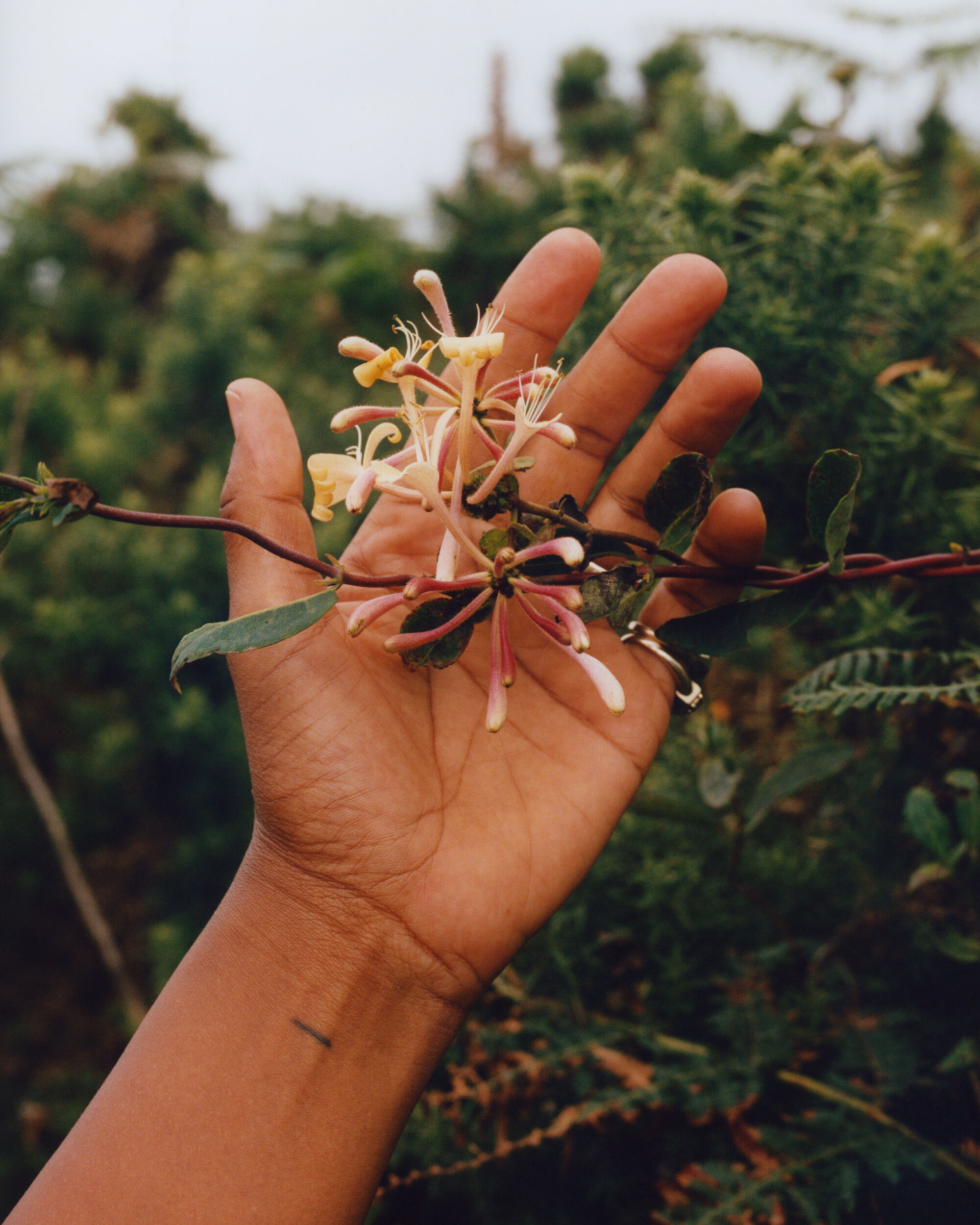

Photograph by Christian Cassiel
To never miss an episode of The Nature Of, be sure to follow here.
What if conflict is not something to be avoided, but something that can help us grow? This week, Willow sits down with author and conflict resolution expert Priya Parker to explore what she calls “healthy heat” and how tension can help relationships and communities thrive. Drawing on her new book, The Art of Fighting, Priya reflects on why some fights are worth having, how to tell when to engage with conflict, and what nature can teach us about the generative power of tension.
Priya Parker is a facilitator, strategic advisor, and acclaimed author of The Art of Gathering: How We Meet and Why It Matters. Her new book The Art of Fighting: The Transforming Power of Conflict is out this September and available for order now. Trained in the field of conflict resolution, she is sought after by Fortune 500 companies, nonprofits, universities, civic organizations, and various groups around the world to resolve issues and come together more intentionally. She studied organizational design at MIT, public policy at the Harvard Kennedy School, and political and social thought at the University of Virginia. She is the host of the popular Substack GROUP LIFE, where she teaches regularly.
Priya Parker
We don’t fight about the things we don’t care about, and we don’t fight with people we don’t care about.
Narration
I have always struggled with conflict, which is why I was so looking forward to speaking with this week’s guest, Priya Parker. As a conflict resolution specialist, she just released a new book called The Art of Fighting, which is all about learning to handle conflict well. As Priya talks about, conflict is not necessarily a sign of dysfunction. It can actually be a symptom of a functioning relationship or group dynamic, and it happens constantly in nature as well.
Priya
Think of a forest of giant sequoias, the largest trees in the world. The species can live for 3,000 years, but it cannot reproduce without fire. Just as there are seeds that require fire to germinate, groups often require some amount of heat to come back into a sense of relevance and purpose.
Narration
I’m Willow Defebaugh, and this is The Nature Of, where we look to the nature of our world for wisdom and ideas that change the way we live. This week, I’m sitting down with Priya Parker to talk about her new book, The Art of Fighting, how we can all practice getting better in conflict, and holding what Priya calls healthy heat.
Willow Defebaugh
Priya, welcome to The Nature Of. It’s so nice to have you here.
Priya
Thank you for having me.
Willow
I’m so excited to dig into your book. Your first book was on The Art of Gathering and your newest book is on The Art of Fighting. Why do these two subjects go hand in hand?
Priya
Because they are both about human connection. We are pretty terrible at conflict. When conflict arises, we tend to take kind of one of two stances. We either avoid and duck and hope it’ll pass, or we escalate and burn the house down. And yet so much of human relevance and connection and conversations that need to happen are actually in the in-between place, which is what I call healthy heat.
The Art of Gathering: Underneath, it’s a book about group dynamics, and there’s a lot of heat in The Art of Gathering. There’s a lot of heat around, have a specific disputable purpose. Not everybody is going to agree with your purpose. That means you’re actually saying something. Not everybody should be invited. That means you actually have a vision. How do you practice generous exclusion? How do you practice generous controversy?
And people would often say, “Why are you so interested in gatherings if you’re a conflict resolution facilitator?” And I would say, “There is so much conflict in gatherings, particularly in the planning of them.” And so I wanted to write a book that, like The Art of Gathering, demystifies another critical part of GROUP LIFE, which is, how do we fight with those we want to belong to?
Willow
And you also point out that fighting is actually not a sign of dysfunction. It’s a sign of a functional relationship. Can you expand on that?
Priya
There are many ways of fighting, and you can have what I call unhealthy heat. So I’m not talking about manipulation or abuse or insults or dominance. But we don’t fight about the things we don’t care about, and we don’t fight with people we don’t care about. And I’m not talking about screaming at strangers on the internet. I’m really talking about, how do we have relevant conversations that scare us with the people that we want to live life with? And at some level, conflict is the first sign that something potentially might need to change in a group or in a relationship. And when we assume that all conflict is dysfunctional, we’re actually, it’s almost like we’re tying our hands behind our backs. We’re leaving ourselves with a lack of capacity to actually look at our most important conversations.
And you may have been raised like this, I certainly was, I’m conflict-averse. I’m a conflict-averse conflict resolution facilitator. When my parents divorced, everyone was shocked because they never fought, and so I learned from an early age that there’s loss and avoidance. And I was raised, as were both of my parents, though they come from different cultures, with the sense that I think many people have, that conflict is dysfunctional and it’s all bad and “good people don’t fight.” And that is not actually looking at what conflict actually is, in terms of as an engine of change. And if we think it’s immoral or dysfunctional, then why would we get good at it? Why would we build skills around it? Why would we have rituals around it? Why would we have ways to hold? It is dangerous, but it’s also relevant.
Willow
Right. Well, and also, if you look at nature, evolution is driven by tension, both by cooperation, but also by conflict, right?
Priya
Yes, yes.
Willow
And evolution is the most productive creative force on this planet. So in a very literal way, we probably wouldn’t be here as a species, as people, without that tension.
Priya
Absolutely. When I was writing The Art of Fighting, I started writing in 2020, and whenever I’m working on a book, I talk about it—I think as we all do our work—with different friends. And as I was telling, it was actually a friend’s parent about what I was pursuing in this book, she’s a biologist, and I was explaining to her how we have an almost distorted view of conflict, and I used the phrase healthy heat and she said, “Oh, well, that’s absolutely true in forestry.”
And she said, “Think of a forest of giant sequoias, the largest trees in the world. The species can live for 3,000 years, but it cannot reproduce without fire. Fire clears space on the forest floor. It lets in light and water for new seedlings to take hold and grow.” And then she explained the whole ecosystem. “It clears away leaves that have built up on the ground so seeds can root into the bare, mineral-rich soil, and then the heat even opens older cones, releasing fresh seeds.”
And we were sort of talking across fields, so to speak, and I realized just as there are seeds that require fire to germinate, groups often require some amount of heat to come back into a sense of relevance and purpose.
Willow
And it’s actually such a brilliant analogy because people and cultures, particularly Native cultures in the U.S., have been practicing prescribed burns for so long, which actually help the forest be more resilient in terms of wildfires creating a massive storm by actually having these little fires along the way. And I feel like there’s a really perfect parallel there, too, because you talk about not letting conflict become a huge wildfire necessarily, by taking certain intermediary steps. Can you talk a little bit about that?
Priya
Oh, I love this analogy. Yes. I’m a facilitator, so I’m often brought in once people have tried everything else.
Willow
Love it.
Priya
And so by the time a facilitator like me is called into a team or a group or a political movement, whatever it is, someone has articulated that there’s a need and that they don’t necessarily have the skills to address it, which is actually incredibly helpful. Half the time we’re not even admitting we have a problem.
So when I come in and I work with teams or groups, one of the things that I realize I have to do is we don’t know how to have small fights, and yet we’re expected to have big fights. And so one of the things I do with teams, we practice having small fights. There’s a restaurateur that I interviewed for The Art of Fighting. I looked actually at restaurants as places with a lot of micro conflicts, and looking at the restaurants and the restaurant owners who have more of a generative mindset and build in regular skills within their staff to regularly repair with each other.
And Gabriel Stulman is an owner of a restaurant in Brooklyn called Sailor, and he said to me, “Well, I always say, ‘Sure, don’t make a mountain out of a molehill, but keep molehills molehills.'” And I said, “What do you mean?” We were at the staff training. And he said, “Well, often if somebody brings something up that’s bothering them, a way to shut it down is to say, ‘Come on, man, don’t make a mountain out of a molehill,'” meaning don’t say anything at all. But part of what Gabriel was saying is, “Don’t make a big deal out of it, but make a small deal out of it.”
And so whether it’s someone speaking harshly to a staff, to a colleague, as we are all prone to do in tense moments, to come back and say, I mean, ideally to catch it, “Hey, I’m sorry. I was really stressed out. I shouldn’t have spoken to you like that,” or the more scary on the opposite: “Hey, do you have a minute? I really love working together, and when you use that tone with me, it makes me actually more stressed out and less effective.”
And all of that to say is when we actually help people talk about the things that bothered them in tiny ways, it actually builds the capacity and the practice to start talking about the bigger stuff. And right now we’re all kind of like lambs learning to walk. If we don’t have the cultural permission, the skills, or the normalcy to molehill-clear regularly, how the heck are we going to be able to have the conversations about the most important, crucial decisions in our teams or groups or families or workplaces? These are muscles to build.
Willow
Yeah. Something I think that we’re circling around a little bit is what you label the idea of unhealthy peace, that sometimes peace is not always the healthiest choice. When is that the case?
Priya
Unhealthy peace, when I see it in teams or in multi-generational families, it’s when people basically hold their tongue, not out of wisdom or discernment, but out of fear. And the problem with unhealthy peace is, if it lasts too long, people will just leave. It still dissipates the group. They just exit.
And so over time, I mean, I mentioned this earlier, my parents are divorced. One of the things that, in part because of their cultural training, was they were so afraid of conflict that would burn the house down, they ended up losing their spark.
Willow
There’s a mic drop. So how do we know which fights are worth having?
Priya
In The Art of Fighting, I designed the book—I structured the book based on the life cycle that I see a group go through a fight, or a community go through a fight. But it can also be friends one-on-one, but I’m really interested in the life of the group. And so the first part is called “Tear,” the second is called “Grapple,” and the third is called “Cleave,” which is a contranym, which means both to cut or to bind.
In the entire book, there’s only one chapter that’s actually the facing. Everything else is preparing for it and coming out of it. And, in the first third of the book, the entire section is focused on building and growing our own intelligence and discernment as to what type of fight is this? Why am I feeling this way? And then, importantly, not to just dive in.
And so chapter three of The Art of Fighting is literally called “To Face or Not to Face.” I have a Substack called GROUP LIFE, where I write about the different tools and skills, whether it’s gathering or fighting. And I actually just had an article that went out today, a newsletter that went out today, that named the: How do you decide whether to face or not face?
So here’s some questions to ask yourself to help decide whether to face the conflict or not. Can I continue to engage meaningfully without facing? Do I care enough about this group or relationship to take this on? Do I still have longing for this group? Is this conflict touching on a core value of mine? Does the group need to reflect those values for me to be a part of it? Knowing conflict arises in every group, are these the people I want to be in a mess with? We tend to think like, “Well, I don’t need this. I’ll go elsewhere,” then the same thing happens somewhere else. So at some level, it’s like you can’t just keep exiting groups. We’re just going to end up incredibly lonely.
Is the conflict making the group worse? How might not facing the conflict hurt the group? Do I think that by saying something, I could alter the situation? Will I regret not trying? And counterintuitively, do I want to be closer to this person?
Willow
I want to highlight one of those in particular around, do I care enough to have this fight? Because I think that’s very revealing that sometimes, when we are willing to fight with someone, there is kind of a subtext there that says, “I care enough,” right?
Priya
Yes, yes.
Willow
And that is something I remind myself often when my brain just wants to go into the place of, “Oh, this is bad. I need to run away from this.” It’s actually, it’s a sign, right?
Priya
It is.
Willow
That there’s mutual buy-in.
Priya
And on both sides, because one of the books that really affected me as I was writing The Art of Fighting, is Danya Ruttenberg’s On Repentance and Repair. And one of the things, she’s a rabbi, Rabbi Ruttenberg says is, “We all cause harm, we all experience harm, and we all witness harm.” There’s a way that we can read The Art of Fighting and it’s natural. I do it, too. It’s like, “OK, how do I say the thing to the friend who hurt me?” But actually, we are also the friends who hurt people.
And so there’s two sides of this. And the first is, to your point, thinking of this as an investment. If you are coming to someone, and you’ve decided to speak up or say something to them, to start that conversation by saying some version of, “I’m telling you this because I care about you,” or, “I love our friendship and there’s something right now that is blocking the type of connection I love having with you.” It’s first starting by honoring the relationship.
And on the flip side, if you are on the receiving end of the complaint, take a deep breath. I still get defensive. I still want to defend myself: “I’m a good person. I didn’t mean to do this. You’re reading this wrong,” but I bite my tongue. And if I can, and if I have the wherewithal, take a deep breath, and I’ll say some version of, and here’s what you can also practice saying, “Thank you for trusting me enough to tell me. Thank you for caring enough about this relationship to bring this to me. And I totally disagree.” You know?
Willow
Beautiful though. I love that framing.
In terms of talking about how we actually fight better, I love the piece that you bring in around banter because I think that this is such a helpful tool. This is like my mother, if she is listening, she knows, she has given me this advice. She was one of the first women lawyers in Michigan growing up where I grew up.
Priya
Wow.
Willow
And she was constantly in very tense situations. And she has reminded me many times in my career, in my adult life, bringing some banter into a situation—
Priya
Really?
Willow
—can really help diffuse things. I just was wondering, if you could expand on that for people listening who might not be familiar with that idea.
Priya
One of the biggest things I learned through the research of this book is that to get better at fighting, it’s not to become even more brittle or even more calcified when we’re in conflict, but to actually add warmth to heat. Warmth meaning banter, humor, even joy, which is ironic because, as my mother says, “It’s really hard to be funny when you’re mad.”
But part of what I looked at was, where are teams that can handle healthy heat? And it’s often where they also really enjoy each other. It’s where there’s relationships that are thick and deep. It’s where they’re also having fun. It’s where they’re also doing a lot of other stuff and it’s not just a fight after fight after fight after fight. And banter is one of many tools I look at in the book that actually is a form of pro-social conflict. I think of banter as conflict plus humor.
And so I work with teams to host what I call hot take parties where, and I was inspired by a manager who did this named Melissa, and the idea is relatively simple. It’s basically, a hot take is a strongly held unpopular opinion about something totally inconsequential, something that doesn’t matter. So, “Thursday is the best day of the week,” or, “there should only be one type of pasta,” or, “11 a.m. is absolutely the right time for lunch.”
And this manager, Melissa, she wanted to bond her team, but she also realized that they were kind of conflict-averse. And so for her end-of-the-year party, she hosted a hot takes party and everyone was invited to bring a two-minute PowerPoint presentation presenting their hot take to the team. And within minutes, people were laughing, but also being like scrunching up their nose like, “Ugh, pineapple on pizza? That’s disgusting,” or like, “What do you mean tuna melts are the perfect breakfast food?” And it’s this backdoor way into actually arguing with one another, but with humor and joy and something that is so low-stakes that you can laugh about it. And what we’ve seen is low-stakes arguing prepares us for high-stakes arguing. If it’s people who you spend a lot of time laughing with and having a great time with, it builds the resilience in the body of the group.
Willow
Excuse me while I text my group chat and organize a hot take party. It sounds very helpful. I love it.
OK. I want to ask a question that I have to imagine is probably on many people’s minds who are listening. What is the role of compromise in all of this, in fighting, knowing when to compromise, when not to?
Priya
I mean, compromise is a fundamental part of every human relationship. One of the books I read for The Art of Fighting that I love is called Siblings Without Rivalry. It’s by two writers, and they are psychologists, and they also run workshops with families who suffer from really intense sibling rivalry. And on the first day of the workshop, they say, “Your job is not to make your children best friends.” And most people breathe a sigh of relief, and they’re like, “It’s not?” And they say something like, “No, your job is to teach them how to build a bridge to the islands of each other’s separate identities so that also in years later when you’re gone, they still always know there’s many paths and roads to each other.”
Willow
That is pretty good.
Priya
It’s beautiful.
Willow
Beautiful.
Priya
And so fighting doesn’t mean you’re always right, not at all. If anything, one of the most important skills in The Art of Fighting is knowing how to speak a clean apology, knowing how to take accountability, knowing how to, what I call, let the arrow pierce. Even within conflict resolution, we’re not coming together necessarily to always make people closer. Sometimes we’re coming together to help them get to the right distance from each other so that they can be in relationship. A relationship covers all sorts of different things. Sometimes people are too close, and actually what they need is a little bit of loosening.
Willow
Yeah. And this really does all come down to relationship. And I want to highlight a word or a phrase that you used earlier, relational longing. And I thought that this was a really poignant part of the book, is assessing, do I still have relational longing? Can you speak a little bit to this?
Priya
I spend time with three different types of people for my research. One are people who are experiencing conflict themselves, friend groups, Taiko drumming circles, football teams. The second is people who are experts at holding conflict, so facilitators, trainers, lawyers. And the third is people who study conflict: researchers and professors.
And Sethu Nair falls in the second bucket. She’s a conflict resolution facilitator, very skilled, very seasoned. And in the book, I write about a very complicated group fight, group dynamic that came out. It was a flag war that erupted in the summer of 2020 in a local government agency between some staff that were putting up Black Lives Matter flags on their desks, and some staff that were putting up Blue Lives Matters on their desks. So Sethu Nair was brought in. One of the things I asked her is, “If people aren’t as seasoned as a facilitator as you, what advice would you give them? What do you do when you’re going into such a tense situation like that?” And she said, “I always see if I can find the relational longing because if you can tap into the relational longing, no matter what is happening on the surface, there’s still an avenue of possibility.” And I define relational longing as the residual desire to still be connected or belong, even if you’re mad.
And so this is why, again, the core of the book is, how do you fight with the people you want to belong to? It’s not about screaming at strangers on the internet. In part, because again, when I’m called in as a facilitator, that means two things are true: One, people have at least articulated that there is a need; and two, there’s some amount of desire to work it out.
Willow
Yeah. OK. So this is the moment where I’m going to zoom us out a little bit. We are obviously living in a time in this country of immense political, cultural conflict. And I know that The Art of Fighting is not about screaming at strangers on the internet, which is where so much of this conflict is playing out. But how do you see your work applying to this moment for this country? I mean, have we lost our relational longing? Is that what we need to work on finding?
Priya
I think that one of the opportunities of modern life is that we get to choose the groups we get to belong to, and most of us belong to multiple groups. And I hope they’re not all groups in which everyone has your exact same political belief, or everyone has the exact same class, or everyone has the exact same race, that we get to be part of groups—or we have to be part of groups—at work, in our religious institutions, in which there are some people, for whatever reason, we need to get along with.
And part of what I’m arguing, is that we are not going to solve this by theoretically talking about it. We’re going to solve this by actually being in relationship and in proximity with people who, if they are different from us, we still care for them. It’s almost like it’s a backdoor in. Where are the people in my life that I have some amount of difference, but I just like them, I just care about them? And it’s just funny we have this connection or this banter. We’re totally different. And I think democracies are built on those cross-cutting ties.
And so I’m not sort of backing out of the large questions. I’m actually saying we get into the large questions by getting into our specific, lived realities in community, in conversation with the skills of the people around us, and particularly practicing how to build those bridges across difference, even if that difference is with your sibling, particularly if that difference is with your sibling.
Willow
Do you feel like the problem is that we’re fighting too much or that we have forgotten how to fight well?
Priya
I think we are often having the wrong fights. I think we are not skilled on how to have a good fight. I think we are confused. I mean, I see this in children, and school children, and parents, myself included. Most schools, most classrooms, even most playgrounds, we have completely different assumptions of what should happen when kids mistreat each other at just the micro level. Do you let them sort it out? What if one person is dominating the other? How do you decide if that’s what it is? Is it building skills to let them do that so then the other person starts to fight back, or do we create communities of safety in which the authority figure, whether it’s a parent on a playground or a teacher in a classroom, is interrupting it and helping both sides build skills to be able to be in the community together?
Willow
Yeah. I had a mentor once who said the way we do one thing is the way we do everything. And that’s, in some ways, a gross simplification, but I really like what you’re pointing toward: that we can practice this on the playground. We can practice this on the subway. These are the steps that, maybe it might be easy to dismiss as not the all-important arenas, but we can practice building these skills in our everyday lives on smaller stages.
Priya
Yeah. I mean, Gloria Steinem, one of the quotes I recently read of hers was something like, “You don’t change the rainforest from the treetops. You change it from the seeds.” Simply teaching kids—and, frankly, adults—to be able to articulate clearly what they did wrong, start there. We’re not taught to do that. We’re just, “Oh, I’m sorry.” “Well, sorry for what?” “Sorry that you’re so sensitive.” It’s actually slowing this all down and beginning to have a roadmap at the very beginning to say, “What does it mean to articulate what one did wrong? What does it mean to behave differently in the future? What does it mean to learn how to use our power differently?” And slowing it down so that we actually start having a lexicon and then, eventually, a culture for being in right relationship with each other.
Willow
Can you give me an example of a really good apology, a really good taking accountability?
Priya
I try to do with my own children, and it can be so simple; like, “I was mean to you on purpose. I was trying to make you mad. I’m really sorry.”
Willow
I forgive you. Brilliant.
Priya
Right?
Willow
Yeah.
Priya
It’s the deep ownership of even owning the parts of us that are inconvenient. “I was mad. I wanted you to feel small.” “Wow. Thank you. I’m not crazy. You’re not gaslighting me.”
Willow
Yeah. And it does help build intimacy, you know?
Priya
Yes.
Willow
I had an experience this week, too, where I was having a back-and-forth with someone, and we both had kind of been triggered at different points, and it was like us both being able to say we’re sorry for that, even though they’re not someone I know that well. Afterwards, I was like, “Wow, I feel so much closer to this person.”
Priya
So much better because it’s the acknowledgement. It’s the acknowledgement at some deep level that you affect me, that I’m a little tender baba, even under all of this armor, and that I affect you. That’s why it’s intimate. It’s a vulnerability to admit that we affect each other.
Willow
You know, something I’m really struck by, I don’t know if you know this, but two of our closest living relatives in terms of the animal kingdom are chimps and bonobos. It’s very fascinating because chimps are among the most violent societies, and bonobos have among the most peaceful, and they are our two closest relatives. And it’s really fascinating, looking at where we fall into this sort of picture. But one thing with bonobos is that it’s not that you can’t observe conflict arise within them, but there’s also a ton of behavior that you can witness in which they show each other affection and physical comfort and they groom each other and they’re actually really good at conflict resolution.
Priya
Yeah, interesting.
Willow
Do you feel, just to loop back to the larger picture as we start to wrap this up, it’s hard not to feel like somewhere, probably around the pandemic, there was this tear in this country, and we’ve been grappling with it ever since? And it feels like maybe things are reaching a head, and maybe we might be in the cleaving part, and we’re trying to decide which way to go. I don’t know, but this really jumped out to me when I read this framework.
Priya
The pandemic was a massive, massive triggering event, and it both—because of the nature of the pandemic—it revealed truths that we don’t always want to see about class and who’s vulnerable and who’s not. What is a “first responder” who has to physically go in and put their body in danger in a global pandemic? Who gets to work from home? It revealed fault lines and race that have always been here, but the unique predicaments of it allowed for a racial uprising for those to be even more faced, a forced facing. It revealed our differences and vulnerabilities across abled bodies, disabled bodies, vulnerabilities, and where and how we care for one another.
And it also, because it was the nature of the pandemic, was that you were putting yourself and others in danger if you not only touched each other, but weren’t within 6 feet of each other. That is a massive collective trauma. It’s a massive collective reorganizing, where I remember the early days of the pandemic, we were still figuring out, “Wait, what is this?” A woman walked past me on a sidewalk in Brooklyn, and her baby dropped her pacifier, and I instinctively reached down to get it, and then I paused, and I instinctively leaned out. And we both just looked at each other, both of us not totally sure what we were supposed to do in that moment.
And I think for multiple years plus, we were somatically trained to lean out. And we need practice to begin to somatically remember that we actually deeply need each other. And I hope that my instinct over time, but it’s practice and learned and unlearned, is to reach back out for that pacifier.
Willow
Beautifully put.
OK, final question. For anyone who is listening who is like, “OK, I’m so in, I want to become an artful fighter,” what is one piece of advice for where they should start?
Priya
Begin by just becoming curious. And I hope this conversation has helped you just have a lens, when heat rises in a relationship or a group you care about, rather than stomping it down or gunning it, to just first start by paying attention to the tension and be curious and say, “What might this actually be about, and what might this be revealing to us?”
Willow
Beautiful. I think about this a lot in relationship to the climate crisis in a lot of ways of, I spend a lot of time asking myself, “What is this really about? What is actually underneath this schism that we’ve created with the natural world?” And yeah, probably could be a whole other conversation.
Priya
Deeply.
Willow
But thank you so much, Priya. This has been so illuminating.
Priya
Thank you so much for having me.
Narration
I don’t know about you, but this conversation has given me so many ideas and tools for how I can start practicing The Art of Fighting. If you’re wondering where to begin, maybe you can start by looking at, what is your relationship to conflict in the first place? Do you tend to run toward it or run away from it? And then, maybe you start to apply some of the tools that Priya brought up in this week’s episode. Try leading with curiosity when you do see conflict arise. Ask yourself some of the questions that she pointed out for assessing whether or not a fight is worth having. And if the fight does happen, practicing a little bit of banter and playfulness can go a long way.
The Nature Of is an Atmos podcast produced by Jesse Baker and Eric Nuzum of Magnificent Noise. Our production staff includes Emmanuel Hapsis and Sabrina Farhi. Our sound designer is Kristen Mueller. Our executive producers are me, Willow Defebaugh, Theresa Perez, Jake Sargent, and Eric Nuzum.
Atmos is a nonprofit that seeks to re-enchant people with our shared humanity and the earth through creative storytelling. To support our work or this podcast, see our show notes or visit atmos.earth/biome. That’s A-T-M-O-S dot earth slash B-I-O-M-E.
I’m your host, Willow Defebaugh, and this is The Nature Of.
Join our membership community. Support our work, receive a complimentary subscription to Atmos Magazine, and more.
How to Be an Artful Fighter With Priya Parker