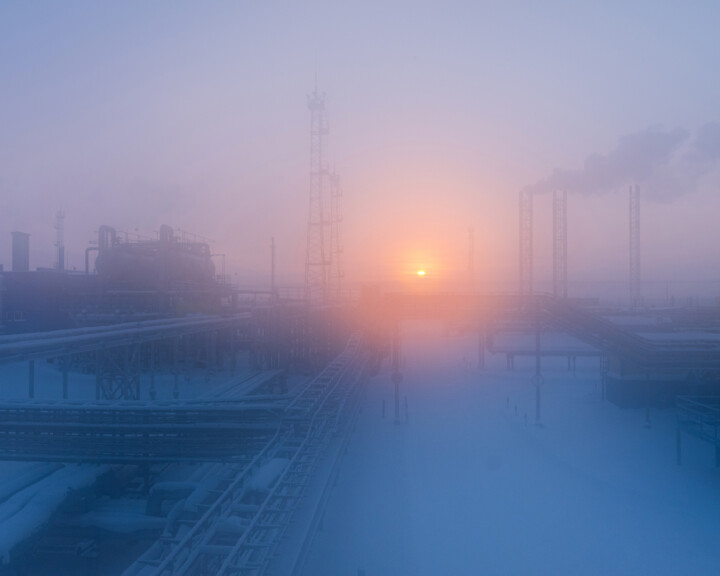

Photograph by Retrofile / Getty Images
words by miranda green
We rarely hear the word compromise these days, especially in politics. I often feel like bipartisanship died with the last season of The West Wing, or at least the first Trump term.
But a new bill making its way through Congress right now is framed as a solution to a problem industries on both sides of the energy debate have long grappled with: how to get faster approvals to build infrastructure on public lands.
The Bipartisan American Affordability and Jobs Act is a permitting reform bill that would speed up approvals for energy infrastructure projects on public land. The Senate voted Monday to move BAAJA to a full vote, teeing it up for a fast-track approval.
The bill would more readily greenlight solar arrays, wind farms, and modernize electric grids and power lines. But it would do the same for data centers and gas pipelines.
BAAJA supporters consider it essential to clear infrastructure backlogs, cut the red tape of complex, slow environmental reviews, and get more energy of all kinds online quickly. Opponents argue the bill would negatively impact protected land, weaken species protections, skip tribal and historical reviews, and increase emissions.
As you can imagine, environmental and clean energy groups are divided over whether to support the bill and help get it through ASAP, or send it packing.
It’s important to note that this bill was created with true bipartisan support.
Senate Republicans Mike Lee of Utah and Shelley Moore Capito of West Virginia introduced BAAJA alongside Democrats Martin Heinrich of New Mexico and Sheldon Whitehouse of Rhode Island.
And Whitehouse’s support is not something to view lightly. He’s held more than 300 weekly “Time To Wake Up” speeches on the floor since 2012 that press his colleagues to confront the climate crisis, address the financial and environmental impacts of fossil fuels, and reckon with the outsized influence of dark money in politics.
Whitehouse says BAAJA will be a boon for clean energy. “This bill is a BIG step to fight climate change,” he wrote on X this week. “It would lower power sector emissions, accelerate clean energy, and avoid emissions equivalent to those from nearly 35 million gasoline-powered vehicles.”
He also argues that certain provisions in the bill would lower data center costs for ratepayers by forcing companies to pay more for grid expansion. BAAJA could save ratepayers $55 billion over 10 years, according to an independent analysis from Grid Strategies LLC.
Clean energy and climate groups echo Whitehouse’s arguments, including Evergreen Action, a group started by former Washington Gov. Jay Inslee staffers. (Inslee himself has not taken an official stance on the bill).
On the other hand, AI and gas companies also champion the bill for being pro-energy. BAAJA would benefit the gas industry in two ways: by allowing it to build out more of its own energy infrastructure; and by paving the way for more data centers, which are predominantly powered by gas.
The Data Center Coalition, whose members include Amazon, Google, and Microsoft, reportedly spent $480,000 on lobbying between July and September, including on the permitting reform bill. Other groups that divulged their lobbying on the bill include the American Petroleum Institute, the Edison Electric Institute, and the National Mining Association.
API’s aggressive bill advocacy included sending a “BAAJA on the Hill” taco truck around the Capitol building on Tuesday to distribute free tacos.
It read: “Pass permitting reform. Lower energy costs. Brighter Opportunities.”
Many see BAAJA as a rare compromise. But is it worth it?
While considering what compromise might look like in a bill that could pass, I’m reminded of words from political scientist Leah Stokes, whom I spoke with previously about her efforts to pass the largest climate bill in American History: the Inflation Reduction Act.
That bill was trimmed repeatedly: from a $6 trillion reconciliation package, to a $3.5 trillion Build Back Better framework, to a scaled-back $1.75 trillion proposal. In the end, the Inflation Reduction Act passed with nearly $400 billion in climate investments.
It was still a win for the planet, Stokes told me, even in its imperfection.
“I really felt despair sometimes when the bill would shrink,” she said, “but I also felt like, you know, something is better than nothing. And losing out on this huge opportunity to pass a climate bill means that we could wait another decade to make this happen.”
Of course, that doesn’t mean BAAJA is the right compromise. If it passes, it’s important to consider the losers as much as the winners. Gas companies, the AI industry, and solar manufacturers could all make some big gains. But the climate could be left reeling.
The Center for Biological Diversity argues that BAAJA provides “massive long-term structural advantages to the fossil fuel industry and minimal short-term improvements to electricity transmission policy that might marginally benefit renewable energy.” One of its directors likened the bill to a “climate kill shot that condemns our most vulnerable communities to suffer decades more fossil fuel pollution.”
Oil Change International, a nonprofit campaigning for a just transition to clean energy, warns BAAJA would allow for “a massive, unprecedented buildout of gas power plants and pipelines,” arguing that’s why the permitting legislation would “fail to trigger a clean energy revolution.”
But research indicates that long term, the pluses might outweigh the minuses.
Independent research provider Rhodium Group found that yes, the bill will both increase clean energy resources by driving an additional 17-249 GW of clean resources, and increase fossil fuel production by increasing liquefied natural gas exports by 8-15%.
Taken together, though, Rhodium estimates BAAJA could reduce greenhouse gas emissions by between 5 and 148 million metric tons annually by 2040. Allowing clean energy to be deployed more readily—even alongside fossil fuel infrastructure—will arguably allow the industry to grow quickly enough to ultimately eclipse fossil fuels on the market, driving down emissions in the long term.
But that’s if the bill is implemented as promised.
One big concern is federal intervention. A proposal’s congressional approval doesn’t necessarily translate to federal permit approval—and Trump has shown his hand when it comes to clean energy projects.
As climate writer Lissa Harris asked Bill McKibben: “Why do we presume any of these mfers will do anything but wipe their ass with this deal when Boss Baby decides he hates a wind project next year?”
It turns out her concern was well-founded.
Hours after Trump’s Monday BAAJA endorsement, he told reporters at the White House that he wouldn’t approve any wind projects despite the bill. “Wind turbines are a major loser,” he said.
Congressional Democrats, on the brink of power come January, seem keen to slow BAAJA down. Following the midterm election results, analysts at investment banking firm TD Cowen cut their outlook for the bill’s success from roughly 40% to 25%. Timing is on Democrats’ side: A Senate approval would send the bill to the House, and the holidays—when congressional members take time off to go home—are fast approaching.
House Democratic leader Hakeem Jeffries said last week that the permitting bill falls short, criticizing it for a “failure to adequately protect tribal sovereignty.” Over the weekend, a new amendment was added to BAAJA—77 pages of updates—meant to answer objections from tribes, environmentalists and utilities. Not everyone is convinced.
Even if Democrats take up the bill next year, it’s unclear what it would look like on the heels of such such clear messaging from American voters last week against data centers.
I can’t see Democrats starting their tenure leading the new Congress by trumpeting a bill that benefits the very industry whose opposition helped pave their road to victory.
Want me to look into The Understory of something? Send me an email!
Join our membership community. Support our work, receive a complimentary subscription to Atmos Magazine, and more.
The Unlikely Allies Behind Congress’ New Energy Deal