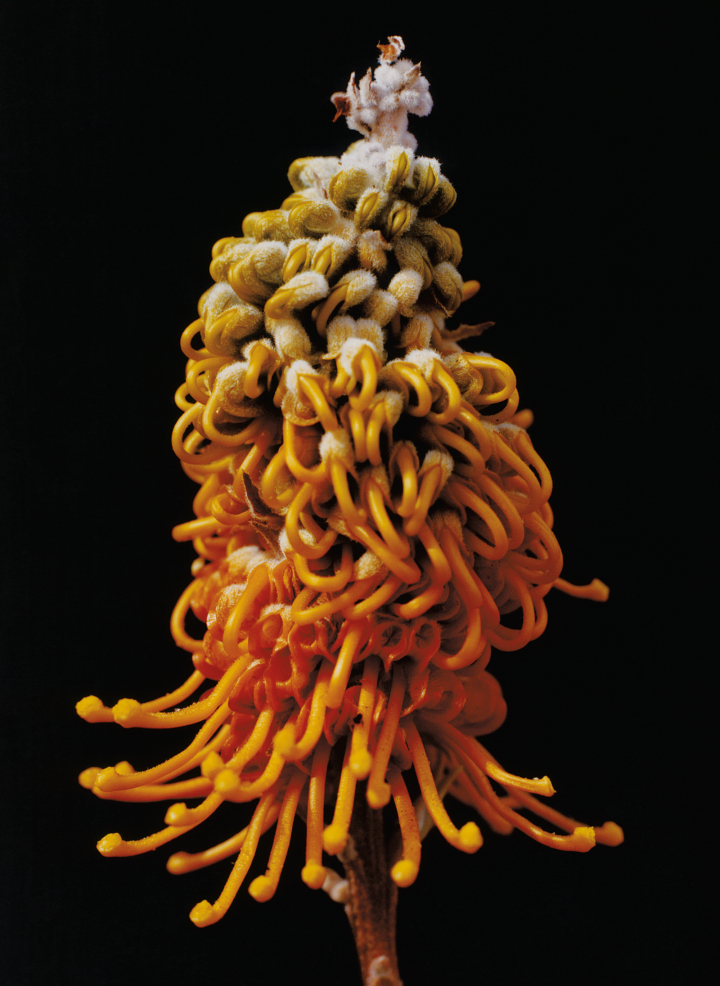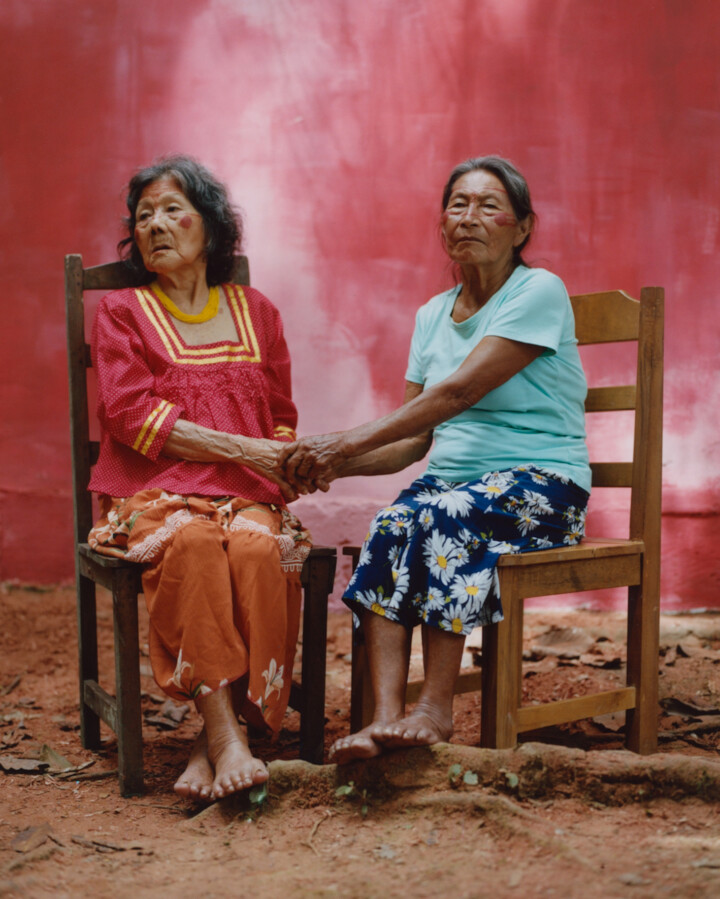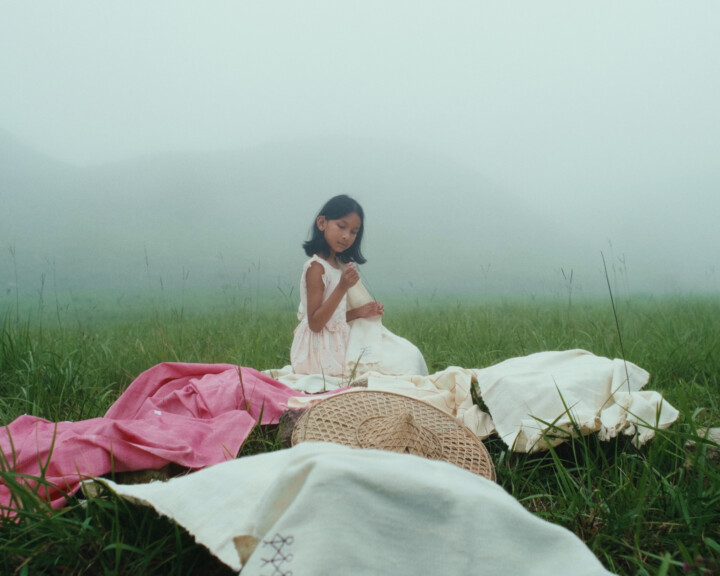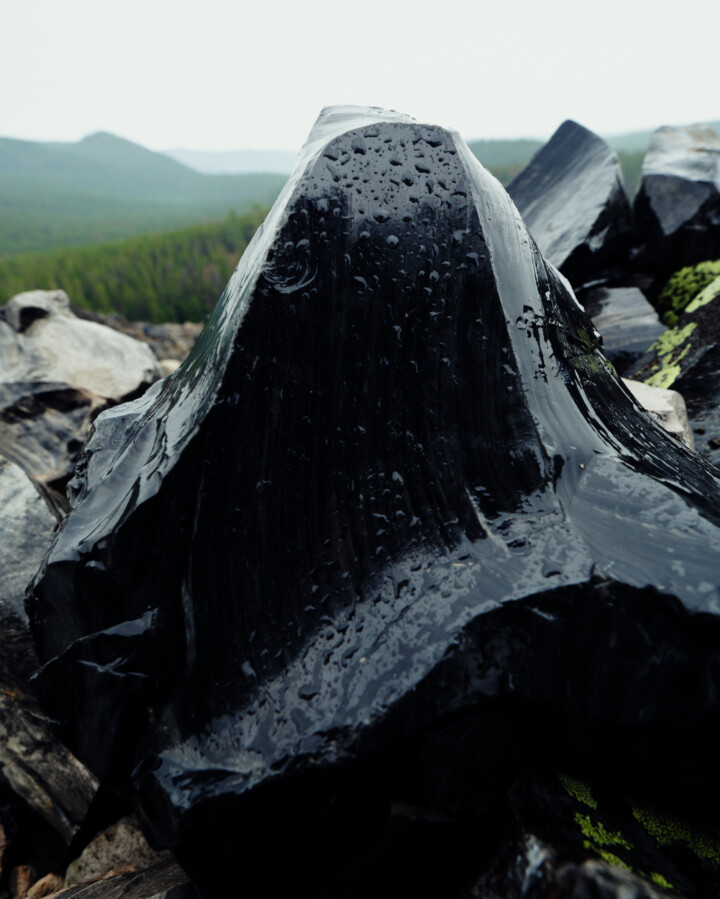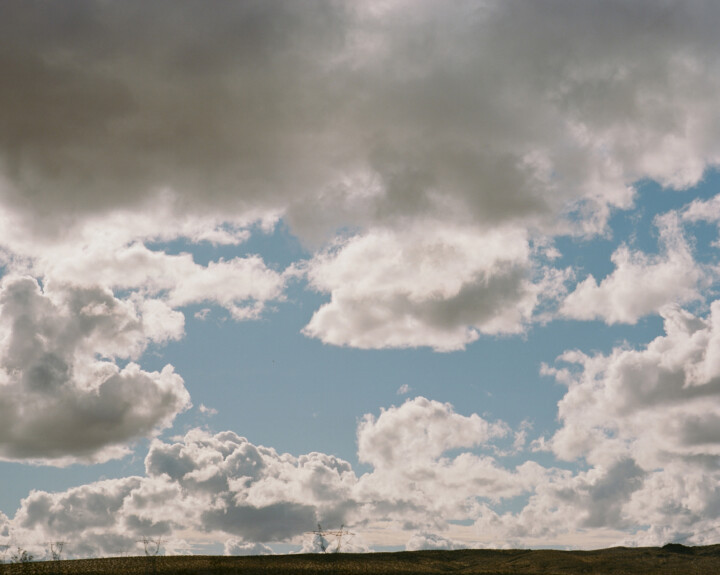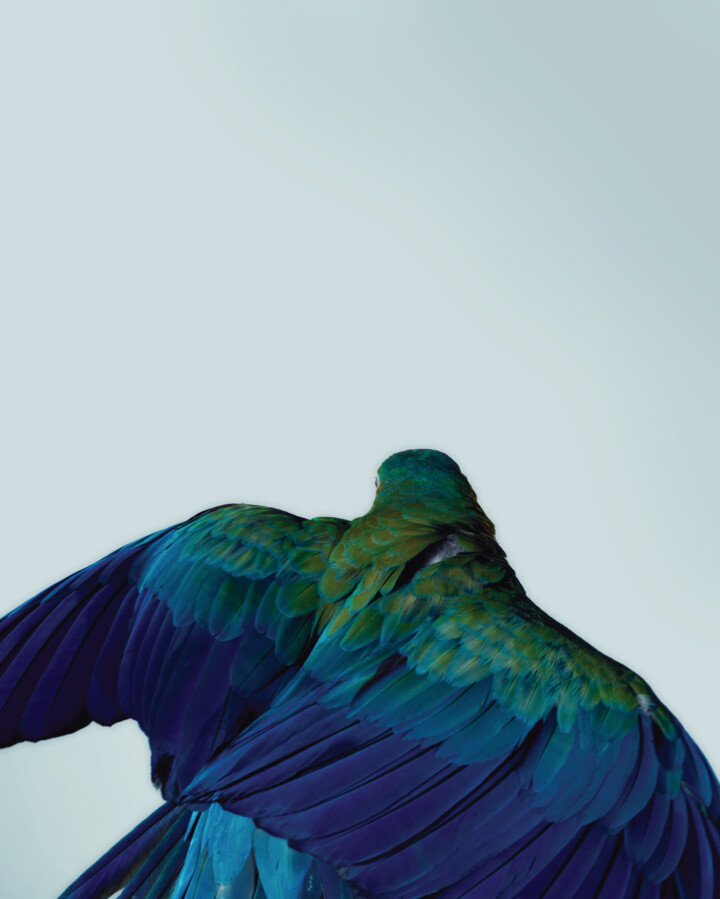
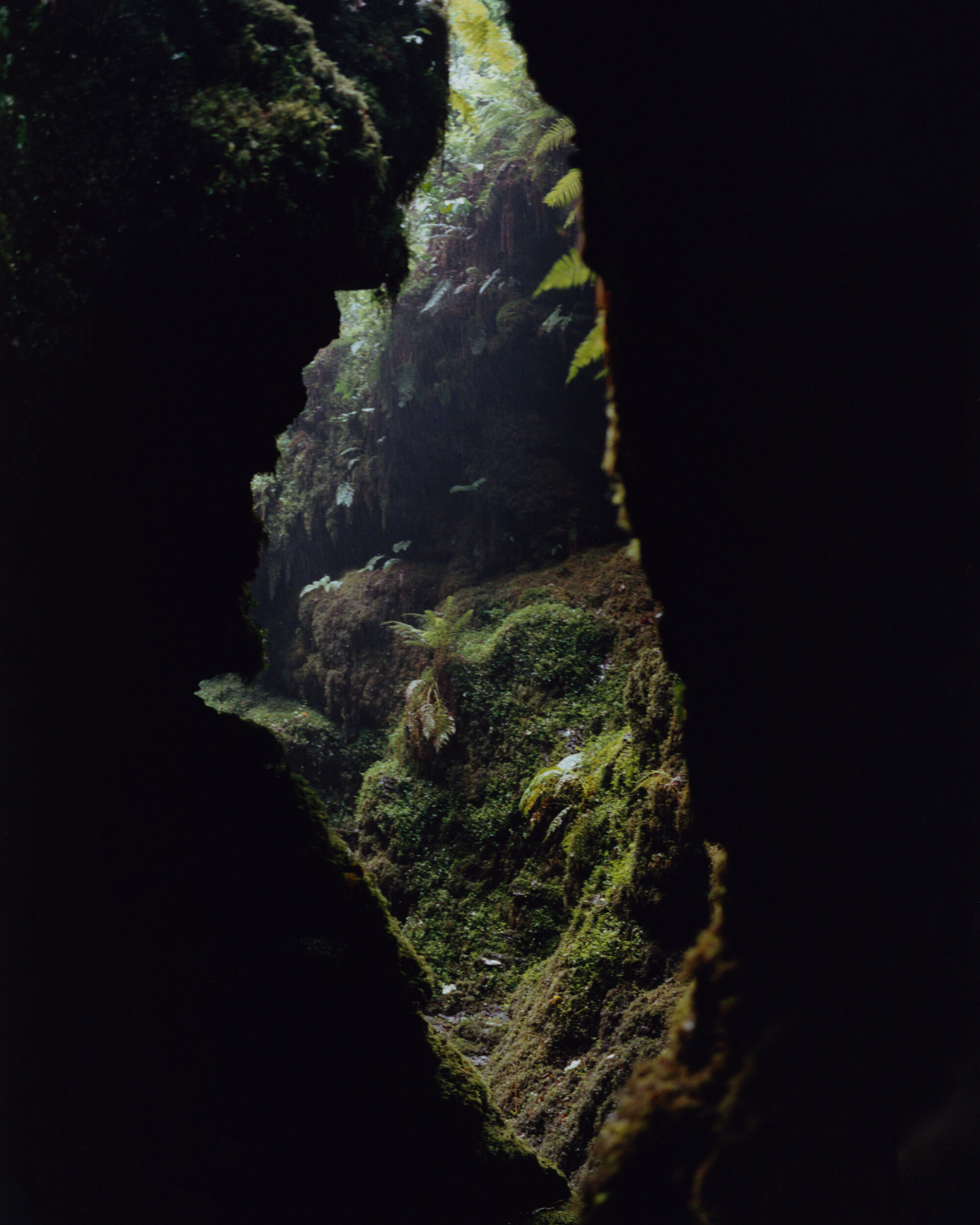
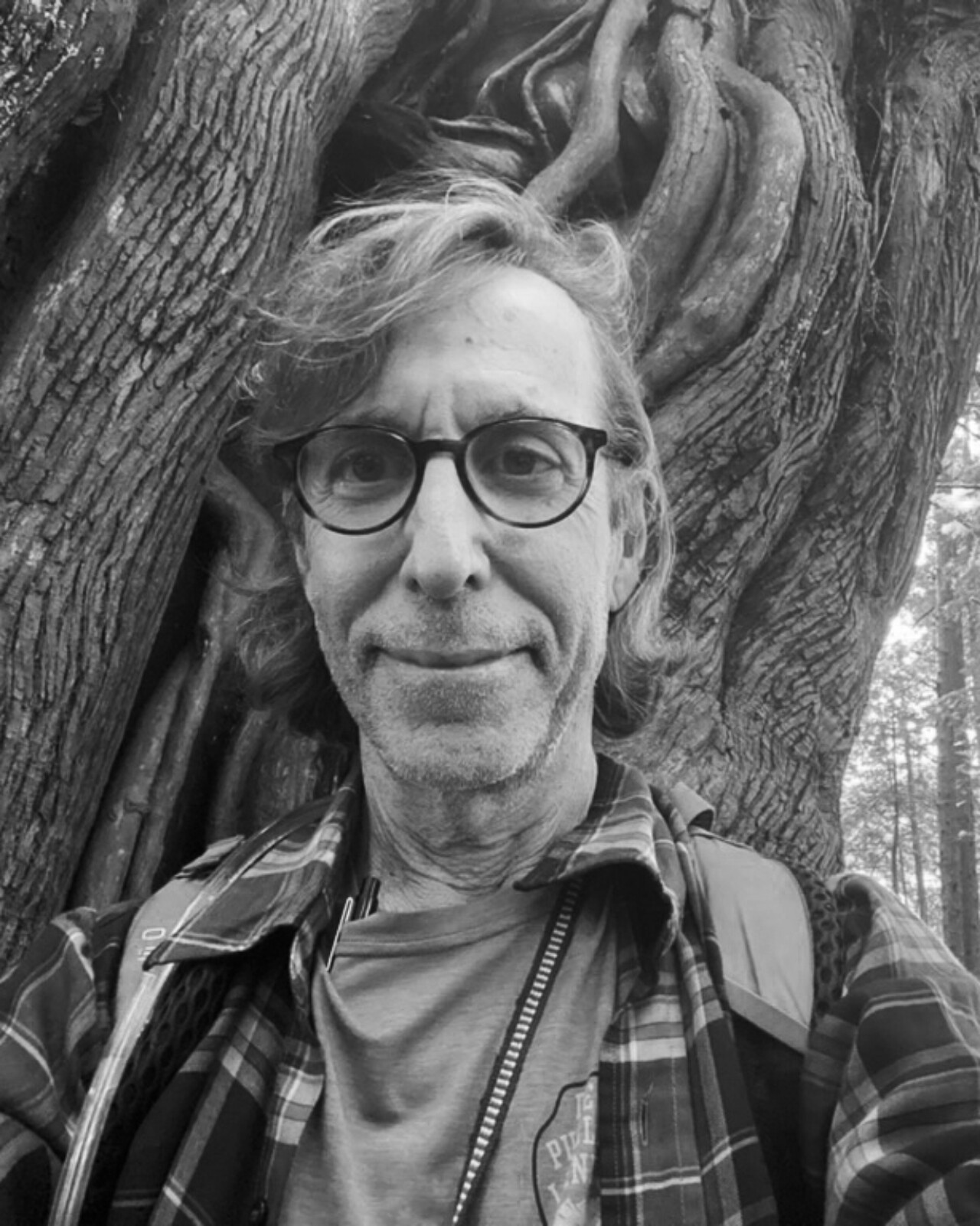
Photograph by Christian Cassiel
To never miss an episode of The Nature Of, be sure to follow here.
What if the world around us is speaking, and we’ve simply forgotten how to listen? This week, Willow sits down with cultural ecologist and former sleight-of-hand magician David Abram, whose groundbreaking book, The Spell of the Sensuous, invites us to reconnect with the living world through our senses. They explore how paying attention can reveal the magic hiding in everyday life and why our increasingly digital world may be pulling us away from that experience. From the astonishing world of spiders to the many ways nature communicates beyond words, David reminds us that we are part of a world that is constantly speaking to us, if only we slow down enough to listen.
Cultural ecologist and geophilosopher David Abram is the author of The Spell of the Sensuous and Becoming Animal: An Earthly Cosmology. Described as “revolutionary” by the Los Angeles Times and as “daring” and “truly original” by the journal Science, David’s work engages the ecological depths of experience, exploring the ways in which sensory perception, language, and wonder inform the relation between the human animal and the animate earth. He was the first contemporary philosopher to advocate for a reappraisal of “animism” as a complexly nuanced and uniquely viable worldview—catalyzing a vital reassessment now underway in many disciplines.
In his first book, David coined the phrase “the more-than-human world” in order to speak of nature as a realm that thoroughly includes humankind, yet also necessarily exceeds humankind; the phrase has now been taken up worldwide within the broad movement for ecological sanity. The recipient of many awards, Dr. Abram has held the international Arne Naess Chair in Global Justice and Ecology in Norway, and recently spent a year as the Senior Visiting Scholar in Ecology and Natural Philosophy at Harvard University. For the spring of 2026 David was an invited Fellow at the University of Oxford. He lives in northern New Mexico.
David Abram
Something about attention enables us when we quiet ourselves down enough or slow down enough to notice the ordinary, utterly plain things happening right near at hand. We become aware that everything is magic, that magic is what the world is woven of.
Narration
There are certain people whose work I consider to be ancestral to my own. Their ideas and their writing is foundational to how I see the world. And one of those people is David Abram. Thirty years ago, he wrote a book called The Spell of the Sensuous, which was all about reanimating our relationship with the living world through the senses. I was so thrilled about having David on the show—not only because he doesn’t really do that many interviews, but also because this book might as well have been written for our world today. It is an invitation to get out of our cerebral, thinking brains and into our feeling bodies, our bodies that are always in relationship with the sensorial world. A world that is constantly speaking to us in so many different languages, more than just words.
David
All things are expressive. It’s just that most things don’t speak in words, but things speak in rhythm.
Narration
I’m Willow Defebaugh, and this is The Nature Of, where we look to the nature of our world for wisdom and ideas that change the way we live. This week, I’m speaking with David Abram, a cultural ecologist and once upon a time sleight of hand magician who has a gift for changing how we see the world, revealing the magic that is all around us all the time.
Willow Defebaugh
David Abram, welcome to The Nature Of. Thank you so much for being here.
David
It’s a delight to join you here, Willow.
Willow
You coined the phrase the more-than-human world, which is an expression that I use all the time on this show and it is a huge part of my personal vernacular. So I would be remiss if I did not start this conversation by asking you to share a little bit about the origin behind that phrase and why you felt compelled to come up with a new way of speaking about nature.
David
Yes. When I was writing my first book in the early 1990s, I found myself stifled by a lack of terminology by which to articulate what we call nature, but yet the word nature is so often juxtaposed with culture as though nature is out there and culture is in here. They seem like two different things. I didn’t want to continue that assumption. So I was looking for a way to speak of what I was experiencing as nature, as something that includes humans within it.
So first, I started writing about non-human nature and human nature, but that didn’t do it because there was still this divide between them like a fence: non-human nature out there, human nature in here. I realized what I was trying to find words for was a way of speaking of nature as that which includes and permeates humankind with all of our culture and even all of our technology, that we are a part of this wider than human field of life and endeavor and song and dance, but it necessarily exceeds the human world. It’s always more than just us, even more than we can fathom: the world of other critters, plants, insects.
And I like that it inculcated a humility that we humans are not everything. There’s something much more than just us that exceeds us. And in that way, this phrase I coined contrasts quite vividly with another recently coined term, the Anthropocene, which ostensibly names the epoch now upon us wherein humankind, the anthropos, has become the dominant geological force on the planet, which is to imply that there is no more-than-human world. It’s all us now. It’s all anthropos, which seems to me an incredible hubris.
Willow
So if you could rename the Anthropocene, what would you call it?
David
If I could rename the Anthropocene, I’d look at how it has become an aspirational term for ever so many who think that now that we’ve wrecked the biosphere, we own it. It’s ours to take the reins of and control as we see fit, just like that old shopkeeper’s dictum: You broke it, you own it. Well, we broke it, so now we own it. But that’s nonsense. We don’t have anything like the savvy, the wisdom, the empathy, the compassion to run this place in a way that will be serving life itself. I would say we need to drink a big glass of humility. If we want to name for this geological epoch that is now upon us in which we humans have played such a key and defining role, let’s not use the word anthropos for our kind. Let’s go back to the word human and the fact that the word human is cognate with the word humility and call it the humilocene, the age of humility.
And when I say that, some folks say, “Oh, that just sounds all wrong. It sounds too much like humiliation,” to which I think, well, shouldn’t we be sort of humiliated by what we have wrought, by the incredible amount of other species, other whole shapes of sensitivity and sentience that we have shoved to the very brink of extinction and then by our obliviousness kicked over that brink? The humilocene, the age of humility. If we’re taking that seriously, then we could call these early years of the humilocene in oral tradition, the humbling. We are living into the humbling at this time.
Willow
Well, I’m grateful to be in the humbling alongside you, David. OK, David, I’d like to ask you a question that I ask all of my guests, which is what is one thing that nature has been teaching you lately?
David
It has been teaching me lately the power of magic and shape-shifting. Really, the astonishing sleight of hand of this spider, a cat-faced spider who has been weaving her web every evening on my porch, the most exquisite, incredibly complex spiraling web. And sometimes I get to see her dangling there in front of rainstorms and lightning storms unfurling over the valley. So she looks like the queen of storms or the spinner of rain. But then it’ll get late, and my eyes will start closing, and I’ll drift off to sleep. When I come back in the morning, stumbling out onto the porch, I look for her web and it’s not there. This vast, glistening orb has completely vanished, and I’ll feel around with my hands and it’s really just nowhere to be found. And then come evening, I’ll step out onto the porch and there it is again. And this has been a puzzlement for me for a long time, but it turns out they eat the web. They just go around and ingest all the threads and re-conjoin them, mixing their nutrients to weave a fresh web come evening. Did you know that? I didn’t.
Willow
No I didn’t, but I love the perfect circularity of it, and it gives new dimension to them being orb weavers.
David
Yes. This conundrum of what happened to the webs has been with me much of the last decades ever, since I was living in Indonesia traveling as an itinerant magician there, and found myself in a remote valley late in the evening. I glimpsed some caves that had been carved, and I made my way to one of them and scrambled up the cliff face and into this hollow. And as I was sitting there, the winds began to pick up and then it started raining. But then without warning, the water started amalgamating in front of the cave mouth where I was sitting. So I just sat there with this roaring wall of water in front of me. And then my attention was caught by a tiny figure, and it was a spider slowly weaving this intricate, elaborate orb web. My eyes were drawn down into this other scale of experience, but then I noticed another and then another, and then I realized there were hundreds of spiders spinning web upon web upon web between me and that tremendous waterfall. And I was dazzled, hypnotized.
And at a certain point I tried to hear that wall of water and I couldn’t. It was utterly silent because the weaving of these spiders had so entranced my senses. I actually had the uncanny sensation of watching the universe itself being born galaxy upon galaxy upon spiral galaxy. It now felt utterly peaceful and protected there in the cave. And so I laid down on the moss-covered floor, and I slept and then woke up in the morning, and I looked carefully for one or two of those webs, for any of those webs. I couldn’t see them, and I figured, well, they’re just camouflaged against the sky. And I reached my hand through the cave mouth and there were no webs anywhere. They had vanished. And that was the first time I experienced this astonishing sleight of hand, or—
Willow
Now you know why.
David
Now I know why.
Willow
I remember reading that in your book, and I’m very happy that now our listeners get to experience that story as well. I’m curious, what do you feel is the relationship between magic and attention? Because that moment where you were forced to stay in the cave of your senses, of the present moment, to just be there and to notice, and you watch this whole drama of the universe play out through spider webs, through this moment of attention. And it occurs to me as such a fulcrum in our world today because I think attention is becoming an increasingly fragile concept for many people.
David
So something about attention enables us when we quiet ourselves down enough or slow down enough to notice the simple, ordinary, utterly plain things happening right near, at hand. We become aware that everything is magic, that magic is what the world is woven of.
Willow
Perfectly said. You referenced earlier that you were a sleight-of-hand magician before you became a cultural ecologist.
David
Yes.
Willow
What did learning the art of illusion teach you about the nature of reality?
David
Well, I never thought of the craft of sleight-of-hand magic as the art of illusion. I got drawn into this craft because I was fascinated by wonder and by the magic of the real, particularly of the night sky. In my early adolescence, I would just stumble out of our suburban household every night after my parents thought I was asleep and lie down on the grass in the backyard and just gaze up at the stars and just wonder about how impossible is that—that those folks are really there, all those stars scattered haphazardly across the sky. That sense of wonder, of utter astonishment at the real, and its weirdness was what I wanted to share with others to help create for others. Cézanne, the great post-impressionist painter, said those other painters, they’re trying to create pictures of nature. I am trying to create a piece of nature itself.
As a magician, I was interested not in doing tricks. I was interested in creating magics, mysteries, or miracles because magic, for me, it’s an experience: a wonder that happens when you come to the cliff edge of your understanding and suddenly you tumble off that cliff into an abyss of unknowing, just suddenly realizing that I cannot possibly explain the world. This blooming, buzzing proliferation of color and texture and light is so utterly beyond our understanding. All I can do is participate in it and apprentice myself to whatever elements of this mystery call me close so I can better feel and engage and participate with the rest of the real.
So magic, in a sense—it’s a particular craft, it’s a particular art form that works with the very malleable texture of perception itself, of sensory perception. Perception, we could say, is the medium for a magician like pigments are the medium for a painter or musical tones for a composer. A magician is one who is adept at altering this delicate, ever-shifting fabric of perceptual experience itself, whether a contemporary conjurer or an indigenous traditional sorcerer or dukun or shaman or jhankri in the Himalayas. They are all folks who work with shifting perception as a way of transforming the world because if we shift and alter the way we perceive the world, the world itself transforms, or at least our way of engaging and interacting with the world transforms, and that changes the world.
Willow
And you’ve also written about how the role of that figure in so many Indigenous communities, also, that you spent time with is about mediating the relationship between the human and more-than-human worlds, and that health and healing is tied up in that balance. Can you speak a little bit to that?
David
Oh, sure. Magic and medicine have long gone together, and so I wanted to learn from traditional magicians practicing in these old-style modes. But what blew my mind, Willow, was that once I found myself in the home of a particular dukun, say in the islands of Indonesia, and even beginning to interact with her ceremonies, playing a role within them myself, I began to recognize that these magicians did not see themselves first and foremost as healers, even though they were the healers or medicine people for the villages in their vicinity. And often for villages—in many, many miles, people would often approach for days on foot, carrying a particular ailing family member to be cured by this dukun. And yet the dukun did not see her or his gift as, first and foremost, the ability to heal a sick person. Rather, her primary role or function within her community was to tend the boundary between the human world and the more-than-human world, between the human village and the whole wider-than-human collective of powers in which the human village was embedded.
And by this more-than-human collective, I don’t mean anything supernatural. I mean simply the community that includes us two-legged animals, but includes, as well, all of the other walking and crawling and spinning and leaping, howling creatures that live in that locale, as well as the other flapping and soaring, squawking folks who sometimes shit on our heads as a kind of blessing. And also the thinned, scaly peoples who swim and glide in great schools through the waters around the islands in Indonesia. All of those beings were assumed to be alive, awake, and just as aware as we are. But not just the other animals; also the rooted powers, the herbs, the grasses, plants, trees, even whole forests were assumed to be alive, awake, and aware. It was also the mountains, the rivers, dry riverbeds, patches of lichen, but also shape-shifting clouds gathering behind the ridge and then revealing themselves in huge gray, bulbous shapes over the valley. These two were assumed to be alive. Gusts of wind.
In fact, pretty much anything that we can sense was assumed to be a sensitive sensate, even sentient presence in its own right, experiencing the things and beings around it and experiencing even us. And the magician’s particular responsibility to the human village was to listen in to the calls and cries of these other-than-human shapes of life and experience and to make sure that the human gang never takes more from the land than it returns to the land, whether with prayers, propitiations and offerings, simple praise songs offered steadily to the forest as you’re walking through it.
And this is their primary role, was to tend the boundary between the human and more-than-human world, making sure that that boundary stays porous, stays a membrane across which there’s always a two-way flow so that it’s a living membrane. And by constantly practicing in this way, he or she ensures that every person within the village stays more porous, more fluid, more able to let things that penetrate and enter into them from difficult encounters also slip out of them and dissipate and move on. So it turns out that the ability to heal is considered there a byproduct of one’s more constant work of healing the balance or balancing the equilibrium between the human collective and the more-than-human collective.
Willow
And I love that it’s mediating within that boundary. It just makes me think of Hecate: One of the oldest goddesses associated with magic is also associated with thresholds. And I’ve always loved this idea that magic and thresholds are so intimately linked, because it’s just the veil between perception. The way that you speak about magic resonates so much for me because it’s about revealing the wonder of the world. It’s not escaping the world. It’s peering more deeply into the world. And that’s so deeply—our mission at Atmos is to re-enchant people with nature and the living world. And I always have to tell people that the use of that word, re-enchantment, it’s not an escape from the world. It’s dispelling the dissociation that keeps us from—
David
Just so.
Willow
—experiencing it.
David
Yes. Just so. Well said. And maybe I should mention that all such deeply indigenous, old ways, cultures seem to assume that everything speaks, that all things are expressive. It’s just that most things don’t speak in words, but things speak in rhythm, like the splashing speech of waves on the pebbled beach. They speak in other, more rapid rhythms, like cricket song. Bird song is obviously a rich discourse carrying all sorts of meaningfulness, but also the wind in the willows is a kind of voice. The shuddering of thunder this morning when I woke up, for many cultures, it’s spoken of as the first word, the word at the origin of the world: thunder. Just the sigh of the wind through the branches or through the grasses. All of these sounds can be felt as voices. That is, they all carry an expressive meaningfulness that can be not just heard, but even understood by our animal body.
When the thunder is rumbling off in the distance, my body immediately changes its stance and begins to prepare for the possibility of rain. All the rooted folks in the land around here hear the thunder in a whole other manner, probably with a certain amount of excitement due to the promise of fresh moisture. That is, our own animal body receives these voices, these calls and cries and speakings, and understands them, but not in a way that is usually translatable into words. Most of the meaning going on in the woods when you walk through it can’t be translated into words, and yet there’s so much meaning going on between the wingeds and the soils and the lower branches and the clouds overhead. And so there’s a sense that everything speaks, and I’m convinced that our ways of speaking human language, verbal language, originate in a kind of call and response with a speaking world that human language didn’t just spark up between us two-leggeds talking to one another or between mothers cooing to their infants who are cooing back at them, that human language also originates in this wider reciprocity, this call and response with a world itself speaking.
Willow
This brings us perfectly to something that I think is really at the heart of a lot of your work and that I was hoping to speak about, which is that our senses really bring us into relationship, into reciprocity with the world, this call and response that you’re speaking to. I loved when you were telling the story about the spider earlier, that it wasn’t just that you were paying attention to the spider; the spider was snaring your attention. When we touch a tree, the tree touches us back. When we touch the world, the world touches us. How do you feel that the senses can help pull people out of the spell of loneliness and isolation that so many people feel across the world today?
David
Well, it does seem to me, Willow, that our animal body, this two-legged, two-armed, fleshy, somewhat furry form, is our access to the world of all the other animals and the plants and the winds and the waters. And yet we dissociate from our bodies so often. We speak of having a body as if I’m something that owns this strange property. We split ourselves into a mind or a subject on the one hand and an objective body on the other hand. And this falsifies so much of our felt experience. So when we step out into the world, we look at a tree, we look at the forest edge, we look out at the rest of nature, but we don’t peer into the forest. We don’t peer out into the land from our own fully embedded, embodied position down here in the depths of this breathing landscape.
We still generally think of ourselves as pure minds or pure consciousness, pure subjects encountering a world of pure objects, which makes us one thing and the rest of the world something completely different. But if we notice that we’re not pure subjects, we are bodies—we have weight and density, like the density of that boulder. We have our own smooth and rough calloused surfaces. We have our colors like the surface of a pond. The hand that we use to explore the tangible textured surfaces of the tactile world, well, this hand has its own smooth and textured surface. It is entirely a part of the tangible world that it explores. So when I reach out my hand to touch the smooth skin of an aspen tree, I’m not just feeling the aspen trunk beneath my fingers. I’m feeling the aspen feeling me, sampling the chemistry of my skin, feeling out my smoothness and my calloused surfaces.
There’s this weird reciprocity to the sense of touch that you were just speaking to. But it’s not just there with touch. The eyes with which I explore the visible shapes and colors of things with which I explore the whole visual field. These eyes are a part of the visual field. They have their shiny surface, like the surface of a leaf. They have their color like that leaf. And so when I gaze out at the world, stepping outside my door in the morning, and peer out at the forested hillside across the way, I’m not just seeing those trees on that hill. Also, if I rub my eyes free of a bit of sleep and I open them wide, I feel myself seen, exposed, witnessed from those trees, witnessed by that hillside. Again, there’s that curious reciprocity in simple seeing itself. And this is true for all of our senses. We’re able to hear the things of the world because we’re sounding, sonorous beings who are singing back and forth to one another all the time. We call it talking, but it really is a kind of singing. And so when we encounter the world of things around us, we encounter it as a thing among things, as a body among bodies. And this is a very different way of speaking of perception or sensory experience as an interchange, a reciprocal exchange always going on between our sensing body and the sensuous Earth around us.
Willow
I remind myself often that in the long memory of the world, this way of being that has diffused around the world since the scientific revolution of understanding mind and body as separate, human and animal is separate, it is such a recent phenomenon. It’s so recent, and it’s a blip in the eye of the universe. And yet it does feel like it is coming to a head now. I mean, when you think about what people are interfacing with so often every day from a tactile and sensorial perspective, it’s a glass box in their hands. It’s a screen in front of them. And so I guess I’m curious, what do you think just the role that technology is playing in our lives right now, what do you think that is doing to our sensorial experience of the world? And how are you personally thinking about that?
David
As technology now seems to be inserting itself between our senses and the rest of the sensuous Earth so that I no longer look out at the land around me. I look at the screen of my laptop or my cell phone or whatever other screen-fitted thingamabob I’m carrying around in my pocket at this moment so that my gaze, instead of being drawn out toward these other horizons, gets snagged and caught by the dazzle of the digital screen, which begins to close me into a hall of mirrors. Wherever I look, I’m looking just at another version of myself or another human face or something built by humankind. That is, I find myself closed into an almost exclusively human world of images that are very compelling because they glow, they’re sleek and smooth and finely designed. And so they tend to capture my attention much more readily than the ambiguous, fuzzy, strange mix of colored shapes and awkward sounds that meets my ears when I step out the door.
It does seem like a weird world we are sliding ever so more rapidly into, especially as so-called artificial intelligence is swallowing up so much money, is having so many billions of dollars thrown at it, and it’s capturing the fascination of so many of our fellow humans. Artificial intelligence, lacking a body, is just pure cognition. It’s an extension of this one facet of human experience: thinking. But without a body, it cannot join that thinking to feeling. It cannot infuse it with heart and wonder and felt overwhelm and ache and grief. Doesn’t wisdom always come from binding our reflections to the heart and to our felt sensibilities and to the body’s capacity to feel with others, to resonate and pick up a resonance that draws me into an empathic exchange with another being and with the world? So how can we be expecting artificial intelligence to be wise in any way when it doesn’t have a body—and so it doesn’t have feelings flooding in and informing its thoughts?
Willow
And I think this fits perfectly with the evolution and scientific consensus around consciousness, which is: For so long scientists have thought consciousness exists in the prefrontal cortex, and that’s why humans are the only ones who get to have this magical thing called consciousness. And increasingly, increasingly, scientists are coming forward and saying, well, no, actually it’s about our capacity to feel. It’s about the senses. It’s the upper brainstem, which is widespread among animals. And I’ve loved how every few years now, there’s a new paper that comes out with scientists saying, “Hey, so actually most of the living world seems like it might be conscious.”
And so we’re having this revelation, or science is admitting, that consciousness is so much more widespread in the living world because it’s related to having a body, it’s related to feeling, it’s related to sensing the world. And yet we’re also having this conversation about whether artificial intelligence is conscious. But as you point out, as far as we know and understand, there’s no body there. There’s no senses there. And if as you say wisdom is bound to the body, then I do wonder if that whole conversation just a distraction, and how can we keep reorienting ourselves to the intelligence that is all around us all the time in so many different shapes and forms that are so, so different from ours?
David
Yes. Just so.
Willow
Do you think it is possible for technology and re-enchantment animacy to coexist?
David
Yeah. I suppose I do, but that’s—
Willow
I love how reluctant you sounded in saying that.
David
Well, it’s only because it seems to me, technology is animism from the get-go. All of these technologies spawned by an original technology that we take for granted called the alphabet, a particular tool for recording oral speech. The earliest forms of writing still partake of a sense that everything speaks. In fact, the hieroglyphs of Egypt or the very different hieroglyphic writing of the Maya. You have forms of animals, felines, frogs, clouds, rainstorm, lightning, serpents interspersed with shapes of humans, human implements, houses. And so the reader reading such a script is continually reminded of languages linked to a much more-than-human world that still speaks. So with writing, we’re closing ourselves into the house of human language, but the written characters in such a writing system function as windows that still open beyond the house of human language onto a landscape that’s still filled with meaning. It still speaks.
With an alphabet, the written characters for the first time don’t refer you to anything in the surrounding sensuous world. Rather, they refer you back to your own mouth. You see a B and you go buh, you see a C, you go cuh, that is, the written letters refer me back to my own face. They no longer function as windows, but as mirrors reflecting the human face back upon itself. Only with a more fully phonetic writing system like that we call the alphabet did human language really turn in on itself and begin to experience itself as an exclusively human property. And meanwhile, the rest of the land began to fall mute. It no longer spoke with a vivacity that we could hear and feel. The letters speak with that vivacity.
I come down in the morning, I open the newspaper, or I open my laptop, and I click on the news, and I focus my eyes on these ostensibly inert bits of ink or pixels on the screen and straight away I hear voices. I see visions of events happening in other parts of the world. This is magic. This is animism. It’s just a highly concentrated form of animism or magic. It’s a form so concentrated that it effectively eclipses all of the earlier, older modes of participation in which we used to engage with rocks and animal tracks and gusts of wind. So it’s not a huge step from there once we close ourselves into this very intensely concentrated, human-centered form of animism, where we’re just participating animistically with our own written signs that we begin to surround ourselves with evermore human digital gadgets that capture our attention and screens that reflect us back to ourselves. It’s always been animism. We’ve never broken out of the magic. We can’t, not without our heart stopping to beat. We are made of magic. We’re made of this animistic exchange with things.
But as we close ourselves ever more into an exclusively human field of gadgetry, of voices that only reflect us back to ourselves, I think we begin to go crazy because our nervous system is coevolved with all these other shapes of intelligence and howling wisdom and with loons and spiders and humpback whales. It’s a brand-new thing that our senses are now just encountering other human eyes and ears and screens. And I do think there is a way through; but it resides in giving primary value to the world of our full-bodied, flesh-and-blood encounter with one another—and with aardvarks and cacti and squirrels and hawks—and let that world be the world that we know we’re rooted in and that we have to take care that everything we create serves that world, which includes us humans, but it’s always more than just us.
Willow
OK. So David, imagine that you are listening to this conversation. For everyone who’s out there listening and they are so on board, getting out of the mind as an abstract, something that is elsewhere and back into the sensorial body, how do you recommend they practice doing that?
David
There are ever, ever, ever so many ways. One, start paying attention to your senses again and valuing your senses and trusting your sensory experience. Two, stop talking as if you have a body all the time, and every now and then allow that you are a body, that this is your animality, the creature of you. Dig on being a body and tasting the world from your body’s perspective. Allow just once in a while for a few minutes, 10 or 12 or an hour, just allow that any sound that meets your ears can be a voice, any sound of voice laden with expressive intent.
What’s being spoken between those birds up there and these other birds here not singing so sweetly, but just chasing one another? Yeah, get out of here. Yeah, you get out of here. This male-to-male aggression is right evident in the body language. So tuning into the sounds, but watching the bodies as they’re making those sounds. A bird slipping into its most mellifluous song is obviously relaxing. It’s spending a certain amount of energy. So one of the meanings you can get from that is that there’s no obvious predators nearby. Whoa, but your body picks that up already and relaxes.
Any sound can be a voice. Even the chatter of the stream bubbling over the guttural stones. And notice the words we use in English to speak of the water as it moves between the banks are words like gush, wash, splash, rush is the sound that the water itself speaks as it moves between the banks, which is to say our language is fed by many other voices besides the human. So allow not just that you’re listening to the world, but that the world is listening to you, that all these sounds are filled with meaning, but also that there’s listening behind them and the beings out and about; not just the animals, but the plants feel your steps as you walk on their roots.
And the ground itself, the stone of the ground, the moist soil of the ground, feels your steps as you’re feeling it. How does that shift how you move? And so allowing finally, just for a little while each day, that it’s all alive, that each thing you encounter is a being sensing the world from its unique angle through its own very different set of senses, that it’s tasting the air, the space around it, that it’s maybe in dialogue with the other beings close by and perhaps already in dialogue with you or with your knee or your elbow or your toe. That’s a few ways.
Willow
What a stunning invitation and a perfect note to end on. Thank you so much, David, for coming on the show and for all of the embodied wisdom you brought to this conversation. It was a delight for the senses.
David
Thank you so much, Willow. This was a deep pleasure.
Narration
There was so much wisdom shared in this week’s episode. To put it into practice, I would just invite you to think about reawakening your senses. For the rest of the day, just today, can you focus on your sensorial experience of the world around you? How it feels, how it sounds, how it smells, how it looks? Can you retrain your mind to focus a little bit less on your next to-do list item, where you have to be after this, and that glass box in your hands, and focus on the sounds around you? Focus on the texture in front of you, how it feels to be in a body, to be a body, as David points out, which is to say how it feels to be alive. Let that be the only thing that you have to practice today.
The Nature Of is an Atmos podcast produced by Jesse Baker and Eric Nuzum of Magnificent Noise. Our production staff includes Emmanuel Hapsis and Sabrina Farhi. Our sound designer is Kristen Mueller. Our executive producers are me, Willow Defebaugh, Theresa Perez, Jake Sargent, and Eric Nuzum.
Atmos is a nonprofit that seeks to re-enchant people with our shared humanity and the Earth through creative storytelling. To support our work or this podcast, see our show notes or visit atmos.earth/biome. That’s A-T-M-O-S.earth/B-I-O-M-E. I’m your host, Willow Defebaugh, and this is The Nature Of.
Join our membership community. Support our work, receive a complimentary subscription to Atmos Magazine, and more.
David Abram: Waking Up to the More-Than-Human World