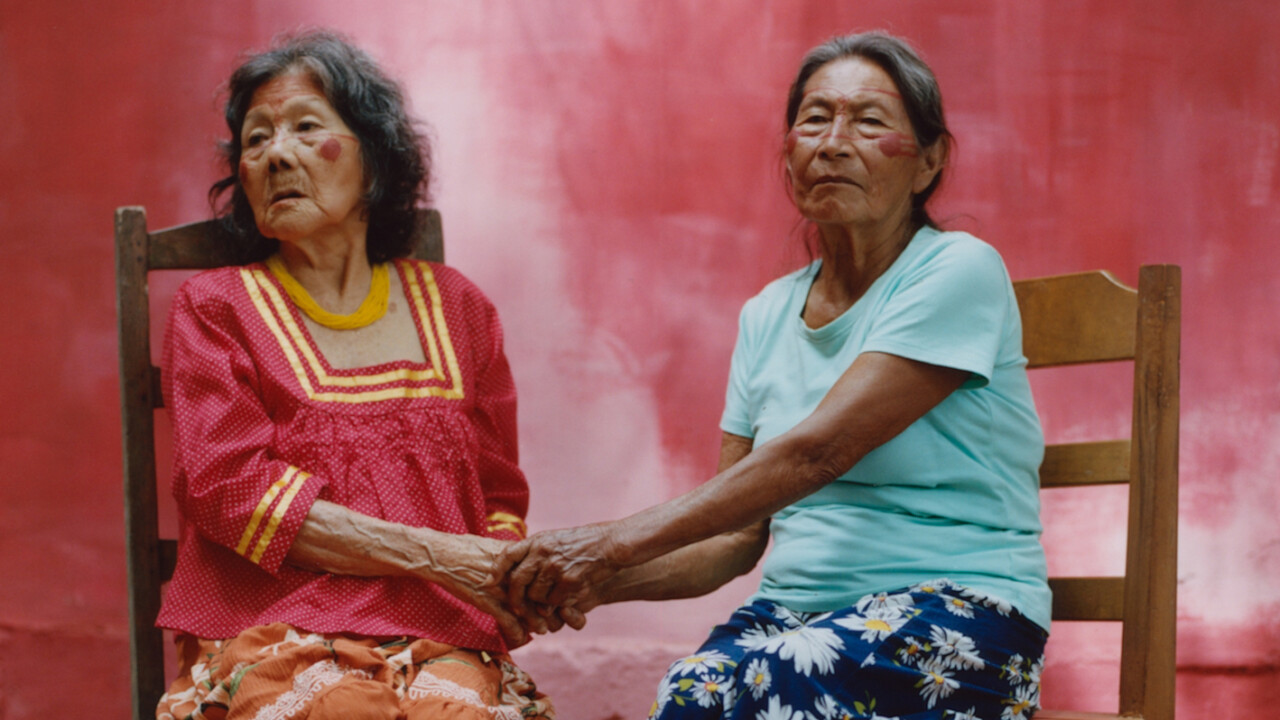
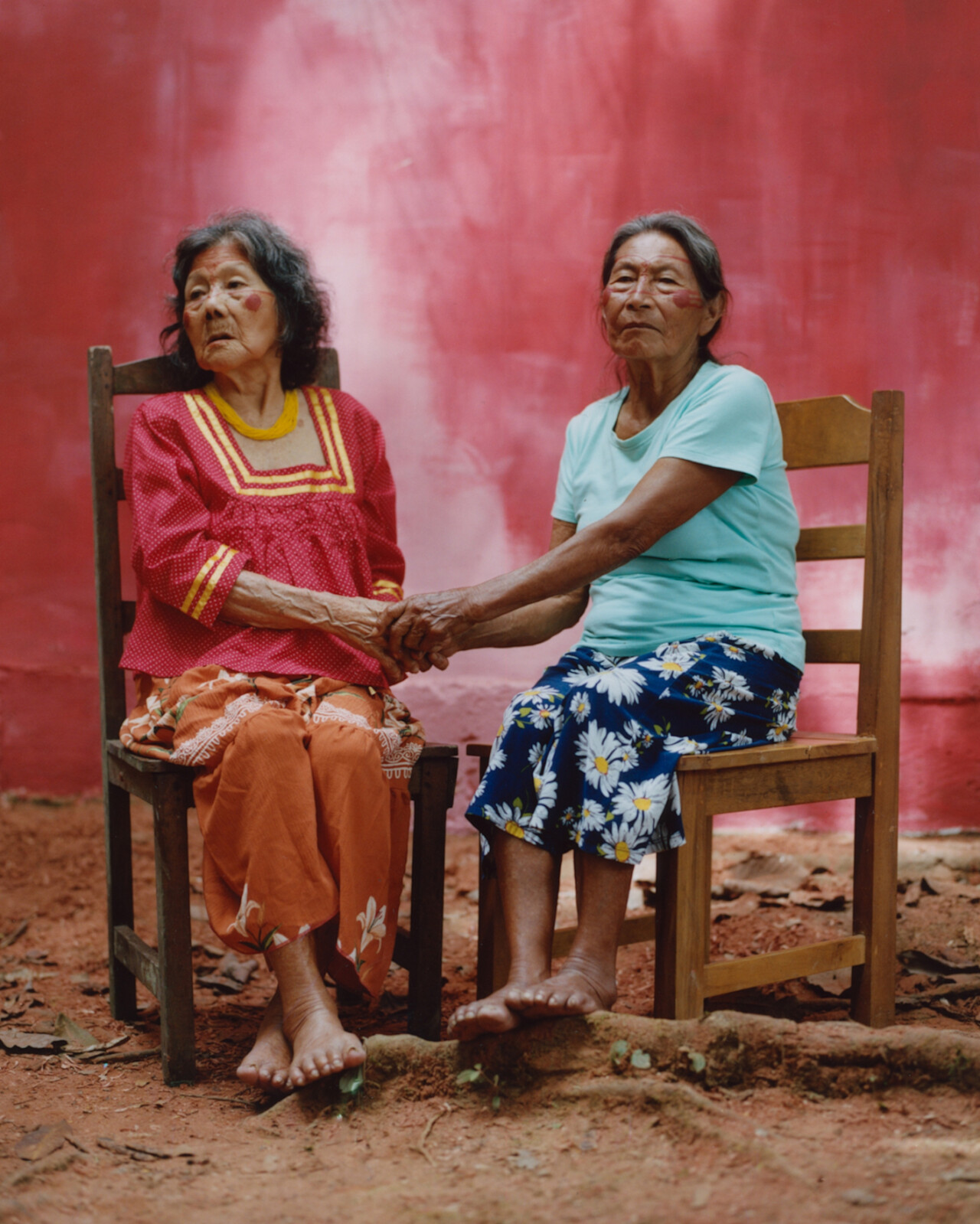
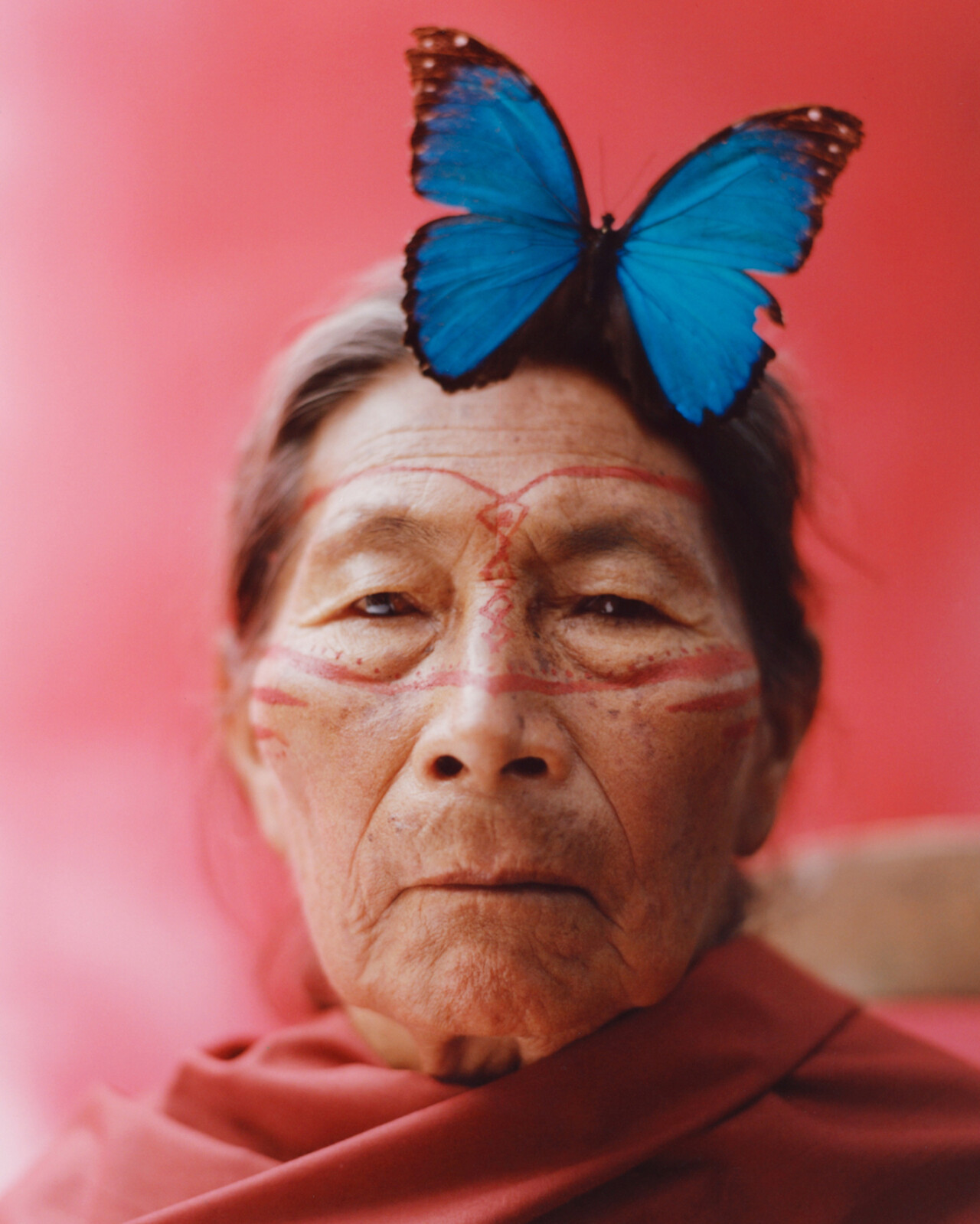
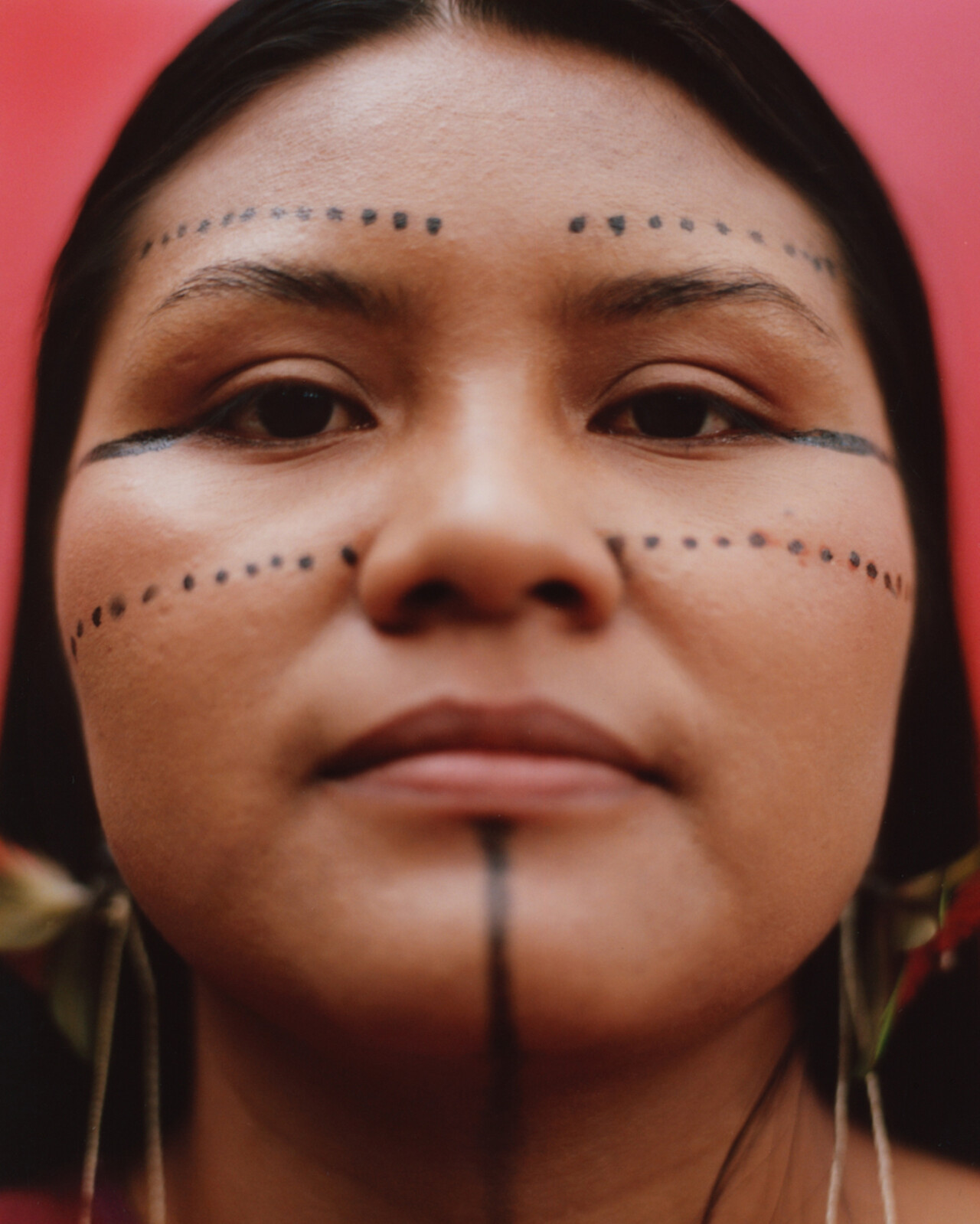
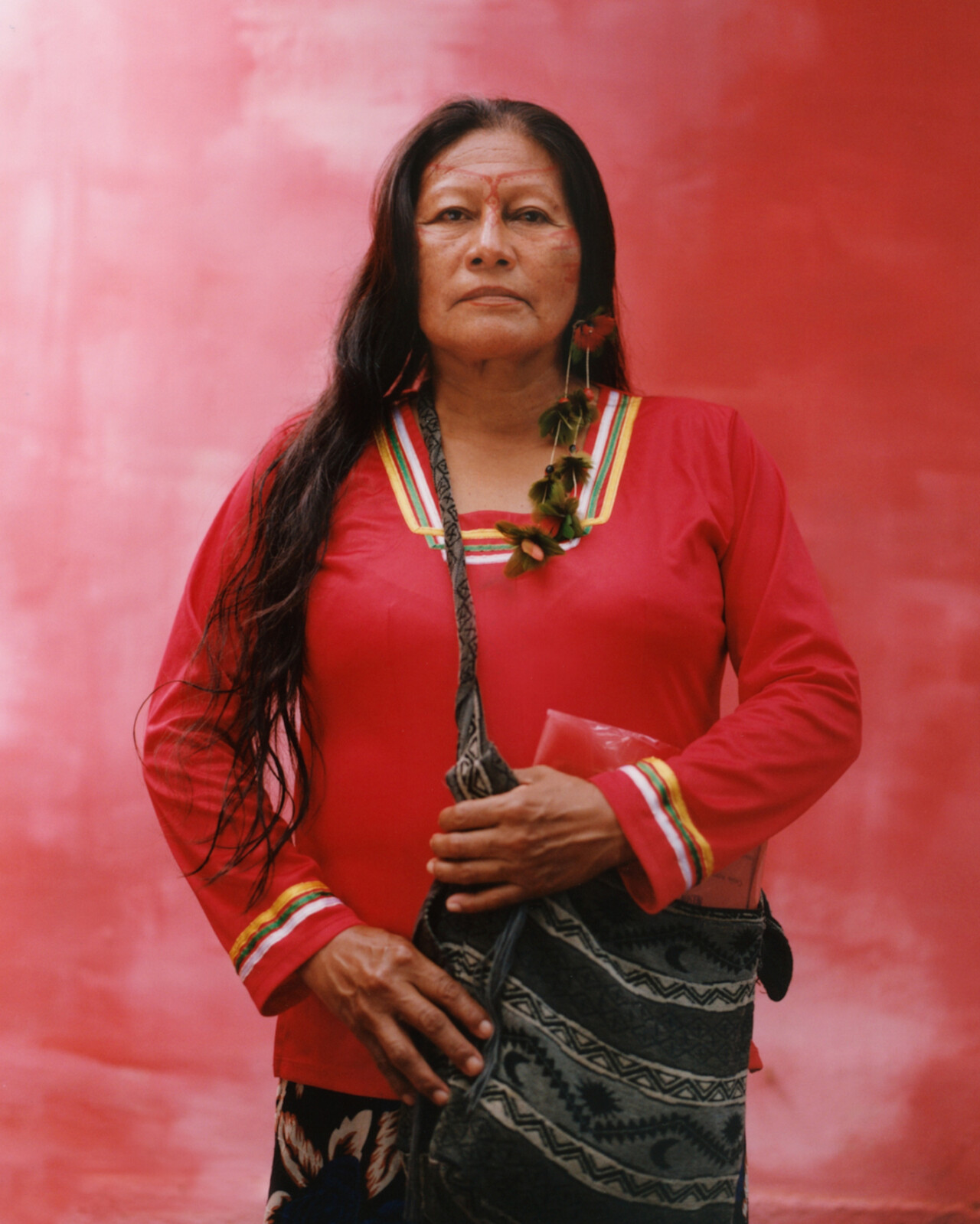
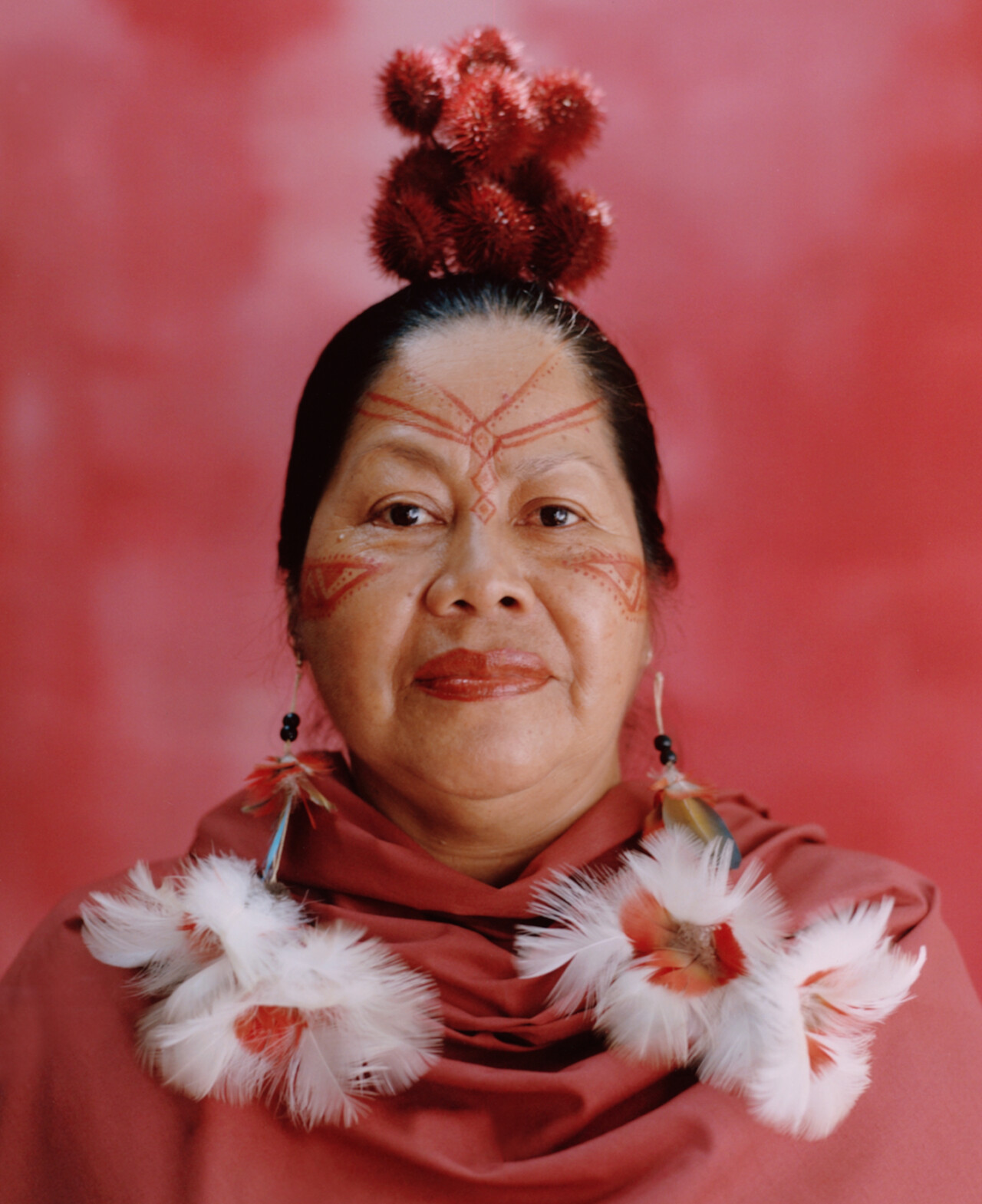
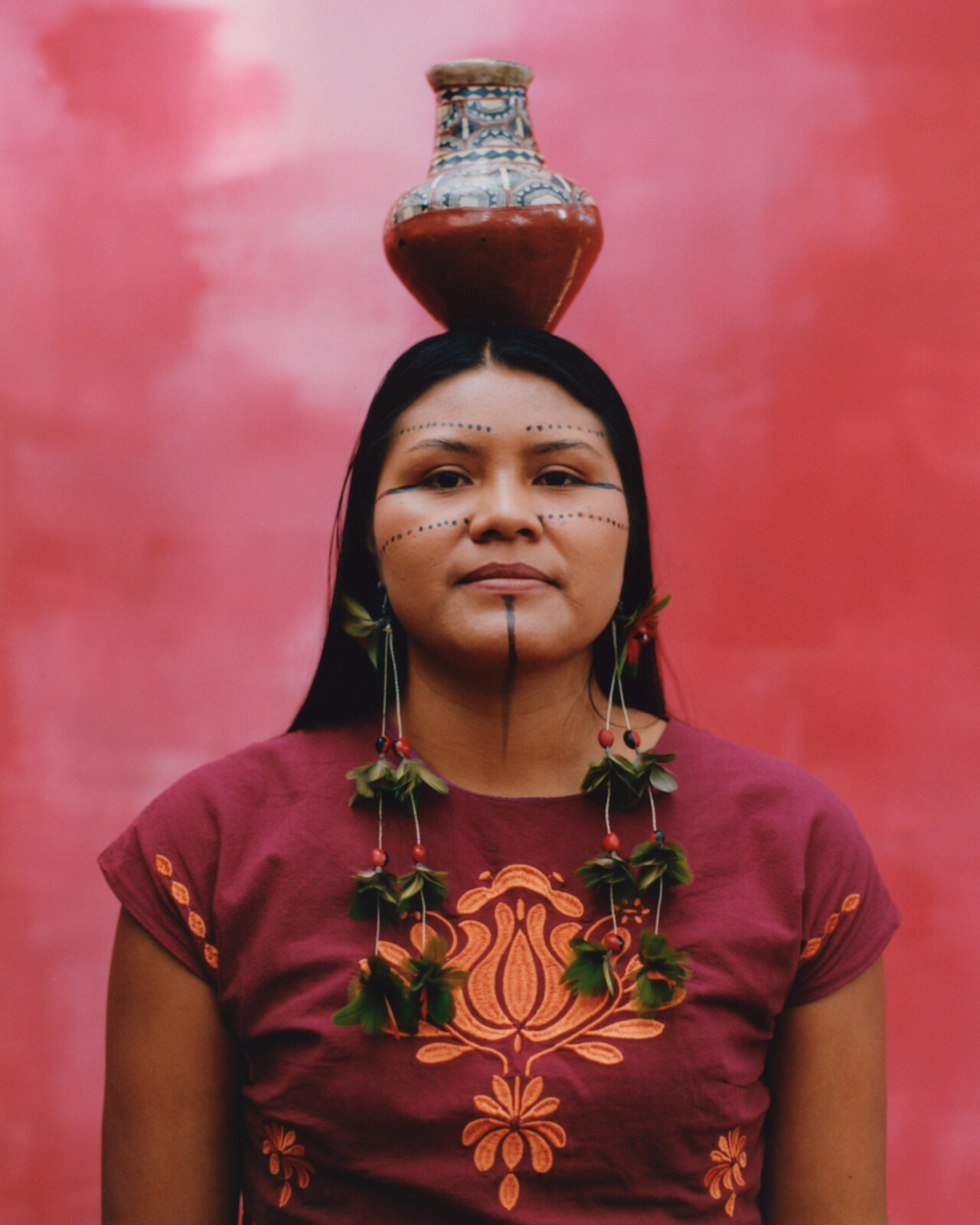
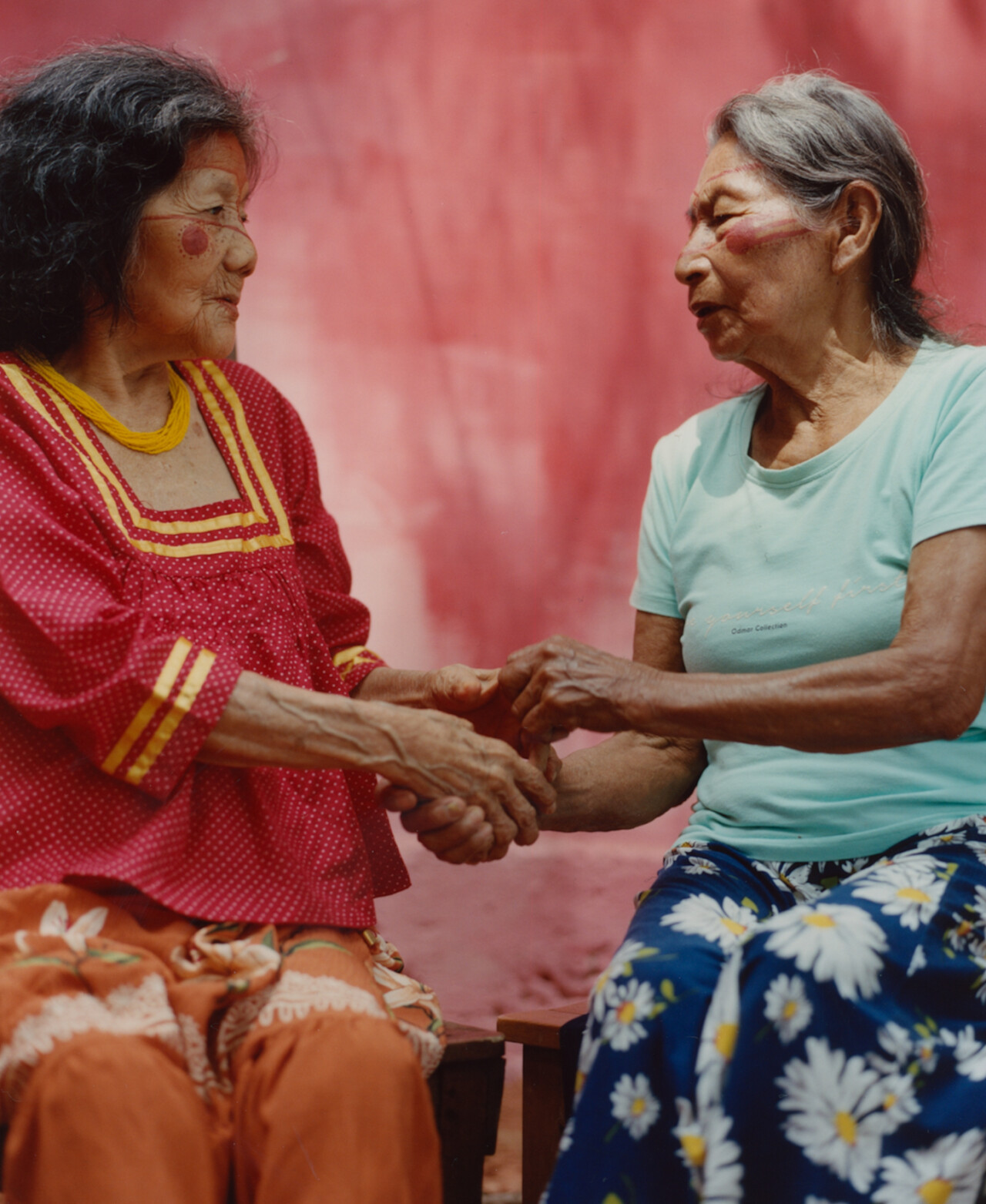
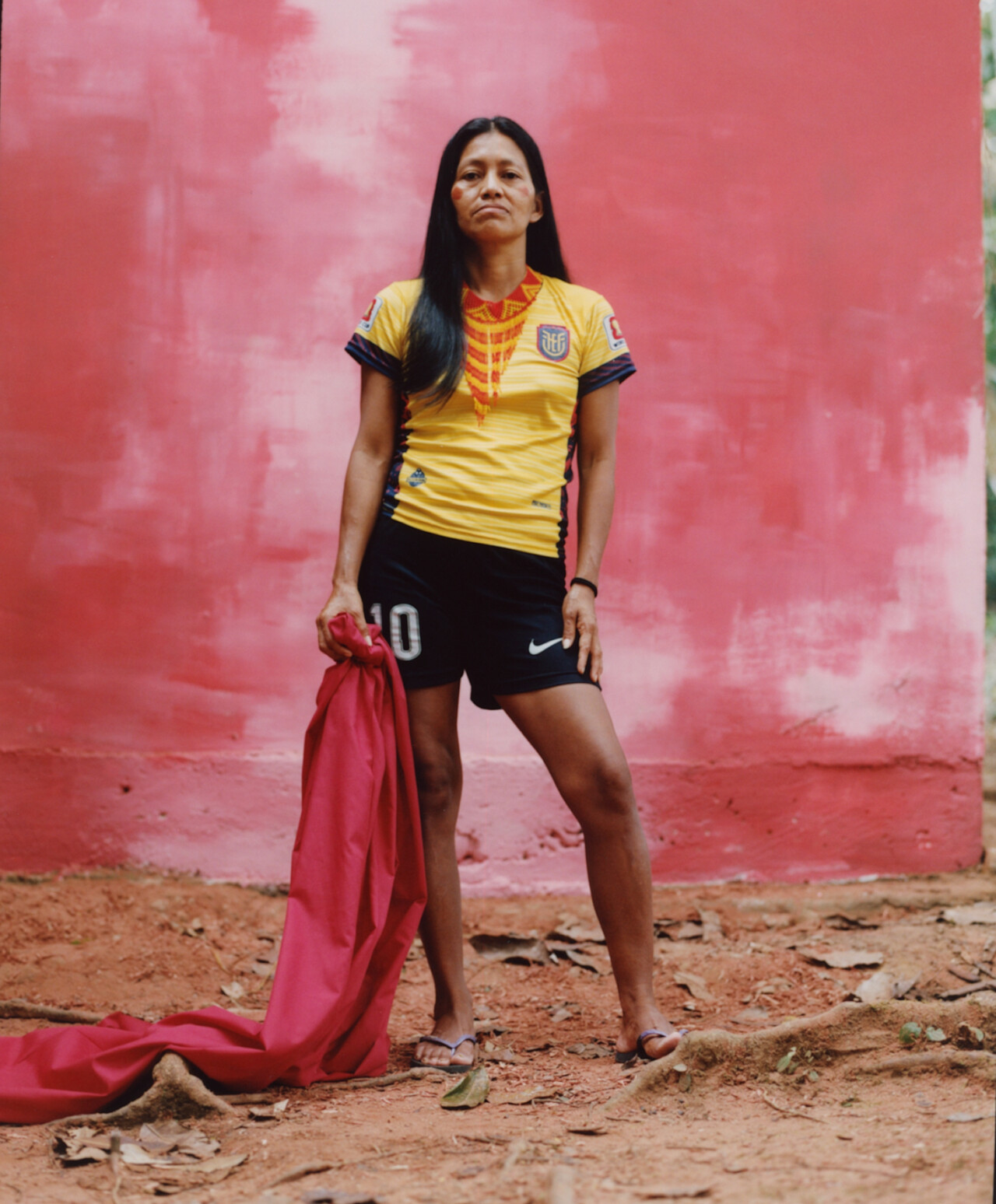
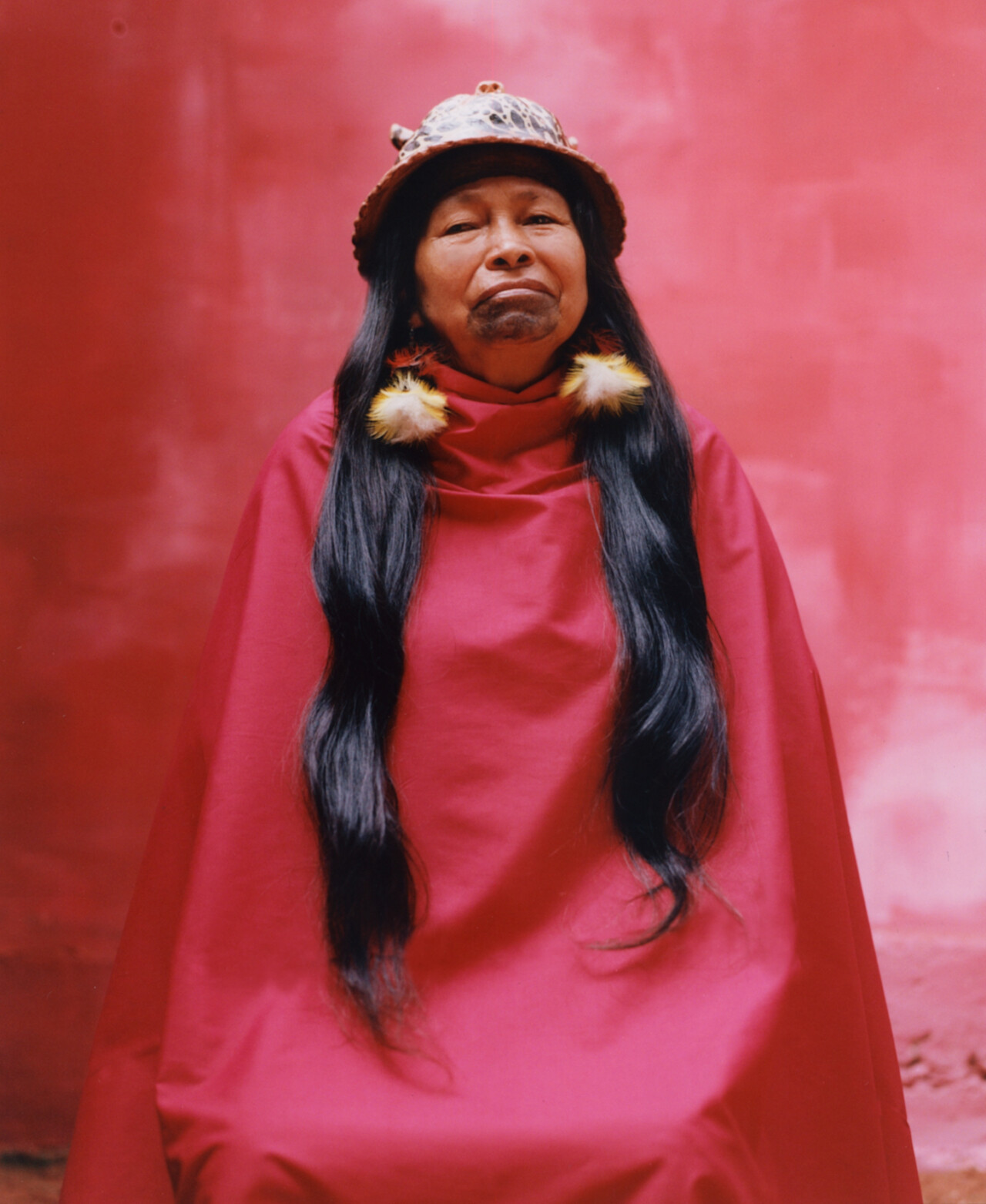
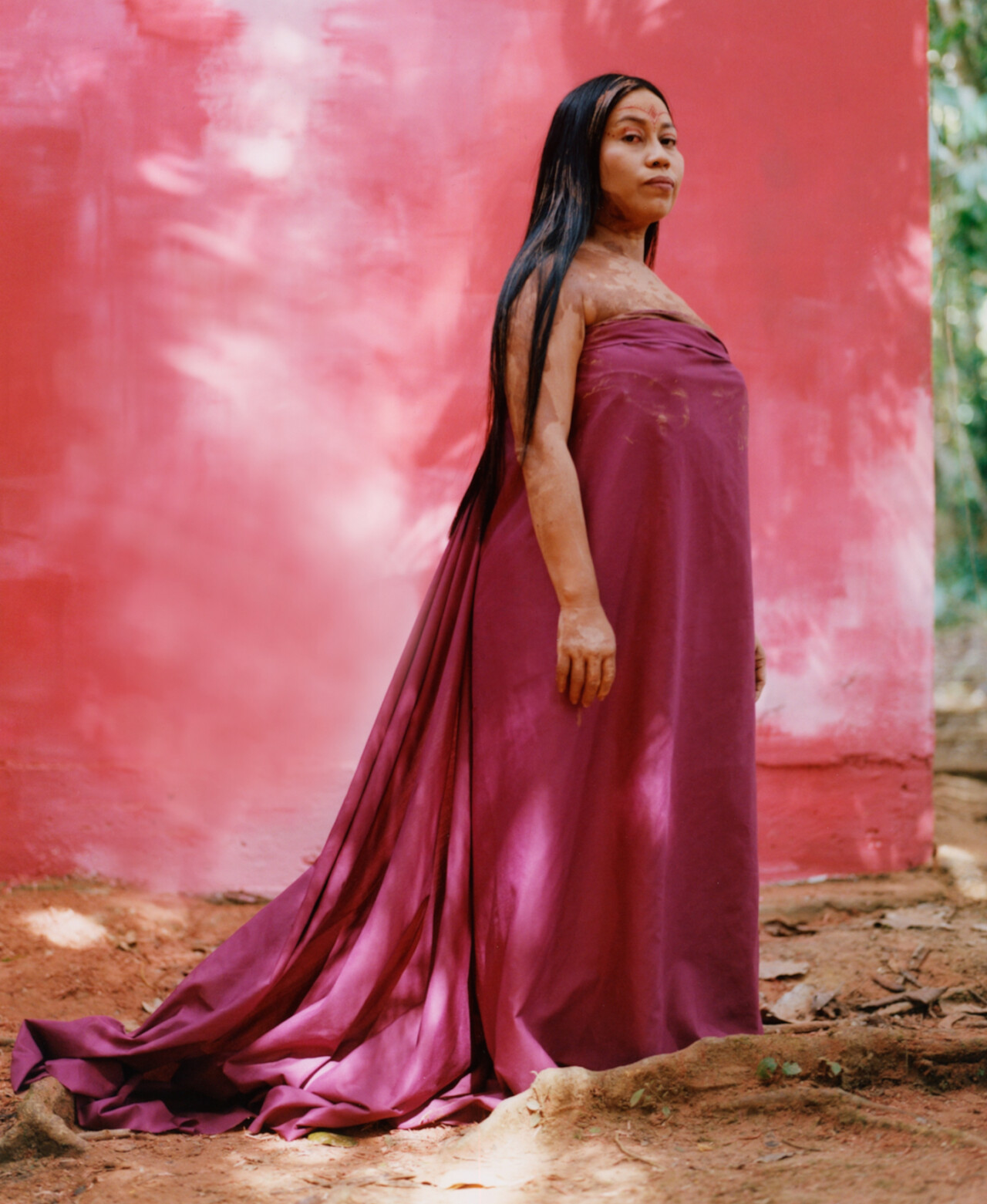
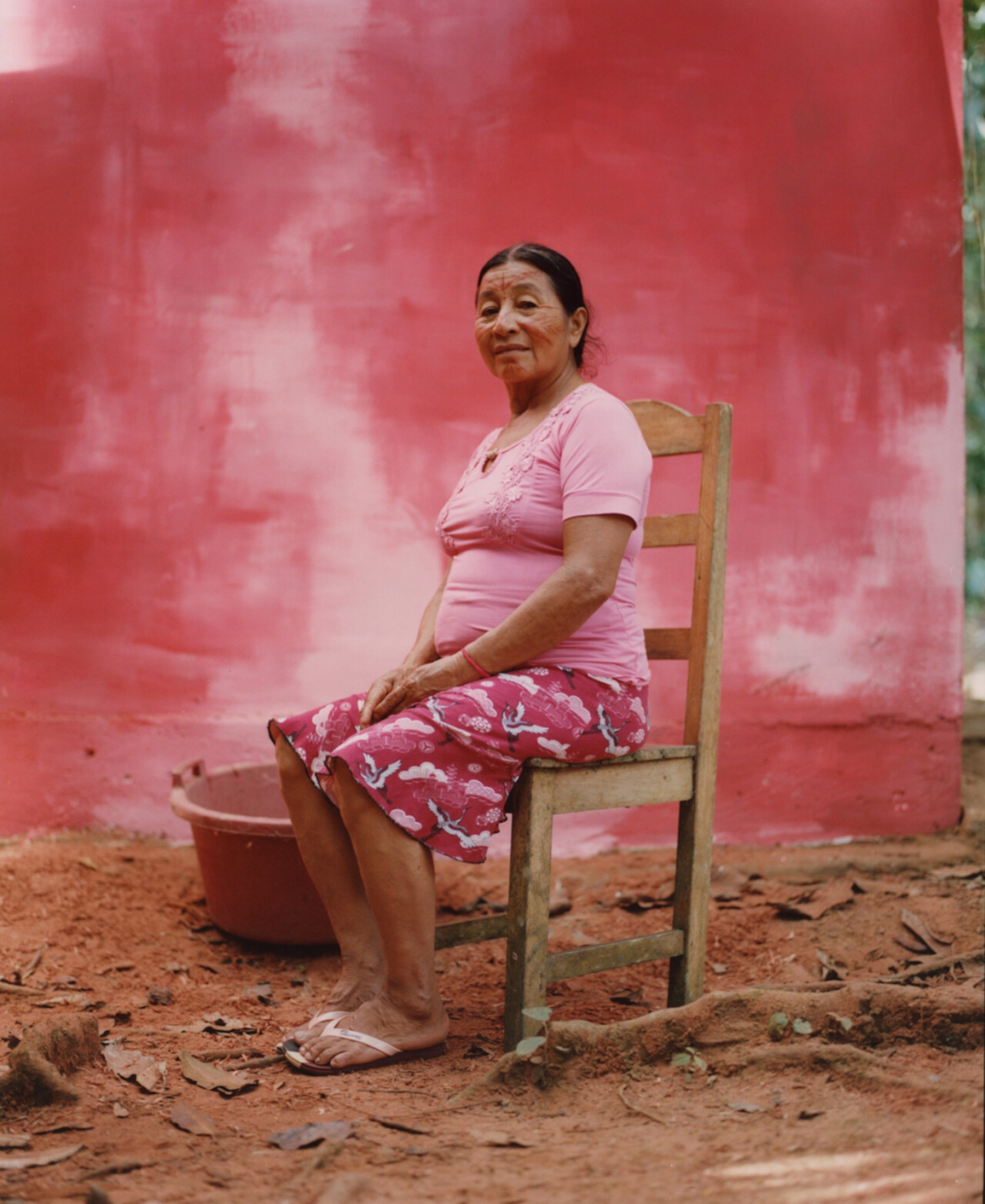
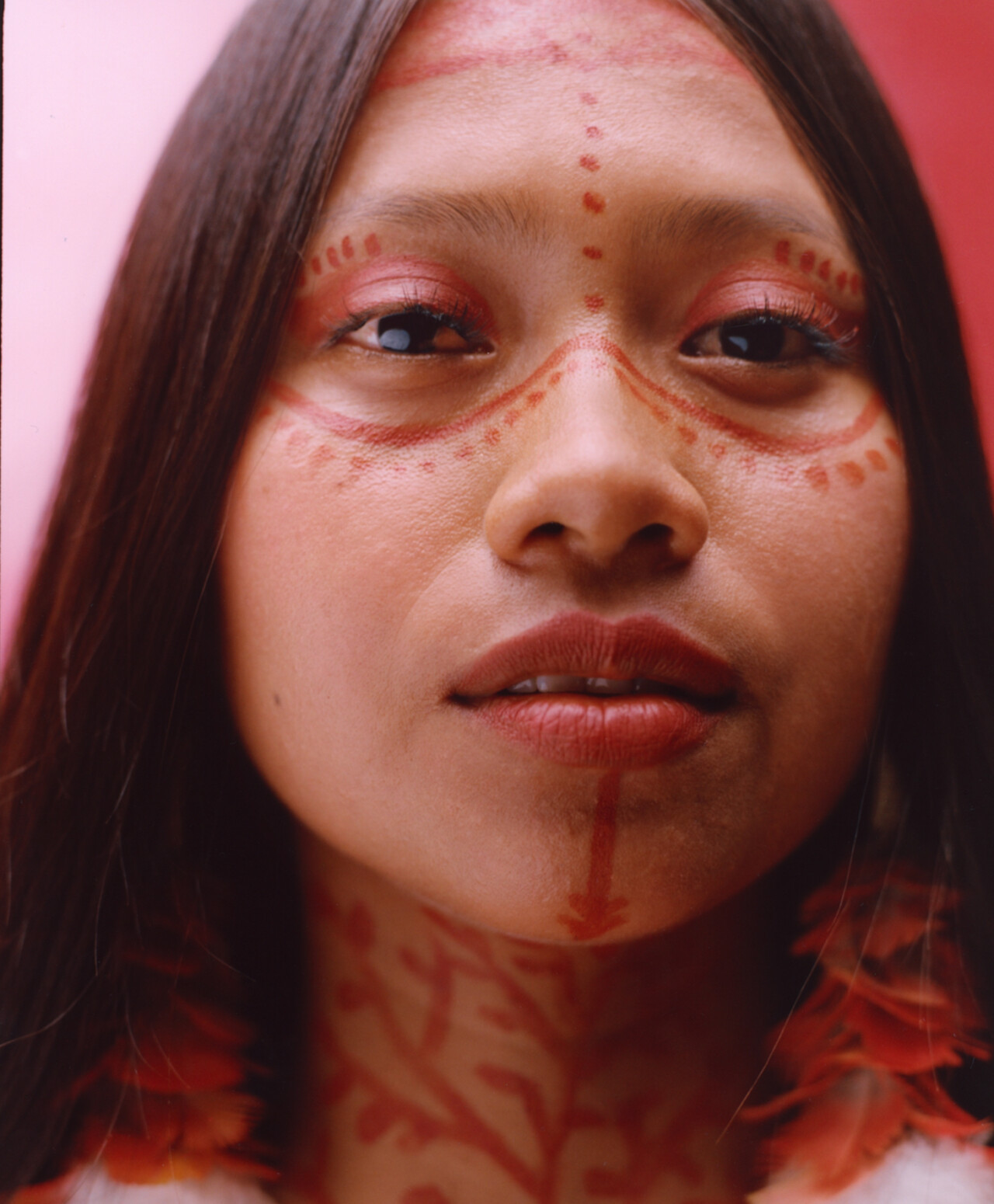
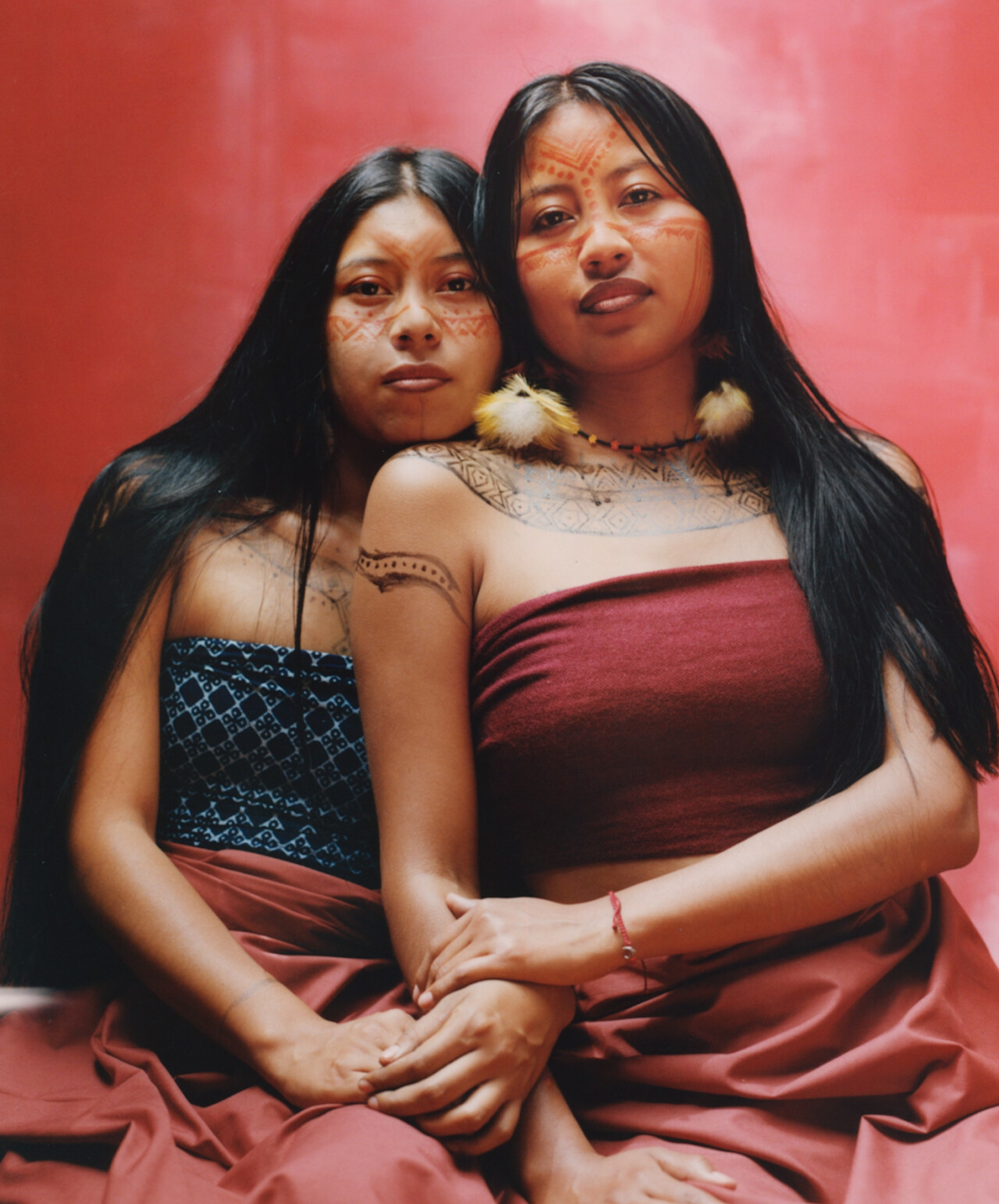
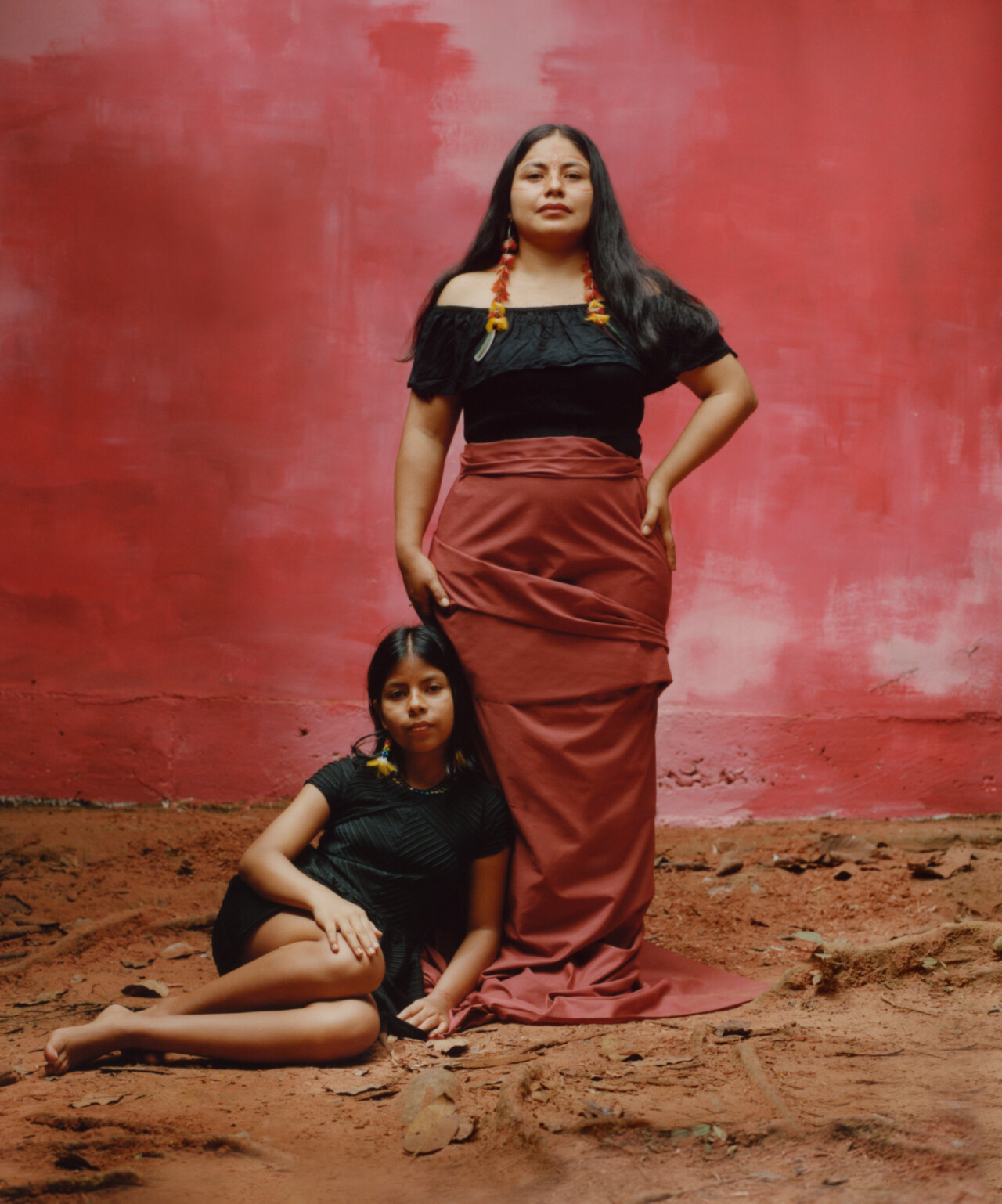
Maria Estefania Aguinda Cerda and Juana Maria Grefa Aguinda
Words by Nina Gualinga
photographs by camila falquez
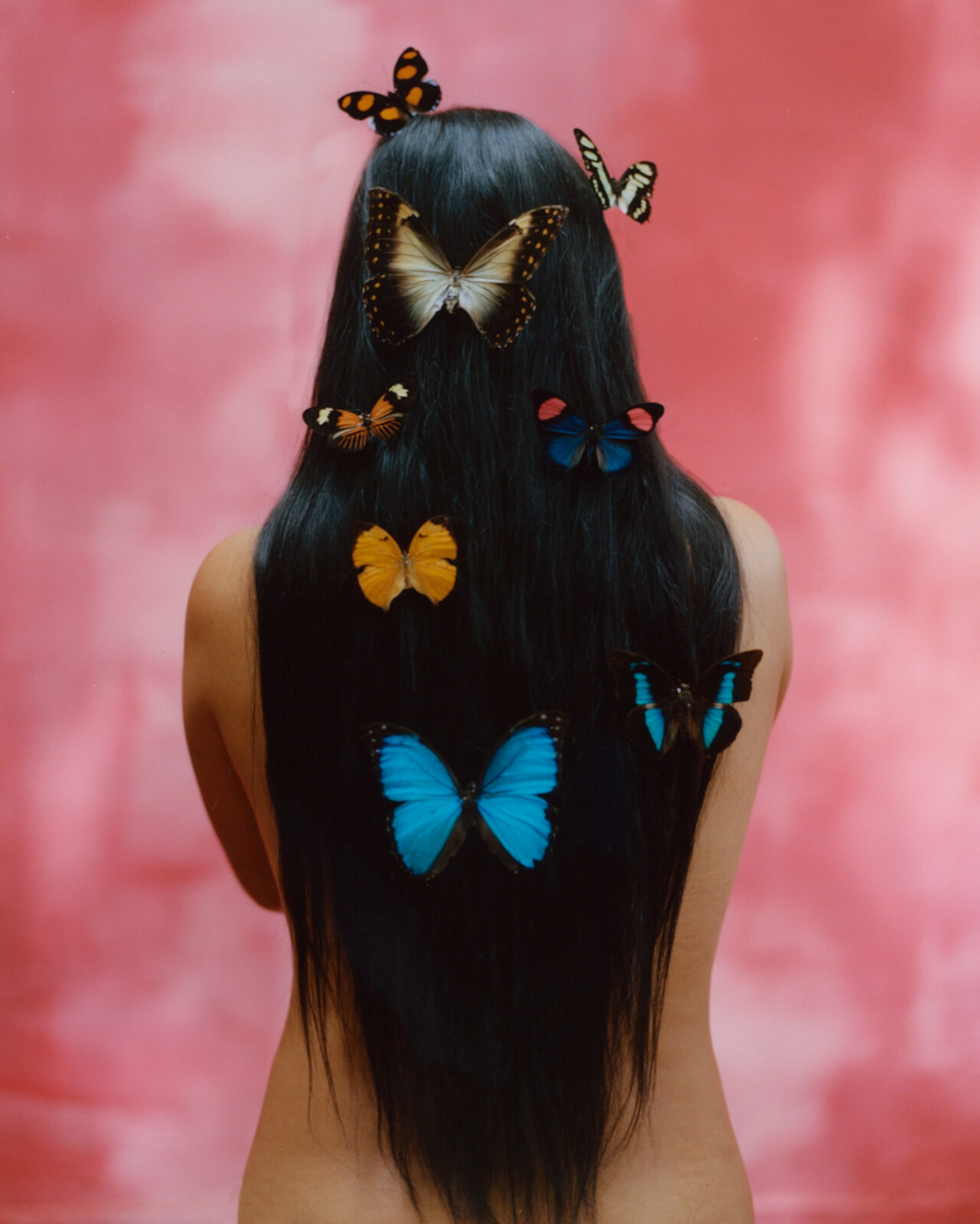
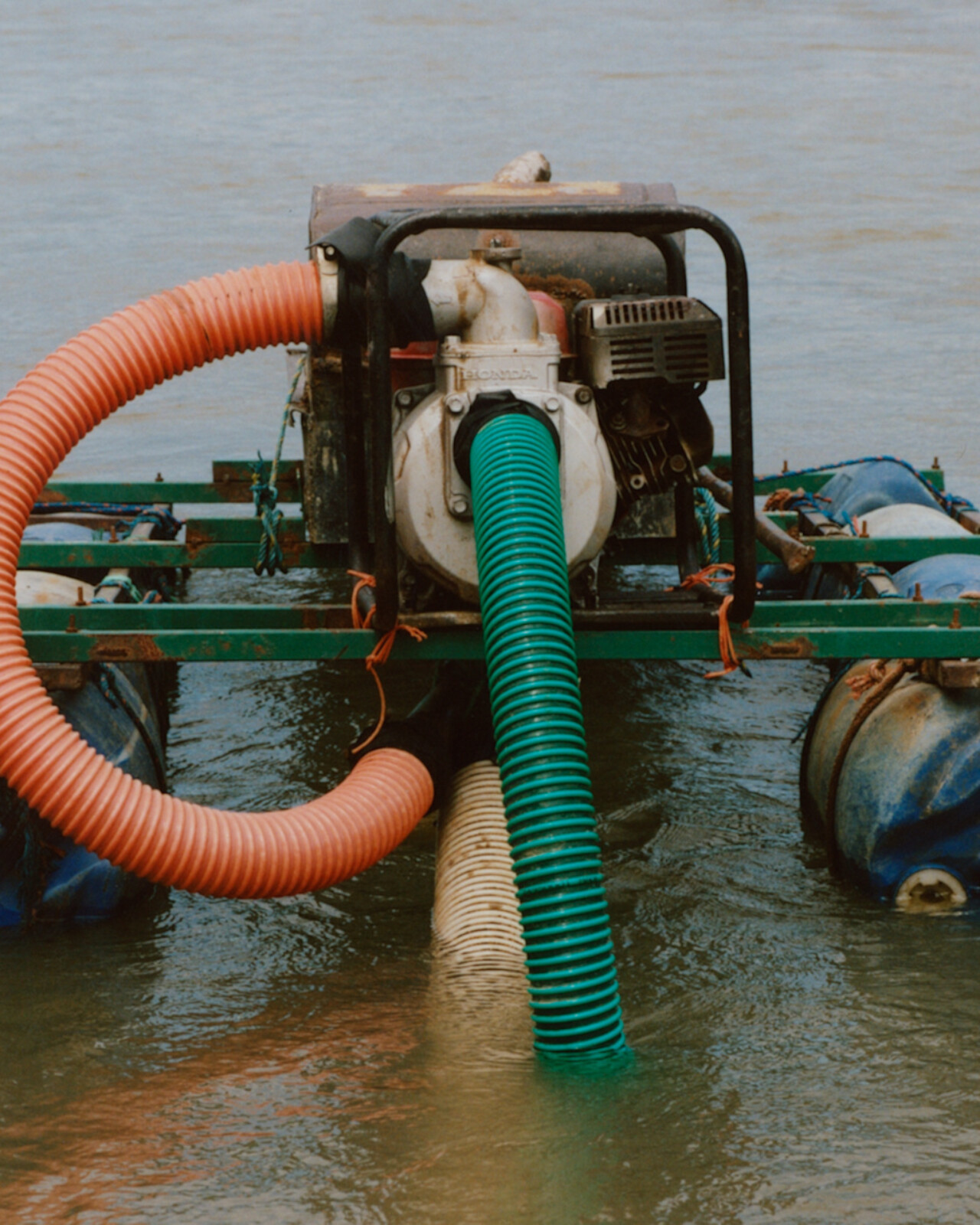
The butterflies move lightly above the river, never appearing to carry the weight of the forest beneath them. The women in my family are like this, too: soft in their movements while holding entire worlds. The machines arrive with weight and noise; the butterflies arrive almost unnoticed. Each changes the landscape in its own way.
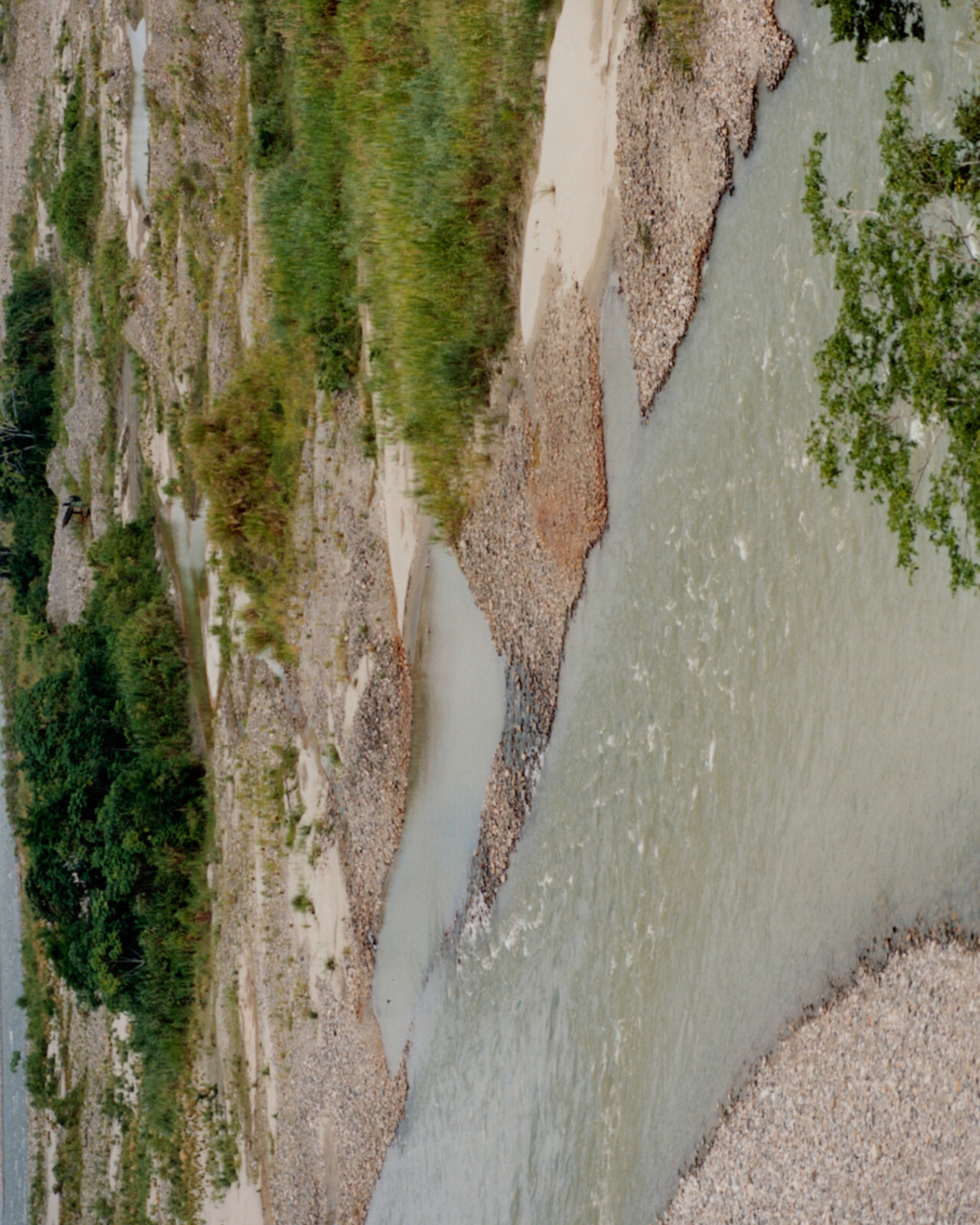
The upper Napo is a place where the Andes dissolve into the Amazon. The Napo River rises on Ecuador’s eastern slopes, along the flanks of the volcanoes Antisana and Cotopaxi. Here, the landscape is green and humid, threaded with crystalline rivers and waterfalls, while mountains disappear into the clouds above. But beneath this beauty lies a more complicated history.
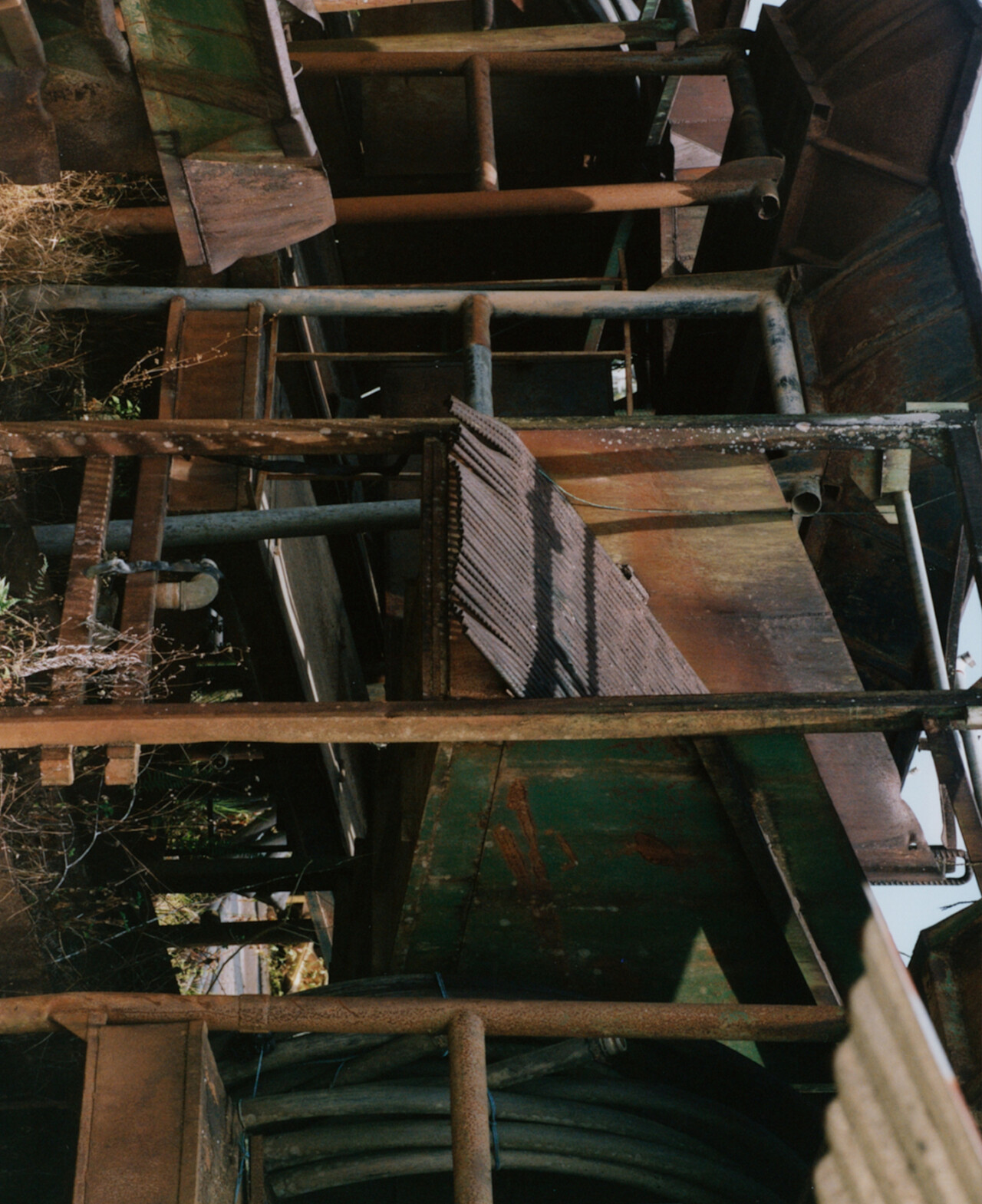
The same rivers and forests that long-sustained communities and biodiversity also attracted missionaries, settlers, traders, tourists, oil companies, miners, and other extractive interests. Today, gold mining pushes deeper into the region while threatening rivers, forests, and islands that Indigenous communities have depended on for generations.
To understand what is happening today, we need to go back in time. Long before European colonizers arrived, the region was home to many different Indigenous peoples and communities, each with their own territories, belief systems, and relationships with the forest and rivers. Colonial expansion transformed those relationships, claiming Indigenous territories and imposing new forms of political and economic control. Extraction became a primary means of connection between the region and the national and global economy, while Indigenous peoples bore many of the social and environmental costs.
Napo’s history was shaped by successive waves of colonization and resource extraction. In the late 19th and early 20th centuries, surging global demand for rubber turned the Amazon into a major source of raw material for industrial production. Along the Napo River, Indigenous people were forced into the rubber trade through violence, debt, coercion, and slavery.
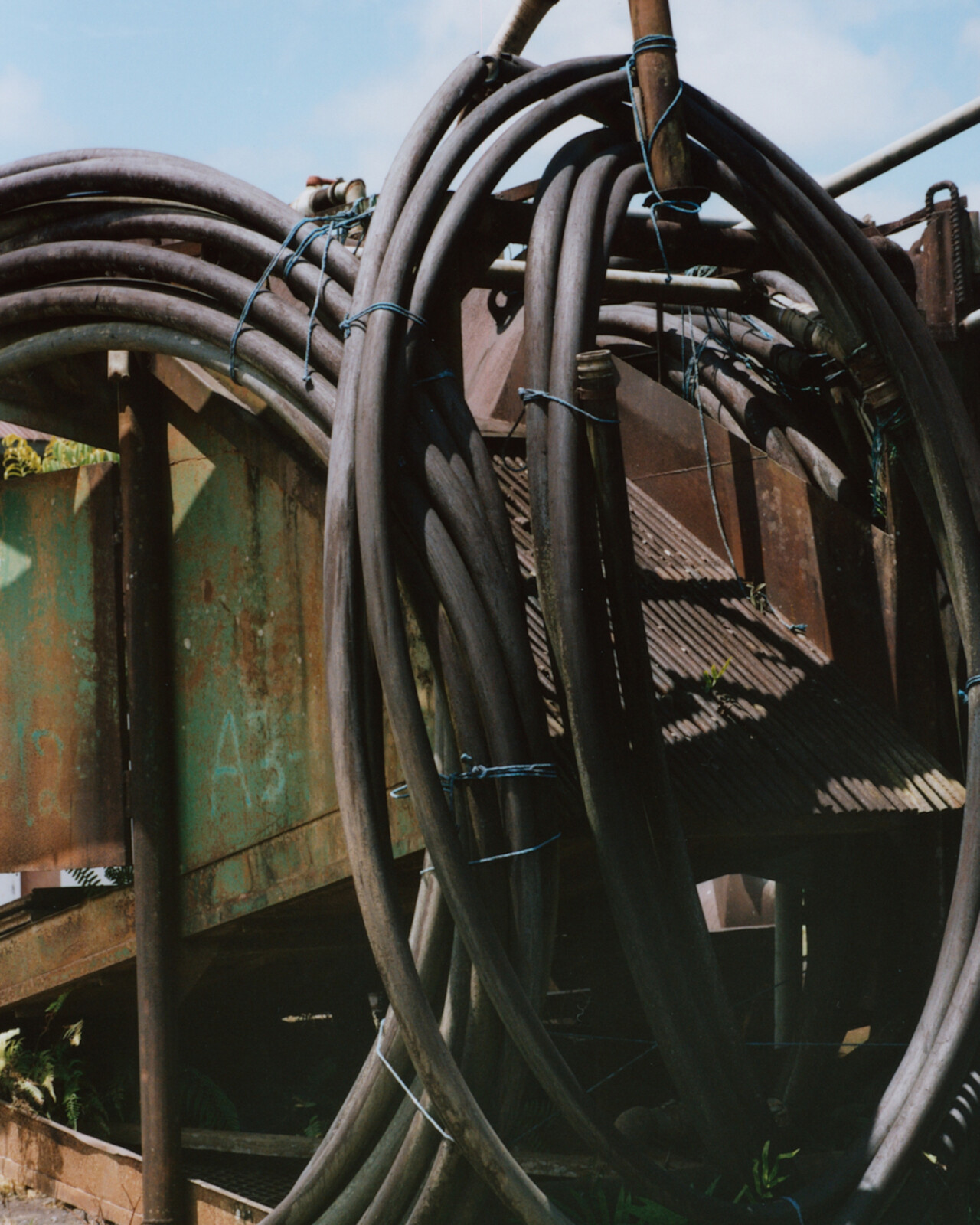
Later, an expanding oil industry changed the form of extraction but reproduced many tensions. Oil exploration and production from the 1960s onward spread across the Ecuadorian Amazon, bringing roads, settlers, infrastructure, and new forms of state and corporate control into Indigenous territories. Oil spills remain a persistent threat. On April 7, 2020, three pipelines ruptured, contaminating the Coca and Napo rivers; water that countless ecosystems, animals, and people rely on.
Gold is the latest chapter in this history of shifting extractive frontiers. Through each, Indigenous peoples have continued to adapt, resist, and defend their territories and ways of life. Among them are Indigenous women carrying the memory of a living landscape—and of a relationship with gold that long predates industrial extraction—even as legal and illegal mining increasingly threaten the islands, forests, and relationships that sustain their families.
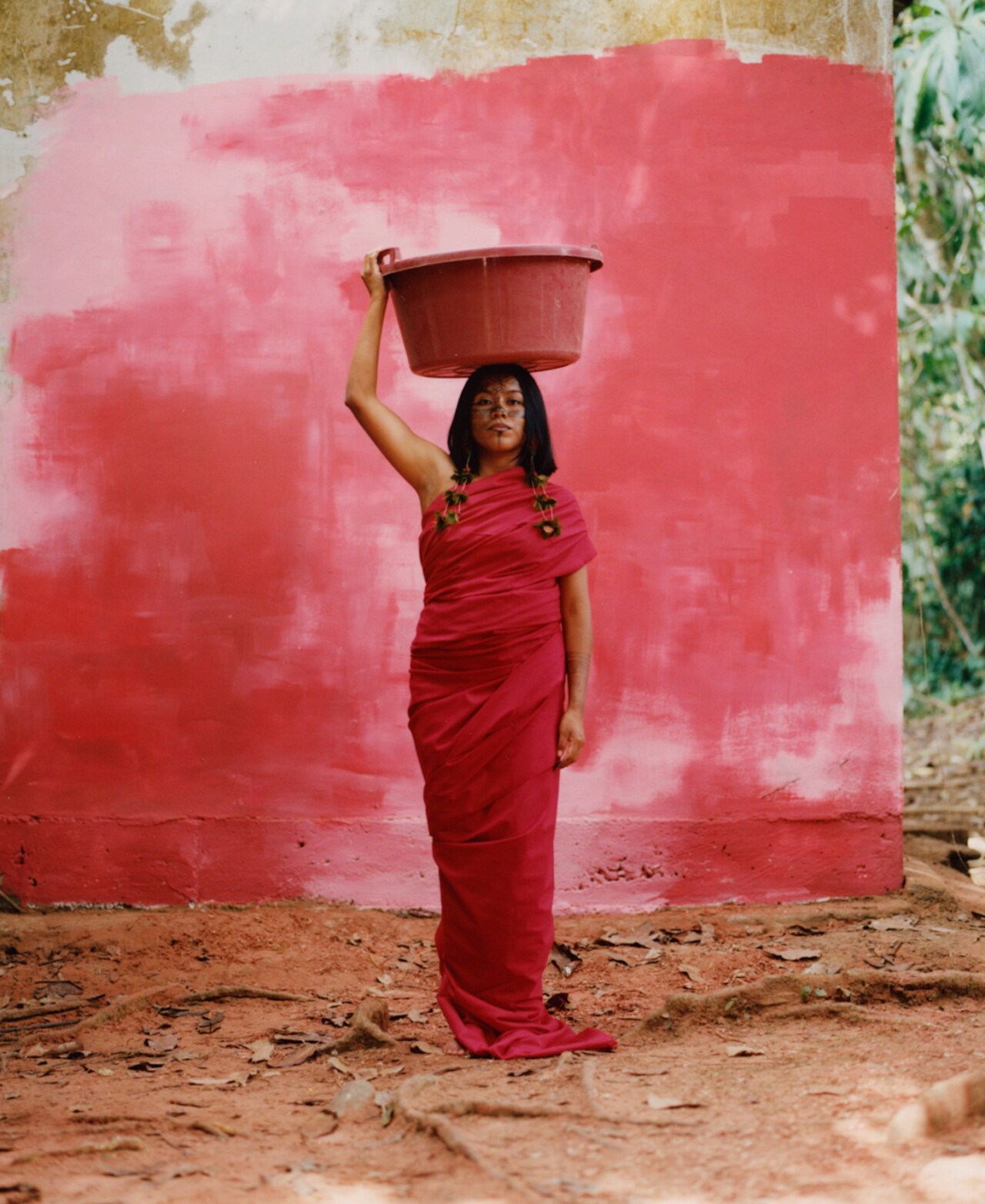
Virkina Swanson Andi, or Eli as we lovingly call her, is one of them. She is a dear friend of mine and compañera de lucha—a companion in struggle.
Eli is a lover: a lover of all that lives, all that moves, and all that remains still. A biologist by training and an artist at heart, she uses photography, poetry, and film as the mediums through which she tells stories about the living world. She comes from the Venecia Derecha (Kanua-Yaku) community along the Napo River and is the president and cofounder of the Iyarina Amazonian Center for Indigenous Knowledge and Innovation, a family-founded biocultural research and learning center that brings together Indigenous knowledge systems, scientific research, education, and innovation, while recognizing the living territory as a teacher.
Eli and I are of mixed heritage, and our experiences growing up share deep similarities and profound differences. She told me about watching small forest trails become paved roads and hearing familiar river sounds drowned out by heavy machinery digging for gold. We spoke many times about the grief we carry in our bodies as rivers are poisoned and forests cut down. For Eli, that grief is rooted in a much longer relationship with this landscape: For generations, Kichwa women have moved between the river and its islands, planting, harvesting, fishing, gathering, and raising their families. The islands are part of the knowledge passed from grandmother to daughter, from mother to child. “My mother gave birth to me on the island,” a grandmother in the community once told Eli. She keeps returning to those words. “This is why it is difficult for me to look at a mining machine and see only a machine,” she said. “Our relationship with these islands is much older than the machines.”
Eli grew up hearing elders say “Kawsak sacha man,” meaning “the forest is alive” in Kichwa. “I understood it long before I understood that there were people in the world who believed otherwise,” she said. To say the forest is alive is not metaphorical. The river is alive. The islands are alive. The mountains have their own relationships with us. The fish move through a world that is also our world. Our dead remain part of the places we live. “There is no single word for ‘nature’ in Kichwa that separates the human world from everything else,” Eli said. “We are not outside of the natural world, looking in at it. We are inside it, entangled with it.”
Gold itself is not foreign to her family. Eli’s mother, Josefina Andi, remembers panning for it almost every day with her own mother so they could send her siblings to school. Her grandmother, Rukumama Estefania Aguinda, now 90, remembers a time when the riverbanks and islands were still intact and families moved through a much larger territory with the seasons. She also recalls elders finding what they called Kuri Amu, the guardian of gold, a being covered in hair and gold among the roots of an uprooted tree where the metal was abundant. What some might call myth, her grandmother’s generation understood as something they had seen and lived alongside.
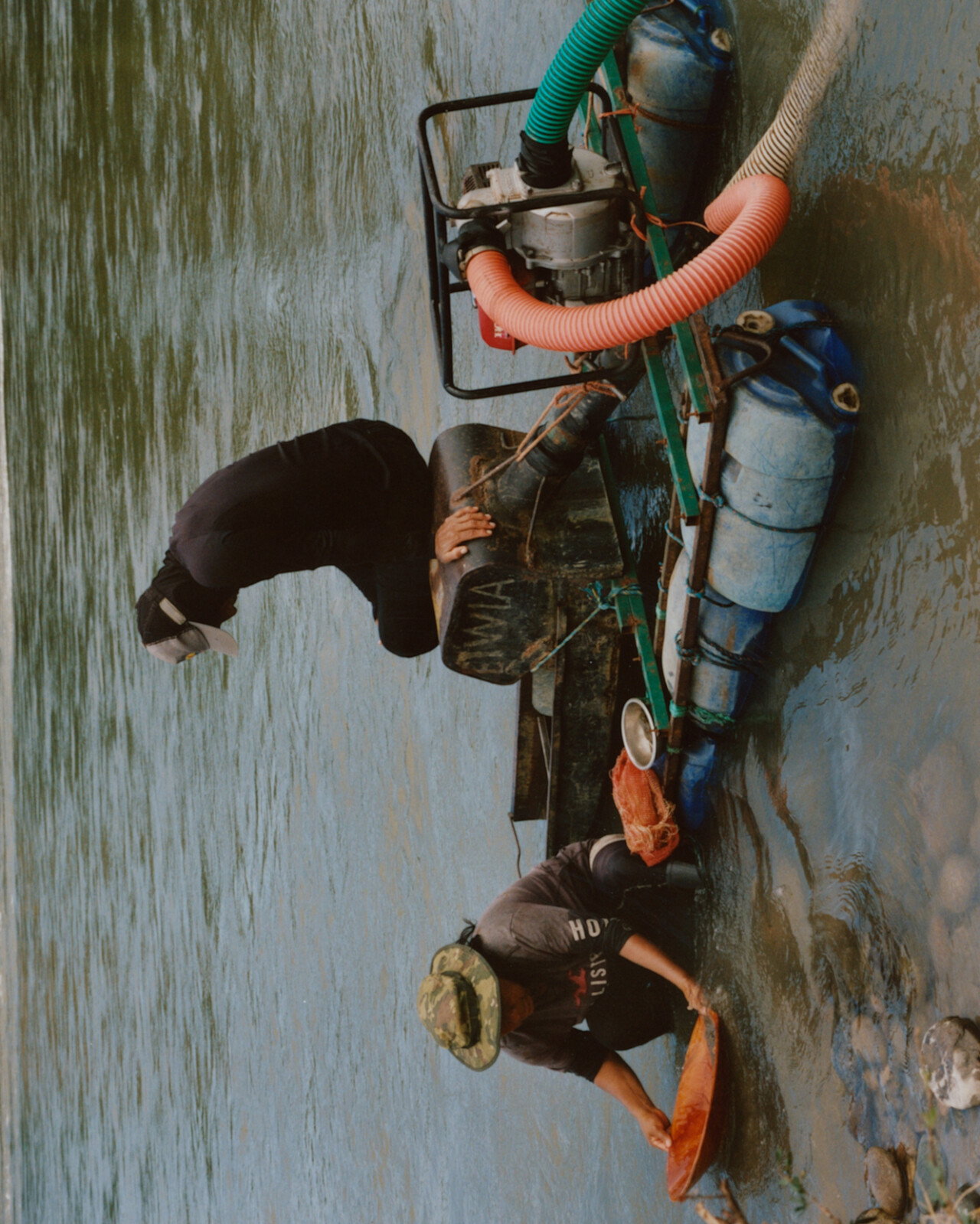
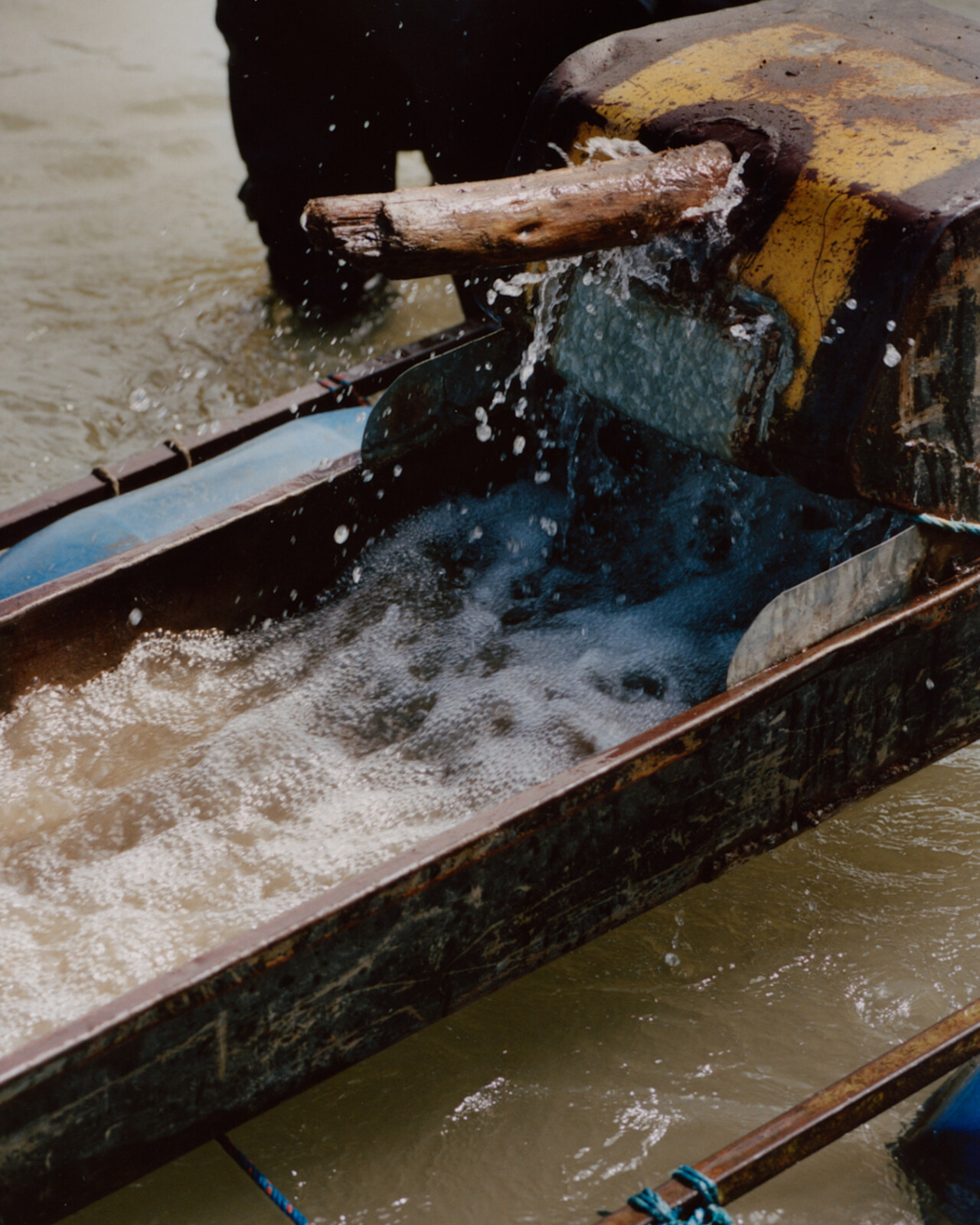
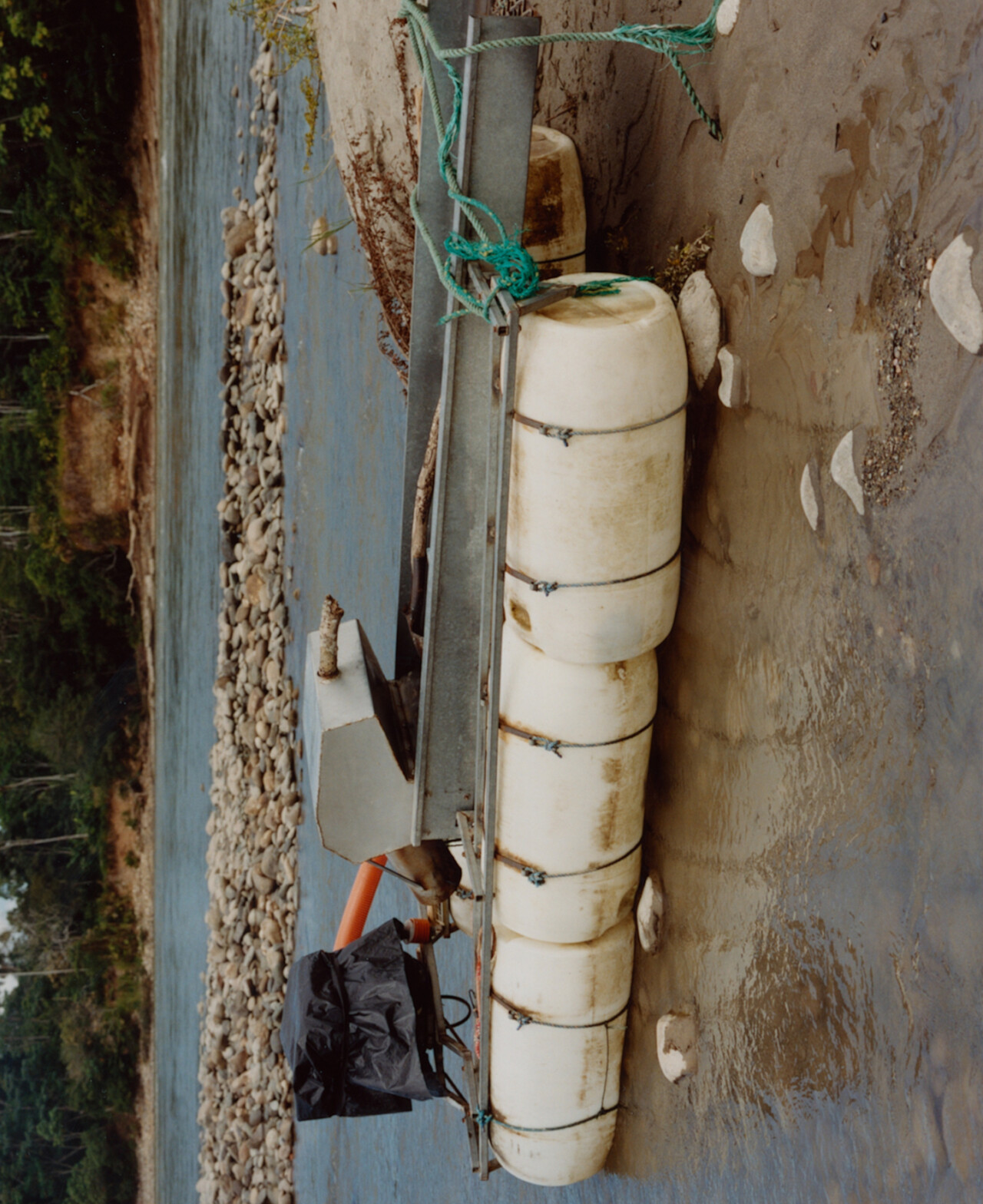
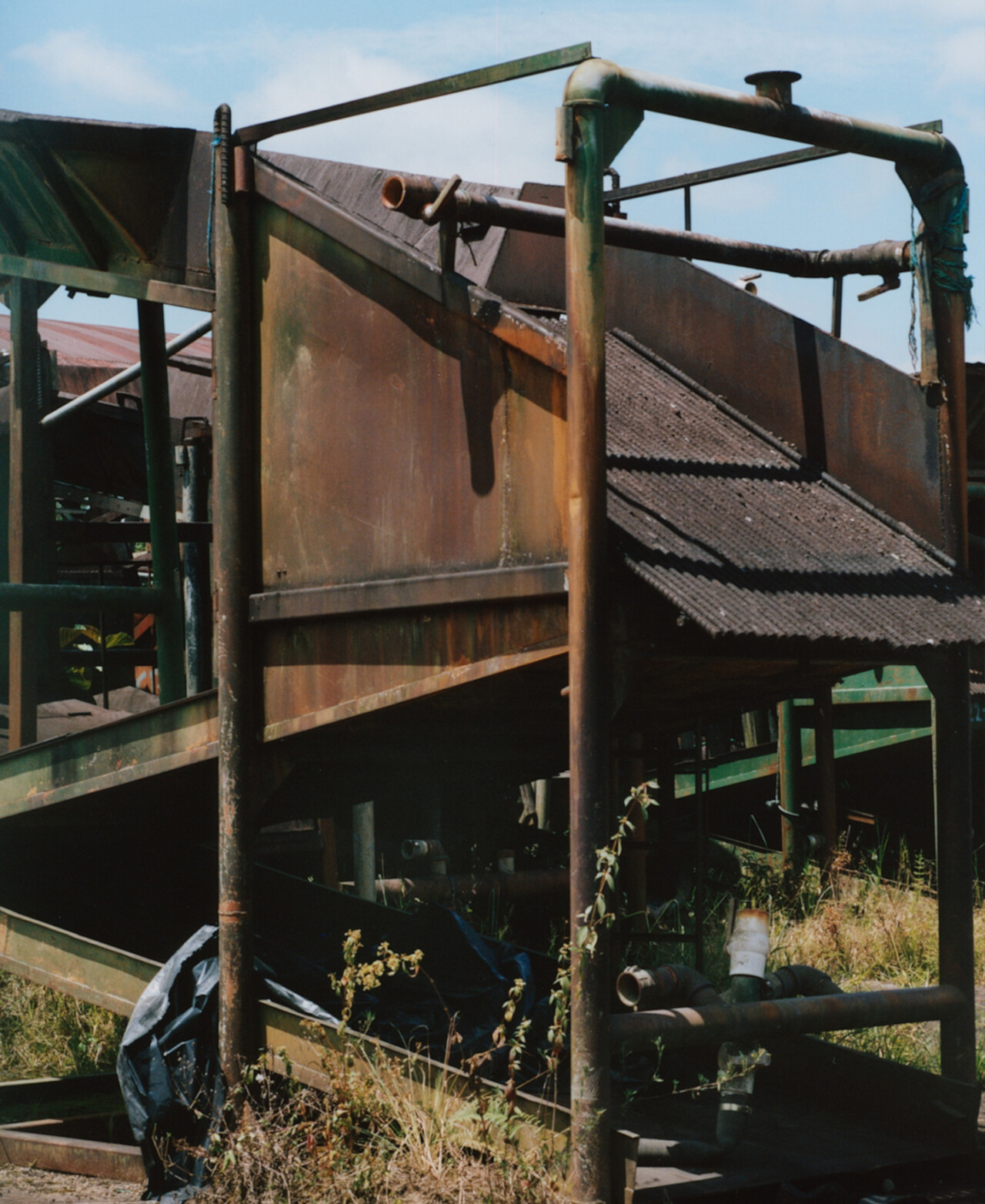
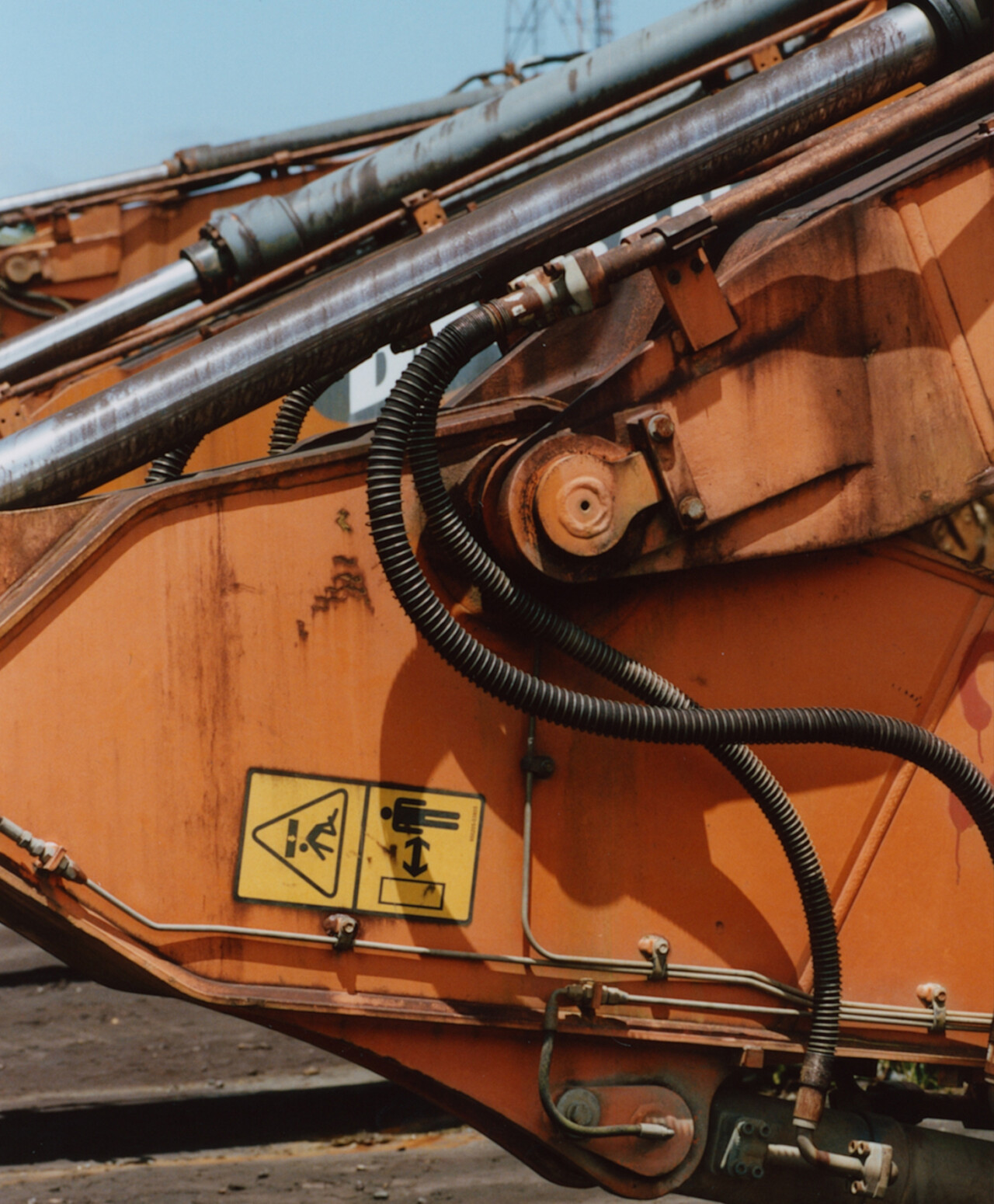
Today, gold represents another phase of this longer extractive history. Mining has expanded significantly along rivers such as the Jatunyacu and Napo, providing income and employment while drawing in a complex mix of Indigenous communities, local miners, outside investors, companies, and organized crime. It has also altered river systems, brought mercury contamination, and intensified conflicts over land and territory. The expansion of illegal mining is therefore not simply an environmental problem, but part of a much longer struggle over who has the right to decide what happens to the territory, who controls and profits from its resources, and what remains for the people and ecosystems once those resources have been extracted.
“Gold panning [was always] part of our lives,” Eli said. “It was labor. It was a way to survive.” But she draws a sharp distinction between that practice and the industrial extraction now entering the territory with heavy machinery and outside investment. “The question is not whether our people have ever touched gold,” she said. “The question is what happens when gold becomes more valuable than the relationships that surround it.”
“There is no single word for ‘nature’ in Kichwa that separates the human world from everything else. We are not outside of the natural world, looking in at it. We are inside it, entangled with it.”
Those relationships extend beneath the ground itself. Before land invasions and Ecuadorian land reform, Kichwa families moved across a much larger territory, building seasonal homes and gardens on the islands. When family members died, some were buried beneath their homes. The houses disappeared, but the relationship to those places endured. When young Kichwa people protest gold mining on these islands today, Eli said, they are not only defending trees and water. They are also defending the resting places of their grandparents. “Our grandparents are buried in these islands,” she said.
I think about this when Eli speaks about the word resource. A resource for whom? What is a piece of land when you know your grandmother is beneath it? What is an island when it holds your food, your ancestors, your childhood, and your future? The violence of that history has not disappeared. It continues to shape the extractive pressures people face here today. And yet, as Eli said, “we are still here, Napuruna people, carrying our relationships with the river, forest, and ancestors forward.”
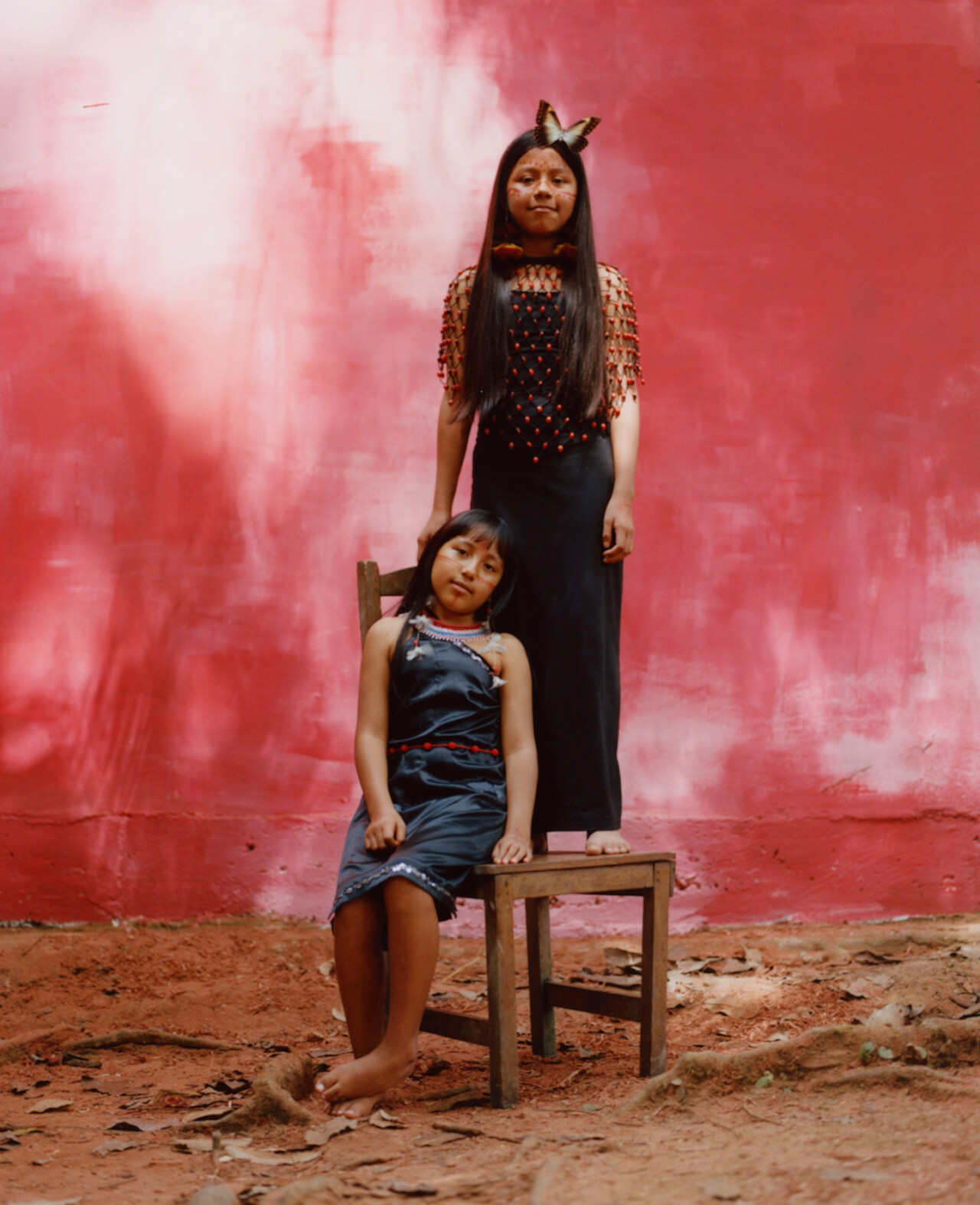
Sisa, our dear flower, is Eli’s cousin, though she likes to call herself her big sister. They grew up under the same roof, often sharing the same bed. They remain inseparable; I rarely see one without the other.
Sisa has always cared for her family and friends, physically and spiritually. I remember once, when we went to the river and I began feeling sick, she pulled out an egg and circled it around my head, eyes, back, and hands, drawing out the negative energy weighing me down. When she finished, she started telling jokes and making us all laugh. That is Sisa: She takes care of us, then makes us laugh.
Eli remembers one of the rare times she saw her big sister cry. They were at a meeting where illegal gold miners were seeking signatures from relatives for permission to mine what Eli calls their “food islands.” “Sisa cried that day, clutching my arm,” Eli said. “She was scared.”
For Sisa, the river is inseparable from memories of her grandparents and childhood. She remembers it as clean, clear, and beautiful. Her family traveled by canoe to visit relatives and swam in the river on the way home. Children carried buckets of river water back to the house for drinking and cooking; after school, families went fishing and returned with full baskets.
“I never had a toy,” she said. “I never had a doll. But I never felt like I was missing anything because I was free.” Now, she said, it hurts to know that children growing up along the river may not experience that same freedom.
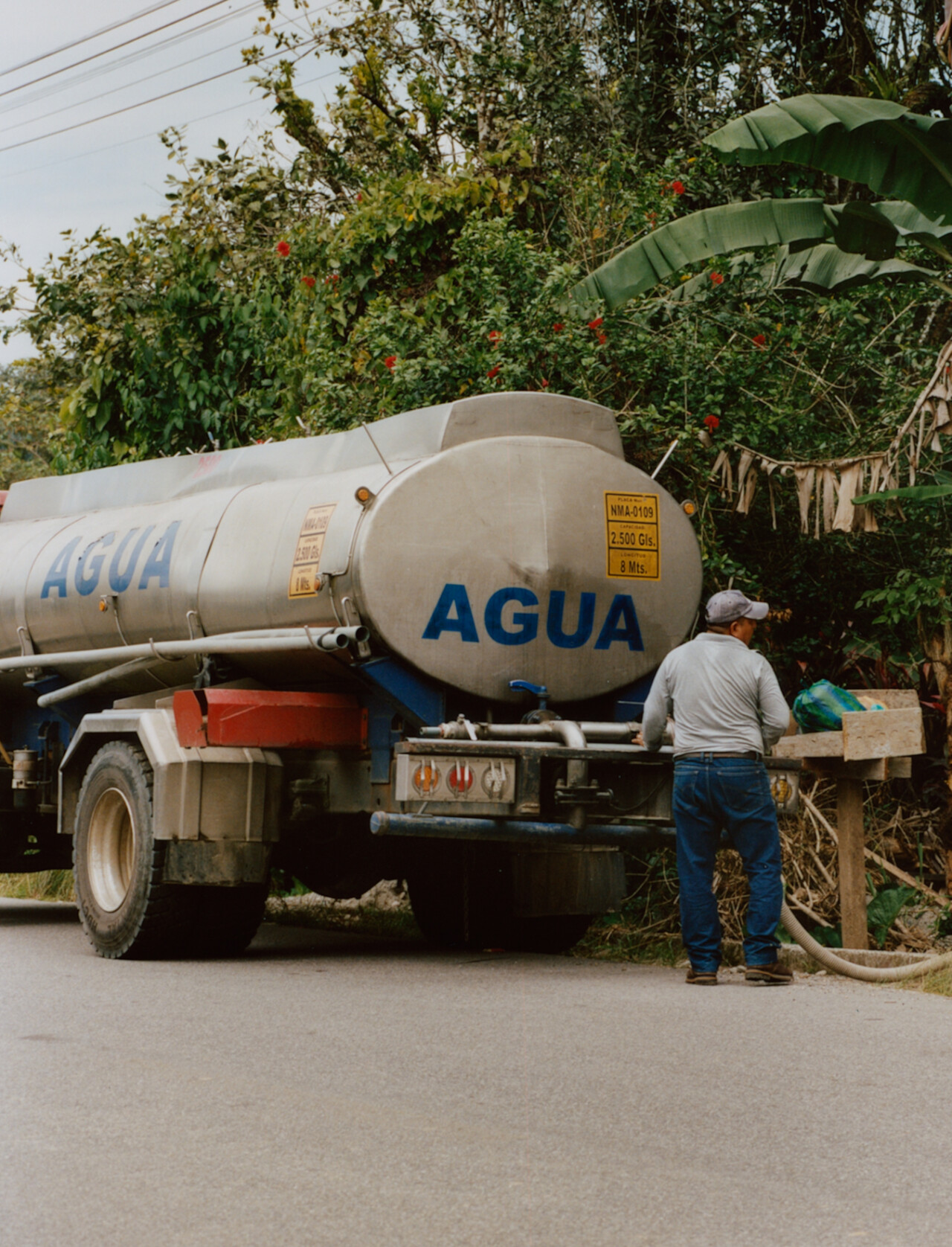
Transforming that childhood landscape is the expansion of illegal gold mining along the Napo, with consequences for her family’s health and food. Many relatives tend chagras on the river islands, growing yuca, bananas, fruit, and medicinal plants. “Now that the river is sick, the plants are also getting sick,” Sisa said.
Illegal mining is polluting rivers across Napo with toxic chemicals and heavy metals. One study found mercury and cadmium levels in 14 tributaries of the Napo River at 100 to 1,000 times the legal limit, threatening water sources vital to local communities. “It hurts to know that something that for me was the most beautiful part of my childhood, today is something that the children fear,” Sisa said. “They fear getting sick. They fear eating fish from the river.”
Gold itself was also part of Sisa’s childhood. She remembers going to the river with her grandparents, carrying a machete and a wooden pan to search for gold. They moved stones from the river without mercury or heavy machinery, in what she describes as an ancestral family practice carried out for generations.
What is happening now, Sisa said, is entirely different.
“Illegal mining has had such a profound impact on us,” she said. “Sometimes I think I want all the rivers to disappear.” It is a startling thought from someone whose happiest memories are rooted in the river. But for Sisa, it reflects the relentlessly spread of mining, reaching deeper into the forest and places communities have depended on for generations. “They are not thinking about the future,” she said. “And this affects us deeply—the communities who have lived along the riverbanks for generations.”
“I never had a toy. I never had a doll. But I never felt like I was missing anything because I was free.”
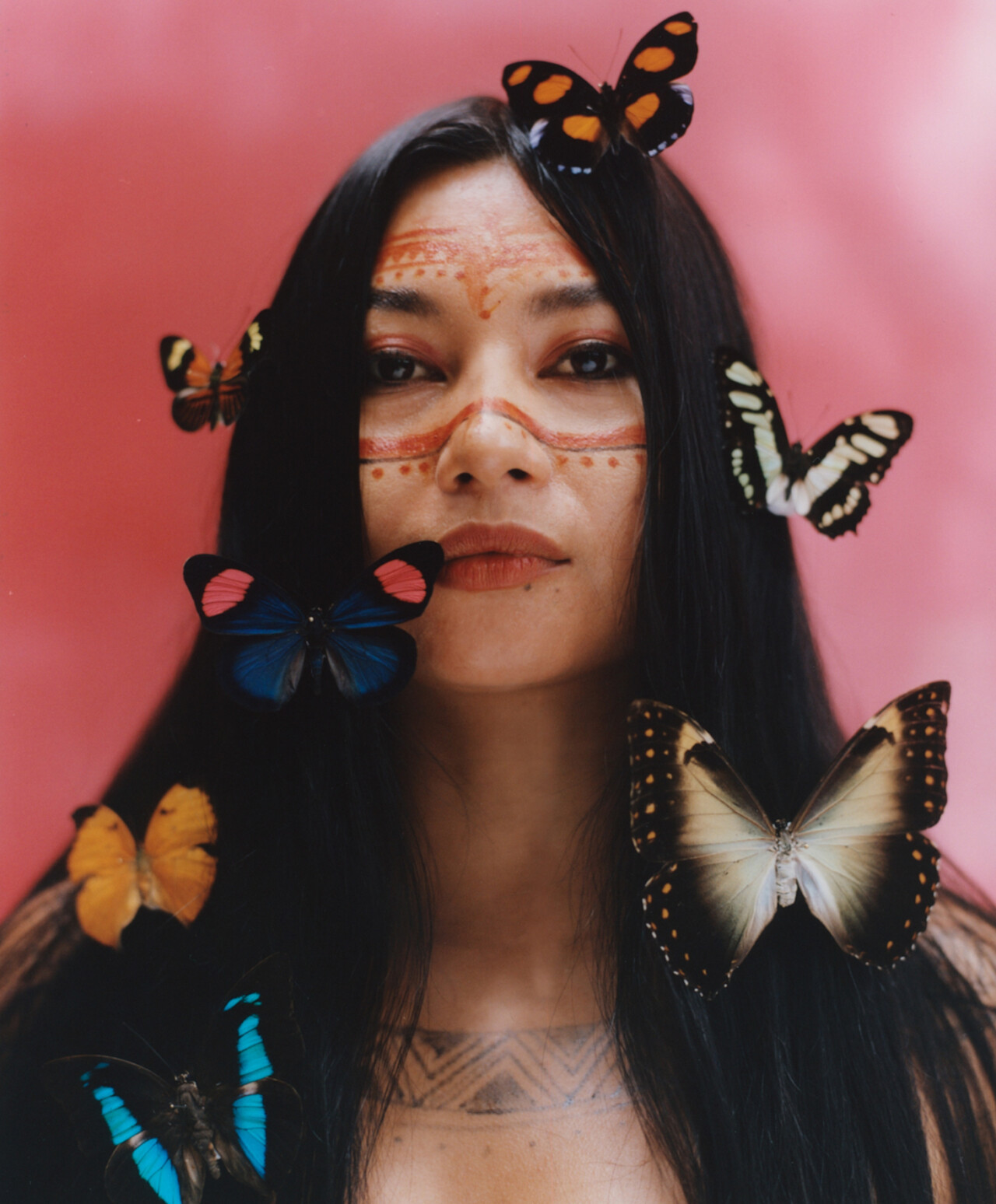
Yarina Andy is like an active volcano, a bird spearfishing, a hummingbird sharing her joy. She is full of energy.
I got to know Yarina through Eli. We crossed paths a few times at protests and parties, but grew closer during a chance meeting while trekking in the Andes. Two Amazonian women high in the mountains, taking our bodies to elevations we had never experienced before. At nearly 16,000 feet above sea level, we shared childhood stories and connected over our love for the Amazon rainforest.
Yarina grew up along the Napo River, swimming in its currents, eating morete fruit, and chasing butterflies, much like Eli and Sisa. After graduating as an environmental scientist, she struggled to find work in her field.
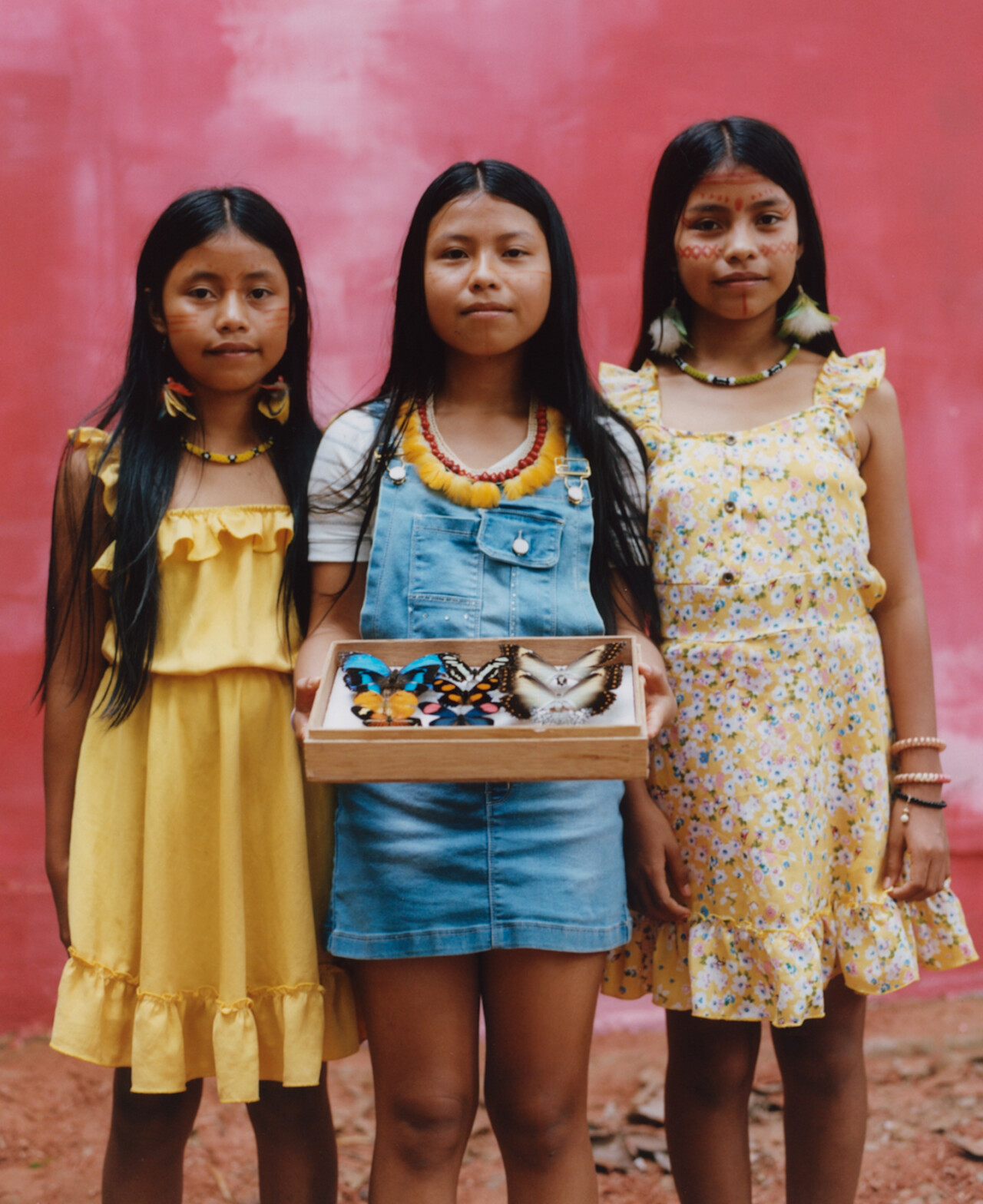
Then she came across a collection of moths and butterflies one day at the Iyarina Center. Her eyes lit up. Children across the Amazon grow up following butterflies without necessarily imagining that one day they might study them—or build a livelihood around protecting the worlds they inhabit.
For Yarina, butterflies are inseparable from the river and from memories of her childhood. She remembers playing along the Napo with her sisters one day when a large blue butterfly flew past them on the riverbank. “My grandmother told us that whenever we saw a butterfly like that, we could make a wish,” she said. “I made my wish with such strong faith that it came true.”
The memory remains one of the most beautiful she shares with her grandmother and sisters. For Yarina, the butterfly has come to symbolize a living, thriving rainforest. “It reminds me that nature is still beating with life, that every living being plays an important role in our ecosystems, and that biodiversity is the greatest treasure of our land,” she said.
That connection to a living, thriving rainforest becomes more important as gold mining expands across the region, bringing with it a familiar promise of jobs and income. The challenge is to create livelihoods that keep people connected to the forest without extracting from it. Mining now threatens many of the rivers, forests, and species that shaped generations of childhoods here. But the river, Yarina said, cannot be separated from that living world. “It is not a resource that can simply be replaced,” she said. “It is our life. And when the river becomes sick, we become sick too. When we care for the rivers, we are also caring for our future.”
For more than 20 years, the Iyarina Center has brought Indigenous knowledge, wisdom, and science into conversation. Over the past five years, the center has conducted biodiversity research funded by the National Science Foundation, studying the life cycles of more than 600 species of moths and butterflies. The work points toward another possibility for people living along the Napo: earning a livelihood by studying and protecting the forest rather than being pushed toward extractive industries like gold mining.
The butterflies Yarina admires and the machines tearing into the rivers point toward profoundly different futures. One takes from the territory. The other asks us to pay attention to what is already here—and to imagine what else is possible.
Photography assistants Sonia Malfa, Boloh Miranda Onsite production Virkina Swanson Andi Creative production Nina Gualinga Production The LTC Created at Iyarina Center | Napo River | Napuruna-Kichwa Territory Special Thanks the Iyarina Team: Priscila Violeta Andi Aguinda, Elsa Marilin Andi Aguinda, Yarina Gricelda Vargas Andi, Delicia Priscila Andi, Alex Aguinda, Cedric Lisander Oña Andi, Edison Eusebio Cerda Chimbo, Felix Gabriel Cerda Chimbo
Join our membership community. Support our work, receive a complimentary subscription to Atmos Magazine, and more.
These Amazonian Women Want You To Know Their River Is More Valuable Than Gold