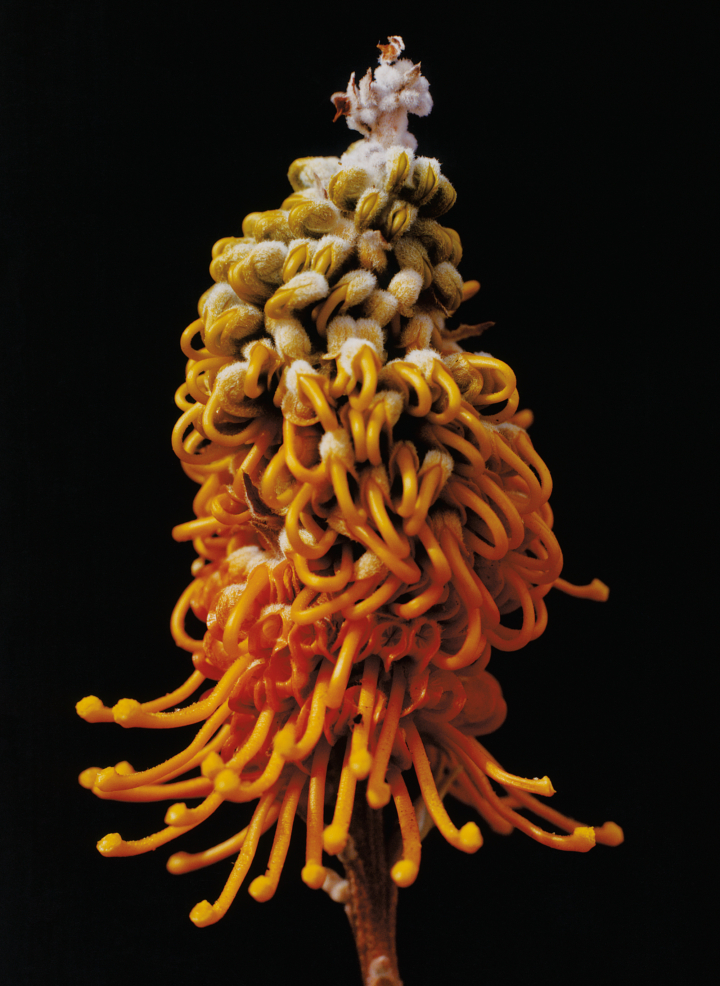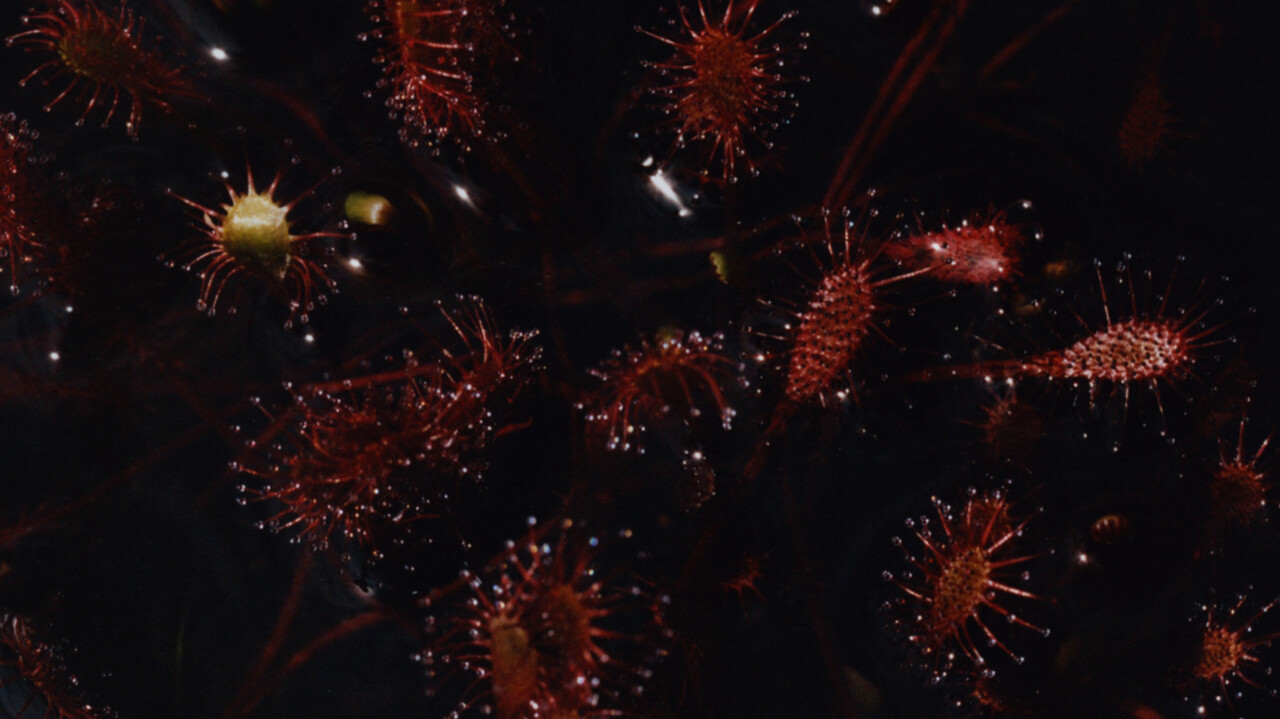
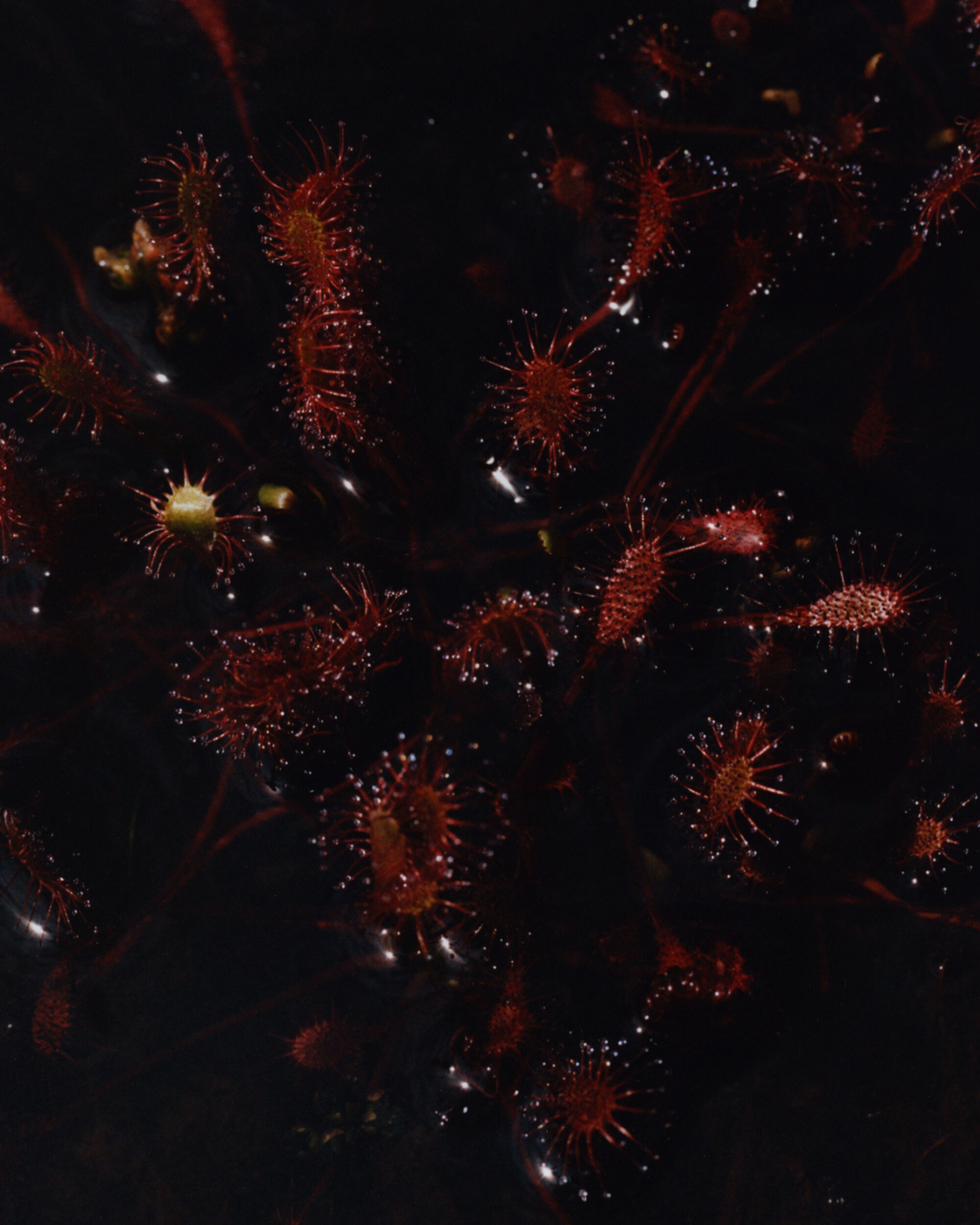

Photograph by Christian Cassiel
To never miss an episode of The Nature Of, be sure to follow here.
What if plants are more intelligent than we’ve ever imagined? This week, Willow sits down with journalist and The Light Eaters author Zoë Schlanger for a conversation about the hidden lives of plants and what they reveal about intelligence, consciousness, and our place in the natural world. By the end of this conversation, you may never look at a tree or a houseplant the same way again.
Zoë Schlanger is a journalist and the author of The Light Eaters, a New York Times bestselling book about the world of plant-behavior-and-intelligence research, published by HarperCollins. The book has been translated into 20 languages and was long listed for the National Book Critics Circle Nonfiction Prize, short listed for the Los Angeles Times Book Prize, and a winner of the National Outdoor Book Award for Natural History. It was among the New Yorker’s Best Books of 2024, New York Magazine’s 10 Best Books of the Year, TIME’s 10 Best Nonfiction Books of 2024, Smithsonian’s 10 Best Science Books of the Year, and New York Public Library’s Best Books of the Year. Zoë is a former staff writer at The Atlantic, where she covered climate change. Her work has appeared in The New York Times, Newsweek, and The New York Review of Books, among other major outlets.
Zoë Schlanger
“ … intelligence, there’s many ways to define it, but one way you could define it is the ability to choose between. And that’s based on the Latin root of the word interlegere, which just meant to choose between. The ability to make wise decisions for your life.
Narration
There is a question that is currently dividing the world of botany, and that is: Are plants intelligent? Here to answer this question today is Zoë Schlanger, who wrote a book called The Light Eaters, which addresses this very question. And let me tell you, after reading this book I could not stop calling everyone I knew to tell them different plant facts. And after you hear what Zoë has to say, I don’t think you will ever take a walk or look at your houseplants the same way again.
Zoë
In Western culture, we’ve been told since the dawn of rationalism, since Aristotle, that there was a ladder of life, this hierarchy of life with plants on the bottom, perhaps just above rocks, and humans at the very top. It seems patently ridiculous to keep plants in the bottom of some hierarchy when we do owe them our lives.
Narration
I’m Willow Defebaugh, and this is The Nature Of, where we look to the nature of our world for wisdom and ideas that change the way we live. This week, we are looking at the wondrous world of plant biology. I’m sitting down with Zoë Schlanger to talk about her book The Light Eaters, the question of plant consciousness, and what we can learn from the beings that make our very lives possible.
Willow Defebaugh
Zoë, welcome to The Nature Of. It is such an honor to have you here.
Zoë
I’m so glad to be with you.
Willow
So to kick things off, you have said that everything we are is made possible by plants. How is that true?
Zoë
It’s true in the most literal sense. Mostly every molecule of sugar you’ve ever consumed was first made inside the body of a plant, which can be hard to wrap your mind around even though we’ve all learned about photosynthesis. We’re all just recycling plant sugars over and over, they’re the main thing of the terrestrial world that can manufacture sugar out of materials that have never been alive, out of sunlight and air and water. And so, anytime you’ve consumed that vital molecule, it’s first born in the body of a plant. And that glucose is what makes our bodies. It’s woven into the muscles, it’s the very fiber of our bones, it’s what makes our minds work. Of course, your brain without glucose would very quickly cease to function. So, every thought you’ve ever had was made possible by plants. Us talking about plants right now is made possible by plants.
Willow
This episode was made possible by plants.
Zoë
Sponsored by foliage. And then, of course oxygen is another major way that we owe plants our lives. Going back again to photosynthesis, the oxygen they produce is a byproduct of their process of making sugar for their own growth. And they release these molecules of oxygen through little fish-like pores on their leaves, and we breathe it in this endless cycle. And then we breathe out CO2 and they take that in to make their sugar. So, we are hooked into the lives of plants, and we wouldn’t be here, we wouldn’t have stepped onto the evolutionary treadmill without them.
Willow
It’s extraordinary. I think of all of the things that I learned when I was young, in fifth grade or whatever, it was that I just accepted as fact. And then, when you relearn them when you’re older, you’re like, “This is actually truly extraordinary.”
Zoë
Yeah. I mean, what would it look like if we centered that thought in our minds between the ages of 12 and adulthood? I think our culture de-centers that very crucial fact for much of our lives after that moment in middle school biology.
Willow
Truly. So your book, The Light Eaters, it centers around this question, which is pretty contentious within the world of botany and plant biology, which is: Are plants intelligent? Are they conscious? Can you share a little bit about why this is such a hot topic?
Zoë
It is very controversial. I came to this subject because I noticed botanists having fights with each other in the opinion pages of science journals, and they were slinging these very salty back and forths between each other, between a camp of botanists who felt it was time to expand our notion of intelligence and possibly even consciousness to include plants.
And then botanists, who thought that was ridiculous—not because plants weren’t doing incredible things, but because why would we drape this very zoo centric, this animal-centric notion onto a whole other tack set of life that evolved very differently from ourselves? And yet there are so many parallels between animal biology and plant biology. Of course, we all have the same biological basis in many ways. And this controversy hinges in many ways on the problem of plants not having brains. We have not found anything like a brain in a plant.
And we’ve, up until this point, only identified intelligence in creatures that have centralized processing systems like ourselves. But when you think about the evolutionary heritage of a plant, they didn’t need one. They didn’t need a centralized processing center, so they evolved without one. They’re rooted in place. They evolved to forage for their food by growth rather than us who needed this compact, centralized, portable processing center to roam across long distances. But I do think if we are able to move beyond the idea of a brain being required for higher processing for a certain amount of agency, we would be open to a very different kind of intelligence; a diffuse, network-based intelligence that many major botanists and also even animal neurologists and human neurobiologists are pointing to as maybe a reasonable expansion of our notion of what it means to be an intelligent organism.
Willow
And stepping outside, I would imagine, are very human-centric ideas of what it means to be intelligent. I think about, in the world of studying animals, the mirror test is still often used for how we measure or think about cognition. And that’s a dot traditionally is painted on an animal’s face, and you watch to see if they can identify with themselves in the mirror. And there are certain animals like dogs that don’t pass that test. And you think, “OK, but for anyone who lives with a dog, you think, ‘How can this animal not possess some kind of higher cognition?'” Well, dogs have terrible eyesight. We are measuring their intelligence based on one of our strongest senses. And so, I think it is a very fascinating moment for science more broadly to look at where are we being wholly anthropocentric in our thinking about life forms that are so different from us.
Zoë
Yeah, absolutely. I think a lot about Ed Young’s recent book looking at the umwelt of animals, the idea that every animal evolved its own specific sensing apparatus and has a totally different sensate version of its surroundings than we might. But that’s not on some kind of hierarchy of cognition, it’s actually this biological creativity that has found different versions of how to be in the world, and I think plants fit into that beautifully.
Willow
Something that I love that you point out is that as organisms that are relatively rooted in place, plants have had to become very creative. Can you share some examples, or even just one that still blows your mind to this day?
Zoë
Yeah. When you are stuck in one place and there’s something you need to do that you can’t do yourself, you had better find someone else to do it for you. And plants do this all the time, they conscript animals into their service. There’s no way of knowing whether we can call this deception or manipulation, or maybe it’s more like collaboration. All of these things have connotations that we can’t reasonably assess as the human observers. But plants are constantly using animals to their ends. For example, there’s a whole group of plants called ant plants that produce sugar specifically to feed ants and also sometimes build houses in their bodies for ants in order to conscript them as bodyguards. So the ants will come, get fed, get shelter, and then go after anything that starts attacking the plant. There’s many videos online of ants that have been part of this kind of organism with this plant that will march up to, let’s say an aphid burrowing in its stem, and pull the aphid out and march that aphid into its den and that aphid is of course never heard from again.
And that’s just one example. There’s groups of orchids called sexually deceptive orchids; many of them are in Australia, where some of our strangest plants tend to be. And they will produce a wasp pheromone that almost perfectly mimics the wasp’s own pheromone and also produce an appendage that looks vaguely like a female wasp. And the male wasp will come, try and grab it to lift it away, and instead bounce around on this appendage and smack into the middle of the orchid, and then get a little packet of pollen glued to its back. And then of course it’ll fly away, be lured by another orchid, and then that orchid gets pollinated. So there’s this constant use of animals as tools that I find really astounding.
Willow
And the example of the wasp orchids brings up an incredibly fascinating question, which is, how do they know the shape of the female wasp that they are producing this appendage in the image of? And this comes up in the chapter of the book also about the boquila vine. Do plants see? I mean, how are they able to mimic—I mean, the boquila vine can take the shape of many different plants that are around them. And you go into some of the different potential theories and explanations for how this is possible, but are they seeing? What is it? What is going on?
Zoë
We don’t know. In the example of the orchids, these are long evolutionary relationships with individual wasp species, and although it’s astounding that not only is there visual mimicry of the wasp body, but there’s also this chemical mimicry of its pheromone. Over the long arc of evolution, even though it seems preposterous to us, that happens quite a lot. This plant, called Boquila trifoliolata, which grows in the cool rainforest in Southern Chile, it is able to spontaneously mimic almost anything it grows beside. And we have not seen that anywhere else in the plant kingdom. I went to see it myself, and it was able to mimic not just the leaf shape, but whether the leaf was glossy or matte, its vein pattern, its texture, its size. It would grow to quintuple the size of its original leaf shape to match a bigger leaf, and it seemed to do that very spontaneously without even needing to touch the nearby plant. It just had to be near it.
And there’s no explanation yet for this, and it’s provoked exactly what you brought up: this question of plant vision. Can plants, on some level, see? And this question, while it initially might sound absurd, has a basis in the fact that plants have more types of photoreceptors on their leaves than we have in our eyes. They’re exquisitely aware of the quality of light that falls upon them and where that light is coming from, because they have to be. They have to get out of the way of scorching sunlight, and they have to seek sunlight or else they’ll die. But they also know if they’re being shaded by a member of their own kin or not, whether or not that plant is not just their own species, but also of their own lineage based on the quality of light passing through the leaf of the other plant.
So if they can do all this assessment, could they possibly also be observing the plants around them to inform their own mimicry? And the problem here, again, comes back to the problem continuously in this debate: that plants don’t have brains, so they have no place to circuit that visual information into an image in the way that we do with our own brains. And yet there’s no explanation either way, so it’s very much an open question that I hope gets more funding in the next 20 years.
Willow
After I read that chapter, I did not walk through my apartment the same. I was looking at my plants wondering if they were looking back at me.
Zoë
Totally.
Willow
There was also a question, too, explored around whether it might even be the microbes that allow them to somehow sense or take on the texture and shape of the plants around them. I mean, that’s extraordinary.
Zoë
That is almost a more alluring explanation for me personally, because I’m so enchanted by these third parties that are modulating the existence of all creatures. And Ernesto Gianoli, the researcher in Chile who discovered the mimicry in boquila in the first place, he wonders: Could this not be a microbial invasion where there’s microbes from other plants? Just like us, we have a microbial cloud that we walk around in all day that are a signature of our own microbiome. Plants have that too, and could it be that the boquila is just more receptive and porous to this microbial cloud of other plants? The problem, or the magnificent possibility that suggests, is that the very shape of leaves is not intrinsic to the leaf but in fact to its microbes, which is a new conception again, entirely of what a plant is.
Willow
And I mean, what is a human, right? If everyone and everything has this microbial cloud, you just really start to break down the idea of, really, what is identity?
Zoë
Right. What is an individual? Yeah.
Willow
Truly. You mentioned the plants bringing other beings and animals into their service to accomplish certain things because they’re rooted in place.
Zoë
Mm-hmm.
Willow
It really makes one wonder. What are plants potentially working through us? I mean, we think of plants as being in the background of our lives. They are foliage and decoration, and something that perhaps brings us peace. But even through how we ingest them, right? We have no idea.
Zoë
Yeah, there’s many compounds inside plants called semiochemicals. And a semiochemical is anything that one organism emits or produces in order to change the behavior of another organism. And so, the wasp example with the orchids, those are semiochemicals at work. But of course, there’s semiochemicals in most plants, and we’re eating them all the time, so it does bring up that question of what, if any, of our behavior is altered. There was a very cool paper that just came out maybe last year about the fact that panda bears are not obligate herbivores.
There’s nothing about their physiology that requires them to eat bamboo. Bears are famously omnivores, they eat everything including meat, and researchers suggest now that there’s a secondary metabolite in the bamboo that is hijacking the behavioral apparatus of the panda by increasing levels of compounds in its brain that enhance pleasure when eating bamboo, which brings up many questions about the things we most enjoy eating in plants.
Willow
So, bamboo could theoretically be making panda bears vegetarian.
Zoë
Exactly. Exactly.
Willow
Incredible.
Zoë
This is just one paper, but I think it’s—
Willow
Sure.
Zoë
—very exciting.
Willow
Worth noting. I mean, I was so struck by this notion that plants really are chemists in a lot of ways. I mean, was it corn? That when they feel a caterpillar eating their leaves, they will use the saliva of the caterpillar to identify the species, and then they’ll release a chemical that will attract the predator of that species, usually a wasp, to then come and take care of the caterpillar.
Zoë
Exactly.
Willow
I mean—
Zoë
It’s really metal actually. Yeah, and it’s not just that the wasp comes and eats the caterpillar. The wasp injects its eggs into the caterpillar, then those larvae hatch and eat the caterpillar from the inside out and then glue their little cocoons, their little Tic-Tac-shaped cocoons, to the outside of the dead caterpillar. It’s really spectacular, this cascade of relationships. And it’s not just corn; tomato does that, as does cotton, I believe. And we found that out in the ’90s. So, sometimes I wonder why it’s taken so long for us to start to see plants as these incredibly alert, active, agentive organisms.
Willow
So, I think this starts to build toward a point you make in the book that plants aren’t just shaped by their environment; they’re also actively shaping their environment through many of the things that we just described. But can you speak to that idea a little bit more, and this notion that biology is also always ecology—
Zoë
It really is.
Willow
—as you put it?
Zoë
Yeah. Biology over and over again looks more like ecology than we’d ever imagine. Part of that is these intense symbioses, these relationships that plants have with all these other life forms, even within their own bodies. I also think a lot about how a plant is a physical network of memory in its own body. When you look at a plant, it’s a signature of everywhere sunlight and nutrition have been before but may no longer be. So, they shape their landscape with the pattern of their roots and their branches.
And when you look at a tree, and there’s a branch that has no leaves on it, that is a sign of where light used to fall but does no longer fall. So, the plant has rerooted its energy toward other places, makes other leaves where there still is sunlight. But they’re very much this physical embodiment of memory of the land, which makes me look at trees and all plants very differently now.
Willow
I’m so happy you brought up memory, because I wanted you to speak about Venus flytraps.
Zoë
Oh, yeah.
Willow
I love Venus flytraps. I’m sure many people who are listening love Venus flytraps, but speak about them in relationship to memory, if you could.
Zoë
Totally. Yes. Well, we all love Venus flytraps because they are a little more like us. They eat animals; they have a mouth-like maw made out of these modified leaves. So, in a way, they start to have a face, and I think that brings them much closer to us than some other plants. But they do amazing things. They grow in places that have low nutrition, so they need to get their nutrition elsewhere, and they do it by digesting insects.
But Venus flytraps have these trigger hairs inside of their maw-like leaves, and those trigger hairs need to be flicked a certain number of times within a certain number of seconds for the trap to close, and then another number of times for digestion to start. And that’s to make sure the flytrap doesn’t close on a little twig or a little stone, because it’s very energetically expensive for the plant to digest something, to go through that process, so it wants to make sure it actually has a meat meal.
And if the triggering stops, if those hairs stop being flicked, the trap opens and resets itself. So, the implication here is that that plant is capable of both addition and subtraction in a way. There are some papers that patently just come out and say that Venus flytraps are capable of basic math, which also brings up questions about how we assess intelligence in another organism like that.
Willow
And also, I mean, keeping time in some way, right?
Zoë
Absolutely. Counting seconds and flicks, it’s multiple variables that they’re working with.
Willow
And, perhaps even more astonishingly, anesthesia works on them?
Zoë
Yes, yes. Wow. There are videos that one can find online of this process, but anesthesia appears to work on lots of plants. Plants are electrical organisms, much like we are. There’s action potentials associated with all actions a plant may take. When a Venus flytrap shuts, there’s a spike in electricity, a little action potential that’s associated with that. And when you take these plants and put them under a bell jar and suffuse that bell jar with diethyl ether, which is an anesthetic that was used for human surgeries for generations, their movements will stop. They’ll slow down and then cease.
And then when the researcher takes the bell jar off and the ether disperses, the seedling will reanimate within 15 minutes. And at the same time, we know that their action potentials, while etherized, slow dramatically down. And anesthetics in humans contain all of this mystery of mechanism. We don’t know how they work, but we know that they slow our own action potentials down, and it appears that they do the same thing in plants.
Willow
I realize that this is ultimately a question of language. If something can be rendered unconscious, here’s the whole question. One might think that they would have had to have been conscious in the first place.
Zoë
Exactly.
Willow
How is electricity potentially tied up in that?
Zoë
Well, when something uses electricity to signal through its body, it brings up a question of how analogous that could be to our own nervous system. Our nervous system is based on electrical signaling, and it appears plants’ signaling is electrical too. And not only that, but plants have neurotransmitters, the same neurotransmitters in their bodies as we have in ours, and they appear to be useful for signaling.
I was able to go to a lab in Wisconsin, the lab of Simon Gilroy, and he and his team have made these plants, these mutant plants, where they put in fluorescent green proteins from jellyfish so that the plant would glow, but only glow when touched. And so, I went into his dark microscope room and pinched one of his mutant plants with tweezers, and we got to see how the signal moved from the place that I pinched that leaf through its vein system very quickly until the whole plant, within two minutes, had received the signal of my pinch.
And he hypothesizes that’s likely an electrical dispersion because it happened so quickly. Two minutes is radically fast for a plant.
Willow
Now that we’ve covered some of the science, plants seem to store memory somewhere. They are in communication with the world around them through chemistry, so to speak. They use electrical signaling within their body to transmit information. Can be rendered unconscious. Maybe have some way of seeing, who knows? So, where are you at with this question of are plants intelligent? Can we consider them intelligent? Can we consider them conscious?
Zoë
Starting with intelligence, intelligence feels more straightforward to me. Intelligence, there’s many ways to define it, but one way you could define it is the ability to choose between. And that’s based on the Latin root of the word interlegere, which just meant to choose between. The ability to make wise decisions for your life. And plants, to me, unmistakably do that. They’re assessing multiple variables in real time and comparing it to past experience. And in that way, I think they have intelligence.
Consciousness is a mushier word in some ways. We do not understand the mechanical substrate in ourselves for consciousness, let alone anything else, and we are very much in the business of deciding who else might have consciousness. And we’ve really only extended that as far as certain animals so far. But I’m very comfortable using the term agency about plants. I think plants are undoubtedly agentive creatures.
And to be agentive might mean to have a stake in the future of your own life, to be an active participant in what happens to you, and there’s no doubt that plants are that.
I think that consciousness, one way to think about consciousness is the ability to experience and the ability to have an embodied experience, and plants certainly have bodies and their bodies with some degree of sensation in so far as we watch them reacting to anything done to them, and they also have motion. They’re in motion all the time through growth, moving over obstacles, through landscapes.
And I think about the philosopher Peter Godfrey-Smith, who wrote a book called Metazoa about tracing the history of animal evolution as it pertains to motion, and he feels that once you have motion coupled with experience, you have some measure of consciousness, and I like that too.
I feel very open to ascribing consciousness to lots of beings that we don’t traditionally ascribe it to. So, as a non-scientist, that’s where I’ve landed.
Willow
I want to revisit this idea of plants not having a brain, and this being a continuous part of the debate. You bring up this idea that, well, what if the whole plant is the brain?
Zoë
Sure.
Willow
Can you speak a little bit to that?
Zoë
Yes. I had just gone to Simon Gilroy’s lab and watched these action potentials, these electrical impulses move through the plant in real time in response to touch. And then I read all of these articles that were responding to his research, including by neuroscientists, who suggested it was time to maybe expand our notion of a nervous system to include plants. And in thinking about that and looking at this image of this branched sensing apparatus, I wondered if we’d been looking in the wrong place.
Maybe this whole network could be seen as a brain, and that comes out of the question of consciousness that asks—we’re constantly looking for a centralized processing center, a brain, but neuroscientists know that while the brain itself is centralized to the body, within the brain it’s a decentralized network. There does not appear to be a command post within the brain itself.
I asked this question very sheepishly of a botanist named Liz Van Volkenburgh, and she studies the way that leaves expand as they grow, which remarkably is a mystery unto itself, or has elements of mystery in it. And she smiled and comically whispered, “I think that too, I just don’t talk about it.” So, this is very much something bubbling up through some areas of botanists who are perhaps more open-minded to that suggestion, but it contains within it danger as well, because if you eliminate brain as organ and ascribe it to something totally dispersed, then what does the word brain even mean?
So, we end up in these loops, these discursive loops that we don’t know how to get out of. And I am just constantly humbled by the fact that whatever is going on with plants, it exceeds the farthest expansion of our own notion of what intelligence might look like.
We have to look beyond ourselves and maybe stop looking for these perfect analogs to human anatomy to find it.
Willow
Right. It makes me think, I heard Merlin Sheldrake, the mycologist, once say that, “Maybe this isn’t so much about trying to bring,” in his case fungi into the world of humans, “but what does it look like for us to go a little bit more into the world of fungi?” And I’m curious how you think about that in relationship to the plant world.
Zoë
Absolutely. Yeah, taking the plant perspective, just like Merlin takes the fungal perspective, elicits totally different conclusions. I think about a person who is a pioneer in the kin recognition space, studying the fact that plants appear to behave differently toward their kin than strangers, even of the same species, and her name is Susan Dudley. She’s a Canadian scientist, and she was able to make her discovery about kin recognition in plants because she decided to stop looking for fitness benefits, which is how most research on organisms is done, and just look at what the plant was doing. So, taking observation cues from the plant itself rather than working from our assumptions about what would be good for the plant. And that’s when you begin to see things that researchers had otherwise missed, like the ability to detect and interact with one’s kin.
Yeah. We have a lot to learn from taking the plant’s perspective.
Willow
You make a really brilliant point in the book too around hoping that science can have faith in the public imagination, that we’re able to hold, OK, we’re not saying plants are human, we’re not saying that they’re like us in that sense. And can we hold at the same time that that doesn’t mean that they are any less intelligent, for example? How are you thinking about all of this within the context of the world in which this book was written and this moment in time for our planet?
Zoë
There’s plenty of botanists who are fed up with this linguistic debate, because it doesn’t matter. Plants will go on being plants whatever we decide I had to think of them. And that’s important to center, that these things are important to us but not important to the incredible, expansive, creative capacities of the plants themselves.
I do think we will, hopefully in 10 years, find this whole debate very silly and have moved beyond it. What it is, is that we have so much cultural undoing to do. In Western culture we’ve been told since the dawn of rationalism, since Aristotle, that there was a ladder of life, this hierarchy of life with plants on the bottom, perhaps just above rocks, and humans at the very top. And later that was Christianized to have God and angels above humans, but the rest looked pretty much the same.
And we’ve had to slough off or begin to slough off those notions to really see these other organisms for what they are. It seems patently ridiculous to keep plants in the bottom of some hierarchy when we do owe them our lives in its entirety and we are fully dependent on them. And it’s not true the other way around, although there’s plenty of symbiotic relationships that are possible and have occurred for thousands of years between humans and plants. Plants would go on just fine were we not to be here.
Willow
And they have so much to teach us. What has changed? I mean, even just from a philosophical perspective, what has changed in your day-to-day life since you wrote this book, since you had this vegetal awakening?
Zoë
So much. I have a really different relationship to the plants around me; I really notice their resourcefulness. Living in New York City, my plants in a daily way are in parks, or they’re urban weeds growing in cracks and climbing up fences, and I stop now and internally remark on the amazing resourcefulness of these urban plants that are able to shift our hard topographies.
They crack through cement; they are growing places we would choose for them not to grow, and doing it fast and with a certain kind of verve that you can just—it’s just palpable. You see these often invasives doing incredible growth to get where they are, and I just salute them as I walk by now because I know what it took for that plant to do that, how many variables it measured, how much energy it had needed to make for itself, to grow every single leaf, to catch any of these photons and the extreme obstacles that all plants are overcoming.
And I also think that it’s shifted my sense of plant life from a wash of plants at large, to individuals. Plants are individuals with their own proclivities, and likes and dislikes, and complex relationships. Even within the same species, there’s this multitude of different individuals, and understanding the ways that ecology is made from that concert of individuals reacting each differently to the same inputs has also changed the way I see them now.
Willow
Zoe, do you have a favorite plant?
Zoë
It’s so hard to choose a single plant, of course, and it changes all the time. But right now I’m really into ginkgos. They’re a very common street tree here in New York, and there’s five or six on the block that I live on, and I get to watch their whole life cycle through the year. And they’re so unusual-looking, so different from the other trees we have with us, and part of that is that they’re so ancient. They’ve persisted largely unchanged since the dinosaurs. They were contemporary to the dinosaurs. And they’ve been through so much. They represent so much cultural history for humans as well.
You think about the ginkgo trees that survived the bombings in Hiroshima and are now revered as survivors of that. They just represent the intense resilience that transcends all human notions of time. They’ve just been doing their thing for so long. And a lot of people think that the fruits smell bad, but I actually think they smell great.
Willow
Ginkgo trees also are capable of changing sex on a specific branch, right?
Zoë
Yes. Exactly.
Willow
We could have had a whole different episode about—
Zoë
We could.
Willow
—the queer botany world.
Zoë
So true. Yes. So, I spoke to a researcher named Sir Peter Crane, and he is among the few people who have done assessments of ginkgo trees, noticing that a single branch of an otherwise male tree can be female. So ginkgos, like many of our most ancient plants, have separate individuals for male and female. Most plants are bisexual and are doing both all the time. And in ginkgos, that capacity to switch a single branch might be incredibly adaptive. It might be the reason they’ve persisted all this time, we don’t completely know.
But if you think about it, if you’re a ginkgo growing in a situation where maybe there’s not many ginkgos around, or the climate conditions have changed such that the other ones have died, you need to self-pollinate. And ginkgos appear to have figured out how to do that, which can teach us a lot about biology at large.
Willow
Icons. OK, so I wanted to circle back. You brought up ethics and how sometimes ethics almost needs to turn the tide even before science fully catches up, right?
Zoë
Mm-hmm.
Willow
You reference the fact that not long ago, surgeries were performed on live dogs with no anesthesia. It was an ethical movement that intervened because, at the time, they didn’t think that dogs felt pain in the same way. And so, that was an example of ethics needing to step in before necessarily the science caught up. So, how does that connect to and how does that bring this conversation into the world of plant conservation?
Zoë
Yeah, I truly do believe that the question of plant consciousness will not be answered by botanists. It’s not their place in many ways. A hundred years ago, scientists were philosopher-naturalists who were considering questions of the meaning of life and the meaning of their work. But now, thanks to specialization, scientists are not fulfilling that role. And that’s, in many ways, given us so many incredible advances in the sciences, but it means that’s not where questions of consciousness will be resolved. And vivisection, that debate was settled by the early animal activists who decided it was wrong. They could see that a dog undergoing unanesthetized surgery was experiencing pain. It seemed obvious to them, even if science had foreclosed at the time the possibility of that question even arising because feeling was thought to be the domain only of humans. Animals were more akin to machines.
And that seems ridiculous now, but it’s an example of the way that the unthinkable can become thinkable very quickly. Science can change its mind incredibly quickly. Paradigms shift, and then suddenly it’s absurd to imagine they were any other way, and we see that happen over and over again. And I think about that when I’m considering climate change and species extinction, and conservation now, too. The formerly unthinkable—what seems impossible—can come to pass faster than we may think, and that’s a reason to not foreclose the possibility of the right and best thing happening in the near future. All it takes is a movement of public opinion changing radically, and that can happen very quickly.
Willow
For anyone who’s listening, what advice or wisdom do you have to share for how they can maybe get in touch with the plant world bring some of the topics that we’ve talked about here into their everyday lives?
Zoë
I would say a few things. Botanical gardens are wonderful places to get acquainted, often with the flora of your region. Botanical gardens are elevating rare species and species from far-flung places, but they also, at their core, most of them have the desire to educate people about what’s right around them. And I’ve learned so much by going to botanical gardens in whatever city I’m visiting and really understanding what that landscape looked like for plant evolution, and who’s there now and who was there before.
I would also say that there’s an element to all of this that moves plants into this realm of our ethical regard, that once you begin to see a plant as agentive, as sensing, as active, as alert, as craning toward life, like all organisms do, you end up respecting them quite immediately. There’s no way to disrespect a plant after you’ve considered that.
And the best thing a private individual might be able to do is transform the land that they live on. If you are someone with a small patch of land, growing a native garden in that little patch of land actually makes a difference to all of these pollinator animal plant interactions that we spoke about. If you’re someone who has a lot of land, putting that land into a trust so that it’s never developed is a massive contribution to this movement. And beyond that, voting for people who are conservation-minded.
Willow
And reading The Light Eaters. OK. My last question, which I ask all of our guests, what is something that nature has been teaching you recently?
Zoë
Nature has been teaching me that life continues unfurling. That we are this product of riotous, intense biological creativity. And we are each this node on an endlessly unfurling web of that creativity. We’re not a rung on a ladder; there is no biological hierarchy. Life just keeps unspooling new approaches to living, and that is both thrilling and heartening because life will continue no matter what. Change is continuous when it comes to evolution and biological adaptation, and although we are losing things and it’s catastrophic and extremely sad, on the other side, nature will look like something. We just don’t know what.
Willow
Evolution is always possible.
Zoë
Mm-hmm.
Willow
Thank you so much for coming on the show, Zoë.
Zoë
It’s so great to be with you, thanks.
Narration
One of my personal favorite teachings of plants has to do with something called phototropism. Most of us are familiar with positive phototropism, which is a plant’s tendency to grow toward the light. But plants also exhibit something called negative phototropism. If we think about the whole root structure of a plant, which is just as integral to its existence, that is actually growing away from the light. It’s growing down into the dark depths of the soil, and the roots do this to forage. And this is a word that botanists actually use, to forage for nutrients and food. So, in these challenging times that we live in, I think about the fact that so many organisms, including the organisms that we owe our lives to, require both the light and the dark in order to grow.
The Nature Of is an Atmos podcast produced by Jesse Baker and Eric Nuzum of Magnificent Noise. Our production staff includes Emmanuel Hapsis and Sabrina Farhi. Our sound designer is Kristen Mueller. Our executive producers are me, Willow Defebaugh, Theresa Perez, Jake Sargent, and Eric Nuzum. Atmos is a nonprofit that seeks to re-enchant people with our shared humanity and the earth through creative storytelling. To support our work or this podcast, see our show notes or visit atmos.earth/biome. That’s A-T-M-O-S.earth/B-I-O-M-E. I’m your host, Willow Defebaugh, and this is The Nature Of.
Join our membership community. Support our work, receive a complimentary subscription to Atmos Magazine, and more.
Are Plants Intelligent? Zoë Schlanger Has the Answer