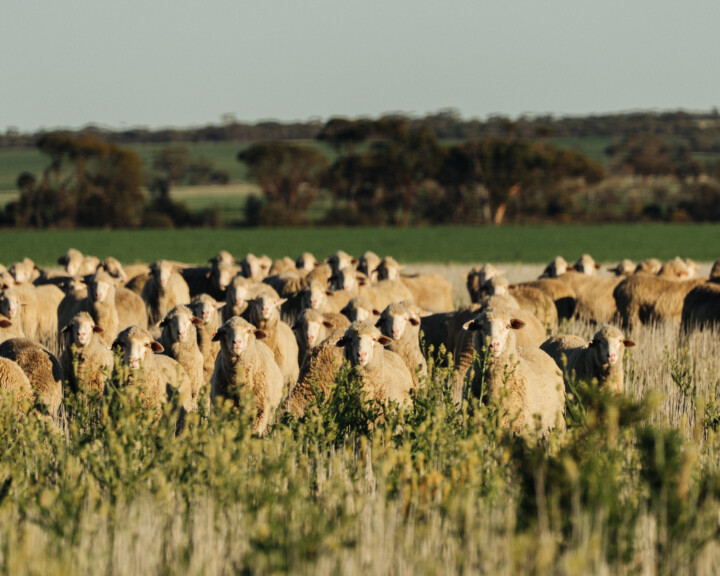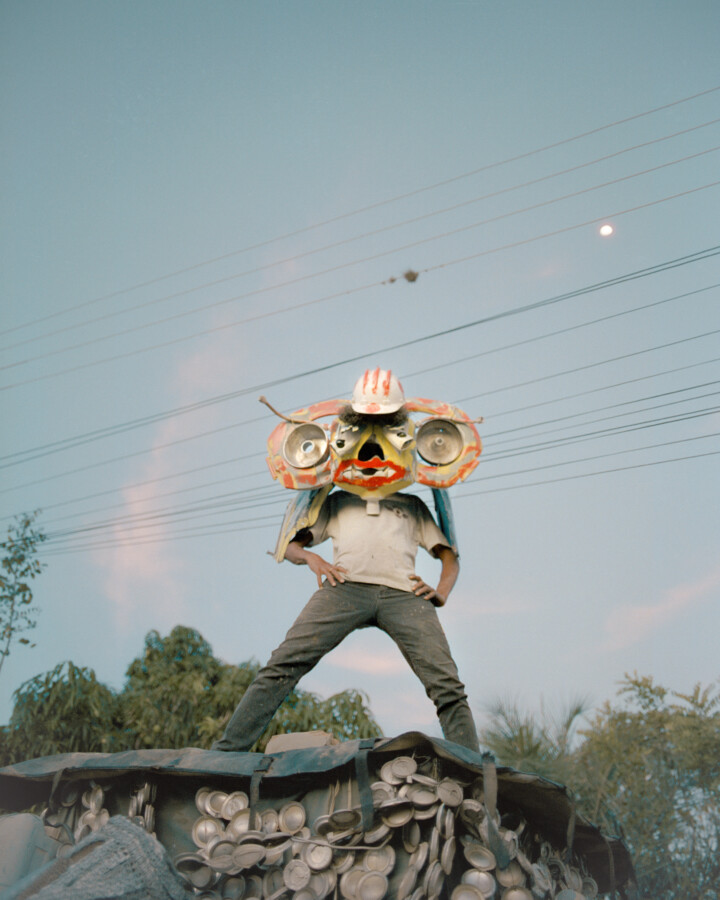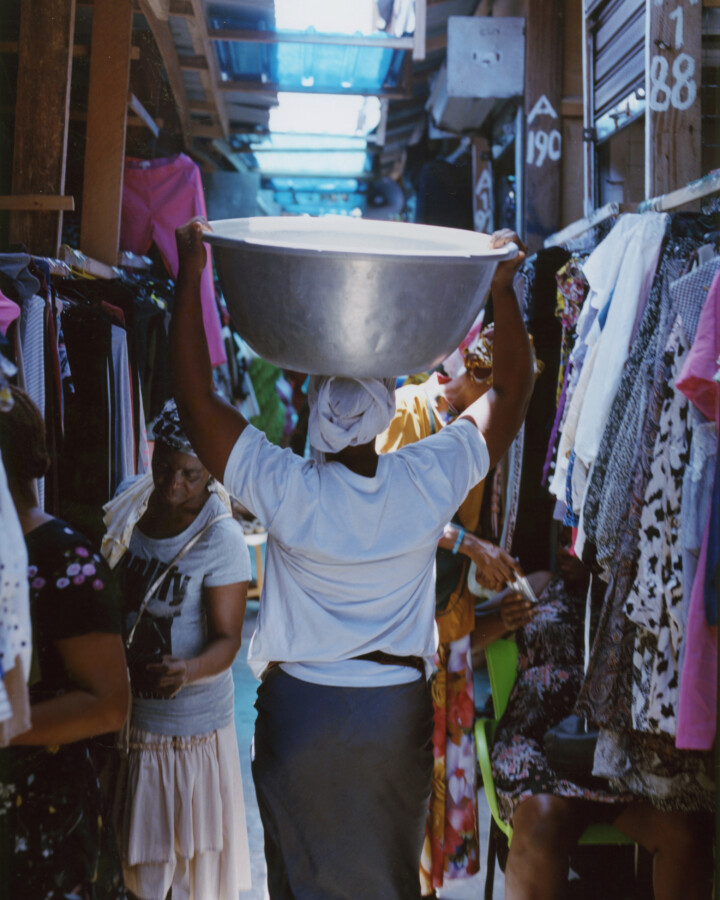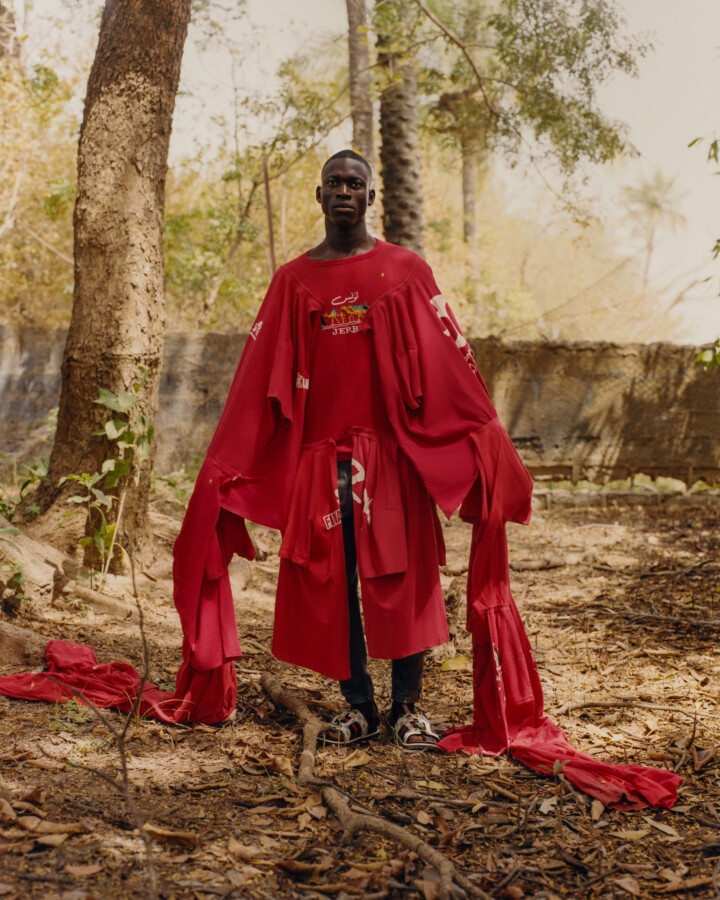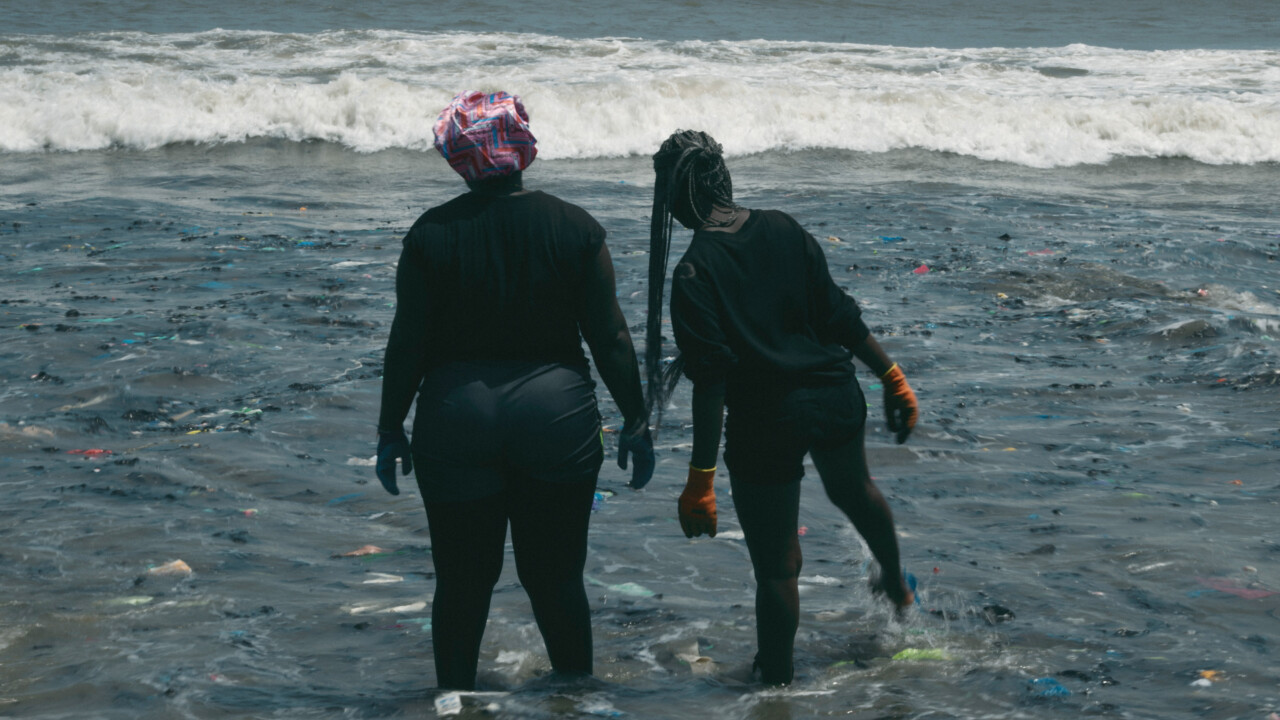
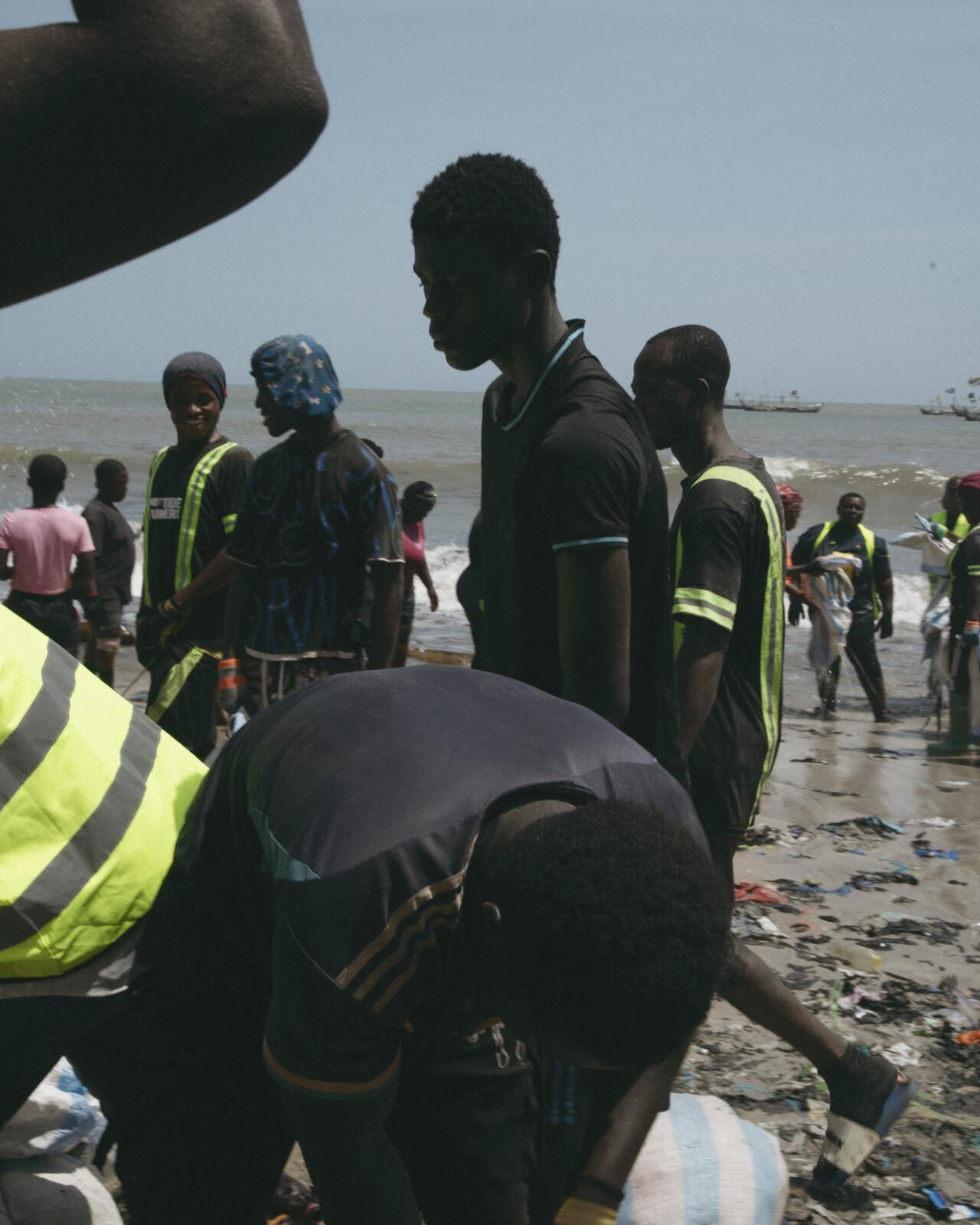
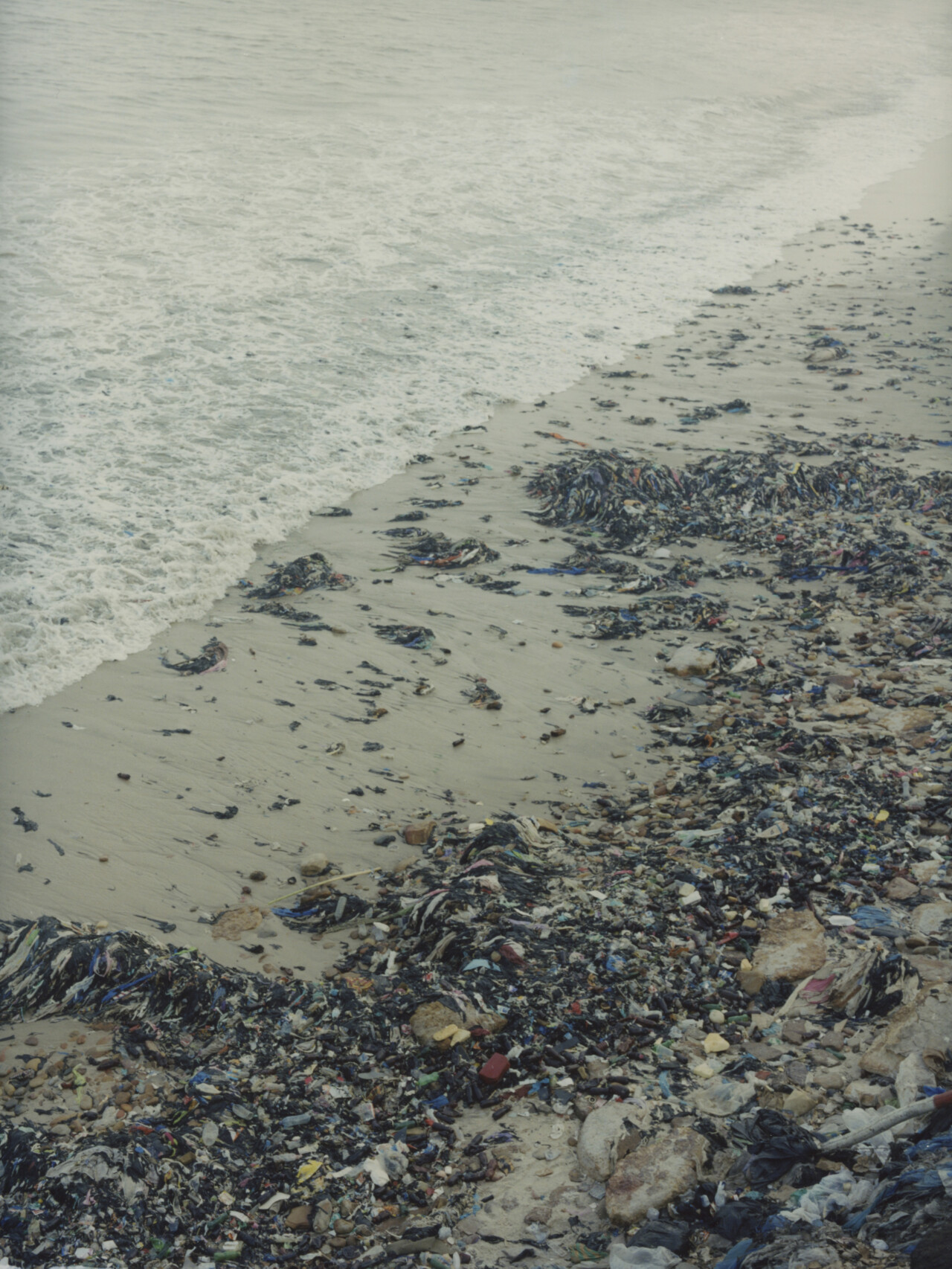
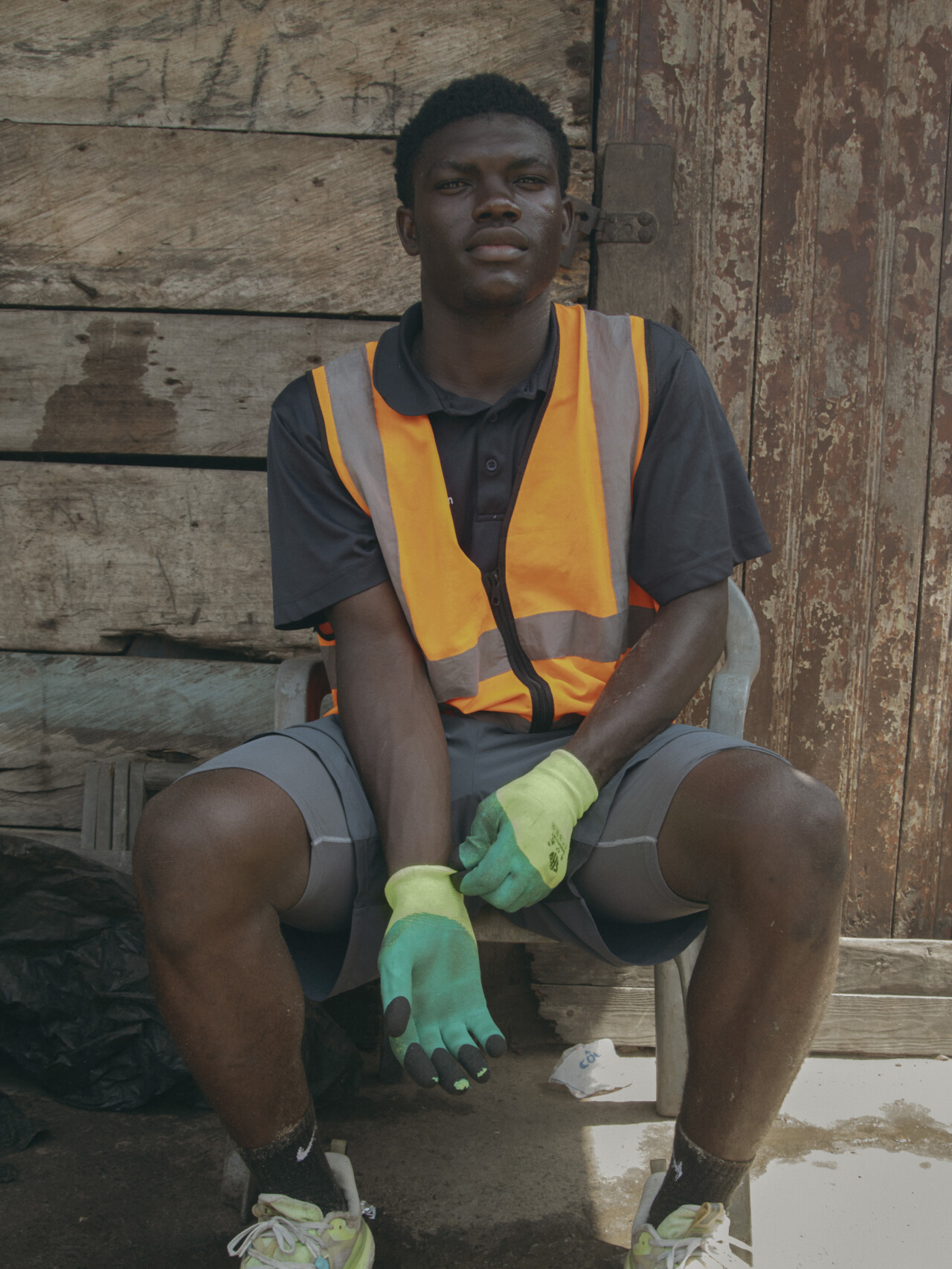
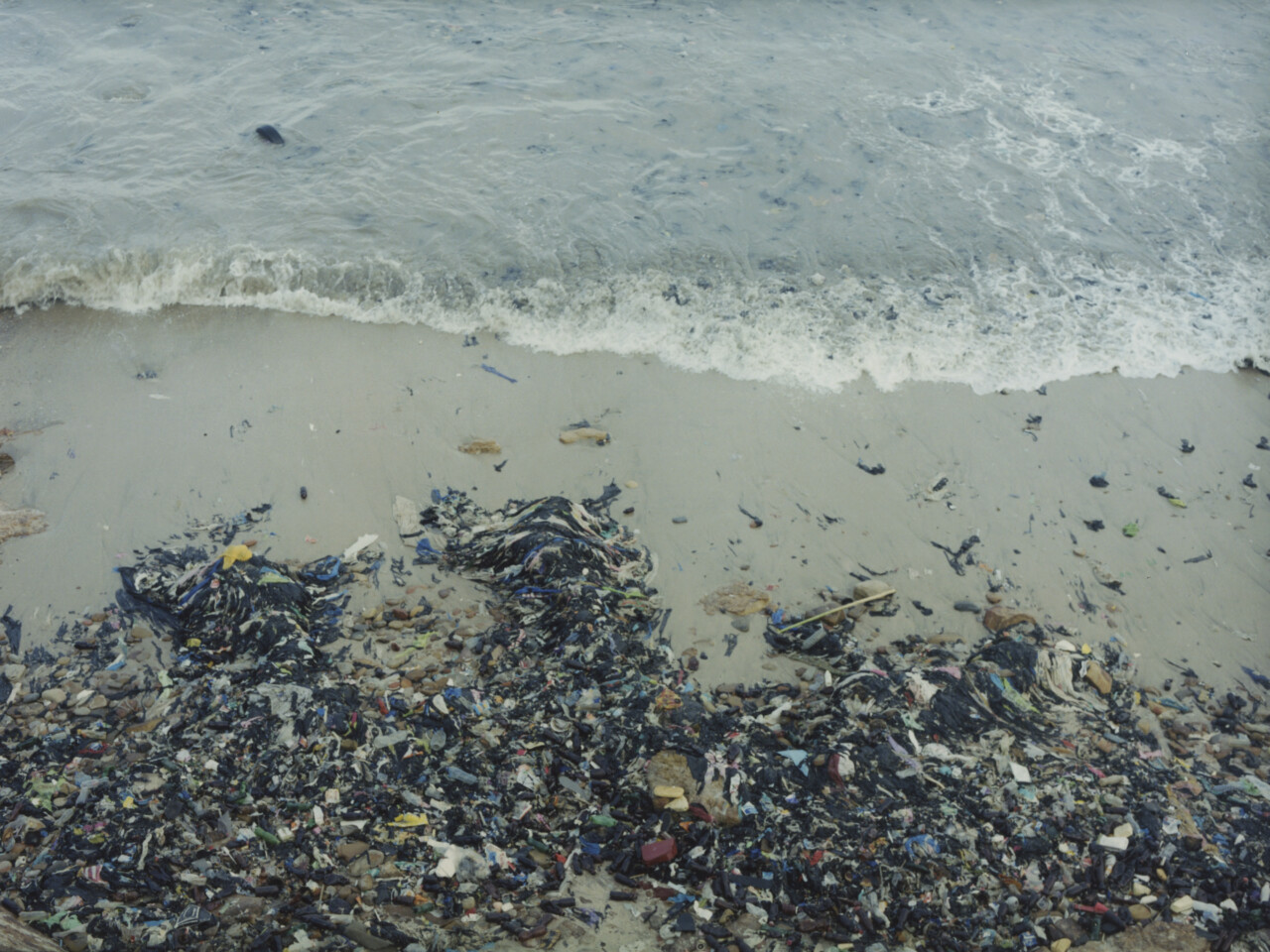
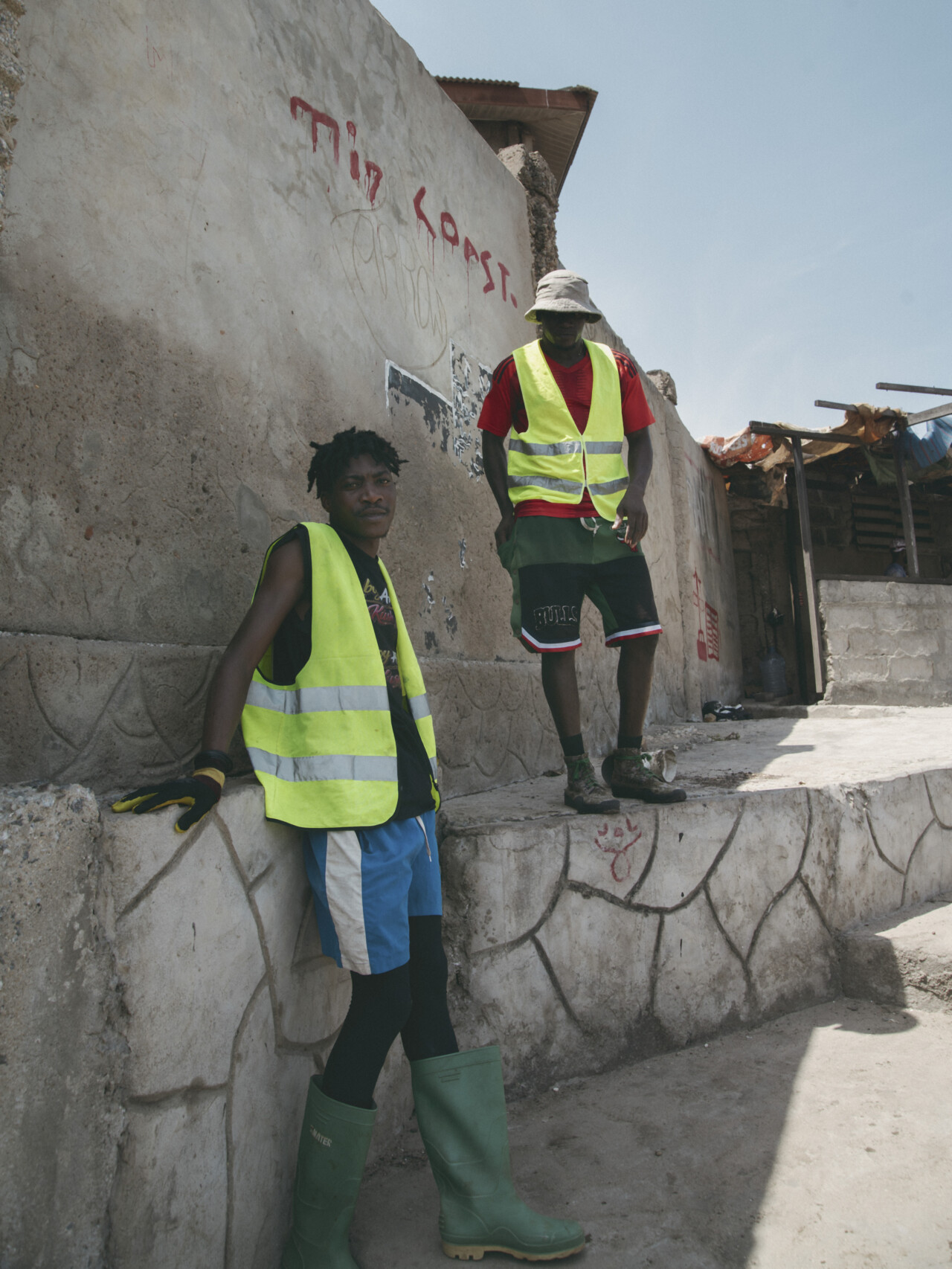
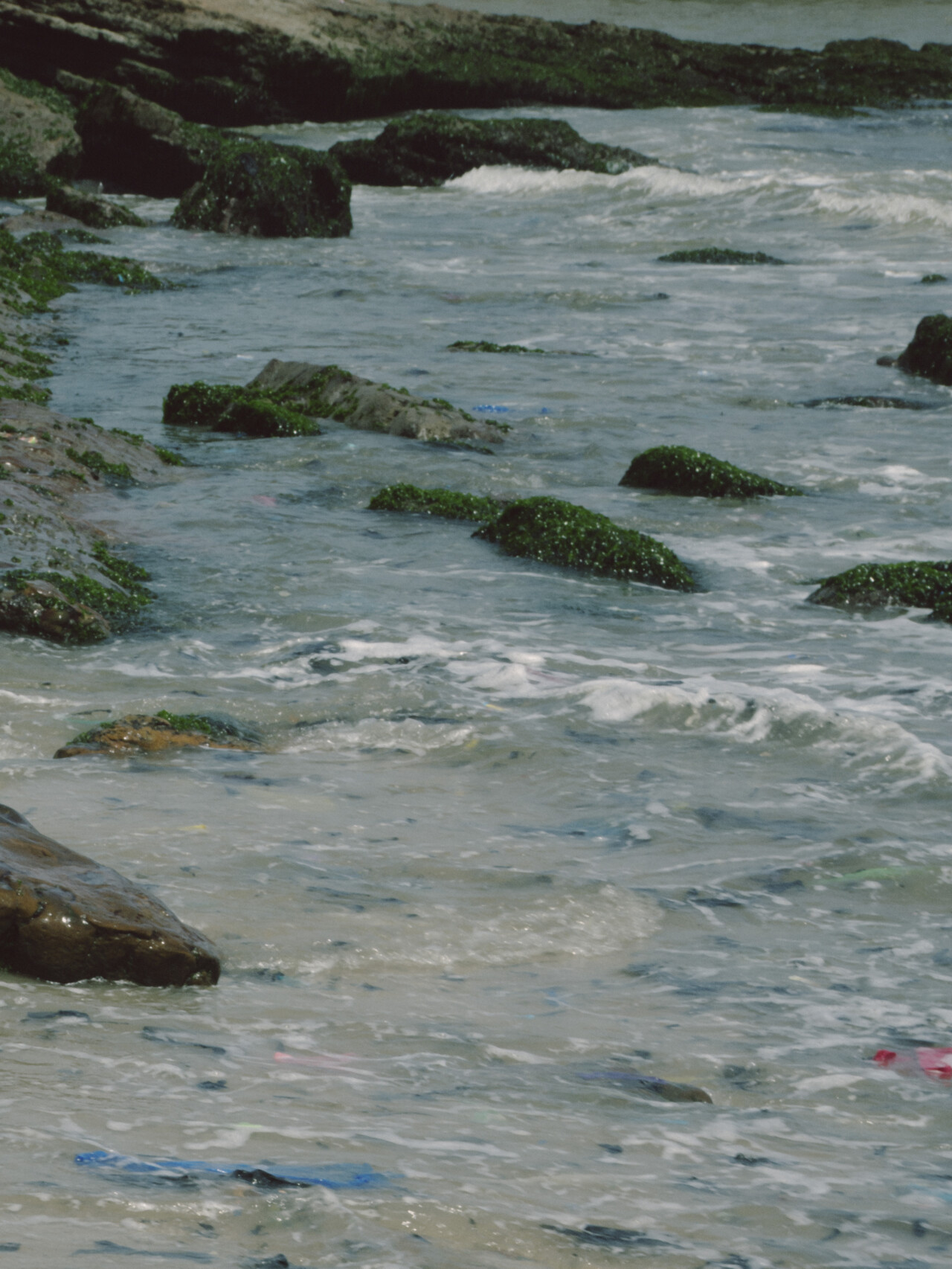
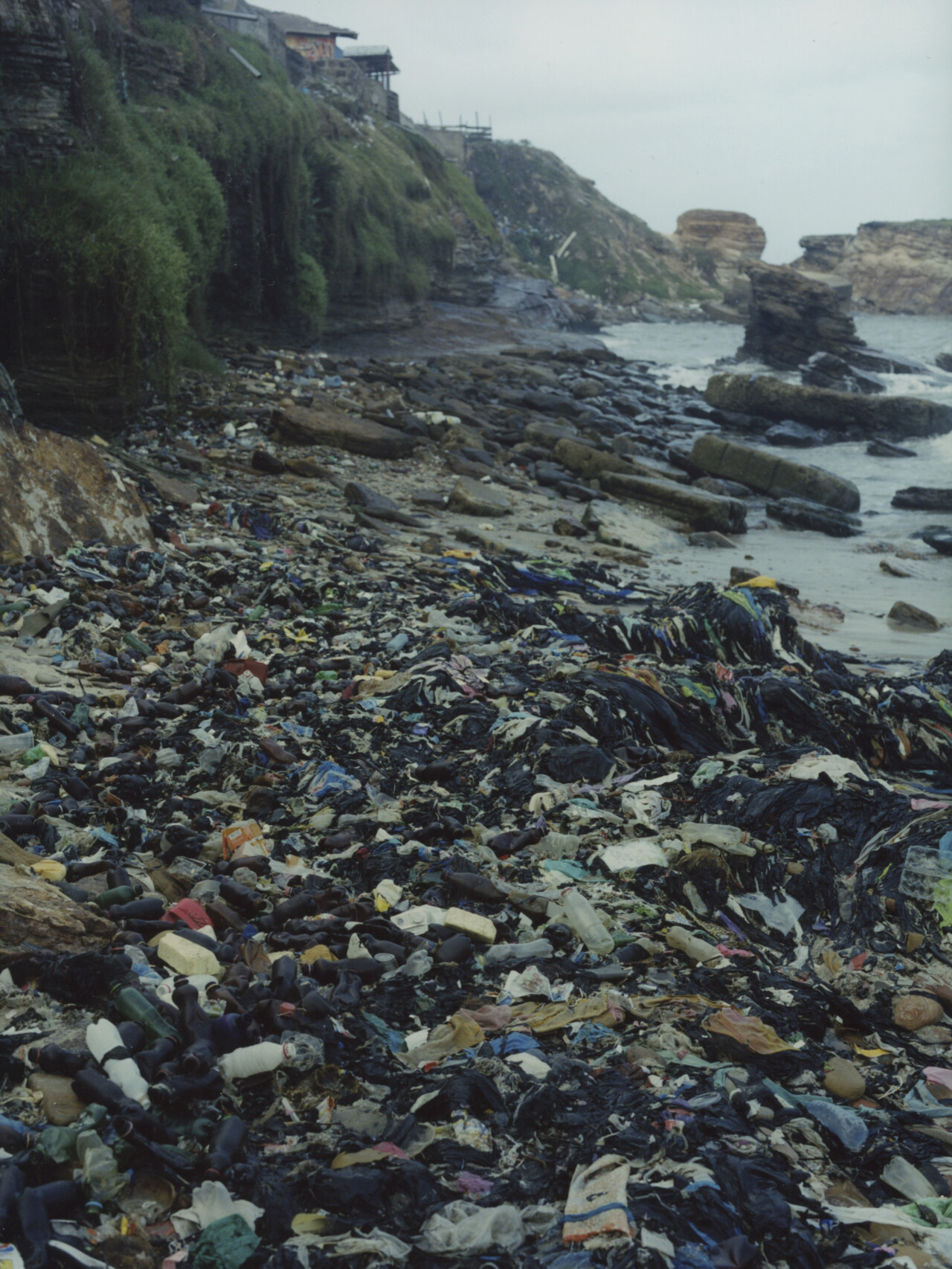
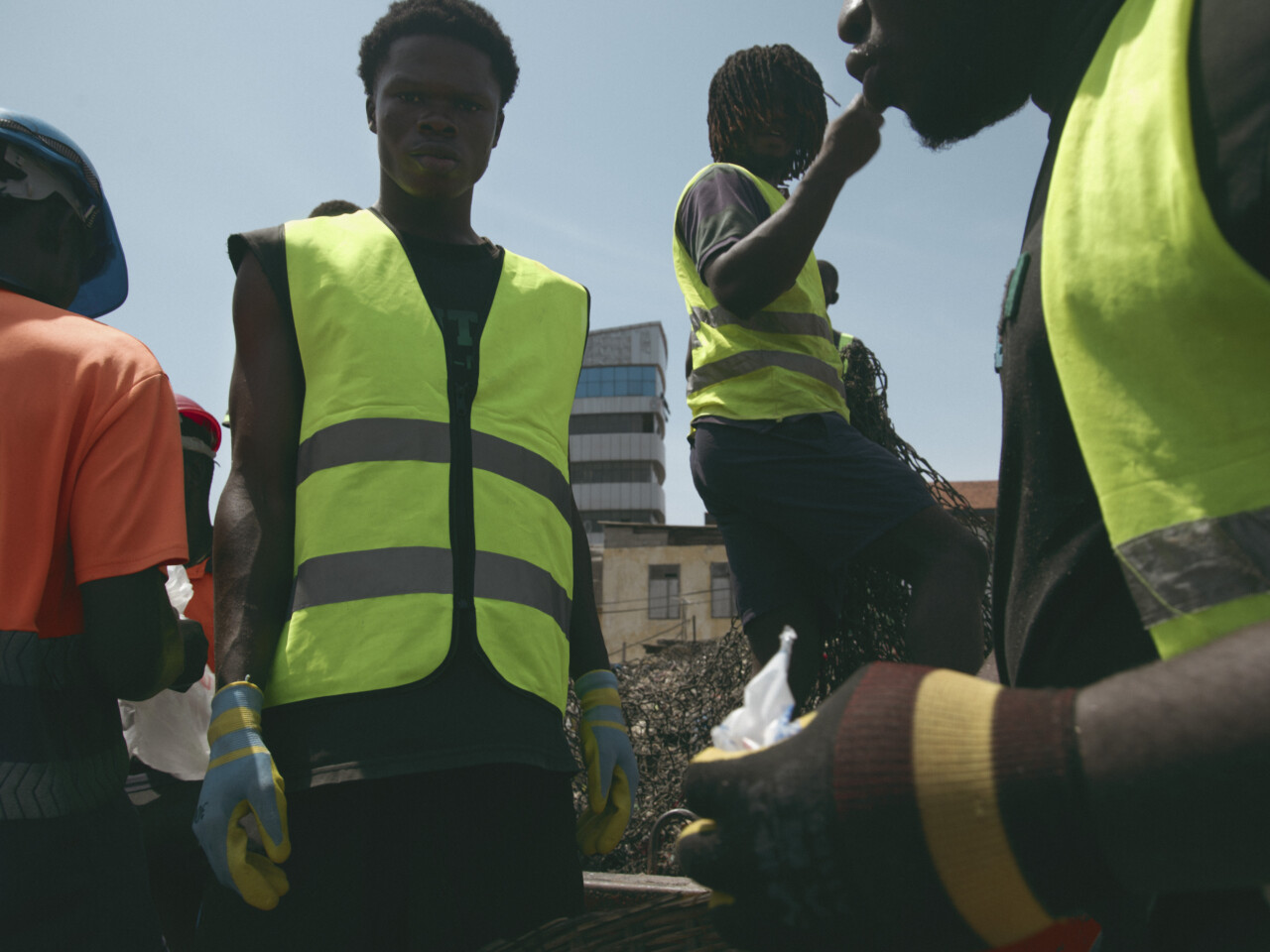
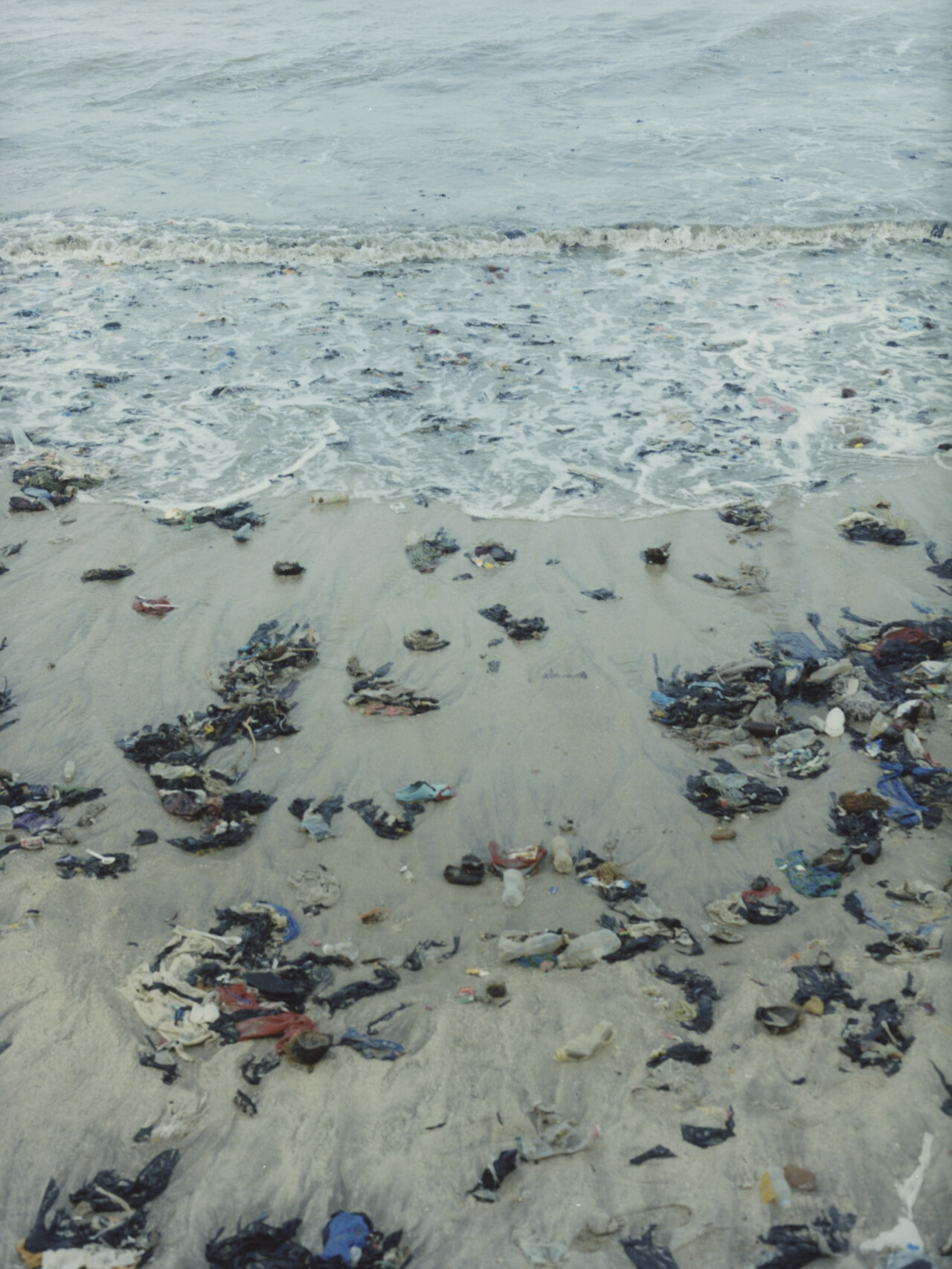
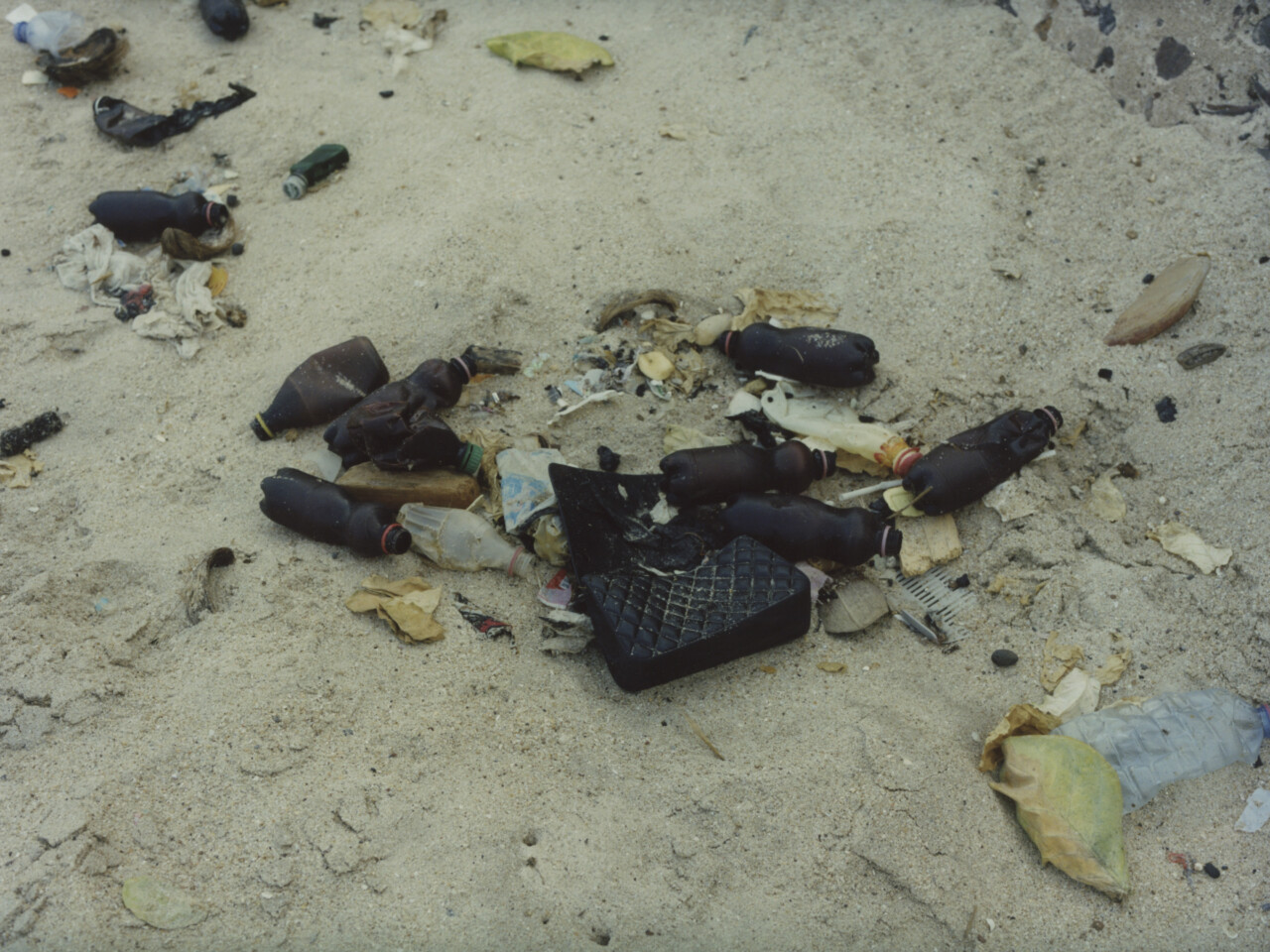
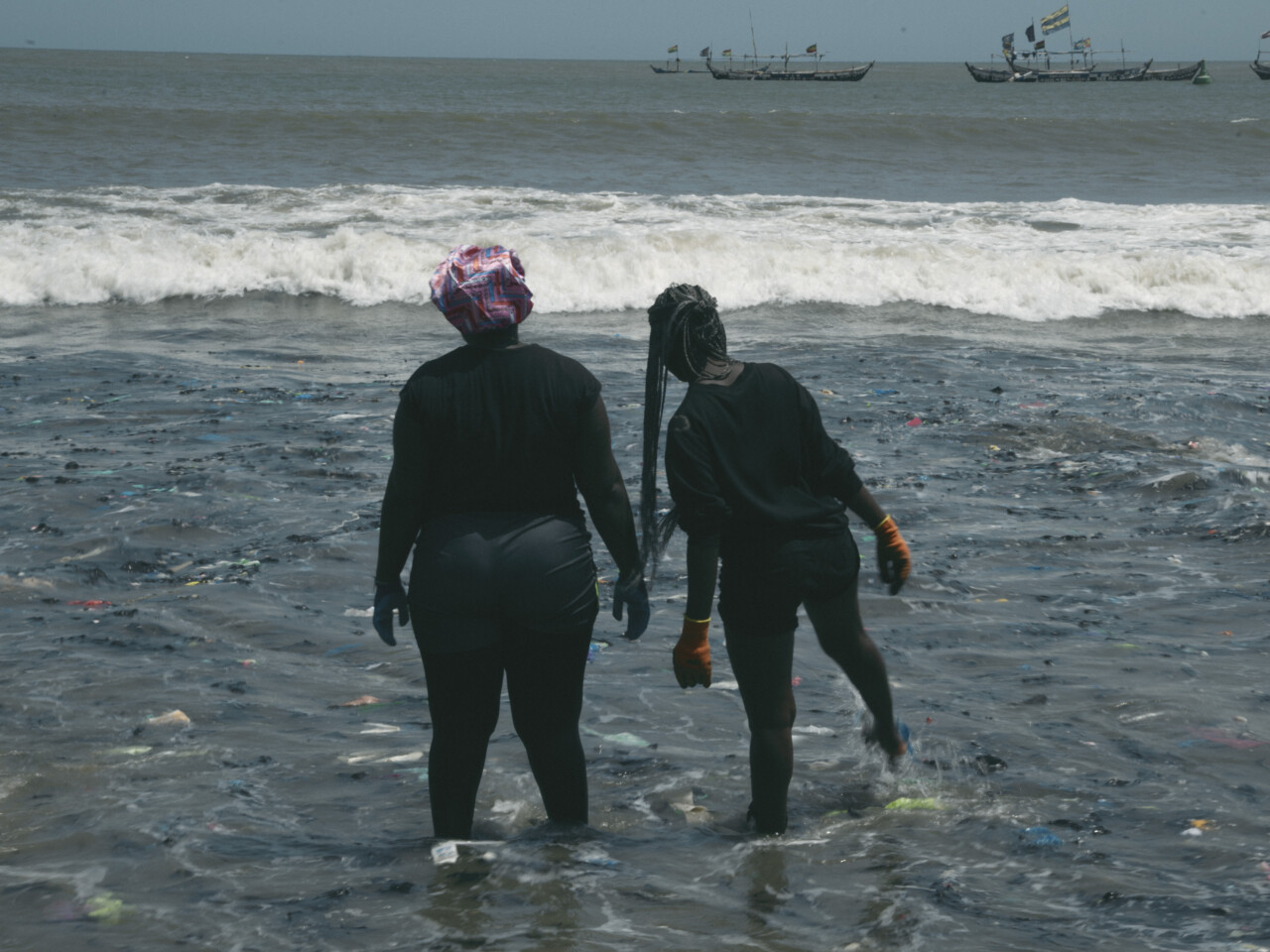
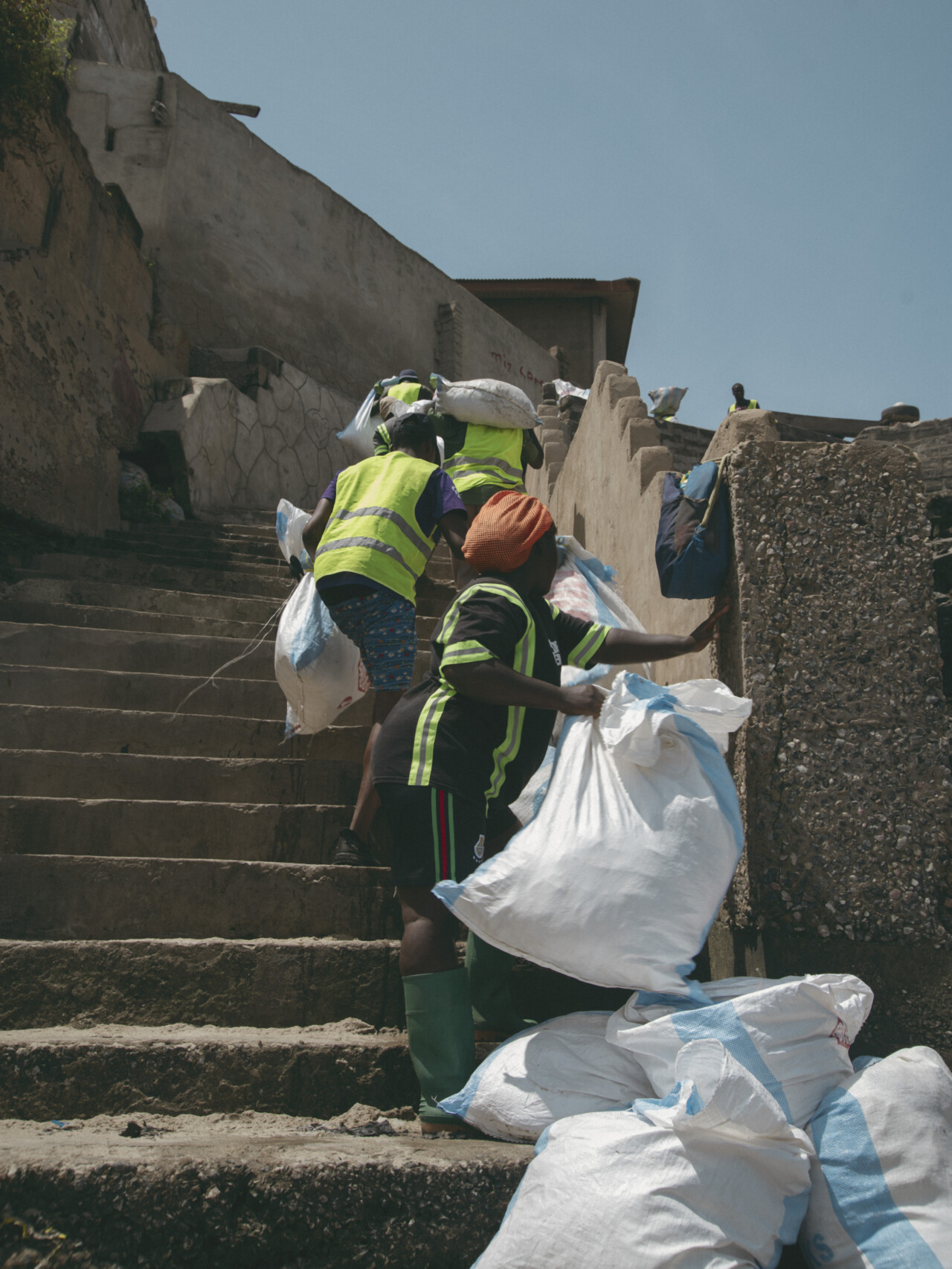
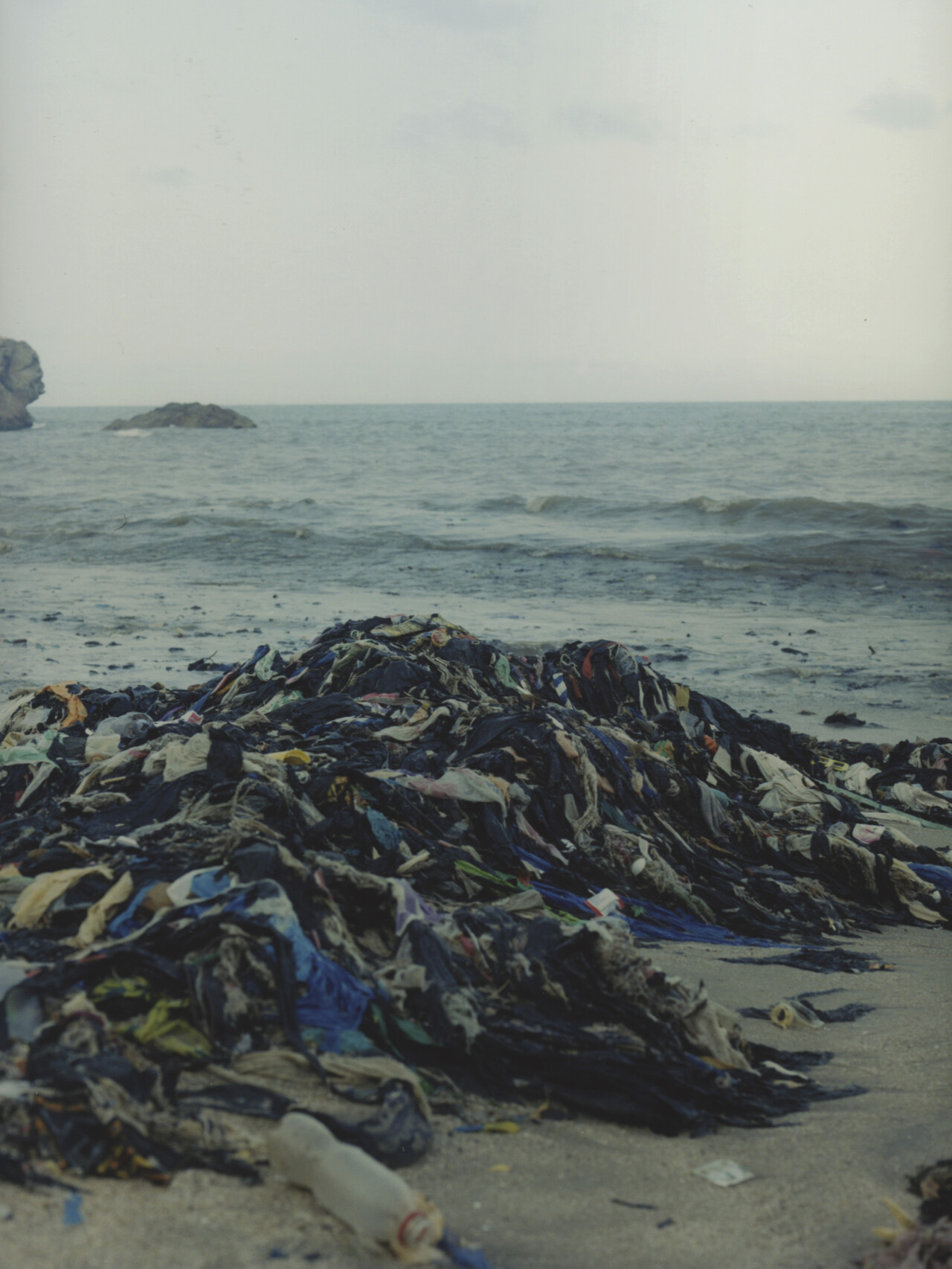
These photographs were taken during a beach cleanup at Jamestown Beach in Accra, Ghana.
Words by Whitney Bauck
photographs by eric asamoah
Adjin Oraka Tetteh has been fishing the waters off the coast of Accra, Ghana, for more than 30 years. For decades, he spent his days launching a small wooden boat full of gauzy green fishing nets into the water from the shore, and returning with the hull full of large red fish. Sometimes he saw sea turtles digging holes in the sand to deposit their eggs before slipping back into the ocean. His life as a fisherman wasn’t without challenges, but the beach was a beautiful place to live and work.
That was before the waste started to wash ashore.
First came the plastic: black and blue bags, bits of old containers, flattened bottles. Then came the clothing: sagging skinny jeans, T-shirts commemorating family reunions in places he’d never heard of, brightly patterned dresses fading to gray under the tropical sun. Sometimes the garments got so filled with sand—in the collar, in the seams, in the sleeves—that they hardened like cement and lodged into the beach like multicolored, branded rocks. Other times, wave action twisted multiple pieces together into tentacle-like, shaggy ropes up to 33 feet long. Occasionally one end would snag on the ocean floor and wave about like a giant strand of seaweed made of trash. Or the whole thing would wash ashore, forming a coil so large it could reach a grown man’s chest.
The beach was eventually so covered in textile and plastic waste that Tetteh could barely see the sand underfoot. The turtles, unable to dig through the layers of discarded clothing to lay their eggs, disappeared. When Tetteh and the other fishermen waded out to launch their boats, they stepped carefully to avoid getting tangled in clothing tentacles that threatened to pull them into the water. The big fish they were accustomed to finding became scarcer, forcing them to venture farther out for smaller and smaller returns.
Now, when casting a net over the side of the boat, he said, “instead of catching fish, you catch clothes.”
The textile waste strangling the beaches and waters of Accra is not made in Ghana, nor is it made primarily by or for Ghanaians. It arrives in the capital as part of the global clothing trade: designed in sleek offices in New York and Paris, produced in factories in Bangladesh and Vietnam, sold in stores in Berlin and Shanghai. Once customers in those countries decide they no longer want it, the clothing is taken to thrift stores or donation bins for resale. What can’t be resold is sorted, packaged into large bales, and shipped to Ghana, which is among the world’s largest importers of secondhand clothes.
Once the clothing lands in Accra, local Ghanaian importers have it transported—often on the heads of young women whose spines are being damaged by the heavy loads—to Kantamanto, believed to be one of the largest secondhand markets in the world. There, much of the clothing is sold by scrappy entrepreneurs or upcycled into new creations by innovative designers. But the clothing that can’t find a second life ends up tossed aside as waste.
Just how much of that clothing ends up as waste is hard to pinpoint. The most commonly cited figure comes from a report written for the United Nations Environment Programme by The Or Foundation, an environmental justice nonprofit, which estimated that between 32% and 42% of the clothing entering Kantamanto leaves the market as waste. That figure has been disputed by used clothing importers in Ghana, who make money buying and selling unopened bales to market retailers.
Unable to independently quantify the waste percentages across the market myself, I accompanied market seller Mary Sarkodie on a recent trip to Accra as she sorted a bale from start to finish.
I sat with Sarkodie as she cut open a newly purchased bale of clothing imported from Poland in her small, open-air stall in Kantamanto. Watching her sort through it, I identified at least one possible reason for the discrepancy in reported waste figures: Some clothes that are technically wearable get discarded because they simply won’t sell. Some of what Sarkodie tossed aside surprised me. Black dresses, for example—considered sophisticated in many European fashion capitals—aren’t popular in Accra, Sarkodie told me, where bright colors are preferred. So, while technically wearable, she counted most of them as junk based on years of experience in the market.
Other times, though, what would be set aside as waste was obvious even to me. Sarkodie’s bale, which she was not allowed to open and inspect before buying, was supposed to contain only women’s dresses, which is what she sells at her stall. But the bale also contained what appeared to be a fluffy cat bed, a stained heart-shaped pillow embroidered with the name “Jonas,” and several dresses with huge tears that would be difficult to repair. Every time she came across a piece like this, doomed to be thrown out and unable to help her recoup what she had paid for the bale, she sighed heavily.
When retailers like Sarkodie encounter items they can’t sell, they have few options for proper disposal. Textile and electronic waste shipped from abroad have overwhelmed the city’s waste-management capacity, according to Solomon Noi, director of the waste management department for the Accra Metropolitan Assembly. The city is barely equipped to handle the waste generated by its own citizens, much less the excess arriving through the ports. “Our fleets are not adequate to take care of them,” he said. “The little we can manage, we do, and then what’s leftover—which is uncollected waste, especially the textile waste, which forms roughly 70 tons on a daily basis—is washed by runoff during heavy downpours into the ocean.”
Some retailers, facing a lack of city services and unable to afford private waste pickers, resort to tossing their cast-offs surreptitiously into the canal behind the market. If they can manage to hire a private waste picker, their discarded clothes may be gathered from the market floor and then taken on a 20-minute walk to the nearest dump, which towers over the slum of Old Fadama and sits at the edge of Korle Lagoon. There, piles of clothing and other waste slide into the water whenever it rains hard enough, Noi said. Either way, the result is the same: The clothing is flushed out to sea and washes onto the beach with the tide.
On the day that I visited Jamestown, the beach where Tetteh fishes, for a cleanup, the coastline was strewn with scraps of plastic bags and garments embedded deep in the sand. One end of the beach was so covered that I couldn’t tell whether I was walking on sand covered with trash or trash covered with a layer of sand. Wearing gloves, I tried to unearth a few of the garments beneath me: a black lace top, a tie-dyed dress, a blue button-up shirt. Some disintegrated as I pulled at them, making them hard to unearth completely. Others were so intact and full of compacted sand that it took a fellow volunteer hacking at them with a machete to detach them from the ground. When the sand eventually spilled from the slashed openings, it often stank—a memento of decaying organic matter or worse, picked up during the clothing’s journey through the dump and the sewage-strewn lagoon before making its way here.
Over the course of the afternoon, digging clothing from the sand alongside other volunteers, I saw some tags bearing names I didn’t recognize. But many tags belonged to brands I knew well: Nike, Adidas, Topman, Fruit of the Loom, Marks & Spencer, All Saints, Zara, Superdry, Umbro, and the Harry Potter merch store. All of these brands are based in, and make money for, executives in wealthy Global North nations. Most have never published how many garments they produce every year, making it difficult to know how much waste they’re responsible for. (The exceptions from this list are Adidas and Superdry, which published production volumes a few years ago: They produced 328 million and 23 million garments respectively in 2023.)
What’s clear to Noi, the city waste manager, is that this beach is emblematic of the ways that Ghanaians are tasked with cleaning up other countries’ waste. “It appears our shores are being used as a dumping ground for the excesses of the Global North,” he told me in his office a few days after I visited the beach. “And that is not fair.”
“Now I look at the beach and I have hope. We’ve done so much work, and that brings the drive; to really know how far we’ve come. It gives us the energy, the zeal, to clear the beaches.”
Fair or not, Ghanaians are increasingly finding ways to clean up messes they didn’t create.
Bright Wayne Ayikpah grew up near the beach and remembers playing soccer and swimming there before it was polluted. That history is part of what drew him to Tide Turners, a group created through a partnership between The Or Foundation and local government to monitor and clean up Accra’s shoreline. Once a week, he and a crew of 70 or so other paid workers, along with a gaggle of volunteers, monitor the new waste that’s appeared on the beach in the past seven days. They collect clothing tags and remove clothing waste from the shore, sometimes hacking and digging to dislodge pieces stuck deep in the sand. They then carry the clothing in dripping bags up a set of concrete stairs to The Or Foundation’s bright orange dump truck until the truck is full.
It was discouraging work at first, Ayikpah said. “Although we are cleaning, there is still more coming, and we don’t know where it’s coming from. We come the next week; clean up. But when you go there again, you see more trash.” When one of his neighbors asked where all the clothing was coming from, Ayikpah hinted that he thought fast fashion was part of the problem, pointing out that “we don’t produce any textiles here.” Still, they kept washing ashore.
It became clear that the beach would never be fully clear as long as clothing continued washing up from elsewhere in the city. So two more cleanup crews were set in motion.
The first was Kanta Keepers, created through a partnership between the Kantamanto Obroniwawu Business Association, local government, and The Or Foundation. (Obroni Wawu refers to secondhand clothing, but literally means “dead white man’s clothes.”) Seeing the beach cleanups made market leadership want to get involved, according to Kantamanto manager Adutwum Atta Manu, who has been working in the market for 50 years. “They have been cleaning the beaches, and the source of the materials that they are cleaning is Kantamanto. So we thought it wise that we tackle it from the source,” he said.
Kanta Keepers was formed as an after-hours cleanup crew that walks through the market after it closes to collect trash as the light wanes. General waste goes into one set of bags headed for the landfill, while discarded textiles are gathered separately and trucked over to The Or Foundation’s “Remanufactory.” There, garments are sorted, shredded, and pressed into fiberboard or cut into strips to make T-shirt yarn.
“Formerly, individuals were managing their own refuse,” Manu said. “It was economically not viable to them, because you have to pay money for people to come and take it away. Because of that, they will pick it up and go and hide it somewhere, or they will just burn it.” As a result, he said, trash built up in the market, turning it into an “eyesore.” Sometimes clothing clogged the gutters, causing the market to flood when it rained. But since Kanta Keepers has been deployed, “the place is clean,” he said. Customers who had been avoiding the market for fear of disease have returned.
The next stop was the canal behind the market. To clean the waterway, a group called the June 4 Taskforce was created. June 4 places nets at strategic points along the canal to catch textiles and other trash before they can exit the waterway. Once a week, crews in rubber boots wade into the canal, unhook the nets, bag the trash they’ve collected, and load it into the dump truck. They start early, at 3 or 4 a.m., to complete the bulk of their work before it gets too hot. On the morning I visited, the crew started wrapping up around 7 a.m. as white egrets landed nearby to peck at waste pulled from the canal.
June 4 member Thomas Inglago told me that when they first started working at the site, they had to bring in a crane to remove mounds of trash so high that it was impossible to walk up to the water’s edge. There’s still a long way to go, he said, but it’s already so much better than it was. “It’s important to make the place always tidy and clean for us all to live, so that when there’s a sickness it will not come and affect the people,” he said.
David Kwabena Akpablie, an Or Foundation team member who helps manage Tide Turners, Kanta Keepers, and June 4, said he generally tries to recruit people living nearby because he knows they’re the ones who benefit most directly from the work. “I try to hire people who have been affected by the problem,” he said, “because they see the work as their own. It is their problem, but they often don’t have the means to do it. So we just come in to empower them to do it.”
Still, there are limits to what the organization can fund. All three cleanup crews rely on a single orange dump truck The Or Foundation bought in 2025 to ease the difficulty of relying on the municipality’s limited fleet. But members from each crew feel they could make quicker progress if they had access to the truck more often.
Funding also limits the workforce. Back at the beach, Tide Turners officially pays 78 people at each weekly cleanup, but employees like Ayikpah have noticed that many volunteers, usually neighbors who live close to the beach, show up too—and the paid workers often share their wages with them. “After they got paid, they were like, ‘You’re also helping us. I can’t just take all the money. Let me share that with you.’ But after sharing the money, how much is left?” Not enough to live on, he said.
It’s worth noting that even in the best-case scenario, in which all the waste is removed from the market, the canal, and the beach, it still ends up in a landfill. That’s unsustainable on its face, but especially in Accra, where engineered landfills—designed to contain waste and limit pollution, unlike open dumps such as the towering pile of trash at Old Fadama—are rare. The city once had one that was designed to accept 500 tons of waste a day, but “because of this excess textile waste, it ballooned the loading capacity to about 3,000 tons per day,” Noi said. “That landfill design life was about 25 years minimum, but in less than six years, it was full.”
In other words, crews like Tide Turners, Kanta Keepers, and June 4 can do ambitious cleanup. But in the end, they need producers in the Global North to turn off the tap that keeps flooding their home with disposable clothing. “We haven’t stopped the influx of more waste,” Noi said.
In the long run, he believes companies and governments in the countries profiting from these clothing brands need to take financial responsibility for the waste they generate. This could take the form of Extended Producer Responsibility laws, which require companies to pay for the management of the waste they produce. If Ghana is already being tasked with managing the global fashion industry’s waste, he said, the industry might as well pay Ghanaians to do that properly.
In the meantime, though, he said that Accrans “cannot fold our arms and do nothing, because then the situation will be worse. The sea will keep bringing the textiles up, and it will end up becoming a whole mountain.”
So though the odds are daunting, and though it doesn’t exactly feel good to be made responsible for someone else’s mess, workers like Inglago and Ayikpah are enacting solutions on their home turf. In addition to Tide Turners’ weekly cleanups, the group also hosts a monthly cleanup open to the wider community. I joined the line of safety-vest-clad volunteers on one such day in February as we descended a concrete staircase to the beach. A band had been hired to play live music, and a stack of green coconuts bursting with coconut water waited to refresh volunteers once their shift was over.
Though the beach looked polluted to me, Joseph Siaw Ayesu, an artist who grew up nearby and is now involved in monitoring and cleanup efforts, noted how much progress had already been made. When Tide Turners started in 2023, he often felt discouraged by how quickly the beach was inundated with waste after each cleanup. But as the crew kept returning week after week, year after year, he saw it slowly get better. New waste still washes up every week, but the baseline—especially the clothes long-embedded in the sand—really did start to clear up. Eventually, they made so much progress on the first beach that they moved on to another. It may never be completely clear of textiles until the “tap” of overproduction controlled by brands is turned off, he said. But in the meantime, the work is making a meaningful difference.
“Now I look at the beach and I have hope,” he said. “Because what it used to be like three or four years ago is way different. We’ve done so much work, and that brings the drive; to really know how far we’ve come. It gives us the energy, the zeal, to clear the beaches.”
Tetteh, the fisherman, agrees. Neither the beach nor the fish have returned to what they were 20 years ago, but since Tide Turners started showing up, he’s catching fewer textiles in his nets. Maybe given enough time, the coastline will become clear enough for the turtles to return and find a beach made of sand rather than textiles, offering them a welcoming place to lay their eggs once more.
This story is part of a series produced in collaboration with The Or Foundation exploring the impacts of the fashion industry on communities in Ghana. Read the previous installment here.
Join our membership community. Support our work, receive a complimentary subscription to Atmos Magazine, and more.
Global Fashion Waste Chokes Ghana’s Beaches. Here’s Who Is Cleaning It Up.