Photograph by Claudio Contreras / Minden Pictures
words by willow defebaugh
“A friend may well be reckoned the masterpiece of nature.” —Ralph Waldo Emerson
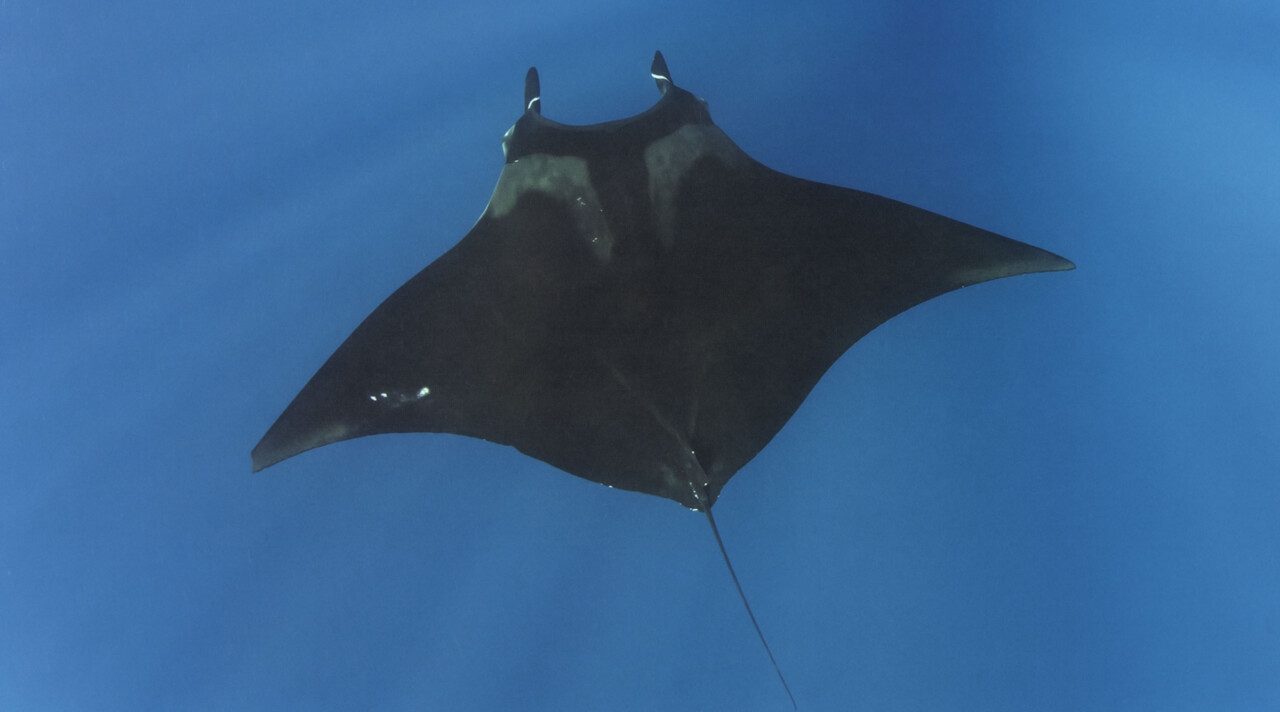
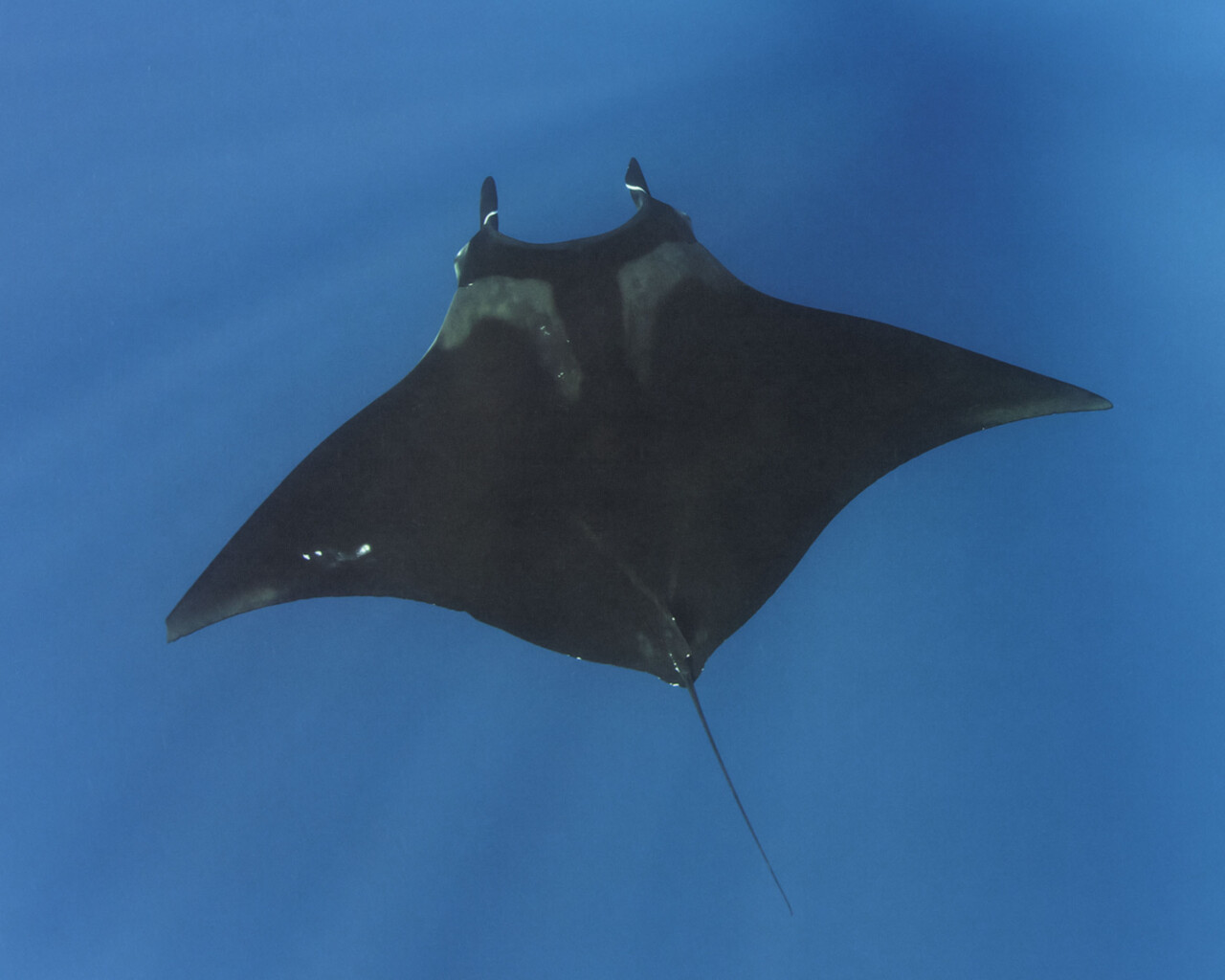
Not all angels are of the sky. Some soar the open seas with wingspans of up to 26 feet, their aquarobics possessing a cherubic grace that Chagall could have only dreamed of painting in his seraphim-filled frescos. It’s unusual to use the term “wingspan” when referring to a being that breathes saltwater, but then again, there is nothing usual about the giant manta ray, a species still shrouded in mystery, not yet studied long enough to even know their lifespan with certainty.
When Terry Kennedy began diving in Mexico’s Sea of Cortez in the late 1980s, Mobula birostris had hardly been observed by scientists. Far from a biologist himself, Kennedy—a Vietnam War veteran and ex-Hell’s Angel—had recently spent time in jail. On his boat named Erotica, he was searching for a good time. Between boat parties, he found peace—and perhaps even redemption—on the wings of a giant manta ray that he affectionately called Willy Wow.
The Last Dive, a new documentary from director Cody Sheehy, tells their story. It begins with Kennedy, now 83, being asked what friendship means to him. Saltwater immediately spills from his eyes, as they do whenever he talks about Willy, as if his more than 14,000 dives have turned him oceanic, porous as the sea itself. There is no answer to this unanswerable question. No answer, save for 19 years’ worth of footage of a man and a manta forming an unlikely bond.
Not long after meeting, Willy began swimming up to the side of Kennedy’s boat and slapping its hull with one of his fins, seeming to signal it was time to dive. Kennedy would hop in, hold onto Willy’s back, and they would explore the ocean as one. Willy even began directly leading Kennedy to sunken fishing nets, deathtraps which Kennedy would then remove. There were few divers at the time, and it wasn’t yet discouraged to touch wild animals, as it is rightly so today.
As the legend and footage of their friendship spread, so did awareness of manta rays. After seeing the evidence of their encounters, marine biologist Bob Rubin was inspired to secure funding for one of the first major research projects to study them. It turns out that these gentle giants have been blessed by evolution with the biggest brains of any fish, also large in relation to their bodies, with highly developed areas for learning, problem solving, and communicating.
All of this lends credence to Kennedy’s seemingly impossible notion that he and Willy had a way of communicating wordlessly. When Kennedy thought of turning, Willy would turn. While beyond scientific understanding, Rubin described this idea as not “unreasonable.” Manta rays are rife with electrical receivers and highly sensitive to electric fields such as our own. In addition to visual cues, this may aid them in identifying specific divers—felt in the way that friendship is.
This electric connection with a giant manta ray who knew nothing of his troubled past turned Kennedy into an ocean advocate. By documenting the cruel capture and slaughter of these fish—each with their own name, their own story—he helped get marine protections in place for these endangered angels of the sea. What is friendship if not a bond that allows us to become better, to discover redemption not in the depths of self but in the ocean of the other?
Join our membership community. Support our work, receive a complimentary subscription to Atmos Magazine, and more.
The Wingspan of Friendship: How a Giant Manta Changed One Diver’s Life