Video by Abraham Joffe ACS / Film Supply
words by willow defebaugh
“I think a glacier would teach us about the plasticity of time.” —Dr. M. Jackson
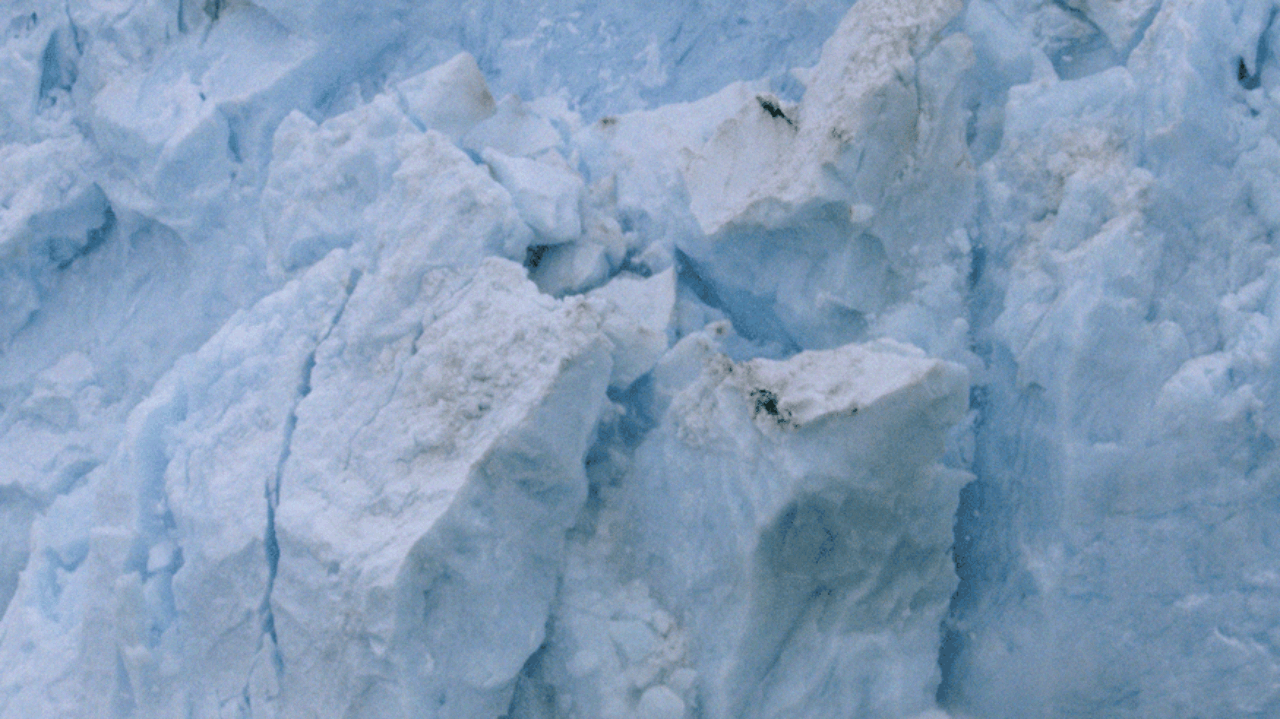
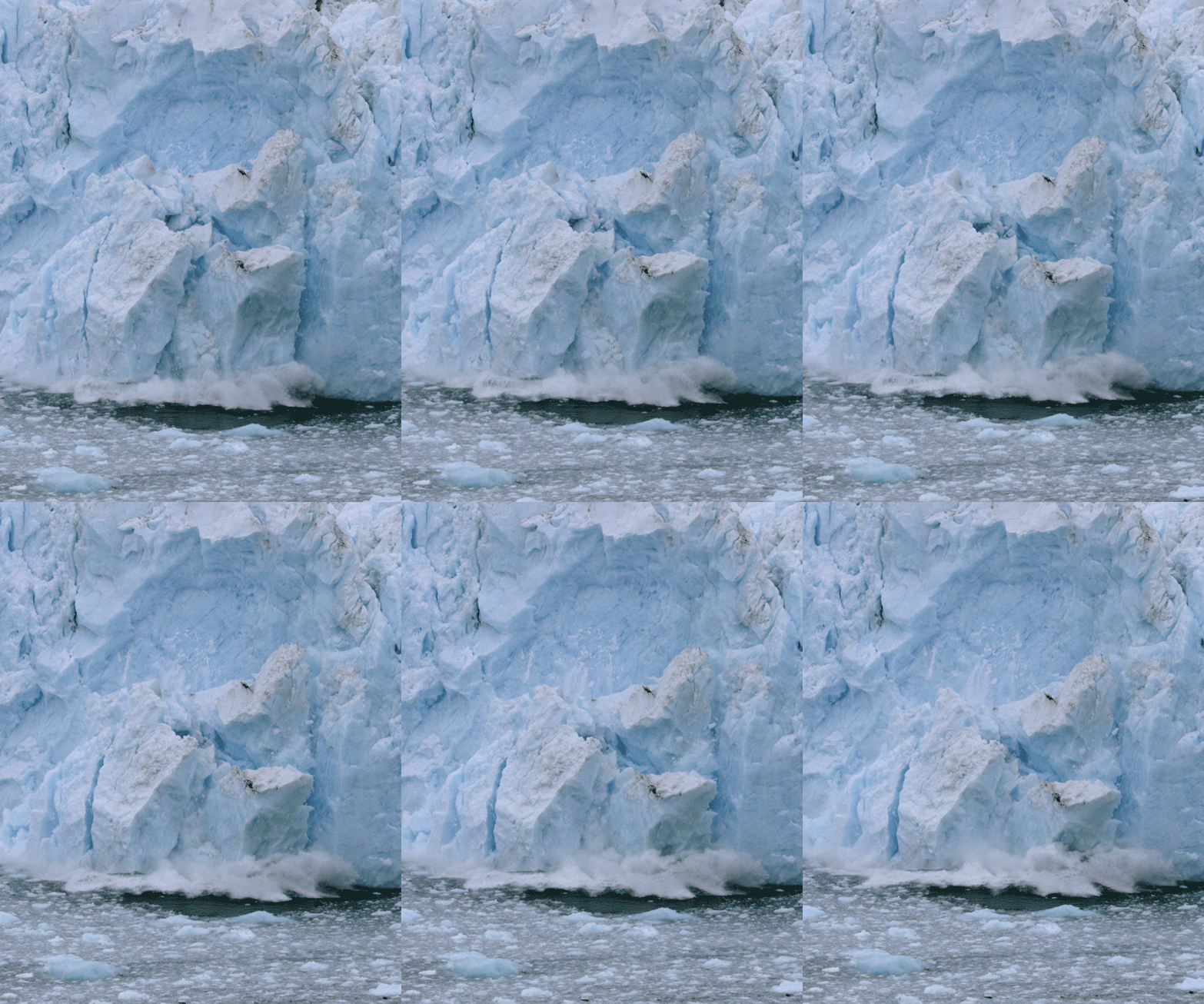
Thunder booms, echoing across the otherwise still water. Almost out of reflex, I scan the horizon for a source, some primordial storm capable of producing such a calamitous sound. Only there is no storm, because there is no thunder. Instead, I see ice crumbling into the ocean: the calving of a glacier. I will witness this with a chilling frequency during my weeks in the Arctic. And each time, the thought will crash through my mind with bewilderment: I am watching a god fall.
Glaciers are giants. Their timescale is far grander than ours, their formation gradual. Snow that falls and remains accumulates year after year, layers compressing until they become glacial ice. With the pull of gravity, the heavy ice mass creates enough stress that it begins to flow. Ice crystals deform and rearrange as the glacier creeps forward. If the base is warm enough for liquid water to form, the glacier can even slide over its own bed. What seems still is merely slow.
As with anything that flows, glaciers are continuously made and unmade. As new snow turns to ice, older ice flows through the glacier and melts or calves at its terminus. And even giants move at different paces: Ice might move through a fast-flowing mountain glacier in a century, whereas the oldest ice in Greenland dates back more than 100,000 years. The oldest known glacial ice in Antarctica may approach 1 million years old. Glaciers are both ancient and ever-new.
Glaciers hold slivers of past skies within their ice. Falling snow carries traces of dust, pollen, volcanic ash, and pollutants. When the snow compresses, the air between crystals can become sealed into bubbles that contain these clues—miniature time capsules that scientists use to learn about the history of our planet’s atmosphere. By studying trapped oxygen and hydrogen, we can learn about past temperatures and weather. Glaciers hold the memory of the world.
As slow as they walk, as deep as their memories reach, the landscape of glaciers is changing fast. Globally, average annual glacier loss increased 36% between 2000–2011 and 2012–2023, from 231 to 314 billion metric tons per year. Since glaciers also help cool the planet by reflecting sunlight off their bright surfaces, while darker land and water exposed by melting glaciers absorb more heat, their disappearances create a feedback loop that accelerates global heating.
A decade ago, the world agreed to keep global heating well below 2 degrees Celsius, aiming for 1.5 degrees. This week, the United Nations released a report stating that exceeding a 1.5-degree temperature increase is now unavoidable. It urges us to make this “overshoot” low and brief, then bring temperatures back down through carbon removal and reducing emissions. But the report also warns that reversing overshoot won’t simply reverse the damage—including glacial loss.
Even as we prepare for overshoot, every fraction of a degree will determine how much is lost. May our actions accumulate as snow. I have never wept as much as I did watching glaciers calve, those gods holding our history and future in their bright blue grasp. Wept not only in grief, but in gratitude: for the invisible line they are holding, for their teachings of slowness, the beauty of memory made into ice, the wisdom of a world that seems frozen yet continues to flow.
Join our membership community. Support our work, receive a complimentary subscription to Atmos Magazine, and more.
Glacial Memory in the Age of Overshoot