Good Neighbors 09.12.26
EDITOR’S NOTE: This summer, writer Katie Hill and photographer Isabelle Zhao set out to meet people in rural communities who found ways to acknowledge their differences while staying true to a common goal of protecting the air, water, and land they all rely on. Good Neighbors zooms in on six distinct parts of the United States, where you’ll meet everyday people joining forces to protect our most precious resources. The weekly series launches September 17; you can read each edition here.
As I sprinted through the Denver airport, trying with all my might to catch the transfer that would get me from Calhoun County, Iowa, to Sublette County, Wyoming, in a single day I realized how objectively difficult rural America is to get to.
I wish Ms. Mocarski had mentioned this in her last-day speech to my A.P. U.S. History class. She told us to go see our country before we got “weighed down by the ol’ ball and chain,” but she didn’t say anything about the heinous layovers.
Many of us seek out rural America for one reason or another. We are a nation that romanticizes the off-the-beaten-path places, the in-between places, the places that the more fast-paced among us thank time for forgetting.
But rarely is the rural America we seek the rural America we find—and the rural America we find is usually tucked away in small, hidden pockets, multiple hours of driving and some miracle of hotel vacancies and near-missed flights away. Sometimes we get there by happy accident. Other times we are dissatisfied with where we end up. Before going on this reporting trip with my stellar, intrepid photography partner Isabelle Zhao, I might have argued we should give up on calling rural America a place and start calling it an idea instead.
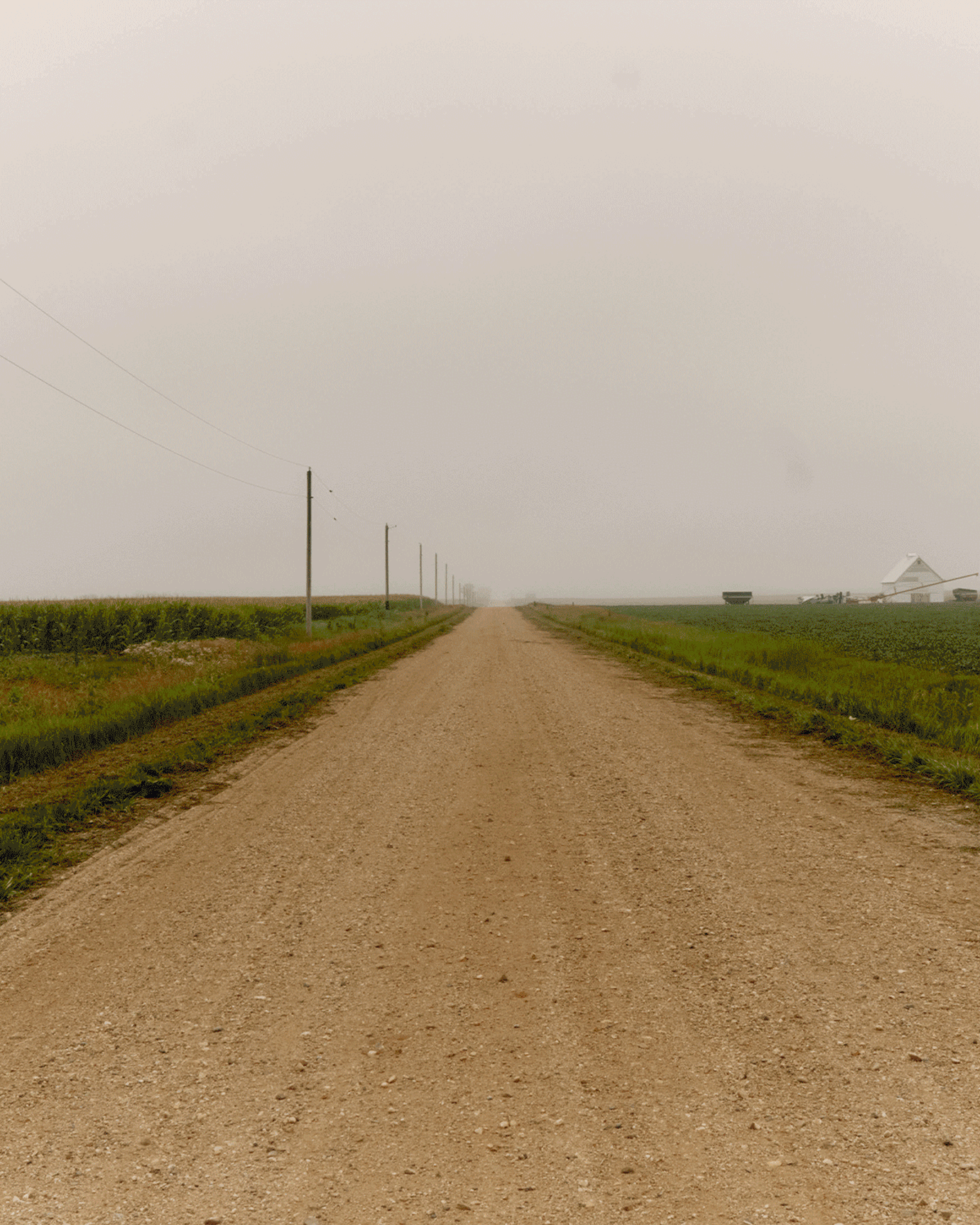
I’ve since realized that rural America isn’t a singular place at all. It’s a million places, beautiful and harsh, and at risk of sounding cliché, no two are alike.
It’s a bend in a muddy river that carries remnants of coal mining runoff from headwaters in dense Appalachian forests toward an eventual confluence with the Potomac.
It’s the view from my room at the Holiday Inn Express on the Permian Basin: hotel parking lot, megachurch, megachurch parking lot, pumpjacks, sky.
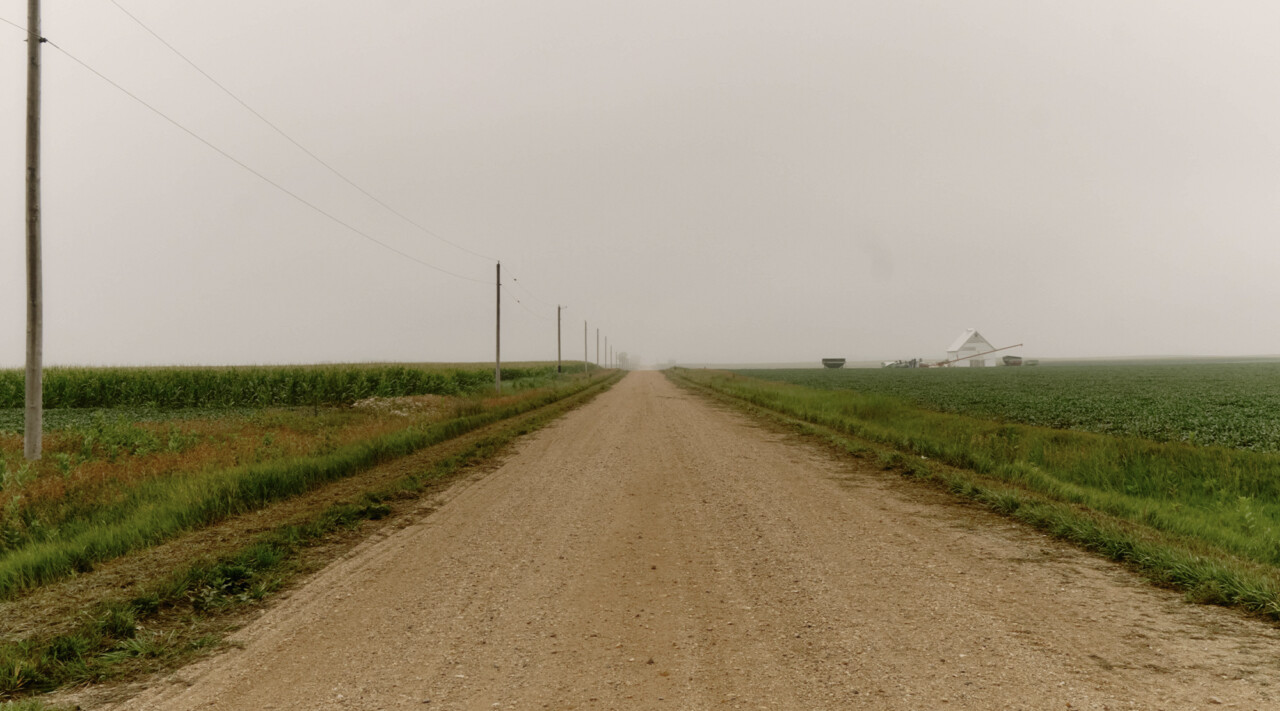
It’s the oversized equipment garage where three corn and soy farmers address 150 other corn and soy farmers and their families about soil health, cancer, and fertilizer in their drinking water.
It’s the small coastal town reckoning with the ferocity of climate change, or extreme weather, or whatever the hell you want to call it, after recovering from nine 100-year floods in just seven years.
It’s the sprawling expanse of Wyoming sagebrush that a small herd of pronghorn cross at top speed, unable to tell the difference between federal land, state land, and private land because it all looks the same.
“I’ve since realized that rural America isn’t a singular place at all. It’s a million places, beautiful and harsh…”
It’s the municipal meetings where a group of commercial fishermen and environmental advocates raise hell about how liquefied natural gas plants are choking them out of their livelihoods and endangering their families.
It’s an incalculably large desert oasis where ranchers, rafting guides, farmers, law enforcement personnel, and self-described radical leftists gather to shout, in unison, that a physical border wall between them and Mexico is going to make their jobs and lives worse, not better.
It’s a million other places that I’ve never seen before and, likely, will fail to glimpse before I die. I hold this truth to be a damn shame.
One of modern society’s greatest failings is forcing all of rural America to wear the same nametag, to the costly expense of its multidimensionality. Like all the other types of America that we love to generalize, villainize, fetishize, ostracize, and patronize, rural America is full of places that are deeply imperfect. And those imperfect places are full of people who love them, more often due to their imperfections than despite them.
Thanks to the tidal wave of data center proposals washing across Flyover Country lately, the rest of the United States seems to be paying more attention to these places now than at any other time in the last decade. As those floodwaters recede, a matrix of cross-aisle organizing emerges, a unifying force that many feel they’ve been missing for a long time. Recognizing this pattern, The New York Times quoted Milwaukee-based comedian Charlie Berens in calling mass loathing of data centers “the most bipartisan issue since beer.” Despite Berens losing a massive corporate sponsorship for his activism against data centers, people in his Instagram comments “feel healed” and “love this corner of the Internet.” Onward he trudges.
But something gets missed when we assume data centers spawned this pan-partisan symbiosis from scratch, because they haven’t. Rural communities across the country have always had a knack for sidelining differences to prioritize imminent threats. In what would more aptly be called “No One’s Coming to Save Us” Country, that’s the only way to live.
These are the places where the political horseshoe bends back around, where Democrats carry guns in their trucks, where Republicans fret over soil health and songbird populations, where everyone and their mother is more than a little distrustful of the establishment. That’s with good reason: More often than not, top-down attempts to “revive” or “invest in” these places end up leaving them in worse shape than before or rendering them unrecognizable or unaffordable for the people who actually live there.
“These are the places where the political horseshoe bends back around, where Democrats carry guns in their trucks, where Republicans fret over soil health and songbird populations, where everyone and their mother is more than a little distrustful of the establishment.”
So when Isabelle and I got the opportunity to tackle a six-part series on environmental coalition-building across rural America, the only stories that survived the cutting-room floor were about places where people build coalitions from the ground up.
We did the bulk of the reporting travel in July as the nation’s 250th birthday celebration shrank in the rearview mirror. Most of the folks we met live deep in the ravine that separates the “America is heaven on earth” crowd from the “America is circling the toilet bowl” crowd. For them, the U.S. is simply the imperfect place they call home, whether by choice, by inertia, or, most commonly, by a cavernous lack of other options.
But if leaving is off the table for many rural Americans, so is letting the steady march of time squash their communities like bugs. In this sense, America is not just their home, but also their canvas, where they use tools like local governance, community meetings, working groups, celebrations, and yes, Facebook, to toil their way toward a more perfect union. America is their old truck, up on cinderblocks in the front yard, never complete, always in need of fixing and rebalancing and part-swapping. Sure, the truck might run someday. But what history will remember most is all the tinkering, all the dead ends, all the new beginnings, and all the extra sets of hands that helped along the way.
If you’re one of the many who casts these places as hotbeds of ignorance and detrimental rugged individualism, I invite you to come along with Isabelle and me and take a closer look. We have six stories about the strength and unglamorous grit of community-keeping in rural America for you to consider. You might be surprised to find that, despite how the topic of data centers came up in every place we visited, not a single one of these stories is actually about a data center. That’s not by accident.
Charlie Berens, if you read this, I hope you’ll forgive me for arguing that data centers are hardly the most bipartisan thing since beer. They’re just another problem that needs fixing—and in places like the ones we visited for this project, what else are neighbors for?
Join our membership community. Support our work, receive a complimentary subscription to Atmos Magazine, and more.
On Good Neighbors: Dispatches From Rural America