Photograph by Meghan Marin / Connected Archives
words by miranda green
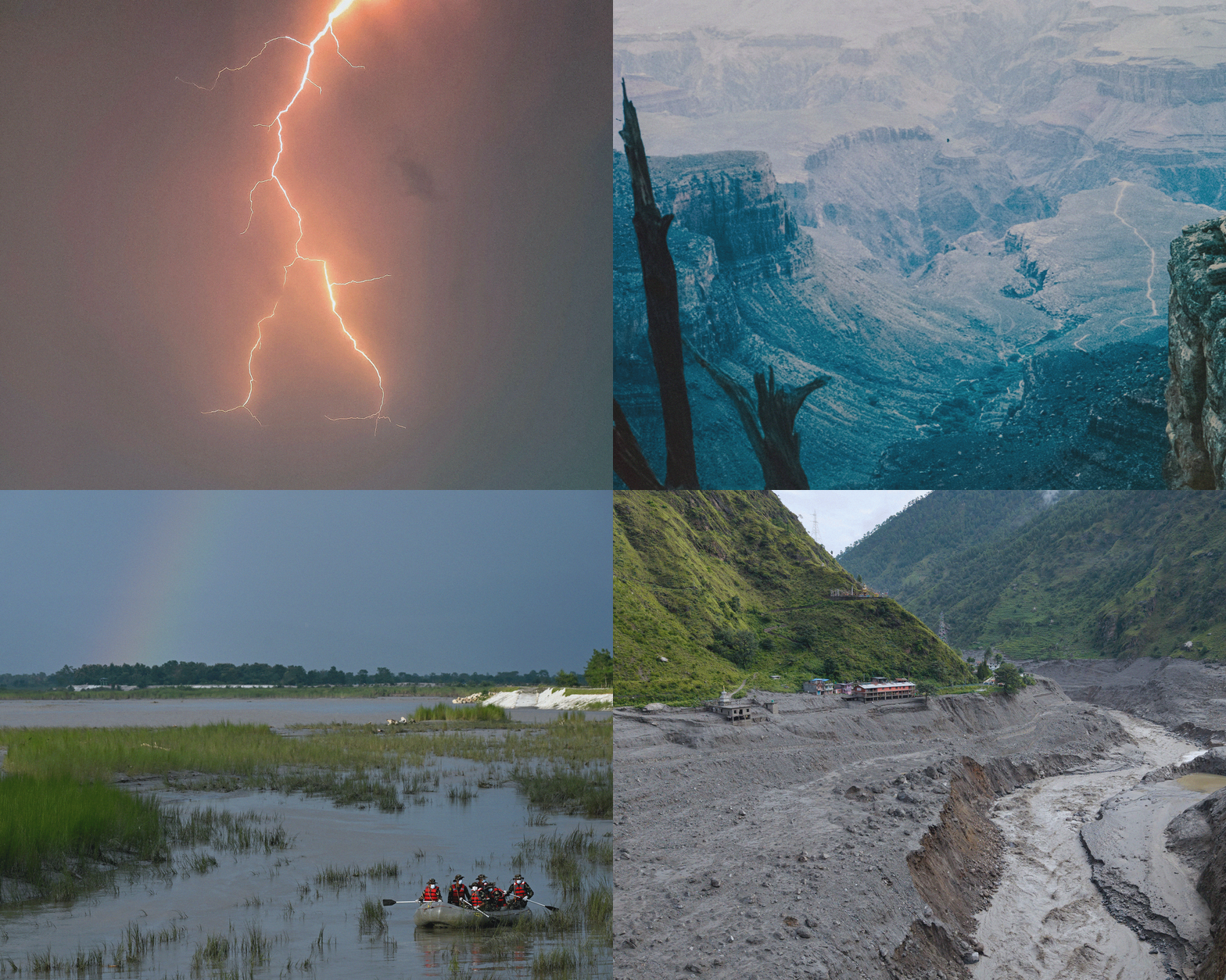
It was back in the ‘80s when scientists began taking note of weird weather hitting the West Coast.
During the winter of 1982 and ‘83, rivers overflowed, roads flooded, hillsides gave way under houses, and a tornado even ripped through South L.A., tearing part of the roof off the Los Angeles Convention Center.
At a workshop for oceanographers in La Jolla in March 1983, researchers debated the cause; some even proposed that volcanic eruptions in Mexico might be responsible. But eventually, experts determined the culprit: cyclical warming and cooling in the Pacific Ocean, which they named El Niño after a term used by fishermen in Peru.
Since then, El Niño has become a bit of a cultural phenomenon. Chris Farley famously portrayed the weather pattern on Saturday Night Live in 1997, proclaiming: “I am El Niño, all other tropical storms must bow before El Niño.”
Experts say we’re highly likely to experience a historic Super El Niño this winter, which could bring heavy rains to the southern United States and drought to the north.
And it’s already sending people into a tailspin.
The obsession with El Niño stems in part from what makes the weather system so unique: It somewhat predicts the future. It’s a weather pattern that scientists can see months before any weather impacts. For the weather-obsessed, it offers an opportunity to plan, prepare, and watch what happens next.
For years, the federal government tracked El Niño cycles along with readers as if it were a spectator sport. The ENSO Blog—which stands for El Niño-Southern Oscillation—tracked all things El Niño and La Niña, offering newly available data collected by the National Oceanic and Atmospheric Administration to the public in digestible language. It also offered concerned citizens and devoted ENSO blog fans a platform to ask questions and get any raw data they were looking for.
But as this year’s Super El Niño approaches, the government’s public-facing website is no longer online. It was pulled last summer, when the Trump administration’s DOGE initiative fired all NOAA staff responsible for overseeing climate.gov, the website that housed it. ENSO has been dark since June 25, 2025. As I’ve written previously, it’s just one of several government-run sites where climate data disappeared.
But thanks to a handful of former NOAA employees, the ENSO blog is making a return this week.
For 15 years, the federal government hosted a website with a simple vision: to decode climate science for readers.
Climate.gov functioned like a clearinghouse. The website, home to NOAA’s latest climate and weather data, was designed to be digestible and user-friendly. It repackaged studies into easy-to-understand stories, graphics, and blog posts, and offered the public direct access to experts to help them find the information they needed.
Rebecca Lindsey served as managing editor of climate.gov. She described the website to me as “part science magazine, part trail map to important climate data tools and resources from across NOAA and other parts of the federal government.”
The website was run largely by communications experts and offered information for people of various backgrounds. It included news and features for the science-interested public, teaching tools for formal and informal educators, and maps and data for scientists and people looking for the hard facts. The site attracted about 1 million viewers a month.
“What we did was we helped people find the most trustworthy, most authoritative, most frequently requested sources of NOAA climate data,” Lindsey told me.
Lindsey and 800 other NOAA staff were let go due to budget cuts in early 2025. Today, the climate.gov website forwards to noaa.gov/climate. The differentiator between the two sites, says Lindsey, is who runs them. While climate.gov was run by scientists and communicators who cleared their posts through scientific experts before posting online, noaa.gov is instead run by the agency’s public affairs department.
But in late June, Lindsey and a small team launched climate.us, a reimagined version of the original website she long managed. They launched it through the help of a crowdfunding campaign that raised $280,000 in donations. Since the website launched, they have raised another $300,000, Lindsey told me.
“We wanted to give back to the public what they had paid for through their taxes for 15 years, and what they had donated already,” she said. “And we just said we’re just going to put it out there.”
One of the most popular aspects of the climate.gov site was its ENSO blog. It tracked all things El Niño and La Niña and developed a devoted and engaged following. Lindsey said she found that the people who read the ENSO blog spent more time, on average, on those pages than on any other part of the site.
“They were sort of more deeply engaged, and they would ask questions of us, and the scientists would respond,” Lindsey said. “And we were frequently told that professors would write to us and say, ‘I love this blog. Thank you for this. I’ve made it required reading for my intro to seasonal forecasting class.’”
One of the blog’s former lead authors will take over piloting ENSO under climate.us. The first post will be published on Thursday.
While ENSO and climate.us run on donations—a far less stable model than a government-funded website—Lindsey said her team has learned there are some perks of being independent.
“I will not call them upsides. I won’t even call them silver linings. But opportunities associated with being outside of the federal government, and also being outside of a single federal science agency like NOAA, we have thought about the possibilities that it would give us to take a broader look at the science and the data and the tools and resources that are available,” she said.
The ENSO blog and the overall site will remain data-driven, not advocacy or adversarial, said Lindsey. She said that’s by design.
“We focused on the science of climate and the things that science can tell us as we think about our options for solutions, you know, for mitigation, for adaptation, resilience, without actually becoming an advocacy platform,” she said. “We feel that a lot of the trust people have in us is because of that.”
She confides that there’s also some hope that a future administration might want to revamp climate.gov and bring back the data. She plans to protect it until then.
Join our membership community. Support our work, receive a complimentary subscription to Atmos Magazine, and more.
The Government Killed a Beloved El Niño Blog. Former Employees Are Bringing It Back.