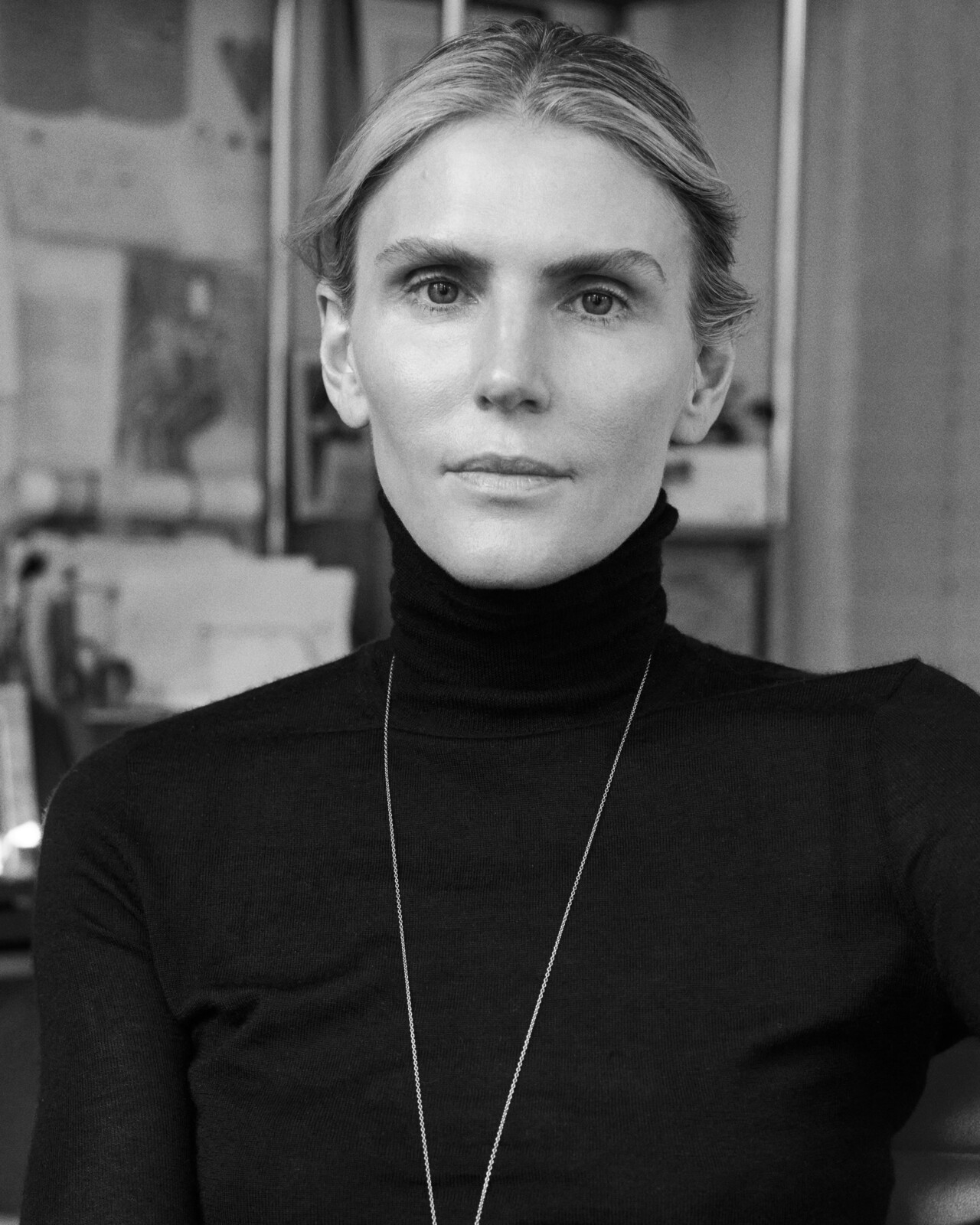
Photograph by Christian Cassiel
To never miss an episode of The Nature Of, be sure to follow here.
What if the limitations we face are actually the key to unlocking our creativity? This week, Willow sits down with visionary fashion designer Gabriela Hearst, founder of her eponymous label and former creative director of Chloé, to explore the surprising power of constraints and the beauty of being uncomfortable. From her upbringing on a remote ranch in Uruguay to her pioneering approach to sustainable luxury, Gabriela shares how nature has shaped her philosophy of creativity and intentional living. They discuss why our obsession with convenience may be holding us back, how discomfort can inspire transformation, and why the solutions we need may already be within reach.
Gabriela Hearst launched her self-titled label in Fall 2015 with two main values: long-term sustainability and reflecting purpose in every piece .The luxury collections come with a conscience, or as Hearst calls it, “honest luxury.” For her, the meaning of true luxury comes down to the fibers themselves, which is why she exclusively uses natural fibers, ensuring the clothing is free from any synthetic materials.
Gabriela Hearst
There’s something natural about being uncomfortable. I find myself, that if I’m too comfortable for a while, I need to change it up. You need to be challenging yourself and evolving yourself. And while it’s nice to be comfortable, there’s something that you don’t want to give in to that comfort.
Narration
This might come as a surprise, but my roots are actually in the fashion industry. When I first moved to New York City, I was working at fashion and art publications where I watched some of the most creative minds at work. A big part of why we started Atmos was actually to invite those creative geniuses to apply their storytelling powers to nature. That’s why I was so excited to sit down with this week’s guest, Gabriela Hearst. She is a true visionary as a designer, and she’s been championing sustainability with her eponymous label ever since she founded it, and during her time as creative director at Chloé. For her, sustainability isn’t just a trend. It’s about being in integrity with herself as an artist and the Earth as a creative force.
Gabriela
I want to use everything that is not a fossil fuel and that has a respect to the environment. I find myself having to use the common sense of growing up on a ranch. Nothing goes to waste.
Narration
I’m Willow Defebaugh, and this is The Nature Of, where we look to the nature of our world for wisdom and ideas that change the way we live. This week, I’m sitting down with designer Gabriela Hearst to talk about the artistic process behind her gorgeous collections, why she finds creativity in discomfort, and why the future of the fashion industry is already here.
Willow Defebaugh
Gabby, welcome to The Nature Of. Thank you so much for being here.
Gabriela
It’s my absolute pleasure to be here.
Willow
Well, I would love to start off with a question I like to ask all of my guests, which is: What is something that nature has been teaching you lately?
Gabriela
Wow. Lately, because everything I know, I learned it from nature, from growing up in the middle of nowhere in Uruguay. But lately my mind goes straight to Greece, where I was this summer, to see those sunsets and just the extraordinary beauty. It’s a dry island, Milos, where I was. It’s very arid and deserted, and you go to the beach and in the middle of the beach, there’s these wild flowers that grow in such a difficult terrain. And I’ve painted those flowers, and they have also become a very popular print in our collection. So, it is always there how beauty can be found in the hardest of environments.
Willow
Hm. Beautifully put. I was just on an expedition in the Arctic for a couple weeks, and it was 24 hours of daylight there, and I’ve never experienced no sunsets.
Gabriela
It’s gorgeous.
Willow
It was gorgeous, but I also found myself really missing the sunsets. I always think about the writer Cheryl Strayed. Some of her best advice is to put yourself in the way of beauty, and going to actually see the sunset every day is such an easy way to practice that.
Gabriela
Yes, and also because there’s a finite number of sunrises and sunsets that we’re going to see.
Willow
I love actually what you’re talking about, because I think there is so much beauty to the finite, and we’re living in this time where there’s these fallacies of infinite growth or infinite longevity. And I think of you as someone who works with materials and resources, and I’m sure the idea or the nature of finite materials is on your mind quite a lot.
Gabriela
Yes. I’ve been saying it for over a decade. We had this idea of living in this endless cornucopia of natural resources, so I’ve always been very smart in the way we’ve used our resources, and there’s no synthetics or polyesters in our fabrications. I choose every single fabric. Nothing that pisses me off than seeing a $5,000 dress that’s 100% polyester, and so that’s for me not luxury. That’s a fashion brand that charges a high price point.
But what we do is honest luxury, so I would know the composition of everything I’m wearing at all times. If we’re going to use cashmere, it has to be the best cashmeres, or recycled cashmeres, because we don’t want the extensions of the Gobi Desert. We’re very mindful of the cotton that we use. We’ve always chosen linen, because we want to save water, and also it doesn’t use herbicides and pesticides. So it’s always being mindful of where we’re taking our materials because of this, because we’re not living in an endless cornucopia.
Willow
And how much of that do you personally credit to your upbringing?
Gabriela
Everything. Everything, because there’s nothing more circular than growing up on a ranch, which is, the closest city is two hours and a half away, so you can’t throw anything away. You have to able to reuse and repurpose a lot. And I tell this anecdote because it’s absolutely true and it tells you the mindset.
In the winter, which is August in Uruguay, it gets cold. So there’s like a one water tank because you’re off the grid, and there’s one water tank, and the water tank has a little bit of water that goes of hot water, and you have to shower with that. And then I would tell my foreman, “Really? We have to change that water tank.” And he says, “Let me see where I can put that one.” Instead of the answer, “Yes, let’s buy,” no, I was like, “Let me figure out where I can put that water tank that we’re using right now, and then we can see where we can put a new one,” because there’s nowhere to throw anything. So this idea is, let’s figure it out, what to do with what we have first, than just replacing and trashing.
Willow
How do you feel like the actual land there, and even just proximity with other animals, how do you feel that that shaped you?
Gabriela
There’s so many moments, but I, for example, don’t know when I was taught how to ride horses. I remember when I was taught how to swim or ride a bicycle, but riding horses, I don’t have conscious of not knowing how to ride horses. So obviously, I’ve been on a horse before I had conscious. And what that has taught me is I think I have inner self-esteem from having been on a horse at such a young age, and such a big animal.
When a horse takes off, it can be a very scary thing. When you’re herding cattle, or you’re doing things in a ranch, and you’re on a horse and the horse takes off for whatever reason, and you have to be very focused in that moment, because sometimes it’s life or death. If you do a wrong move, you end up in a rock with your head open. And I remember being a child and having to have those experiences and making decisions very fast. So in a way, when the pandemic hit, or when we are in a crisis, it seems that I’m very, very calm, because I had that upbringing of—so not a totally protected—how I helicopter my kids, that’s not how I grew up. It’s the opposite. So, because of having that environment around and knowing how to navigate myself in a very nature-driven environment.
Willow
What excites you when you’re looking for a new material to create with?
Gabriela
I get excited when something looks unassuming, right? So, you will look at it and you would think, “Oh, that looks a little bit rustic,” but then you touch it and it’s the most exquisite cashmere. Right now, we have a material that I’m extremely excited about, which is usually those raincoat materials for very light weather, outer weather material, they’re usually nylon and of course we don’t use them. So now we have a linen that is waxed, so it has that permeability that you want for a raincoat, but it has no polymer, no nylon. It’s just linen that is waxed.
Willow
Amazing. And how did you come across that? I mean, what is the experimentation?
Gabriela
The limitations that my team has. So, we’re always exploring, and when somebody has something cool, at this point, we have a reputation, so they’ll come and show it to me. My team, thank God I infected them with the same virus that I am, so they’re as obsessed as I am with quality of materials and looking for always that thing that’s special. Yeah.
Willow
Yeah. Well, and you also occurred to me as someone who is very energized by constraint.
Gabriela
Yes.
Willow
And I think that’s often overlooked. So many people think of “sustainability” as constraint, but constraint is, for so many artists, that is the thing that really allows creativity to flourish.
Gabriela
It’s like you power jet your creativity when you say, “OK, the limitations.” And we have applied them to garments. I’ve applied them to building stores. It’s just extremely beautiful, and it’s all made by hand. So, I will tell the architect team and the interior designers, “This is our parameters. We have to work with recycled wood that was going to be thrown away.” When somebody tells me, like, “Oh, sustainability is more expensive,” no, it’s not. It’s not more expensive, and you can create a successful model. And actually I found myself recently talking to an editor, trying to explain that that is not the case.
Willow
Bear with me with this, because I’m going to connect this to death, but I—
Gabriela
I love that chapter too.
Willow
It occurs to me that there’s just so many parallels in how our culture thinks about the end of a human life, and we put bodies into caskets and deprive them of going back to the Earth versus green burial and composting. That’s becoming part of this beautiful creative recycling system that is nature, right? And it’s like you and how you create, you’re tapped into that similar framework of recycling materials and being part of a cycle, rather than having some fallacy that what is made is going to go into some way or somewhere where it will never rejoin the planet. So, I get the sense that you are thinking about things from a whole life cycle perspective.
Gabriela
Yeah. I think that there’s always in me a bit of, I don’t know, because my mother is a Buddhist, there’s something of the Eastern philosophy of the approach to death, of we have this very fearful look at death and the attachment to the body. In the Western world, we celebrate the individual. In the East, it’s more the collective work, the group work, the achievement of the unity, of the collective. I find that more appealing.
I do think that the natural process, we humans have been able to interfere with this. We’re in the Anthropocene era where we have left our mark, and that Styrofoam will never leave this planet after billions of years. It’s crazy. I don’t think it’s evilness. I think it’s in the name of convenience that we do all these turns, right? We still continue to do them, even though we know it’s produced cancer and it doesn’t biodegrade ever, ever. Will never biodegrade. So, we still do it because of convenience.
Willow
I really want to highlight what you just said, because I think that’s quite profound that it’s not necessarily evil, it’s convenience, and I think that’s so huge. And also convenience feels like it’s, in a lot of ways, the opposite of how you approach luxury.
Gabriela
Yes.
Willow
And also I think what we as a species are going to experience luxury as the future, which is like tactile and craft, which is such a huge part of what you do. I think because this sort of technological path that we’re on is just about more and more convenience, right?
Gabriela
Yeah, exactly, more and more convenience. And I think there’s something natural about being uncomfortable. I find myself, that if I’m too comfortable for a while, I need to change it up. You need to be challenging yourself and evolving yourself. And while it’s nice to be comfortable, trust me, and the older you get, the more comfort you want, there’s something that you don’t want to give in to that comfort. So, it’s about being mindful of how comfortable are you?
Willow
And that’s nature too, right? I mean, species adapt and evolve out of ecological discomfort, around the friction, essentially. And I mean, evolution is the most creative force.
Gabriela
Yeah. Unstoppable.
Willow
You work so much with recycled materials, recycled cashmere, recycled wool. What are some of the limitations you encounter with that? I mean, there’s so much noise around, oh, it’s so difficult to work with recycled materials, and I don’t think that that’s actually true in practice.
Gabriela
Oh, yeah. It was maybe more challenging 10 years ago when we started. Now there’s so much options. It just takes a little bit of thinking. Like, in 2018, I got obsessed with plastic. I would be in a restaurant and I would start looking at things, an obsessive brand in mind, and I would start looking at everybody dressed everywhere, and said, “Everything here came wrapped in plastic unnecessarily.” It didn’t matter the price point. Everything was wrapped in plastic, and I just couldn’t stop thinking about this, so I decided to take all plastic out of our supply chain. One hundred percent of all plastic hangers, of all hangers, end up in a landfill, like 99%. And so, first thing we did was to make recycled cardboard hangers. We work with TIPA, which is a biodegradable polymer, which was the best there was at the time, and we did all these changes. We changed the Styrofoam to starch, fake Styrofoam. There was options. You just had to search them.
And then you had to push a bit back, because when we did the hangers, I was so proud because we did this in less than a year with very limited team. And then we were shipping to the department stores, and we had my head of sales, which now is actually the president of our company, she came at the time, Michele, and said, “They’re going to charge us back because the hangers don’t match the manuals for shipping.” I was like, “What? I haven’t done all this work for a year to ship them with plastic hangers.” So, it’s like they have two options: Either they take them, or I speak out. So they took it. So, you have to sometimes push out because you have to do the right thing, and then other people can follow. Think a little bit further, that’s all you have to do. The options are there.
Willow
I imagine that’s where your good-in-a-crisis moment energy comes in.
Gabriela
Yes. Oh, my God. I am the person to call if you’re in an emergency. I am that person.
Willow
Do you feel like that helps you maintain your focus in this industry, particularly working in the context of the climate crisis?
Gabriela
Right now, it’s not a trend in our industry. We never did it for anything else than what is our belief system. It’s what funded this company from its roots, and so we continue to push on the accelerator on the subject. Even if nobody wants to talk about it, I continue talking about it.
Willow
It is really wild to see how the fashion industry just backtracked. It was like there was a moment where it felt like people were actually starting to be willing to talk about sustainability.
Gabriela
No. Yeah, completely backtrack, and that’s the ignorant part. I think clients still care, and in the masses that they talk about, let’s call it consumers for the billions of dollar businesses, they care. They care. They care about the content of that dress. They’re going to care about how this is made. They’re caring. The fact that the executives don’t think it’s a trend anymore doesn’t mean that the public and the clients don’t care.
Willow
It’s just creating a wider disconnect.
Gabriela
Yes. And I just always knew that I had to stick to the vision, and it’s very, very clear, because we’re really building something for the long term.
Willow
What is it like for you in the fashion industry? Do you feel like—you’re rolling your eyes right now.
Gabriela
I feel like I’m like, first of all, I’m a complete nerd. I’m very clear I can make beautiful things that sell. I have that confidence. I feel like, I live in New York City. This is what I do. You’re never going to find a picture of me where I’m not on-point dressed from ever. That’s kind of my talent. This is my medium. But I feel that I can only do collections with meaning for me, and to extract beauty from that.
Our past collection was the Eglantyne Jebb, founder of Save the Children’s collection, and she was a trailblazer and a badass, and it’s always—or a subject I want to study. The next collection is 100 years of women of Afghanistan. I wanted to take a sampling and keep on thinking of women in Afghanistan and what has happened in the past five years since we withdrew. And so, we actually managed now to make things in Afghanistan. It’s wild. I was today in my studio going like, “It’s wild that we made things in Afghanistan, beautiful things in Afghanistan. It’s wild, right?”
There’s a character in 1920 that was called Queen Soraya, that she was made to abdicate, because she dressed very chic. There’s no other way to describe it. And she was made to abdicate. And then you have the ’60s, the Soviet invasion, where they were wearing miniskirt. In Kabul was always the evolution. There was so much wealth and richness to these different tribes in Afghanistan, so we’ve worked with locals. We’ve worked with Afghanistan refugees in the U.S. that have done our Suzanis and techniques. We did a timeline. So, these kind of things are very difficult, and then they’re even more difficult to explain to fashion journalism.
Willow
That’s right.
Gabriela
And so, I feel like I’m very moved that even maybe 10 people will care, so that’s enough.
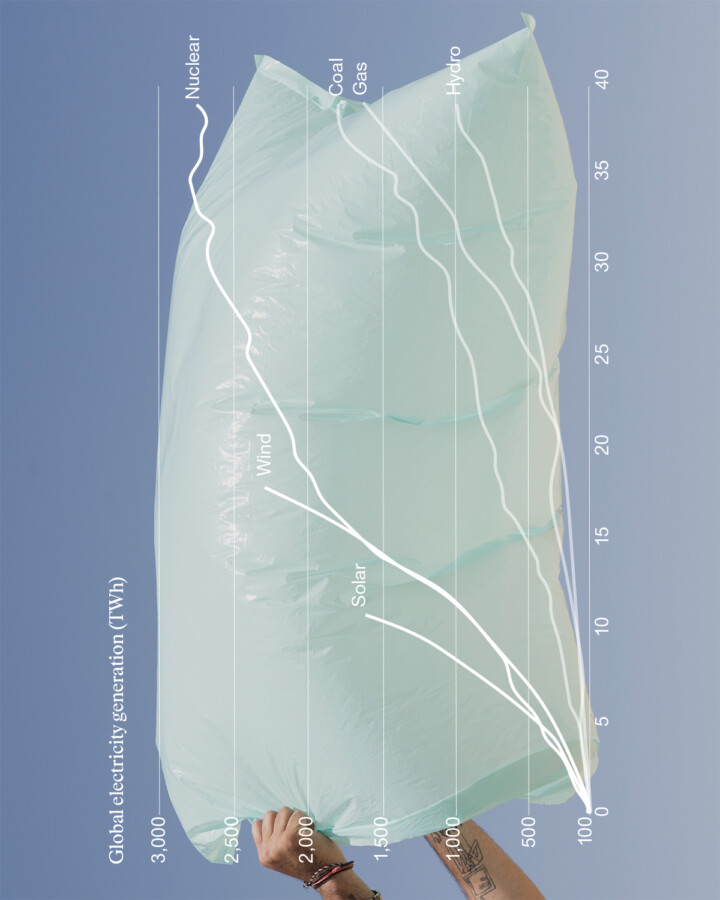
For example, we did a show about fusion energy in 2022 for Chloé. People were like, “What are you talking about? Is it fusion food?” And it was crazy, and I still don’t even know how we even managed to pull it off. But now, from that dream where people would say to me, “Oh, fusion’s never going to happen,” to now it’s in the newspaper in the Financial Times this weekend. They’re regulating fusion in the U.S. before it’s even—It hasn’t even been made to commercialize yet, which is great news, because when we had wind power and solar panels, it took then 20 years to regularize them. We don’t have the time, so fusion energy is not yet to the level it can be commercialized. It hasn’t been proven that we can commercialize it. There’s a lot of investment behind, which makes me very excited.
And for those who don’t know what fusion is, it’s clean around the energy that is what powers the sun and doesn’t use uranium. So, it’s kind of wild, because it’s like they won’t understand me in the moment, but maybe in the future they will.
Willow
Right. Well, I mean, at the turn of the century, the idea that solar energy would ever one day would be cheaper than fossil fuels, that just seemed like a dream.
Gabriela
Like a dream.
Willow
But people drove it forward and here we are. We’re at that point.
Gabriela
I find that sometimes the good news get really hidden and we don’t get to maybe celebrate it, and I get so inspired by—because I’ve known, I’ve invited myself to that community and basically crashed their party, so I became friends with people in the fusion field and engineers of tokamaks. And they are just the most formidable brains that could have done anything in their life, but they decided to do this for the greater good of all of us. So, sometimes I’m a bit weird for my industry. I’m not going to lie.
Willow
Well, that’s where the excitement of solutions and solution journalism comes in. And we were connected by Ayana Elizabeth Johnson, who’s been on the show, and she is the queen of climate solutions. But I think it’s so amazing that through Atmos, we think about, how do we champion that through culture and through storytelling, because so little of media coverage around the climate crisis, the ecological crisis, actually goes towards solutions.
Gabriela
Yes.
Willow
And people generally, I think, are not aware of how many options are out there, and as Ayana says, that we have most of the solutions we need.
Gabriela
Everything is here. Everything is here.
Willow
Everything is here.
Gabriela
Everything is here. There’s nothing we need to invent. It’s here already. It’s happening.
Willow
And you’re showing that in such a creative way. What you are showing people is, how do we take solutions and energize people about them in such a creative way? I mean, how did you go about that collection for Chloé that was inspired by fusion? I mean, what was that like when you were putting that together?
Gabriela
Around October of 2021, I read an article in the Financial Times about fusion energy and how a lot of the private sector started to invest in it, and I started to read about it and I was like, there was something there that I’m like, “This is it. I just about to find my holy grail. This is it.” Because I would sit and talk with all the different companies that want to do good, from all different scales of companies that want to do good, but at the end of the day, even with the best intended of ones, it’s like, where are we taking the energy to do anything we have here? So it’s an energy issue, so sustainability is an energy issue. And so that was kind of like an eureka moment for me.
And then I had to go through the insane process that I am of having to tell the team, “Well, the inspiration for this season is going to be fusion, and we’re going to go to visit ITER, a tokamak in the south of France, which is the biggest global international project ever done in science. And then we’re going to go visit fusion companies, and we’re going to learn about fusion.” And they were like, “What is she talking about?”
Willow
It must be so fun to be a designer at Gabriela Hearst. I mean, come on.
Gabriela
It’s not boring. It’s not boring. Let’s put it that way. It’s fun. It’s definitely fun. And so we visit these places. We did isotopes of hydrogen as eyelets in metal. It was deep. It was inspiring. I mean, that’s the point. If you focus on something, you can get inspired with anything if you pay attention, because everything is wonderful if you really look at it in deep. I always like to remind myself, it’s a mathematical improbability that we’re even here sitting down, that we’re actually gorgeous beings sitting down here. We could’ve been rocks, as far as I’m concerned, or nothingness. And we are, and so we exist, and so that already is a miracle, a mathematical improbability. So the limitation to our imagination, there’s none, so then you can use it to help and create.
Willow
Yeah. You know what we have come to, that our core, I think, role to play in the world with Atmos is to offer people, the phrase we use is “proof of wonder,” because everything is proof of wonder. I mean, as you say, it is extraordinary that this universe even exists. I mean, everything had to just be a fraction of a hair—I mean, if gravity was just a tiny bit stronger, stars would never form. If gravity was a tiny bit weaker, everything would collapse in on itself. I mean, it’s truly—we live on the razor edge of possibility, and so yeah, of course, solutions are possible. Of course, a different future is possible for this planet.
Gabriela
It’s so interesting what you were just saying. Because of fusion, I had to study a bit of physics, and then I realized how poetic physics is, how beautiful and how poetic, and how we can actually go back to the moment everything was born, and the period of the [cosmic] dark ages where there was no light. And how were those first stars? I mean, it’s mind-boggling, and it exists. And so, how I choose to see is, if you’re not fighting for your survival, because we have to remember that today in this planet Earth, and this is according to Save the Children, there’s around 1 billion children living in conflict or in circumstances of danger. That’s a huge number. So, if you’re not fighting for your survival or you’re having to care for your family or you’re in a precarious need, then if you’re not in that situation, in survival, then you are in a situation of duty, of taking care.
And the more you have, the more duty you have. So, this is really how I see my role as a creative. I love what I do. I love what I do, but I’m also very happy painting like a crazy person in my room. I know this since I’m 12 years old. So, if I’m going to be out there doing what I do, I’m going to do it the best I can. I always say this, I like money like everyone else, but I may not like money that much to break my principles. There are certain things that money just cannot buy, so that’s really how I define what I do, because I do work in something that no one needs. No one needs what I do. Absolutely no one needs what I do. It’s only driven by desire, so I have to have a very strong integrity behind that.
Willow
Yeah, and I think bringing in Ayana’s climate Venn diagram, I think working through your specific lens and what only you can bring to this, I think is, I mean, that’s what I’m always trying to point people towards.
Gabriela
Yeah. Yeah, I love that.
Willow
So I write this newsletter called The Overview, which I’ve been writing for about six years now, and every week I look at a different aspect of the natural world, but it always begins with, if I’m thinking about vulnerability, then I go into a deep dive around like, OK, what are examples of vulnerability in the natural world that might carry some kind of wisdom for me right now? And I look at frogs, who have the most porous skin of any creatures, and that makes them incredibly susceptible to disease, but it also is their superpower, because they can secrete poison through their skin. And I write about that, and it has nothing to do with me, and at the same time, it started with where I was feeling called in some way. And I feel like that’s the role of creatives is to be so in integrity with where you’re feeling intuitively drawn, and then figuring out how to translate that into an offering to people.
Gabriela
I think that that’s the path. I really truly believe that that’s the path. There’s a quote that I always love that says, “To move freely, you have to be deeply rooted.” You can’t construct something that will withstand the wind of change if it’s not well-rooted. There are going to be moments things are going to be up, and there’s moments—and also I learned that in a ranch.
There’s moments that things are going to be up, there’s things that are going down, but your temperament has to be the same either way. I genuinely think that if businesses would only know how truly good it feels and good it is for business to do it the right way, there’s places where things are done right, and they should be celebrated.
Willow
For anyone who’s listening, what advice or wisdom do you have to share about people who are trying to think about engaging with their clothing in a more intentional way and with more integrity?
Gabriela
I always go back to my mom. She had a very small closet with very few things, but those were very nice things, and made-to-measure through the local seamstress. So, given the options that we have today, I think it’s much better to have few things that are about high quality than have a lot of. And if you can’t afford a certain price point, there’s options of vintage that you can really look through. There’s eBay. There’s so many good things that you couldn’t look through that are very qualitative that you can find today. It doesn’t have to be a brand, but it has to be driven by not a logo, but driven by something you find beautiful and close to your style.
Willow
Yeah, and I mean, I just think the beauty of vintage also is that it’s storied. Now it’s like you get to become part of the story of something. When you think about the future of the fashion industry, what are you picturing? Because I love that you are someone who blends artisanal craft and tradition with also forward-thinking innovation, so where is your head at?
Gabriela
I think there’s a big disruption that’s happening in our industry. Some big-name brands are not performing well, and then they are figuring out why. And I’m like, “You look at your hero product, it’s made like crap. That was your hero product. You should have been luxury. You should have protected your top assets.” And so, I think that there’s going to be a big disruption and change, and the ones that have maintained certain integrity of the way they do things will stand. Quality is always the North Star in what we do, and it’s very exciting times to see what the transformation that’s going to happen. But yeah, the picture’s going to change quite fast.
Willow
Is there anything you’re thinking about next that you’re feeling particularly excited about?
Gabriela
Oh yes, my next collections. I’m moved by a painting and I invite everyone to see. It’s called “Witches’ Flight” by Goya.
Willow
I know it.
Gabriela
You know it? So, the next collection is based on that painting, but the collection for the show is based on the duchess that commissioned those six paintings. And I want to find out, what was she thinking about? Because that’s like some—were six paintings done on witchcraft. Why were they commissioned? What was she thinking about it? How did that happen? I don’t have the answer, and I want to find out, so yeah.
Willow
Well, I will be eagerly awaiting the answer. OK. Thank you so much, Gabby, for being on the show.
Gabriela
Thank you, thank you.
Willow
This was wonderful.
Gabriela
Thanks for having me.
Narration
In walking away from this week’s episode, I’m going to encourage you to put into practice the integrity that Gabby and I talked about in this week’s episode. Next time you find yourself looking to buy an article of clothing, take a moment to check out what it’s made from. Is it made out of any recycled materials? Is it made out of natural fibers? Do you see synthetics listed? Because synthetics are usually just another word for plastics, aka fossil fuels. As Gabby and I talked about, there is nothing that feels better than wearing and living in your values, and clothing is one way we can start.
The Nature Of is an Atmos podcast produced by Jesse Baker and Eric Nuzum of Magnificent Noise. Our production staff includes Emmanuel Hapsis and Sabrina Farhi. Our sound designer is Kristen Mueller. Our executive producers are me, Willow Defebaugh, Theresa Perez, Jake Sargent, and Eric Nuzum.
Atmos is a nonprofit that seeks to re-enchant people with our shared humanity and the Earth through creative storytelling. To support our work or this podcast, see our show notes or visit atmos.earth/biome. That’s A-T-M-O-S.earth/B-I-O-M-E. I’m your host, Willow Defebaugh, and this is The Nature Of.
Join our membership community. Support our work, receive a complimentary subscription to Atmos Magazine, and more.
Why Convenience Is Holding Us Back With Gabriela Hearst