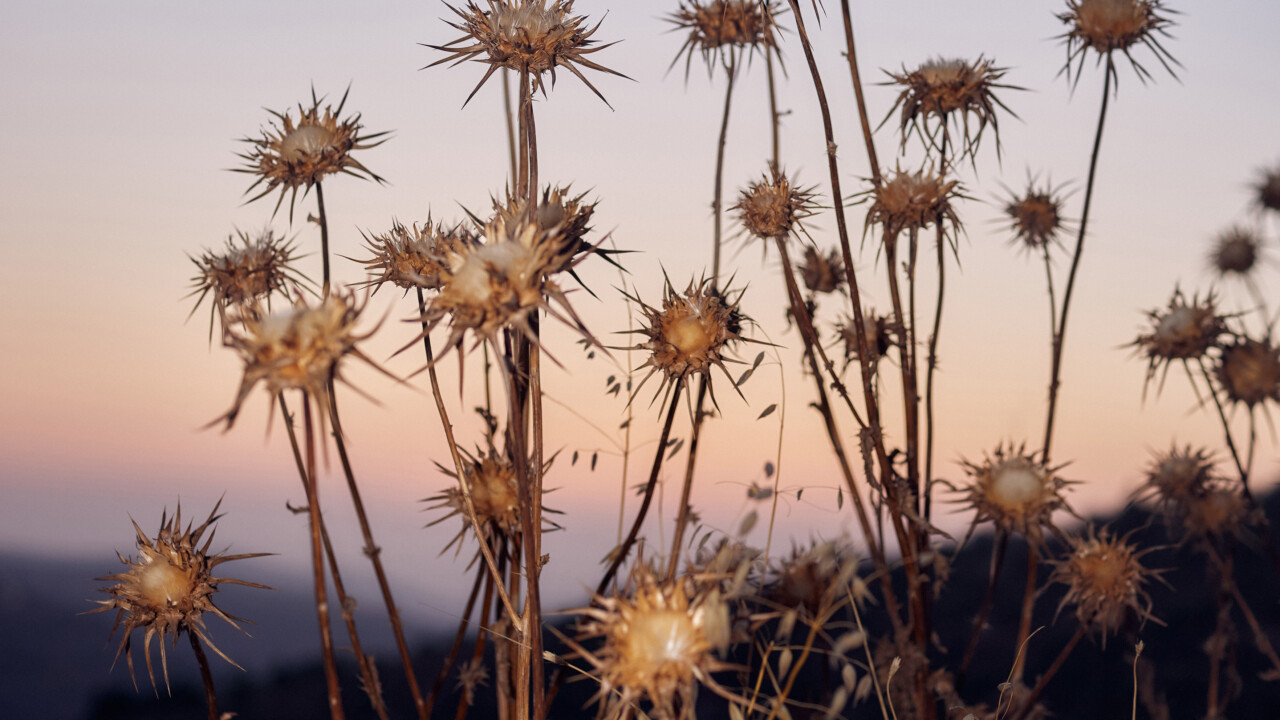
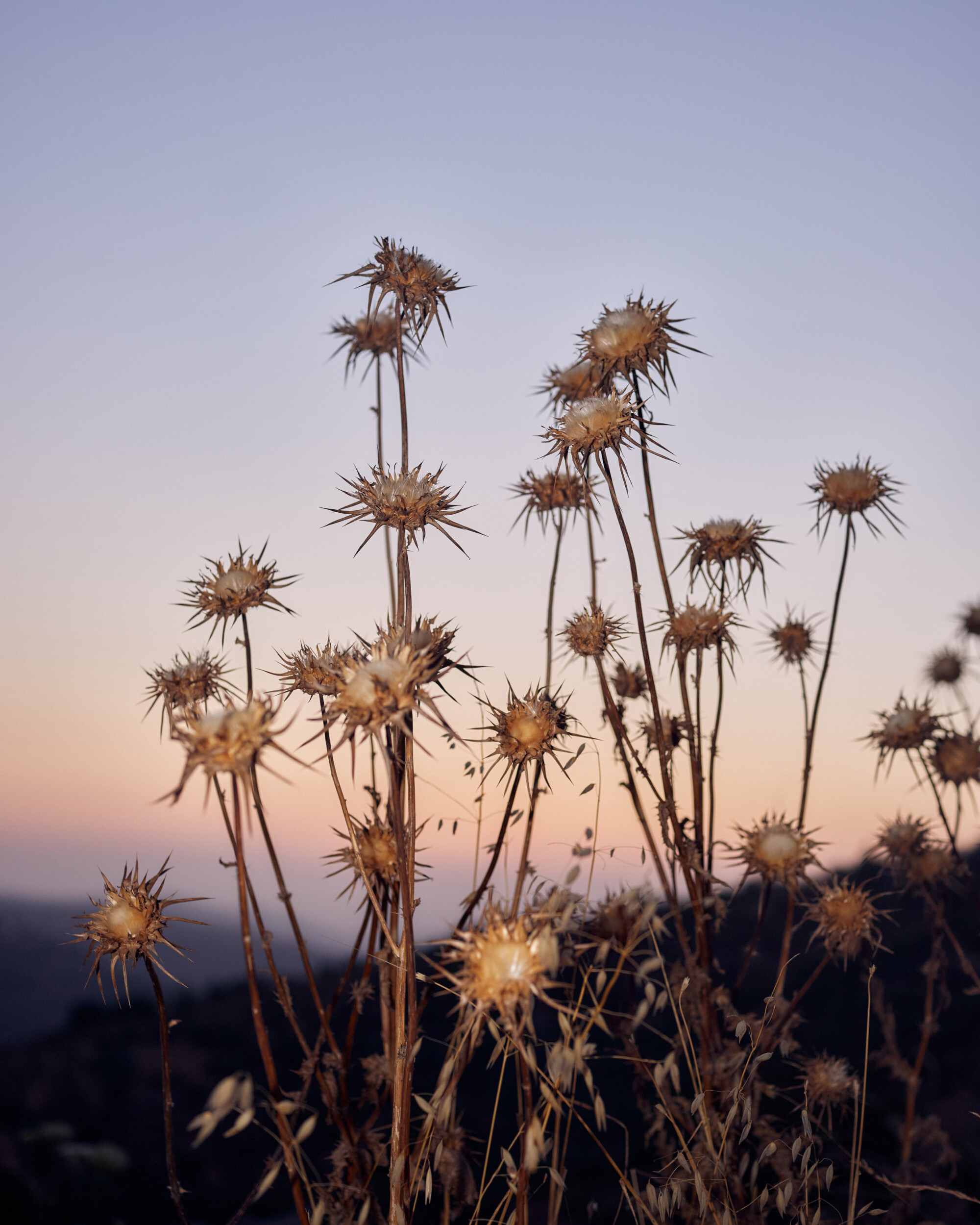
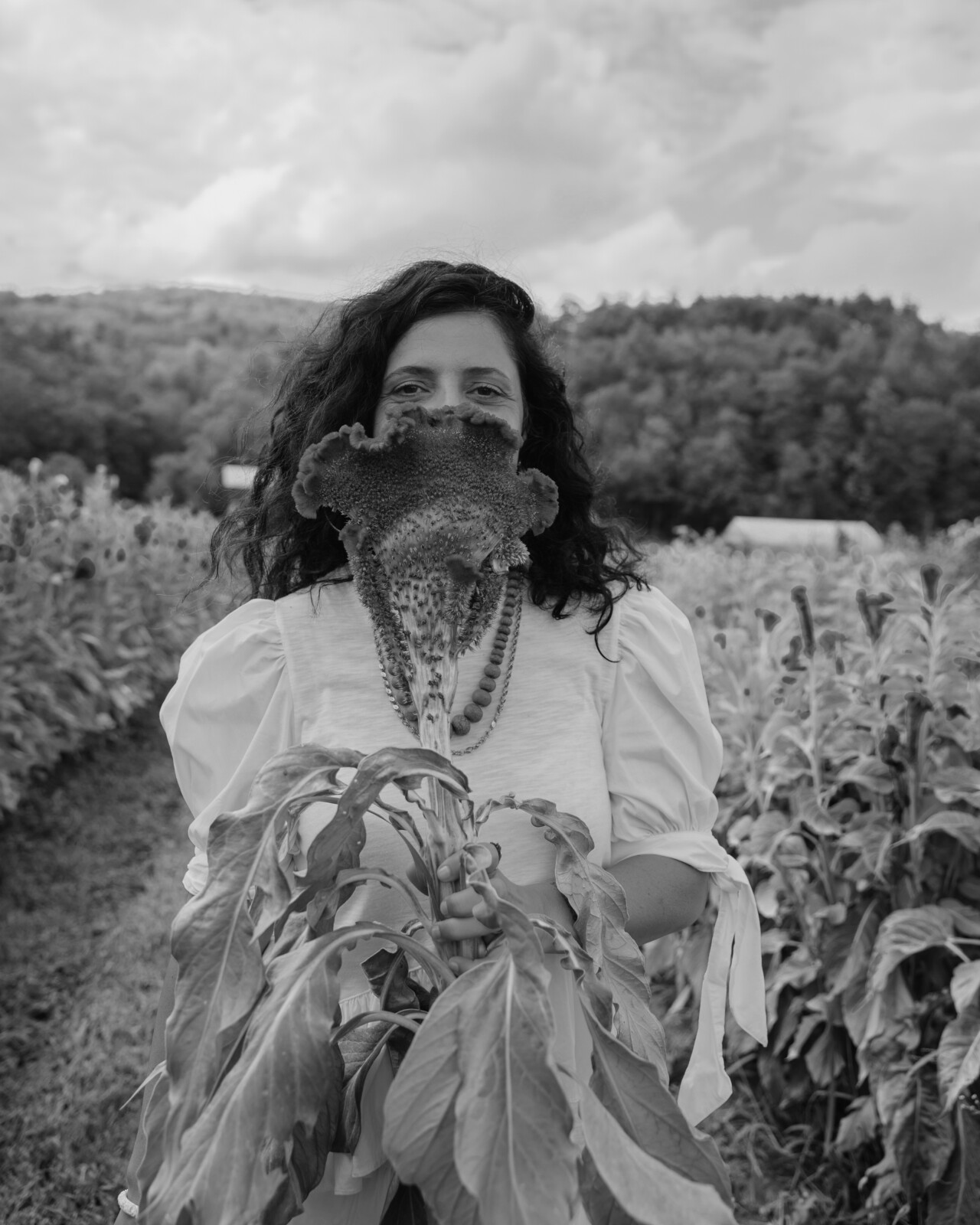
Photograph by Gabriella Achadinha / Connected Archives
To never miss an episode of The Nature Of, be sure to follow here.
What can seeds teach us about memory, resilience, and the possibility of renewal? This week, Willow sits down with Vivien Sansour, seed keeper and founder of the Palestine Heirloom Seed Library. They explore how seeds carry stories across generations and why protecting threatened varieties is a way of preserving the knowledge and traditions they hold, particularly during times of loss. From childhoods spent foraging in the hills to the role food and seeds play in connecting people to place, Vivien reflects on what it means to remember our connection to land, to each other, and to the stories that continue to shape us.
Vivien Sansour is an artist, researcher, and writer. She uses installations, images, sketches, film, soil, seeds, and plants to enliven old cultural tales in contemporary presentations and to advocate for seed conservation and the protection of agrobiodiversity as a cultural/political act. Vivien founded the Palestine Heirloom Seed Library in 2014, where she works with farmers in Palestine and around the world to preserve ancestral seeds and biocultural knowledge. Her work as an artist, scholar, and writer has been showcased internationally. Vivien is the founder and executive director of the Palestine Heirloom Seed Library. Learn more at www.palestineheirloomseedlibrary.com.
Vivien Sansour
I love seeds because they represent infinite possibilities of life that every time we think this is the end, you discover that, oh well, maybe there is a transformation and a possibility for something else.
Narration
When I first discovered the work of Vivien Sansour, I was so moved. As the founder of the Palestinian Heirloom Seed Library, she spent the last 12 years tending a living archive, collecting seeds and stories of the Palestinian people, seeds and stories that might otherwise be erased. Vivien reminds us that life is as inevitable as death is and that seeds themselves and the worlds they grow into can be our teachers.
Vivien
The seeds and the crops really are a great vessel to remind you of who you are, what you’re made of, what kind of mud you are, we say, and what kind of person you want to be in the world, which I think is even a bigger question every day.
Narration
I’m Willow Defebaugh, and this is The Nature Of, where we look to the nature of our world for wisdom and ideas that change the way we live. This week I’m sitting down with Vivien Sansour. I hope that you listen to the many stories that Vivien has to share and the seeds of wisdom they hold.
Willow Defebaugh
Vivien, welcome to The Nature Of. So nice to have you here.
Vivien
So nice to be here. It’s such a beautiful studio you have.
Willow
I’m so glad. So, to start us off, you are a seed librarian. For anyone who is unfamiliar or might not know what that means, can you explain?
Vivien
Well, I am someone who loves beings such as seeds a lot. And so I collect seeds that are threatened with extinction, and I share them with other people. And in the past, I guess more than a decade of my life, I have been sharing them with a whole lot of people all over the world who love nature and love a lot of things that are unfortunately dying.
Willow
Why seeds? What do they symbolize to you?
Vivien
Funny enough, seeds symbolize to me death and life at the same time. So I am fascinated by seeds, particularly because they just look like they’re a dead thing, like a done thing, like a done deal, no more possibilities. And then you put them in the ground and then they find their way somehow to the depths of the Earth. And they find moisture and they figure out how to drink, and then they go up to the sky, and they figure out how to eat the sunshine, and then they offer their bodies as food for us, like kale or lettuce to crunch, and then they die again.
So I love seeds because they represent infinite possibilities of life that every time we think this is the end, you discover that, oh well, maybe there is a transformation and a possibility for something else. The possibility also for design because the food we have today, like the corn on the cob or the wheat you eat in your bread is actually the product of people’s imagination that took literally hundreds of years to select through the process of art and science and select, for example, from a wild grass you got the wheat and then it became now loaves of bread and cookies or corn to your sante that was like basically nothing and now it’s like corn on the cob or popcorn.
It’s quite fascinating because it took a lot of selection, and imagination and design. It’s been this beautiful relationship of human seed, soil, air, sun that created for us the food we have today. So when I eat a tomato, I am just fascinated that literally like so many elements from bugs, worms, to rain, to soil, to air. They all came together and, to human hands that put them in the ground, all came together so that I can enjoy my sun-dried tomatoes. It’s quite fascinating.
Willow
It’s collaborative. When I think about seeds, they’re so strong. They’re so tough. When I think about being buried in the darkness of the soil and reaching through and up toward the light, it’s like germination is no small feat and yet it’s also so elegant and beautiful.
Vivien
Yeah, it feels like not a miracle at all. We’re doing it all the time. We are reproducing children all the time. People get pregnant all the time, seeds germinate all the time, but also they don’t, sometimes. So I don’t know if they’re all strong because we are seeds and we are in different shapes and forms, right? Sometimes I am a really weak seed, and I feel like I’m not gonna germinate today or ever, and some of us don’t make it. Some of us don’t make it, and a lot of that also is the elements. So again, if I’m really going to answer your question, for me, it’s never been really about the seeds alone as just a seed. It’s really also a metaphor and a real metaphor about our lives as human beings and the injustices we live, the grief we go through, the elements that erode us or make us flourish.
So I don’t know, they’re like teachers, they’re like constant teachers. And then when you work with so many different varieties of seeds, you get to understand, also, the nature of the world is very, very diverse. One thing that’s been coming to my mind a lot these days is that nature is queer, for example, and yet we’re constantly trying to make it uniform. There is nothing uniform. Even within the same species, there’s nothing—what is that? Where did this idea come from, or why? And it’s quite disturbing.
Willow
It’s the flattening through monoculture, which is wreaking havoc on our food systems, but also our planet, right? Nature’s song is always biodiversity, always. And without biodiversity, an ecosystem breaks down. And I love that your answer points to collaboration because ecology is always about context. Nothing happens alone. It’s always so many parts and elements tended by many hands; some humans are more than human.
Vivien
Oh, and the animals, I didn’t mention them.
Willow
The animals.
Vivien
In Palestine, a tradition for germinating the olive seed to make a seedling, which is not typically like how most people now grow olive trees, but that you have to find a good goat, have the goat eat the olives, and then have the goat poop the olives, and then the seed that’s in the goat poop, that’s the best seed to put in the ground.
Willow
Collaboration.
Vivien
Yeah.
Willow
So the Palestine Heirloom Seed Library, you mentioned it being a living archive. I’ve heard you talk about how it’s important not to see it as just a record of loss, right? It’s something that is living. Can you talk about that distinction a little bit?
Vivien
When I first started doing this work, I really just was going after the things I love that I just missed, and I wanted to eat, but also I felt very threatened by the speed at which everything was being lost. So I grew up in, for me, I think as a magical place, and I know it’s not perfect, but it was very magical because I really, really had a childhood full of awe in terms of discovery. Like you know, now in education there’s all these, “Oh, let the children explore.” Well, that was my childhood. I was exploring by default. There was no, “Go to the playground and here’s a PlayStation.” That was not my childhood. My childhood was like, “OK, I’m back from school, now go to the hills.”
And so the hills and the lizards and the bugs and the soil were really my teachers. We were some pretty mischievous children, also, because then you discover things like the grasshopper. I remember gathering grasshoppers, putting them in a matchbox, and then taking them to school and unleashing them in the classroom. And then you realize, oh, what does a grasshopper do in an environment that’s not natural to them? But anyway, so all of these things, including a lot of wild plants that I ate just by, you know, you taste, you put in your—you’re a child, you’re just going to—you want to taste it.
They were there, and then they’re not there anymore, or if they’re there, you have to really search for them now. And it just made me really sad that my nephew, my nieces, the future generations, are not going to have this magic that I had, but also that I miss these things. I don’t think we fully grow up. I’m still looking for these little plants that I used to eat in the wilderness. This morning on the train coming down here, I was thinking about all the things that I loved in the mountain, a mountain that I no longer can go and just hop around in, on the terraces and find food and stuff.
So really it was a way to be like, “OK, I want these things back, but I can’t go back in time.” I can’t re-create anything exactly the way it was. But there are concepts in life that nature, and living in nature, and living in seasons the way I grew up, and my community that actually still exists today in remnants—but it exists—that I would like to save, so that it becomes a living experience every day. So, for example, we have a tradition of, say it’s fig season. We have a very beautiful fig tree, people call it the best tree. They always call us in fig season, “Oh, can we come pick some of your figs?”
But before, when I was growing up, they wouldn’t have to call us to come pick our figs because my mom would put figs in a basket, send them to the neighbors, and then the neighbors would send back a basket, say they have pomegranates, they’d put pomegranates—because we didn’t have pomegranates—and send it back to us. That way, you didn’t have to have everything to have everything, but also you had everything. And so those living traditions that are instigated by the seeds and by the crops and by nature are things that I wanted to keep alive, meaning that I wanted in my own being to continue to carry these traditions forward. And the seeds and the crops really are a great vessel to remind you of who you are, what you’re made of, what kind of mud you are, we say, and what kind of person you want to be in the world, which I think is even a bigger question every day as the world keeps pushing us to become a little more robotic and sometimes even monstrous to choose the basket of the figs is so simple, yet feels so revolutionary.
Willow
Right. It was in 2014, right? That you founded the library?
Vivien
Yes, but obviously, these thoughts and feelings have been with me. When I really think about it, I was born, and from the moment I was born, the world I love was dying. I’ve had such joyous experiences in my world, and I’ve also had and have a lot of violent and painful experiences that I’m having today, as we speak. Every day I wake up, I’m here in the empire, but I open my phone and another thing I love is gone. So that’s why the library is a living archive, not just for Palestine. The more and more the library has grown globally, these seeds have carried with them these cultural values that value connection, collaboration, tenderness, and that’s hopefully what we can push forward. Even if we don’t change obviously the entire world, we can at least leave some room for others to find the shade, to find a little bit of shade. It’s pretty hot out here.
Willow
And can you tell us about the library itself, the space that’s in Battir in the Occupied West Bank?
Vivien
The seed library actually, it first started in my house with some jars. And then I opened a studio in Bethlehem in the city, and we had these pop-up dinners where I cooked something from the season or some old crop again, with the idea of keeping a living tradition. But then, luckily, we were able to get a place in Battir. It is in the heart of the village, so people can come from all over. Obviously, today movement is very, very restricted. So even from Beit Jala, where I’m from, which is like a mountain away, like a little hike basically. Some days it’s very hard to get there and vice versa. So it’s been challenging, but this was always something, unfortunately, I knew that we can not put the seeds in one place.
So, actually, the seed library is in Battir, but it’s also all over the world. Today, we have the seed library in upstate New York. We have the seed library in Sicily, Italy. We have the seed library in California, in the Netherlands, in England. So our seeds developed wings and started to fly, and now they’re all over the world. And that is really what I wanted in the sense. The vision is that we can’t rely only on one place, because as you know, also a lot of seed banks and seed libraries have been bombed in wars.
We are forced by default to enter into a new breeding project, if you will, because the seeds like the people. We are being moved forcefully at times or willfully, mostly forcefully. And so when we move, we change, and then we have to adapt. And then some of us adapt well, and some of us don’t, and also how we adapt is really important. Like, how do I enter into a space that’s not mine and be respectfully there? It’s an important question that even the seed asks itself, because the seed has to befriend the soil and the soil has to receive the seed equally, and that in itself is a process.
And also with climate change, all the different elements, the seed library is where it should be. It is in the hands of farmers in the fields with people and on the dinner tables of our friends and family and different communities, and that’s really where it belongs. It’s a living seed library. It’s not a bank where we’re just saving something in a freezer.
Willow
Right. Is there one variety, one plant, that is especially close to your heart?
Vivien
Well, I do love akkoub very much. Akkoub is called gundelia in English, and it’s a wild thorn basically from a thistle, and it’s something that I love very much because when I grew up, we go look for it in the mountain. It’s very delicious when it’s wild, but after settlements were built and the access to the mountain became more limited, more and more people are irrigating it and growing it in the valleys. For me, it doesn’t taste as good, but I’ll take it. And actually, we are trying to also propagate it in California now, and it’s doing well in California.
It’s hard to harvest. You forage for it and then you literally spend—you can spend five to six, seven hours just with scissors cleaning out the crowns because you only eat the crown, and it’s like a really tedious process, but it’s a communal process. Usually, you sit around with your friends or your family, and you sit there, and it’s traditionally women who can get together, and then you start gossiping or telling, oh, what your husband did yesterday. “Can you believe it?” But you’re sitting there cutting the thorns, and then from kilos and kilos you get like a handful, and then we cook it. And it is for me very dear, because it is a threatened species because it’s also being uprooted from its home. So maybe I relate to it, too.
Willow
I wonder why.
Vivien
Yeah. But also because its home is the same home as mine, which I love very much. So it grew in the mountain, I grew in the mountain. And it’s thorny on the outside, which I guess I can be, but it is soft in its eye.
Willow
Beautiful. You were out foraging with, I think, your nephew, and you were teargassed when you were foraging because Israel has made it illegal to wild forage for it. How do you reconcile that wildness itself being restricted, being outlawed?
Vivien
I don’t reconcile it, and I hope I never do because it’s not right. I’m angry. I’m angry most of the time, and I am constantly asking myself or pushing myself sometimes, maybe harshly, to make sure that my heart doesn’t harden. And there are days I wake up and I discover, “Oh, shit, it’s hardened,” and then I have to do the work of unhardening it. And then sometimes I need it to harden again to make it through a moment.
My nephew who—I don’t remember, I think he was maybe 12 at that time—was always afraid of going out in nature so much. And so that particular day, I had convinced him. I was out with a friend, also who was very good at foraging, and I had convinced him to come with us, and he finally got excited and he was with us there. And it’s important because you want to teach your kin, your nephews, your nieces, your children, the things you love. I just finished telling you a story about how much I love Akkoub.
And I remember also the helplessness I was feeling because I saw his eyes become so red, his face so red, he’s in pain because this tear gas not just makes you teary, it literally burns your—like you feel your skin is burning. And it wasn’t just tear gas. They were also shooting. At that time, it wasn’t just because we were foraging; they were also shooting at other people because they went a little too far in the mountain or whatever. And just yeah, to feel so helpless and to watch a child who was doing something so simple like—
Willow
And so natural.
Vivien
—so natural, just walking in the mountain with his auntie. He’s a child, and then to feel—I felt responsible. I felt guilty for taking him with me. Of course, I had no way of predicting this, but the real tragedy is until today he refuses to go anywhere. He’s in his 20s today, but he refuses to go anywhere out in nature with me, which is the purpose of oppression and colonization: to sever you from land one generation after the other until you forget. The purpose is forgetfulness. So when you also ask me about the seed library, the purpose is to remember, to constantly remember. And so to take that from people, to take your ability to remember who you are, is the way to weaken you as a seed, weaken you as a species, weaken you as a human being.
And so I guess the only reconciliation, if you will, is the work of the seeds because then I know that if one day my nephew decides that he wants to dare into that world again, that at least he will have something to refer to. What is it that my aunt took me to forage? So I guess I will keep cooking and hope that one day all these flavors that have been outlawed can become, again, part of our pores and our bodies and that we can continue to eat and smell who we are so we can never forget.
Willow
The word remember—I’m always struck by its root—is member, which is parts of the body, like your arm, your leg. So the word remember, it’s literally like putting something back into wholeness, right? And we were talking about, that is really the goal of colonization is to create that separation and to create separation between land and people.
During genocide, there’s understandably this hesitance when you’re watching torture and violence against human beings. I’ve noticed sometimes there’s a hesitancy for people to talk about the land or more than human beings, and I understand that, but then also to separate them also feels very colonial, right? I think dissociation begets dissociation, right? It’s like the dissociation of colonization then begets a world of people watching a genocide on their phones and dissociating and numbing themselves, and the answer has to be embodiment or the remembering.
Vivien
Think about how many beautiful people have died whole because they didn’t want to bow. They didn’t bow. And I think we are being always sent the message that to bow is to be safe. What if we learn from trees: They don’t bow, they die standing. For us in Palestine, that is a huge metaphor that we always say. “If you’re going to die, die like a tree, standing.”
Willow
So powerful. What you were sharing earlier about waking up every day and noticing when you become harder, how do the seeds help you? What do they teach you in trying to navigate that?
Vivien
They teach me that it’s OK to die. I look in the mirror, I don’t recognize myself, for example, right now. I will never be the same after what I’ve seen and what my people have been going through, but then we just had a really harsh winter, right? And I was walking down the street this morning to the train station, and I saw this collection of dandelions, like bright yellow. Life is just as inevitable as death. And my work is to accept the death so I can start to even imagine a new life.
Willow
You referenced that this work is not just for Palestine, it’s for the world. Can you share a little bit more about that and what it means?
Vivien
Yeah, I love to talk about that. I will share a story. A few years ago, I wanted to build a cistern, a rain harvesting cistern because we often get water cutoffs in Beit Jala where I’m from. And in the West Bank in general, water is rationed, basically. And that was during the pandemic, actually, and the water was cut off for more than three months, and my crops were wilting away and it was hot, and I said, “You know what? I need to build a cistern, a rain harvesting cistern.”
So we started digging for the cistern, and while we were digging, we find these geodes, beautiful crystal geodes, like deep in the—this is in my backyard. And I was fascinated, like these geodes are older than Palestine. They’re older than like—this is when we were all ocean. This is when we were aquatic ancestors, like we weren’t even here as a species. And I thought, “Wow, this is us before even nationalism,” of course, because that’s a new thing.
Imagine if we actually were able to live in the world where we really remember that part. There are things we need to forget, such as nationalism, but there are things we need to remember, also: that we were frogs and fish before we were human beings. And I think that’s a really important thing to remember, so that when you’re feeling such an attachment to a particular—and I know this is going to land unpopular with some people, but I love Palestine because—I really love Palestine, as in I love the air, I love the people, I love a lot of the culture, I love the trees, I love the almonds, I love the apricots, I love my grandmothers. I don’t care if it’s a flag.
And the way I love Palestine, I am sure that many people love—I don’t know, a person from Kazakhstan loves their apple trees. And it doesn’t matter if it’s called Palestine, Kazakhstan, Smurf land, as long as we all have the equal right to be in love with our lands, to be in love with our nature, to be together as a people, to choose who you want to be with and who you want to be around, what you want to be.
My wish is that all the sacrifices in Palestine will turn into maybe a new model that hasn’t existed yet in the world where we’re not—for me, I know a lot of people are seeking something different. We’re not seeking liberation just as a nation state with a flag and a parliament and a—no, but we’re actually seeking true liberation, liberation to be human beings who have the right to their food, who have the right to the land, have the right to love and flourish.
It’s not about being committed to a flag or to a national identity. And for me, that would be quite a victory. If we can end the human cycle of recreating the old thing that continues to create violence, but just as we’re talking about the seeds and the infinite possibilities, I like to be open for different possibilities. If I don’t know what it is, it’s fine. I’d rather also die in exploring liberatory possibilities than to recreate something that is violent again.
Willow
It’s so beautiful because what is a library, but a collection of possibilities? A library, every book is a world, right? Every seed is a world.
Vivien
True. I like that a lot.
Willow
As a way of a last message to anyone who’s listening, for how people can support the work, anything you want to share?
Vivien
We are growing, and we are growing very beautifully, if I may say, because people are being touched from all over the world. So many people have found so much companionship and soul and themselves, a way of remembering themselves through these seeds. A woman called me yesterday, saying that her grandmother left seeds, and she didn’t know what they are, and it turns out there were seeds from Gaza, that she’s originally from Gaza and she’s growing these seeds and learning about herself.
And so this work is growing. We, like I said, have now growers all over the world. So the first thing that you can be is a seed protector, which means that we would love to share seeds with you and have you commit to telling their story and also propagating them so they can continue to be in the world. And that’s a simple thing people can do. People can visit our website www.palestineheirloomseedlibrary.com. We have different programs, the traveling kitchen. We love to come to different communities and different art institutions and colleges, whatever, and do things with people so we can eat our histories together and be together and tell new stories and old stories.
One of my biggest joys I will tell you about this seed library, is seeing the young people that I work with. If I planted one seed, these people are going to grow fields and fields of so much beauty. They have the boldness and the courage that I probably didn’t have, and I’m just so proud of them and I see them as the real new plants of the future.
Willow
So my grandmother was Palestinian and—
Vivien
Oh, I didn’t know that.
Willow
Yeah. That part of my family comes from Beit Sahour and—
Vivien
What?
Willow
Yeah.
Vivien
You should have told me. I have a lot of crops from Beit Sahour I can talk about.
Willow
Really. OK. When I come upstate, if you have any there.
Vivien
And Beit Sahour is traditionally very famous for a lot of what we call Ba’al crops that are grown with no irrigation, particularly faqous, which is very particular to Beit Sahour, and it grows with no irrigation. And it is saved in ash because the ash protects it from disease when you put it in the ground the next year. And it is a very, very beautiful thing. Unfortunately, Beit Sahour also has lost so much of its land and these beautiful seeds that had homes where literally you put it in the ground, no irrigation, nothing, and you have beautiful, delicious summer crop all summer. This is a tradition that is disappearing, and it’s from Beit Sahour, which—
Willow
And you have some of those seeds.
Vivien
I have some of those seeds. I’m happy to give you some. And also, yeah, the studio where I told you that I started in the city in Bethlehem was really in Beit Sahour, but I didn’t think anybody would know what I’m talking about. Well, I was sitting here with you the whole long.
Willow
Beautiful. Thank you for sharing.
Vivien
Wow.
Willow
I always feel like my grandmother gave me a seed that I carry, and I’m so proud of that part of my ancestry.
Vivien
Well, that’s amazing.
Willow
I want to end by underlining something that you said earlier, which was so beautiful to me. Life is as inevitable as death is. Your work is such a perfect testament to that, and thank you so much for coming on the show and sharing it with me and for everyone listening.
Vivien
Thank you. Thank you. I have to be reminded of that myself as I say it.
Willow
Thank you.
Vivien
Thanks for having me.
Narration
Something that I have heard a number of Indigenous people speak about is this idea that we all carry knowledge within our bloodlines for how to be better stewards of the earth. So in walking away from this week’s episode, I invite you to think about your own ancestry, the culture, and people that you come from, and perhaps it’s time to start a journey of digging into what practices, what seeds they hold for how you might better reconnect with the earth.
The Nature Of is an Atmos podcast produced by Jesse Baker and Eric Newsom of Magnificent Noise. Our production staff includes Emmanuel Hapsis and Sabrina Farhi. Our sound designer is Kristen Mueller. Our executive producers are me, Willow Defebaugh, Theresa Perez, Jake Sargent, and Eric Newsom. Atmos is a nonprofit that seeks to reenchant people with our shared humanity and the earth through creative storytelling. To support our work or this podcast, see our show notes or visit atmos.earth/biome. That’s A-T-M-O-S.earth/B-I-O-M-E. I’m your host, Willow Defebaugh, and this is The Nature Of.
Join our membership community. Support our work, receive a complimentary subscription to Atmos Magazine, and more.
The Wisdom of Seeds With Vivien Sansour