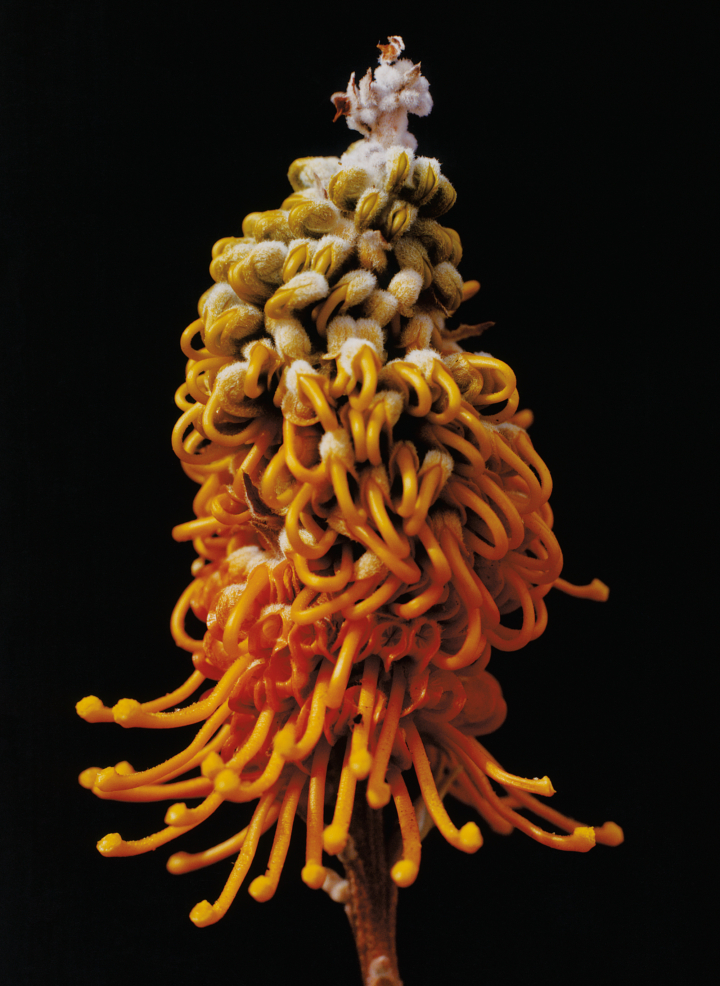
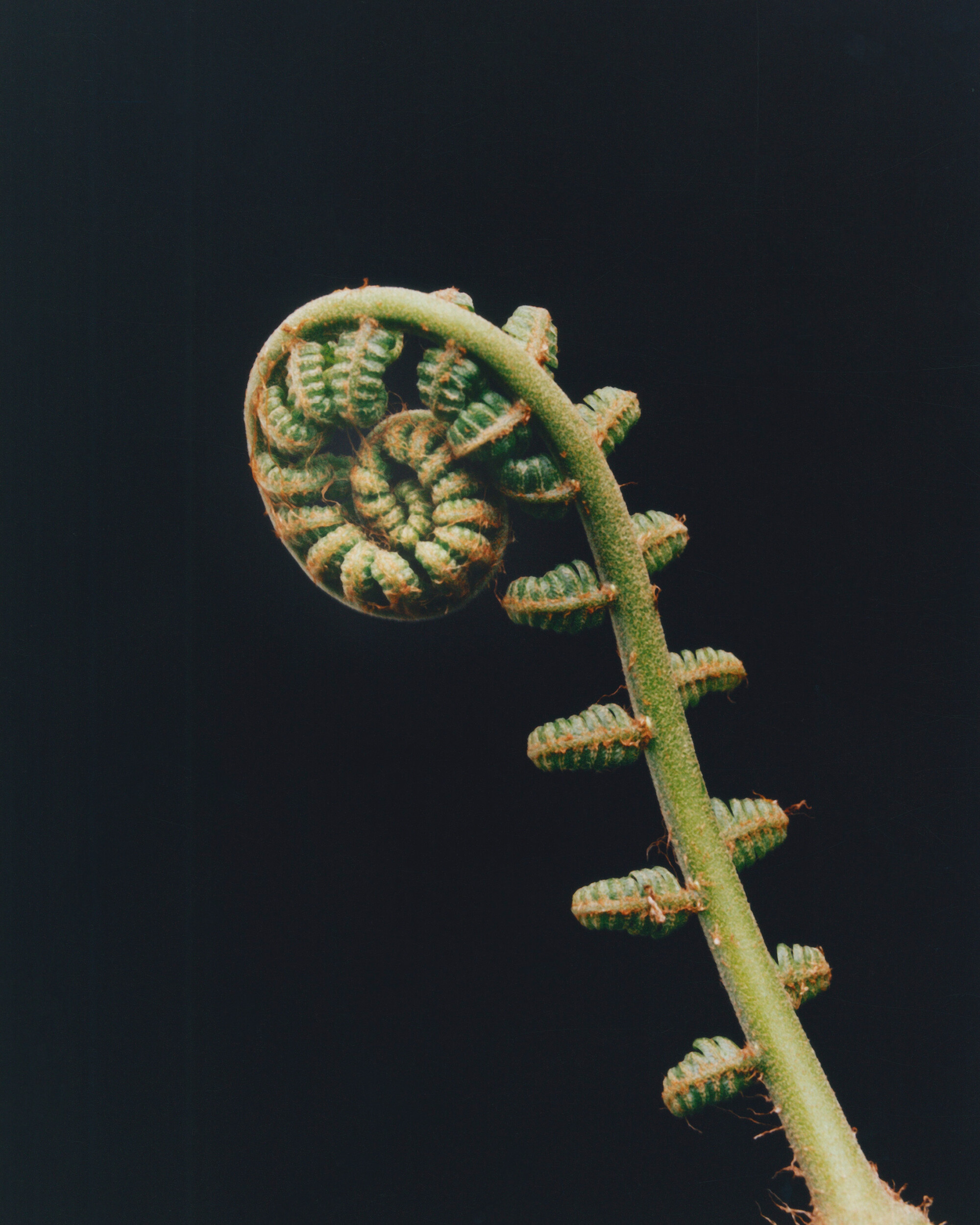
Photograph by Charles Negre
To never miss an episode of The Nature Of, be sure to follow here.
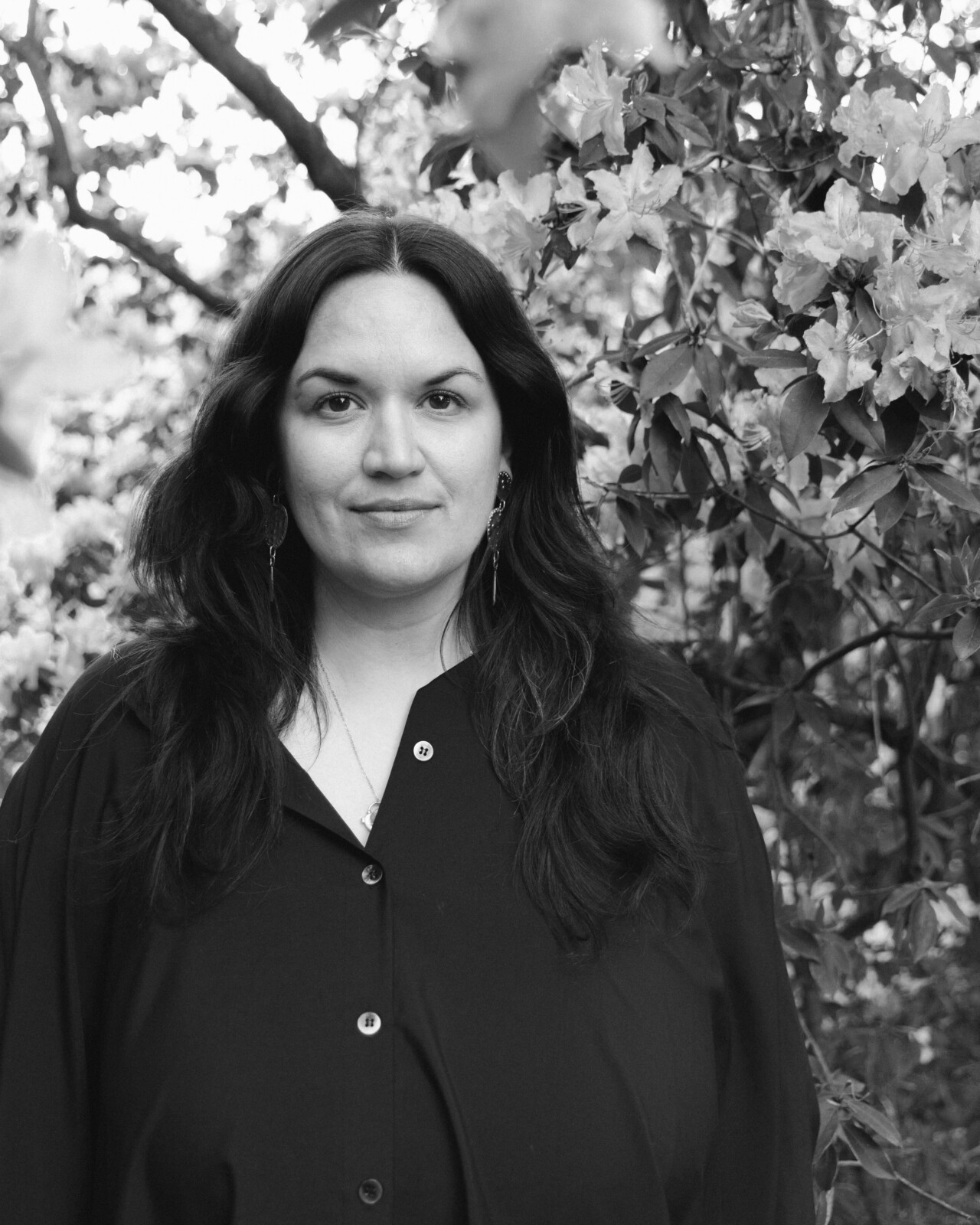
Lindsay Mack spends her time helping people rewild and reconnect with their intuition—but not in the way you might expect. This week, Willow sits down with the teacher, author, and host of Tarot for the Wild Soul for a conversation about spirituality rooted in nature, healing that moves in spirals rather than straight lines, and finding meaning in uncertainty. Together, they explore how the living world can become a mirror, a guide, and a reminder that we already carry much of the wisdom we’re searching for.
Lindsay Mack is an intuitive Tarot teacher, writer, and founder of Tarot for the Wild Soul, as well as the host of the popular podcast of the same name, which has been downloaded over eleven million times since its inception. Through their beloved workshops, retreats, and online Tarot courses, Lindsay has had the profound honor of teaching Soul Tarot to many tens of thousands of students from all around the world. They are also the author of Tarot for the Wild Soul, which is a trauma informed approach to the cards for growth, healing, and presence, and the creator of The Soul Tarot Deck (with illustrations by Chelsea Granger). Their work has been featured in New York Times, BUST, Medium, HuffPost, and Nylon.
Lindsay Mack
There seems to be, I think it’s learned, this idea that if we give over to a deeper whisper of wisdom in us, we’ll lose ourselves. When the opposite, I think, is true.
Narration
Speaking of a deeper whisper, I have had the voice of Lindsay Mack in my ear for years. They’re the host of an incredible podcast called Tarot for the Wild Soul, and the author of a new book by the same name. Lindsay and I share a sense of spirituality that is really rooted in nature, not about escaping from the world, but embedding ourselves more deeply in it. Even the parts that feel difficult to love.
Lindsay
It’s an invitation to really, really love who you are, and it really asks us to start with the broken parts first. Are we willing to open our arms to even this?
Narration
I’m Willow Defebaugh and this is The Nature Of, where we look to the nature of our world for wisdom and ideas that change the way we live. This week, I’m sitting down with Lindsay Mack to talk about how tarot and spirituality can be a way of reconnecting with ourselves, our intuition, and the world around us. And if you are somewhat of a skeptic about tarot or anything spiritual, I encourage you to listen with an open mind, because Lindsay has so much wisdom to share about how nature can be our teacher and our guide.
Willow Defebaugh
Lindsay, welcome to The Nature Of.
Lindsay
It’s a dream come true.
Willow
I have been listening to your podcast, Tarot for the Wild Soul, for years and years. And it’s guided me through some transitional moments in my life, and it feels really full circle to get to have you here, and talk about all the magic that you bring to the world.
Lindsay
Your work is one of the greatest anchors and balms in my life, and has been for a while, so. Huge honor.
Willow
OK. To kick us off, I’d love if you could just share about your relationship to nature and the living world.
Lindsay
Wow.
Willow
Small question.
Lindsay
Yeah. As somebody who was abused, grew up in an abusive environment, and has experienced a lot of suffering as a result of that, nature has always been, from the very beginning, the reminder and the refuge that something is bigger than this. Something is bigger than, is holding me inside of the depth of suffering that I was raised in, the challenge of whatever moment that I happen to be in, or to find myself in, with the way that my brain works. Very often, it can feel like the present moment is forever, it’s never going to change, that’s it. And it’s been very helpful to be able to say, “Well, winter doesn’t last forever anywhere. You cannot be different from that. You’re not that special. This can’t be any different from that.”
So I think I’ve always had a reverence and a love and an adoration for nature, and for the living world. And I’ve always seen it as a mirror, and as a reminder of what’s true, in the midst of a life that has been filled with regular reminders of what isn’t true, what is temporary, and nature has always been a counter to that.
Willow
Beautifully said. I want to underline the piece that you shared about how nature is bigger than you. It’s interesting to me, because what is spirituality? This very kind of loaded word. What is that, other than just the belief, or having reverence for the idea that there is something bigger than you? That is nature, to me, and I feel that that is true for you, too.
Lindsay
Absolutely, and so beautifully put. I think, “Can this hold me? Can this be larger than me, always?” Larger than anything that might come up, the biggest of experiences in my human conditioning, and human behavior, and just in life. I think that is where I find myself coming back to the old threads, I think, of things that I have played with with regard to spirituality. Like, the idea that everything happens for a reason fell away so quickly, the older I got, and the idea of a punishing force or one singular spirit, to me, fell away. That really is the one thing that I keep coming back to is like, “May this hold me, be enough.” And that, it always is.
Willow
Yeah.
Lindsay
That, it’s always been.
Willow
Yeah. And it’s so interesting. I love that you said that about everything happening for a reason, because I think for some reason, people really hold onto that—
Lindsay
They do.
Willow
—as being the core tenet of what it means to believe in something, or to be a quote-unquote “spiritual person.” Because that’s also something that fell away for me, pretty quickly. And it’s interesting because I actually think that when you let go of that idea, it didn’t change my reverence for the world. It didn’t impact the wonder with which I experience life, because it’s also just so marvelous that we live in a world and a universe where anything happens at all. Where chemistry turned into biology, and turned into relationships, turned into you and me sitting here having this conversation.
Lindsay
I know. I so agree with that, and I also think it took away resentment and pressure somehow. I think it maybe increased my capacity for reverence. The understanding of: Things happen, and we make the meaning that we make of it that helps us thrive and survive. We evolve through what we were handed, and were shown endless examples of that. The idea of evolution is one of the most meaningful tenets of life to me, just as a creature who has evolved through many things.
Willow
You know, something that I love also, is that I’m sure there are a lot of people who would not expect from someone who reads tarot, teaches tarot, offers tarot to the world, for you to say, “Everything doesn’t necessarily happen for a reason, things happen and we make meaning from them.” So I think for anyone who’s listening to the show because they love nature, and are here and they’re like, “What is tarot?” Can you explain what is tarot, in your eyes? How do you think about what the practice is?
Lindsay
Yeah. So I teach and offer a kind of tarot that I developed called Soul Tarot, which, I’ve been practicing tarot for 30 years, and doing it professionally for just over 10. Soul Tarot is essentially an intentional utilization of the tarot as a non-predictive helping tool, one that can help us to be with what is, rather than what might be or will be. To me, it is 78 archetypes, mirrors, reflections of ourselves. That when we go to the deck the cards really will, if we let them, reflect back to us the medicine that I think we know, and I think lives within us, but often our brains, minds, lives, are too loud to really access that.
Willow
It is, in a sense, the mirror aspect of it, the way I see it is like a dialogue with our unconscious, right?
Lindsay
Mm-hmm.
Willow
Because what’s always interesting to me is what we see. That is the most revealing aspect. I almost think about when we go to see a film, we’re watching all these archetypes in motion. And the aspects of a character’s story or journey that speak to us, that help us process our own traumas, our own experiences in life through the technology of empathy, of seeing the mirror of storytelling.
It’s not so different with tarot, right? It’s like we’re seeing these archetypes and symbols, and when you ask yourself, “OK, I’ve drawn the Queen of Cups. What could this mean for me, knowing what this archetype is about?” My own answer to that question is what’s revealing. So in that sense, I think you’re spot on, that it’s just like—It’s a mirror.
Lindsay
It is.
Willow
And I love that you said it’s 78, 78 of them. And so you have just released your first book, also called Tarot for the Wild Soul.
Lindsay
Yes.
Willow
And your first deck.
Lindsay
Yes.
Willow
Nature is a huge part of, I mean, in every artwork for all of the cards in your deck.
Lindsay
That’s right.
Willow
But also in the language that you use to explain these different archetypes, there’s nature, and the symbolism of nature. So how did that emerge for you?
Lindsay
From way before I even did this professionally, I had dreams of having a deck someday, and I knew it would only be nature. I knew. I have a real passion for it, and I don’t necessarily know if I will be successful at this, but the attempt was made. To have somebody pull a card from this deck, and understand or have a fresh opportunity to get a sense of what the card was, without necessarily having to look it up. They can, but I think because nature is right there for you, it’s right there. I really believe in the power of kind of living tarot. I really let, on my walks, on my engagement with nature, it’s happened very organically that sometimes I feel like nature tells me about the cards, and the cards tell me about nature.
So there has been this kind of conscious and unconscious tracking for a really long time with regard to like, “Oh wow, yeah.” Learning more about the trillium, since living in Oregon, the trillium flower, which sometimes takes up to nine years to bloom. And that are protected, and it’s very difficult to transplant them out of the wild, and into domestic growth. That feels a lot like Knight of Pentacles to me, because Knight of Pentacles tends to wait until they’re called. They tend to teach us like, “How can we be in this pause, and in this place of preparation, that might look like we’re not doing anything, but actually we’re really honoring our timing.” And that’s why, in the deck, that’s a trillium flower with a little snail crawling up it, because the goal was, “You already know what this means.”
Willow
It’s pointing to an intuitive knowing.
Lindsay
I think so.
Willow
And it’s interesting, because I have scientists on the show who talk about intuition being one of the most important evolutionary mechanisms that we have. This isn’t just kind of an out there idea, it’s a technology, and yet it’s often dismissed, or people can feel so disconnected from their own intuitions. Why do you think that is? It’s part one and part two—how do you recommend anyone listening tap into their intuitions, if maybe it’s a newer idea for them?
Lindsay
Yeah. So we’re all intuitive, and I think the most important thing to understand is that intuition looks different for everyone. And it behaves differently; it shows up differently. All of us are doing different things with our intuition. So a lot of us are shown, either through movies or media, or now maybe social media, if that’s what your algorithm is feeding you. This idea of an intuitive as a clairaudient psychic medium, who is just receiving messages like a Joan of Arc, you know?
Willow
Mm-hmm.
Lindsay
And that’s absolutely not the way that everybody experiences intuition. One of the first reasons why I think there’s a sense of disconnect is because we don’t have the elders, a lot of us, we don’t have the variety of examples to show this is all of the different kinds of ways that intuition can show up for us. Some people, their intuition is so remarkably colorful, and for some people, like I always say, “My intuition reminds me of salt,” which is OK. So I think that sensing into one’s self that we might have to re-wild a bit about our framework for intuition, notice what has been placed into the landscape via the overculture, and what might need to come out in order for there to be a flourishing. But I think it’s learned, this idea that if we give over to a deeper whisper of wisdom in us, we’ll lose ourselves. When the opposite, I think, is true.
And I think the way that we can begin to retrieve our intuition is, one, to take complete pressure off. And two, to remember that it’s just you. It’s just you. It’s not anything outside of you, that’s it. The way in for me to begin to sense into, like, “What does the mind have to say, and what does this deeper part of me have to say?,” is that I did really basic questions. “Coffee or tea today? Right or left today? This road or that road, today?” And I would track and notice like, what did I feel, what did I sense? And the more you do it, just as a regular practice of building muscle, the more you start to notice, like, “I can much more easily perceive which way.” Or, “I don’t know anything. And I’m going to do the best I can with the information I have.”
It does take time, and I think it takes real compassion, because I think a huge perception is, like, “If you’re intuitive, you’re just born with it.” And that is true for some, it is not true for everybody.
Willow
I love this idea that everyone’s intuition looks different, and I love that yours is salt.
Lindsay
I think so.
Willow
Mine has always been threads. That’s how I see the world, is like, I see the threads that connect things. And I actually, like beyond the label of someone who makes a podcast, or someone who writes. It’s like, I feel like my job is actually just to follow the threads and to weave them together. And it’s interesting, because in a lot of ways, reading tarot is kind of what taught me how to write my newsletter that I write. Because it taught me to look, in the same way you were talking about how when we look at nature, we know what things mean, or meaning arrives. And I think I felt that way in writing about ecology, and drawing symbols from what I was seeing. It was like that practice I learned, almost, from reading tarot. If that makes sense.
Lindsay
Yes.
Willow
I think most people in their ancestry, wherever they’re from, there are people within their lineages who at some point had connection to just the wisdom of nature.
Lindsay
That’s right.
Willow
Understood the cycles of the season, maybe knew how to heal with herbs, whatever it was. A lot of Indigenous folks will say, like, “The work right now is not appropriating other people’s ways of connecting with nature, you have that in your bloodline,” wherever you’re from. If your ancestors are from Europe, if they’re from Asia, if they’re wherever. There is that knowledge in your bloodline, so discover those practices.
And you do that quite a lot in your offerings. I mean, you speak about Sauin and Beltane and these Gaelic and Celtic festivals, that were meant to be about connecting to and honoring the cyclicality of nature. How was that journey for you, in sort of connecting with that part of yourself and your ancestry, and how does it inform how you live your life on the wheel of the year?
Lindsay
I’m lucky and privileged to know where my family was from before they immigrated over to America. So I wanted to know, from my great-great-grandparents, what were the native plants? What would have grown around them? And trying to find a connection to what I could reasonably access. Where I started, the core of that was actually salt, lemon, garlic, rosemary. And the more I learned about it, just the more tools that I had no business using, left my life.
But yeah, learning about the Celtic fire festivals of the year, learning about the harvest cycles of the year. Especially the cross quarters, as you mentioned, even more so then the solstices and the equinoxes, are huge anchor points to me. And you also can’t take one without the other. We can’t talk about the riotous color and floral explosion of mid-spring, without speaking to the closing of that time that happens on the other side of the year, and that’s happening on the other side of the world. And that’s always been very comforting to me too, like if the world can hold this duality, it can hold whatever we might bring to it as well.
Willow
Yeah. It’s been such a beautiful gift, because that’s a part of my ancestry as well, so it’s been a beautiful gift to kind of orient my year around not just the equinoxes and solstices, but these cross quarter holidays of just literally being touch points of, “What is nature doing right now—”
Lindsay
That’s right.
Willow
“—where I live, here?”
Lindsay
That’s right.
Willow
“Right now, she’s flourishing. Right now, she’s blooming.” Or, “Right now, she’s decaying.” And where might I be mirroring that in my own life?
Lindsay
That’s right.
Willow
It really has changed the kind of way that I see the wheel of the year, or the spiral. You love the word spiral.
Lindsay
I do. I really do.
Willow
You say that we are spiralic beings.
Lindsay
I do, yeah.
Willow
Can you share a little bit about what that means to you?
Lindsay
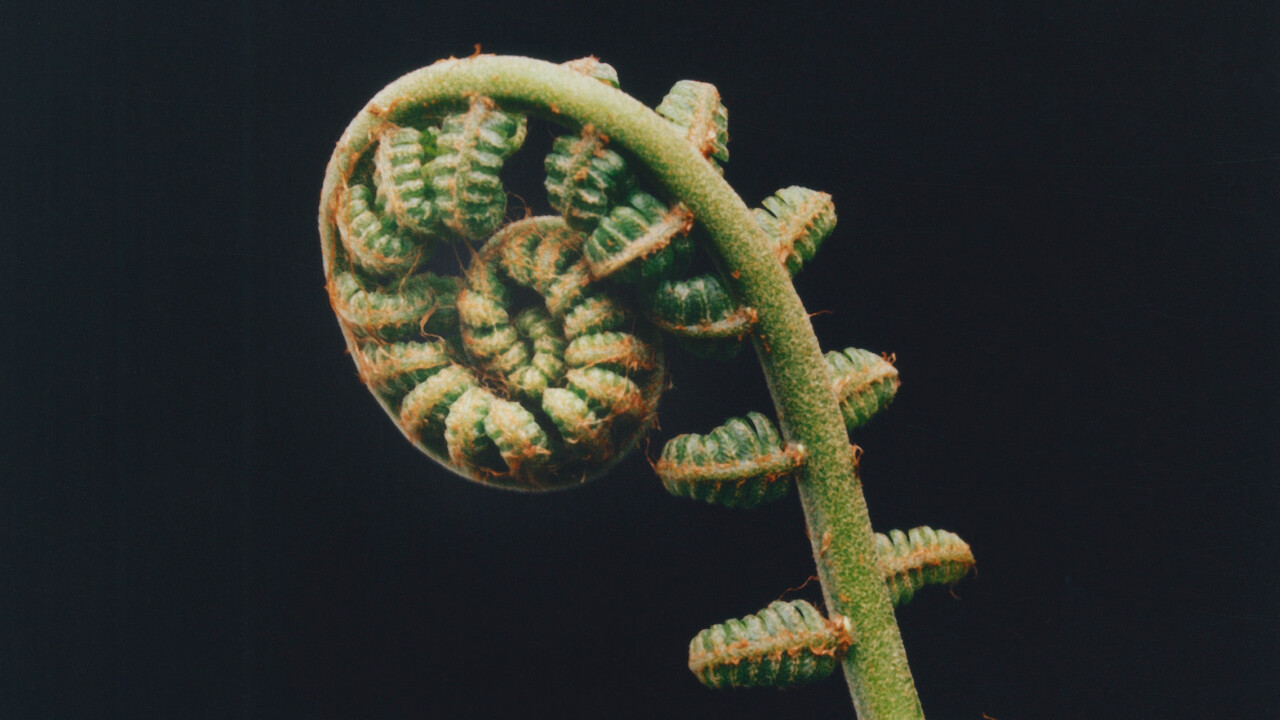
Yes. So I think that term came about for me within my own lived process, because with PTSD that is very active, there is a real embodied experience for many of us. Where, if you are in an active state, if your trauma and your PTSD has flared, you can feel, devastatingly so, like you are back in something. Which was the most devastating part of having PTSD for me, was the sense like I was ripped out of my life, and pulled back into something. Whatever it is. And learning about the nature of spiral time, I think, and of the spiral. And mapping my own understanding to it, this idea that, “I may feel ripped back into this time, but I am still moving forward.” Because I can’t not. I can’t move backward on the spiral, because again, I’m not that special. Spirals will continue to undulate out. They won’t recede back in.
So even though I feel this, the feelings don’t always match the facts. And so the idea that I am a spiralic being too, because I am, we all are, is something that is deeply nourishing. It really saved my life. This idea that I don’t go back and forward on a line, I’m always spiraling forward, and even something that feels old is coming with me into this new time on the spiral. The truth is that, the expectation for most of us is that we should be linear, and that life runs linearly. Something happens, we heal from it, we don’t. For many of us, there is a sense in healing where we have a surgery, and we’re doing OK. And then we have a setback, and then we feel better, and then we feel worse. And we might call that cyclical, we might label it something else, but I think it’s a big example of spiralic living. We are spiral beings. We are.
Willow
It’s a great comfort, I think, to know. I mean, who hasn’t been through a breakup or grieving something and we have this idea of like, “Oh, I thought I was past this. And why, all of a sudden, am I snapped back here?” And I think what the idea or the symbol of the spiral offers is like a way of saying like, “Even if it can feel like we’re going backwards, we’re still expanding, we’re still growing. One does not mean the other isn’t true.” And I think that is a real gift.
Lindsay
And I think the tarot is spiralic too, because the tarot can’t be different from life, in that it can’t offer—I think there’s an expectation that it should offer something different, like it has answers, they’re clear, it will provide you with a linear answer. And it really doesn’t, most of the time. It can, sometimes, but it really doesn’t most of the time. So sometimes what happens is we go to the tarot for a question about something happening next month, and we get something that’s really important for this morning. But we assume like, “Oh, I must have not—that card doesn’t make sense in this context.” But in fact, it might. It just might be answering something that you didn’t think to immediately tune in about.
Pretty much the top pillar of Soul Tarot is, there are no good cards, there are no bad cards, all cards bring medicine. And that was directly sourced from a sense of relationship with nature, because some plants sting, some of them poison, they’re all doing something. It’s not necessarily—
Willow
And they’re not wrong. They’re not bad.
Lindsay
—and they’re not wrong, right. They’re not doing anything wrong by existing. So I think it’s not negating the reality that some cards, in some positions, we can feel a sting with them. They can be bitter. They might even feel a little bit like, “Whoa, this is taking me on a ride.” There is a huge cultural adoration and love for The Empress card, right? And why not? The Empress card is amazing, and it’s so meaningful to so many. And I started to notice very quickly, I was like, “Huh, there’s always discomfort when The Empress shows up,” not at the presence of the card, but in my life.
Because The Empress is Venus. So if we think about Venus themes, we’re thinking about the peak lushness and the beauties of life, like all the flowers. We’re thinking about honey, and jasmine, and it’s beautiful. But I know for me, and I know for a lot of people, we don’t feel worthy of that. We don’t feel worthy to receive that. We forget. We’ve been told for years, by our caretakers, by religion, by all these different things. “Well, you have to do something to be worthy of all of this.”
And so, one of the reasons that The Empress can feel, and it’s expressed to me a lot, like pretty activating for some people, is because it is a really big confrontation. What do you feel that you deserve? Do you feel you have to be worthy of beauty, and sensuality, and pleasure, and receiving? When, for a lot of us, Empress is quite uncomfortable because it’s like, “I’m not going to let you get away with not thinking that you do not deserve this.”
Willow
And that is such a beautiful example of, I think for anyone listening, getting a window into how your mind works with these archetypes. Because it’s an example of how, even something that feels uncomfortable can be such a light bulb—
Lindsay
Yeah.
Willow
—right? It’s just this archetype, that is a mirror that is showing you, “What is your relationship to feeling worthy of abundance, of beauty, of these gifts?” And I love the comparison you drew to nature, because it’s true. That card for some people might be like, “Yes, I am feeling myself. I am in myself as The Empress.” And for others, it’s a point of pain in the same way a plant that grows in the forest for one creature might be poisonous, and for another it might not be.
Lindsay
That’s right.
Willow
And it’s not right or wrong, it’s not good or bad, it’s there and it’s existing, and it’s an invitation to learn something. Well, now I’m also curious, how did you represent The Empress in your deck?
Lindsay
It’s a beautiful, it’s a black background, and it’s like dripping honeycomb, I think lilac, berries. It’s just all of this lush, gorgeous ripeness, like this just little cavalcade of sensual delights, vis-a-vis nature. And it’s just like, “Yeah, this is available to you. It’s right here, if you feel available to reach out and touch it.” And if you don’t feel available, that is the beginning of the work with Empress, and you’re not alone in it.
Willow
Beautiful. Do you have any specific rituals around the tarot that you really abide by? Like, do you pull a card every morning?
Lindsay
I have no rituals.
Willow
Love it.
Lindsay
I know that sounds bananas. I don’t. My life is the ritual, in that, it is unpredictable. I think having a 4-year-old, I’m really an at-need basis right now. So I go to my deck when I need, as I need. But in this season of life, I don’t have a whole lot of ritual, in terms of pulling for myself.
Willow
Life as a ritual really resonates. It’s the closest, I think to me, of how I can explain what my spirituality is at this moment in life. It’s not like something I need to go do and practice, it’s just at this point, it’s kind of seeing everything as ceremony is how I relate to it. And even, I had a friend who had surgery a few months ago, and she really did not know how to wrap her head around it. She was really freaked out, she had never had surgery before. I shared that, in my experience, it was helpful for me to just think about like, “I’m having a ceremony. This is a ceremony, and it means there’s going to be challenging parts of it, but can I see it all as everything that comes up, the pain, the healing, can I just see all of it as worthy of my reverence?”
Lindsay
Gorgeous.
Willow
And I think that that has illuminated a lot for me about the role that spirituality can play in people’s lives, is it gives us a way to wrap our heads around the things that feel really unfathomable. We take myth and we create meaning, and it helps us drench our own lives in more meaning. And why else are we here?
Lindsay
I mean, absolutely.
Willow
What is something nature has been teaching you lately?
Lindsay
Oh my God. So in the Pacific Northwest, where I live, I think this is true everywhere. But, lilac season, it’s a big deal. Because there’s just so much greenery out there. And I know this can be said for any flower, but lilac season is a big devotion, and a big meditation with death and life for me. Because when lilac season comes, I love lilacs so passionately. It’s made me go on more walks, get up, take turns that I wouldn’t normally turn, to be able to sniff lilacs. And what it’s been teaching me is, put quite simply, when beauty arises, make space for it. Run to it, embrace it, because it is not destined to stay long. Then there’ll be something else.
So lilac season in particular is always just a huge time of, rather than meditation, like active devotion. I’m walking to the plant, I’m being with the plant, I’m making time in my day to walk over, to take the long way. Making space for beauty has been a huge part of my moment, right now, with nature.
Willow
OK. To close this out, will you pull a card for this moment, for the Earth?
Lindsay
Yes. Two of Cups. Yeah.
So there are a lot of ways to look at Two of Cups, but one thing that always feels really present for me about it, is that it’s an invitation to really, really love who you are. And it really asks us to start with the broken parts first. So the parts that we really feel like, “If this could not be there, be the way that it is, everything could be better, everything might be better if this was gone.” And so I’m open to your thoughts about it, because I feel like, I know that the Earth is doing a lot of this work right now, in terms of being confronted with parts of themselves that have been brought to the brink of destruction, or extinction, or of barrenness as a result of our actions.
And conversely, for us as people, there’s so much about the world, not because of the world, but because of what humans have done to the world, that feels really challenging or hopeless or difficult to embrace. I don’t think it asks us to like, “Just love everything.” I think it’s more about, are we willing to open our arms to even this? I think love might be a stretch, but can we open our arms to anything that arises? How does that land with you? What comes up for you—
Willow
It’s beautiful.
Lindsay
—around that?
Willow
Can we open our arms to even this? What it brings up for me is that, I think some people think that this world is maybe not worth saving. And I really want to challenge that for people, because there is so much here that is worth saving, but it’s scary. I think people run from their love for this world, because they’re afraid of losing it. I think it’s an unwillingness to actually look at the grief and the harm that I think all humans feel on some level, at seeing something that we are a part of, something that’s bigger than all of us, be polluted to the degree that it is. And we have to get past that idea that it’s not worthy of being saved, even if it is in such an imperfect, disparaged state. Ayana Elizabeth Johnson, who’s been on the show, in her amazing book What If We Get It Right, which is a library of climate solutions. One of the solutions is just, “Let nature heal.”
Lindsay
Yes.
Willow
It’s huge. We actually let ecosystems regenerate, because we live in a world that both regenerates, and also decays. Both things are constantly happening. Beltane and Samhain, at the same time, in different hemispheres. So I think, when I think about Two of Cups, I think it’s this moment of, as you were saying, “Can we open our arms to a world that is broken?” Because I know you know the wound is also always where the medicine is, and maybe that’s the medicine of this card. So I love your interpretation.
Lindsay
I love yours.
Willow
Beautiful. Thank you so much, Lindsay. It’s a dream to have you here.
Lindsay
Dream to be here. Thank you so much for having me.
Narration
Listen, I’m not going to tell you to pick up a tarot deck if you don’t have one already, but I will invite you to walk away from this episode trying on Lindsay’s worldview. Which is to see everything around us as a mirror, and an invitation, to get to know ourselves a little bit better, to live here in a deeper and more expansive way. And even, to heal.
The Nature Of is an Atmos podcast produced by Jesse Baker and Eric Nuzum of Magnificent Noise. Our production staff includes Emmanuel Hapsis and Sabrina Farhi. Our sound designer is Kristin Mueller. Our executive producers are me, Willow Defebaugh, Theresa Perez, Jake Sargent, and Eric Nuzum.
Atmos is a nonprofit that seeks to re-enchant people with our shared humanity and the Earth, through creative storytelling. To support our work or this podcast, see our show notes or visit atmos.earth/biome. That’s A-T-M-O-S.earth/B-I-O-M-E.
I’m your host, Willow Defebaugh, and this is The Nature Of.
Join our membership community. Support our work, receive a complimentary subscription to Atmos Magazine, and more.
Lindsay Mack: Growth Is a Spiral, Not a Line