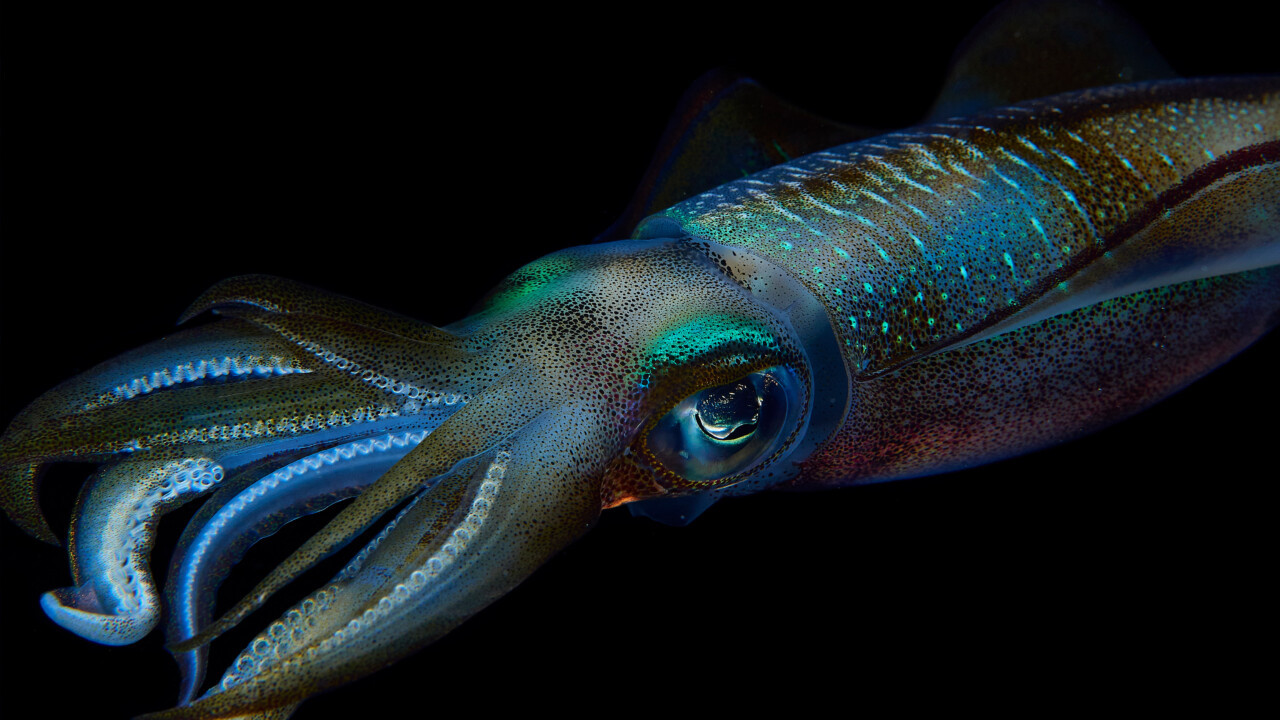
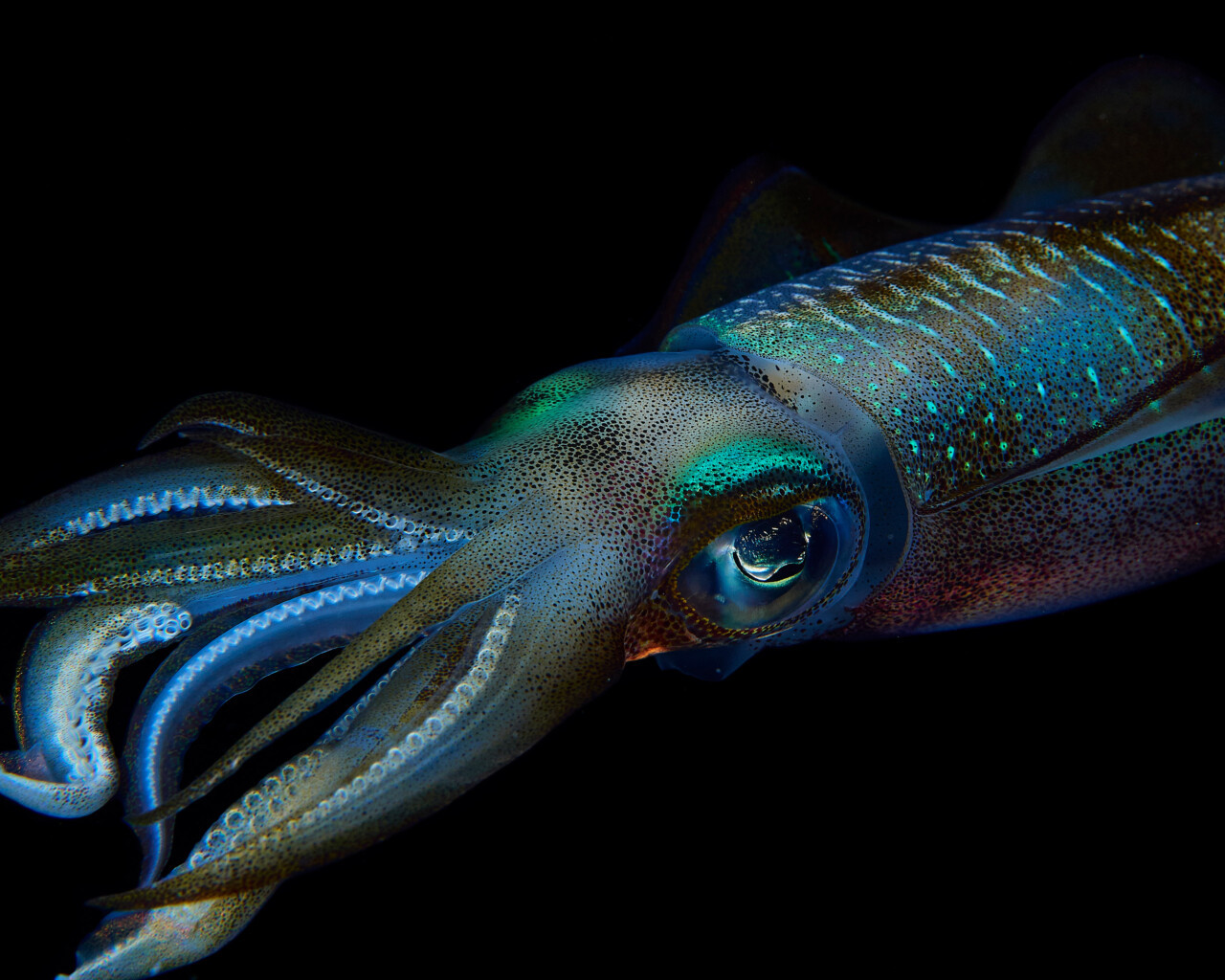
Squid challenge conventional ideas about reproduction, with some species exhibiting multiple mating strategies as well as documented same-sex mating.
Photograph by Aleksei Permiakov / Getty Images
Words by Willow Defebaugh
“Do you know Perrin from the animal sex world, the comics community, or the environmental space?” someone asked me last month at her book launch in Brooklyn, hosted by actress and author Amber Tamblyn.
Only Perrin Ireland sits at the center of such a colorful Venn diagram. She can often be found on Instagram with hula hoop around her waist, explaining without missing a beat an animal science fact or a new environmental policy that’s under threat.
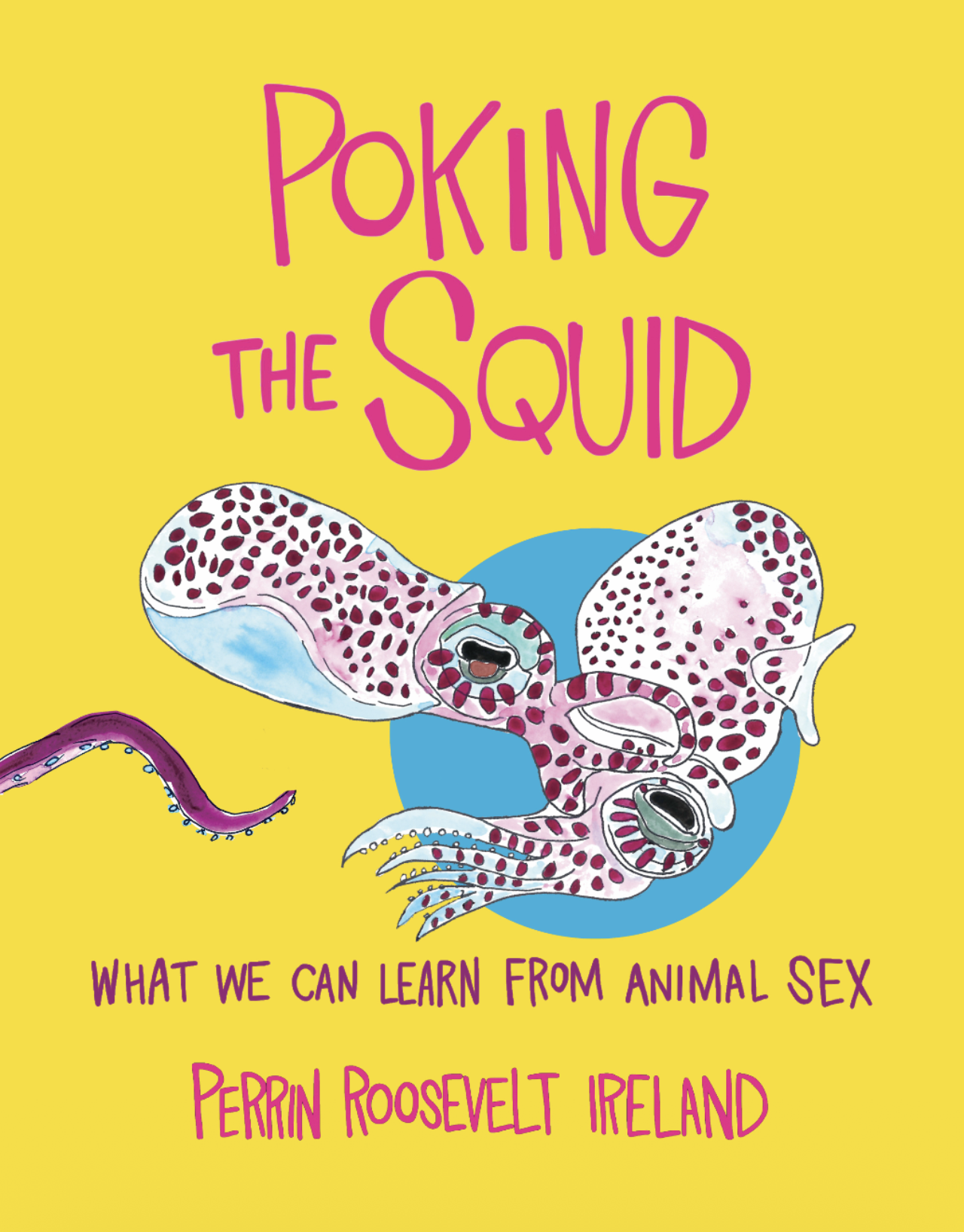
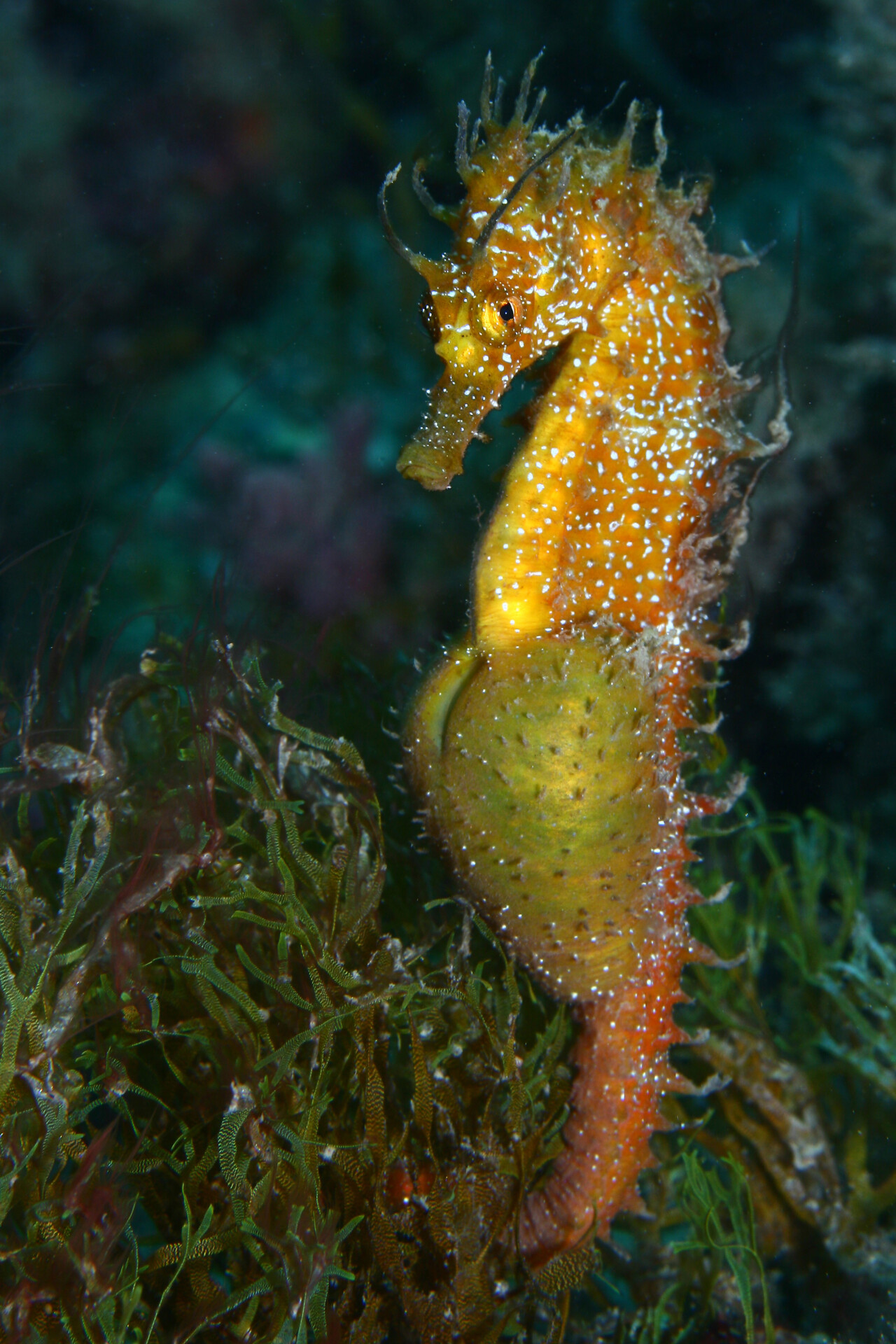
Poking the Squid, Ireland’s newly released book of comics, explores everything we can learn from the wild, wondrous world of animal sex. This includes, but is by no means limited to, four-headed echidna penises, the oral sex of spiders, sex-changing fish, and seahorse dads. In addition to being an artist and exceedingly funny environmental communicator, Ireland is a rigorous researcher: She spoke with 65 scientists for the book.
For Atmos, we discussed what surprised her most in the creation of this book, how pleasure can be a bridge, and why seeing sexual diversity as biodiversity is more critical than ever.
Willow Defebaugh
What was the moment that you realized there was a book waiting inside the world of animal sex?
Perrin Ireland
I began having the desire to have deeper conversations with people than we could have at my live workshops, or performances, or online, telling science stories, when people would respond so thoughtfully but in really complex, very human ways to stories I was telling about animals.
One of the funniest examples is Japanese macaque females. Research indicates they have exclusive gay relationships with each other for long periods of time because they like it. The internet is so funny in response to those stories. Or there was this study about male dolphins that described “long-term sexual friendships.” I shared the paper and explained what researchers understood about these relational dynamics, and the internet was like, “Please do not put us back in the closet. We’re not roommates. It’s not Bert and Ernie. Name names.”
I’ve been studying feminist science and technology studies for over a decade, looking at people like Donna Haraway and others who critically examine the stories we tell about animals. So when I would get that kind of feedback from people, I’d think, “Yes, totally. I just can’t get into the dissertation I want to write in the comments section.”
I wanted to make those conversations more accessible. I had some panic that there wouldn’t be an archive of this work for a popular audience.
Willow
Before writing the book, what was your own personal biggest misconception about sex in the natural world?
Perrin
I think I knew I was participating, because I was communicating in such short-form ways, in what science writers derisively call the “gee whiz” approach—“This insect! This female insect has a penis!” Just putting that on the internet isn’t the level of complexity I wanted to offer.
Looking back at popular science storytelling about hyenas from the late 1990s and early 2000s, it’s explicitly transphobic in the way it talks about these animals. I didn’t want to participate in that “animals are crazy” way of talking about them.
One of the conversations that shaped me early was with Riley Black. We were talking about seahorses, and Riley was naming cis limitations on gender. I remember thinking, “I would love it if these animals could help me graduate kindergarten about gender. I just want to be a cis person who’s headed into first grade by the time this book is done.”
The other thing that surprised me was how much animals are talking back to us if we listen well—and if we have a diversity of scientists making science. Class, race, gender identity, sexuality, global origin: All of these shape the questions scientists ask animals, the answers they receive, and their comfort sharing what they’ve learned.
Animals have been telling us a story we’ve not been able to keep pace with because our methodologies weren’t sophisticated enough. But when we advance the methodology and have different scientists asking different questions, we can really see much more of animal life than we’ve been able to see before.
Willow
One of the most extraordinary aspects of this book is that you also drew it. What was that process like? Why was this the right medium for this project?
Perrin
I learn by drawing, and so I really moved each journal paper that I used in the book through my body, and the way that I design a page is the way that I’m learning the story.
I think, for me, there was something really feminist about making comics and putting myself in the comics, and inviting people with an R-rated Magic School Bus style into the learning process.
And you need to do additional layers of research to be able to draw something. There are a lot of images you can find on the internet. I’ll reach out to scientists, they’ll send me a video that maybe was published or wasn’t, or I’ll visit their lab. And so, for me, as an artist obsessed with science, it’s a kind of study, and investigation, and experimentation, and exploration to do the drawing. And I think doing that kind of illustration during a biodiversity crisis is a way for me to pay homage with time and deep attention to these animals and invite other people into that, too.
Willow
R-rated Magic School Bus style. If you haven’t made that T-shirt yet…
Perrin
Ms. Frizzle after hours.
Willow
A big throughline of this work is that sexual diversity is biodiversity. For anyone who is new to this, can you share what that means and why?
Perrin
We see, when we pay attention and ask questions about animal sex, that they’re doing all kinds of things that are really new and different for us. There are little, tiny bugs that just clone themselves inside their own bodies, and those babies are born pregnant, and then they do it all over again. And sometimes they have sex with male aphids, and sometimes they don’t.
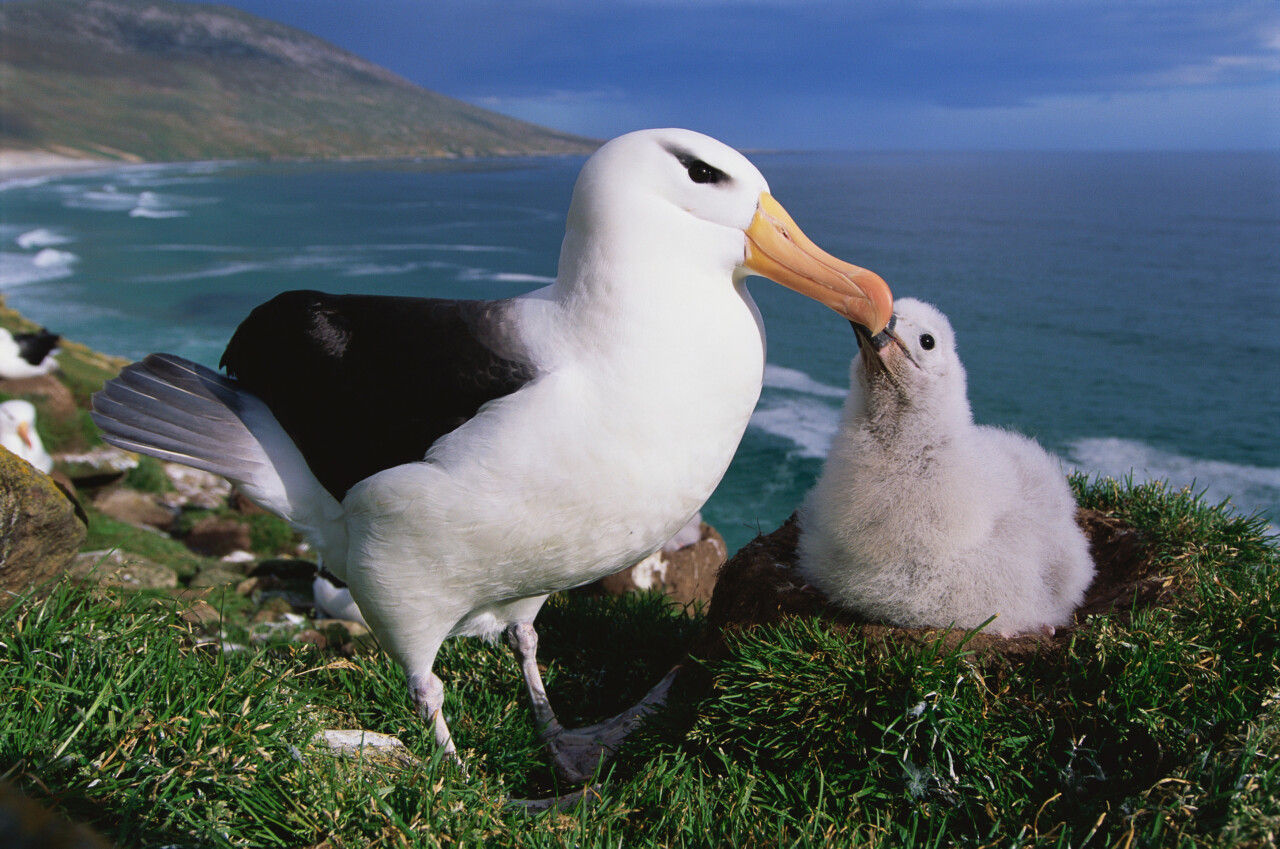
And then there are other animals, like a lioness having sex 100 times while she’s in heat. There are albatrosses that, it wasn’t until we started analyzing their DNA, we found were living in same-sex pairs and reproducing effectively with sperm from a neighbor male, and heterosexual long-term albatross relationships, too. So when we look at how animals are making choices about their lives, there’s a lot of sexual diversity. There are a lot of different strategies that are the right choice for them in the ecological niche that they live in that they are expert at thriving in.
Sara Lipshutz talks about how sex is composed of multiple variables. So it could be what sex cells an animal makes. Do they make egg or sperm? What chromosomes do they have? It can be what genitalia they have. It can be their physiology. Are they larger or smaller? What are they doing with their body? How is their body allocating resources? It can be behavioral. In some animals, the males are the only providers of parental care. In others, predominantly in mammals, mostly females are providing the care.
So it’s all these different variables. But these variables are interacting differently with each other in different organisms. And so when we talk about sex, being as specific as we can to the species in question—and what sex looks like in that model—is really important to starting to have a definition for the word sex that is more expansive, and more effective, and more accurate.
Willow
It couldn’t be a more critical time for this to be coming out. We are living in a moment where biological sex has a period after it. It’s used to justify the oppression of reproductive rights, LGBTQ rights, women’s rights. And it’s wild because I think, as you discovered in creating this book, when you talk to the people who really study biological sex, they don’t have one definition for it. They don’t have one answer for it.
We’ve spent so much time focused specifically on gender, which is one expression of sex, but we need to be having the conversation around sex too, because I think when we shy away from it, we’re actually doing ourselves a disservice because the natural world has such a massive amount of diversity.
Perrin
Yeah. Andrea Long Chu wrote an essay called “Freedom of Sex” where she argues that when we’re denying trans kids medical care, we’re talking about the freedom to change one’s tissues.
I read that while I was working on the barnacle section of the book, and barnacles change how they want to sexually develop depending on the environment that they wind up in and what works best for them as a sexual strategy in that environment, and they will literally change the length of their penis depending on water conditions. They are embodying freedom of sex by changing their tissues.
And of course, there’s such a rough history of this sort of animal-human, dangerous comparison that can happen and be weaponized and used in harmful ways. But when I was drawing that section and reading that essay, I was like, “Oh, this is what we’re actually talking about when we talk about animal sexual diversity, is the way they can teach us in this moment that we do need to talk about freedom of sex.”
Two people who really made the book a whole lot better are the trans historian of science, Beans Velocci, and Sam Sharpe. They have a book coming out where they attempted to pinpoint the moment in science when we landed on the binary, and they were unable to find it.
The dismantling of the scientific enterprise in America is specifically targeting trans projects, trans research projects, and trans scientists. And DOGE has put on these AI trackers where any study that has the words LGBTQ, same sex, even female in it is getting tagged and tossed from the funding model. A diverse cohort of people made this book so much better. I think they make science so much better.
Willow
I also want to talk about the role that humor plays in this book, because you are such a hilarious person, and I’ve seen you speak about the book also publicly a number of times, and it could be a comedy set. I mean, why is humor such an important tool?
Perrin
I’m a child of the 1980s and ‘90s, Sting had left the Police and he was doing Rainforest Crunch, and the proceeds from all profits went to the rainforest. And I was like, “Love this guy, he’s a hottie and I want to protect the rainforest.”
I’ve only ever known a sense of loss, despair, and scarcity when it comes to the natural world, and to habitat loss, and to these animals that kids universally love. I spent 10 years as a communicator in the environmental movement, and NRDC was a great place to do that. I was allowed so much creativity, freedom, and opportunity to collaborate with amazing people and practice different ways to tell these stories. And the environmental movement has communicated from a place of loss, panic, urgency in order to try to wake people up and to get them to pay attention and to take action. And I really wanted to try, in starting to tell these stories about animal sex, to invite people in from a place of pleasure.
Sex touches all of our lives in some way. And I have lots of asexual people interacting with my work and requesting asexual stories. It’s not all about Pound Town, though, as we know, that is a deep interest of mine. But hey, sex is funny. Everybody talks about sex. Come on in. We will then be talking about the way that the loss of the forest impacts chimpanzee culture, contributes to cultural loss, and sex is a part of culture. And so we’re going to have that conversation once you’re here.
I mean, in terms of humor, though, I will say I personally feel that the jokes absolutely write themselves when it comes to nature. Nature is a gag a minute. You could not make this shit up. I was talking to my friend, Amber Tamblyn, on her Substack about this incredible paper that came out. These Bolivian scientists published a paper where they were like, “We accidentally eavesdropped on Bolivian dolphins using an anaconda as a sex toy. They are a highly reclusive species. We took like 12 hours of video hoping to just capture a fin, and these dolphins had rock hard boners with this anaconda out of the water for hours, and hours, and hours.” And then they went back and were processing the film, and they were like, “Much to our chagrin, this is a novel behavior observation, and we will have to publish it.” And so those things just truly keep me going, how funny nature is, and how constantly she’s pranking us.
“I really wanted to try, in starting to tell these stories about animal sex, to invite people in from a place of pleasure.”
Willow
At the risk of the “gee whiz” approach, what was the fact that gagged most of your friends?
Perrin
I did start with albatross because I think that monogamy is a way to get people and to get them swooning, and then to reveal that lesbians have been pranking scientists for over a century.
So we start the book with black-browed albatrosses, who are increasingly getting “divorced” as we are forcing ocean temperatures to rise through our behaviors and our relentless consumption, specifically in the Global North. And their reproductive strategy is highly remote islands. All they want to do is be left alone. They’re living amongst so much of our plastic. And female black-browed albatrosses increasingly choose to divorce highly successful partnerships when the ocean surface temperature is warmer.
Meanwhile, over in Hawaii, Lindsay Young, who is a scientist, was doing DNA analysis of feathers from albatrosses who tended two eggs in a clutch, which is sort of like their brood for that year. Because albatross females can only lay one egg a year. They’re long-lived seabirds that make a high investment in their one offspring a year. And so she and her colleague were like, “What are these super clutch nests? And we’re going to do DNA analysis.”
She discovered that two female albatrosses had come together to each lay one egg in the nest and incubate and raise the young together. And she ran the results four times because she was like, “I’m a woman. I’m about to publish about lesbian seabirds. They’re going to come for me. I better be right.” And she’s another one who’s very reluctant. She’s like, “I’m not against same-sex sexual behavior, but we can’t call them lesbians. They’re birds. We don’t know what they’re doing or how they identify.” And new evidence indicates everybody’s really having sex with everybody, but these female and female pairs have been successfully raising young.
Looking at those pairs over years, they have since found they’re returning to do their ritual greeting with each other, hours and hours of allopreening, which is the scientific term for cuddling—really committed, long-term partnerships that happen across multiple breeding seasons where they borrow sperm from a neighbor and raise their young together.
Willow
Incredible.
Perrin
And in terms of “gee whiz,” the echidna has a four-headed penis, and this is a mystery to science. It uses two heads at a time, but I would say that the image of the four-headed penis surrounded by quills has left some impressions. It has stayed with people. And the fact-checker I worked with, Diane Kelly, was like, “Listen, I got a MacArthur Grant to go to Australia to get to the bottom once and for all of these echidna penis heads, so we got to bang out this book and then I got to go.” And she hasn’t published the results yet. I don’t know what she found. I can’t wait to find out.
Willow
What are some misconceptions that you think people have about the role that pleasure plays in sex for other animals beyond just humans?
Perrin
One of the things that did blow my mind that I did find surprising was, I found this 2024 neuroendocrinology of primates paper that quoted Audre Lorde talking about the uses of the erotic, and using pleasure as a bridge between sharers of pleasure for more relating and more connection.
Having those scientists saying that they want to ask science to orient more toward animals, studies that come from a place of imagining their capacity for pleasure instead of studies that assess how much they do or don’t respond to pain, rocked my world. We’re moving into a golden era of the sciences that this is what our generation is putting forward.
From an objective standpoint in science, we have been really resistant to actually identifying other animals as having pleasure. And that was a really fun thing about talking to Patty Brennan. She said to me some version of, “You can’t shake a stick without hitting a clit in nature.” It’s like, OK, so each of these animals has evolved to carry around this highly innervated organ that is solely devoted to pleasure. Not to mention all the new science that we’re learning that people like Ed Yong are helping popularize, like, “Oh, an octopus might have its brains in all of these tentacles. What might that mean for their experience of pleasure?” It’s not even about the genitalia. That’s just really clear evidence that these animals must be having pleasure in sex if we have those and we do too—or if we have all of these other connective systems in different kinds of bodies.
Willow
I think that starts to get at this really fascinating place where science is in this moment to me, which is that it’s clear that we need to create more bridges between us and other species, and create more empathy. And also, can we do that without trying to—and I think you and I spoke about this once—always bring other animals into our world? Can we go into their world? And what you were sharing about the octopus, what might that mean for their pleasure, even if it’s totally different from our own? Can we see personhood in species beyond our own, but can we do it in a way that really recognizes and appreciates the vast differences and doesn’t try to assimilate our experiences?
Perrin
I think about how, with the spider oral sex stuff, scientists are comfortable saying it’s male spiders who lick—or they don’t have tongues, but who are chewing and putting saliva with their mouth parts on the female genitalia—that tend to have more mating success, and they’re able to mate for life. That’s what they’re comfortable saying. That’s the extent of it because it’s the observed behavior. And then it’s like, “OK, so spiders see really poorly. They can hear and sense other things incredibly. They’re playing their webs like a church organ. So then what’s oral sex like for them?” I have so many questions.
Willow
Exactly. Is there an animal whose story changed how you personally are thinking about dating?
Perrin
That’s a good question. I will say humbly, coming away from this book, I really take a page from the scientists, who are like, ‘We don’t want to emulate them. We don’t want to be like them. We want to understand if the strategy works for the environment that they’re in.”
If that were to apply to my dating, what I want inspired by animals is to pursue the dating strategies that work best for my physical needs, the needs of my community, and the needs of myself at that moment.
In terms of sexual goals, I know that dolphins are controversial, but I would love to be echolocatively oral-sexed as a person who can communicate through echolocation. I want the whole sensory system, and then that big old clit that Patty Brennan keeps finding when she opens up a dolphin that’s getting echolocated on.
Willow
Incredible. No notes.
If readers were to walk away with one shift in perspective from reading Poking the Squid, what do you hope that it is?
Perrin
I hope it’s that sexual diversity is a form of biodiversity. And that they identify as friends of biodiversity in all forms, and as accomplices and allies to the animals whose romantic lives we endanger, as well as any and all humans whose romantic lives or identities are under attack right now.
On the website, there is a book club reading guide with lots of questions for really doing this dance with, when is it OK to project onto nature or relate to it. When do I want to walk the line on that? How did this change my perspective on sex in some way?
There’s also the Society to Save Slap and Tickle, which is explained at the end of the book. We’re out to conserve kinklords. And I’ve put a bunch of creatures that are in the book on the website with conservation organizations that people can choose to support if they want to take the next step. If you love the seahorse dads, for example, you can help support Project Seagrass. Once we have reconnected with sexual diversity as a form of biodiversity, then the next thing to do is we take some action to protect it.
Willow
Wonder leading into action.
Editor’s Note: This interview has been condensed and edited for purposes of length and clarity.
Join our membership community. Support our work, receive a complimentary subscription to Atmos Magazine, and more.
Lesbian Albatrosses, Seahorse Dads, and the Freedom of Sex