Photograph by Christian Cassiel
To never miss an episode of The Nature Of, be sure to follow here.
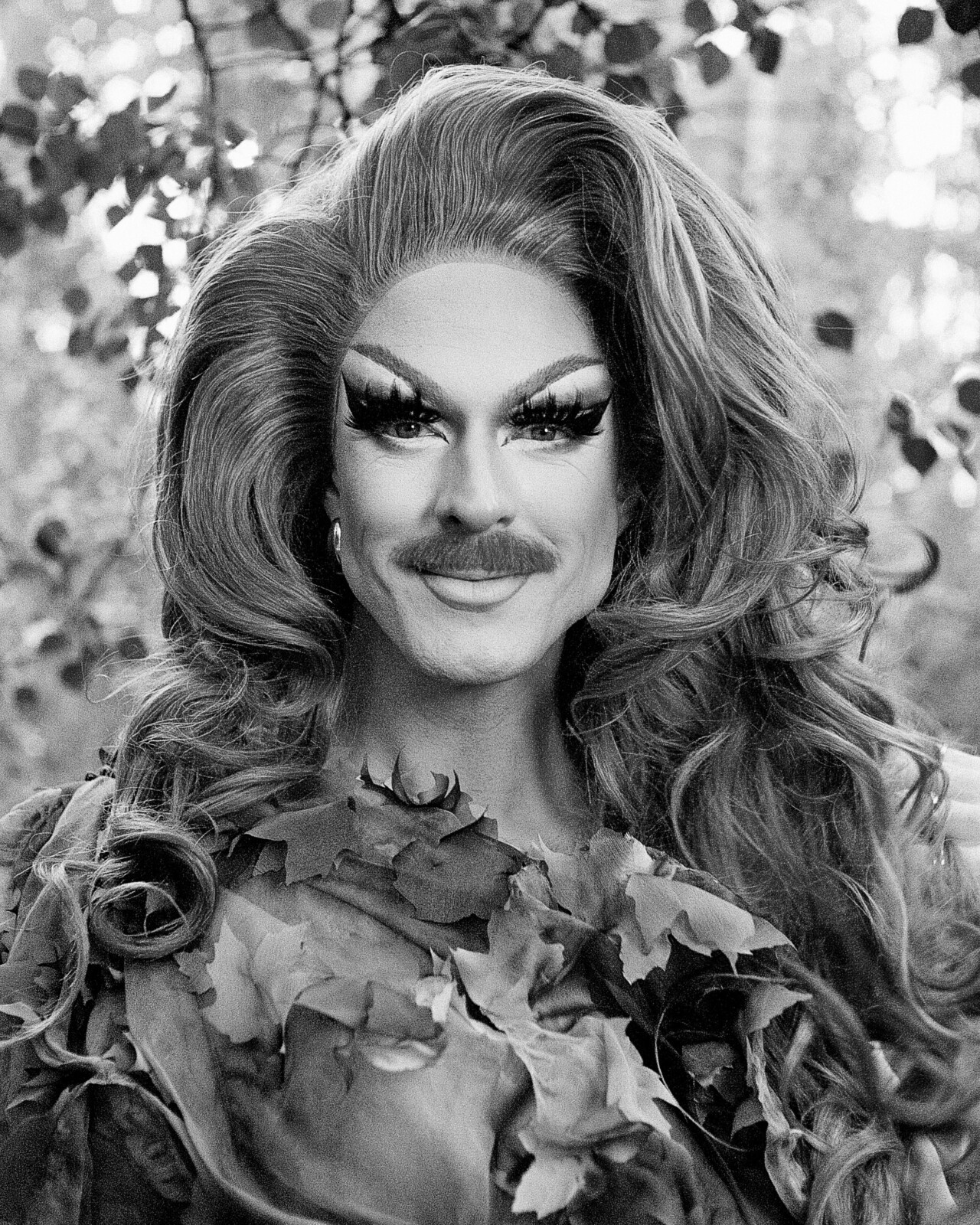
How can we see nature as an invitation to break down binary thinking? In this episode, Willow sits down with environmental drag queen Pattie Gonia to explore the outdoors as a space that bridges divides. From hiking in heels to building community through art, Pattie shares how drag became a pathway back to both nature and self. Diving into the deep connection between identity, self expression, and the natural world, this conversation is an invitation to reconnect with what is most alive within us—and to remember that healing ourselves might be part of how we heal the world.
Pattie Gonia (she/they) is an environmentalist, drag queen, and community organizer working to build a culture of advocacy for people and the planet. Pattie’s community consists of over 2 million people across platforms and her work has over 320 million views globally. She’s used her platforms to create a diverse movement for people and the planet via in person events, top tier educational content and centering joy, fundraising over $3.8 million for nonprofits. Pattie’s work has resonated across sectors as she’s been featured in New York Times, TIME Magazine, Vogue, Outside Magazine, Grist, NPR, National Geographic and more. Pattie has keynoted/performed at events for Smithsonian, NASA, The North Face, REI, Yale, California State University Northridge, and many others, leading to 4.7 million impressions of events alone. Pattie is touring her drag show “Save Her” across the country in 2026.
Pattie Gonia
We all love nature. On the left, people might call it climate. On the right, people might call it conservation. It is the same thing, babe. We have the potential via nature to actually, I think, bridge what people view as the unbridgeable right now. I think that’s going to be hard, but I think it starts in realizing everyone has a piece of nature that is really important to them.
Narration
Speaking of bridging worlds, you might not think that climate activist and drag queen belong in the same sentence, but Pattie Gonia does it all. She has hiked 100 miles in drag, she’s bungee jumped in drag, and even rappelled off of the face of a cliff with Imogen Heap for their latest musical collaboration. Pattie is a force of nature, and she’s here to remind us to take the work seriously—but not ourselves.
Pattie
I think a lot of people look at what I do with drag as an activist and see me as a joke. And I’m like, “Thank you so much. That’s the highest compliment you could ever give me,” because the joy that I can give people, and that then they can give each other, is the strategic way through. Joy is a strategy. Joy is an inside job. And joy is what keeps people showing up time and time
again.
Narration
I’m Willow Defebaugh, and this is The Nature Of, where we look to the nature of our world for wisdom and ideas that change the way we live. This week, I’m sitting down with my best-dressed guest, Pattie Gonia, to talk about her career blending climate activism and drag, how the outdoors can bring us all together, and the story behind some of her most iconic looks.
Willow Defebaugh
Pattie Gonia, welcome to The Nature Of.
Pattie Gonia
Hello, everybody. Oh my gosh, you can hear the carabiner earrings.
Willow
Yeah, can we have a little carabiner earring ASMR?
Pattie
Yeah, these are not climbing-grade carabiners, but they do work functionally for keys. So lesbianism abound, you know.
Willow
They’re carrying their weight, I would say.
Pattie
You should be an author.
Willow
Oh, thanks. Note taken. OK, I want to get into the origin of Pattie Gonia. How did you come to be hitting the trail in heels?
Pattie
I really feel like the story of Pattie goes back to my childhood. Like, I remember jumping off of a swing set when I was 7 years old, performing musicals in my backyard, and I really think that’s when Pattie was born. But I didn’t claim her until about seven years ago, when I went on this backpacking trip, and I decided to take this six-inch pair of high heels with me, and by accident, birthed this drag persona. But really like what was behind it, was so many years of connection to the outdoors via expression, and femininity, and my queerness, and so much of this inner child that I was so at peace with growing up, and especially found in nature. That then through middle school, and through high school, through sports, through Boy Scouts, through being called a faggot every time I would play a sport outdoors, I really learned to disconnect myself from nature. I really learned to disconnect myself from this whole side of me that I loved. And I’m so glad that Pattie brought that healing, and inner child back into my life, and brought a connection to nature with it.
And so much of my work is rooted in wanting that same connection for other people. I really think that so much of the problems in our world today are because we are so disconnected from nature, and we’re so disconnected from ourselves. And that’s why I really think that if we can heal ourselves, we can heal the world. That’s why I think that self-love, and coming to terms with who you are, is such a gift to give this world, and that’s what Pattie is here to do.
Willow
I mean, you took the words right out of my mouth, because when you said that you were disconnected from the natural world through all of that bullying, those experiences as a kid, it’s like we talk so much about how we get disconnected from ourselves, I think, as queer people, when we have those kinds of upbringings, but we don’t often talk about what happens at the same time, which is a disconnect from the world around us. And queer people are so often told that we’re unnatural, or that we don’t fit into the world, and it comes at the same time. And I’m thinking about Joanna Macy’s World as Lover, World as Self, like to be disconnected from the self, and the world, and to be queer is to reclaim that. When people ask me, what does queerness mean to me, I’m like, “It just means wild. It means just letting the thing grow into itself as it was always meant to be, or is what feels natural to it.”
Pattie
Yeah, I relate to that so much. I feel like, for me, now in adulthood where I’m at, I know that queerness is nothing but natural. Queerness is in every ecosystem, on every continent on planet Earth. And the one thing that’s unnatural is hate. The one thing that fuels the destruction of not only this planet, but people on it, is hatred, is division. And it’s almost like why people in power hate queer people is because we are living proof of what it looks like to not divide a world, but instead to collaborate, to give, and to get, and to play our role in nature. Nature’s one goal isn’t just to reproduce. It’s also to support the collective whole. It’s to see where we can collaborate, how we can play a role, and that’s what I think we need more of. We don’t need more survival, we need more thrival. I think queerness offers that.
Willow
You referenced that queerness flowers in every continent. What is your favorite example of what we would call queerness in nature?
Pattie
OK, this answer’s a little untraditional—
Willow
OK.
Pattie
—but I want to advocate for a definition of queerness in nature that’s beyond what a species has sex with. I want to think about queerness as a way of being, and in that way, I think we all can remember the power of queerness no matter who we are, whether we’re straight, bi, trans. There’s an ability with queerness to adapt in creative ways against all odds, and I see that everywhere in nature. I see that in the dandelion growing up in the middle of the concrete sidewalk in New York City. I see that in a way that a tree twists one way, and another, to find light, and then, oh damn, half the tree got chopped off, and it still finds a way to survive against all odds, like that is queerness to me, and that’s queerness in nature. And the more I see queerness in nature, the more I see it in myself, the more I remember that queerness is nothing but natural. And the more I remember that queerness can teach us all something, the power of survival, the power of creativity.
Willow
And that is the story of nature.
Pattie
That is the story of nature.
Willow
Life in transition, one might say.
Pattie
I constantly feel like I am transitioning, and I feel like the biggest gift that queerness has given me is this ability to reinvent myself, discover new sides of myself, realize that who I am today is not who I was yesterday, and what a gift we can give ourselves of that reinvention. I think that’s something that queerness has to offer all of us. I mean, how has that been for you transitioning? I’m curious to hear.
Willow
I mean, I was just writing yesterday about one of my favorite evolutionary phenomena, which is mimicry. And I was writing about the mimic octopus, which literally has evolved to have this advanced neurological control over its skin color, texture, shape, movement. And it will hide in the sand, and then just have two limbs above the sand, to mimic sea snakes. It will become striped so that it looks like a venomous lionfish. It does all of this, depending on who it’s interacting with, and so its identity is like fluid and relational. And I think that for me, my journey has always been about getting closer to what feels true to me and authentic. And I always say that transitioning was not about getting from point A to point B. It was about going from a place of dissociation to a place of enlivenment or embodiment. It’s like putting on glasses, not realizing that I needed them my whole life.
Dissociation, when you feel really disconnected from yourself, it’s like you’re in a haze, and there’s a lot of grief that can come with confronting that, like realizing how much time you’ve spent in that state. But there’s so much beauty that waits on the other side, when suddenly you’re looking at the world with glasses on, and so much of what I wish our species could see, right? Because I think we are living in this deep ecological dissociation, like not just disconnected from ourselves, but also disconnected from the world, and I want us to become enlivened, but so many people are afraid of facing that grief of disconnection with themselves, or with the world. And I think part of why queer people are so much on the chopping block right now is because we just represent that. We represent being unapologetically alive and embodied. And I think as our friend, Alok, says, when you see someone really being themselves, it forces you to confront the distance from that in yourself, in your own self. I try to like invite people in, and just be like, “Come on, it’s a lot more fun over here.”
Pattie
It’s so much more fun over here. And it makes me think about how interconnected all of the conversation around queerness in nature, trans people, is to this moment in politics. Because just like you said, trans people to me represent a freedom in self, and acceptance of self, that we see try to be so controlled on the political right, or in the fascist movement, when really, truly, what that is, why that hate exists is because there’s so much in themselves that they’re not allowing themselves to be. And what I hate is that something like Byron Noem happens, because I want them to feel that freedom to be able to dress how they want, to wear that breastplate, to be who they are. But when that’s at that intersection of hatred that they spew on other people, I really have a hard time with that, because I’m like, “That’s what it’s always been, babe. It’s always been this projection. It’s always been this truth that you all haven’t been able to accept,” and I want that freedom for me, and I want that freedom for you too.
Willow
Yeah. I mean, this makes me think about the importance of putting down our phones, and touching grass, because social media really does amplify the most extreme voices, and so do politics, right? And so if I’m only tuned in to that world all the time, I start to think that this whole country, this whole world, hates trans people, hates me. But the reality is, according to the most recent survey, over 80% of Americans want trans people to have the same rights and protections as everyone else. And everywhere I go, I meet strangers who are nothing but kind, and want to start conversations. And at the end of the day, I just have to remind myself that there is like a real world of people who are mostly just strange, and good, and kind, and want to find connection, and probably in some way or another, feel like an outsider themselves. I’m kind of in a process right now of like really trying to shed whatever part of me assumes what someone is going to think about me before I’ve even spoken with them.
Pattie
I feel that so hard, like walking through the world as a drag performer is very different than being trans, but it also makes me want to be on the defense a little bit more, or like the internet nowadays, the politics of nowadays, makes me want to be on the defense. And what I found is being on the offense, and giving people a chance, often invites this freedom that surprises us both. And I kind of hate that it’s on people like us, but I also really do think it’s a pretty radical act to just assume the best intent of people until they prove me otherwise. And more often than not, I’m actually quite amazed.
Willow
Yeah.
Pattie
I’ve been really thinking a lot about, lately, the intersection of social media and my life as a human. And there is so much to process there, about how much profit is to be made by people in power, by disconnecting us, by giving us the false hope of connection via things like social media, which is not social media, it’s interest media. The more that we are sitting in our rooms, alone on our phones, disconnected from nature, disconnected from each other, the more profit there is to make. These things are by design. The moment that we realize that we have more in common with each other, and we have more in common with nature, than we do with these billionaires who extract from us, who only see value in a forest until it is cut down, that is by design, and that is not something that I want to play into.
So I’ve been thinking a lot about what that means for me, and my work. How do I organize my life, and my work, around seeing social media as a thing that I want to get off of, as fast as possible, and move toward connection in real life, connection with people in real life. And that is why a lot of my work has moved off the internet, and has moved to in-person shows, because I’m like, “That’s the only thing keeping me going,” is making in-person spaces for people to take action together, to look at each other in the eyes, and say, “Oh, there’s way more of us than there are of them.” “Oh, there’s way more power that we have in our collective action.” And that’s the future I want for everyone to realize, is that we have way more in common with each other than we do with a motherfucking billionaire. OK, I said my piece.
Willow
Snap.
Pattie
You literally are an editor-in-chief at a magazine, social media is a part of what you do. How are you thinking about that intersection when it comes to politics, when it comes to space-making? How’s that changed throughout your life?
Willow
I think when this administration took office again, we were like, OK, are we going to be covering everything that gets thrown against the wall again? Are we going to be like the Trump tracker?” And pretty quickly, in discussion, we realized that that’s what the rest of the media is going to be doing, is following him around, and taking notes on every temper tantrum that he throws. And I’m really trying to hold the long arc.
Pattie
Talk to me about that.
Willow
I keep thinking about geologic time lately, and I keep thinking about how nature has these timescales that are so much vaster than our own, and that it’s part of what’s frightening, right, is to understand some of the long-term damage that’s being done. And at the same time, this is a moment in time. And I’m thinking, if everyone is only pointing out everything that’s wrong, then we don’t have anyone who’s pointing out what’s right, and how do we get there.
And so when I think about the role that I want most to play in the world right now, I want it to be that lighthouse. I want it to be that space where people can dream, that garden where people can plant seeds of what the different future looks like. Because I have learned in my own life that it is very hard to change if you are only focused on getting the negative off of your plate; but if instead you focus on filling your plate with as much of the good as you possibly can, then over time, there is naturally less room for everything else.
And I think that that’s just more of an effective tool for creating change. And I think the environmental movement—we’ve been going with the same story for a long time. It’s been, “If we don’t act, we’re all doomed, and—
Pattie
Dooms maxing.
Willow
Yeah, dooms maxing. You should coin that.
Pattie
I think you should coin hope maxing.
Willow
Hope maxing.
Pattie
Come on. I mean, for real, like solution maxing.
Willow
Yeah. So I think that’s the role that I want to play in the world right now, is re-enchanting people with nature. We are surrounded—we have, like, many design challenges all around us, but we also have so many teachers, like every other species is another teacher.
Pattie
Something that I’ve been thinking a lot about lately is how we tell ourselves that we are the most intelligent species on planet earth, and we’re busy dropping bombs, destroying our home, and yet, the least intelligent species are busy building it. They’re out there building, generating, creating, taking severed connection and healing it. And, of course, there is division in nature. Division is a part of every ecosystem, but there are so many more builders constantly at work. And I think that the human species can learn a lot about that, because while there is a lot of people at the top, that are creating a lot of division, there are a lot of builders. And I think what building looks like right now, can look like so many things. Like, yes, do we need more people at climate rallies? Yes, but we also need bridge builders, healers, jesters.
We need some tomfoolery in here. We need some creativity in here. We need some accountants to come in, and do some accounting for these nonprofits. Everyone has a role to play, and everyone has the potential to be a part of generating a new world. I love what you were saying about solution maxing because I think, of course, the solutions don’t get any of the press, right? But they’re so important to keeping the fire alive. And I also think that fascists, and people in power, and people destroying this planet, know that shedding light on the solutions means that we might actually be able to—
Willow
Solve a problem.
Pattie
—solve a problem, and dream up a new world. We have the solutions right here. We just have to start taking action on them. We have the solutions. That is what is keeping me motivated nowadays, to continue to do this work.
Willow
I love you talking about we need builders, we need jesters, with your carabiner earrings.
Pattie
Well—
Willow
She’s here. She’s ready to build.
Pattie
She’s here. Yeah, I think that when most people hear climate, or activism, and drag, these worlds are kind of hard to pair together, but I think what’s been really important for me to learn, throughout my drag career, is that drag was founded as a political art form. Drag was purposely founded on the work throughout thousands of years of jesters, throughout society, that were some of the only people who could tell the king, or the royal court the truth, were some of the only people who could use humor, or creativity, or costuming, or design, or a play, to tell a story, that might be even more truthful than the truth itself.
And for me, drag has been a really powerful form of protest art, to tie back to my queer roots, because during the AIDS crisis, when no one wanted to join our fight for queer liberation, when people were afraid to breathe the same air as us, trans people and drag performers turned fear into hope through creating what we now know as Pride, this thing we celebrate, year after year.
So through celebration, and through strategic joy, and through solution maxing, we were able to come to the table and bring something new, and it changed the course of queer rights forever. And I want that same thing in every social justice movement. And I really think that that’s the role that art, whether it’s drag, or music, has played throughout every single social justice movement, climate justice movement. Think about the power of a song like “We Shall Overcome” during the Civil Rights Movement, and how much that banded people together. Let me be clear, fascists hate joy, so bring some fucking joy to the table.
Willow
And we need more joy in the environmental movement, like—
Pattie
I’m like, babe, this party sucks, like who would want to join this party? Seriously?
Willow
It’s been like, “join or else” has kind of been the message. Who wants to respond to that party invitation?
Pattie
Totally. And like literally, gun at our head, “Join, or else.”
Willow
Well, and also like, you have to be perfect to join. You have to look like this exact vision of what liberalism says you look like. I know that’s something that you’ve been thinking about too, and this is also one of the hardest things of this moment, is how do we kind of build bridges? And it seems like this country is so extremely divided, and at the same time, we know that there is a shared love of nature across the political spectrum, in the U.S. Where is your head at with building nonpartisan bridges right now?
Pattie
We all love nature. On the left, people might call it climate. On the right, people might call it conservation. It is the same thing, babe. We have the potential, via nature, to actually, I think, bridge what people view as the unbridgeable right now.
Willow
To find common ground, one might say?
Pattie
To find common ground. And I think that’s going to be hard, but I think it starts in realizing that everyone has a piece of nature that is really important to them, whether it’s a local park, a national park where they go to hunt, where they go to spend time with their community, where they go with their friends to paint their fingernails, and all of that is equally important. And I think that’s something we can all get around. And I’m really excited for us to also reframe the climate conversation away from these abstract things that I don’t think people can hold onto, and instead reframe it as, “Do you want to breathe some clean air?” “Yeah, I want to, too.” “Do we want to eat healthy food?” “Yeah, I think we all want that.” “Do we all want a lower cost of living?” “I think we want that, too.”
I think those are things that not only me, but maybe my Republican neighbor in Oregon, can get behind and realize that we have way more in common between me and someone who people in power want me to hate, than we do with the people extracting from people and planet, all for the sake of profit.
Willow
Yeah, I mean, it’s fascism 101, to try to divide people, so that everyone’s too busy pointing fingers at each other.
Pattie
It’s that Spider-Man meme.
Willow
Exactly.
Pattie
Everyone pointing fingers at the other person.
Willow
Exactly. Yeah, yeah, yeah. We live in this world where everything, this artificial world we’ve constructed, where everything is built on binaries, right? Left, right, conservative, liberal. And I think, again, about this duality that you’re holding of like drag queen and environmental activist. Did one come first, or was Pattie sort of inseparable from both?
Pattie
You know, I think neither came first. I think healing myself came first. I think when Pattie was born, it was an invitation for me to see the world in a completely new way than I was raised with. I’m from Nebraska. I’m from a really conservative family, a really religious family, and there was so much internal homophobia, hatred of myself inside of me. Because even though I was out, when I came out of the closet, I feel like I went further back into the closet, because what happened to me was I was told,” Hey, we love you, but never paint your fingernails, never do drag, never ever be friends with trans people, or consider transitioning.” And what Pattie offered me, when she was born, was a way to say, “How would you actually live your life, if you were to live it for yourself?” “What does actually healing yourself look like?”
Maybe it looks like leaving some toxic relationships behind. Maybe it means leaving some relatives behind and building a new chosen family. Maybe it meant realizing that, necessarily, how I looked outwardly with my gender presentation wasn’t always how I felt on the inside. And the biggest gift that drag has ever given me is freedom. Freedom to discover, freedom to play, freedom to create, freedom to say what I want to say.
I think a lot of people think that drag, like what I look like right now, is hiding something. I’m like, “No, babe, this is the one time I cannot hide, like this is me being who I am. This is me wearing who I am on the inside, on my sleeve,” and that’s why I think that drag is a reveal. And I think what drag can teach us all is the ability for us to give the gift to the world of healing ourselves. And then wearing that healing on our sleeve, because all we’re looking for in this world is permission to be a little bit more ourselves, and what a gift to give our world. And I think right now, a lot of people think that the world is dying, but what I think we also have an invitation to do right now is to birth a new world.
Willow
I’m so happy that you shared also about your experience when you came out, because I think it’s really something that’s not talked about, particularly probably outside of the queer community, but I think about this really often because especially being trans, there’s this very interesting thing that happens, where you come out, and then the “goal” kind of becomes to erase yourself, to “pass,” to never be visibly trans, right? That’s like the goal that sort of gets implanted in your head is like, “I want to meet someone on the street, and for them to just see me as a woman first, not a trans woman.” And I remember, like the early years of my transition, it was this strange duality of like, I’ve come out, but then also I’m trying to still fit into a box, or a mold, and it took a lot to get past.
And I think there tends to be, perhaps, like a straight vision of what the coming out narrative looks like, that’s sort of like you come out, and that’s it. But the reality is it’s like, it’s a yearslong process of shedding the internal voices in your head, that’s like, “OK, you can be trans, but no one can know you’re trans,” or, “You can be gay but not paint your nails,” right? And it’s like all of that shedding is, to me, such a part of the chrysalis of the metamorphosis that I think all people go through. And it’s just, again, I don’t even think it’s really queer-specific. It’s like I think if you are wanting to live a life of authenticity, a life where you are getting to know yourself, then you are shedding the expectations that society has placed on you, that your family has placed on you, whatever it is. For some people, that just happens a little bit more visibly, but there’s a lot of internal work that happens after coming out.
Pattie
There’s so much about trans people in that transition, and this, just like you said, constructed world of binaries we made, where trans people break that, and remind us that nature is nothing but transition. I mean, look at nature: Nothing in nature blooms all year. We are constantly birthing, changing, how beautiful, but we can’t accept that, because this binary world we’ve created means that we have to be so rigid in who we are, or we have to be like one side or the other, when really there’s so much more life than this in between, and I think America is in that in between right now.
And that’s what I think makes this moment even more politically charged for trans people, is that you all, as trans people, can look at America and be like, “Babe, you’re in transition. You are literally like so afraid of coming out of the closet, America, of being maybe something else, something better, something more truthful, you’re holding onto that identity with a death grip, and look at it killing yourself.”
Willow
Yeah. I was speaking recently, and someone asked like, “What is the non-binary to you?” And I was like, “What is the sunrise? What is the sunset?” We divide nature into night and day, but dawn and dusk are equally part of the cycle of creation. Isn’t a twilight the beauty of the world? Like to me, the non-binary is like morning, and eventide. It’s like a sky bleeding more colors than a palette could ever hold. And like, isn’t that gorgeous? Don’t we want a world that’s free, that’s not constrained by duality, or labels? Sunset is my favorite time of day, for that reason. I love to just watch the light change. I love to watch the sky often turn pink, and blue, with white clouds. And I feel like every day it’s Mother Nature being like—
Pattie
“Hi, trans.”
Willow
“Hi, trans.”
Pattie
“Hi, trans.”
Willow
Yeah.
Pattie
OK, that is so beautifully said. And I know you think of yourself as an author, but I’m going to challenge by choice, you right here. Are you ready?
Willow
OK, I’m excited.
Pattie
You are also a lyricist, and I need you to write a song about how sunset, sunrise, it’s all perspective, nature is trans, OK?
Willow
Maybe you and I are going to write it—
Pattie
Maybe.
Willow
—because you’re a musician yourself.
Pattie
You know, we are making some music. I love music.
Willow
Yeah.
Pattie
Nothing makes me feel like music.
Willow
Can we talk about that?
Pattie
Sure.
Willow
I mean—
Pattie
Sure.
Willow
—you, with your first album that you put out, you did a collaboration with Yo-Yo Ma—
Pattie
Uh-huh.
Willow
—performing on a glacier. The most recent song you put out, you worked with Imogen Heap. Tell me about how that came to be. Tell me about, like did you ever envision yourself putting out music? How did the collaboration with Imogen come about, how did you end up carabining off like on a cliffside, in the music video, like let’s get into it.
Pattie
OK, well, let me start by saying this. I think we’re finally starting to realize the power that music has, to literally put us on the same wavelength. There’s literal scientific studies about how the different regional bird song of birds unlocks pores in trees, so that they can absorb more oxygen. Literal science about that. And if a bird song can do that to trees, what can music do in us? What has music done in us? And no doubt, music finds a way to find a place in our lives that represents a time, it represents a person, but I think it also represents a remembering that we are all a part of something bigger than ourselves, that we have more in common with each other than we have apart.
And so for me, I love doing music as a part of my art form, and I love creating music, that can hopefully remind people, and most importantly remind myself, that I’m a part of nature, that God to me used to be something that told me that I was wrong, and now God to me is nature. A cathedral built on hatred is now a cathedral built by a forest.
That when I look at my hand, and I see this pattern on my hand, I can see the same pattern in a river. I can see the same pattern on a leaf, like I am nature. Queerness is nature. I think the biggest thing that music has taught me, though, is the power of collaboration. And I think that collaboration is something we don’t do enough, or practice enough, in this world. I think that collaboration has the power to unlock completely different worlds. And when we think about building a better future, I think it has to be through collaboration. And collaboration is hard, which is why people don’t do it. It requires a lot of communication. It requires a lot more time. But what we can make together is so much more beautiful than we can apart. And so for me, with this most recent project with Imogen Heap, it was such a beautiful example to me of collaboration.
I mean, yes, I’m working with Imogen. I’m also working with over seven musicians on the backend, making this track. We’re working across continents. We’re meeting in different continents. We’re meeting in person to film this music video, and working with an artistic crew to carry out this artistic vision. It is such a beautiful example, to me, of an ecosystem collaborating. I think what we made at the end of it was so much more beautiful together than something we could have created separate. And I think for me, getting to do that through music, and having this song go out into the world, and find its way into the world, it’s almost just like a little ecosystem, like releasing its little beautiful pollen out there, like we’ll see where it goes. I’m excited for that journey.
Willow
OK, can you describe the video though, because—
Pattie
Oh, my gosh. Well, let me just say that while other people want to use AI to make music videos, we are literally dangling off the side of cliffs. So like me, and Imogen Heap, you can just envision us on two ropes, 300 feet in the air, with dancers behind us, also on ropes. This fabulous dance troupe, BANDALOOP, and they’re jumping, and it’s very Cirque du Soleil. And it is literally this queer childhood dream of mine, that I had when I was 7 years old, jumping off of a swing set in my backyard, performing for no one, but being this beautiful, free little queer child.
And now I’m doing it next to one of my childhood heroes, Imogen motherfucking Heap, like literally like me dancing to like “Hide and Seek” in the basement while my parents are getting actively divorced upstairs. Literally like that’s the childhood picture.
Willow
That was the moment you were like—
Pattie
Mm-hmm.
Willow
—”I think I’m queer.”
Pattie
I think I’m queer. I think I’m going to meet this person someday. And now, like, years later, to have created a song with her, is a dream come true, but it’s also so much inner child healing for me, of being like, “This is me, healing that inner child, and hopefully giving that permission to the rest of the world to chase that crazy thing.”
I mean, I really think that in a world that wants to tell us that like we can’t dream, we can’t hope, to dream, to put things out there, to see what could be, and for me to essentially like cold DM Imogen, and be like, “Hi, so I have this idea.” And then a year later, to actually have made this music video, and song with her, is crazy.
Willow
Yeah.
Pattie
It’s crazy, but you have to ask that of the world. You have to give that out. You have to give yourself permission to heal that inner child. Who knows what could happen from there?
Willow
I have to ask, I mean, because you’ve done some pretty incredible feats in drag, like I’m talking rappelling on cliffsides, in heels. Can you choose like one story, one moment, where you were like, “What have I gotten myself into?”
Pattie
Oh, my goodness. OK, well, let’s see, I have skied in drag. I’ve rock climbed in drag. I’ve hung a 200-foot, trans Pride flag on the side of El Capitan, in Yosemite, in drag.
Willow
I know that’s right.
Pattie
I have done an ultra-marathon in drag.
Willow
Casual.
Pattie
I’ve backpacked 100 miles in drag. And what I will tell you is the scariest thing ever for me in heels is literally walking around New York City. I’m like, literally, these sidewalks, they’re so crazy. I trip everywhere. I don’t see the little lips. I’m literally like put me on a trail, fine. New York City, crazy. It’s crazy. I’ve done all these things in heels, outdoors, crazy feats. I literally forgot, I’ve also bungee jumped in full drag. But the thing that makes me feel the most scared, or the most unsafe, was actually being in drag in Washington DC, in the halls of Congress, walking next to these senators and Congress people who, if they had their way, would have me definitely not be a part of this country. If they had their way, wouldn’t see me as human. I mean, they don’t see me as human.
And I think a lot of people would sit here, and be like, “Oh, I wasn’t afraid,” but I was really afraid because these are people that affect people that I love. I think a lot of us are afraid right now, but I think what I’m reminded about, time and time again, we have got us, we are the solution. The community and how everyone can give something, to fight, and change, and reshape the world, that is the solution that we need, and is right in front of us.
Willow
Yeah. How do you navigate those moments when you do feel afraid, or when you feel like the joy just is so far beneath the surface? How are you navigating, like, just the emotional landscape of this moment?
Pattie
What the queer movement has taught me that I think is so important to remember in this moment is that they would fight in the morning, they would mourn in the afternoon, and they would dance in the evening. And all three of those things—fighting, mourning, dancing—were all so equally important to waking up the next day, and fighting again, and then mourning again, and then dancing again. And I really think it’s that dancing, it’s that joy, that kept them going through. And I think a lot of people look at what I do with drag, as an activist, and see me as a joke. And I’m like, “Thank you so much. That’s the highest compliment you could ever give me,” because the joy that I can give people, and that then they can give each other, is the strategic way through. Joy is a strategy. Joy is an inside job, and joy is what keeps people showing up, time and time again.
Willow
Yeah. Something I love about you is that every one of your looks has a story. You’ve had a look that featured gynandromorphism, which is when animals have male, female coloration split right down the middle. It happens in butterflies, it happens in birds. You’ve done clown fish drag, a little nod to the fact that all clown fish are born male, and some of them transition to female. Thank you very much, Finding Nemo. And you’ve done looks made out of tents. I mean, some really iconic ensembles out there. Tell us, and describe in detail for anyone who’s just listening, what are you wearing today?
Pattie
Thank you so much for asking. I am wearing a 100% upcycled skirt and jacket made of upcycled outdoor gear. So we took four different outdoor coats and turned them into this ensemble, and worked with this amazing upcycled designer named Anna Molinari, who lives here in New York City, to make this look. And it’s my take on kind of like Captain Planet, but if she used she/her pronouns. And it’s this blue and green earthy ensemble. And for me, one, it’s comfortable as hell, like so much of drag is so uncomfortable, so you’re getting a comfy look today. But two, I’m like, it’s camp on camp, baby. I’m using camp gear. This gear that’s traditionally so masculine, and used to conquer peaks, and making a drag look out of it. Which for those who get it, they get it. And how could I forget? I am wearing, I think, 3.5 ounces of carabiners as earrings.
Willow
Actual earrings.
Pattie
So for me, I’m kind of like, this is my home base with my drag, is doing camp on camp.
Willow
OK, my last question. I’m thinking about younger Pattie. I’m thinking about that fateful moment where you almost might not have thrown those heels into your hiking backpack.
Pattie
Mm-hmm, mm-hmm.
Willow
What would you say to a younger version of yourself, who maybe didn’t feel like they fit, about what their life has bloomed into? And then the second part of that is what would you say to any queer kids who are listening?
Pattie
I think for anyone listening, like living life as unapologetically who you are, is such a gift to give yourself, and is such a gift to give this world, because I think we’re all a little scared walking through this world. And I think magic in this world are people that make us feel like we have permission to be, no matter what that is, and what a gift. And it’s free.99, baby, like we can give each other this gift all the time. And that’s what I love about drag, is that drag shows me, in front of my face, what permission grants. People show up, they’re more lively, they’re more fun. It literally puts a smile on their face. The power of that, the power we all have, no matter who we are, and being ourselves, can change the world.
And I think right now, we’re so focused on carbon offsets. We’re so focused on defeating fascism, but I think we also need to not be distracted away from healing ourselves, and seeing that as a part of the solution of building this new world, because if we can heal ourselves, if we can love ourselves, if we can remember that we are not separate from, but we are a part of nature, I think we can start to build a new world, and I think that world is going to be even more beautiful than we could ever imagine.
Willow
Well said. And thank you for putting a smile on my face today.
Pattie
I love you, Willow.
Willow
I love you, Pattie.
Narration
If you take anything away from this conversation, I hope it’s an invitation to hit the streets, but also hit the trail, and the club. I’d love for you to think about what it looks like to incorporate a little bit more joy into your life, particularly during these trying times. Because as Pattie points out, it’s that joy, it’s the community, and the celebratory aspect of being alive, that gets us through, and reminds us what it is that we’re striving to protect.
The Nature Of is an Atmos podcast produced by Jesse Baker and Eric Nuzum of Magnificent Noise. Our production staff includes Emmanuel Hapsis and Sabrina Farhi. Our sound designer is Kristen Mueller. Our executive producers are me, Willow Defebaugh, Theresa Perez, Jake Sargent, and Eric Nuzum. Atmos is a nonprofit that seeks to re-enchant people with our shared humanity and the Earth through creative storytelling.
To support our work or this podcast, see our show notes or visit atmos.earth/biome. That’s A-T-M-O-S.earth/B-I-O-M-E. I’m your host, Willow Defebaugh, and this is The Nature Of.
Join our membership community. Support our work, receive a complimentary subscription to Atmos Magazine, and more.
Drag Queen Pattie Gonia: Nature Isn’t Binary, and Neither Are We