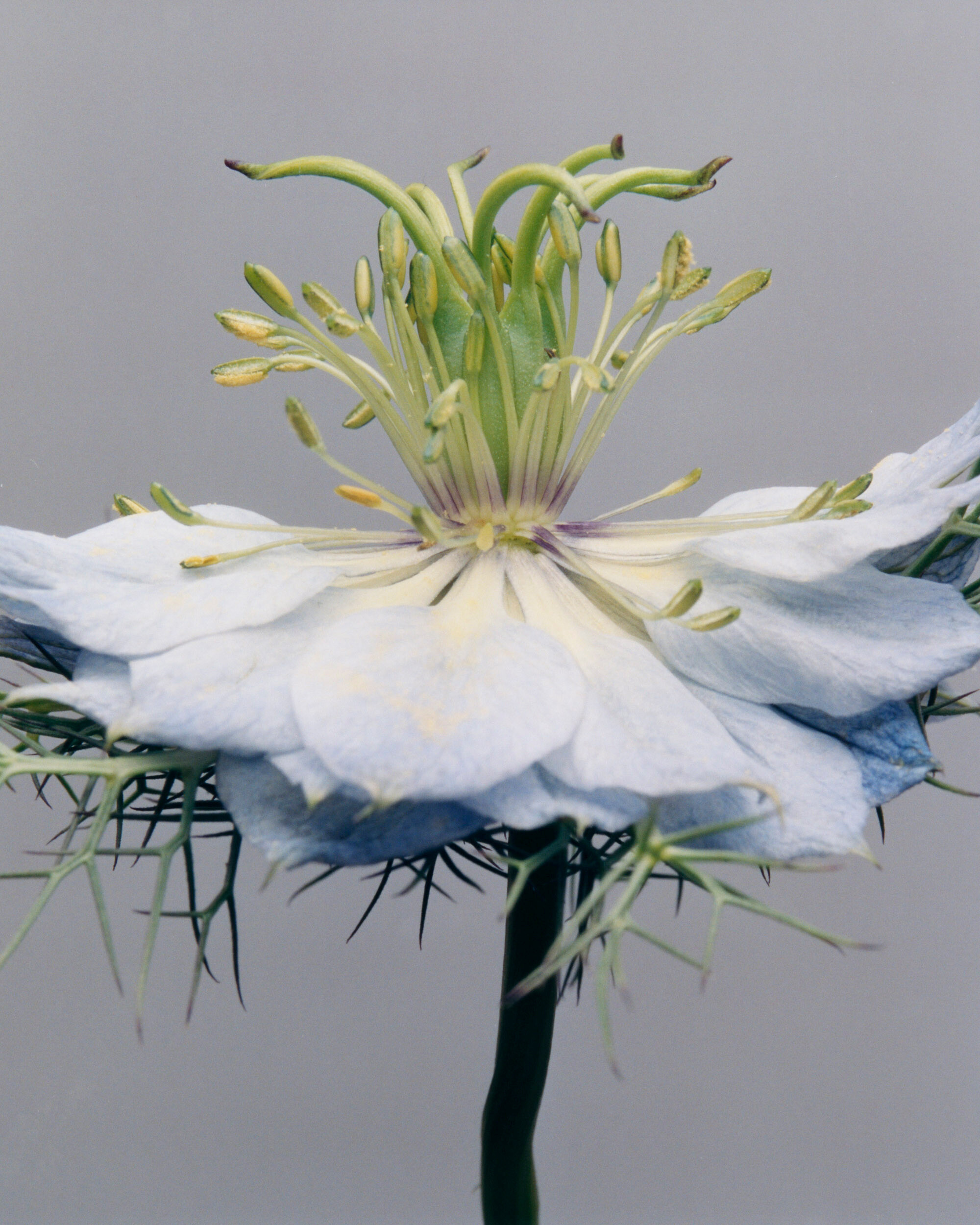
Photograph by Charles Negre
To never miss an episode of The Nature Of, be sure to follow here.
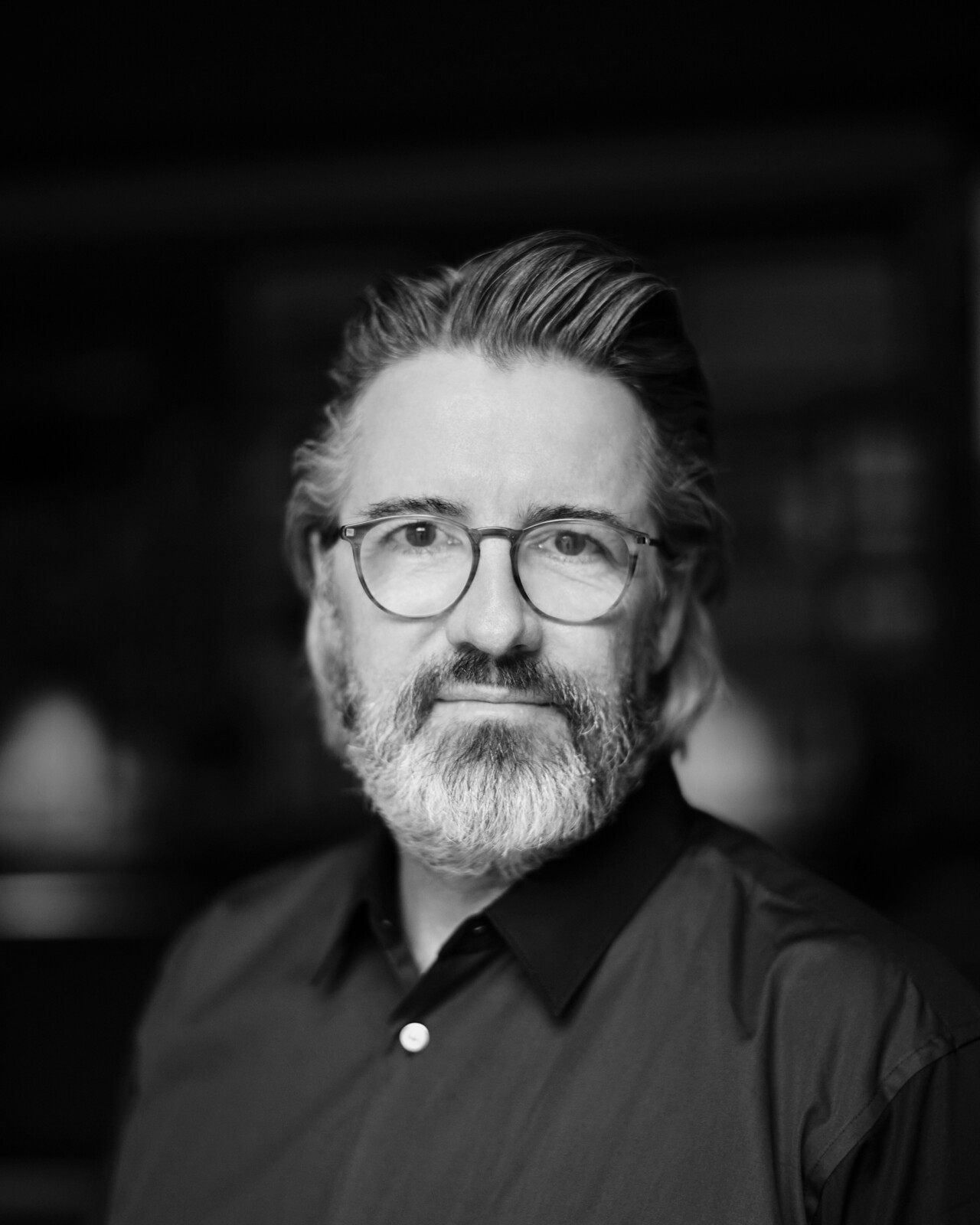
How can getting in touch with our senses help us reconnect with the world around us? Nature has shaped the work of artist Olafur Eliasson for decades. From glowing suns indoors to melting glaciers in city streets, his installations invite us to see what we’ve been blind to. In this episode, Willow and Olafur explore how art can reach beyond language, allowing us to feel what is often too vast or abstract to grasp. They consider the ways art can help us see the world in new dimensions—and feel seen in return.
The works of Icelandic-Danish artist Olafur Eliasson (b. 1967) explore the relevance of art in the world at large. Since 1997, his wide-ranging solo shows— featuring installations, paintings, sculptures, photography, and film—have appeared in major museums around the globe. His art is driven by his interests in perception, movement, embodied experience, and feelings of self and community.
Eliasson is internationally-renowned for his public installations that challenge the way we perceive and co-create our environments. In 2003, he made The Weather Project, a glowing indoor sun shrouded in mist at Tate Modern’s Turbine Hall in London. In 2008, Eliasson constructed four expansive artificial waterfalls along the Manhattan and Brooklyn shorelines for The New York City Waterfalls. He has also explored art’s potential to address climate change: for Ice Watch, he brought large blocks of free-floating glacial ice to the city centers of Copenhagen in 2014, Paris in 2015, and London in 2018. Passers-by could touch fragments of the Greenlandic glacial ice and witness its fragility as it disappeared before them. In 2019, Eliasson was named UNDP Goodwill Ambassador for climate action and the sustainable development goals. On the occasion of the 2020 German Presidency of the Council of the European Union, Eliasson created Earth Speakr together with children around the world and support from the German Federal Foreign Office; the global artwork invites kids to speak up for the planet.
Located in Berlin, Studio Olafur Eliasson comprises a large team of craftspeople, architects, archivists, researchers, administrators, cooks, art historians, and specialized technicians.
OLAFUR ELIASSON
We want to feel that we are safe. We want to feel that we are good enough. This feeling requires somebody or something to see us. Culture, as I see it, is one of the languages that can make you feel seen, met, and heard.
NARRATION
As a writer, I have spent years trying to help people reconnect with nature and feel what’s happening to the Earth through language. But some things are beyond words, and language can only carry us so far. That’s why I was so looking forward to speaking with this week’s guest, the illustrious artist, Olafur Eliasson.
Over the last few decades, Olafur has brought waterfalls to the Brooklyn Bridge, melting glacial ice to major cities, and even recreated the sun indoors. His art helps bring new perspective and even open our eyes to where we might have been blind.
OLAFUR
I need to unsee what I have been seeing all along. There’s nothing more inspiring than accepting that you have been blind.
Narration
I’m Willow Defebaugh, and this is The Nature Of, where we look to the nature of our world for wisdom and ideas that change the way we live. This week, I’m sitting down with Icelandic Danish artist Olafur Eliasson to talk about the power of art in helping us touch the intangible and letting ourselves be touched in return.
WILLOW DEFEBAUGH
I’m a huge admirer of your work and so honored to have you on the show, so thank you.
Olafur
Thank you, Willow. And thank you for having me here on this podcast.
Willow
You’ve spoken about how growing up between Denmark and Iceland really influenced you in terms of seeing the landscape up close, seeing our changing planet up close. When I think about Iceland in particular, the landscape is so elemental and so dynamic. I’m curious as a starting point, if you can speak a little bit to how that shaped the relationship between creativity and the natural world for you.
Olafur
I was born in Denmark by Icelandic parents. They were very young. I was sent off to Iceland to be with my grandparents whenever there was a chance, and that means summers, maybe Christmas, Easter holiday. It meant that I spent a considerable amount of time being slow.
One of my earliest memories that I have is that I was at my grandparents’ house. It was—must have been ’72, ’73, where there was an oil crisis. Every night, I believe it was maybe after dinner or 7 or 8 o’clock, there would be a big bell in the city, and then all this electricity of the city would be turned off to save electricity. Every night, I think it was every night.
When we heard the bell, we ran to the window. My grandparents lived a little bit on the periphery of the city, overlooking the city, overlooking the harbor in the city. There was this magic moment where all the lights would go off, over the whole city. But what was very special was that my grandmother typically would come with a candle then and we would sit by the window. We would look out the window into this very blue Icelandic light.
When we talk about nature, we often think about a mountain or a river or something. But in this case, the light that fell into the room was this incredibly blue, Arctic, summer, midnight sun. It wasn’t quite as north as midnight sun, but there was this very strange light. That was the city of Hafnarfjörður it’s called, and it was looking north.
You are looking up to the very big glacier called Snæfellsnes, which is actually not very big anymore, but it was then. That meant we were waiting for the sun to set and be behind Snæfellsnes. It had already gone down, but it would still, from underneath the horizon, be able to illuminate the glacier. This meant when it was exactly behind its scene from Hafnarfjörður it started to glow in this incredible red and yellow and burning colors.
If I have any really profound memories of Iceland, it was this connection between a social getting-together almost around a campfire, this candle there on the table, us running around, me and my cousins, waiting for the sun to be glowing up this glacier. I remember when I was in Denmark, after the summer, I always thought of that magic type of relationship with all these things that you somehow can’t see, but you can see if you make an effort, things that are invisible, but if you really look, you can see more than you think.
That was somehow maybe the beginning of how I got more and more involved with nature, simply also because my family or many families, when you don’t have money to travel abroad, which was expensive back then, you would go hiking and you would go camping, you would have a tent, you’d go fishing, you would do whatever the country allowed you to. My favorite spot in Iceland was a place called Landmannalaugar, which means the pools for the people from the nation or something.
To get there, you could do a shortcut and go through Dómadalur. In that Dómadalur, I noticed as a child, somebody had taken a Jeep and driven up the side of a mountain, through the moss, I mean, outside of the road. And then I got back the next year. Oh, it hasn’t changed. Then I came back 10 years later. I kept going back to the same place. If I go today, now it’s like a lifetime ago, right now it’s 50 years ago or something, the tracks are still there. So, talking about slowness, the particular kind of slowness that Arctic nature has, if you drive once over moss, it will basically take more than a lifetime for it to repair itself.
That made me a bit somehow conscious about the environment and to not fool around in it, certainly not drive across it, and the fragility, this very fine quality of the blue light and the way it changed when the sun hit the glacier, the very, very fine changes in environment when the weather changed a little bit, and the way the glaciers, they would actually be alive. It’s not just a chunk of ice. They’re constantly doing something. They’re talking to you, in a sense. Or the way that if you drive across moss, that moss is just gone. This is not going to come back.
I started thinking of Iceland not necessarily as nature, but as culture or nature culture, something that is actually, no matter what, already influenced or touched by human activities.
Willow
It’s such a beautiful story and a fitting symbol to start this conversation with, because what really struck me in what you were sharing was the parallels, I think, between ice and art in terms of reflecting the world back to us. And your art in particular, in terms of filtering and dealing with our perception of the world around us, it is changing. What jumped out to me was the tension between the slowness you’re describing of the living world in Iceland, and yet also compared to the rest of the world, with the climate crisis, how fast in many ways it’s changing with glacial melt.
How have you observed that tension and seen the landscape not change as you’ve recalled, but also change?
Olafur
I think I was only 23 or 24 when I heard the word “climate crisis” or the fact that there was something in nature which was relativized by human activities. I’m so old that I remember there was nature on one side and then culture on the other side, as I talked about before, and nature somehow was untouchable. It just was beyond what we could somehow influence.
When I walked and hiked when I was 18 or 16 or 20, when I hiked across Iceland, I was afraid of what I would do if there was a snowstorm suddenly. I was afraid for my life. I somehow learned to look at the clouds. I learned over the years to connect with nature, and in some way, I sensitized myself. I cultivated, simply because I had to, in a sense. When the river looks like this on the surface, I cannot walk across it, but over there, it looks like this on the surface, I could wade, take off my boots, and carry my backpack over there.
That somehow allowed for a degree of synchronizing that also had to do with time or slowness, because you develop a sensitivity, almost like a way of being defensive or to protect yourself. I was very lucky to develop this relationship with the slowness or relationship with a sensitivity. This climate psychologist who talks about the loss of this connection to nature being a collective trauma: Her name is Steffi Bednarek.
It’s not a traditional trauma that you have from a car accident when you’re a child or something like this. No, it’s more like a collective, a little bit like a legacy trauma from 100 or maybe 200 years ago, where we lost through modernity. The modernity took us away from nature. I find it very interesting that the inability to connect with nature is one of the challenges, as I said, we have around the climate and the climate crisis and the whole relationship with the environment. People are struggling to find the problem that they are facing within themselves.
When I started doing art, I wasn’t really sure what I was looking for, but I had a sense of, here is something that is invisible, but if I somehow work with it, I can make it visible.
Willow
I want to come back to what you were sharing around trauma, because I think about this quite a lot. When we experience a trauma, what often happens is the left and right sides of the brain stop talking to each other. The rational part and the feeling part say, “We can’t process this. We can’t deal with this.” It’s almost as if the trauma falls into the fissure in between.
So, trauma in many ways is a separation. I think more so than solving climate change like a problem, I think more about, how do we heal that trauma? How do we heal the trauma of separation? Part of why I was so excited to talk with you is because, as a writer, I try to use language to help people reconnect to the living world. And also, there’s a certain point in which language fails, where words fail. I’m really interested in this space where art and the visual arts can carry us further into that unspeakable place.
I’m wondering, do you think art can be what heals this trauma of separation?
Olafur
Seeing something that we can see is a little bit like sitting with the truth of something that has pain in it. Even if there is nothing we can do, we can still do something, and that is to sit with the truth. What I believe culture or a work of art can do, it can bring to your attention a need to face something that is an unmet need that you have. We really don’t like to address it. When we talk about climate, it triggers a sensation of maybe gradually it’s getting a degree of despair, fear, this is so overwhelming, I don’t know what to feel, even. I go about challenging the climate changes with numbness. Sensitizing myself is actually uncomfortable. I get too nervous. What is the unmet need here?
Evidently, we have a need to feel safe. We want to feel that we matter, and we want to feel that we are safe. We want to feel that we are good enough and that we are not a failure. This feeling requires somebody or something to see us, to see, meet, and hear what we have to say. Culture, as I see it, and now I’m generalizing a little bit, is one of the languages that can make you feel seen, met, and heard.
If you stand in front of, let’s say, a painting, you are involved in an art installation, you are participating, somehow it is engaging and importantly, it is embodied. It’s not a screen-based conversation. You are actually physically present. Let’s take an example. You stand in front of a painting, and you go, oh my god, I know that feeling. That is exactly what I was thinking about. That is exactly what I felt. That intuitively is what speaks to me. It is saying what I would have said if I had the words. I was just finding out how best to be present to that feeling that is in that painting. It is not me seeing the painting. It is the painting seeing me. It’s the book that is reading me back. It is me in the book. I’m reading a book about myself. It is the theater play that is me on the stage. That dance or that ballet, whatever, that street theater.
Culture has this capacity to actually touch something that’s deeper in you, that is something that you are working on. And questions can be asked that cannot be asked by politicians or by completely cognitive environments. We can talk about things that would not be easy to talk about outside of cultural institutions. Cultural institutions are generally more inclusive and more pluralistic. You can stand in front of the painting before, and I stand next to you, and I say, oh my god, that blue color. And then you say, I really don’t connect with that blue. And I look at you and say, my god, that’s interesting.
Imagine now if this were politics in America, for instance, or if it were two British football teams. What? Liverpool? Oh my god, let’s get into a fight. It’s so ridiculous that there’s actually not a lot of spaces left where being different is actually an asset, diversity. There is a lot of, I think, trust around culture in its ability to reflect something that I’ve been working on dealing with, and I haven’t gotten around to it yet.
Willow
You brought in the word embodiment or embodied, which I really appreciated because I think in so many ways that is an antidote to the numbness and the dissociation that often comes with trauma, right?
OLAFUR
Mm.
Willow
The first work of yours that I saw in person was Riverbed in New York. I remember having this feeling of seeing this ecosystem, but in the context of a space that was so unnatural. It brought me into my body in a way that helped me to move, move forward, to feel, to process. Of course, there’s so many questions around, what comes after that? How does that turn into action? But I think that that is deeply valuable.
I loved what you said around safety, because most people don’t actually have the luxury of safety to process the news or, now, what they’re scrolling through on their phones. And I’m curious, is that something that you are thinking about often and consciously while you are creating your works is, how can I make this a space that is safe for people to engage with something that is so ineffable?
OLAFUR
I think a safe space is not safe in the way that it’s defensive. It keeps everything out. It’s not safe. It is safe in the sense that it sets you free to express your needs and your boundaries, and it gives you an opportunity to feel that being honest about your uncertainty is a strength. It holds the possibility of you saying, I don’t know what to do. That is my strongest sensation and statement I can give right now.
That I find very fascinating, because there is a macho operating system that seems to be the manual to everything in success, that has to do with if you don’t come across as a champion of something, if you’re not fast, and if you’re not always punching your fist in the table and telling everyone to do so and so, and being dominating or mansplaining—the opportunity here I think lies in, let’s just think of a different system altogether.
Who was on your podcast also? Wasn’t it Robin Wall Kimmerer, who I think talked about the Indigenous traditions in various forms, to not talk about it, but to talk about who when it comes down to our relationship with the world. We in the Western world, we would say, I come from that world, you say, “What is that tree? That tree, mm, nice. That’s definitely 100 kilo of wood. What could I use it for?”
That’s what I say—”What can I use it for?”—where Robin Wall Kimmerer, she would say, “Who are you to the tree?” That’s interesting. I’m like, wow, am I missing something here? Then she said, “What can I learn from you?” And I, of course, got so touched when I heard this for the first time as to, oh my god, it’s not about the tree, it’s about me being blind.
When it comes to being safe, it also has to do with changing the lens and to accept being blurred, for instance. In an exhibition in Switzerland, one of the lenses was the way we think a dog sees things. One was a bat, one was a spider, one was—there was this more-than-human way of looking at it. The more-than-human, of course, it’s a thing now because we are talking about giving rights of personhood to more-than-human. We are generally shifting on understanding. Can a mountain, can a tree, can a river, the river Ganges in India, for instance, can they have rights?
ClientEarth, who I hosted only a couple of weeks ago here at my place in Berlin where they’re opening up a new office, they’re from London, they helped the air of London suing the city of London for pollutants, and they won. They won the case because there was too much in the air that was not allowed to be there. They represented the air in court.
The rights of personhood is also happening, of course, in theory, a lot of the theory is drawing resources from Indigenous systems of thinking, learning from them, acknowledging the incredible resourceful material that is there. It’s fantastic how we are given the opportunity from reconsidering our lens. I need to unsee what I have been seeing all along. There’s nothing more inspiring than accepting that you have been blind.
Willow
There is nothing more inspiring than accepting that you have been blind. I couldn’t agree more. There’s a participatory element to a number of your works. I’m thinking about “The Weather Project,” and people spelling things with their bodies, and your piece that you were just talking about, “Life,” the one in Switzerland. You actually had the whole facade of the space opened up so the more-than-human world could come in and be actually part of the exhibition, right?
OLAFUR
Yes, and thanks for bringing it up again. Yeah. I offered the blurring of the inside and the outside of the show. There’s a lake outside, a small pond, actually, out in the garden. I thought, why don’t we raise the level of it? What if it would start flooding the gallery? We have to take the artworks out and then somehow take the facade off. I called the architect: “Can I take out the facade? This shouldn’t be too much of a problem, should it?” “Yeah, as long as you put on the facade again afterwards.”
In that way, we transformed—I really spent a lot of time on looking at the museum as a structure. “The Weather Project” riffed a little bit off the fact that everybody in London is like, “… It’s very cold today.” “Yeah, it’s going to snow tomorrow.” The weather is the shared nature in a city. You don’t have any nature left, but the weather is what we have in common. This is our collective space.
“The Weather Project” somehow offered some kind of experience that was referred to as a natural experience. There was this sense of, oh, we have to go and see that, and then of collectivity, community. I can lay down and do something completely crazy. Somebody brought the canoe, and they were sailing around on the floor at the Tate. Some people came in a group and did yoga. Some people spelled out things, and they went, “Bush, go home.” because he was visiting in London. There was all these different activities that it opened up for.
The museum had to start—they had to embrace the fact that people were misbehaving according to the normative of how you behave when you’re in a museum. You don’t lay on the floor. The fire marshal had to go around and say, “You cannot lay on the floor. Imagine if the building burns and then everybody’s running, and then you’re laying on the floor. They’re going to fall.” So, it also exposed the hidden power structures that every institution evidently has. We don’t think about it, because we are cultivated into—you don’t bring your guitar and sit in the middle of a Goya show and play guitar because it’s inspiring to you.
Maybe there is an opportunity in certain types of exhibitions. Maybe there’s an opportunity in reconsidering the agency that the institutes or the spaces that culture lives in. Maybe they are also restraining. Maybe one can actually reconsider what are the best platforms for culture to do its stuff. This is why I’m always interested in being outside on the street. There’s a great space of the model: being in nature, in fact.
Willow
I love that it exposed the power structures of this institution, but through play and experimentation, and also reconnection with nature. But I think there’s this idea of the safe space also being something that’s not trying to lead someone to an outcome, but rather be a container where people can play and arrive at their own experience or conclusion.
I wanted to end by talking about “Ice Watch.” You actually brought melting glaciers to people in major cities to witness. I was wondering, did that feel full circle to you in a way, given what we were talking about with your relationship to Arctic landscapes and being able to bring that into places where people wouldn’t necessarily see it up close?
OLAFUR
To make a long story short, we got a permit from the UN, from the city of Paris, and from everyone to do this “Ice Watch.” It seemed good. And then there was this terror attacks. There was this shooting in the nightclub, and everything stood still. I was so impressed with the fact that after this terror attack, the commitment to climate was still there.
The idea was, here you can touch the data that is being talked about, and it is literally melting in front of you. And not only you can touch it, you can always be touched by it. It was blue, there was small air bubbles inside. The pressure of this enormous glacier in Greenland had pressured the bubbles of air from 20,000 years ago, pressured it together, so when the bubble comes as the ice was melting close to the surface, it pops. “Pop!” it says. When you get really close to the ice, you hear the “Pop, pop, pop.”
That’s the popping of the air from 20,000 years ago that’s been stuck in the ice, and it’s actually that air. You can sniff up the air from 20,000 years ago, or you can just put your ear to it and give it a hug, and you can get a nice hug back from 20,000 years ago.
What I’m saying is that it is actually quite literally touching. It is very moving, you could also say. And of course, it’s melting right in front of you. Next day you come back, if you do, it’s half the size. It’s not half, but it’s very much smaller. It takes about a week, then a chunk the size of a car is gone. Now, it’s just gone. Now, that’s … under Paris, in the sewers.
In terms of fantasy, imagination, dreams, having some contact with what is on the outside, on the periphery of the rational world, believing in something, having higher hopes than what you can actually explain, giving yourself to things that are about dreaming and daring and having courage to actually be strong enough to ask for help, to show your vulnerabilities, to be honest, this I think is what the project actually is about. Humanizing or re-humanizing what it means to be present to each other and to the eyes, of course.
In the midst of these times in which we live, there are great things happening. I am going to be as committed as I can to participating. There are great people doing a lot, but are we meeting our targets? No, we are not. Are we showing up at the right time, at the right place, at the right thing? No, we are not. Is it working? No, it’s not.
It is not looking good, but to be a part of something is better than be not a part of something. Being a part of a movement is to begin with maybe a good answer.
Willow
Yes. I think I speak for so many people listening when I say thank you for creating a space for people to touch and be touched by things that feel so massive in scale and hard to grasp. Thank you for this conversation. It’s a real gift.
Narration
At the end of each episode, you often hear me recommend that you go outside and go for a walk in the woods, but this week I’m going to suggest that you find your local museum instead. Our world is changing impossibly fast, and it can feel really difficult to catch up, but wherever there are people, there are artists creating the space for us to get in touch with our feelings and discover new perspectives on our world in transition.
To check out the specific works Olafur and I talked about in this week’s episode, head to our show notes.
The Nature Of is an Atmos podcast produced by Jesse Baker and Eric Nuzum of Magnificent Noise. Our production staff includes Emmanuel Hapsis and Sabrina Farhi. Our sound designer is Kristen Mueller. Our executive producers are me, Willow Defebaugh, Theresa Perez, Jake Sargent, and Eric Nuzum. Atmos is a nonprofit that seeks to re-enchant people with our shared humanity and the Earth through creative storytelling.
To support our work or this podcast, see our show notes or visit atmos.earth/biome. That’s A-T-M-O-S.earth/B-I-O-M-E. I’m your host, Willow Defebaugh, and this is The Nature Of.
Join our membership community. Support our work, receive a complimentary subscription to Atmos Magazine, and more.
Artist Olafur Eliasson on Seeing What We’ve Been Blind To