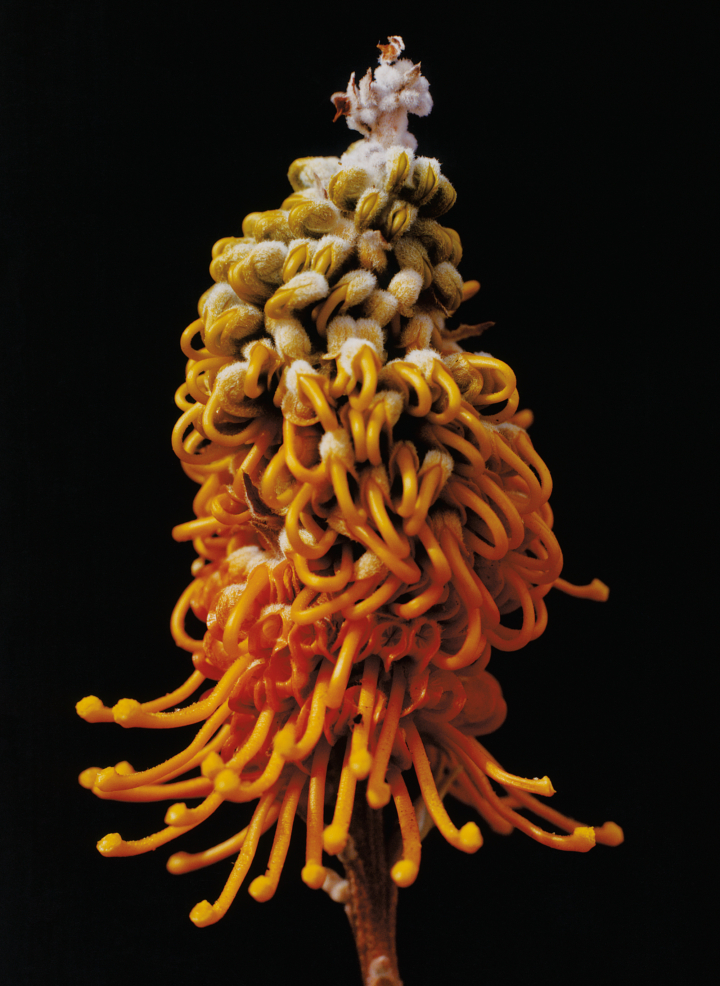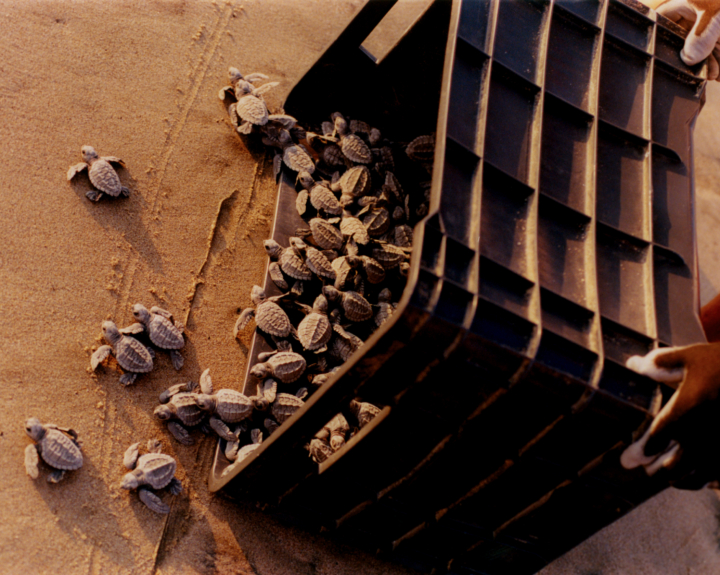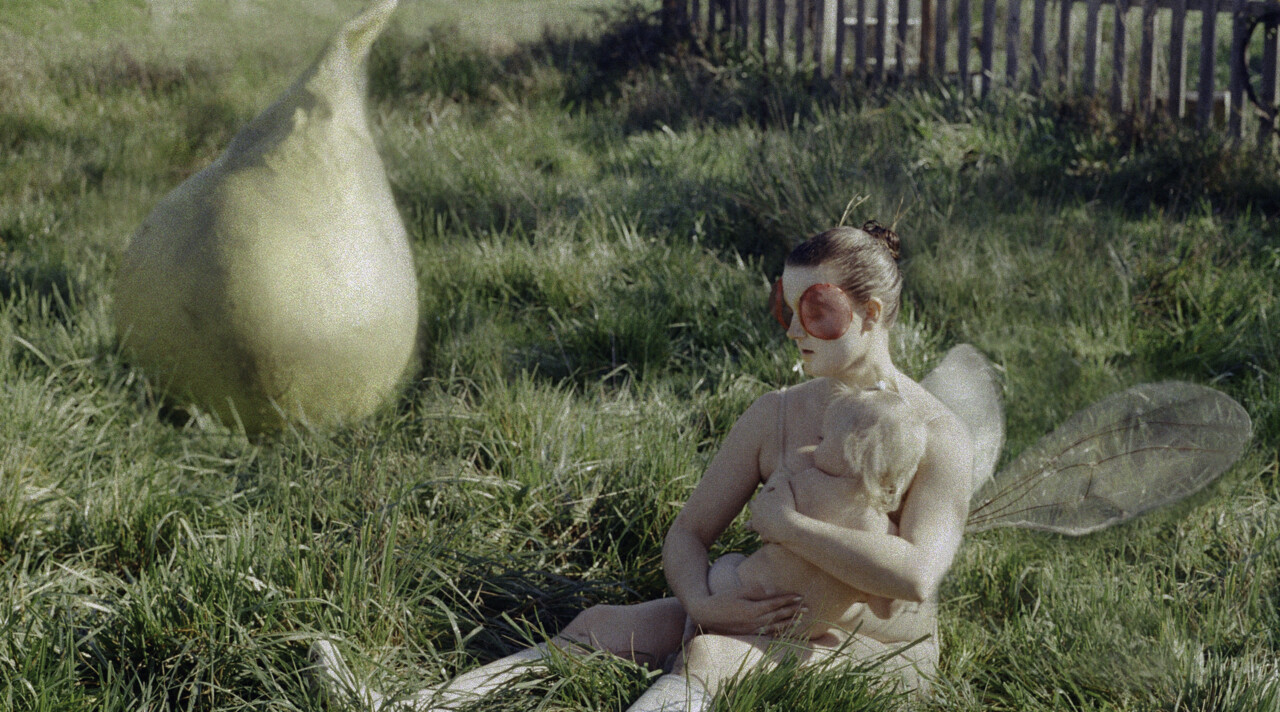
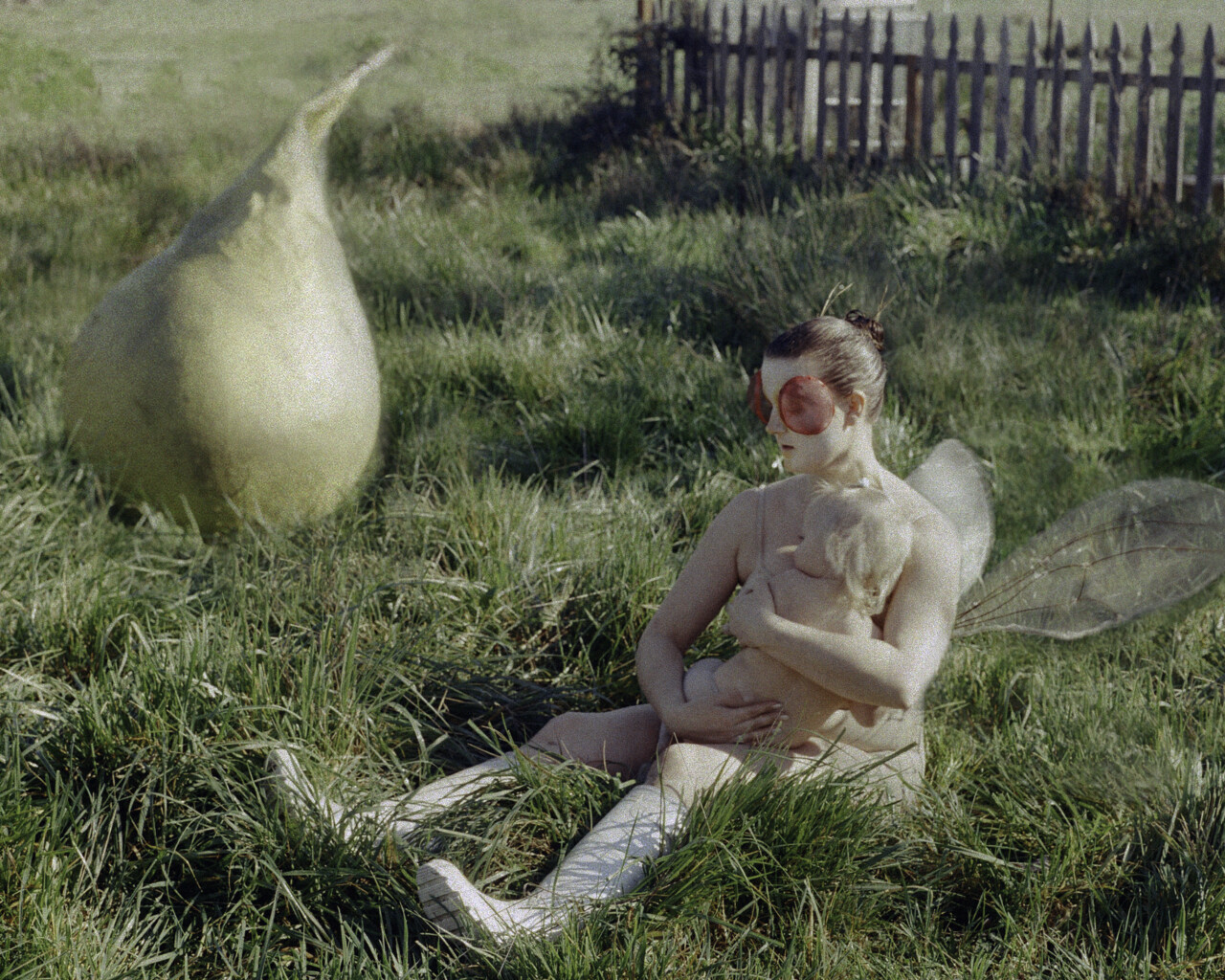
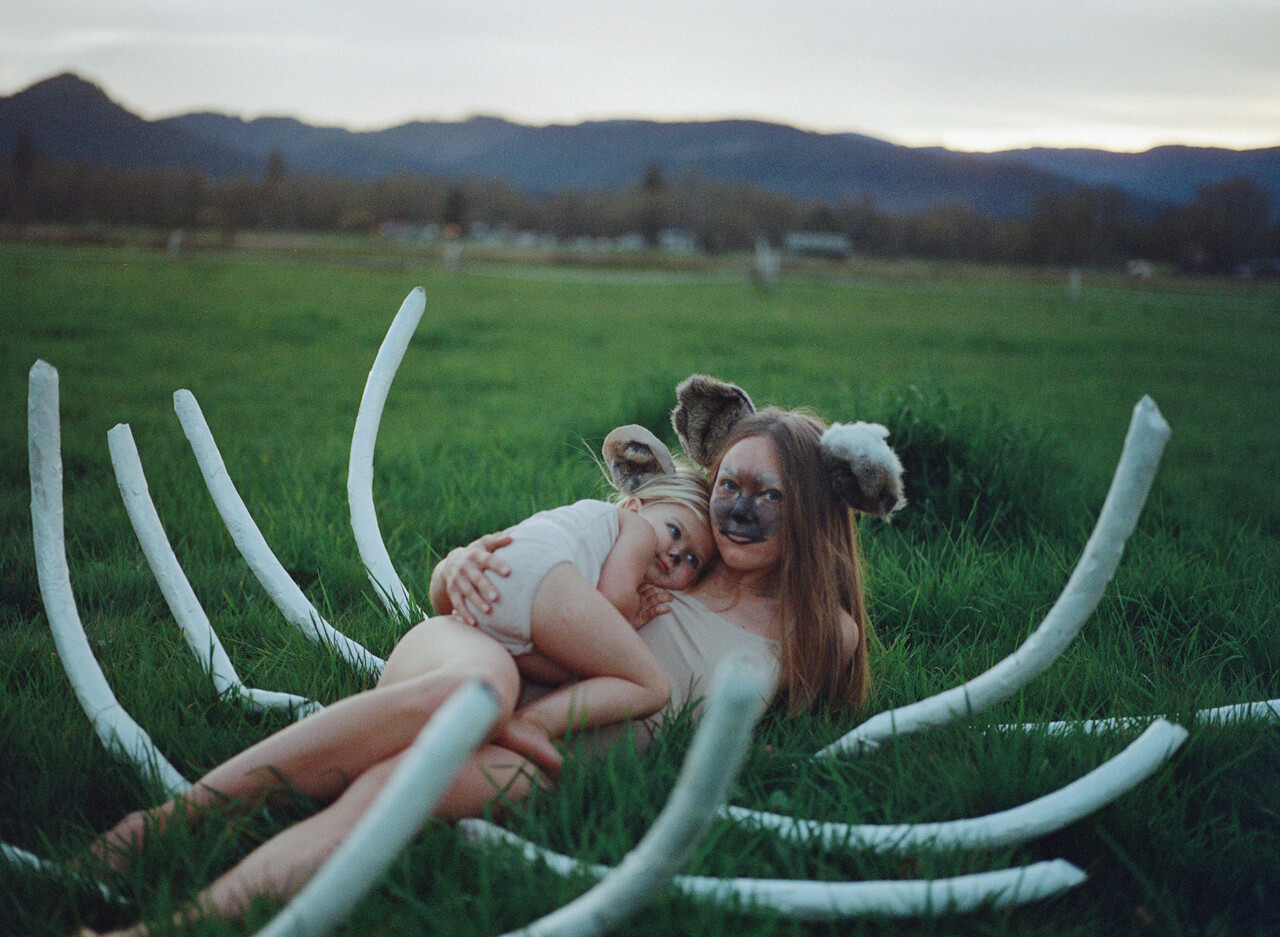
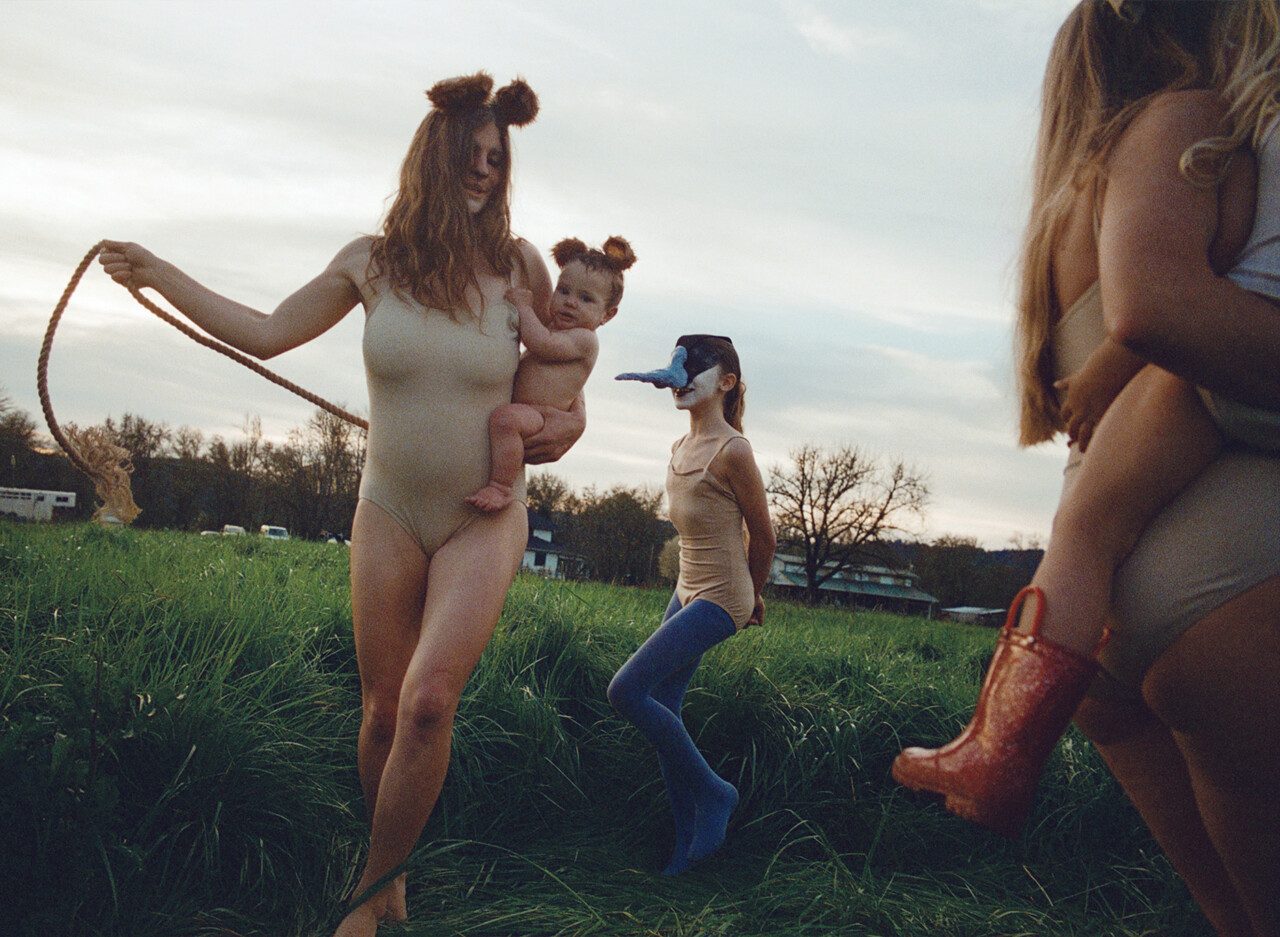
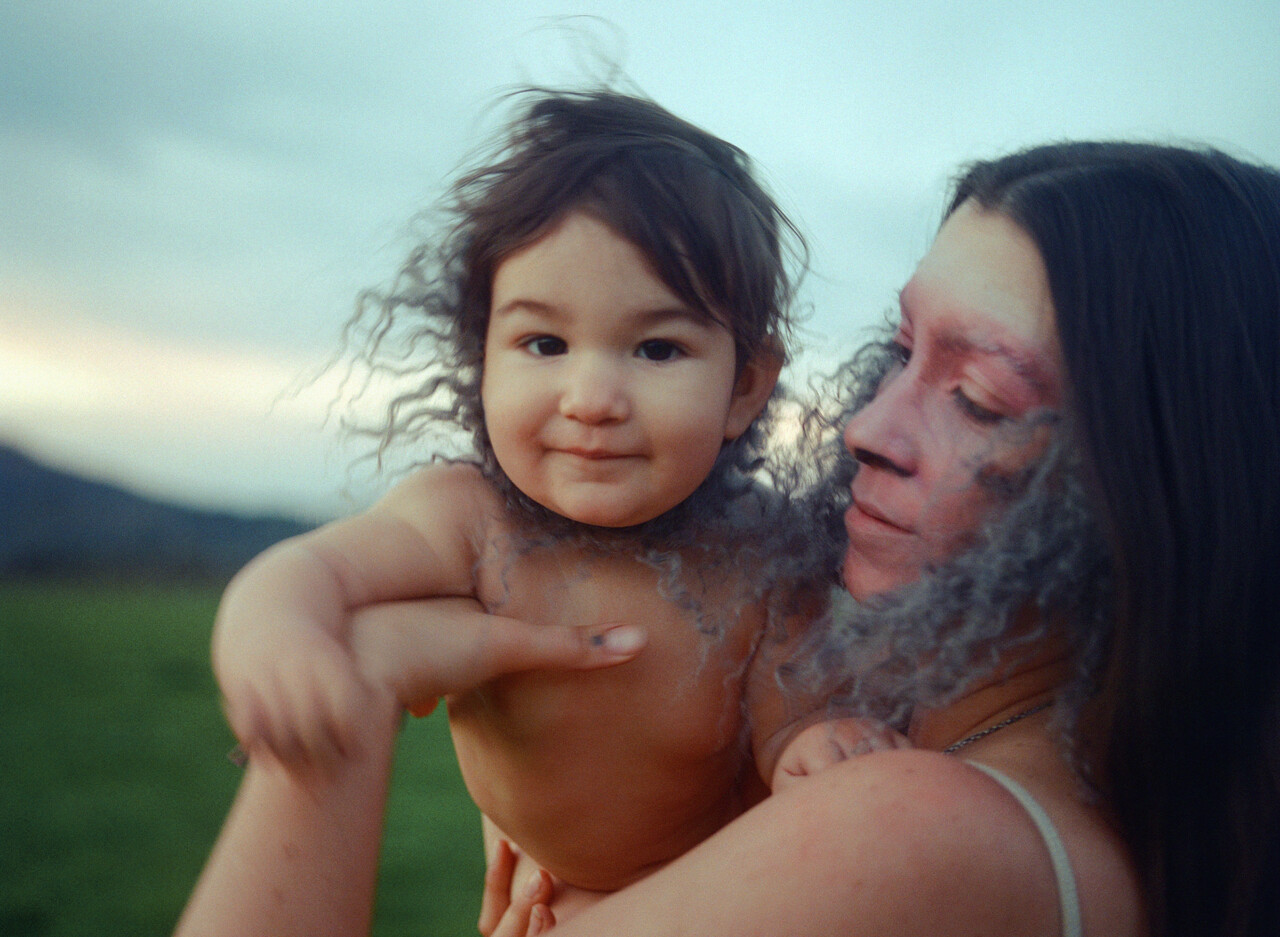

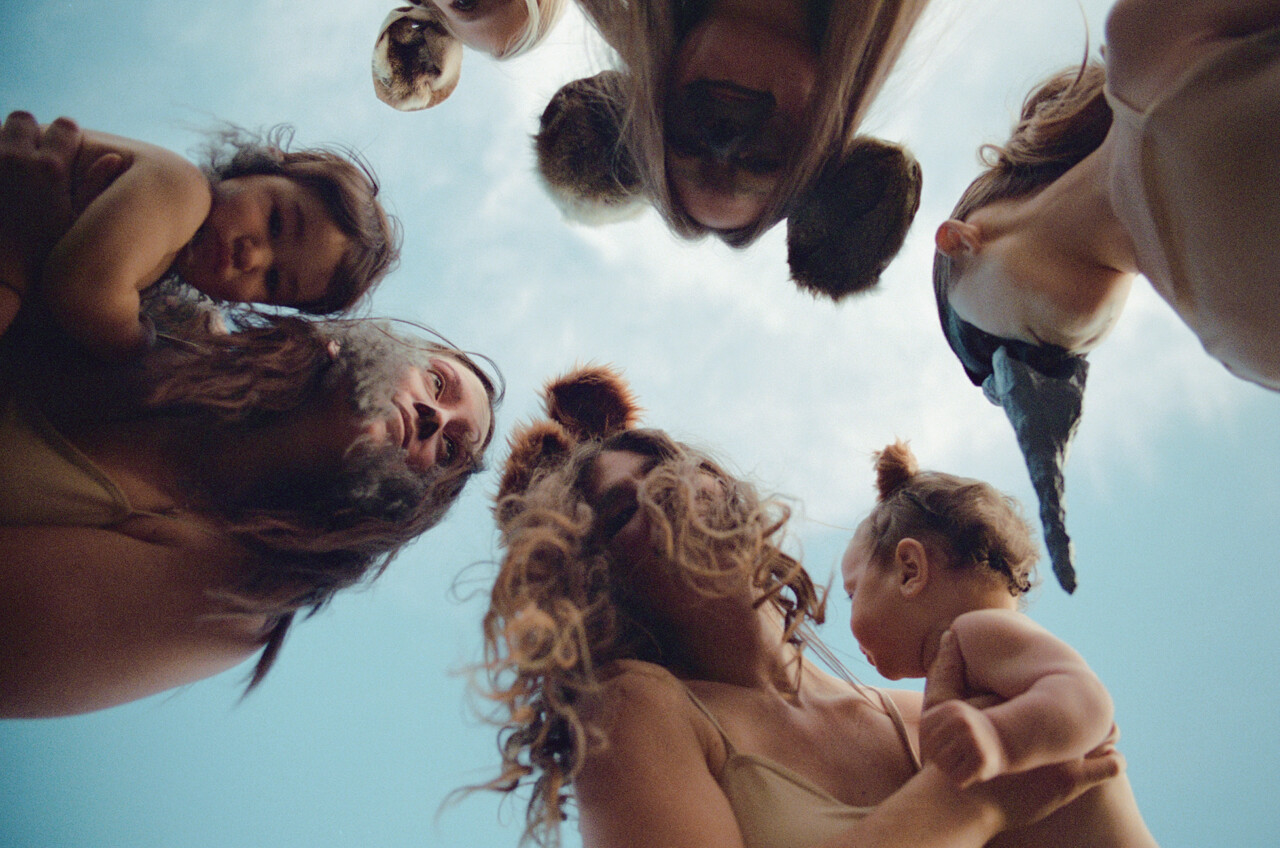
These images were commissioned by Atmos for this story.
Words by Ambika Kamath and Melina Packer
photographs by olivia bee
Ambika Kamath and Melina Packer are the authors of Feminism in the Wild, which examines how scientists have historically projected human social norms onto animal behavior and how science can escape those binds by embracing subjectivity and opening itself up to diverse perspectives.
Like so many stories we tell about the natural world, this one begins with Charles Darwin. But unlike many stories that begin with Darwin, this tale leads our scientific understanding of sex and gender—which for so long has been filtered through human assumptions about “male” and “female” behavior—somewhere new.
In the late 1800s, as Darwin developed his theories of how organisms are shaped by processes of natural and sexual selection, he made strong pronouncements about how males and females behave during reproduction. He argued that males are “eager” to mate, each attempting to reproduce with as many females as possible. That’s why, Darwin claimed, peacocks fan their tails and stags lock antlers in public performances of “masculinity,” while females, he insisted, are “coy,” choosing carefully among males to help ensure they mate only with the best.
In the 1940s, the botanist Angus Bateman set out to test Darwin’s sweeping claims about male and female mating behavior, using fruit flies. By tracking physical characteristics linked to genetic mutations, Bateman’s experiment would count how many mates each fly had and how many offspring resulted. He predicted that males who mated with more females would produce more offspring, while females who mated with multiple males would not have more offspring (compared to females who mated with just one male). Results matching these predictions would let Bateman conclude that males benefit evolutionarily from mating with multiple females, whereas females benefit evolutionarily from mating with just one male.
But Bateman’s data were uneven. Inexplicably, instead of plotting all his data on a single graph, Bateman split his results into two separate graphs. Only the second of Bateman’s two graphs conformed to Darwin’s predictions and confirmed the botanist’s own hypothesis. Ignoring the first graph and focusing on the second, Bateman concluded that promiscuity pays off for males, but not females. Furthermore, he declared that these results applied to all animals, not just to the fruit flies in his experiment, writing, for instance, that “there is nearly always a combination of an undiscriminating eagerness in the males and a discriminating passivity in the females.”
Bateman’s paper languished in near-obscurity until 1972, when evolutionary biologist Robert Trivers brought renewed attention to that second graph, once again ignoring the first. Upon such shaky foundations, Trivers built an entire theory of sexual dynamics that further reinforced the notion that male and female animals conform to Victorian-era gender norms. Trivers’ claims caught on quickly, legitimizing decades of research on sexual behavior in animals and humans that took patriarchal stereotypes as a given. When asked much later why he focused on the second and not the first of Bateman’s graphs, Trivers reportedly admitted “unashamedly that it was pure bias.”
Has the scientific process, often described as “self-correcting,” since eradicated this patriarchal bias from our understanding of animal sex? In some ways, yes. In most ways, no.
“When those influences go unexamined, science can end up reaffirming—rather than questioning—the perspectives of the powerful.”
In the years that followed, a group of biologists, most of whom identified as feminist, strongly rejected what came to be known as Bateman’s Principles, which are based upon this notion that males benefit evolutionarily from having multiple mating partners, but not so for females. Feminist biologists pointed out the “close conformity between [Bateman’s principles] and post-Victorian popular prejudice.” Equally importantly, they brought evidence. Across the animal world, females are not consistently coy or passive. Lionesses mate 100 times a day while sexually receptive, female baboons and chimpanzees regularly initiate courtship with males, and female fish seek out copulations with multiple males long before they are fertile, storing sperm for eventual fertilization.
The pattern repeats elsewhere. Among spotted hyenas, females are socially dominant and compete aggressively for mates. Among jacanas, a tropical shorebird, females might mate with several males and leave the males to incubate the eggs and rear the chicks. In many pipefish and seahorses, it is males who brood the young, and females who appear to compete for access to them. Even among insects, from crickets to beetles, females often mate with multiple males.
Bateman’s fruit fly experiment was revisited in the early 2000s by evolutionary biologist Patty Gowaty and her colleagues. Attempting to replicate it, they uncovered not just his baffling decision to split the data into two separate graphs and focus on the one that fit Darwin’s expectations, but also a slew of other methodological flaws and outright errors. Taken together, they concluded, Bateman’s results were unreliable and could not support the sweeping generalizations built upon them.
But despite decades of critique and ample evidence to the contrary, the science of animal sex remains tethered to some of its founding assumptions. Consider the 2019 edition of Animal Behavior, a well-regarded textbook. The section “Sex Differences in Reproductive Behavior” opens with the question: “Why is it more common for males to do the courting, and females to do the choosing?” The premise goes largely unexamined. Do we actually know that it is “more common”? And if not, why do we think it is?
This textbook also largely dismisses Gowaty and colleagues’ work. While acknowledging that Bateman’s experiment could not be reproduced with the same results, the book’s authors quickly minimize the implications: “Although this team was unable to replicate Bateman’s results, their findings do not eliminate the important principle that Bateman outlined.”
Where does this entanglement of science and patriarchal ideals come from—and why does it persist so stubbornly?
Modern science derives largely from the worldviews of elite European and Anglo-American men during the height of empire, the transatlantic slave trade, and colonial expansion. The assumptions held by powerful white men of that era—that men are superior to women, that the “white race” is more advanced than all others, and that nature is a resource from which commodities must be extracted—inevitably seeped into scientific frameworks.
“Noticing, and then challenging, the human assumptions that permeate all sciences not only strengthens our understanding of the natural world, but also does the urgent work of repairing our social relations with one another.”
Charles Darwin’s own writing makes this context visible. In The Descent of Man and Selection in Relation to Sex, first published in 1871, he expresses preference for “a heroic little monkey, who braved his dreaded enemy in order to save the life of his keeper,” which he compares with “a savage who delights to torture his enemies, offers up bloody sacrifices, practices infanticide without remorse, treats his wives like slaves, knows no decency, and is haunted by the grossest superstitions.” Darwin’s racist description of the behavior of “a savage” is consistent with notions of European superiority prevalent in Darwin’s social and political milieu; one can imagine the “savage” in question describing their own society, not to mention European society, quite differently. But by virtue of being mentioned in a scientific text, blatantly racist and empirically unfounded perspectives like this one became part of the scientific enterprise.
And yet, elite European scientists asserted their method was the superior way of knowing precisely because it supposedly produced neutral, incontrovertible facts. That claim of objectivity has made it easier to overlook how scientific knowledge is shaped by the social, political, and historical worlds of the people producing it. When those influences go unexamined, science can end up reaffirming—rather than questioning—the perspectives of the powerful.
In 2013, behavioral ecologists Hanna Kokko and Johanna Mappes developed a theory that fundamentally undermined Bateman’s principles by changing a pivotal assumption. Darwin, Bateman, and Trivers all presumed that females effectively decide in advance how many males they will mate with, surveilling a field of suitors before choosing the male deemed best. Kokko and Mappes started elsewhere. Most female animals, they argued, do not encounter all possible mates at once. They meet males sequentially and must make case-by-case decisions about whether or not to mate.
It’s the difference between attending a Victorian ball with all eligible bachelors in attendance and swiping right or left on potential partners on Tinder before moving on to the next contender. In a simple mathematical model, Kokko and Mappes demonstrated that when a female makes these sequential mating decisions, it becomes too risky to be choosy. A female who rejects too many males may end up never reproducing at all—a far greater evolutionary cost than mating more than once. Under these conditions, mating with multiple males is in fact far more likely to be the sensible default, and not a deviation or transgression.
Examples like these—some unassuming and implicitly radical, others explicitly resisting the ways in which science has “naturalize[d] our social conventions”—suggest a way forward. We can start to see our way out of entanglements between science and systems of oppression. Noticing, and then challenging, the human assumptions that permeate all sciences not only strengthens our understanding of the natural world, but also does the urgent work of repairing our social relations with one another.
Editor’s Note: This story is adapted from Feminism in the Wild: How Human Biases Shape Our Understanding of Animal Behavior, published by The MIT Press.
Join our membership community. Support our work, receive a complimentary subscription to Atmos Magazine, and more.
How Gender Stereotypes Got Written Into Evolution