Photograph by SPENCER LOWELL / Trunk Archive
words by miranda green
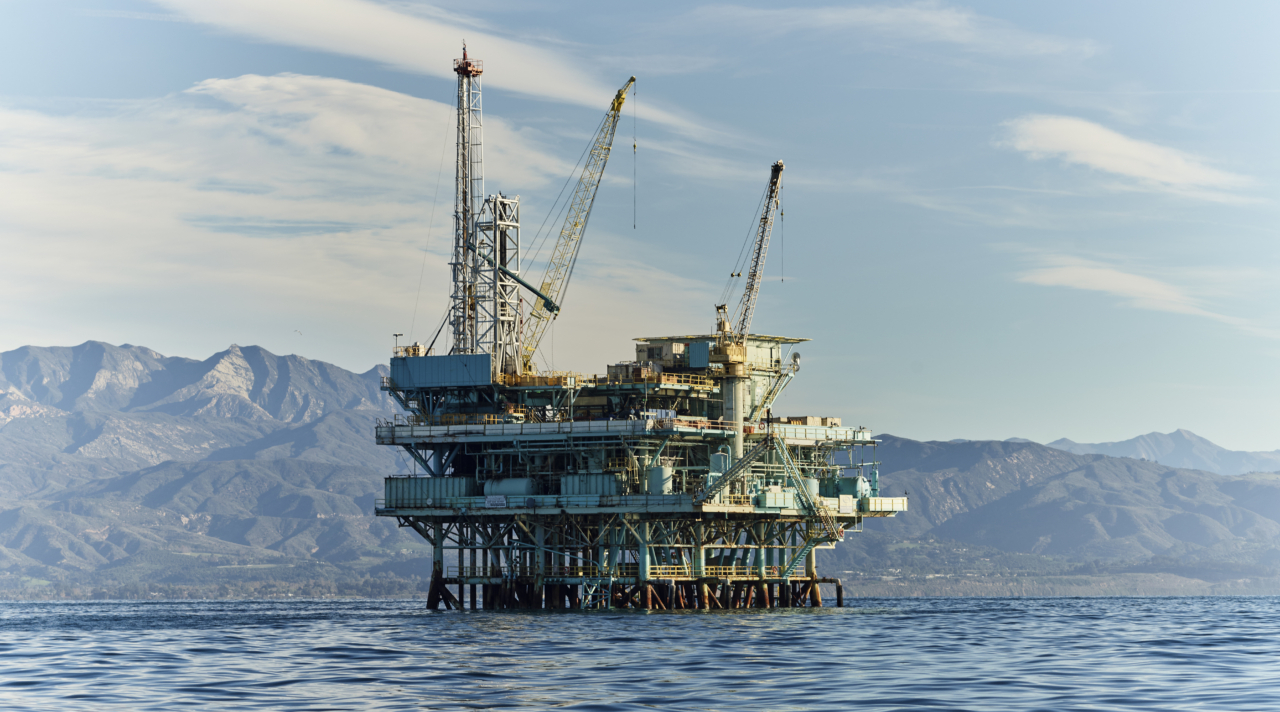
The first offshore oil rig in the United States was built in the late 19th century, about 5 miles off the coast of a southern California town aptly named Summerland. It was also there that the first major oil spill disaster occurred in U.S. history.
In 1969, a buildup of pressure caused roughly 3 million gallons of crude oil to erupt into the Pacific Ocean in Santa Barbara County, home to sandpipers, sea kelp, sea lions, and bright orange Garibaldi fish.
The disaster inspired the first national Earth Day and galvanized today’s modern environmental movement. Not long after the spill, the California State Lands Commission put a temporary moratorium on new offshore oil and gas leasing in state waters, and drilling slowed down. While leases granted before 1969 continue to bring in revenue for the state, the federal government has not held lease sales off the Pacific Coast since the late 1980s.
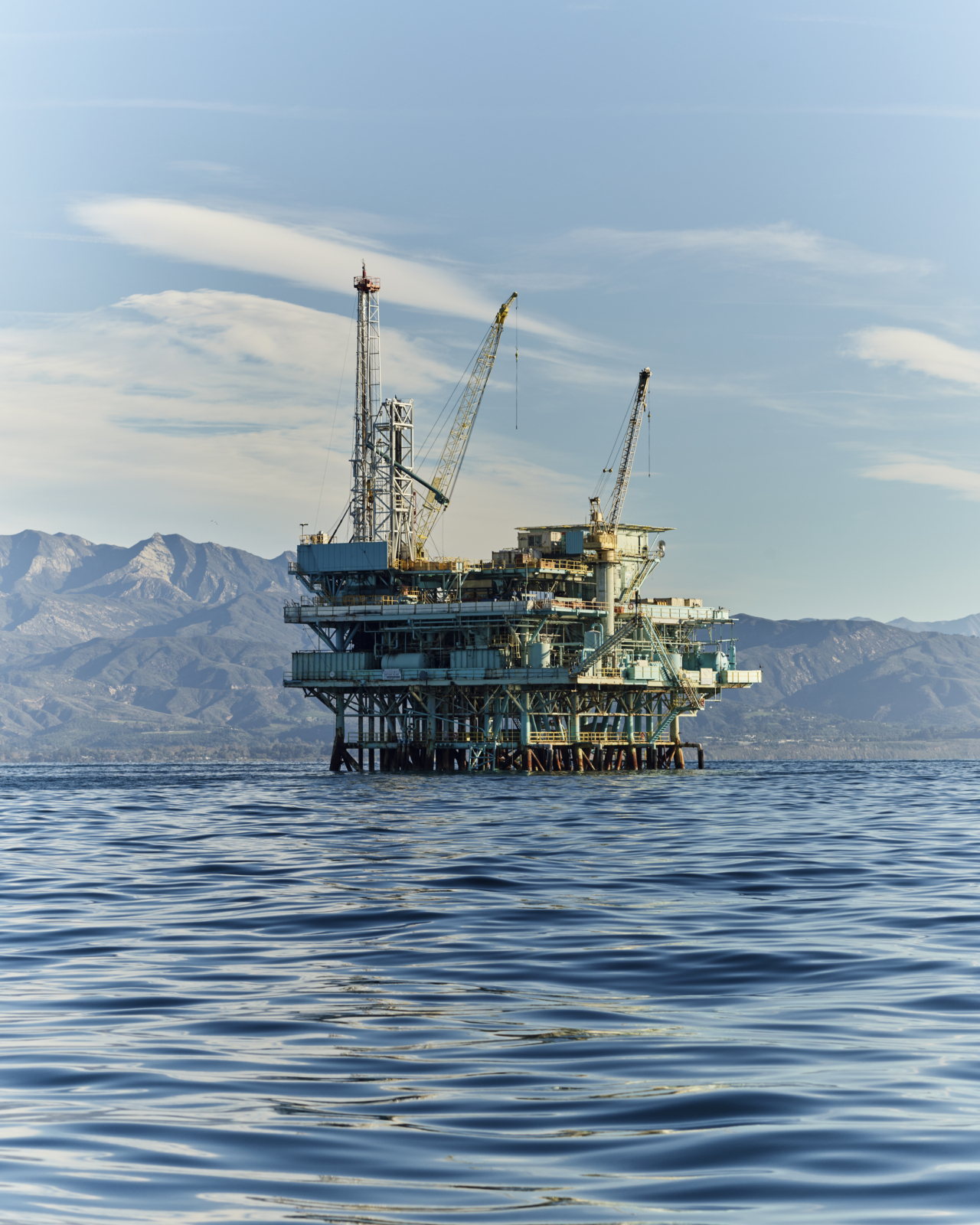
I grew up in Santa Barbara, where having a bird’s-eye view of several offshore oil rigs was both somewhat whimsical and deeply frustrating.
If you didn’t know better, the rigs looked like big fishing ships. Local kids knew to look out for an optical illusion visible from a car driving up the 101 freeway at night: One of the platforms looked like a glowing Santa’s sleigh, taking off from a pier on its way to bring children toys.
We also knew the rigs released tar: thick globs of black goo that washed up on beaches, mixing with sea glass and sticking to the soles of your feet. Later, residents discovered how devastating the emissions released by the rigs while drilling—and when oil and gas were burned—could be. Santa Barbara has experienced 15 major wildfires since 2009 and one post-fire mudflow that killed 23 people, highlighting the impacts of climate-change-fueled disasters. My parents were evacuated because of two of the fires. The mudflow was the first disaster I ever covered as a reporter.
Today, just 11 of the original 60 rigs remain operating in state waters, while 22 rigs drill on the outer continental shelf by the federal government. Of those, nine offshore rigs are currently in the process of being decommissioned. It makes sense why California would not want a repeat of its past when the worst-case scenarios have been so well documented, and are unfortunately still being reaped.
But as of last week, President Trump is looking to force California to reverse course.
The Interior Department released plans last Thursday to open new offshore drilling leases in federal waters off the coast of California for the first time in four decades. The proposal also includes setting up offshore rigs in Alaska’s remote High Arctic region for the first time, and expanding drilling in the eastern Gulf of Mexico—where locals don’t have to look far back in history to remember what an oil spill could do to their tourism and beaches.
Collectively, the plan would open about 1.27 billion acres to offshore drilling. Interior Secretary Doug Burgum called it a “robust, forward-thinking leasing plan.” It’s also an administrative act of doubling down. Trump’s “One Big Beautiful Bill” passed earlier this year with language that allows for six lease auctions off Alaska’s coast and 30 in the Gulf of Mexico over the next 10 to 15 years.
Ten state AGs already submitted comments to the Interior Department during the summer opposing any plan to increase offshore drilling, arguing it was too much of a risk to the marine and coastal ecosystems. Now, leaders from all three areas that are set to see renewed lease sales are crying foul—including Florida Republicans.
Florida Rep. Vern Buchanan told E&E News that a moratorium on drilling off the Sunshine State’s beaches was one of his top issues: “The reason being, is it affects not only the value of homes and real estate, it affects tourism and, more importantly, it’s just bad for the environment.”
As to be expected, this latest offshore drilling proposal—which would open six oil and gas auctions off California’s coast between 2026 and 2031—was not received well by California’s leaders.
“It’s never going to happen. Over our dead body. Dead on arrival. Period. Full stop,” California Gov. Gavin Newsom told reporters after a draft version of the plan leaked during COP30 earlier this month.
Newsom said of Trump: “He’s trying to re-create the 19th century.”
California Attorney General Rob Bonta—who some say might be jockeying to replace Newsom as governor when his term runs out in 2027—wrote in a statement following last week’s proposal that California is “not a rich man’s playground, and the president cannot come and extract resources as he pleases.”
It turns out offshore drilling is extremely unpopular, no matter what your politics. And it is a unifier when it comes to acknowledging the need to protect the environment.
This isn’t the first time Trump has attempted to open new areas of federal waters to drilling.
Obama’s administration blocked about 94% of the outer continental shelf—the area between state coastal waters and the deep ocean—from new oil and gas leases. In contrast, President Trump in 2017 directed his Interior Department secretary to determine where to expand offshore lease drilling. Trump’s subsequent plan was to open the largest number of acres ever proposed for auction. It received nearly instantaneous opposition from leaders across both parties.
The pushback from Florida’s then-Gov. Rick Scott was fierce. Days after the announcement, former Interior Secretary Ryan Zinke flew to meet Scott in Florida; soon after, the Trump administration announced Florida was off the table.
The U.S. did eventually hold the largest offshore oil sale in the country’s history, auctioning off an area of the Gulf Coast roughly the size of New Mexico in 2018. But industry interest was so low—just 1% of the area received bids—it was considered by critics to be a major flop. Another lease sale held at the end of Trump’s term in 2020 fared even worse. Trump’s original plan to expand offshore drilling was never fully implemented, and Biden paused new drilling and gas leases on federal lands and waters when he got into office in 2021.
The latest proposed lease sales by Trump are still required to pass federal environmental review, and members of the public have 60 days—ending January 23, 2026—to provide comments on the proposed regulation. You can submit feedback to the government here.
If the plan is adopted, it’s expected to take at least a year for an auction to take place. Even then, it’s not guaranteed that the swaths of open waters will find willing buyers. It’s even less of a sure thing that the lease holders will actually initiate drilling.
For perspective: There are currently about 2,000 active offshore leases in the U.S.; just 21% of them are producing oil and gas. That’s because offshore drilling is extremely expensive, and not always financially smart. It doesn’t help that JPMorgan analysts are forecasting oil prices to crash by more than 50% in the next two years.
Even on land, it’s proven historically hard to entice drillers to invest in rural regions in Alaska. When Trump first opened Alaska’s Arctic National Wildlife Refuge to oil and gas drilling in 2021, only nine tracts—or 437,804 acres of the 1.1 million available acres—sold, for a total of $14.4 million in winning bids. The administration had previously estimated the sales would generate $1.8 billion. A second lease sale this past January garnered no bids.
This might offer some hope for those opposing the lease sales. Opening offshore drilling may be paramount to Trump’s energy-first agenda, but if the leases fail to get any traction in this economy, an absence of bids could do more damage to the administration’s plans—and Trump’s ego—than any lawsuits or environmentalists ever could.
Join our membership community. Support our work, receive a complimentary subscription to Atmos Magazine, and more.
Trump’s New Drilling Plan Is an Old California Nightmare