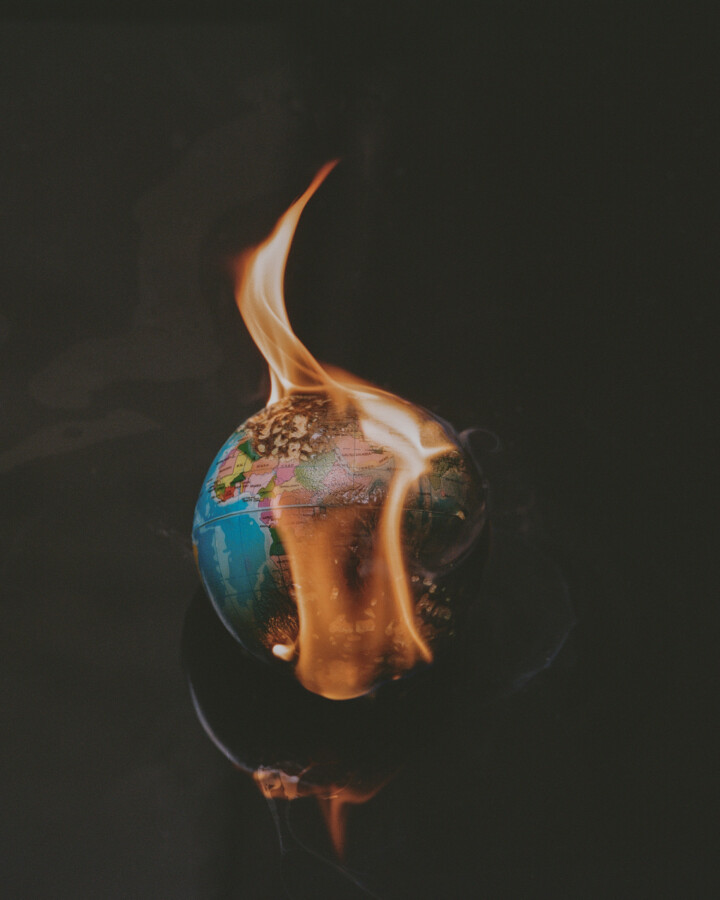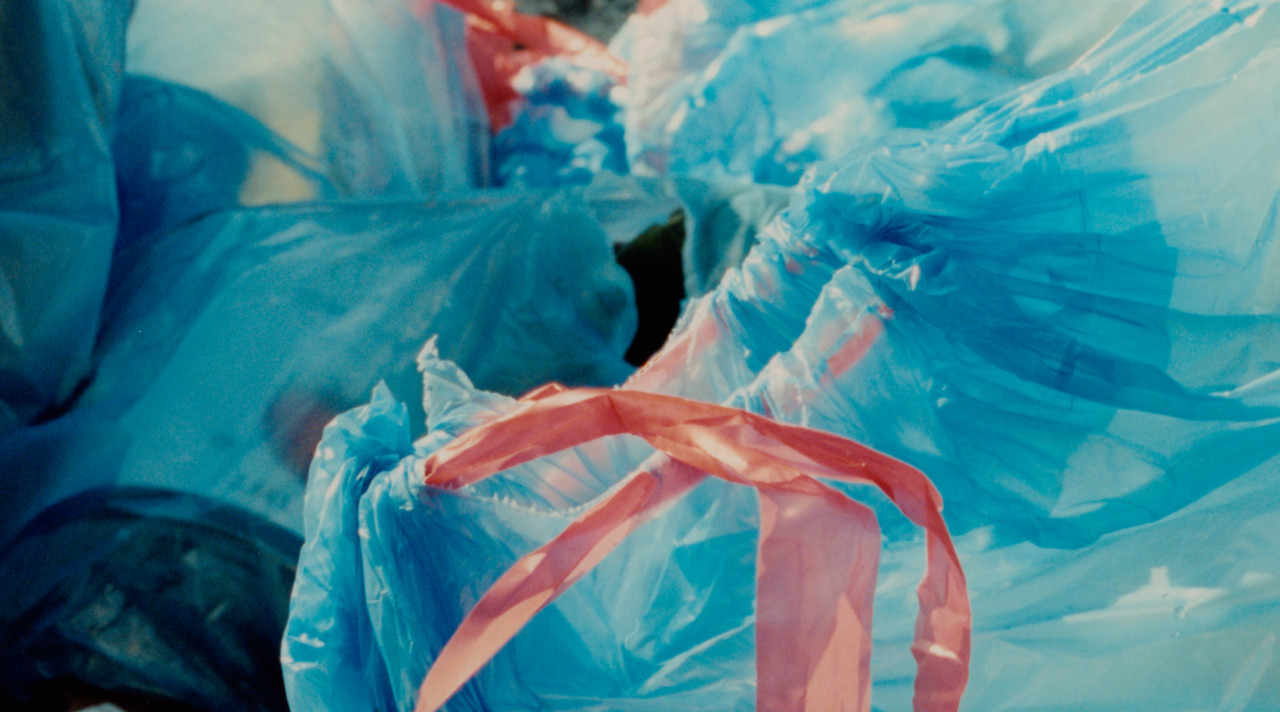
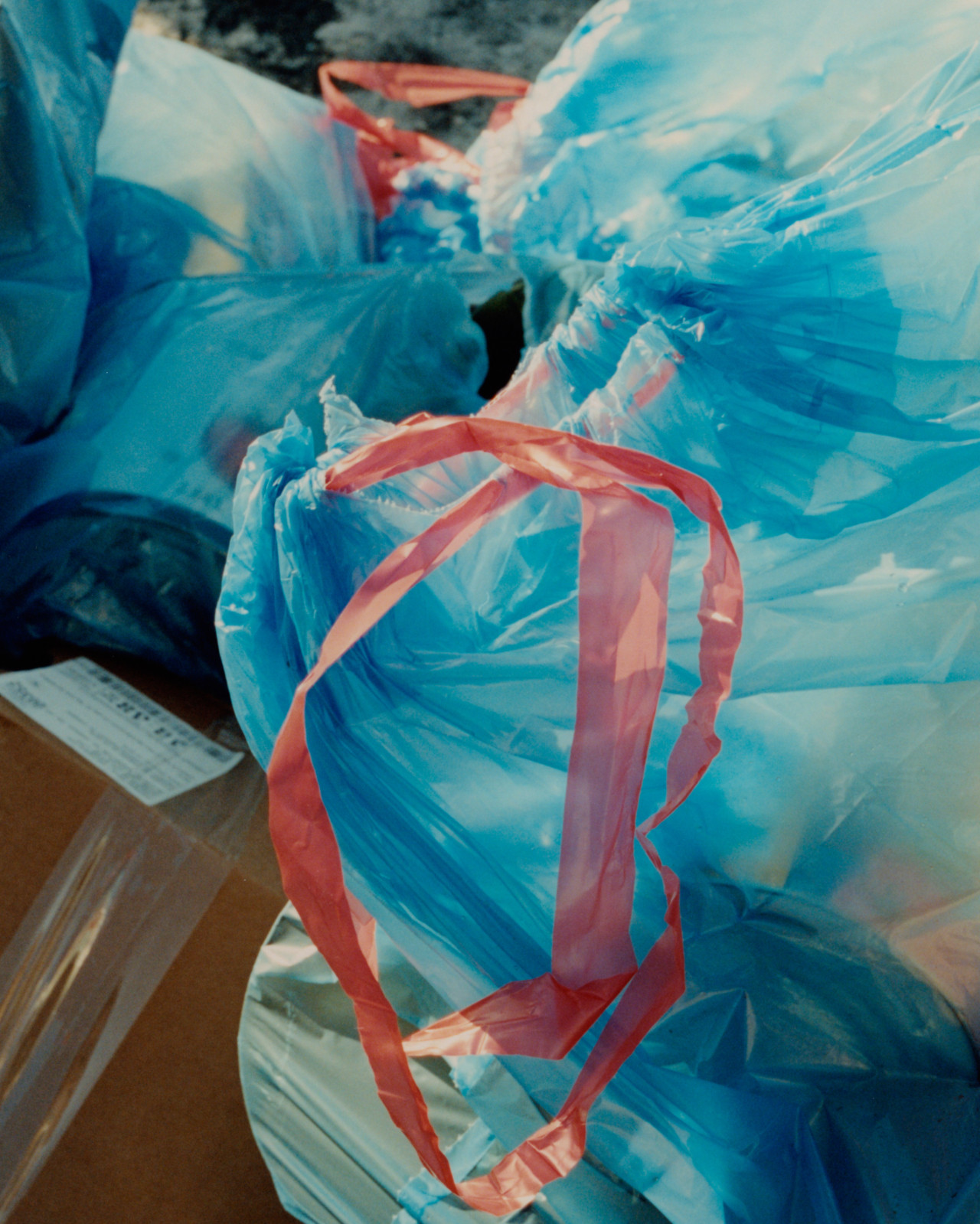
Photograph by Ryan Molnar / Connected Archives
words by miranda green
When plastic was first introduced to consumers in the early 1900s, it was considered a miracle material.
Plastic is flexible, it’s waterproof, and the nearly indestructible material doesn’t break down over time—which made it great for everything from medical devices and computers to Tupperware.
What no one had really planned for, however, was what would happen after it was thrown away.
Facing mounting criticism over plastic pollution, producers over the years have come up with several solutions. Many of them rely on marketing.
In 1953, Keep America Beautiful—a nonprofit founded by leaders in the beverage-container industry—shifted the focus from corporate polluters to litterers. Its cringey 1971 commercial featured a man in a Native American headdress (played by an Italian American actor), paddling a canoe through polluted water only to have trash thrown on him from passing cars once he reached land. A single tear rolls down his cheek. “People start pollution,” a narrator tells viewers. “People can stop it.”
It was classic greenwashing: redirecting blame from plastic producers (and the oil and gas companies that provide the raw material that make plastic) to consumers.
The early 1970s brought another development that would shape public perception for decades: the invention of the recycling symbol we all know today. In 1970, 23-year-old Gary Anderson designed the “chasing arrows” logo as part of a competition to celebrate the world’s first Earth Day, which itself started largely as an environmental protest against the 1969 oil spill in Santa Barbara, California. In 1972, the world’s first plastic recycling mill was built in Pennsylvania.
The plastics industry championed the idea of recycling publicly. But privately, executives didn’t believe it would actually curb the issue of plastic waste. As NPR reported, one Exxon Chemical vice president said during a 1994 meeting, “We are committed to the activities, but not committed to the results.”
To most consumers, the three-arrow symbol has come to be seen as a mark of a recyclable product. If a product has the logo on it, it denotes that it can be tossed in a bright blue bin to be reborn as another plastic product. But that’s rarely the truth.
“The recycling symbol has absolutely no legal or governmental meaning. It’s just a graphic,” said Jesse Sherry, associate professor of environmental studies at Eckerd College. “You can stick it on anything, and then they put the number in the middle to designate which resin the plastic was made from.”
Under President Joe Biden, the Environmental Protection Agency was reportedly moving to stop companies from overusing the symbol on products. An EPA official wrote to the Federal Trade Commission at the time, stating that “businesses making deceptive marketing claims create an unfair market advantage and stand to financially benefit from deceptive claims. Other businesses, consumers, municipal recyclers, and communities pay if the claims are not in fact true.”
“The lawsuits highlight a growing interest by consumers and their governments to act on the piling up of waste and the unforeseen consequences of plastic pollutants.”
The EPA urged replacing the three-arrow symbol with solid triangles to reduce confusion. But the FTC’s most recent “Green Guide,” which hasn’t been updated since 2012, still contains the old logo.
In the absence of federal action, a growing number of local governments are now trying to step in and hold producers accountable for their false marketing. Nearly a dozen local and state governments in the last decade sued plastic producers and fossil fuel companies over what they say are factually inaccurate and harmful claims that their products are recyclable, when they aren’t.
Their arguments range from the broad to the specific, but they boil down to the point that plastic pollution is becoming a burdensome, environmentally dangerous, and expensive health concern. They argue companies should be held accountable for benefiting from marketing their products as recyclable when municipalities lack the necessary recycling plants to process those products. Instead, they say, the plastic ends up in landfills.
Last September, the city of Philadelphia sued Bimbo Bakeries—the parent company of SaraLee and Entenmann’s baked goods—along with S.C. Johnson & Son, maker of Windex and other cleaning products, alleging that the two companies misinformed consumers by labeling their plastic products as “recyclable,” despite knowing they cannot be disposed of without causing environmental harm.
In October, California sued several companies over plastic bags marketed as recyclable, arguing the firms were aware the bags were not recyclable within the state’s systems. A separate 2024 lawsuit accused PepsiCo of engaging in “disinformation campaigns” that suggested purchasing sodas in plastic bottles was an environmentally responsible choice. A third California lawsuit filed that same year against ExxonMobil accused the fossil fuel giant of promoting plastic production despite mounting cleanup costs that now run into the billions annually.
All three cases are still pending. Other similar cases have so far settled in court. One—New York’s 2023 lawsuit against Pepsi and Coca-Cola, charging the corporation was “jeopardising the environment and public health” with its high volume of single-use plastics—was dismissed in late 2024, with the judge saying consumers, not the soda maker, were ultimately responsible for littering.
The lawsuits highlight a growing interest by consumers and their governments to act on the piling up of waste and the unforeseen consequences of plastic pollutants.
The United Nations estimates that about 440 million tons of plastic are produced globally each year. Only about 10% is recycled. A series of investigations in the United States found that plastic labeled as recyclable frequently ends up in landfills. That’s because the recycling market favors clear, clean plastic. Colored plastic and certain resin types are expensive to process or effectively unrecyclable, and often sent to landfills instead, according to Sherry.
“Especially in American society, we don’t want to think about waste … And because we don’t want to think about it, all kinds of bad things happen in that sector of the economy.”
The recent push to rein in plastics likely comes from two coinciding forces. The first is visibility. For years, much of America’s plastic waste was shipped overseas. When China sharply restricted imports of foreign plastic waste in 2018, communities across the U.S. were forced to confront the material piling up at home. Recycling pollution was no longer out of sight, out of mind.
The second is science. A growing body of research has shown the potential health impacts of otherwise invisible plastic pollution. Microplastics have been found in up to 83% of tap water worldwide as well as in soil, air, and even human bloodstreams and brain tissue (though some studies have been disputed).
“Especially in American society, we don’t want to think about waste … And because we don’t want to think about it, all kinds of bad things happen in that sector of the economy,” said Sherry. “I think it has really changed people’s thoughts about this because it went from a problem that’s like, ‘It’s bad, but it’s out there in the world,’ to, ‘This is a problem that is getting into my body that is potentially making me sick.’”
As litigation expands, producers are paying more attention to their labels, said Christopher “Smitty” Smith, a litigator and trial lawyer at Saul Ewing. Many companies now think twice about labeling their products as recyclable, biodegradable, or compostable, or are exploring partnerships with local governments to avoid accusations of misleading marketing, he said.
The problem, Smith said, is that recycling infrastructure varies widely across the country. That makes it hard for companies to accurately label a product that easily crosses city and state lines. A California law mandates that products labeled as recyclable must be eligible for recycling programs in roughly 60% of the state.
“If you were to sit down with some of the NGOs, you would get the perception that there’s this concerted effort to pollute, and it’s just not the case,” Smith said. “The reality is these producers are trying to work within a business marketplace to put out a product that does what they want it to do, that doesn’t have those impacts.”
Municipalities, for their part, are launching lawsuits against producers in a bid to secure a uniform way to regulate plastic pollution. But placing the onus on producers—a model known as extended producer responsibility—is a solution that may be hard to come by, as it entails getting the plastic genie back into the bottle.
But it has been done before. Germany in 1990 introduced its Green Dot program, requiring producers to finance the collection and recycling of packaging waste. It has since been successful in increasing recyclability. A 2023 study found that over 94% of all packaging placed on the German market in 2019 was collected for recycling, and more than 71% was ultimately recycled.
If any of the pending U.S. lawsuits were to succeed, it could set a precedent for producers here to face similar obligations. Or, at the very least, think twice about the materials they put out into the world to begin with.
Join our membership community. Support our work, receive a complimentary subscription to Atmos Magazine, and more.
The Legal Push to Make Plastic Producers Pay