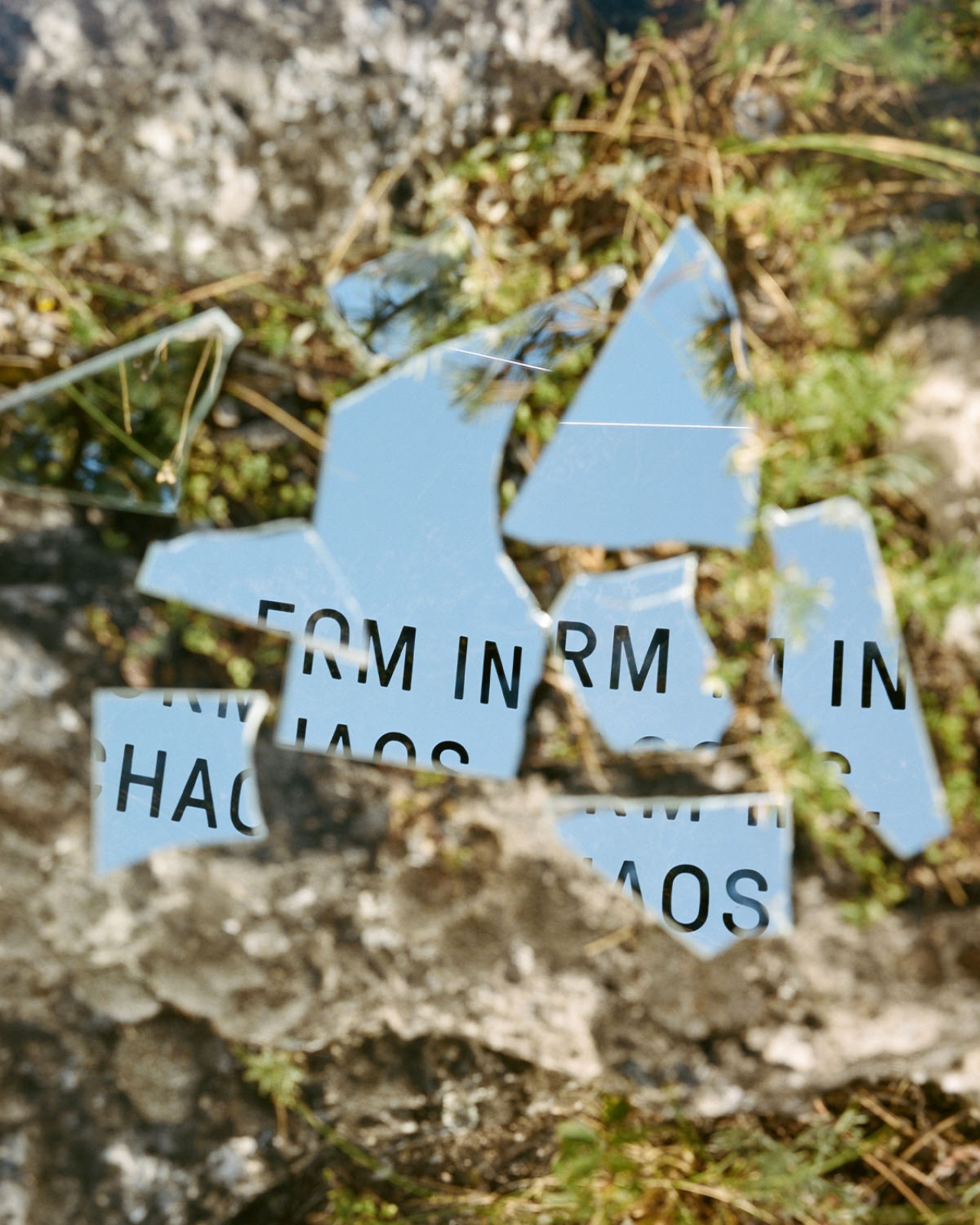
Photograph by by David Avazzadeh / Connected Archives
words by miranda green
When the Trump administration defended last weekend’s murder of Minnesota ICU nurse Alex Pretti by falsely calling him a “domestic terrorist” who was brandishing a gun, I, like many, was reminded of this line in George Orwell’s 1984:
“The party told you to reject the evidence of your eyes and ears. It was their final, most essential command.”
That line stayed with me this week as I learned about the National Park Service’s recent efforts to systematically remove plaques and exhibits that highlight the complexities of human history and inconvenient realities—from slavery to climate change.
In Pennsylvania, workers last Thursday took down an exhibit outside Philadelphia’s Independence National Historical Park titled Freedom and Slavery in the Making of a New Nation, which described the nine enslaved people who lived and worked at the site of President George Washington’s onetime home.
That same week, a panel and three signs at Fort Sumter and Fort Moultrie National Historical Park in South Carolina were removed. They explained how sea-level rise fueled by climate change threatens the historic Civil War site and encouraged visitors to reduce plastic waste.
In Maine, at least 10 signs in Acadia National Park have been taken down. Collectively, they urged hikers to stay on trails to protect fragile ecosystems, take public transportation to reduce emissions, and explained the area’s significance to the Wabanaki people.
And at New York’s Jamaica Bay Wildlife Refuge, a sign explaining the very purpose of national parks was removed. It read:
“Some very new parks preserve not just lands or buildings but our nation’s ideas and ideals. They remind us of things we hope to live up to—like women’s rights and liberty—and things we hope never to repeat—like slavery, massacres of Indians, or holding Japanese Americans in wartime camps.”
It was replaced with a map.
These removals follow an executive order issued last March aimed at restoring “truth and sanity to American history.” The order claimed there has been a “concerted and widespread effort to rewrite our Nation’s history,” accusing museums and parks of promoting a “revisionist movement” that casts America’s founding principles in a negative light.
In an effort to undo what it sees as revisionism, the administration has instead embraced erasure. An undo button. A rewrite—on its own terms. National Park staff were instructed to document plaques and exhibits for removal. Now that directive is playing out across the country.
This is not an isolated project. The Trump administration has worked tirelessly to narrow the boundaries of acceptable language and information.
The term “climate change” has been scrubbed from government websites—twice. MLK Day and Juneteenth are no longer free national park days. (Trump’s birthday is.) As I’ve written in past newsletters, the administration has removed key datasets from public websites and dismissed federal workers tasked with collecting and analyzing climate and public-health data.
The result is both a bleed of expertise and a widening hole of information.
Some argue that is the point. If data showing that fossil fuel pollution harms human health doesn’t align with policy preferences, the administration can simply stop considering it.
Earlier this month, the Environmental Protection Agency announced it will no longer factor the cost of human life into cost-benefit analyses for new air pollution rules. For decades, the agency used the “value of a statistical life”—currently estimated at $11.7 million—to justify regulations that prevent premature deaths. Now, that value is effectively zero.
The EPA will still consider the cost savings to industry of not regulating pollution, but not the benefits to human life if it did.
“The benefit of their effort is to justify either not regulating, or regulating weakly, or deregulating,” Alan Krupnick, a senior fellow at Resources for the Future, told me of the EPA’s actions.
“It’s in their interest to have less tight regulations, and sometimes those are warranted, and sometimes they’re not,” he said of the fossil fuel industry. “But if you don’t look at the actual evidence, how do you know?”
What might look like a technical or scientific shift is also a continuation of a broader strategy: controlling the story by limiting what can be seen, measured, or remembered.
Deletion and obfuscation can be forms of storytelling. I learned this firsthand while investigating how fossil fuel companies and utilities weaponize local news sites across the U.S. to amplify positive narratives and bury negative ones. Alabama’s largest power company, for example, runs its own “good news” site—meaning when winter storms sent rates skyrocketing, it simply didn’t cover itself.
The White House has followed a similar playbook. It started with social media and government websites, moved on to Smithsonian museums, and now includes national parks.
“I think some people do see it as a zero-sum game, that somehow acknowledging the bad things that the great men of history did, somehow takes away from them. I’ve never seen it that way.”
Some call this the post-truth era. Trust in news is low. Social media fills the gap with lots of unverifiable slop. And the administration’s version of events travels through Truth Social posts and the White House’s own newsroom.
That dynamic was on display again last weekend when DHS Secretary Kristi Noem grossly mischaracterized the scene leading up to the ICE shooting of Pretti, while the department blocked local law enforcement from reviewing evidence. “Thank God we have video,” Minnesota Gov. Tim Walz said afterward.
Footage and photos may be the last remaining counterweight—at least, that’s the hope of Lena Bohman, who is leading a crowdsourcing effort to keep national park signage alive, well after it might be removed.
Bohman is a founding member of the Data Rescue Project and also leads a partner project called “Save Our Signs” based out of the University of Minnesota. Starting last fall, the public was invited to submit photographs of national park signage to a burgeoning database maintained by the group. Save Our Signs has archived more than 10,000 photos from 300 sites so far.
Bohman said creating today’s exhibits didn’t come easily or without thought. It’s taken decades of work—by historians, scientists, tribes, and local communities—to make park interpretation more inclusive. She believes the administration is altering those exhibits to maintain a whitewashed narrative of U.S. history. But the signs were created to show the nuance and complexity of humans and their history.
“I think some people do see it as a zero-sum game, that somehow acknowledging the bad things that the great men of history did, somehow takes away from them,” she said. “I’ve never seen it that way.”
Many of the signs being removed were created by scientists in cooperation with local partners. The Fort Sumter signage removed this month, for example, was installed following a 2016 collaboration with university researchers that measured the potential impacts of climate change on the site. Those impacts included requiring the Army Corps of Engineers to help reinforce the fort’s seawall.
“It’s a lot of hard work,” said Bohman of the exhibits that were created. “And the real tragedy is that we’re losing so much of it.”
Written on a plaque or not, those choices are also now part of history. And, like all acts of erasure, they will never fully be forgotten.
Join our membership community. Support our work, receive a complimentary subscription to Atmos Magazine, and more.
The Era of American Erasure