Photograph by Mustafah Abdulaziz
words by miranda green
I’ve never visited the frozen territory of Greenland. But as a climate reporter, I’ve likely read about it more than any other body of land. That’s because Greenland is climate change personified.
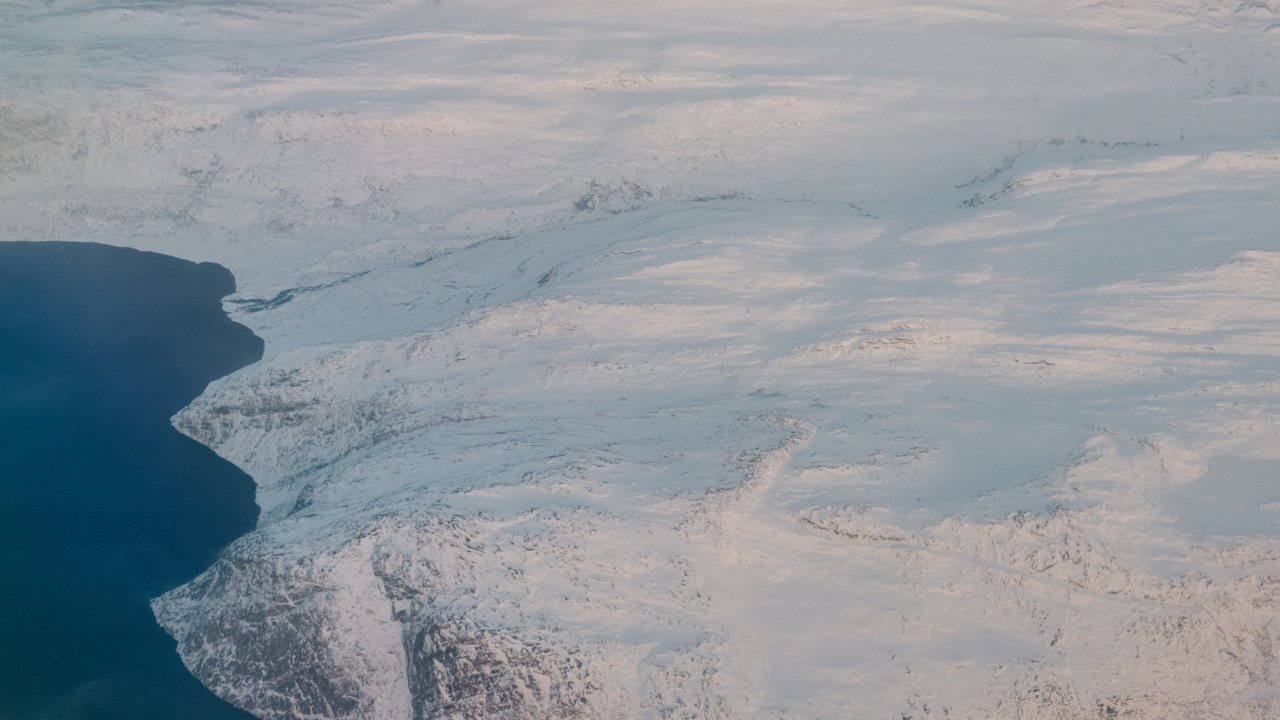
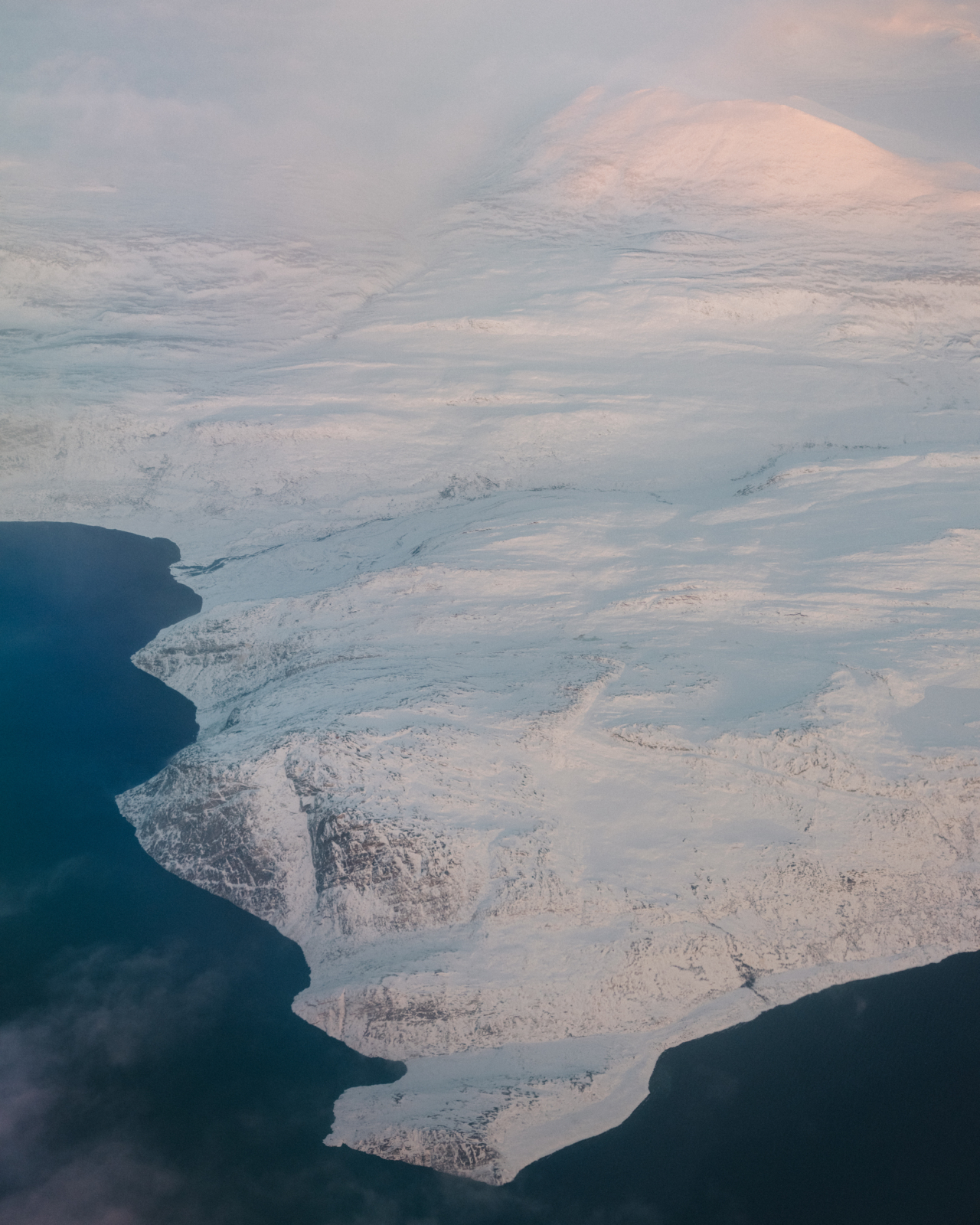
The Greenland ice sheet is the second-largest body of ice on Earth after Antarctica’s, and home to more than 5,400 distinct glaciers and ice caps. It sustains diverse Arctic wildlife, including polar bears, musk oxen, puffins, and reindeer: all animals whose survival depends on slowing global warming.
It’s also melting at an astonishing rate.
Greenland lost 105 billion metric ton of ice in 2025 alone. Should the ice across the entire swatch of frozen island melt, it would contribute 23 feet of sea level rise.
Despite all of this—or perhaps because of it—President Donald Trump has reiterated his interest in buying Greenland from Denmark. He told reporters last week he was “very serious” about taking over the world’s largest island, located east of Canada.
The former real estate developer says he wants Greenland for security purposes: It’s home to a key United States missile defense system. But there’s more to a purchase than meets the eye. The island is also rich in untapped crude oil and natural gas.
And it’s estimated to be home to a quarter of the world’s rare earth minerals—which are likely easier to mine as the ice thaws.
Denmark has until now scoffed at Trump’s request, saying the world’s largest island is not for sale. In response to the president’s renewed calls to take over the island, European leaders last week wrote a joint statement that read: “Greenland belongs to its people. It is for Denmark and Greenland, and them only, to decide on matters concerning Denmark and Greenland.”
But there’s one thing Trump has control over that could force Denmark to the negotiating table, and it comes in the form of one of Trump’s least favorite things: wind power.
The White House halted five offshore wind projects in late December that were being built off the coasts of Rhode Island, Massachusetts, and Connecticut, claiming they were national security risks.
Many of the projects were more than halfway done. Together, Revolution Wind, Empire Wind 1, Vineyard Wind 1, Sunrise Wind, and Coastal Virginia Offshore Wind would have generated enough electricity to power more than 2.5 million homes and businesses.
It wasn’t the first time the administration tried to stop the construction of offshore wind. Trump notoriously dislikes wind; and in August, the administration issued a stop-work order on a nearly complete project—Revolution Wind—due to unspecified national security concerns, but a court struck it down.
Another court ruled Monday that the same wind project can continue its construction as it brings a suit against the administration’s latest challenge.
Revolution Wind is expected to become fully operational this year. The tumultuous project is owned by the Danish company Orsted. Several of the offshore wind projects also have agreements to buy turbines from Vestas Wind Systems, a Danish company, or Siemens Gamesa, which makes wind turbines in Denmark.
In a different timeline, Denmark could have stepped in early to try convincing Trump to allow the projects to continue unscathed. There’s reason to believe it might have worked, as other countries have found success this way.
For example: The White House in May lifted another stop-work order placed on an offshore wind project in New York that Norway’s state-owned energy company was developing. Trump flipped after the Norwegian prime minister and finance minister met with him at the White House—and after New York Gov. Kathy Hochul negotiated that in turn, New York would reconsider approving a natural gas pipeline that was previously tabled.
For a while, it was reported that the Danish government was attempting to lay low. Greenland stayed largely out of Trump’s lexicon for an entire year, until this January. Denmark had not moved to meet with White House officials, with some believing that talks with the Trump administration over Revolution Wind might be playing directly into his hand, giving him leverage to request Greenland in exchange.
But that changed this week when senior Danish and Greenlandic officials agreed to meet with Vice President JD Vance and Secretary of State Marco Rubio at the White House today. Yet, negotiations didn’t seem to go well. After that meeting, Danish Foreign Minister Lars Lokke Rasmussen cited a “fundamental disagreement” with the U.S. over Greenland and dismissed any plans outside the scope of Greenland’s “self-determination.”
Energy Secretary Chris Wright downplayed the likelihood that there was a quid pro quo happening with regard to wind, telling CNBC last week, “I don’t believe there’s any connection there with Greenland or Denmark.”
Instead, he went on to compliment Interior Secretary Doug Burgum for being a fantastic partner when thinking about, “How can we use energy and commerce, instead of guns, to influence world geopolitics?”
Trump might have his sights set on Greenland, but he’ll likely find little welcome from locals. Greenland is home to about 57,000 people, who are largely indigenous Inuit. A poll taken last January found that 85% were against becoming part of the U.S., and the majority (56%) are in favor of Greenland becoming its own nation.
Greenlanders are also staunchly against drilling. While the U.S. Geological Survey estimates that there could be as much as 17.5 billion barrels of oil and 148 trillion cubic feet of natural gas in Greenland, the territory voted in 2021 to end all fossil fuel exploration due to concerns about climate change. Their government said, “The future does not lie in oil.”
Trump’s vision of an American Greenland comes with its fair share of ironies.
First, the Trump administration last week removed the U.S. from dozens of international entities, including organizations focused on climate action, yet it now desires a country on the front lines of climate change.
Second, the security measures Trump says he is most worried about—namely, baseless claims that China or Russia will send ships to take over Greenland—are made more possible as the frozen area gets more navigable due to the ice melting.
And then there’s the kicker. If the U.S. were to mine Greenland, it would have in its possession a lot of rare earth minerals valued mostly for their application in clean energy technology. Those minerals go toward batteries that can be used in wind turbines: the very industry Trump is trying to put on the chopping block back at home.
Join our membership community. Support our work, receive a complimentary subscription to Atmos Magazine, and more.
How Offshore Wind Factors Into Trump’s Lust for Greenland