words by miranda green
Photographs by Jordan Vonderhaar
You might have to dust off some cerebral cobwebs to recall Trump’s key 2016 campaign chant of “Build that wall!” The rallying cry helped propel him to his first term, and now, a decade on, the proposed 1,954-mile-long, metal wall is in varying states of completion along the border between the United States and Mexico.
“Border town residents, some of whom voted for Trump, have front-row seats to the wall’s construction and impact as it cuts through towns, parks, and wildlife corridors—and many don’t like what they’re seeing. One such litmus test is playing out in real time at Big Bend National Park in Texas, along the Rio Grande River.”
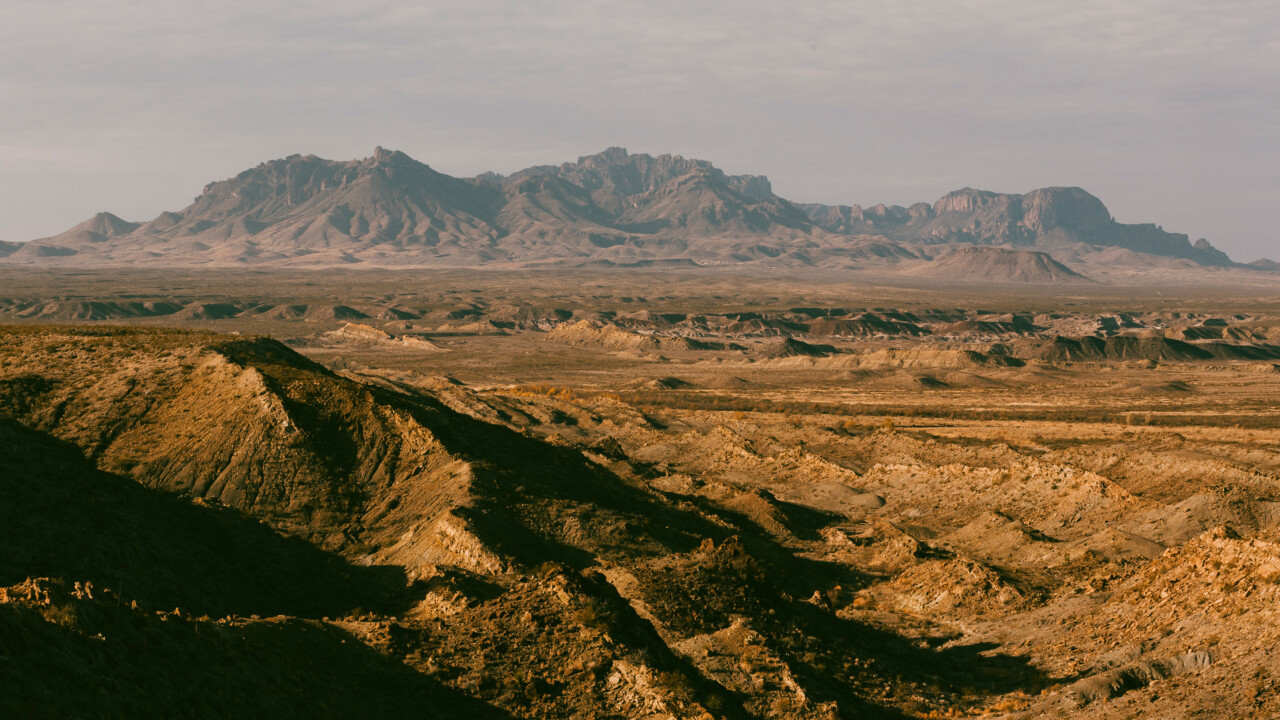
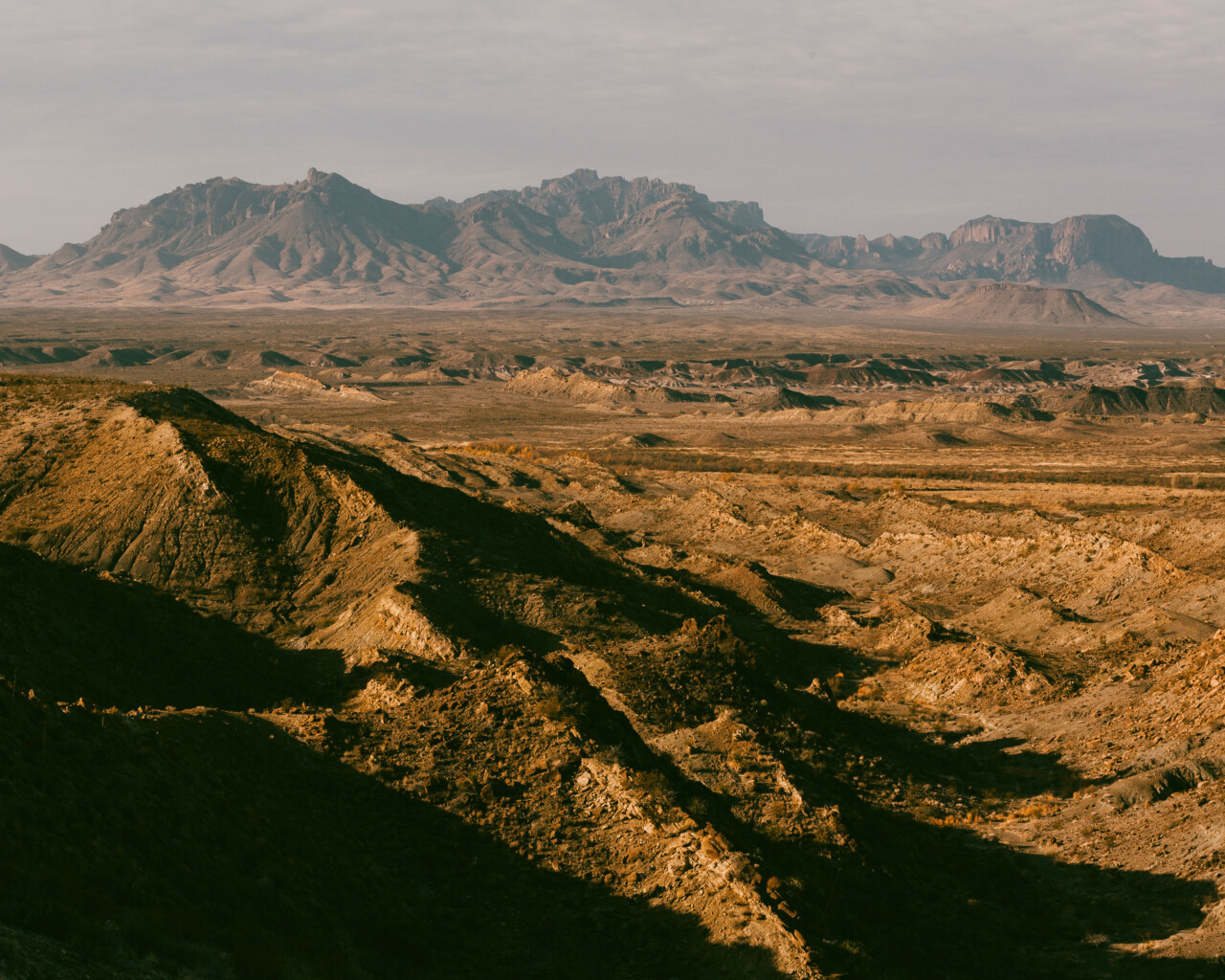
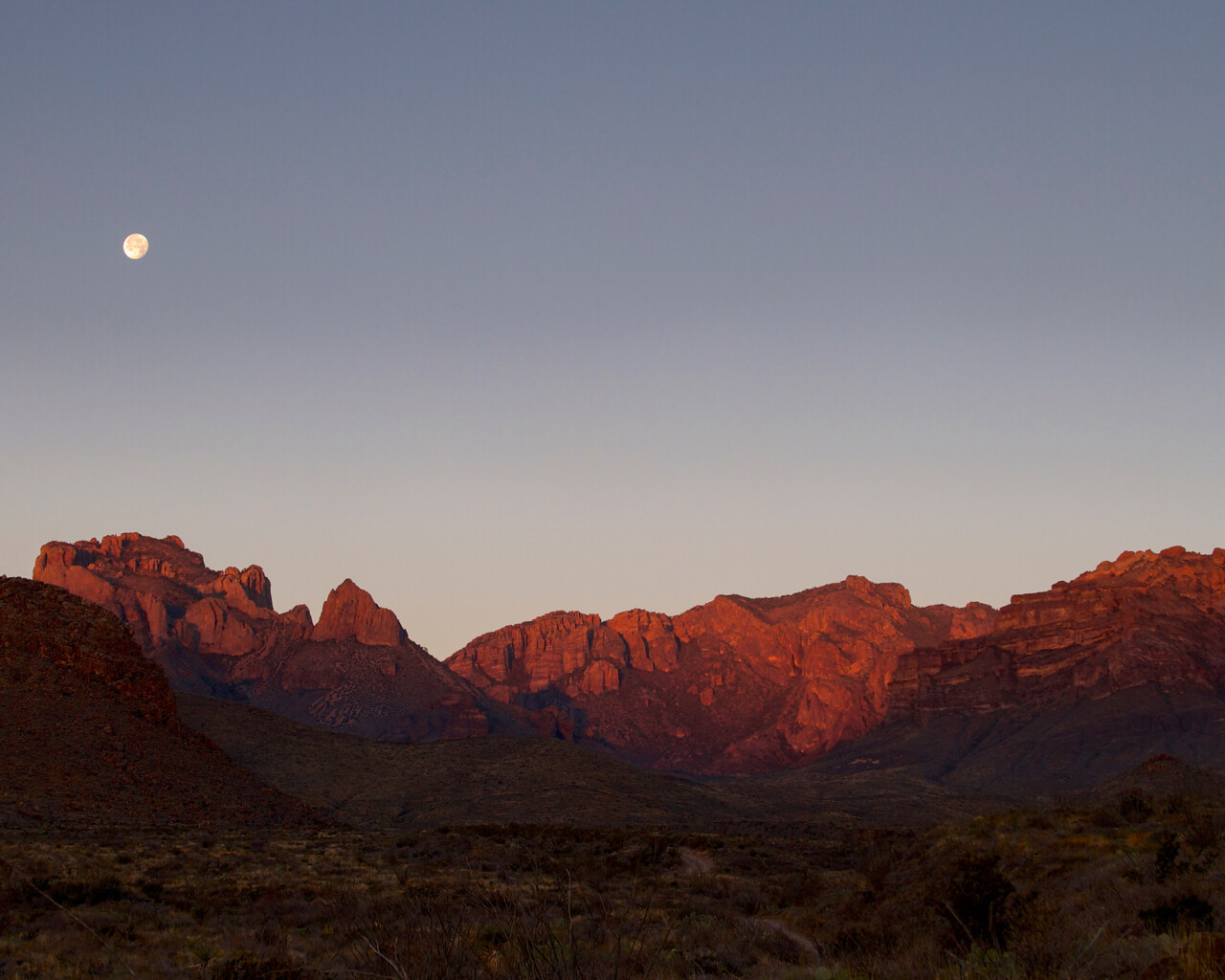
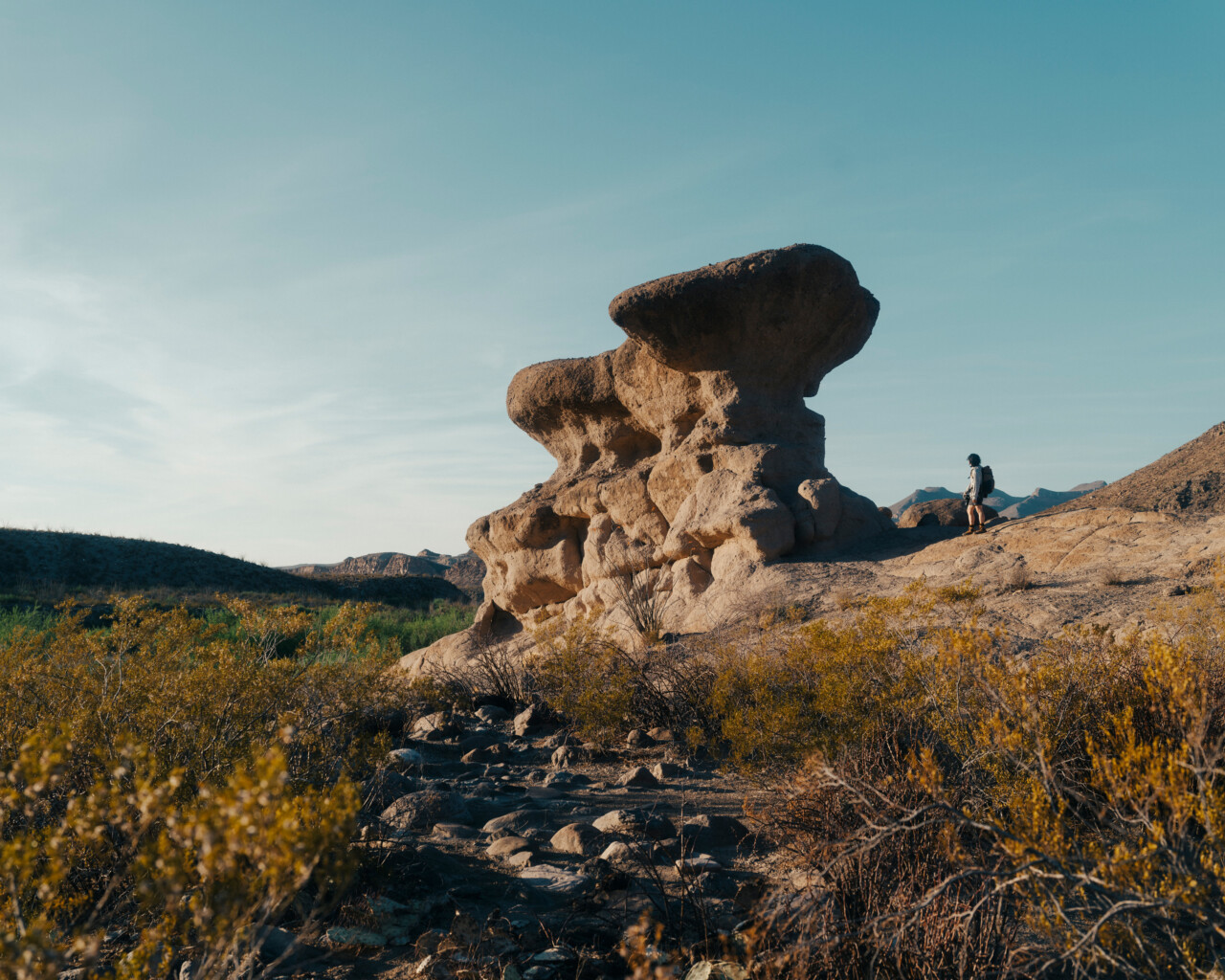
Big Bend is known for its “splendid isolation” as Texas’ largest and most remote national park, flanked by jagged canyons and straddling the international boundary along the vast Rio Grande River. The park is home to dinosaur fossils, javelinas, and hot springs—and soon, according to plans that broke in February, 517 miles of border wall.
“A border wall in the Big Bend region is an absurd, wasteful, counterproductive idea that is loathed by nearly every person who has ever lived or visited there,” writes Isaac Saul, author of a non-partisan politics newsletter called Tangle and resident of Brewster County, Texas.
Texans knew border wall construction had accelerated in early 2026, but plans for addressing the part of the border running through Big Bend didn’t become clear until mid-February when the Department of Homeland Security determined to waive more than two dozen environmental protections to fast-track construction.
Sam Karas, a river guide and reporter for The Big Bend Sentinel, was first to break the news of the unceremonious move to build a border wall through the entire park. She compared her realization of what they were doing to a “late monsoon” that begins with drops before becoming a flood. In this case, she said, the wall began with a razor wire fence that kept growing until it was clearly something else entirely: a border.
“I felt sick to my stomach,” she wrote of the realization. “There it was: the first man-made barrier of any kind between the United States and Mexico in the Big Bend, thrown up haphazardly and what felt like overnight.”
The majority of public response to this section of the wall has been in opposition. Democratic and Republican sheriffs from five bordering counties wrote an open letter in early March arguing against the wall’s continued construction:
“Based on decades of combined experience working with this terrain, we believe that construction of a continuous physical border wall in the Big Bend region would not represent the most practical or strategic approach to border security in this area,” the missive read.
Laredo Councilwoman Melissa Cigarroa said in a statement to environmental group Earthjustice that the existing border wall looked like a “looming mass of steel” up close, “with 24-hour high intensity lights, cameras, and dusty surveillance roads,” and argued it felt like a prison wall keeping locals in.
“We do not deserve to be treated like criminals,” she said. “Our river, our water, our land, and our children deserve better.”
Environmentalists warn of thwarted animal crossings, especially those of Texas bighorn sheep and black bears, and worry about the destruction of taxpayer land. They have also asked the obvious, immediate question: Whom is this really benefiting? The Big Bend area has some of the lowest rates of illegal crossings. Border Patrol in fiscal year 2025 recorded 3,096 apprehensions in the Big Bend sector—just 1.3% of all border apprehensions.
“Law enforcement across the political spectrum say that a wall is simply unnecessary to secure the border here, and its harm to local communities and the resources and values of these wild lands would be grossly out of proportion to any possible benefits,” wrote Bob Krumenaker, former Big Bend National Park superintendent and chair of Keep Big Bend Wild, in a letter compiled by the Center for Biological Diversity and sent to Congress last month. “Nothing would permanently destroy the wildness of Big Bend more than a border wall with its accompanying roads, fences, and lights.”
A rally in Austin over the weekend drew a crowd of roughly 2,000 protesters, some of whom carried signs that read “Big Love for Big Bend” and “No al Muro” (“No to the wall”). Texas’ former land commissioner, a Republican, led the chant: “No damn wall!” “I have found no one, Republican or Democrat, who wants a wall in the Big Bend,” Jerry Patterson told The Guardian. “I almost wanna find somebody so I can talk to ’em. But I can’t.”
Anthropologist Carolyn Boyd opined to The Guardian about potential damage to archaeological sites. “They are sacred landscapes,” she told the outlet. “They are libraries of human knowledge. They are the voices of 175 generations preserved on canyon walls. And many of these places remain sacred to Native American communities today.”
With $50 billion allocated by Trump’s One Big Beautiful Bill Act for border wall construction, there’s no doubt the money is available for an installation through Big Bend.
But the pushback clearly struck a nerve—or at least gave the administration a rare moment of pause.
Initial plans from the DHS showed maps with border walls sealing off nearly every reachable stretch of the Rio Grande in Big Bend National Park and Big
Bend Ranch State Park. But officials told a local radio station at the end of March that there are “currently no plans for border wall construction,” and the CBP website instead shows plans for a “virtual wall” through the parks.
Residents and activists are keeping a close and wary eye on a project whose scope has changed multiple times already without public input or congressional approval.
Few issues inspire unity across every political stripe, but national parks and open land are clearly two of them. The administration has taken note.
Join our membership community. Support our work, receive a complimentary subscription to Atmos Magazine, and more.
Border Wall Meets Bipartisan Backlash in Big Bend